
Specklebelly country can look almost identical from one field to the next.
A harvested rice field stretches toward the horizon.
Shallow water reflects the winter sky.
Mud surrounds old tractor tracks.
A drainage ditch divides two properties.
Several hundred geese sit in one field.
The neighboring field looks almost the same.
Yet hardly a bird lands there.
That is one of the biggest lessons in greater white-fronted goose hunting.
Geese do not use agricultural landscapes randomly.
They respond to small differences in:
- Food
- Water depth
- Wind
- Disturbance
- Field condition
- Roost distance
- Current migration pressure
A productive field is usually productive for a reason.
Successful hunters learn to identify that reason before setting up.
Greater White-Fronted Geese Are Often Called Specklebellies
Hunters commonly call greater white-fronted geese:
- Specklebellies
- Specks
- White-fronted geese
The nickname comes from the dark markings that develop across the belly of many adult birds.
These geese are strongly associated with agricultural and wetland landscapes during migration and winter.
Rice Country Can Be Excellent Habitat
Productive landscapes may include:
- Harvested rice
- Flooded rice fields
- Grain stubble
- Wet pasture
- Coastal prairie
- Shallow marshes
The best locations usually combine food with nearby secure water.
Food Comes First
A field may contain water.
That does not mean it contains enough food.
Specklebellies often choose fields where usable grain or vegetation remains available.
Harvested Rice Can Be Highly Attractive
Waste rice provides concentrated food.
But harvest efficiency differs from field to field.
Some fields leave more grain behind than others.
Do Not Judge Only From the Road
Two fields can appear identical while holding very different food levels.
Bird behavior tells you which one matters.
Watch Feeding Activity
Look for geese that remain spread across the ground and actively feed.
That often tells you more than seeing a flock simply resting.
Field Position Matters
Do not record only:
“Geese in the rice.”
Record whether they are using:
- Center
- Low corner
- Levee edge
- Flooded section
- Drier stubble
One Section May Hold Most of the Food
Harvest equipment and water can distribute grain unevenly.
Birds notice.
Shallow Flooding Can Improve Habitat
Water across harvested rice can create a combination of:
- Food
- Drinking water
- Security
within the same field.
But Water Depth Matters
A few inches of water may still allow efficient feeding.
Too much water can reduce access to grain.
Higher Ground Can Become Important
If a field floods deeply, geese may shift toward:
- Levees
- Elevated rows
- Shallower corners
Watch Where Birds Stand
Their exact position tells you which depth is working.
Falling Water Can Expose New Food
As water levels drop, grain and vegetation may become more accessible.
Rising Water Can Move Birds
A strong rain may completely change field use overnight.
Rescout After Heavy Rain
Do not assume yesterday’s feeding zone is still usable.
Agricultural Water Levels Can Be Managed
Some fields are intentionally flooded or drained.
That means habitat can change quickly even without major weather.
Never Alter Water-Control Structures
Do not touch:
- Gates
- Pumps
- Boards
- Drains
without permission.
Landowners Manage Water for a Reason
Respect farm operations.
Coastal Prairie Adds More Habitat
Specklebellies may also use:
- Grasslands
- Pastures
- Prairie wetlands
near rice-growing regions.
Grass Fields Can Be Important
Do not assume all feeding happens in grain stubble.
Birds may use green vegetation depending on conditions.
Watch Current Flocks
Actual behavior is always more useful than assumptions about what birds “should” prefer.
Roost Water Organizes Daily Movement
Specklebellies often move between:
- Secure roosts
- Feeding fields
throughout the day.
Morning Flight Lines Are Valuable
Watch birds leaving roost water.
Note:
- Direction
- Altitude
- Flock size
- First fields they inspect
Evening Movement Confirms the Pattern
Birds returning toward secure water can show where the day’s feeding took place.
Flight Corridors Can Stay Consistent
When weather remains stable, geese may use similar routes repeatedly.
But Pressure Can Change Them Quickly
Repeated hunting or vehicle disturbance can shift birds toward:
- Different fields
- Higher flight
- Alternate routes
Specklebellies Can Become Very Cautious
They often respond quickly to repeated pressure.
Scouting Needs to Stay Current
A productive field three days ago may already be abandoned.
Do Not Depend on Historical Hotspots
Birds follow today’s food and disturbance.
Migration Adds Another Layer
Regional bird numbers can change rapidly.
A cold front may bring:
- New flocks
- Different behavior
- More competition for feeding fields
Fresh Migrants May Behave Differently
New birds may be less familiar with local pressure.
Stale Birds May Be Harder to Hunt
Geese that have spent weeks in the same region often learn:
- Popular fields
- Common access roads
- Typical hunting locations
Rescout After Major Weather
Migration can completely reset the area.
Wind Is One of the Most Important Variables
Specklebellies use wind heavily during approach and landing.
Study Wind Before Choosing Position
A productive field can still hunt poorly from the wrong side.
Birds Usually Want a Controlled Landing
They may turn repeatedly to approach into favorable wind.
Crosswinds Can Shift Flight Lines
A flock may pass one side of the field instead of flying through the middle.
Watch Real Flocks
Do not rely only on theoretical wind behavior.
Strong Wind Can Lower Birds
But it also creates:
- Colder conditions
- More difficult equipment handling
- Harder walking
Calm Days Can Be Difficult
Geese may circle longer and inspect the field carefully.
Concealment Becomes More Important
Reduce:
- Head movement
- Gear movement
- Standing
when birds approach.
Open Rice Fields Offer Little Natural Cover
Small differences in elevation can help.
Levees Can Create Structure
Rice fields often contain narrow raised levees.
These affect:
- Water depth
- Bird distribution
- Hunter access
But Levees Can Expose Hunters
Walking directly along the highest point can make movement more visible.
Use Low Ground When Safe
Shallow depressions can help break up your outline.
Mud Makes Everything Harder
Flooded rice country can contain some of the most tiring agricultural mud.
Clay Can Be Extremely Sticky
Every step may add:
- Weight
- Resistance
- Fatigue
Mud Suction Pulls at Boots
Poor fit becomes obvious quickly.
Slow Down
Trying to walk too fast increases the chance of:
- Losing balance
- Pulling a boot loose
Tractor Ruts Can Be Deep
Standing water may hide them completely.
Never Assume a Flat Field Has Flat Footing
Agricultural equipment creates:
- Ruts
- Holes
- Soft shoulders
Ditches Are Major Hazards
Drainage ditches may be:
- Narrow
- Deep
- Hidden by grass
Scout Crossings in Daylight
Do not discover a ditch for the first time before sunrise.
Culverts Can Create Firmer Crossings
But verify that access is allowed.
Grass Waterways Can Be Wet
Runoff concentrates in these areas.
They may stay muddy long after neighboring ground dries.
Specklebelly Hunting Is Hard on Footwear
A typical hunt may involve:
- Sticky rice-field mud
- Shallow water
- Wet grass
- Frozen soil
- Drainage ditches
- Flooded stubble
- Long equipment carries
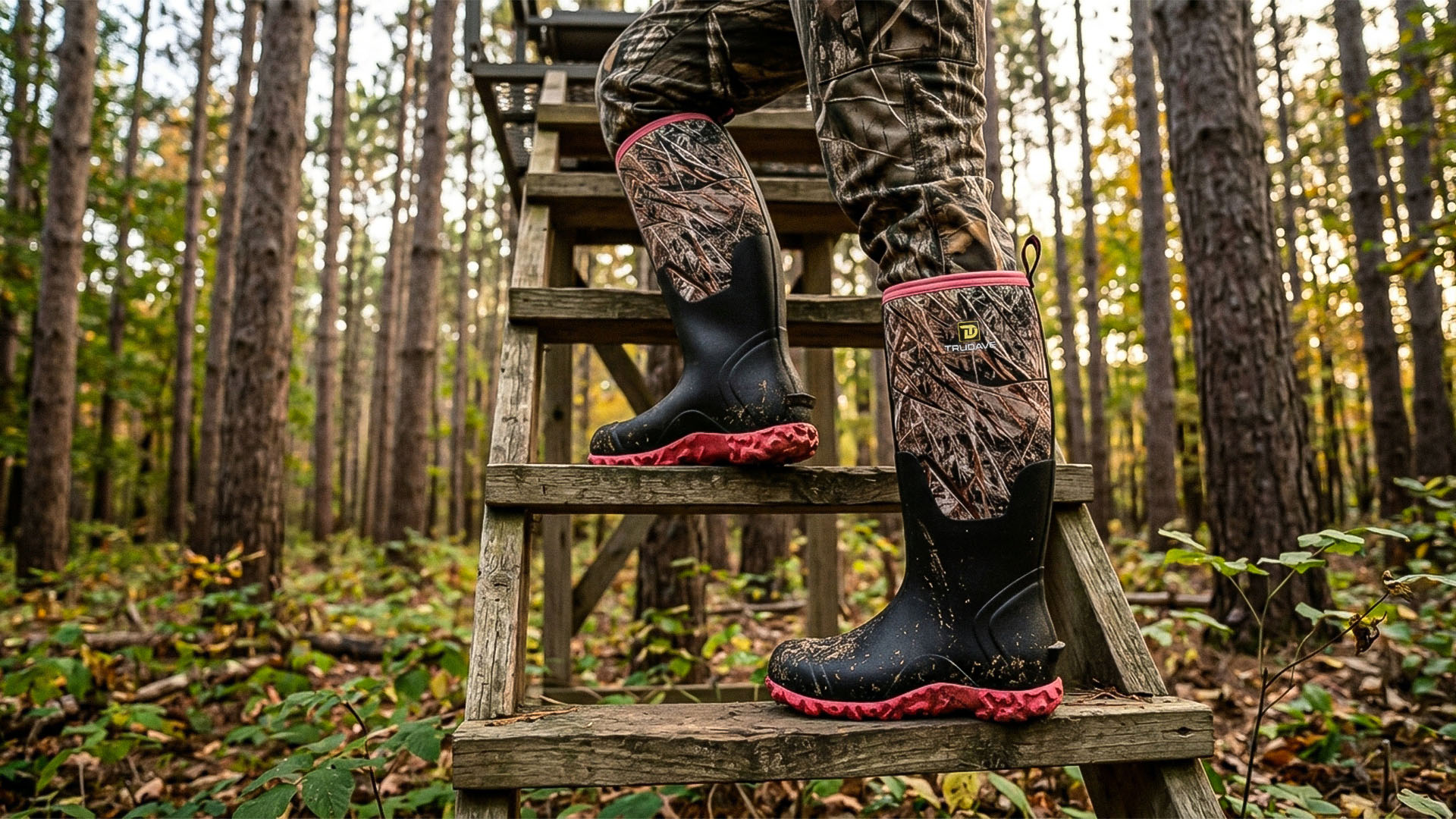
Hunters may benefit from waterproof hunting boots for flooded field goose hunting that provide secure heel retention, strong mud traction, and enough waterproof height for repeated travel across saturated agricultural ground.
Tall Rubber Boots Can Be Excellent
Flat wet agricultural fields are well suited to rubber hunting boots.
Boot Height Matters
Standing water may be deeper in:
- Tractor tracks
- Ditches
- Low corners
Secure Fit Is Critical
A loose boot can nearly come off in sticky mud.
Heel Retention Reduces Fatigue
Every step becomes easier when the boot moves with the foot.
Aggressive Tread Helps
Deep tread can improve grip in:
- Mud
- Wet grass
- Soft levees
But Mud Can Fill the Tread
Once packed, grip decreases.
Clean Soles When Practical
Especially before walking on:
- Hard roads
- Boat ramps
- Vehicle steps
Lace-Up Waterproof Boots Can Work on Firmer Fields
If most access involves:
- Dry levees
- Gravel roads
- Grass
supportive waterproof boots may provide better long-distance comfort.
Choose Footwear for the Whole Day
A field frozen at sunrise can become deep mud after noon.
Think Ahead
Do not choose footwear only for the first hour.
Waders May Be Useful in Deeper Flooded Fields
Where water regularly exceeds boot height, properly fitted hunting waders may provide better protection.
Waders Are Not Always Necessary
Many rice-field hunts are better handled with:
- Tall waterproof boots
Waders Do Not Solve Deep Mud
Hunters can still become stuck.
Waders Do Not Make Ditches Safe
Unknown channels should be crossed only at safe known locations.
Use a Walking Stick Where Appropriate
A sturdy staff can help test:
- Water depth
- Bottom firmness
Cold Water Adds Risk
Winter flooded fields can become extremely cold.
Wet Feet End Hunts Quickly
Water inside boots can lead to:
- Cold discomfort
- Blisters
- Reduced mobility
Carry Spare Socks
A dry pair can save the day.
Protect Dry Clothing
Use waterproof storage.
Winter Rice Country Can Be Cold
Flat agricultural landscapes offer little protection from wind.
Windproof Clothing Is Valuable
Wind chill can become more important than air temperature.
Avoid Overheating During Setup
Walking through mud creates substantial heat.
Remove Layers Before Sweating
Then add them once stationary.
Moisture Inside Clothing Becomes Cold Later
Manage both:
- Rain
- Sweat
Gloves Get Wet Easily
Hunters may handle:
- Wet decoys
- Muddy gear
- Birds
Carry a Backup Pair
Dry gloves make long hunts much more comfortable.
Rain Can Transform Access
A manageable field may become difficult after one storm.
Ranch and Farm Roads Need Respect
Do not create deep ruts.
If the Road Is Too Soft, Walk
Future access depends on landowner trust.
Do Not Drive Around Mudholes Through Crops
That can damage:
- Fields
- Levees
- Drainage
Ask the Landowner Where to Park
Do not assume.
Rice Country Is Usually Working Agricultural Land
Farm operations come first.
Equipment May Be Present
Possible hazards include:
- Tractors
- Pumps
- Irrigation pipe
- Electrical equipment
Do Not Touch Farm Equipment
Unless specifically authorized.
Leave Gates As Directed
Livestock may share parts of the property.
Do Not Block Farm Roads
Workers may need access during the hunt.
Property Boundaries Can Be Difficult
One rice field may sit beside another owned by someone else.
Water Does Not Show Ownership
Flooded ground can make fence lines harder to see.
Know Exact Boundaries
Use reliable current property information.
A Downed Bird Crossing the Line Does Not Automatically Grant Access
Discuss recovery beforehand.
Positive Landowner Relationships Matter
Good goose hunting often depends on long-term permission.
Clean Up Completely
Do not leave:
- Trash
- Broken gear
- Food packaging
Retrieve All Equipment
Even small items can interfere with farm machinery.
Pick Up Spent Hulls
Leave the property clean.
Specklebellies Have Distinctive Vocalizations
Their calls can help hunters identify approaching flocks.
Learn the Sound
It can alert hunters before birds become visible.
But Sound Is Not Enough for Identification
Visual confirmation still matters.
Greater White-Fronted Goose Identification Is Important
Depending on region, hunters may see:
- Specklebellies
- Snow geese
- Canada geese
- Other waterfowl
Adult White Fronts Have Distinctive Features
Hunters should study:
- White area near the bill
- Belly markings
- Overall body shape
Juveniles Can Look Different
Do not study only fully marked adults.
Belly Speckling Varies
Some birds show much more than others.
Do Not Identify Only by the Belly
Use multiple characteristics.
Low Light Reduces Visible Color
Silhouettes can be difficult.
Flight Profile Can Help
But it should only support visual identification.
Mixed Flocks Require Discipline
Do not assume every bird in the formation is the same species.
If Unsure, Do Not Shoot
Positive identification comes first.
Specklebellies Are Migratory Game Birds
Regulations can vary substantially by:
- State
- Flyway
- Zone
- Season
Species-Specific Bag Limits May Apply
Do not assume general goose limits cover all species equally.
Verify Current Official Regulations
Before hunting, confirm:
- Season dates
- Daily bag limits
- Possession limits
- Shooting hours
- License requirements
- Migratory bird requirements
- Non-toxic ammunition requirements
- Zone-specific rules
Do Not Use Last Year’s Regulations
Migratory bird rules can change annually.
Public Wildlife Areas Can Add Restrictions
Individual properties may regulate:
- Hunting days
- Entry times
- Parking
- Draw systems
- Blinds
Check the Exact Property
Statewide legality does not mean all public ground is open.
Refuge Boundaries Matter
Rice-country landscapes may contain nearby:
- Refuges
- Sanctuaries
- Closed wetlands
Know Where Hunting Ends
Do not rely on birds to reveal the boundary.
Hunting Pressure Changes Field Use
Specklebellies can become wary of repeatedly hunted locations.
Fields Close to Easy Roads May Receive More Pressure
Birds may shift toward quieter ground.
But Remote Does Not Automatically Mean Better
Food remains the primary reason for field use.
Find Current Birds First
Then evaluate access.
Scout Without Pushing Them
Observe from a reasonable distance.
Do Not Repeatedly Drive Into Feeding Flocks
Disturbance can change the next day’s pattern.
Binoculars Are Essential
Use them to observe:
- Field use
- Species
- Flight direction
Exact Location Matters
One flock feeding on the west side tells you more than simply knowing which farm they are using.
Midday Movement Can Be Important
Geese may change fields after:
- Disturbance
- Feeding
- Weather changes
Do Not Assume All Activity Ends After Morning
Stay aware.
Afternoon Can Produce New Feeding Flights
Especially before birds return to roost water.
Changing Wind Can Trigger Movement
A wind shift may cause birds to reposition.
Dogs Can Help With Recovery
A trained retriever can be valuable in:
- Shallow flooded rice
- Muddy fields
- Grass ditches
But Agricultural Ground Creates Hazards
Dogs may encounter:
- Wire
- Deep ditches
- Irrigation pipe
- Sharp stubble
Keep Dogs Under Control
Do not allow them to run across neighboring property.
Mud Exhausts Dogs Too
Every retrieve through deep soil costs energy.
Cold Water Can Chill Dogs
Provide a dry place between retrieves.
Carry Fresh Water
Do not rely on agricultural standing water.
Warm Winter Days Can Still Cause Heat Stress
Temperatures can rise quickly under sun.
Check Paws
Rice stubble and agricultural debris can cause irritation.
Recovery Can Be Difficult in Stubble
A goose may disappear behind:
- Standing crop residue
- Levee grass
- Muddy ruts
Mark Every Fall
Use fixed features such as:
- Pump
- Utility pole
- Field corner
- Levee intersection
Keep Watching
Do not immediately focus on another flock.
Wounded Birds Can Move Far
Search beyond the first marked location.
Dogs Can Improve Recovery
Give the dog time to work.
Without a Dog, Search Systematically
Use:
- Parallel lines
- Expanding circles
Flooded Fields Can Move Birds Slightly
Wind may push a downed bird across shallow water.
Ethical Shot Selection Improves Recovery
If a bird is headed toward:
- Deep ditch
- Neighboring property
- Unsafe background
consider passing.
Open Fields Require Strict Shooting Safety
Flat agricultural ground is not a backstop.
Know What Lies Beyond the Birds
Possible background hazards include:
- Houses
- Roads
- Workers
- Livestock
Establish Safe Shooting Zones
Every hunter should know:
- Partner locations
- No-shoot directions
Do Not Change Position Silently
Field layouts can make hunters difficult to see from low cover.
Low Birds Require Extra Discipline
Never shoot toward:
- Dogs
- Vehicles
- Homes
- Farm equipment
Warm Weather Requires Game Care
Gulf Coast winters can include mild afternoons.
Keep harvested birds:
- Clean
- Cool
according to current food-safety guidance.
Direct Sun Warms Birds Quickly
Do not leave them exposed unnecessarily.
Muddy Conditions Require Clean Storage
Use appropriate containers or game bags.
Prepare Cooling Before Hunting
Do not improvise afterward.
Common Specklebelly Hunting Mistakes
Hunting a Field Because It Was Good Last Week
Birds and food availability change.
Scouting Only the General Farm
Exact feeding location matters.
Ignoring Water Depth
Too much flooding can move birds toward shallower ground.
Underestimating Wind
Landing direction and field use change with airflow.
Wearing Loose Boots in Rice-Field Mud
Mud suction makes poor fit exhausting.
Driving Wet Farm Roads Carelessly
Ruts can destroy landowner relationships.
Misidentifying Juvenile Birds
Study more than fully marked adults.
Using Old Migratory Bird Regulations
Always check current species-specific rules.
Frequently Asked Questions
Where do greater white-fronted geese usually feed?
Specklebellies commonly use harvested grain fields, rice country, grasslands, pastures, and flooded agricultural habitat where suitable food remains available.
Are flooded rice fields good for specklebelly hunting?
They can be excellent when water remains shallow enough for birds to access food while providing security and drinking water.
Does wind matter for specklebelly hunting?
Yes. Wind strongly affects flight lines, landing direction, field positioning, and how birds approach feeding areas.
Is specklebelly hunting good after rain?
Rain can create new flooded habitat and excellent fresh tracking conditions, but it can also make farm roads and fields extremely muddy.
What boots are best for rice-field goose hunting?
Waterproof hunting boots with secure heel fit, strong mud traction, and enough height for shallow standing water are practical. Tall rubber hunting boots are especially useful in flat saturated fields.
Are waders necessary for specklebelly hunting?
Not always. Many rice-field hunts only require tall waterproof boots. Properly fitted hunting waders can be useful where water regularly exceeds normal boot height.
Can retrievers hunt flooded rice fields?
Yes. Trained retrievers can be very useful, but hunters should watch for deep drainage ditches, wire, cold water, mud, agricultural equipment, and property boundaries.
Do specklebelly hunting regulations vary?
Yes. Seasons, bag limits, possession limits, shooting hours, licensing, migratory-bird requirements, ammunition rules, and zone restrictions vary by jurisdiction and year. Hunters should verify current official regulations before hunting.
Final Thoughts
Specklebelly hunting teaches hunters that agricultural country is never as uniform as it looks.
One rice field holds more grain.
One low corner has the right water depth.
One levee stays dry enough for birds to stand.
One drainage creates a travel edge.
One wind direction changes the entire approach.
One cold front brings new birds into the region.
The fields look similar.
The geese notice every difference.
Scout current birds.
Find the food.
Watch water depth.
Study flight lines.
Respect the wind.
Protect farm roads.
Respect landowner instructions and property boundaries.
Wear boots that let you cross flooded rice stubble, sticky clay mud, wet grass, levees, shallow water, drainage edges, and miles of winter agricultural ground without making soaked feet, heel slip, or mud suction the reason the hunt ends early.
Use properly fitted waders when water depth actually requires them.
And when flock after flock flies over several nearly identical rice fields before dropping into one shallow flooded section with exposed grain, remember the lesson.
Specklebellies are not choosing a field name.
They are choosing the exact combination of food, water, wind, security, and current conditions that works for them that day.
