
Gadwall country can be easy to underestimate.
A shallow marsh spreads across the prairie.
Cattails form broken edges.
Submerged vegetation grows beneath calm water.
Mud flats appear near the shoreline.
A few ducks sit quietly near the middle.
Nothing about the wetland looks dramatic.
Then a flock of gray ducks lifts from one protected bay.
Another group drops into a patch of shallow water covered with aquatic vegetation.
Several more birds begin feeding only a few yards from the cattail edge.
That is gadwall habitat.
These ducks often use wetlands that do not look spectacular from a distance.
They respond to:
- Shallow water
- Aquatic vegetation
- Quiet feeding areas
- Protected shorelines
- Wetland complexity
- Current water levels
Successful hunters learn that the best gadwall water is often productive because of what lies below the surface.
Gadwalls Are Strongly Connected to Productive Shallow Wetlands
Gadwalls commonly use:
- Prairie potholes
- Shallow marshes
- Freshwater wetlands
- Protected bays
- Flooded grasslands
- Vegetated ponds
They often prefer habitat rich in aquatic plants.
Water Depth Matters
Deep open water may hold birds.
But shallow water that supports abundant vegetation can be especially valuable.
Think About What the Water Can Grow
If sunlight can reach the bottom, submerged vegetation may develop.
That can create feeding opportunities.
Aquatic Vegetation Is One of the Best Clues
Look for wetlands containing:
- Pondweed
- Submerged grasses
- Other aquatic plants
Bird Behavior Reveals Food
Gadwalls feeding repeatedly in one section often indicate productive underwater vegetation.
Watch Where Birds Spend Time
Do not simply note:
“Ducks are on the marsh.”
Record whether they are using:
- One bay
- One shoreline
- One vegetation bed
- One cattail opening
Exact Location Matters
A large wetland may contain only a few truly productive feeding zones.
Shallow Bays Can Be Excellent
Protected bays often combine:
- Calm water
- Vegetation
- Security
Wind Can Determine Which Bay Is Best
One side of the marsh may remain calmer.
Leeward Shorelines Can Attract Birds
Especially during strong wind.
But Windward Edges Can Also Hold Food
Wave action may concentrate:
- Floating vegetation
- Invertebrates
Watch the Ducks
Actual bird use matters more than general rules.
Cattail Edges Provide Structure
Broken cattails create:
- Landing pockets
- Concealment
- Wind protection
Solid Cattail Walls Can Be Less Useful
Birds often prefer places where dense vegetation opens into water.
Hunt the Irregular Edges
Points, pockets, and channels create variety.
Small Openings Can Hold Several Birds
A narrow hole inside cattails may be more productive than a huge open center.
Channels Through Marsh Vegetation Matter
Natural channels can connect:
- Feeding water
- Resting water
- Larger wetlands
Never Assume Channels Are Shallow
They may be significantly deeper than surrounding marsh.
Test Before Entering
Use a wading staff where appropriate.
Soft Bottom Can Be the Biggest Challenge
Water may only reach the knee.
The mud underneath may be much deeper.
Bottom Firmness Matters More Than Water Depth
Firm-bottom shallow water can be easy.
Soft muck can be exhausting.
Mud Suction Pulls at Boots
Secure heel fit becomes important.
Lift Slowly
Do not yank aggressively.
Hidden Holes Are Common
Marsh bottoms may contain:
- Muskrat channels
- Root holes
- Old creek cuts
Take Short Steps
Water-Level Changes Can Completely Shift Gadwall Use
A marsh that is perfect one week may become too deep after heavy rain.
Rising Water Opens New Habitat
Freshly flooded grass or shoreline vegetation may attract birds.
Falling Water Can Expose New Feeding Zones
Shallow vegetation becomes easier to access.
Gadwall Hunting After Rain Can Be Productive
Rain may:
- Raise marsh levels
- Flood new edges
- Create fresh mud sign
- Change bird distribution
But Rain Also Changes Access
Roads become muddy.
Channels become deeper.
Rescout After Major Weather
Do not rely on old water-depth assumptions.
Drought Can Concentrate Birds
As small wetlands disappear, gadwalls may shift toward larger permanent marshes.
Wet Years Can Spread Them Out
More habitat means more options.
Regional Wetland Conditions Matter
A single good pothole may be less important during a wet year than during drought.
Prairie Wetland Complexes Are Important
Gadwalls may move among:
- Potholes
- Marshes
- Lakes
- Flooded fields
throughout the day.
Watch Inter-Wetland Flights
Movement reveals how the local wetland network is functioning.
Morning Flights Can Be Useful
Birds may travel from resting water toward feeding habitat.
Midday Movement Can Still Matter
Gadwalls are not always finished moving after sunrise.
Disturbance Can Trigger Relocation
One hunting party may push birds to another pond.
Quiet Wetlands Become More Valuable Under Pressure
Late-season ducks often search for lower-disturbance water.
But Quiet Water Still Needs Food
Security alone is not enough.
Submerged Vegetation Can Keep Birds Returning
A productive food bed may continue attracting gadwalls even after nearby pressure increases.
Scouting Should Focus on Feeding Behavior
Look for repeated:
- Tipping
- Dabbling
- Feeding movement
A Resting Flock May Not Stay Long
A feeding flock tells you more.
Gadwalls Can Be Subtle to Identify
They lack the bright colors of some other ducks.
Adult Drakes Are More Muted
Their gray appearance can blend into:
- Water
- Cloudy light
- Marsh vegetation
Learn Hens Too
Female gadwalls can be more difficult to separate from other brown ducks.
Do Not Study Only Drakes
Low Light Makes Identification Harder
Use multiple characteristics.
Study:
- Body shape
- Wing pattern
- Bill shape
- Flight profile
Gadwalls Can Mix With Other Dabblers
Possible companions include:
- Mallards
- Wigeon
- Pintails
- Teal
Mixed Flocks Require Individual Identification
Do not assume every duck in the flock is the same species.
If Unsure, Do Not Shoot
Positive identification comes first.
Wind Strongly Influences Landing Behavior
Gadwalls often approach shallow feeding water into the wind.
Field Position Matters
A good marsh can still produce poor opportunities if you are on the wrong side.
Crosswinds Can Shift Flight Lines
Birds may favor one pocket unexpectedly.
Strong Wind Can Make Open Water Rough
Protected bays may become more attractive.
Calm Days Create Different Challenges
Birds may circle longer and inspect setups more carefully.
Concealment Becomes More Important
Reduce unnecessary:
- Head movement
- Standing
- Bright equipment
Marsh Vegetation Provides Natural Concealment
Use existing cover where legal and practical.
Do Not Destroy Large Areas of Habitat
Blend with the wetland.
Fog Can Complicate Marsh Hunting
Morning fog may reduce visibility.
Identification Becomes Harder
Do not shoot at unidentified silhouettes.
Navigation Can Also Become Difficult
One cattail point may look like another.
Offline Maps Are Useful
Download:
- Wetland boundaries
- Access points
- Property lines
- Dikes
Mark the Vehicle or Boat
Carry a Headlamp
Many wetland hunts start before daylight.
Scout the Route During Daylight First
Learn:
- Water depth
- Channels
- Fences
- Ditches
Do Not Explore Unknown Marshes in Darkness
Gadwall Hunting Is Hard on Footwear
A typical hunt may involve:
- Shallow water
- Soft mud
- Wet grass
- Cattails
- Muddy levees
- Frozen shoreline
- Long equipment carries
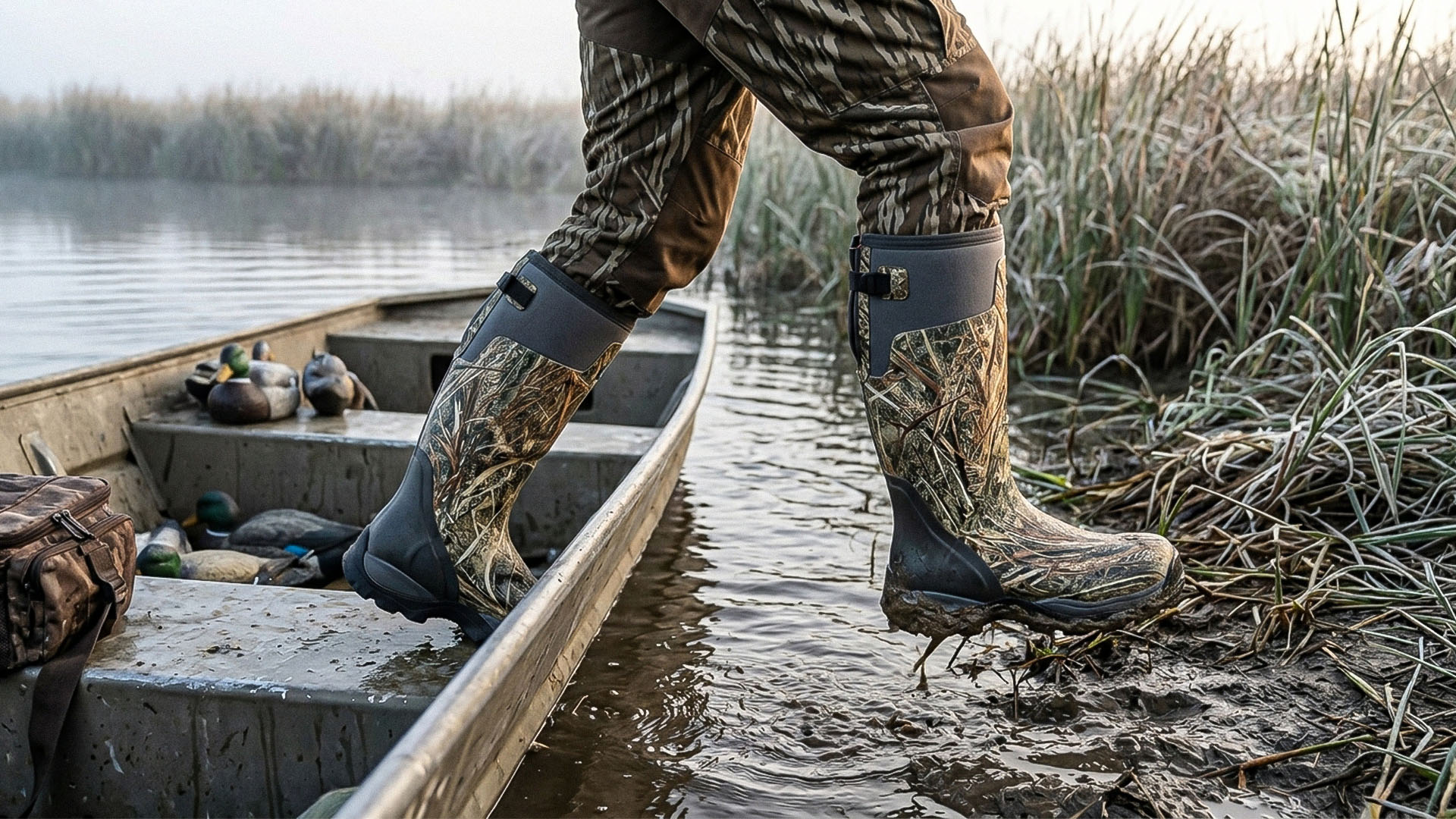
Hunters may benefit from waterproof hunting boots for shallow marsh duck hunting that provide secure heel retention, dependable mud traction, and enough waterproof protection for repeated travel through wet prairie habitat.
Tall Rubber Boots Can Be Excellent
Where water stays below boot height, rubber hunting boots are practical.
They Handle:
- Mud
- Wet grass
- Shallow water
well.
Secure Heel Fit Is Critical
Mud suction pulls constantly.
Loose Boots Become Exhausting
Boot Height Matters
One deeper marsh pocket can fill shorter footwear immediately.
Lace-Up Waterproof Boots Can Work on Drier Edges
If the route involves mostly:
- Dikes
- Grass
- Dry shoreline
supportive waterproof boots may offer better walking comfort.
Choose Boots for the Entire Route
Think about:
- Parking
- Wet grass
- Mud
- Water depth
- Setup location
Waders May Be Necessary in Deeper Marshes
When water regularly exceeds normal boot height, properly fitted hunting waders may be more appropriate.
Waders Do Not Make Deep Water Safe
They do not remove:
- Hidden channels
- Soft bottom
- Cold-water risk
Use a Wading Belt Properly
Follow manufacturer guidance.
Chest Waders Are Not Flotation Devices
Avoid Water Beyond Safe Wading Depth
Cold Water Can Become Dangerous
Late-season gadwall hunting may involve extremely cold marsh conditions.
Insulation Matters
But activity level matters too.
Walking Through Mud Generates Heat
Avoid overheating on the way in.
Sweat Becomes a Problem Later
Moisture trapped inside clothing can make hunters colder while sitting.
Vent During Setup
Add insulation afterward.
Carry Spare Socks
A flooded boot or wader can happen.
Protect Dry Clothing
Use waterproof storage.
Gloves Get Wet Quickly
Hunters handle:
- Decoys
- Wet vegetation
- Birds
- Boat lines
Carry a Dry Backup Pair
Late Season Can Bring Ice
Shallow wetlands may freeze rapidly.
Freeze-Up Changes Bird Distribution
Remaining open water becomes more valuable.
Larger Marshes May Stay Open Longer
Wind and depth can delay freezing.
Springs or moving water can create openings
Never Assume Ice Is Safe
Marsh vegetation weakens ice.
Muskrat channels create thin spots
Wildlife tracks do not prove human-safe ice
Snow Can Hide Open Water
Stay on known routes.
Ice Around Cattails Can Be Especially Inconsistent
Boats Can Help on Larger Wetlands
Where legal and practical, small marsh boats may improve access.
Shallow Water Still Requires Boating Safety
Wear appropriate flotation equipment.
Do Not Overload Small Boats
Hunters may carry:
- Decoys
- Waders
- Dogs
- Cold-weather clothing
Weight Adds Quickly
Hidden Stumps Can Damage Boats
Travel slowly in unfamiliar marshes.
Mud Can Strand Boats
A navigable channel may become too shallow.
Check Water Level Before Launching
Wind Can Build Rough Conditions
Even inland wetlands can become dangerous.
Watch the forecast
Dogs Can Be Valuable Retrievers
A trained retriever helps recover birds in:
- Open water
- Cattails
- Submerged vegetation
Gadwalls Can Fall Into Dense Marsh Cover
A dog can locate birds hunters cannot see.
Marshes Create Dog Hazards
Possible risks include:
- Deep channels
- Soft mud
- Cold water
- Sharp reeds
Do Not Send Dogs Into Unsafe Water
Cold Water Can Chill Dogs Quickly
Watch for:
- Shivering
- Weakness
- Reduced coordination
Provide a Dry Resting Area
Carry Fresh Water
Do not depend on marsh water.
Warm Early-Season Conditions Can Cause Heat Stress
Some gadwall hunts occur under mild weather.
Give Dogs Rest
Check Paws
Marsh edges can contain:
- Shell
- Sharp vegetation
- Wire
- Debris
Recovery Starts Before the Shot
Ask whether the bird can be safely recovered.
Mark Every Fall
Use fixed landmarks such as:
- Cattail point
- Dike
- Island
- Lone tree
Do Not Immediately Look for Another Flock
Watch the bird to the water.
Wounded Dabblers Can Swim Into Cover
Begin recovery promptly.
Dogs Improve Recovery
But maintain awareness of where the dog is before any additional shooting.
Without a Dog, Search Methodically
Approach the marked area carefully.
Check Vegetation Edges
A bird can hide under only a few stems.
Wind Can Move Downed Birds
Use multiple landmarks.
Ethical Shot Selection Includes Recovery
If a bird is headed toward:
- Deep water
- Closed refuge
- Private property
consider passing.
Property Boundaries Matter
Prairie wetlands often sit beside:
- Agricultural fields
- Private pasture
- Public land
Water Does Not Show Ownership
Know exact boundaries.
A Downed Bird Across the Line Does Not Automatically Create Access
Discuss retrieval beforehand.
Private Wetlands Require Permission
Clarify:
- Parking
- Walking routes
- Boat use
- Retrieval
Do Not Damage Farm Roads
Wet access roads can become deeply rutted.
Park and Walk When Necessary
Leave Gates As Directed
Livestock may use surrounding land.
Do Not Block Agricultural Access
Public Wetlands Can Have Special Rules
Individual properties may regulate:
- Entry times
- Hunting days
- Boat use
- Parking
- Ammunition
Check the Exact Management Area
Wetland Managers May Control Water Levels
Do not touch:
- Gates
- Boards
- Pumps
- Structures
Habitat Management Depends on those systems
Gadwalls Are Migratory Game Birds
Hunters should verify current official regulations before every season.
Check:
- Season dates
- Daily bag limits
- Possession limits
- Shooting hours
- License requirements
- Migratory bird requirements
- Non-toxic ammunition rules
- Public-land restrictions
Species Limits Can Change
Do not assume the current gadwall limit matches last season.
Public Areas May Be More Restrictive
Check property-specific rules.
Do Not Use Old Waterfowl Regulations
Habitat Conservation Matters
Shallow vegetated wetlands support many species.
They provide habitat for:
- Ducks
- Shorebirds
- Amphibians
- Invertebrates
Small Wetlands Matter
Do not overlook their ecological value.
Avoid Damaging Shoreline Vegetation
Stay on Authorized Vehicle Routes
Clean Gear Between Wetlands
Mud and vegetation can spread invasive species.
Inspect:
- Boots
- Waders
- Boats
- Trailers
Remove Plant Material
Pick Up All Trash
Remove:
- Food packaging
- Gear debris
- Spent hulls
Common Gadwall Hunting Mistakes
Hunting Only Deep Open Water
Gadwalls often prefer shallow vegetation-rich habitat.
Ignoring What Is Under the Surface
Aquatic food beds can explain bird concentrations.
Treating Every Marsh Pocket the Same
Depth, vegetation, wind, and pressure create differences.
Using Old Scouting Information
Water levels and bird use change quickly.
Wearing Loose Boots in Muck
Mud suction makes poor fit exhausting.
Assuming Waders Make Deep Water Safe
They do not.
Misidentifying Hens and Mixed Flocks
Positive identification matters.
Using Old Migratory Bird Regulations
Always check current rules.
Frequently Asked Questions
Where do gadwalls usually live?
Gadwalls commonly use shallow marshes, prairie potholes, freshwater wetlands, protected bays, and vegetated ponds containing abundant aquatic food.
Do gadwalls prefer shallow water?
They frequently use shallow water because it supports submerged vegetation and other feeding opportunities, though they may also use deeper wetlands for resting.
Are cattail marshes good gadwall habitat?
Yes. Broken cattail marshes containing open feeding pockets, channels, and aquatic vegetation can be excellent habitat.
Is gadwall hunting good after rain?
Rain can raise water levels, flood new vegetation, and shift birds into newly productive areas, although it can also make access more difficult.
What boots are best for gadwall hunting?
Waterproof hunting boots with secure heel fit and strong mud traction are useful around shallow marshes. Tall rubber boots are especially practical where water remains below boot height.
Are waders necessary for gadwall hunting?
Not always. Many shoreline and shallow-marsh hunts can be handled with waterproof boots, while deeper setups may require properly fitted hunting waders.
Can retrievers help with gadwall hunting?
Yes. Retrievers are very useful for recovering birds from cattails, shallow water, and submerged vegetation, but soft mud, deep channels, and cold water require careful management.
Do gadwall hunting regulations vary?
Yes. Seasons, bag limits, possession limits, shooting hours, licensing, ammunition requirements, and public-land rules vary by jurisdiction and year. Hunters should verify current official regulations before hunting.
Final Thoughts
Gadwall hunting teaches hunters that the most important part of a marsh may be underwater.
One shallow bay grows more submerged vegetation.
One cattail point creates protection from wind.
One muddy edge provides feeding access.
One rainstorm changes the water level.
One quiet wetland becomes more valuable after pressure builds elsewhere.
The water may look ordinary.
The ducks notice what lies beneath it.
Scout current birds.
Watch feeding behavior.
Study water depth.
Find vegetation.
Check protected shorelines.
Respect mud, hidden channels, cold water, dogs, property boundaries, and current waterfowl regulations.
Wear boots that let you cross wet prairie grass, sticky marsh mud, shallow water, cattail edges, muddy levees, and frozen shoreline without making soaked feet, heel slip, or poor traction the reason the hunt ends early.
Use properly fitted waders when water depth actually requires them.
And when a flock of gray ducks ignores a wide open lake and drops into one shallow vegetation-filled pocket beside a cattail edge, remember the lesson.
They are not choosing the biggest water.
They are choosing the water that provides the best food, depth, security, and conditions at that moment.
