
Redhead duck country can look almost identical from one wetland to the next.
A shallow pothole sits between grass-covered hills.
Cattails line the shoreline.
Open water fills the center.
Submerged vegetation waves beneath the surface.
Another wetland sits only half a mile away.
It looks almost the same.
Yet one holds dozens of redheads.
The other holds almost nothing.
That is one of the biggest lessons in redhead hunting.
Water alone does not create good habitat.
The best wetlands combine the right:
- Water depth
- Aquatic vegetation
- Open water
- Cattail cover
- Food
- Wind exposure
- Security
Successful hunters learn to identify the small habitat differences that cause birds to choose one prairie wetland over another.
Redheads Are Closely Connected to Prairie Wetlands
Redheads commonly use shallow freshwater and brackish wetlands containing abundant aquatic vegetation.
Productive hunting habitat may include:
- Prairie potholes
- Marshes
- Shallow lakes
- Cattail wetlands
- Protected bays
- Large wetland complexes
They are diving ducks.
But that does not mean they always prefer deep water.
Shallow Productive Water Can Be Excellent
Redheads often use water shallow enough to support abundant submerged vegetation.
That vegetation can provide:
- Food
- Invertebrates
- Habitat structure
Do Not Search Only the Deepest Water
A large deep lake may hold birds.
But a smaller shallow bay may provide much better feeding habitat.
Vegetation Is One of the Strongest Clues
Look for water containing:
- Submerged aquatic plants
- Pondweed
- Other productive vegetation
depending on local habitat.
Watch Feeding Birds
Bird behavior reveals what exists beneath the surface.
Repeated diving in one section of a wetland can indicate concentrated food.
Feeding Areas May Be Surprisingly Small
A broad lake can contain one productive vegetation bed that attracts most of the birds.
Scout exact location.
Prairie Potholes Create a Habitat Network
One wetland rarely exists alone.
Prairie landscapes may contain:
- Seasonal ponds
- Semi-permanent wetlands
- Larger marshes
- Shallow lakes
Birds can move among them throughout the day.
One Pothole May Be for Feeding
Another may provide:
- Rest
- Security
- Deeper water
Understanding the network is more useful than studying one pond in isolation.
Watch Inter-Wetland Flights
Birds moving between neighboring potholes can reveal:
- Feeding sites
- Resting water
- Disturbance patterns
Morning Movement Can Be Important
Early flights may connect:
- Roosting areas
- Feeding marshes
Midday Movement Can Matter Too
Redheads may relocate between wetlands long after sunrise.
Do not assume the hunt is finished after the first flight.
Wind Can Trigger Movement
Changing wind conditions may cause birds to shift into:
- Protected bays
- Different potholes
- Leeward shorelines
Cattail Edges Are Important Habitat Features
Cattails provide:
- Concealment
- Wind protection
- Wetland structure
But Dense Cattails Can Be Difficult to Hunt
A solid wall may offer almost no visibility.
Look for:
- Open pockets
- Channels
- Broken edges
Cattail Points Can Influence Bird Movement
A point extending into open water may create a natural edge birds follow.
Small Openings Can Be Productive
A hidden hole inside a large cattail marsh may receive repeated bird use.
Channels Through Cattails Deserve Attention
Natural or old water channels can create:
- Travel lanes
- Open landing water
- Better hunter access
Never Assume a Channel Is Shallow
Some are significantly deeper than surrounding marsh.
Test Depth Before Entering
A wading staff can help.
Soft Bottom Is a Major Challenge
Prairie marshes may contain:
- Organic muck
- Soft mud
- Submerged vegetation
that make every step harder.
Water Depth Is Only Half the Question
Knee-deep water with firm bottom can be easier than ankle-deep water over deep mud.
Test Bottom Firmness
Do not commit your full weight before knowing what is underneath.
Marsh Mud Can Trap Boots
Suction builds around footwear.
Lift slowly.
Do Not Pull Straight Up Aggressively
Shift weight gradually.
Thick Vegetation Can Hide Holes
Cattail roots and submerged plants make the bottom difficult to read.
Muskrat Channels Can Be Deeper
Small channels can cut through otherwise shallow marsh.
Beaver Activity Can Change Wetlands Too
Water depth may change quickly around dams and channels.
Wetland Routes Should Be Scouted in Daylight
Do not learn a new crossing before sunrise.
Rain Changes Prairie Wetlands
Heavy rain can:
- Raise water levels
- Flood new vegetation
- Change shorelines
- Create mud
Redhead Hunting After Rain Can Shift Quickly
Birds may move into newly flooded habitat.
Rising Water Opens New Feeding Zones
Vegetation that was previously above water may become accessible.
Falling Water Can Concentrate Birds
As wetlands shrink, remaining productive water can become more important.
Water-Level Changes Affect Access Too
A route that was safe last week may now be deeper.
Rescout After Major Rain
Do not depend on old depth assumptions.
Drought Changes the Entire Wetland Network
During dry periods, temporary potholes may disappear.
Birds may concentrate on larger remaining wetlands.
Wet Years Spread Birds Out
More habitat can mean birds use many smaller wetlands.
Regional Conditions Matter
Do not judge one marsh without considering the surrounding landscape.
Water Clarity Can Reveal Habitat
Clearer water may allow submerged vegetation to grow more effectively.
But Clear Water Alone Does Not Guarantee Birds
Use actual bird observations.
Redheads Can Mix With Other Diving Ducks
Depending on region, hunters may encounter:
- Canvasbacks
- Ring-necked ducks
- Scaup
- Other divers
Mixed Flocks Require Careful Identification
Do not assume every duck following redheads is a redhead.
Study Adult Drakes
Mature male redheads have a distinctive appearance.
But Hens Are More Difficult
Female plumage can appear more subtle.
Learn Hens Before Hunting
Do not study only brightly colored males.
Low Light Makes Color Less Reliable
Use:
- Body shape
- Head shape
- Wing characteristics
- Flight profile
together.
Redheads and Canvasbacks Can Be Confused
Hunters should know differences in:
- Head profile
- Bill shape
- Body coloration
before hunting areas where both occur.
Positive Identification Is Essential
If uncertain:
Do not shoot.
Wind Strongly Influences Duck Movement
Redheads may adjust:
- Flight route
- Landing direction
- Wetland choice
according to wind.
Leeward Bays Can Be Important
Protected water may offer:
- Easier feeding
- Calmer conditions
during strong wind.
Windward Shorelines Can Also Concentrate Food
Wave action may move vegetation or invertebrates.
Observe bird behavior.
Do Not Memorize One Rule
Some days birds want protection.
Other days the food matters more.
Watch Where They Actually Land
Real behavior beats theory.
Strong Wind Can Make Marsh Hunting Harder
Hunters may face:
- Cold exposure
- Rougher water
- Moving equipment
Open Prairie Offers Little Shelter
Windproof clothing matters.
Calm Days Create Different Problems
Birds may circle longer and inspect the wetland closely.
Concealment Becomes More Important
Minimize:
- Head movement
- Sudden standing
- Bright gear
Cattails Provide Natural Concealment
But hunters should avoid destroying unnecessary vegetation.
Use Existing Openings
Blend into natural habitat where legal.
Redheads May Approach Open Water Differently From Dabblers
Diving ducks often use longer, lower flight paths over water.
Watch Distant Flocks Early
A group seen far away may line up with the wetland well before arrival.
Stay Ready
Do not wait until birds are already close to prepare.
Large Wetlands Require More Scouting
Birds may use one shoreline repeatedly.
Glass Before Entering
Binoculars can help identify:
- Feeding groups
- Flight lines
- Productive vegetation
Avoid Pushing Birds During Scouting
Observe from distance when possible.
Pressure Changes Behavior
Repeated disturbance may cause redheads to:
- Shift wetlands
- Use larger open water
- Become more cautious
Quiet Water Can Become Valuable
Less disturbed potholes may hold birds later in the season.
But Security Alone Is Not Enough
Food still matters.
Migration Can Change Numbers Overnight
New birds can arrive after:
- Cold fronts
- Weather changes
A Quiet Marsh Can Suddenly Become Productive
Rescout during migration.
Do Not Hunt Last Week’s Birds
Current observations matter most.
Cold Weather Changes the Wetland
Shallow potholes may begin freezing first.
Freeze-Up Can Concentrate Birds
Remaining open water becomes more valuable.
Larger Wetlands May Stay Open Longer
Depth and wind can delay ice formation.
Moving Water Can Stay Open Too
Channels or springs may create small open sections.
Ice Is a Serious Hazard
Never assume shallow marsh ice is safe.
Vegetation Weakens Ice
Cattail stems and current can create inconsistent thickness.
Wildlife Tracks Do Not Prove Safety
Stay on known safe routes.
Snow Can Hide Thin Ice
A white surface may look solid.
It may not be.
Late-Season Cold Requires Better Preparation
Hunters may stand in water for extended periods.
Insulation Matters
But so does moisture control.
Overheating During Setup Creates Problems Later
Sweat inside waders can make hunters colder after activity stops.
Vent During the Walk In
Add insulation once stationary.
Redhead Hunting Is Hard on Footwear
A typical hunt may involve:
- Wet grass
- Marsh mud
- Shallow water
- Cattails
- Slick shoreline
- Frozen ground
- Long equipment carries
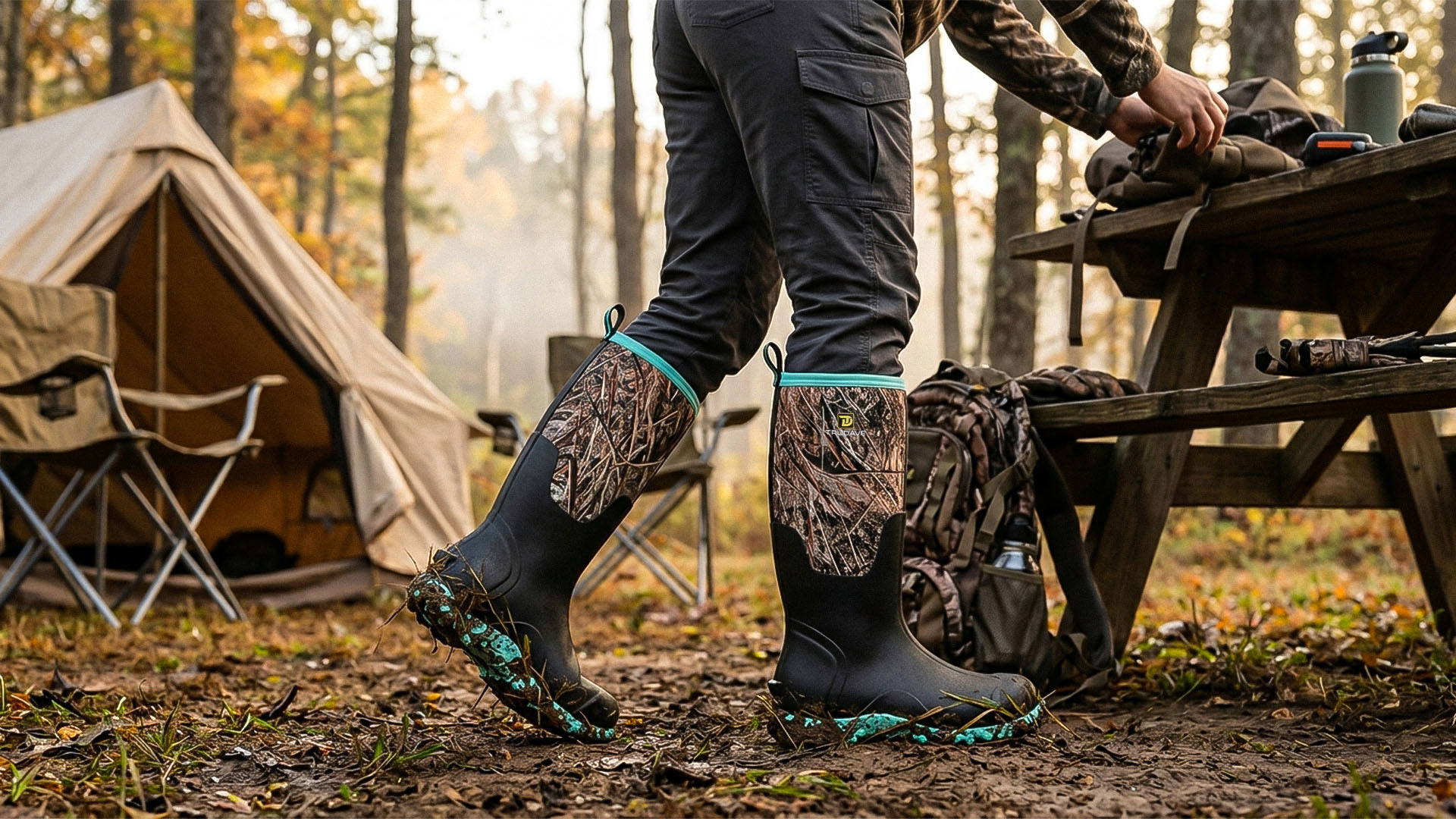
Hunters may benefit from waterproof hunting boots for prairie wetland hunting that provide secure heel retention, strong mud traction, and enough waterproof protection for repeated movement through wet prairie habitat.
Tall Rubber Boots Can Work Well
Where water stays below boot height, rubber hunting boots provide simple protection.
Secure Fit Is Critical
Mud suction pulls against every step.
Loose Boots Become Exhausting
Heel lift creates:
- Blisters
- Fatigue
Boot Height Matters
One deeper pocket can fill shorter footwear immediately.
Waterproof Lace-Up Boots Can Work on Drier Edges
Where much of the route includes:
- Grass
- Dikes
- Dry shoreline
supportive waterproof boots may improve walking comfort.
Choose Boots for the Full Route
Consider:
- Parking
- Wet grass
- Mud
- Water depth
- Setup location
Waders Are Often the Better Choice in Deeper Marshes
When water regularly exceeds boot height, properly fitted hunting waders may be necessary.
Waders Do Not Make Marshes Safe
They do not remove:
- Deep channels
- Soft bottom
- Cold-water risk
Use a Wading Belt Properly
Follow manufacturer guidance.
Chest Waders Are Not Flotation Devices
Deep water still requires appropriate safety precautions.
Avoid Water Above Comfortable Wading Depth
A productive marsh is never worth unnecessary risk.
Boats Can Help on Large Wetlands
Where legal and appropriate, small boats can provide access.
Respect Boat Capacity
Hunters may carry:
- Decoys
- Dogs
- Waders
- Cold-weather gear
Weight Adds Quickly
Do not overload.
Wear Appropriate Flotation Equipment
Cold water increases consequences dramatically.
Shallow Lakes Can Still Become Rough
Strong prairie wind can build waves.
Watch the Forecast
Do not assume small inland water is harmless.
Muddy Boat Ramps Are Dangerous
Wet ramps may contain:
- Algae
- Mud
- Ice
Walk Slowly
Many accidents occur during launching rather than hunting.
Dogs Can Be Valuable Retrievers
A trained retriever helps recover birds in:
- Cattails
- Open water
- Submerged vegetation
Marsh Vegetation Makes Recovery Difficult
A downed duck can disappear behind only a few stems.
Dogs Can Follow Scent Where Hunters Cannot See
This improves recovery.
But Marshes Create Dog Hazards
Possible problems include:
- Deep channels
- Soft mud
- Cold water
- Muskrat holes
Do Not Send Dogs Into Unsafe Water
Recovery safety applies to them too.
Cold Water Can Chill Dogs Quickly
Watch for:
- Shivering
- Weakness
- Reduced coordination
Provide a Dry Resting Area
Especially during late-season hunts.
Carry Fresh Drinking Water
Do not depend on wetland water.
Warm Early-Season Conditions Can Cause Heat Stress
Prairie pothole hunts may occur while temperatures are still relatively high.
Give Dogs Breaks
Open wetlands may offer little shade.
Paw Checks Matter
Marsh edges can contain:
- Sharp reeds
- Shell
- Wire
- Debris
Recovery Starts Before the Shot
Ask:
Can I safely recover the bird if it falls there?
Mark Every Fall
Use fixed references such as:
- Cattail point
- Shoreline tree
- Open-water edge
- Island
Do Not Immediately Look for the Next Flock
Watch the bird to the water.
Diving Ducks May Move After Landing
A wounded bird may dive or swim.
Begin Recovery Promptly
Do not delay unnecessarily.
Dogs Can Improve Recovery Greatly
But keep track of both:
- Bird
- Dog
Without a Dog, Search Systematically
Approach the marked location carefully.
Vegetation Can Move With Wind
Do not depend on one floating weed as a landmark.
Use Several Reference Points
Low Birds Require Safe Shooting Zones
Diving ducks may fly close to water.
Never shoot toward:
- Dogs
- Boats
- Partners
- Shoreline structures
Flat Water Is Not a Backstop
Know what lies beyond.
Public Wetlands May Have Other Hunters
Cattails can hide people easily.
Communicate Before Moving
Never relocate silently.
Bright Safety Gear During Access Can Help Visibility
Follow current local requirements.
Prairie Wetlands Often Occur Near Private Land
A public pothole may sit beside:
- Private pasture
- Agricultural fields
Know Exact Boundaries
Wetland edges are not necessarily property lines.
Water Does Not Create Automatic Access
Stay within legal ground.
Private Access Requires Permission
Clarify:
- Parking
- Walking routes
- Retrieval
before hunting.
Do Not Damage Agricultural Fields
Avoid:
- Driving around gates
- Creating mud ruts
- Crossing crops unnecessarily
Leave Gates As Directed
Livestock management matters.
Public Wildlife Areas Can Have Special Rules
Individual properties may regulate:
- Entry times
- Hunting days
- Boats
- Parking
- Ammunition
Check the Exact Area
Do not depend only on statewide rules.
Redheads Are Migratory Game Birds
Before hunting, verify current official:
- Season dates
- Daily bag limits
- Possession limits
- Species-specific restrictions
- Shooting hours
- License and stamp requirements
- Migratory bird requirements
- Non-toxic ammunition rules
Species-Specific Limits Can Matter
Redheads may have their own daily-limit restrictions within the broader duck limit.
Do Not Use Last Year’s Regulations
Migratory bird rules can change annually.
Identification Errors Can Affect Legal Limits
Knowing the species is not optional.
Public-Land Regulations Can Be More Restrictive
Check property-specific information too.
Habitat Conservation Matters
Prairie potholes are incredibly productive ecosystems.
They support:
- Waterfowl
- Shorebirds
- Amphibians
- Other wildlife
Wetland Loss Reduces Habitat
Protecting small wetlands matters as much as protecting large lakes.
Do Not Disturb Water-Control Structures
Managed wetlands may contain:
- Pumps
- Gates
- Boards
Leave Them Alone
Water levels may be intentionally managed.
Prevent Invasive Species Spread
Wetland vegetation can attach to:
- Boats
- Waders
- Boots
- Trailers
Clean Equipment Between Water Bodies
Follow local recommendations.
Mud Can Move Plant Material Too
Inspect gear before leaving.
Pick Up All Trash
Remove:
- Food packaging
- Line
- Gear debris
Shotgun Hulls Should Not Be Left Behind
Keep the wetland cleaner than you found it.
Common Redhead Duck Hunting Mistakes
Hunting the Deepest Water
Redheads may feed heavily in relatively shallow vegetation-rich habitat.
Ignoring Submerged Vegetation
Food below the surface can explain almost all bird use.
Treating Every Prairie Pothole the Same
Depth, food, wind, and pressure create major differences.
Using Old Scouting Information
Birds and water levels change quickly.
Wearing Loose Boots in Marsh Mud
Suction makes poor fit exhausting.
Assuming Waders Make Deep Water Safe
They do not.
Confusing Redheads With Other Diving Ducks
Positive identification matters.
Using Old Waterfowl Regulations
Check current species-specific limits every season.
Frequently Asked Questions
Where do redhead ducks usually live?
Redheads commonly use shallow marshes, prairie potholes, lakes, cattail wetlands, protected bays, and other waters containing abundant aquatic vegetation.
Are prairie potholes good for redhead hunting?
Yes. Productive potholes containing suitable water depth, vegetation, and nearby wetland habitat can attract redheads during migration and other seasonal periods.
Do redheads prefer shallow or deep water?
They can use both, but shallow vegetation-rich feeding areas may be especially important. Bird behavior and food availability matter more than simply choosing the deepest water.
Are cattail marshes good redhead habitat?
They can be, especially where dense cattails are broken by open water, channels, and submerged feeding vegetation.
Does rain affect redhead hunting?
Yes. Rain can raise water levels, flood new vegetation, change wetland access, and move birds into newly productive areas.
What boots are best for redhead duck hunting?
Waterproof hunting boots with secure heel fit and strong mud traction are useful around shallow prairie wetlands. Tall rubber boots work well where water stays below boot height.
Are waders necessary for redhead hunting?
Not always. Shallow shoreline hunts may only require waterproof boots, while deeper marsh setups may require properly fitted hunting waders.
Do redhead hunting regulations vary?
Yes. Season dates, species-specific bag limits, possession limits, shooting hours, licensing, ammunition requirements, and public-land rules vary by jurisdiction and year. Hunters should verify current official regulations before hunting.
Final Thoughts
Redhead hunting teaches hunters that the most important part of a wetland may be invisible from shore.
One pothole grows more aquatic vegetation.
One cattail opening gives birds a safe landing zone.
One shallow bay provides better feeding depth.
One strong wind moves birds toward protected water.
One rainstorm raises the marsh enough to open completely new habitat.
The wetlands may look identical.
The redheads notice the differences.
Hunters need to notice them too.
Scout current birds.
Watch feeding behavior.
Study water depth.
Find submerged vegetation.
Check cattail openings.
Respect mud, deep channels, cold water, property boundaries, and changing wetland conditions.
Wear boots that let you cross wet prairie grass, sticky marsh mud, shallow shoreline water, cattail edges, muddy access roads, and frozen wetland ground without making soaked feet or poor traction the reason the hunt ends early.
Use properly fitted waders when water depth actually requires them.
And when a flock of redheads passes over several apparently identical potholes before dropping into one shallow vegetation-filled bay, remember the lesson.
They are not choosing water.
They are choosing the underwater habitat that water makes possible.
