
Texas Hill Country can look open from a distance.
Low ridges roll toward the horizon.
Live oak breaks up the grass.
Juniper crowds rocky hillsides.
Creeks carve through limestone.
A hunter may think spotting deer should be easy.
Then the first axis deer steps behind a cedar.
It disappears.
Another animal moves through knee-high grass.
Then a whole group emerges from a shaded draw that looked completely empty moments earlier.
That is axis deer hunting.
These deer thrive in landscapes that combine:
- Grass
- Brush
- Oak
- Rocky terrain
- Creek bottoms
- Agricultural edges
- Water
The key is not simply finding deer country.
It is finding the small places where food, shade, water, and security overlap.
Axis Deer Are Different From Native Whitetails
Axis deer, also called chital, are native to South Asia but have established populations in parts of Texas and elsewhere through introduced populations.
They behave differently from native white-tailed deer in several important ways.
Hunters should not assume:
- Same seasonal patterns
- Same group structure
- Same rut timing
- Same habitat use
Axis deer can breed at different times of year, so local observation matters greatly.
Texas Hill Country Is Classic Axis Habitat
Useful habitat can include:
- Live oak savanna
- Juniper breaks
- Grasslands
- Creek bottoms
- Ranch pastures
- Rocky hills
- Agricultural openings
The best areas often combine several of these within a relatively small space.
Start With Water
In dry Texas landscapes, water can strongly influence animal distribution.
Axis deer may use:
- Springs
- Creeks
- Stock tanks
- Ponds
- River bottoms
depending on local conditions.
Permanent Water Can Be Especially Important During Dry Periods
When surrounding habitat dries out, reliable water becomes more valuable.
Look for travel sign between water and:
- Bedding cover
- Feeding areas
Hunt the Travel Route, Not Only the Water
Animals may visit a tank briefly.
The trail connecting it to shaded bedding habitat may offer a better pattern.
Creek Bottoms Can Be Excellent
Creeks create cooler, more productive habitat inside dry country.
They may support:
- Taller grass
- Live oak
- Brush
- Firmer travel routes
Dry Creeks Still Matter
A creek does not need flowing water to influence movement.
The drainage itself provides:
- Lower elevation
- Shade
- Concealment
- Easier travel
Rocky Creek Banks Preserve Sign
Mud after rain may show:
- Tracks
- Crossing points
- Fresh travel
Creek Crossings Can Become Predictable
Repeated trails often converge where:
- Banks are lower
- Bottoms are firm
- Brush opens slightly
Cedar Breaks Provide Security
Juniper—often called cedar locally—can create dense cover across Hill Country slopes.
Axis deer may use these areas for:
- Shade
- Bedding
- Security
Hunt the Edge of the Cedar
The thickest center may offer poor visibility.
Focus on transitions between:
- Cedar
- Grass
- Oak openings
- Creek corridors
Small Openings Can Be Highly Productive
A grassy pocket only a few dozen yards wide may provide feeding habitat while keeping deer close to escape cover.
Do Not Ignore Hidden Flats
A bench behind a ridge may contain:
- Better grass
- Less wind
- Water nearby
than the visible slope.
Topography Matters More Than It Looks
Texas Hill Country is often described as rolling.
At ground level, it can include:
- Steep limestone cuts
- Hidden draws
- Small saddles
- Rocky benches
These features organize deer movement.
Saddles Can Connect Feeding Areas
A low point between ridges offers easier travel.
Fresh tracks can show whether deer use it regularly.
Benches Can Provide Bedding and Feeding
Flat terrain on an otherwise steep slope may offer:
- More comfortable bedding
- Better vegetation
- Easier travel
Draws Can Hide Entire Herds
A shallow drainage may conceal multiple deer from a nearby road.
Glass every terrain fold.
Glass Before Walking
Openings throughout Hill Country provide good opportunities to use binoculars.
Glass:
- Grass flats
- Creek edges
- Oak openings
- Opposite slopes
before committing to long walks.
Look for Movement
Axis deer have striking coats, but they still disappear easily inside:
- Shadow
- Cedar
- Oak
- Tall grass
A head turn may be the first clue.
White Spots Do Not Make Them Easy to See
Broken light through oak canopy can imitate spotted patterns surprisingly well.
Scan Shade Carefully
During warm conditions, deer may remain in:
- Tree shade
- North-facing slopes
- Creek bottoms
Early Morning Is Valuable
Cool conditions can keep deer in open feeding areas longer.
Evening Can Produce Similar Movement
Animals may leave bedding cover as temperatures fall.
Midday Can Still Be Productive
Axis deer may remain active depending on:
- Temperature
- Food
- Disturbance
Do not assume the day is over after morning.
Heat Changes Everything
Texas hunting can involve high temperatures even outside summer.
Deer may shift toward cooler microhabitats.
Shade Becomes Habitat
Look for:
- Oak groves
- Cedar draws
- Creek corridors
- Canyon walls
that reduce direct sun.
Wind Still Matters
Axis deer have strong senses and can react quickly to scent.
Approach with favorable wind.
Hill Country Wind Can Swirl
Ridges and draws create changing air currents.
Check frequently.
Thermals Can Matter
As slopes warm, air movement may shift uphill.
Cooling conditions can reverse it.
Do Not Trust Wind From One Location
Conditions at the truck may differ completely from conditions inside a creek bottom.
Agricultural Edges Can Attract Deer
Where ranch country meets:
- Hay fields
- Grain
- Improved pasture
axis deer may feed heavily.
Food Plots Can Be Important on Managed Properties
Where legal and present, planted forage may influence movement.
Private Property Dominates Many Axis Deer Areas
This makes landowner permission and ranch rules especially important.
Clarify Access Before Hunting
Ask about:
- Roads
- Gates
- Livestock
- Retrieval
- Property lines
Do Not Assume Large Ranches Are One Continuous Hunting Area
Leases and neighboring ownership may divide the landscape.
A Deer Crossing a Fence Does Not Grant Access
Stay within the property you are authorized to hunt.
Fence Lines Can Reveal Movement
Look for:
- Hair
- Tracks
- Trails
where deer regularly cross.
Fence Corners Can Concentrate Travel
Topography and fencing may create predictable routes.
Do Not Damage Fences
Use designated crossings.
Cattle Often Share Axis Habitat
Many Texas ranches support both:
- Livestock
- Game
Know Where Cattle Are
Never take an unsafe opportunity toward:
- Livestock
- Roads
- Buildings
Ranch Roads Can Be Excellent Scouting Corridors
Soft dirt may preserve:
- Fresh tracks
- Droppings
- Crossing patterns
especially after rain.
Rain Can Improve Axis Deer Scouting
Fresh moisture creates better tracking surfaces.
Check:
- Dirt roads
- Creek crossings
- Water tanks
- Pasture edges
Axis Deer Hunting After Rain Can Be Productive
Rain can also:
- Cool temperatures
- Quiet vegetation
- Stimulate fresh forage
But Texas Clay Can Become Extremely Slick
A dry ranch road can turn into mud quickly.
Do Not Rut Ranch Roads
If conditions are too soft:
Park.
Walk.
Future Access Matters
Damaging roads can end a hunting relationship.
Limestone Terrain Creates Unique Footing
Hill Country often contains exposed:
- Limestone
- Loose rock
- Gravel
Dry Rock Can Still Be Slippery
Small limestone pieces may roll underfoot.
Wet Limestone Can Become Worse
After rain, smooth rock may provide little grip.
Grass Can Hide Rock
A grassy slope may contain loose stone underneath.
Short steps improve stability.
Cactus Can Be Present
Depending on the property, hunters may encounter:
- Prickly pear
- Other thorny plants
Watch Where You Kneel
Do not drop behind a bush without checking the ground.
Prickly Pear Can Hide in Grass
Durable pants help.
Thorny Brush Adds Another Challenge
Mesquite and other woody plants can:
- Scratch
- Tear lightweight fabric
Gloves Can Help
Light gloves protect hands during:
- Crawling
- Fence crossings
- Brush movement
Eye Protection Is Useful
Low branches can strike the face during thick-cover stalks.
Axis Deer Hunting Is Hard on Footwear
A typical hunt may involve:
- Loose limestone
- Wet grass
- Mud after rain
- Steep draws
- Cactus
- Creek crossings
- Long ranch-road walks
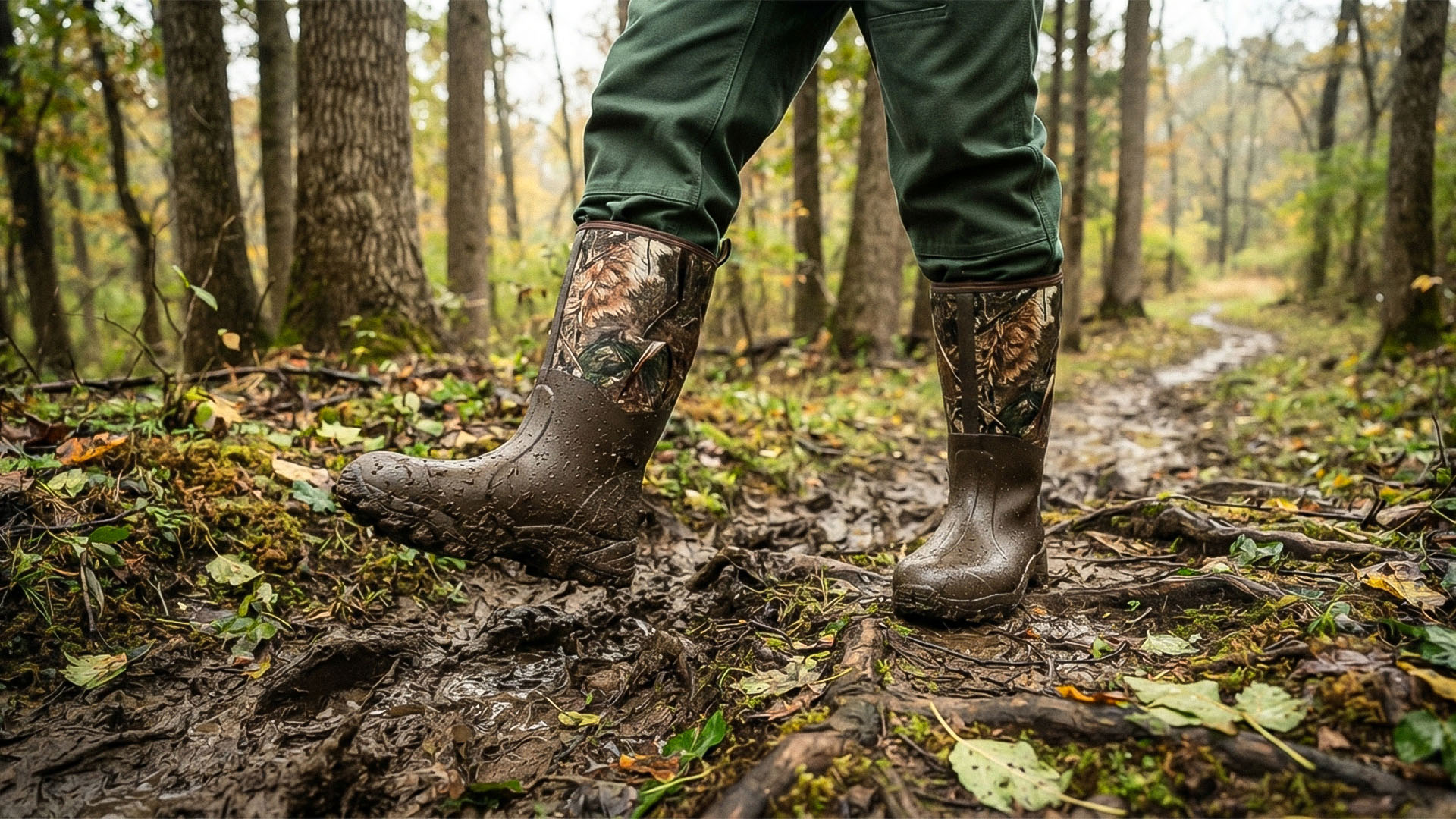
Hunters may benefit from waterproof hunting boots for Texas deer hunting that provide secure heel retention, dependable traction, and enough ankle support for broken Hill Country terrain without unnecessary weight.
Lightweight Boots Often Make Sense
Hot weather and high mileage make heavy footwear tiring.
Avoid Excessive Insulation
Warm Texas conditions often call for:
- Breathability
- Moisture control
rather than extreme warmth.
Waterproofing Still Matters
Rainstorms, wet grass, and creek bottoms can soak non-waterproof boots quickly.
Secure Heel Fit Prevents Blisters
Uneven terrain and repeated climbing expose poor fit fast.
Toe Protection Helps
Rock and cactus can punish soft footwear.
Moderate Ankle Support Is Valuable
Hill Country may not be alpine.
But:
- Side slopes
- Rock
- Hidden holes
still stress ankles.
Traction Is Critical After Rain
Mud over limestone can be exceptionally slick.
Aggressive Tread Helps
But careful foot placement remains essential.
Gaiters Can Be Useful
They help keep:
- Grass seeds
- Small rocks
- Mud
- Cactus debris
out of boots.
Tall Rubber Boots Can Work in Low Wet Areas
Where hunting involves:
- Creek bottoms
- Mud
- Wet grass
rubber boots may be practical.
But They Are Not Always Ideal for Rocky Hills
Long sidehilling often favors lace-up footwear with better heel lock.
Choose Boots for the Whole Property
Think about:
- Roads
- draws
- creek
- rocky hills
- temperature
together.
Heat Makes Foot Care Important
Sweaty feet increase blister risk.
Use socks suited to warm active hunting.
Carry Spare Socks
A creek crossing or unexpected storm can soak the first pair.
Break Boots In Before the Hunt
Do not discover a heel-slip problem in the middle of a hot, rocky ranch.
Axis Deer Can Be Very Social
Groups may include multiple animals.
Seeing one deer often means more are nearby.
Scan Around Every Animal
Additional deer may stand behind:
- Cedar
- Oak
- Terrain
More Animals Mean More Eyes
Group hunting makes movement detection easier.
Move When Animals Are Distracted
Terrain and vegetation should do most of the concealment work.
Stay Below Ridge Lines
A hunter silhouetted on a limestone ridge is easy to see.
Use Draws to Approach
Low terrain can hide substantial movement.
Do Not Leave Cover Too Early
The final open stretch is often the hardest part of the stalk.
Axis Deer Can Move Quickly
Once alarmed, they may cover ground rapidly.
Do Not Chase With Speed
Use terrain to relocate them.
Glass the Escape Direction
A group may stop in the next draw or behind the next ridge.
Fresh Tracks Can Help Relocation
Soft ground after rain provides additional clues.
Vocalizations Can Reveal Deer
Axis deer can be vocal, particularly around breeding activity.
Sound may help locate animals.
Do Not Hunt by Sound Alone
Visual identification is still required.
Breeding Activity Can Occur at Different Times
Unlike many native deer systems with a highly synchronized fall rut, axis reproductive timing can be less tightly tied to one season.
Local observation matters.
This Changes Scouting Strategy
Do not assume traditional whitetail rut timing applies.
Watch Current Animal Behavior
Look for:
- Chasing
- Vocalization
- Group structure
rather than hunting the calendar alone.
Water Availability Changes With Drought
A dry year may concentrate deer around reliable sources.
A wet year may spread them farther.
Rescout After Major Rain
New water and forage can shift activity.
Springs Can Create Green Corridors
Small water sources may support more productive vegetation than surrounding slopes.
Creek Vegetation Can Stay Greener Longer
These zones deserve attention during dry conditions.
Oaks Can Provide Seasonal Food
Where acorns are available, axis deer may use oak habitat.
Mast Production Varies
Do not assume every oak stand is productive every year.
Browse and Grass Can Both Matter
Axis deer may use a mixture of feeding resources depending on season and local habitat.
Follow Current Feeding Sign
Tracks and droppings around actively used forage matter more than habitat labels.
Public-Land Expectations Should Be Realistic
Many well-known axis hunting opportunities occur on private land, though legal opportunities vary by jurisdiction and property.
Always Verify the Exact Access System
Do not assume general Texas hunting practices apply everywhere.
Hunting Regulations Can Differ From Native Deer Rules
Axis deer are treated differently depending on jurisdiction and property status.
Verify Current Official Regulations
Before hunting, confirm:
- License requirements
- Season rules
- Legal methods
- Shooting hours
- Public-land restrictions
- Property-specific rules
- Reporting requirements where applicable
Do Not Rely on Whitetail Regulations
Different species can have different management frameworks.
Ranch Rules Can Be More Restrictive Than State Rules
Private properties may set:
- Harvest criteria
- Hunting times
- Areas
- Guide requirements
Follow the Property’s Rules Exactly
Access depends on trust.
Positive Identification Matters
Axis deer may share habitat with:
- White-tailed deer
- Other exotic ungulates
Axis Deer Have Distinctive Spots
Adults generally retain white spotting that helps distinguish them.
Males Have Distinctive Antlers
Mature males typically develop multi-tined antlers.
But do not rely on one feature alone.
Females and Young Animals Require Careful Identification
Study official and property-specific identification resources.
Low Light Can Reduce Visible Color
Use:
- Body shape
- markings
- overall structure
together.
Do Not Shoot at a Partial Animal Through Cedar
Wait for clear identification and a safe background.
Thick Brush Can Hide Livestock
This is especially important on ranches.
Open Hill Country Is Not a Backstop
Know what lies beyond:
- Ridge
- Brush
- Field
Ranch Buildings Can Be Hidden
Homes, barns, and equipment may sit behind terrain.
Scout thoroughly.
Partner Positions Must Stay Clear
If hunting in a group, maintain communication.
Do Not Separate Without a Plan
Rolling terrain can hide partners quickly.
Recovery Can Be Difficult in Cedar
A deer can disappear in thick brush after only a short movement.
Mark the Last Known Location
Use:
- Oak
- Rock
- Fence
- creek bend
as reference.
Multiple Landmarks Are Better
Hill Country vegetation repeats visually.
Rain Can Affect Tracking Sign
Heavy rainfall may wash blood or disturb soil.
Move Methodically
Follow current hunter-education guidance for recovery.
Do Not Rush Into Thick Cover
Preserve sign where possible.
Rocky Ground Can Reduce Visible Tracking Clues
Look around:
- Soil pockets
- Grass
- creek mud
for supporting evidence.
Game Recovery Can Become Difficult in Heat
Warm temperatures increase urgency.
Plan Meat Care Before Hunting
Know:
- Vehicle route
- Ice availability
- Cooler capacity
- Processing plan
Direct Sun Heats Game Quickly
Move toward cooling promptly.
Shade Helps but Is Not Enough
Follow current food-safety and wildlife-agency guidance.
Clean Game Bags Are Useful
Keep meat away from:
- Dust
- Mud
- Vegetation
Recovery From Steep Draws Can Be Hard
A relatively short distance may require a difficult uphill pack.
Plan Before Dropping Into Terrain
Ask:
How does the animal come back out?
Game Carts Work Best on Roads
Rocky brush slopes may make them impractical.
Packs Can Offer More Flexibility
Use manageable loads.
Do Not Overload Yourself in Heat
Heat stress plus weight can become serious.
Carry Enough Drinking Water
Texas heat can make recovery much harder than the hunt.
Hydration Is Essential
Do not wait until you are thirsty.
Shade Is Limited on Some Slopes
Plan breaks.
Early Starts Reduce Heat Exposure
Morning hunting can improve both:
- animal visibility
- hunter comfort
Midday Rest Can Save Energy
On hot days, long stationary glassing from shade may be more efficient than random walking.
Storms Can Develop Quickly
Texas weather can change abruptly.
Lightning Is a Risk on Exposed Ridges
Move to safer terrain when storms develop.
Flash Flooding Can Affect Creeks
A dry draw may carry water after heavy rainfall.
Do Not Park in Drainages During Storm Risk
Choose higher safe ground.
Common Axis Deer Hunting Mistakes
Treating Axis Deer Exactly Like Whitetails
Their seasonal and social behavior can differ.
Walking Before Glassing
Hill Country openings give hunters useful visibility.
Ignoring Creek Bottoms
They often provide shade, water, food, and travel cover.
Hunting Only Open Grass
Cedar edges and hidden benches can hold deer.
Underestimating Wind in Broken Terrain
Draws and ridges create swirling scent.
Wearing Heavy Insulated Boots in Warm Weather
Heat and mileage favor lighter footwear.
Ignoring Mud After Rain
Texas roads and limestone slopes can become extremely slick.
Failing to Plan Meat Care
Warm-weather recovery can become urgent.
Frequently Asked Questions
Where do axis deer usually live in Texas?
Axis deer commonly use Hill Country grasslands, live oak habitat, juniper breaks, creek bottoms, ranch pastures, rocky foothills, and other landscapes that combine food, water, shade, and security.
Are creek bottoms good places to find axis deer?
Yes. Creek bottoms can provide cooler temperatures, water, greener vegetation, shade, and concealed travel routes, especially during dry or warm conditions.
Is glassing useful for axis deer hunting?
Yes. Glassing grass openings, opposite hillsides, creek edges, and cedar transitions can help locate deer before covering unnecessary miles.
Does rain affect axis deer hunting?
Rain can create fresh tracks, cool temperatures, stimulate vegetation, and make current travel easier to identify. It can also turn clay roads and limestone slopes slippery.
What boots are best for axis deer hunting?
Lightweight waterproof hunting boots with secure heel fit, dependable traction on limestone and mud, durable toe protection, and moderate ankle support are practical for Texas Hill Country.
Are rubber boots good for axis deer hunting?
Tall rubber boots can work in muddy lowlands and creek bottoms, while rocky hills and longer walking routes usually favor supportive waterproof lace-up boots.
Do axis deer rut at the same time as whitetails?
Axis deer reproductive timing can be less synchronized with the traditional whitetail fall rut, so local observation and current deer behavior are more useful than assuming identical timing.
Do axis deer hunting regulations vary?
Yes. License requirements, public-land rules, legal methods, shooting hours, property restrictions, and other requirements can vary by jurisdiction and hunt type. Hunters should verify current official rules for the exact hunt.
Final Thoughts
Axis deer hunting teaches hunters that Texas Hill Country is built from small pieces of habitat.
One creek bottom stays green.
One cedar break provides shade.
One hidden bench gives deer a place to bed.
One oak opening provides food.
One muddy ranch road records where the group crossed after last night’s storm.
From a distance, the hills can look repetitive.
The deer notice every difference.
Glass before walking.
Check the creeks.
Study cedar edges.
Watch the wind.
Look for water during dry conditions.
Respect ranch roads, fences, livestock, and property boundaries.
Carry enough water for both the hunt and the recovery.
Wear boots that let you cross loose limestone, wet grass, muddy draws, cactus, rocky creek bottoms, steep ranch slopes, and miles of Texas Hill Country without making overheated, wet, or blistered feet the reason the hunt ends early.
And when one spotted deer steps from behind a cedar and suddenly reveals an entire group hidden on a slope you had already glassed twice, remember the lesson.
Hill Country does not need deep forest to hide deer.
Sometimes one shadow, one creek, and one wall of cedar are enough.
