
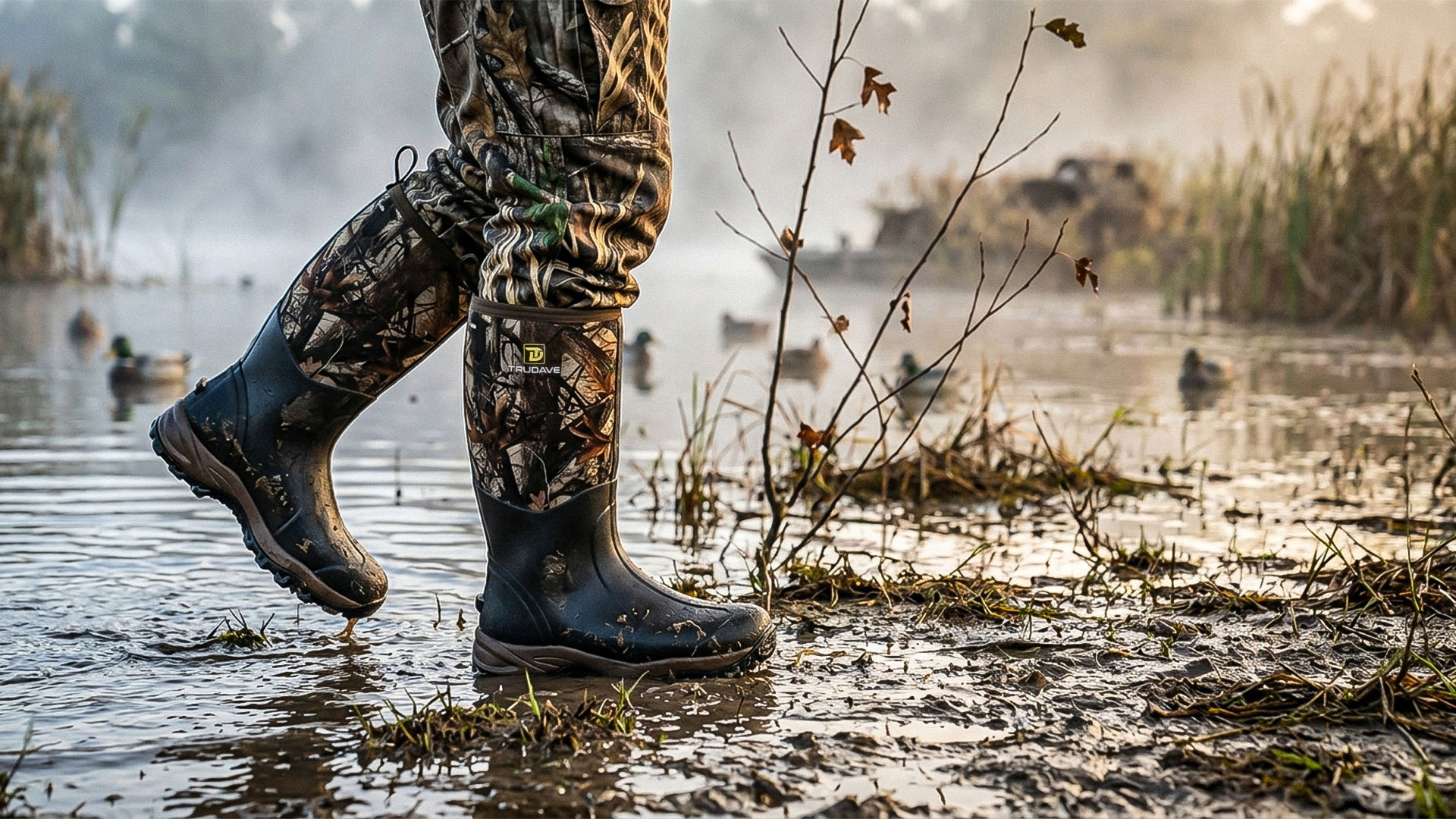
Sika deer country can look like a place where deer should be easy to find.
The marsh is flat.
Grass stretches toward the horizon.
Tidal creeks cut through the reeds.
Small islands of higher ground rise only a few feet above the wetland.
There are no mountains.
No huge forest blocks.
No deep western canyons.
Then the hunter steps into the marsh.
The grass is chest high.
Mud swallows each boot.
A creek that looked narrow on the map is wider than expected.
Visibility disappears.
And a small deer can vanish only thirty yards away without making a sound.
That is tidal-marsh sika hunting.
The landscape appears simple from above.
At ground level, it is a complicated network of:
- Water
- Mud
- Reeds
- Slightly higher ridges
- Brushy islands
- Tidal channels
- Hidden trails
Successful hunters learn that only a few inches of elevation can completely change how deer move.
Sika Deer Can Thrive in Wet Coastal Habitat
Sika deer are associated with several types of cover, but some of the most distinctive hunting occurs in coastal marsh environments.
Productive habitat may include:
- Salt marsh
- Brackish wetlands
- Reed beds
- Tidal creeks
- Hardwood islands
- Pine islands
- Wet grasslands
- Marsh-forest transitions
These habitats provide both feeding opportunities and security.
Marsh Elevation Matters More Than It Looks
One section of marsh may remain saturated most of the day.
Another patch only slightly higher may provide:
- Firmer footing
- Bedding cover
- Easier travel
Sika notice these differences immediately.
Look for Natural High Ground
Possible features include:
- Marsh ridges
- Creek levees
- Old road beds
- Islands
- Elevated field edges
These areas can become major deer travel zones.
Dry Islands Can Hold Deer
A small wooded island surrounded by wet marsh may provide:
- Bedding
- Shade
- Wind protection
- Security
The isolation can also reduce human disturbance.
Not Every Island Is Equal
A useful island usually connects logically with:
- Feeding habitat
- Nearby trails
- Safe crossings
- Other cover
Fresh sign tells you whether deer are actually using it.
Tidal Creeks Organize Movement
Sika deer may cross or travel beside tidal channels.
Look for areas with:
- Lower banks
- Firmer bottoms
- Narrow crossings
- Vegetation gaps
Repeated Crossings Can Become Obvious
Mud may show:
- Tracks
- Worn banks
- Flattened grass
where animals regularly cross.
Track Direction Matters
Do not stop at “deer crossed here.”
Ask whether the trail leads toward:
- Bedding island
- Feeding marsh
- Timber
- Agricultural edge
Tide Changes Access
A route that is easy at low tide may be:
- Deeper
- Faster
- Completely submerged
several hours later.
Always Think About the Return Trip
Before crossing a tidal creek, ask:
What will this look like when I come back?
Tide Tables Are an Access Tool
Hunters in coastal wetlands should understand local tidal timing before entering remote marshes.
Water movement affects both:
- Deer travel
- Hunter safety
Never Assume Yesterday’s Water Depth Applies Today
Wind, storms, and lunar tides can change marsh water levels.
Wind Can Push Water Into Coastal Marsh
Strong onshore wind may increase water levels beyond normal expectations.
Offshore Wind Can Pull Water Out
This may expose:
- Mud
- Creek bottoms
- New crossings
but conditions can reverse.
Mud Is One of the Biggest Physical Challenges
Salt-marsh mud can range from:
- Firm
- Sticky
- Knee-deep
- Extremely soft
within a short distance.
Marsh Grass Can Hide Soft Bottom
The surface may look solid.
Step carefully.
Test Unknown Ground
A walking staff can help evaluate:
- Bottom firmness
- Water depth
- Hidden creek edges
Do Not Follow Deer Trails Blindly
A sika deer can move through marsh terrain much more efficiently than a hunter.
Choose the safer route.
Mud Suction Can Exhaust Hunters
Every step may require pulling the foot free.
Long marsh distances feel much farther than they appear on a map.
Plan Shorter Routes Than You Would on Firm Ground
One mile through tidal marsh can be far harder than one mile on a forest road.
Reed Beds Create Excellent Security Cover
Tall reeds can hide deer almost completely.
A deer may be only a few yards away.
Hunt Reed Edges Carefully
The transition between:
- Open marsh
- Dense reeds
- Timber
can be especially useful.
Small Openings Can Reveal Movement
Look for:
- Grass lanes
- Mud patches
- Creek crossings
inside dense cover.
Trails Through Reeds Are Valuable
Repeated deer use may create narrow tunnels.
Fresh mud and tracks can show whether they are active.
Do Not Force Through Every Reed Bed
Dense marsh vegetation can hide:
- Water channels
- wire
- holes
- other hunters
Use edges when practical.
Marsh-Forest Transitions Are High-Value Areas
Sika may feed in open wet habitat and retreat toward wooded cover.
Focus on places where those habitats meet.
Hardwood Islands Can Provide Mast
Where suitable trees occur, seasonal mast can influence deer movement.
Pine Cover Can Provide Shelter
Evergreen islands may offer protection from:
- Wind
- heavy rain
during poor weather.
Agricultural Edges Can Pull Deer
Where coastal marsh meets:
- Grain
- pasture
- agricultural fields
feeding opportunities may influence movement.
Private Property Becomes Important
Coastal landscapes often contain complicated ownership.
A deer moving from marsh to field may cross legal boundaries quickly.
Know Exactly Where Permission Ends
Water and reeds may hide:
- fences
- posted boundaries
- property markers
A Deer Crossing a Creek Does Not Create Access
Stay within authorized ground.
Rain Can Improve Sign Reading
Wet mud preserves fresh tracks extremely well.
After a storm, look around:
- road crossings
- marsh ridges
- creek edges
- island trails
Sika Hunting After Rain Can Be Productive
Rain may:
- quiet vegetation
- refresh tracks
- increase visible mud sign
Heavy Rain Can Also Raise Water
Access routes may become:
- deeper
- softer
- more difficult
Do Not Assume Rain Is Only Helpful
The same storm that improves tracking can make recovery much harder.
Fog Is Common in Wet Coastal Country
Morning fog may reduce visibility dramatically.
Navigation Becomes Critical
A flat marsh with no distant landmarks can become confusing very quickly.
Carry Offline Maps
Download:
- tidal creeks
- property boundaries
- access roads
- islands
before the hunt.
Mark the Vehicle or Boat
Do not rely on recognizing one patch of grass in darkness or fog.
Carry a Headlamp
Many deer hunts begin or end in low light.
Carry Backup Light
Wet salt environments can be hard on electronics.
Waterproof Important Gear
Protect:
- Phone
- batteries
- maps
- emergency equipment
Saltwater Is Hard on Equipment
After the hunt, clean appropriate gear according to manufacturer guidance.
Salt accelerates corrosion.
Sika Deer Can Be Extremely Secretive
Dense marsh cover allows animals to remain hidden even when hunters are nearby.
Slow Down
Move a short distance.
Then:
- stop
- scan
- listen
Look for Partial Animals
You may only see:
- ear
- leg
- antler
- shoulder
between reeds.
Movement Is the Best Clue
A stationary deer blends well with marsh vegetation.
One step can reveal it.
Low-Light Conditions Make Identification Harder
Coastal deer may appear as dark shapes.
Wait for a clear view.
Positive Identification Is Essential
Sika deer habitat may overlap with white-tailed deer in some areas.
Hunters must confidently identify the legal species.
Study Size and Body Structure
Sika are generally smaller and proportioned differently from whitetails.
Use multiple features.
Coat and Markings Can Help
Appearance varies by:
- sex
- age
- season
Do not rely on one photograph.
Tail Characteristics Matter
Use official wildlife identification resources before hunting.
Antler Appearance Differs
Mature males have distinctive antler structure.
But legal identification should never depend on one feature alone.
Vocalizations Can Reveal Activity
During applicable breeding periods, male sika can become more vocal.
Sound may help locate animals in thick marsh cover.
Marsh Sound Can Travel Far
A call heard across open wetland may seem closer than it actually is.
Use Multiple Listening Positions
Terrain and wind can distort direction.
Do Not Rush Toward Sound
First evaluate:
- wind
- creek crossings
- tide
- property boundaries
Wind Matters Greatly
Sika depend heavily on scent.
Open marsh can expose hunter odor over long distances.
Approach From Favorable Wind
Avoid walking directly up the main deer trail.
Wind Direction Can Shift With Coastal Weather
Check conditions repeatedly.
Marsh Grass Moves in Wind
This can sometimes help hide small hunter movements.
Strong Wind Makes Hearing Difficult
You may miss:
- footsteps
- vegetation movement
Rely more on visual scanning.
Wind Also Changes Water Levels
In tidal systems, wind is both a hunting factor and an access factor.
Bedding Areas Can Be Extremely Wet
Sika may use slightly elevated hummocks or islands surrounded by saturated habitat.
Difficult Access Can Create Security
Hunters naturally avoid deep mud.
Deer may benefit from that.
But Hard Access Does Not Guarantee Deer
Fresh sign still comes first.
Use Sign to Justify Effort
Do not cross a half-mile of terrible marsh because an island merely looks good.
Tracks Are Excellent Evidence
Soft bottomland soil often preserves clear hoofprints.
Fresh Droppings Add Confidence
Repeated sign can reveal bedding or feeding concentration.
Beds May Appear on Raised Ground
Look for flattened vegetation on:
- grassy ridges
- wooded islands
- dry hummocks
Rubs Can Reveal Male Activity
During appropriate seasonal periods, rubbed vegetation may indicate current use.
Old Rubs Can Persist
Freshness matters.
Marsh Roads Can Be Excellent Scouting Corridors
Old access tracks or dikes may collect:
- mud tracks
- crossings
- droppings
Deer May Use Elevated Roads Too
Firm walking surfaces benefit both deer and hunters.
Dikes Can Funnel Travel
If water lies on both sides, narrow dry corridors may concentrate movement.
Do Not Block Management Access
Wetland dikes and roads may be used by:
- farmers
- refuge staff
- land managers
Public Marshes Can Have Special Rules
Wildlife management properties may regulate:
- entry times
- parking
- boats
- hunting zones
- permits
Check Property-Specific Regulations
Do not rely only on statewide rules.
Flood or Storm Closures Can Occur
High water may temporarily change access.
Boats Can Be Useful in Some Marsh Systems
Where legal and appropriate, shallow-draft boats can help reach:
- islands
- distant marsh
- creek systems
Boat Safety Still Matters
Tidal water can include:
- current
- wind
- cold water
Wear Appropriate Flotation Equipment
Follow current boating requirements.
Do Not Overload Small Boats
Hunters, gear, harvested game, and mud-soaked equipment add weight.
Muddy Shorelines Complicate Landing
A firm-looking bank may collapse.
Know the Tide Before Leaving the Boat
A landing point accessible at high tide may be surrounded by mud later.
Anchor Securely
Changing water levels can move an improperly secured boat.
Cold Water Raises Consequences
Even relatively mild air temperatures can accompany dangerous water conditions.
Waders May Be Useful in Tidal Marshes
Properly fitted hunting waders can help when access requires:
- shallow creeks
- flooded grass
- soft marsh edges
Waders Do Not Make Tidal Water Safe
They do not protect against:
- strong current
- deep channels
- unstable mud
Never Enter Unknown Channels Blindly
Use established crossings when possible.
Water Depth Can Change Rapidly
A creek only knee-deep at low tide may become much deeper.
Waterproof Hunting Boots Still Matter
Not every marsh hunt requires chest waders.
Many routes include:
- muddy roads
- wet grass
- shallow marsh
- wooded islands
Hunters may benefit from waterproof hunting boots for marsh deer hunting that provide secure heel retention, dependable mud traction, and enough waterproof protection for long coastal access.
Tall Rubber Boots Can Be Excellent
Where water remains below boot height, tall rubber hunting boots are often practical.
Secure Heel Fit Is Critical
Marsh suction pulls aggressively at loose boots.
Boot Height Matters
One hidden channel can fill shorter footwear immediately.
Traction Matters More Than Appearance
Salt-marsh mud can be extremely slick.
Choose tread suited to wet ground.
Mud Can Pack Into Soles
Clear tread when practical.
Lace-Up Waterproof Boots Can Work on Firmer Islands
If much of the hunt occurs on:
- wooded ridges
- roads
- higher ground
supportive waterproof lace-ups may improve walking comfort.
Choose Footwear for the Whole Route
Consider:
- parking
- marsh crossing
- island
- recovery
together.
Gaiters Can Help in Wet Grass
Where standing water is limited, gaiters can reduce:
- moisture
- seeds
- mud
entering boots.
Salt Marsh Vegetation Can Be Abrasive
Durable pants improve comfort.
Burrs and Seeds Can Accumulate
Check clothing regularly.
Gloves Can Help Around Reeds and Brush
Wet vegetation may cut or scratch bare hands.
Mosquitoes Can Be Severe
Warm-season coastal marshes can produce significant insect pressure.
Biting Flies Can Be Worse
Stationary hunters may need appropriate insect protection.
Ticks May Occur on Drier Islands
Check:
- clothing
- skin
after the hunt.
Heat and Humidity Matter
Early-season coastal deer hunting can be physically demanding.
Carry Plenty of Water
A wet landscape does not provide safe drinking water automatically.
Humidity Slows Cooling
Take breaks during long marsh crossings.
Open Marsh Offers Little Shade
Plan activity around temperature when possible.
Cooler Mornings Can Be More Comfortable
They may also coincide with deer movement.
Cold Weather Creates Different Challenges
Late-season marsh hunts can involve:
- freezing wind
- ice
- cold water
Wet Wind Is Especially Uncomfortable
Windproof clothing matters.
Ice Can Form on Shallow Water
Do not assume marsh ice supports human weight.
Salt and Brackish Water Freeze Differently
Conditions can be highly variable.
Snow Can Reveal Trails
Where snowfall occurs, tracks become easier to identify on dry islands and marsh edges.
Snow Can Hide Mud and Water
Move carefully.
Sika Deer Hunting Is Physically Demanding
Flat does not mean easy.
Mud and water can make every step expensive.
Mileage Underestimates Difficulty
Two marsh miles can be harder than several miles of firm forest road.
Save Energy for Recovery
A successful hunt adds weight and logistics.
Harvest Recovery Needs Planning
Before hunting a remote island, ask:
How will the deer come back?
Dragging Through Mud Is Extremely Difficult
Wet ground creates enormous resistance.
Use Legal Recovery Equipment Appropriate to the Property
Options vary with:
- terrain
- access
- regulations
Boats Can Simplify Recovery in Some Areas
But added weight must remain within safe capacity.
Do Not Overload Yourself
Multiple trips may be safer.
Mark the Animal’s Location
Tall marsh grass makes relocation difficult.
Use:
- creek bend
- island tree
- dike marker
- GPS position
Use Multiple References
The landscape can look different once you move.
Blood Trails Can Be Difficult in Wet Grass
Rain and tidal water can reduce visible sign.
Follow Current Hunter-Education Guidance
Use careful, methodical recovery procedures.
Do Not Rush Into Deep Marsh After a Wounded Deer
Plan the route safely.
Property Boundaries Still Apply During Recovery
Know local laws and landowner requirements.
Warm Weather Makes Game Care Urgent
Marsh environments can be humid.
Begin Cooling Promptly
Follow current wildlife-agency and food-safety guidance.
Humidity Can Slow Cooling
Do not assume coastal breeze is enough.
Keep Meat Clean
Mud and marsh water can contaminate game.
Clean Game Bags Are Useful
Protect meat from:
- dirt
- insects
- vegetation
Plan Before the Hunt
Bring the equipment needed for likely temperature and recovery distance.
Sika Regulations Can Be Location-Specific
Before hunting, verify current official:
- season dates
- tag requirements
- legal sex
- weapon rules
- shooting hours
- public-land regulations
- reporting requirements
Sika and Whitetail Rules May Differ
This is especially important where both species occur.
Do Not Assume One Deer Tag Covers Both
Check the exact jurisdiction.
Public Wetland Properties May Add More Restrictions
Individual wildlife areas can have special rules.
Seasonal Access Can Change
Tide, storms, refuge management, and habitat conditions may affect entry.
Positive Identification Should Happen Before the Opportunity
Do not try to learn species differences during a brief marsh encounter.
Common Sika Deer Hunting Mistakes
Treating the Marsh as Flat and Featureless
Small elevation changes control movement.
Ignoring the Tide
Access conditions can change completely within hours.
Walking Directly Through the Deepest Marsh
Use ridges, dikes, and safe crossings.
Hunting Only Wooded Islands
Feeding movement through open marsh can be equally important.
Assuming Hard Access Means Good Hunting
Fresh sign still matters.
Wearing Loose Boots
Mud suction makes poor fit exhausting.
Underestimating Fog and Navigation
Flat marsh can become disorienting quickly.
Assuming Sika and Whitetail Regulations Are the Same
Verify the exact rules.
Frequently Asked Questions
Where do sika deer live in coastal marshes?
Sika may use tidal marshes, reed beds, wet grasslands, creek levees, wooded islands, marsh-forest transitions, and other coastal habitat that combines food with secure cover.
Are tidal creek crossings good places to hunt sika deer?
They can be useful when repeated tracks show deer consistently crossing at shallow or firm locations between feeding and bedding habitat.
Does tide affect sika deer hunting?
Yes. Tide can change hunter access, creek depth, mud exposure, and potentially which travel routes are easiest for deer to use.
Is sika deer hunting good after rain?
Rain can create excellent fresh tracking conditions and quiet vegetation, but it may also increase mud depth and raise water levels.
What boots are best for marsh deer hunting?
Waterproof hunting boots with secure heel fit and strong mud traction are practical. Tall rubber boots work well in shallow marsh environments, while firmer wooded islands may favor supportive waterproof lace-up boots.
Are waders useful for sika deer hunting?
They can be useful when shallow creeks or flooded marsh regularly exceed normal boot height. Properly fitted waders do not make deep tidal channels, strong current, or unstable mud safe.
Why are wooded islands important?
Small elevated islands can provide dry bedding, shelter, feeding opportunities, and security inside otherwise wet marsh habitat.
Do sika deer hunting regulations vary?
Yes. Season dates, tags, legal sex, weapon rules, species-specific regulations, public-land requirements, access rules, and reporting can vary substantially. Hunters should verify current official regulations for the exact hunt.
Final Thoughts
Sika deer hunting teaches hunters that a flat marsh is only flat from a distance.
Walk into it and the details appear.
One creek blocks movement.
One narrow crossing opens it again.
One grassy ridge stays dry.
One reed bed creates security.
One wooded island gives deer somewhere to disappear.
One tide changes all of those routes before the afternoon is over.
Read the mud.
Learn the tide.
Watch the wind.
Study creek crossings.
Find the high ground.
Respect deep channels, private property, public-marsh rules, and changing water levels.
Wear boots that let you cross wet grass, sticky marsh mud, shallow tidal water, muddy roads, reed edges, and wooded islands without making soaked feet or poor traction the reason the hunt ends early.
Use properly fitted waders only when water depth actually requires them.
And when a sika deer disappears into grass that barely looked tall enough to hide its back, remember the lesson.
The marsh does not need mountains or timber to create security.
Sometimes a few inches of elevation, one creek, and a wall of reeds are enough to make a deer vanish.
