
Prairie chicken country can look almost too open.
Grass rolls toward the horizon.
A few crop fields break up the prairie.
There are no thick forests.
No deep cattail marsh.
No obvious brush pile where birds should hide.
A hunter can stand on a rise and see for miles.
Yet the birds can still disappear.
One moment the grass looks empty.
The next, several prairie chickens erupt from a low swale only a short distance away.
They rise fast.
Turn with the wind.
And cross a huge amount of open country in seconds.
That is prairie chicken hunting.
The mistake many hunters make is assuming open prairie means birds use every acre equally.
They do not.
Prairie chickens respond to subtle differences involving:
- Grass height
- Native vegetation
- Agricultural food
- Topography
- Wind
- Disturbance
- Seasonal cover
The best habitat may look only slightly different from the surrounding landscape.
Successful hunters learn to recognize those small differences.
Greater Prairie-Chickens Are Grassland Specialists
Greater prairie-chickens depend heavily on open grassland landscapes.
Productive habitat may include:
- Native prairie
- CRP grasslands
- Mixed grass
- Agricultural edges
- Low swales
- Rolling prairie
- Open rangeland
Unlike woodland grouse, prairie chickens are strongly associated with broad treeless or lightly treed environments.
That openness is part of their habitat.
Large Grasslands Matter
Prairie chickens benefit from landscapes containing substantial continuous grassland.
Small isolated patches may provide some cover.
But broad connected prairie generally offers more:
- Feeding
- Roosting
- Movement
- Security
Not All Grass Is Equal
One field may contain:
- Dense tall grass
- Little bare ground
while another contains a more open structure.
Birds may respond differently to each.
Look at vegetation from ground level.
Ground-Level Movement Matters
A grassland can look perfect from the road while being extremely dense underneath.
Prairie chickens need to move through the vegetation.
Habitat structure matters more than simply grass height.
Native Prairie Can Be Extremely Valuable
Native grasslands often contain a diverse mix of:
- Grasses
- Forbs
- Insects
- Seed-producing plants
that provide important habitat.
The diversity is often more useful than a monoculture.
Forbs Add Food and Structure
Broadleaf plants can provide:
- Seeds
- Insects
- Cover variation
especially during warmer parts of the year.
Look for prairie with mixed vegetation.
Uniform Grass Can Be Less Productive
A field containing one dense grass type from edge to edge may offer less habitat diversity.
Birds often benefit from patchiness.
Think in Mosaics
Good prairie chicken country may contain:
- Short grass
- Taller nesting cover
- Open feeding areas
- Crop edges
- Protected swales
all within the same landscape.
CRP Can Provide Useful Habitat
Conservation grasslands may offer:
- Nesting cover
- Roosting habitat
- Security
depending on vegetation structure and management.
Some CRP fields can hold birds consistently.
Older CRP Can Become Very Dense
As vegetation matures, ground-level movement may become more difficult.
Recent management can change habitat quality significantly.
Managed Disturbance Can Improve Structure
Depending on region and conservation objectives, land managers may use:
- Prescribed fire
- Grazing
- Haying
- Other habitat management
to maintain diverse grassland structure.
Hunters benefit from understanding recent management history.
Burned Areas Can Change Bird Use
After prescribed fire, vegetation structure and food availability change.
Birds may use nearby burned and unburned areas differently.
Scout current conditions.
Grazing Can Create Useful Variation
Moderate grazing may produce a mixture of:
- Short vegetation
- Taller patches
- Bare ground
depending on management.
That patchiness can influence bird use.
Overgrazed Ground May Offer Too Little Cover
Extremely short vegetation can reduce security.
Balance matters.
Agricultural Edges Can Provide Food
Prairie chickens may use fields containing:
- Corn
- Soybeans
- Grain crops
depending on region and season.
Agricultural food can become especially important during colder periods.
Hunt the Transition
The edge where native prairie meets:
- Corn
- Soybeans
- Grain stubble
can be more productive than the center of either habitat.
Birds gain food while remaining close to grass cover.
Corn Stubble Can Attract Birds
Waste grain after harvest may provide feeding opportunities.
But birds may spend only limited time in open crop ground.
Look nearby for secure prairie cover.
Soybean Fields Can Also Be Used
Regional feeding habits vary.
Actual bird observation matters more than assumptions.
Scout which crops birds are using now.
Feeding Patterns Can Change Quickly
Harvest changes.
Weather changes.
Food availability changes.
A productive agricultural edge early in the season may become much less important later.
Recent Scouting Matters
Prairie birds can shift widely across open landscapes.
Look for:
- Actual birds
- Fresh tracks where visible
- Droppings
- Feeding sign
but prioritize direct observation.
Glass Before Walking
Open country makes optics useful.
From a slight rise, scan:
- Prairie edges
- Crop borders
- Low swales
- Open feeding areas
before committing to a long walk.
Birds Can Be Hard to See on the Ground
Their coloration blends with:
- Dry grass
- Soil
- Crop residue
Movement often reveals them first.
Look for Walking Birds
Prairie chickens may move through open grass rather than remaining stationary.
A small head or body movement may reveal an entire group.
One Bird Often Means More
If one bird becomes visible:
Search the surrounding area.
Others may be:
- Slightly downhill
- Hidden by grass
- Spread across a feeding zone
Flocks Can Be Widely Spread
Prairie chickens may not stand tightly packed.
A group can occupy a large area.
Do not assume the first few visible birds represent the entire flock.
Topography Matters Even in Flat-Looking Country
Prairie landscapes often contain subtle:
- Rises
- Swales
- Draws
- Bench-like flats
These small features influence wind and vegetation.
Low Swales Can Hold Birds
Depressions may provide:
- Taller grass
- Moisture
- Wind protection
compared with exposed ridges.
Wind-Protected Areas Become Important
Strong prairie wind changes everything.
Birds may favor:
- Leeward slopes
- Low swales
- Grass behind small rises
where conditions are calmer.
Hunt the Protected Side
If a ridge is exposed to strong wind, check the opposite side.
A small elevation change can create a much more comfortable microclimate.
Wind Can Change Flight Behavior
Prairie chickens are powerful flyers.
Strong wind can make departing birds:
- Faster
- More difficult to follow
Stay controlled.
Birds May Use Wind Immediately After Flushing
A flush with the wind can create extremely fast separation.
Do not rush.
Pick One Bird
When several birds flush together:
Choose one.
Track it.
Do not shoot into the middle of the flock.
Flocks Can Flush in Waves
Not every bird leaves at once.
After the first group flushes:
Stay ready.
Several birds may remain hidden nearby.
Do Not Immediately Relax
A second flush may occur only a few steps later.
Continue moving slowly.
Running Birds Can Create Wild Flushes
Prairie chickens may move ahead through grass before taking flight.
Hunters who rush can push birds farther away.
Slow Pressure Can Be Better
Move steadily.
Pause.
Watch dog behavior where dogs are used.
Let the birds make the first mistake.
Dogs Can Be Very Useful
Pointing dogs can help locate prairie chickens in huge grassland cover.
A dog can search more efficiently than hunters walking random lines.
Dog Range Should Match the Landscape
Open prairie allows dogs to range farther.
But the dog still needs reliable control.
Birds can move rapidly.
Wind Affects Scenting Conditions
Prairie wind may help a dog locate scent from farther away.
It can also make the scent cone unpredictable around terrain.
Watch the dog’s behavior.
Dogs Can Point From Long Distance
In favorable conditions, a dog may recognize birds before hunters see anything.
Approach carefully.
Do Not Rush a Distant Point
Birds may move while hunters approach.
Keep the dog under control and prepare for a changing situation.
Prairie Heat Can Be Serious
Early seasons may involve:
- Warm temperatures
- Strong sun
- Dry wind
Dogs can overheat despite open airflow.
Carry Plenty of Water
Large prairie landscapes may contain very little surface water.
Bring enough for:
- Hunter
- Dog
before leaving the vehicle.
Never Assume the Next Pond Is Nearby
A water source visible on a map may be:
- Dry
- Private
- Unsafe
Carry your own supply.
Dry Wind Hides Dehydration
Sweat evaporates quickly.
Hunters can lose substantial fluid without feeling soaked.
Drink regularly.
Shade Can Be Almost Nonexistent
Open prairie may offer no trees for miles.
Sun protection becomes important.
Use Appropriate Sun Protection
Consider:
- Hat
- Sunscreen
- Lightweight protective clothing
according to conditions.
Warm Ground Can Affect Dogs
Dry soil and crop stubble may become hot.
Check paw condition frequently.
Grass Seeds Can Create Problems
Prairie vegetation can contain sharp seeds that work into:
- Dog paws
- Ears
- Coat
- Hunter socks
Inspect throughout the hunt.
Burrs Can Accumulate Quickly
Do not wait until the end of the day.
Remove irritating vegetation before it becomes embedded.
Snake Risk Can Be Relevant
Depending on region and season, prairie habitat may contain venomous snakes.
Watch:
- Foot placement
- Dog behavior
during warm conditions.
Ticks Can Occur in Grasslands
Use appropriate prevention.
Check both hunters and dogs after the hunt.
Late Season Creates a Completely Different Hunt
By late fall and winter, hunters may encounter:
- Cold wind
- Snow
- Frozen ground
Prairie conditions become more demanding.
Snow Can Make Birds Easier to Locate
Fresh snow may show:
- Tracks
- Feeding areas
- Roost activity
This can narrow huge search areas.
Snow Can Also Cover Food
Deep snow may reduce access to natural seed.
Birds may shift toward agricultural feeding areas.
Windblown Crop Fields Can Be Productive
Exposed stubble may provide accessible grain after storms.
Scout recently.
Frozen Ground Makes Walking Easier in Some Places
Mud can become firm overnight.
But frozen ruts and uneven soil create ankle hazards.
Thawing Creates Problems Later
A firm field at sunrise may become:
- Muddy
- Slick
as temperature rises.
Plan the return.
Prairie Chicken Hunting Requires Serious Walking
A typical day may involve:
- Miles of grassland
- Agricultural edges
- Mud
- Morning dew
- Frozen ground
- Snow
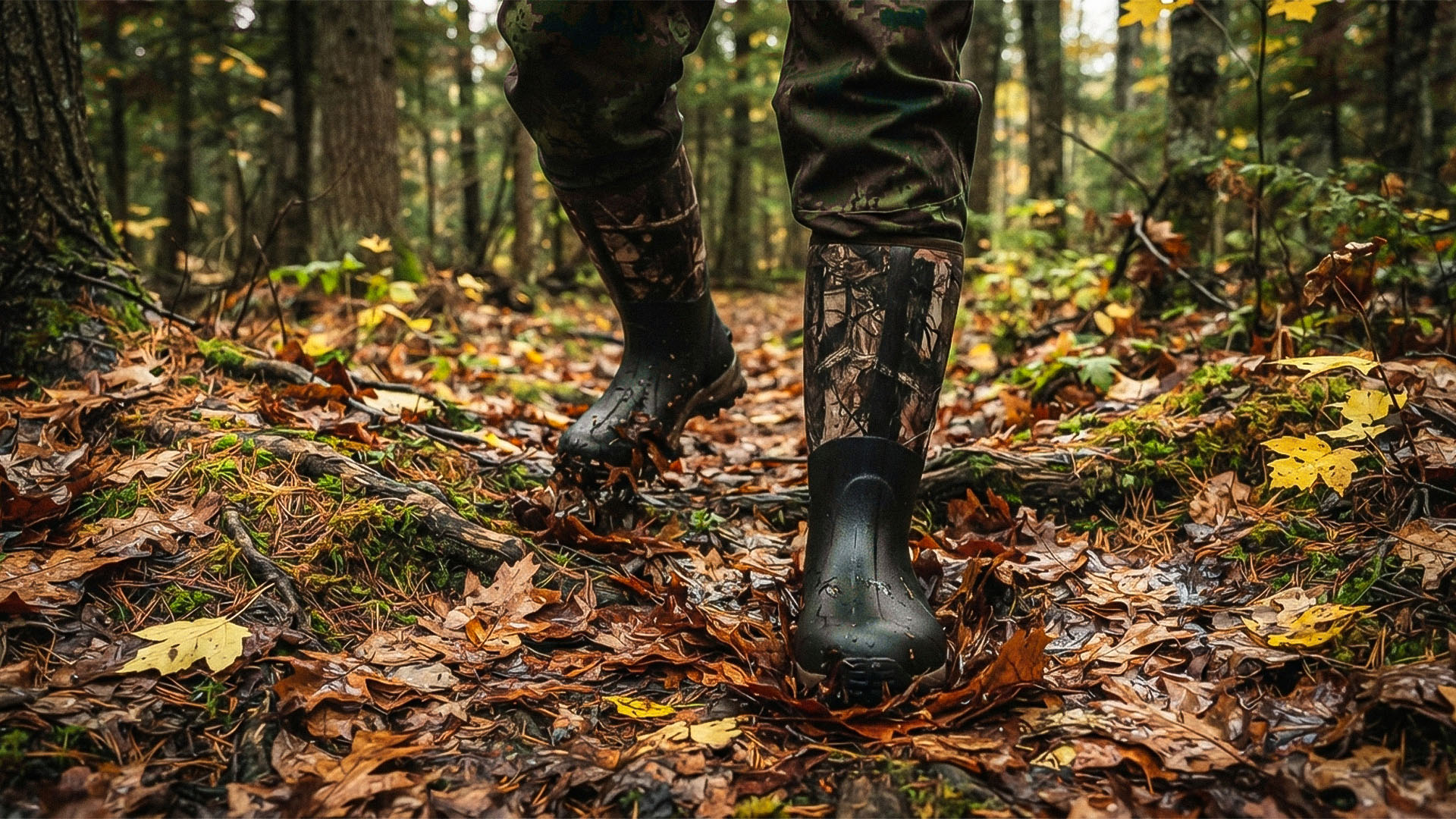
Hunters may benefit from waterproof hunting boots for prairie hunting that provide secure heel retention, dependable traction, and enough all-day support without becoming unnecessarily heavy.
Lightweight Boots Are Valuable
Open grasslands involve constant walking.
Heavy footwear adds fatigue mile after mile.
Choose a balance of:
- Weight
- Support
- Waterproofing
Waterproofing Still Matters in Open Prairie
Morning dew can soak grass completely.
A hunter can wet non-waterproof footwear before reaching the first productive area.
Dew Can Be Heavy Enough to Soak Pants Too
Wet grass transfers moisture with every step.
Lower-leg protection may help.
Gaiters Can Be Useful
Gaiters may keep:
- Moisture
- Seeds
- Grass debris
- Snow
out of footwear.
Secure Heel Fit Matters
Long walking exposes poor fit quickly.
Heel slip causes:
- Blisters
- Hot spots
Moderate Support Helps on Uneven Ground
Prairie looks flat.
But hidden:
- Holes
- Ruts
- Badger burrows
- Cattle tracks
can twist an ankle.
Watch Every Step Around Burrows
Tall grass may hide holes.
Do not run blindly after flushing birds.
Livestock Ground Can Be Uneven
Pastures may contain deep hoof impressions.
These become especially difficult after:
- Rain
- Freeze
Mud Can Build on Boots
Sticky prairie soil adds weight.
Clean excessive buildup when practical.
Rubber Boots Can Work in Wet Lowlands
Tall rubber boots may be useful when habitat includes:
- Wet grass
- Mud
- Shallow water
But they should still support long walking.
Lace-Up Waterproof Boots May Be Better for Distance
Where water is limited and miles are high, lighter supportive lace-up footwear may improve efficiency.
Insulation Should Match the Season
Early prairie hunts may be hot.
Late hunts can be bitterly cold.
Avoid choosing one overly heavy boot for every condition.
Thick Socks Need Enough Room
Do not compress feet inside winter boots.
Circulation matters in cold conditions.
Wind Chill Can Be Severe
Open prairie offers almost no protection.
A moderate cold temperature with strong wind can feel much harsher.
Carry a Windproof Layer
Wind protection can matter more than heavy insulation during active hunts.
Avoid Sweating
Walking through grass can produce significant heat.
Vent layers before becoming wet from inside.
Cold Stops Feel Different
A hunter may be comfortable while moving and cold within minutes after stopping.
Layer accordingly.
Gloves Need Dexterity
Use gloves that provide enough warmth while allowing safe handling of equipment.
Carry a dry backup pair in cold or wet conditions.
Rain Creates Different Challenges
Wet prairie becomes:
- Heavy
- Slick
- Muddy
even when temperatures remain mild.
Prairie Chicken Hunting After Rain Can Be Productive
Wet vegetation may reduce noise.
Fresh tracks may appear on:
- Dirt roads
- Field edges
but walking becomes harder.
Clay Roads Can Become Impassable
Do not damage ranch or farm access.
If conditions are bad:
Walk.
Thunderstorms Are Dangerous in Open Country
Prairie landscapes provide little lightning shelter.
Watch forecasts carefully.
Do Not Remain Exposed During Lightning
Leave open ridges and fields according to severe-weather safety guidance.
Fog Can Remove Landmarks
Open prairie seems easy to navigate until visibility disappears.
Carry reliable maps.
Offline Maps Are Useful
Cell service may be inconsistent.
Download:
- Property boundaries
- Roads
- Public land
- Topography
before hunting.
Mark the Vehicle
Miles of similar grass can make the return confusing.
Save the parking location.
Carry a Headlamp
Late recovery or long walks can extend beyond daylight.
A headlamp belongs in the pack.
Property Boundaries Are Critical
Prairie chicken habitat often crosses:
- Private ranch
- Cropland
- Public grassland
Know where you can legally hunt.
Open Prairie Does Not Mean Open Access
A lack of fences does not equal permission.
Use current ownership information.
Private Land Requires Permission
Clarify:
- Parking
- Dogs
- Field access
- Retrieval
before hunting.
Dogs Can Cross Boundaries Quickly
Open terrain allows them to cover large distances.
Maintain control.
A Dog Crossing a Property Line Does Not Grant Hunter Access
Understand local laws and agreements.
Fence Lines Can Be Dangerous
Prairie fences may be difficult to see in:
- Tall grass
- Snow
Watch both hunter and dog movement.
Barbed Wire Is Common
Use safe crossings.
Do not damage fencing.
Electric Fence May Be Present
Never assume a wire is inactive.
Follow landowner instructions.
Livestock Often Shares Prairie Habitat
Cattle can be far away and still influence safe shooting directions.
Know the location of livestock.
Low Birds Require Careful Background Awareness
Prairie chickens may fly relatively low after flushing.
Never shoot toward:
- Cattle
- Hunters
- Roads
- Buildings
Long Sight Lines Can Create False Confidence
Open country may look empty.
Structures or people can be much farther away but still within the direction of fire.
Know your background.
Group Hunting Requires Spacing
Hunters can spread out to cover broad grassland.
Maintain a visible, organized line.
Do Not Drift Ahead
One hunter moving far forward creates unsafe shot angles.
Communicate constantly.
Dogs Can Make Hunters Focus Forward Too Much
Keep track of:
- Dog
- Partners
- Terrain
at the same time.
Flushes Can Happen Behind the Line
Birds may hold until hunters pass slightly.
Stay aware of the full area.
Positive Identification Is Essential
Prairie chicken habitat can overlap with:
- Sharp-tailed grouse
- Other upland birds
depending on location.
Hunters need to know local species.
Greater Prairie-Chickens and Sharp-Tails Can Look Similar at Speed
Study differences in:
- Tail shape
- Wing pattern
- Overall appearance
using official wildlife resources.
Habitat Alone Is Not Enough
Both species may use grasslands.
Confirm visually.
Seasonal and Sex Differences Can Affect Appearance
Do not rely on one photograph.
Study several views.
Regulations Can Be Highly Restricted
Prairie chicken hunting opportunities vary significantly by jurisdiction and population.
Some areas may have:
- Limited seasons
- Permit systems
- Closed seasons
Always check current official regulations.
Do Not Assume a Population Is Huntable
Conservation status and legal hunting opportunity differ by state and region.
Verify before planning a hunt.
Permit Requirements May Apply
Some hunts may require:
- Draw
- Special permit
- Additional registration
beyond a basic license.
Season Length Can Be Short
Certain prairie grouse seasons may offer limited days.
Know the exact dates.
Bag Limits Can Be Conservative
Management may use low limits to protect populations.
Always confirm current rules.
Unit Boundaries Matter
One area may be open while neighboring habitat is closed.
Use official maps.
Public-Land Regulations Can Add Restrictions
A valid permit does not override:
- Property closures
- Access restrictions
- Ammunition rules
Do Not Rely on Old Online Advice
Prairie chicken regulations and population management can change.
Use current wildlife-agency information.
Habitat Conservation Is Central to Prairie-Chicken Survival
These birds depend on large connected grasslands.
Loss and fragmentation of prairie can reduce suitable habitat.
Trees Can Change Prairie Habitat
Expansion of woody vegetation into open grassland can alter habitat quality.
Prairie birds generally depend on open landscapes.
Grassland Connectivity Matters
Small isolated patches may not provide the same value as broad connected prairie.
Landscape-scale conservation is important.
Native Prairie Is Difficult to Replace
Once converted, complex native grasslands can take a long time to restore.
Protecting remaining habitat is valuable.
CRP and Other Conservation Programs Can Help
Grassland programs can add cover across agricultural landscapes.
Their value depends on:
- Location
- Size
- Management
Responsible Hunters Should Minimize Damage
Avoid:
- Driving wet prairie
- Damaging fences
- Leaving trash
Stay on Legal Roads
Do not create new vehicle tracks through grasslands.
Pick Up All Waste
Leave the property cleaner than you found it.
Recovery Can Be Difficult
A downed prairie chicken can disappear in:
- Tall grass
- Crop residue
Mark the location carefully.
Watch the Bird to the Ground
Do not immediately switch attention to the rest of the flock.
Choose a landmark.
Use Multiple Landmarks
In open prairie, everything can look similar.
Mark using:
- Fence post
- Lone shrub
- Road corner
- Terrain rise
Dogs Can Be Very Valuable for Recovery
A trained dog may locate birds hidden in dense grass.
Give it room to work.
Without a Dog, Search Methodically
Start from the marked location.
Walk:
- Parallel lines
- Small expanding circles
Wind Can Move Feathers
Do not rely only on small visual signs.
Use the best initial landmark possible.
Running Birds May Move After Landing
Search slightly beyond the apparent fall point.
Ethical Shot Selection Improves Recovery
A bird flying toward:
- Private property
- Unsafe livestock area
- Dense inaccessible cover
may create a poor recovery situation.
Warm Weather Requires Game Care
Early seasons may still be hot.
Keep harvested birds:
- Clean
- Cool
as soon as practical.
Direct Sun Can Heat Game Quickly
Do not leave birds exposed.
Cold Weather Still Requires Clean Handling
Mud and crop residue can contaminate game.
Use appropriate storage.
Common Greater Prairie-Chicken Hunting Mistakes
Treating Every Grassland Acre the Same
Small habitat differences matter.
Walking Before Glassing
Use open-country visibility to save energy.
Ignoring Agricultural Feeding Edges
Prairie and crop transitions can be important.
Moving Too Fast
Birds may run ahead before flushing.
Wearing Heavy or Poorly Fitting Boots
Prairie hunting often means many miles.
Underestimating Dew
Wet grass can soak footwear early.
Losing Track of Property Lines
Open landscapes can cross multiple ownership boundaries.
Assuming Prairie Chicken Hunting Is Open Everywhere
Legal opportunity can be highly restricted and location-specific.
Frequently Asked Questions
Where do greater prairie-chickens usually live?
Greater prairie-chickens are associated with open grassland landscapes including native prairie, conservation grasslands, agricultural edges, rolling prairie, and other habitats providing food and ground-level cover.
Are CRP fields good for prairie chicken hunting?
They can provide useful habitat depending on vegetation structure, field size, surrounding grasslands, and current management.
Do prairie chickens use agricultural fields?
They may use grain fields and crop edges for feeding, particularly when suitable grassland cover is nearby.
Does wind affect prairie chicken hunting?
Yes. Strong wind can change where birds seek shelter and can dramatically affect flight after flushing.
Is prairie chicken hunting physically difficult?
It can involve many miles of walking through tall grass, dew, mud, frozen ground, and uneven prairie, even when the terrain appears flat.
What boots are best for prairie chicken hunting?
Lightweight waterproof hunting boots with secure heel fit, dependable traction, and enough support for long grassland walks are practical. Gaiters can also help with dew, seeds, snow, and debris.
Can dogs help with prairie chicken hunting?
Yes. Pointing dogs can efficiently cover large grasslands and help with recovery, but range control, hydration, paw care, heat, and property boundaries all require attention.
Is greater prairie-chicken hunting legal everywhere in their range?
No. Hunting opportunities vary by jurisdiction and population and may involve short seasons, permits, or complete closures. Hunters should verify current official regulations for the exact location before hunting.
Final Thoughts
Greater prairie-chicken hunting teaches hunters that open country is not simple country.
One low swale blocks the wind.
One crop edge provides food.
One managed grass field offers better ground-level movement.
One slight rise gives hunters a place to glass.
One flock may be invisible in grass even though there is not a tree for miles.
The prairie is full of subtle differences.
Learn to see them.
Glass before walking.
Find the food-to-cover transition.
Watch the wind.
Slow down when dogs become birdy.
Respect huge open-country property boundaries.
Carry plenty of water.
Wear boots that let you cross heavy dew, mud, tall grass, frozen ruts, snow, and miles of rolling prairie without making your feet the limiting factor.
And when a flock erupts from a shallow depression in grass you were certain could not hide anything, remember the lesson.
Prairie chickens do not need thick cover to disappear.
They only need the right grass, the right terrain, and a hunter moving just a little too quickly.
