
Mourning dove hunting can look deceptively simple.
Find a field.
Sit on the edge.
Wait for birds.
But anyone who has watched a perfect-looking field remain almost empty while doves pour into another property half a mile away knows there is much more to it.
Doves are mobile.
They can feed in one field.
Rest on a power line.
Drink at a pond.
Then move several miles before the next feeding period.
The best dove hunters do not simply look for birds.
They look for the route connecting:
- Food
- Water
- Roosting cover
- Bare ground
- Travel corridors
Once those pieces line up, dove movement becomes much more predictable.
A field does not need to hold thousands of birds all day.
It only needs to sit on the route birds already want to use.
Mourning Doves Are Birds of Open Country
Mourning doves commonly use landscapes containing:
- Agricultural fields
- Grasslands
- Farm ponds
- Gravel roads
- Fencerows
- Power lines
- Scattered trees
- Open woodland edges
They usually prefer environments where they can see danger early.
Dense closed forest is less useful than open country with scattered cover.
Food Is the First Major Clue
Doves consume large quantities of seeds.
Productive feeding areas may include:
- Sunflower
- Millet
- Wheat
- Corn
- Native grasses
- Other seed-producing plants
depending on region and season.
The important question is not simply:
What crop is planted?
It is:
Can doves reach the seed easily?
Bare Ground Matters
Doves often prefer feeding where seeds are accessible on relatively open ground.
Dense vegetation can make feeding more difficult.
A field with abundant seed but thick ground cover may be less attractive than one containing:
- Bare soil
- Short stubble
- Harvested rows
- Disked strips
Sunflower Fields Are Classic Dove Habitat
Managed sunflower fields can provide:
- Abundant seed
- Open feeding space
- Predictable flight patterns
where legally planted and hunted according to current regulations.
But not every sunflower field hunts equally well.
Watch How Birds Enter the Field
Do not automatically sit in the middle of the best-looking crop.
Scout first.
Doves may prefer entering along:
- Tree lines
- Power lines
- Low gaps
- Fence rows
One corner can receive far more traffic than the rest of the field.
Field Corners Often Concentrate Flight
A corner where:
- Hedgerow
- Crop field
- Pond
- Gravel lane
come together can create a natural intersection.
These multi-feature edges deserve careful observation.
Power Lines Can Reveal Travel
Doves frequently perch on elevated open structures.
Power lines may function as:
- Resting locations
- Observation points
- Travel guides
Watch where birds leave the line.
Their departure direction may reveal the feeding field they prefer.
Do Not Set Up Directly Under Every Power Line
Infrastructure introduces important safety concerns.
Know:
- Where legal hunting is permitted
- What lies beyond the birds
- Local utility and property restrictions
Never shoot toward electrical infrastructure.
Dead Trees Can Serve as Staging Perches
A bare snag near a feeding field may attract birds before they enter.
Watch these trees during scouting.
Repeated use can reveal a strong flight route.
Isolated Trees Can Be Better Than Dense Woods
A single tree beside open country gives birds:
- Visibility
- Resting space
without forcing them into thick cover.
These locations can become predictable stopping points.
Fencerows Can Guide Flight
Doves may follow linear landscape features such as:
- Fence lines
- Hedgerows
- Drainage strips
between feeding and resting areas.
The best line may not look dramatic.
It simply connects the right resources.
Farm Ponds Can Be Extremely Important
Warm early-season conditions make water valuable.
Doves may visit:
- Farm ponds
- Stock tanks
- Small reservoirs
- Natural water
during predictable periods.
The Best Water Often Has Bare Banks
A pond surrounded by:
- Thick reeds
- Tall weeds
- Steep banks
may be less accessible.
Doves often favor water sources with:
- Open shoreline
- Mud edge
- Gentle slope
where they can land and drink safely.
Watch the Mud Line
A few feet of exposed shoreline may matter more than the entire pond.
Birds need a place where they can:
- Land
- Walk
- Reach water
without pushing through vegetation.
Livestock Ponds Can Create Excellent Open Banks
Cattle and other livestock may keep vegetation shorter around water.
This can create ideal dove access.
Where hunting is lawful and permission is granted, these locations deserve scouting.
Livestock Changes Safety
Never shoot toward:
- Cattle
- Horses
- Buildings
Know where animals are before the hunt begins.
Morning and Evening Water Use Can Differ
Doves may feed before visiting water.
Or they may drink before moving toward afternoon feeding areas.
Local scouting matters more than a rigid schedule.
Scout Actual Movement
Spend time watching birds from a distance.
Record:
- Direction of travel
- Time
- Height
- Number of birds
Patterns become easier to see after several observation periods.
Opening Day Is Won Before Opening Day
The most useful dove scouting often occurs during the days leading up to the season.
A productive field can change quickly.
Birds may respond to:
- Harvest
- Weather
- Human disturbance
- New food availability
The field that held birds two weeks ago may be nearly empty today.
Scout the Final Days
Recent observations matter most.
Watch:
- Evening flights
- Morning feeding
- Water use
close to the hunt date.
Harvest Timing Changes Everything
A standing crop may become much more attractive after harvest exposes seed.
Likewise, cultivation or mowing can change how easily doves feed.
Recently Harvested Grain Can Attract Birds
Fields containing scattered seed can become productive rapidly.
Look for actual bird activity rather than assuming every harvested field will be good.
Cornfields Can Work Differently Than Sunflower
Corn may provide abundant food.
But dense standing corn changes visibility and access.
Harvested corn creates a much different hunting environment.
Wheat Stubble Can Be Excellent
Short stubble provides:
- Open ground
- Seed
- Easy landing
where suitable.
It can also make birds easier for hunters to observe.
Native Seed Fields Can Be Productive
Not every good dove field is planted for wildlife.
Natural seed-producing plants can create excellent feeding habitat.
Learn what birds are actually using locally.
Weed Seeds Can Matter
Fields containing mature seed heads may attract doves even when the property contains no traditional crop.
Observe bird behavior.
Do not judge habitat only by agricultural value.
Gravel Roads Can Attract Doves
Road edges may provide:
- Bare ground
- Small gravel
- Weed seeds
Doves sometimes use these locations for feeding and grit.
Roadside Hunting Requires Extreme Caution
Rules regarding roads, rights-of-way, and shooting near traffic vary.
Always follow current laws and property rules.
Never shoot toward:
- Vehicles
- Homes
- Public roadways
Dirt Farm Roads Can Reveal Feeding Activity
Fresh tracks and droppings may show repeated use.
But visual scouting of actual birds is more valuable.
Dusting Areas Can Attract Birds
Doves may use dry dusty ground.
Look around:
- Field edges
- Bare soil
- Farm lanes
where birds repeatedly land.
Flight Lines Are More Important Than Field Size
A 20-acre field directly under a major flight line can outperform a much larger field that birds approach from unpredictable directions.
Scout the sky.
Not only the ground.
Watch Height
Birds flying:
- High
- Fast
may simply be passing through.
Birds dropping lower and adjusting direction often indicate a nearby destination.
Look for Descending Birds
A gradual descent toward:
- Field
- Pond
- Tree line
usually tells you more than birds crossing high overhead.
Low Gaps Can Funnel Movement
Trees, terrain, and buildings can create openings birds prefer.
A low point in a tree line may function like a doorway.
Watch it carefully.
Wind Changes Flight Lines
A field that hunts perfectly on a calm day may change completely when wind arrives.
Birds may approach:
- Lower
- Faster
- From different angles
Adjust your position.
Headwinds Can Change Approaches
Doves often use wind strategically.
Watch how they enter fields rather than assuming the same route every day.
Crosswinds Create Fast Shooting
Birds crossing with strong wind can move very quickly.
Maintain controlled movement.
Do not let speed create unsafe shots.
Strong Wind May Push Birds Lower
Low flight can make backgrounds more important.
Know exactly where:
- Partners
- Roads
- Buildings
are located.
Calm Days Make Birds Easier to Hear
Wing noise can alert hunters to approaching birds.
Use your ears.
Do not stare only in one direction.
Doves Can Approach From Behind
A field setup that looks perfect toward the front may still receive birds from:
- Tree line
- Road edge
- Pond
behind the hunter.
Scan the entire sky.
Avoid Tunnel Vision
Many hunters focus on the direction most birds used during scouting.
That is useful.
But keep checking other approaches.
Sit Where You Can See Early
A position with a few extra seconds of visibility can be more valuable than one directly beneath the flight line.
More reaction time improves:
- Identification
- Safety
- Shot selection
Field Edges Can Provide Better Visibility
A slight opening beside the main feeding zone may allow birds to be seen earlier.
Do not automatically choose maximum concealment.
Concealment Still Matters
Doves can see movement well.
Hunters should minimize unnecessary:
- Standing
- Arm movement
- Bright equipment
when birds approach.
Natural Shade Can Help
A shaded tree line or brush edge can reduce a hunter’s visual profile.
It also helps with early-season heat.
Use Cover Without Blocking Visibility
Dense brush behind you can help.
Dense brush in front can make incoming birds impossible to see.
Balance concealment and awareness.
Doves Learn From Pressure Quickly
Opening-day birds may fly predictable routes.
After repeated shooting, they can:
- Gain altitude
- Change fields
- Avoid obvious positions
Pressure matters.
Move When the Pattern Changes
If birds consistently shift fifty yards away, staying in the same place all day may be less effective than repositioning where legal and safe.
Do Not Chase Every Bird Around the Field
Constant movement creates disturbance.
Wait for a meaningful pattern before relocating.
Multiple Hunters Can Cover a Field
A group can watch several flight lines.
But spacing and communication are essential.
Agree on:
- Positions
- Safe shooting directions
- Retrieval areas
before shooting begins.
Never Shoot Toward Another Hunter
Fast-moving birds can tempt hunters to swing too far.
Establish hard no-shoot zones.
If a bird crosses them:
Let it go.
Low Birds Require Extra Caution
Doves often fly low along field edges.
Never shoot when the background contains:
- People
- Dogs
- Livestock
- Buildings
Know Where Roads Are
Vegetation can hide a road completely.
Scout the entire property before the hunt.
Farm Buildings Can Be Farther Away Than They Look
Open country distorts distance.
Use maps and daylight scouting.
Birds on the Ground Are Different From Birds in Flight
Only take lawful, safe opportunities that fit the current regulations and hunting context.
The main priority is clear identification and a safe background.
Positive Identification Matters
Agricultural fields can attract multiple bird species.
Hunters should confidently identify mourning doves before shooting.
Eurasian Collared-Doves May Also Occur
Depending on location, hunters may encounter other dove species.
Legal status and season rules can differ.
Know current local identification and regulations.
White-Winged Doves Can Overlap in Some Regions
Species identification becomes especially important where multiple huntable dove species occur.
Study:
- Wing patterns
- Tail
- Body shape
using official identification resources.
Small Birds Can Be Difficult to Identify at Distance
Do not shoot simply because:
“It looked like a dove.”
Wait for clear identification.
Migration Changes Bird Numbers
Dove numbers can change dramatically over short periods.
A strong cold front may move birds out.
New birds may also arrive from the north.
Weather Can Empty a Field Quickly
A field holding hundreds of birds one evening may hold far fewer after a major weather change.
Recent scouting matters.
Keep Multiple Locations in Mind
If access allows, identify several potential fields or water sources.
That provides options when bird numbers shift.
Early Seasons Can Be Hot
Dove hunting often occurs in warm conditions.
Heat can become one of the biggest challenges.
Carry enough water.
Shade Matters for Hunters
Whenever possible, choose a safe position offering:
- Shade
- Airflow
without compromising visibility.
Hydrate Before You Feel Thirsty
Sitting does not eliminate dehydration.
Direct sun and wind can remove moisture quickly.
Carry More Water Than You Expect to Need
Opening-day hunts can last much longer than planned.
Water should not be left only in the vehicle.
Dogs Need Water Too
Retrievers working in warm fields may overheat quickly.
Carry clean water.
Hot Ground Can Affect Dogs
Dry soil, gravel, and harvested stubble may become extremely hot.
Monitor paw condition.
Give Dogs Frequent Breaks
Repeated retrieves in warm temperatures build heat rapidly.
Watch for:
- Excessive panting
- Fatigue
- Reduced coordination
Farm Ponds Are Not Automatically Safe Drinking Water
Agricultural runoff or algae may affect water quality.
Bring clean water when practical.
Dog Control Matters in Fields
A dog chasing birds or moving through neighboring property creates problems.
Maintain reliable:
- Recall
- Steadiness
where appropriate.
Fences Are Common Hazards
Dogs and hunters may encounter:
- Barbed wire
- Electric fencing
- Woven wire
Know the property before the hunt.
Never Assume a Fence Is Inactive
Farm fencing may be electrified.
Use designated crossings.
Harvested Fields Can Hide Wire
Old fencing and irrigation equipment may lie beneath vegetation or stubble.
Watch every step.
Stubble Can Be Rough on Dogs
Dry crop stems may cause:
- Paw irritation
- Small cuts
Inspect after the hunt.
Dove Hunting Can Still Be Hard on Footwear
The terrain may look easy compared with mountain hunting.
But a typical dove hunt may involve:
- Dew-soaked grass
- Muddy field edges
- Farm roads
- Pond banks
- Harvested stubble
- Long walks during scouting and recovery
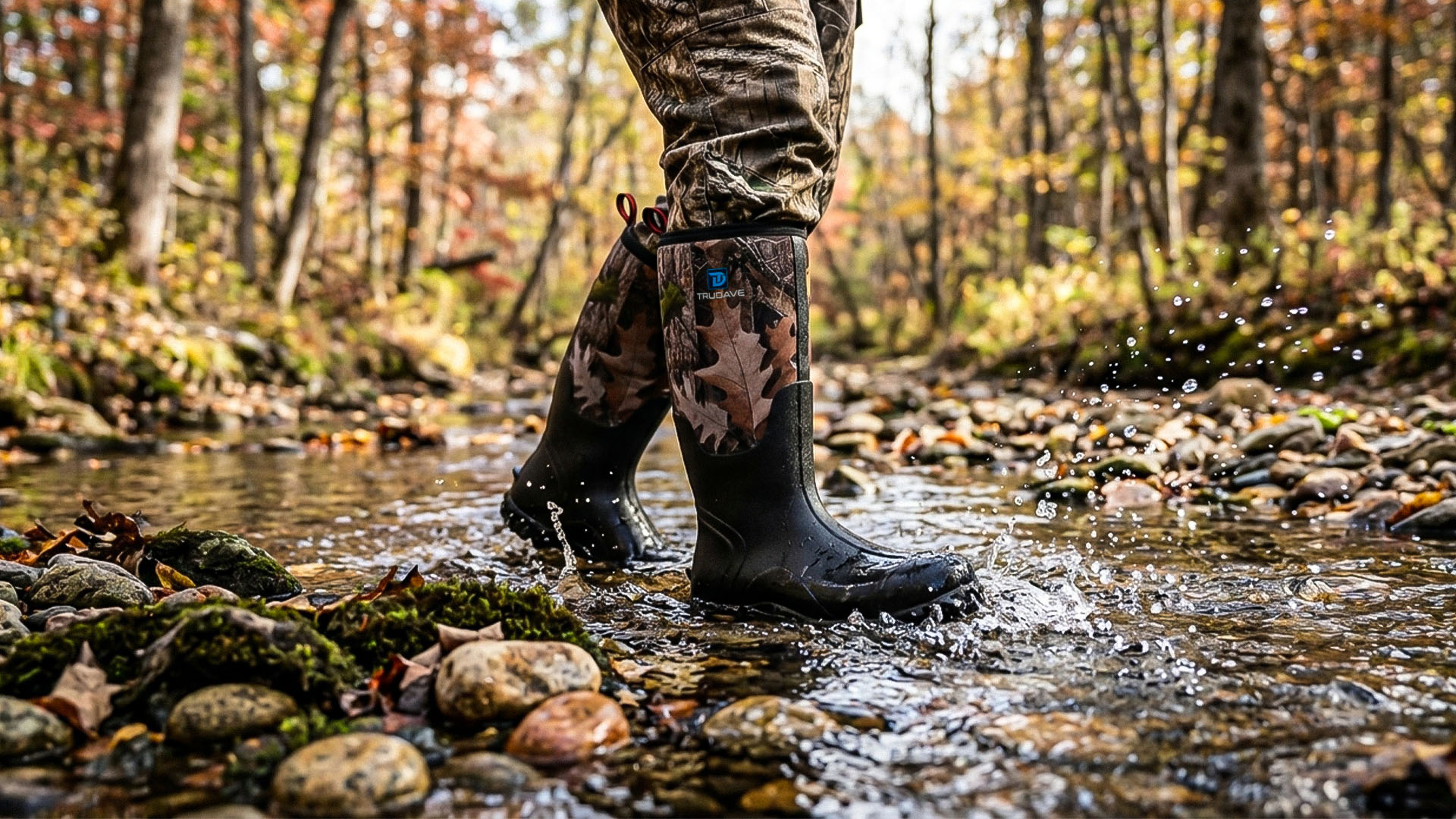
Hunters working these environments may benefit from lightweight waterproof hunting boots for dove hunting that provide secure heel fit, good wet-grass traction, and enough comfort for warm-weather agricultural hunting without unnecessary insulation.
Lightweight Matters
Early-season conditions can be hot.
Heavy insulated boots may cause:
- Sweating
- Fatigue
Choose footwear appropriate for temperature.
Waterproofing Still Has Value
Opening morning grass can be soaked with dew.
A hunter may have wet feet before sunrise without ever stepping into a puddle.
Morning Dew Can Be Extreme
Tall weeds and grass transfer water constantly.
Waterproof footwear helps prevent gradual saturation.
Muddy Pond Edges Need Traction
Farm ponds can have:
- Clay
- Soft mud
- Slick banks
Good tread reduces slips during bird recovery.
Wet Clay Can Be Extremely Slippery
A dry field road can become slick after one storm.
Take controlled steps.
Lace-Up Boots Can Be Practical
Lightweight waterproof lace-ups can provide:
- Secure fit
- Walking comfort
- Better support
than loose footwear during long scouting walks.
Rubber Boots Can Work in Wet Fields
Tall rubber boots may be useful when conditions include:
- Heavy dew
- Mud
- Pond margins
But fit and heat management matter.
Avoid Heavy Insulation During Hot Hunts
Unless local conditions demand it, excessive insulation can make early-season hunting uncomfortable.
Secure Heel Fit Prevents Blisters
Dove hunters may walk long distances recovering birds across harvested fields.
Poor fit can become painful quickly.
Gaiters Can Help With Seeds
Low gaiters may keep:
- Grass seeds
- Burrs
- Stubble debris
out of boots.
Harvested Stubble Can Enter Low Shoes Easily
Field debris becomes irritating over several hours.
Boots provide useful protection.
Grass Seeds Can Affect Dogs Too
Check:
- Paws
- Ears
- Coat
after hunting.
Insects Can Be Severe
Early-season dove fields may contain:
- Mosquitoes
- Biting flies
- Ticks
Use appropriate protection.
Ticks Can Be Common Along Field Edges
Tall grass and brush create suitable tick habitat.
Perform post-hunt checks.
Snakes May Be Active in Warm Weather
Depending on region, hunters may encounter venomous snakes around:
- Pond banks
- Brush piles
- Tall grass
Watch footing.
Do Not Reach Blindly Into Vegetation
Recovery can lead hunters into thick edges.
Use caution.
Thunderstorms Can Change the Hunt Fast
Late-summer storms may bring:
- Lightning
- Strong wind
- Heavy rain
Do not remain exposed in open fields during dangerous weather.
Open Fields Provide Little Lightning Protection
Follow severe-weather safety guidance.
A hunt can be resumed later.
Rain Changes Field Conditions
One storm can turn:
- Dusty roads
- Dry field edges
into mud.
Plan vehicle access accordingly.
Avoid Driving Wet Farm Roads
Deep ruts damage property.
Follow landowner instructions.
Park and walk when necessary.
Private Land Permission Is Critical
Many productive dove fields occur on:
- Farms
- Ranches
Always obtain clear permission.
Ask About Exact Boundaries
Do not assume the entire field or neighboring property is included.
Clarify:
- Parking
- Hunting area
- Retrieval access
before the hunt.
Leave Gates As Directed
Working farms depend on gate management.
Follow instructions exactly.
Respect Crops
Do not:
- Drive through standing crops
- Trample unnecessary areas
Good behavior protects future access.
Watch Irrigation Equipment
Agricultural fields may contain:
- Pipes
- Pivots
- Pumps
Do not damage equipment.
Property Boundaries Can Be Difficult to See
Open fields may stretch across multiple landowners.
Use reliable maps where appropriate.
A Downed Bird Crossing a Boundary Does Not Automatically Grant Access
Plan retrieval permissions before hunting close to neighboring land.
Public Dove Fields Can Be Excellent
Some wildlife agencies manage fields specifically for dove hunting.
These may contain:
- Sunflower
- Millet
- Grain
- Managed openings
Check current property information.
Public Fields Can Be Crowded
Opening days may attract many hunters.
Know:
- Assigned zones
- Spacing requirements
- Entry rules
before shooting.
Arrive With Safety in Mind, Not Just Position
Do not squeeze into an unsafe gap simply to be closer to birds.
A slightly less productive position with adequate spacing is better.
Maintain Visibility of Neighboring Hunters
Open farmland helps, but vegetation and terrain can still hide people.
Keep track of positions.
Regulations Require Special Attention
Mourning doves are migratory game birds.
Before hunting, verify current official:
- Season dates
- Daily bag limits
- Possession limits
- Legal shooting hours
- License requirements
- Migratory-bird registrations or stamps where applicable
- Ammunition rules
- Property restrictions
Do Not Use Last Year’s Regulation Book
Migratory bird rules can change.
Always check the current season.
Baiting Rules Are Especially Important
Dove hunting around agricultural fields has specific legal considerations concerning:
- Baiting
- Normal agricultural operations
- Manipulated crops
Hunters should review current official migratory-bird guidance before hunting a field.
Do Not Assume a Planted Field Is Automatically Legal to Hunt
How a field was:
- Planted
- Harvested
- Manipulated
can matter under current law.
Verify before the hunt.
Ask the Landowner About Field Management
If uncertain, learn:
- What was planted
- How it was harvested
- Whether grain was added later
Then compare that information with current official regulations.
Legal Agricultural Practice Is a Regulatory Question
Do not rely on:
- Rumor
- Social media
- “Everybody hunts here”
Use official wildlife guidance.
Non-Toxic Ammunition May Be Required on Some Properties
Even if not required statewide for dove, individual public areas may impose special rules.
Check the exact property.
Shooting Hours Matter
Do not begin because you see other hunters shooting.
Know the official legal time yourself.
Species Limits Can Be Combined or Separate
Where multiple dove species occur, bag-limit structures may differ.
Check current regulations.
Recovery Is Part of the Hunt
A small dove can disappear in:
- Grass
- Sunflower stalks
- Crop stubble
Mark every fall carefully.
Watch the Bird All the Way Down
Do not immediately look for the next incoming group.
Pick a landmark first.
Use Fixed Landmarks
Choose:
- Tree
- Fence post
- Crop row
- Bare patch
to mark the fall.
Distance Is Easy to Misjudge in Open Fields
A bird may fall farther away than it appears.
Walk a straight line from your shooting position toward the landmark.
Dogs Can Greatly Improve Recovery
A trained retriever can locate birds hidden in dense vegetation or crop stubble.
This can reduce lost game.
Let the Dog Work Before Trampling the Area
Human scent and footprints can complicate recovery.
Give the dog a chance where appropriate.
Without a Dog, Search Methodically
Start at the marked fall.
Work:
- Small circles
- Parallel passes
instead of wandering randomly.
Check Beneath Vegetation
A dove can disappear under:
- Sunflower leaves
- Grass clumps
- Crop residue
even in relatively open fields.
Ethical Shot Selection Improves Recovery
If a bird is flying toward:
- Impenetrable crop
- Unsafe property
- Deep water
consider whether recovery will be realistic.
Pond Shots Can Create Difficult Recovery
A dove dropping into deep water may be inaccessible without a dog or proper equipment.
Plan before shooting.
Warm Weather Requires Prompt Game Care
Early-season heat can spoil harvested birds quickly.
Keep game:
- Clean
- Cool
according to current food-safety guidance.
Do Not Leave Birds Piled in Direct Sun
Use shade and appropriate cooling.
Vehicle Interiors Get Hot Quickly
Do not assume birds will stay cool inside a parked vehicle.
Bring a Cooler Before the Hunt
Game care should be planned before the first bird arrives.
Common Mourning Dove Hunting Mistakes
Choosing a Field Without Scouting Flight Lines
Food alone does not guarantee birds will pass your position.
Sitting in the Middle of the Field Automatically
Edges, corners, and travel gaps may be better.
Ignoring Water
Farm ponds can organize daily movement during warm weather.
Moving Constantly After Every Missed Opportunity
Wait for a real pattern before repositioning.
Wearing Heavy Hot Footwear
Early-season dove hunting rewards lightweight mobility.
Wearing Non-Waterproof Shoes Through Heavy Dew
Wet feet can begin before sunrise.
Failing to Mark Downed Birds
Small birds disappear quickly in stubble.
Assuming Every Agricultural Field Is Legal to Hunt
Current migratory-bird baiting rules must be checked carefully.
Frequently Asked Questions
Where do mourning doves usually feed?
Mourning doves commonly use open seed-producing areas including harvested agricultural fields, sunflower, millet, wheat stubble, native seed fields, and other locations where seed is accessible on relatively open ground.
Are sunflower fields good for dove hunting?
They can be excellent when seed is available, birds are actively using the field, and the field is lawful to hunt under current migratory-game-bird regulations.
Are farm ponds good places to hunt doves?
They can be, particularly during warm dry conditions when birds use ponds for drinking. Open muddy banks often provide easier access for birds.
What time of day is best for dove hunting?
Morning and late afternoon feeding or watering movements can be productive, but local scouting should determine the strongest flight periods.
Is dove hunting good after rain?
Rain can alter flight patterns, create muddy access, and change feeding conditions. After storms, hunters should rescout because birds may use fields differently.
What boots are best for dove hunting?
Lightweight waterproof hunting boots with secure heel fit, good traction in dew-soaked grass and mud, and minimal unnecessary insulation are practical for warm agricultural-field hunts.
Why is scouting important for dove hunting?
Doves move between food, water, and resting areas, often following repeatable flight corridors. Scouting reveals where birds actually enter a field instead of forcing hunters to guess.
Are mourning doves migratory game birds?
Yes. Hunters should verify current federal, state, and property-specific regulations, including seasons, limits, licenses, shooting hours, and rules concerning baited areas before hunting.
Final Thoughts
Mourning dove hunting teaches hunters that a good field is not simply a field containing food.
The birds still have to choose it.
One sunflower strip provides seed.
One pond provides water.
One dead tree provides a staging perch.
One gap in a hedgerow becomes the route hundreds of birds use to enter the field.
That pattern exists before the hunter arrives.
The job is to find it.
Scout the final days before the season.
Watch where birds actually fly.
Study field corners.
Check bare pond banks.
Pay attention to wind.
Know every neighboring hunter and building.
Wear lightweight boots that let you cross morning dew, harvested stubble, muddy field edges, farm roads, and pond banks without overheating or soaking your feet before the first flight begins.
And when the first group of doves ignores the center of a huge field and funnels through one narrow gap exactly where you watched them the evening before, remember the lesson.
Dove hunting is not about covering the biggest field.
It is about sitting where the birds have already decided to fly.
