
A harvested cornfield can look perfect for Canada geese.
Grain remains on the ground.
The field is wide open.
A pond sits only a few miles away.
Fresh tracks cover one muddy entrance.
Everything looks right.
Then sunrise comes.
Thousands of geese leave the roost.
They fly directly over the field.
Keep going.
And disappear into another piece of farmland two miles away.
That is one of the biggest lessons in field goose hunting.
A field can contain food without being the field geese want today.
Canada geese respond to a combination of:
- Current food
- Recent feeding history
- Disturbance
- Wind
- Roost location
- Field visibility
- Weather
Successful hunters do not simply search for harvested agriculture.
They look for the field birds are actively using now.
Fresh Scouting Is More Important Than a Beautiful Field
A productive-looking cornfield may hold almost no current activity.
Another field that appears ordinary may contain hundreds of feeding geese.
The difference is often recent use.
Look for:
- Fresh droppings
- Tracks
- Feathers
- Concentrated feeding areas
But visual observation of actual birds remains the strongest clue.
Scout Birds, Not Just Habitat
Seeing geese feeding in a field tells you far more than finding old sign.
Whenever possible, observe birds from a distance.
Watch:
- Where they enter
- Where they land
- Which section of the field they prefer
- When they leave
Those details determine the next hunt.
One Evening of Scouting Can Save an Entire Morning
Field hunting rewards preparation.
A hunter who arrives at an unscouted property before daylight is guessing.
A hunter who watched the birds the evening before already knows:
- Direction
- Timing
- Preferred feeding zone
That information matters.
Recently Harvested Cornfields Can Be Excellent
Cornfields may provide waste grain after harvest.
Geese can use:
- Standing stubble
- Broken ears
- Spilled kernels
depending on field conditions.
But food quantity varies enormously.
Not Every Cornfield Has the Same Amount of Waste Grain
Harvest efficiency, weather, and field condition all matter.
Walk the field where permission allows.
Look at the ground.
A small field with more accessible grain may outperform a larger one.
Fresh Feeding Sign Can Be Concentrated
Geese may not use the entire property equally.
One section may contain:
- Heavy droppings
- Trampled stubble
- Tracks
while another section appears untouched.
Hunt the pattern.
Not the acreage.
Mud Can Reveal Exactly Where Birds Landed
After rain, feeding areas become much easier to read.
Fresh goose tracks may cover the ground where birds spent time.
That can reveal:
- Landing zones
- Walking direction
- Feeding concentration
Old Droppings Can Mislead
Goose sign can remain long after birds move on.
Fresh sign tends to look:
- Darker
- Moist
- Recent
Older sign dries and weathers.
Current bird observations are still better.
Snow Can Make Feeding Sign Obvious
Where snow occurs, geese may expose ground while feeding.
Look for:
- Trampled areas
- Tracks
- Open grain
Fresh activity stands out clearly.
Snow Can Also Change Which Fields Are Available
Deep snow may cover food.
Wind can expose grain on:
- Ridges
- Field edges
- Open slopes
Geese may shift quickly toward accessible feeding.
Windblown Fields Can Become More Important
A field with less snow may provide easier feeding than one with more food buried underneath.
Watch where birds actually land after storms.
Wheat and Other Grain Fields Can Also Attract Geese
Canada geese are not limited to corn.
Depending on region and agricultural conditions, they may use:
- Wheat
- Barley
- Other grain stubble
- Pasture
The best crop is the one birds are currently feeding in.
Green Fields Can Matter Too
Some geese may feed on green vegetation.
Pasture and winter crops can become important depending on location and season.
Again, observation matters more than assumption.
Water and Food Work Together
Canada geese commonly move between:
- Roost water
- Feeding fields
- Loafing areas
Understanding that daily pattern makes field selection easier.
Roost Location Controls Morning Direction
Watch where birds leave the roost.
They may follow repeatable routes toward feeding areas.
A field directly along that path can receive early traffic.
Do Not Disturb Major Roosts Unnecessarily
Repeated disturbance at important resting water can change the entire local pattern.
Where legal hunting opportunities exist elsewhere, feeding fields may provide a better way to hunt without constantly pressuring the core roost.
Evening Observation Can Reveal the Next Morning
Watching geese return toward the roost can help identify:
- Active fields
- Travel direction
- Timing
Birds leaving a feeding field late in the day may return there the following morning if conditions remain stable.
Weather Can Break Yesterday’s Pattern
Never assume the same field remains productive automatically.
Strong changes in:
- Wind
- Snow
- Temperature
- Disturbance
can shift birds overnight.
Wind Changes Field Selection
Geese generally prefer landing and taking off with wind assistance.
That can influence which side of the field receives activity.
Scout how birds approach under current conditions.
Wind Direction Can Change Landing Zones
A flock that used the north end yesterday may prefer another section after the wind reverses.
Field setup needs to reflect current conditions.
Strong Wind Can Keep Birds Lower
Windy days may produce lower flight over agricultural ground.
This makes background and hunter-position awareness even more important.
Calm Days Can Produce Higher Circling
Birds may spend more time inspecting a field before committing.
Movement becomes more visible.
Concealment matters.
Geese See Fields From Above
A field that looks flat from ground level may contain obvious patterns from the air.
Potential visual features include:
- Vehicle tracks
- Standing crop strips
- Grass waterways
- Brush rows
Birds can react to unusual objects.
Field Edges Can Provide Natural Concealment
Where legal and safe, hunters may use existing landscape features such as:
- Grass edges
- Drainage strips
- Low vegetation
to reduce visible movement.
Avoid damaging crops or property.
Low Spots Can Help Conceal Movement
A shallow depression may provide enough terrain difference to reduce visibility from approaching birds.
Even small field contours matter.
Agricultural Fields Are Not Always Flat
Look for:
- Drainage channels
- Small rises
- Low swales
These features can affect both bird behavior and hunter access.
Grass Waterways Can Become Natural Travel Corridors
Modern farmland often contains grass strips designed to manage runoff.
They may provide:
- Easier walking
- Natural concealment
- Firmer ground
But always follow landowner instructions.
Mud Changes Access Completely
One rainstorm can turn a firm farm lane into deep mud.
Vehicles can become:
- Stuck
- Damaging to roads
- Unable to reach the field
Plan for walking.
Do Not Ruin Landowner Roads
Field access depends on trust.
If roads are soft:
Park where directed.
Carry equipment farther.
Future permission is worth more than one easy drive.
Canada Goose Hunting Can Involve More Walking Than Expected
A field may be visible from the road.
But legal parking may be:
- Half a mile away
- Across a drainage
- Behind another field
Plan gear accordingly.
Heavy Gear Magnifies Footwear Problems
Wet fields combined with equipment make every step harder.
Poorly fitting boots create problems quickly.
Canada Goose Field Hunting Is Hard on Boots
A typical hunt may involve:
- Mud
- Wet corn stubble
- Morning dew
- Frozen ground
- Snow
- Farm ditches
- Long equipment carries
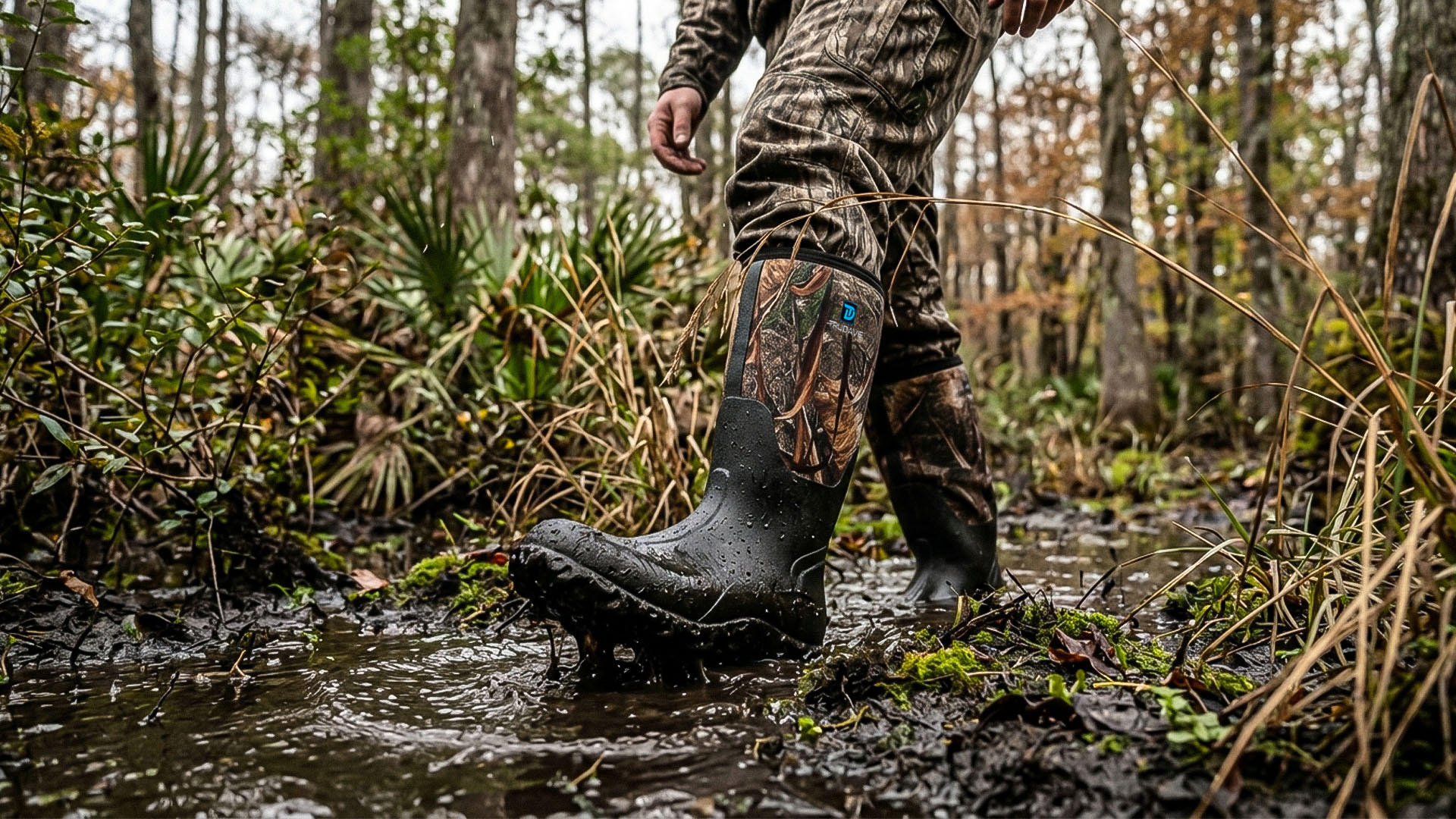
Hunters working these environments may benefit from waterproof hunting boots for field goose hunting that provide secure heel retention, dependable mud traction, and enough waterproof protection for long mornings in wet agricultural terrain.
Waterproofing Matters Before Sunrise
Agricultural grass can hold heavy dew.
A hunter may cross only one wet field edge and already have soaked footwear.
Waterproof protection keeps conditions manageable.
Rubber Boots Can Work Well in Mud
Tall rubber hunting boots are practical where fields contain:
- Deep mud
- Wet ditches
- Standing water
They provide simple waterproof protection.
Secure Fit Is Still Important
Loose rubber boots become exhausting during long walks.
Mud pulls at every step.
Poor heel retention can create:
- Blisters
- Fatigue
Lightweight Waterproof Boots Can Be Better on Firmer Ground
Where fields are mostly:
- Frozen
- Dry
- Firm
with only moderate wet sections, lighter waterproof boots may provide better walking comfort.
Insulation Should Match Conditions
Canada goose seasons can range from:
- Warm early-season weather
- Severe winter cold
One boot system does not fit every hunt.
Choose insulation based on actual temperature and activity.
Too Much Insulation Can Cause Sweat
Hunters carrying equipment across a field generate significant heat.
Over-insulated boots may become damp inside.
That moisture becomes uncomfortable once hunters stop moving.
Cold Ground Changes Foot Comfort
Frozen soil conducts cold differently from dry grass.
Standing still for long periods may require more insulation than active walking.
Boot Fit Should Allow Appropriate Socks
Do not compress thick winter socks inside tight footwear.
Reduced circulation can make feet colder.
Traction Matters on Frozen Mud
Mud that freezes overnight can become:
- Hard
- Uneven
- Slick
Watch every step.
Thawed Mud Can Be Worse Later
A field firm at dawn may soften dramatically by midday.
Plan the walk out too.
Corn Stubble Can Catch Feet
Cut stalks create:
- Uneven footing
- Sharp stems
Lift your feet.
Do not shuffle through stubble.
Snow Can Hide Stubble
A thin layer of snow makes cut stems harder to see.
Move carefully.
Farm Ditches Create Hidden Obstacles
Drainage channels may contain:
- Water
- Mud
- Ice
especially after storms.
Scout access before darkness.
Pre-Dawn Access Should Be Scouted in Daylight
Know:
- Ditches
- Fence crossings
- Parking
- Field entrances
before the hunt morning.
Headlamps Are Essential
Carry:
- Headlamp
- Backup power
for early setups and late pack-outs.
Do Not Rely Only on Vehicle Headlights
Once you leave the road, field hazards become difficult to see.
Personal lighting matters.
Property Boundaries Matter
Agricultural landscapes may contain several landowners within a short distance.
Know exactly:
- Which field is permitted
- Where access begins
- Where retrieval permission ends
A Goose Landing Next Door Does Not Create Access
Respect property boundaries.
Do not pursue across private land without permission.
Ask About Retrieval Rules in Advance
Before the hunt, clarify what happens if a bird falls near or beyond:
- Fence line
- Neighboring property
Do not wait until recovery becomes necessary.
Private Land Permission Is Central
Many field hunts depend entirely on landowner relationships.
Be clear about:
- Number of hunters
- Vehicles
- Dates
- Parking
Leave Gates As Directed
Working farms rely on gate management.
Follow instructions exactly.
Livestock Can Share Goose Fields
Cattle may use:
- Pasture
- Corn stubble
- Feed lots
Know where livestock is located before hunting.
Never Shoot Toward Livestock
Dense groups of geese can distract hunters.
Background awareness must remain constant.
Farm Buildings May Be Hidden by Terrain
Flat-looking farmland can contain:
- Homes
- Barns
- Equipment
behind small rises.
Scout the surroundings.
Roads Can Be Closer Than They Look
Open fields distort distance.
Know exactly where:
- Public roads
- Farm lanes
run around the property.
Low Birds Require Extra Discipline
Geese may approach close to the horizon.
Do not take opportunities where the background contains:
- Roads
- Homes
- Hunters
- Livestock
Large Flocks Require Target Discipline
When many birds approach together, visual clutter increases.
Remain focused on clear, legal, safe opportunities.
Do Not Shoot Into the Middle of a Dense Group
Bird separation matters.
Wait for a clear individual opportunity.
Species Identification Is Important
Canada goose hunting areas may also contain other goose species.
Hunters should study:
- Size
- Head and neck pattern
- Calls
- Flight characteristics
before hunting.
Small Canada-Type Geese Can Complicate Identification
Different goose populations and related species may vary in size.
Do not rely only on body size.
Use official identification resources.
Snow Geese May Share Agricultural Areas
Depending on region, white geese and Canada geese may use nearby fields.
Regulations can differ.
Know the species before the hunt.
Migratory Bird Regulations Require Current Information
Canada geese are migratory game birds.
Hunters should verify current official:
- Season dates
- Daily bag limits
- Possession limits
- Legal shooting hours
- License requirements
- Federal or state registrations and stamps where applicable
- Ammunition rules
- Local goose-zone regulations
Goose Regulations Can Be Zone-Specific
Many jurisdictions manage geese differently by:
- Region
- Population
- Time of season
Do not assume one statewide rule applies everywhere.
Early and Late Seasons May Differ
Some areas use different regulations for:
- Early resident seasons
- Regular migratory seasons
- Late seasons
Always check the exact hunt period.
Public and Private Land Rules Can Differ
A legal season does not automatically mean every method or access route is permitted on every property.
Verify both wildlife and land rules.
Non-Toxic Ammunition Requirements Are Important
Waterfowl and goose hunting commonly involve specific ammunition requirements.
Use current official regulations.
Do Not Trust Old Boxes of Regulations
Migratory bird rules can change annually.
Check before each season.
Scouting Pressure Can Educate Birds
Constantly driving near feeding geese can cause them to relocate.
Observe from a respectful distance.
Do not repeatedly enter the field while birds are feeding.
Let Birds Leave Naturally When Possible
Entering an active field to scout tracks while birds are still present can create unnecessary disturbance.
Wait.
Then inspect the ground later if permission allows.
Vehicles Can Change Goose Behavior
Geese often recognize unusual vehicle movement.
Stopping repeatedly beside the same field may alert them.
Scout discreetly and lawfully.
Hunting Pressure Changes Flight Height
After repeated hunting, geese may:
- Fly higher
- Avoid familiar fields
- Approach differently
Keep scouting throughout the season.
One Successful Hunt Can Change the Field
After heavy disturbance, birds may stop using a field temporarily.
Do not assume yesterday’s pattern will repeat.
Maintain Multiple Field Options
Where access permits, several scouted fields provide flexibility.
Weather and pressure constantly change bird behavior.
Roost Disturbance Can Affect an Entire Area
If birds abandon their primary roost, every local feeding pattern can change.
Think beyond one field.
Cold Weather Increases Energy Demand
During colder conditions, geese may spend more time feeding.
This can strengthen field patterns.
But snow depth and food accessibility still matter.
Warm Weather Can Reduce Predictability
During mild periods, birds may have more feeding choices.
They may move less urgently.
Scouting becomes even more important.
Fog Can Delay or Change Flights
Dense fog may affect:
- Timing
- Visibility
Hunters should prioritize identification and safety.
Do Not Shoot at Sound Through Fog
Wait for clear visual identification and a safe background.
Rain Can Change Field Use
Light rain may not stop feeding.
Heavy rain can create:
- Mud
- Standing water
- New access problems
Rescout after strong weather.
Standing Water Can Attract Geese
Temporary field water may provide:
- Resting
- Drinking
opportunities.
But it can also make walking significantly harder.
Flooded Fields Can Become New Habitat
Heavy rain or river flooding may suddenly make previously dry agriculture attractive.
Bird distribution can change rapidly.
Frozen Water Can Push Birds Toward Open Areas
When small ponds freeze, geese may depend more heavily on larger open water.
That can change flight routes to feeding fields.
Ice Creates Serious Hunter Hazards
Do not assume frozen farm ponds or flooded fields are safe to cross.
Animal tracks do not prove human-safe ice.
Never Use a Shortcut Across Uncertain Ice
Walk around.
A longer approach is better than a dangerous crossing.
Dogs Can Be Helpful for Recovery
Trained retrievers may help recover birds across:
- Stubble
- Grass waterways
- Shallow water
But agricultural terrain has hazards.
Dogs Need Visibility
Large fields make it easy for dogs to range farther than expected.
Maintain control.
Roads Are a Major Hazard
A wounded or retrieving dog may move toward:
- Farm lane
- Public road
Know the surrounding property.
Corn Stubble Can Affect Dog Paws
Sharp stalks and frozen ground may cause:
- Cuts
- Abrasion
Check paws after the hunt.
Snow and Ice Can Build Between Toes
Inspect dogs regularly during winter hunts.
Cold Water Requires Caution
Retrievers entering ponds or flooded fields can become chilled quickly.
Monitor:
- Shivering
- Coordination
- Energy
Dogs Need Warm Resting Areas
After wet retrieves, provide protection from:
- Wind
- Frozen ground
where practical.
Carry Water Even in Cold Weather
Working dogs still require hydration.
Do not rely entirely on snow.
Warm Early Seasons Require Heat Awareness
Resident goose opportunities can occur during hot weather.
Dogs can overheat rapidly in fields.
Provide:
- Water
- Shade
- Breaks
Recovery Begins With Marking the Fall
Large birds can still disappear in:
- Tall stubble
- Grass
- Drainage cover
Watch every bird to the ground.
Use Fixed Landmarks
Mark the fall relative to:
- Fence post
- Field corner
- Tree
- Tractor track
before leaving your position.
Do Not Focus on the Next Flock Before Recovery
Account for harvested birds first.
This reduces lost game.
Dogs Can Reduce Search Time
A trained retriever can cover agricultural stubble more efficiently than hunters walking randomly.
Without a Dog, Search Methodically
Use:
- Parallel passes
- Grid patterns
around the marked fall.
Wounded Birds Can Travel
A bird may move through stubble or drainage vegetation.
Begin recovery promptly.
Drainage Ditches Can Hide Birds
Check:
- Grass edges
- Culverts
- Low cover
near the fall area.
Recovery Safety Still Comes First
Do not cross:
- Dangerous water
- Thin ice
- Unauthorized property
without a safe and legal plan.
Game Care Matters in Warm Weather
Early goose seasons may occur during warm temperatures.
Harvested birds should be:
- Kept clean
- Cooled appropriately
according to current food-safety guidance.
Cold Weather Does Not Eliminate Proper Handling
Frozen conditions help but do not replace responsible game care.
Keep Mud Off Game When Possible
Wet agricultural fields can make cleanliness harder.
Use appropriate bags or clean storage during transport.
Habitat Management Shapes Goose Use
Agricultural practices strongly influence local distribution.
Changes in:
- Harvest timing
- Crop rotation
- Tillage
can move birds from one field to another.
Yesterday’s Cornfield May Be Today’s Plowed Dirt
Farm landscapes change quickly.
Keep scouting.
Conservation Easements and Wetlands Can Add Habitat Diversity
Agricultural regions containing:
- Wetlands
- Grass buffers
- Water
may support broader wildlife communities.
Respect Working Agriculture
The field is somebody’s livelihood.
Hunters should minimize:
- Crop damage
- Road damage
- Litter
Pick Up All Trash
Remove:
- Food wrappers
- Shell debris where applicable and required
- Other equipment waste
Leave the field clean.
Common Canada Goose Field Hunting Mistakes
Choosing a Field Based Only on Crop Type
Actual bird use matters more than appearance.
Relying on Week-Old Scouting
Geese can change fields quickly.
Ignoring Wind
Landing approach can shift dramatically.
Hunting Old Sign Instead of Fresh Feeding Activity
Recent observation is more valuable.
Driving Wet Farm Roads
Future access depends on respecting the property.
Wearing Boots With Poor Mud Traction
Agricultural fields can become extremely slick after rain or thaw.
Underestimating Gear-Carry Distance
Field hunts may involve long walks from legal parking.
Forgetting That Goose Regulations Can Change by Zone and Season
Always verify current migratory-bird regulations.
Frequently Asked Questions
Where do Canada geese usually feed?
Canada geese commonly use harvested corn, grain stubble, pasture, green agricultural fields, and other open feeding areas depending on region and season.
Are harvested cornfields good for Canada goose hunting?
They can be excellent when waste grain is available and geese are actively using the field. Current scouting is more important than crop type alone.
Is goose hunting good after rain?
Rain can create fresh mud sign and temporary water, but it may also change bird distribution and make agricultural access much more difficult.
Does wind affect Canada goose field hunting?
Yes. Wind can change how geese approach, where they prefer to land, and which part of a field receives the most traffic.
What boots are best for goose field hunting?
Waterproof hunting boots with secure heel fit, strong traction in mud and wet stubble, and insulation appropriate to the season are practical. Tall rubber boots can work especially well in muddy or flooded agricultural fields.
Why is scouting so important for goose hunting?
Canada geese can shift feeding fields quickly in response to food, weather, disturbance, and hunting pressure. Recent observation tells hunters where birds are actually feeding rather than where they used to feed.
Are Canada geese migratory game birds?
Yes. Hunters should verify current federal, state, provincial, or other applicable rules covering seasons, limits, shooting hours, licenses, stamps, ammunition, and specific goose-management zones before hunting.
Final Thoughts
Canada goose field hunting teaches hunters that farmland changes constantly.
One cornfield gets harvested.
One wheat field stays green.
One storm creates standing water.
One cold night freezes a pond.
One flock gets pressured and changes feeding fields entirely.
The geese adapt immediately.
Hunters need to do the same.
Scout recently.
Watch where birds actually land.
Study wind.
Read fresh mud.
Protect roosting areas from unnecessary disturbance.
Respect farms and wet roads.
Know every property boundary.
Wear boots that let you cross soaked grass, corn stubble, sticky mud, snow, frozen ruts, and farm ditches without turning the walk into the hardest part of the hunt.
And when thousands of geese fly over a field that looked perfect but never even consider landing, remember the lesson.
The crop does not decide which field is best.
The geese do.
Your job is to find that decision before sunrise.
