
Mountain goat country looks vertical.
Cliffs rise above timberline.
Small grass benches interrupt walls of rock.
Snow remains in shaded gullies.
Fog moves across the ridge.
From the valley floor, a white goat can look easy to spot.
Then the animal steps behind one rock rib and disappears.
The hunter starts climbing.
An hour later, the cliff looks completely different.
The “small ledge” is now a steep face.
The easy route is blocked by loose rock.
The goat appears again, several hundred feet higher.
That is mountain goat hunting.
These animals live in terrain where physical ability, route choice, weather, footing, and patience matter as much as locating the animal.
The biggest mistake is believing that seeing a goat means you have solved the hunt.
Finding the animal is only the first step.
The real question is:
Can you reach a safe, ethical position—and can you recover the animal if the hunt succeeds?
Mountain Goats Are Built for Vertical Country
Mountain goats occupy rugged alpine and subalpine environments.
Productive habitat may include:
- Cliff systems
- Alpine meadows
- Rock faces
- Avalanche chutes
- Subalpine timber
- High ridges
- Talus slopes
- Glacier-cut basins
They are comfortable on slopes that feel intimidating to hunters.
Their terrain is not simply steep.
It is broken.
A goat may move easily between:
- Rock ledges
- Grass shelves
- Narrow gullies
that require a hunter to make long detours.
Glass Before You Climb
Mountain goat hunting punishes unnecessary elevation gain.
A hunter can spend hours climbing toward an animal that:
- Moved
- Was not legal
- Cannot be approached safely
Use optics first.
Study the entire group.
Confirm:
- Number of goats
- Location
- Terrain
- Possible approach routes
before leaving the observation point.
One Hour of Glassing Can Save Half a Day of Climbing
High-country hunters often feel pressure to move.
But optics are one of the most valuable energy-saving tools available.
Search:
- Cliff bases
- Grass benches
- Snow edges
- Rock shelves
- Ridge shoulders
carefully.
A stationary white animal can blend surprisingly well with:
- Snow
- Light rock
- Fog
Look for Movement, Not Just White Shapes
At long distance, goat movement may reveal more than color.
Watch for:
- Head movement
- Feeding posture
- Body shifting along a ledge
Do not assume every white patch is an animal.
Snow and pale rock create constant false alarms.
Recheck Every Suspicious Shape
If something looks like a goat:
Keep watching.
A real animal eventually tends to:
- Move
- Turn
- Feed
A snow patch does not.
Patience prevents wasted climbs.
Alpine Benches Are Critical
A steep mountain often contains small shelves.
These benches can provide:
- Feeding
- Bedding
- Rest
They may be only:
- Twenty yards wide
- Fifty yards long
yet hold goats repeatedly.
Topographic maps can help identify them before the hunt.
Grass Shelves Can Be Feeding Areas
Where alpine vegetation grows between rock faces, goats may feed in surprisingly small openings.
Look for green patches surrounded by:
- Cliff
- Talus
- Snow
The contrast can make productive habitat easier to identify from far away.
Cliff Bases Can Hold Animals
The bottom of a rock face may offer:
- Shade
- Shelter
- Nearby forage
- Escape terrain
Search the narrow strip where:
- Rock
- Grass
meet.
A goat can bed directly beneath a cliff and remain difficult to see from below.
Escape Terrain Matters
Mountain goats often stay close to steep terrain that provides security.
When disturbed, they may move toward:
- Cliffs
- Rock ribs
- Narrow ledges
This should influence the entire hunting plan.
Do not approach in a way that pushes an animal into terrain that creates an unsafe or impossible recovery.
Recovery Terrain Should Be Considered Before the Shot
This is one of the most important mountain goat hunting principles.
Before taking any opportunity, ask:
If the animal moves or falls downhill, where will it go?
Possible consequences include:
- Cliff fall
- Deep ravine
- Snow chute
- Inaccessible ledge
A legal opportunity is not automatically a good opportunity.
Passing a Bad Recovery Situation Is Good Hunting
Mountain terrain can create situations where retrieval is extremely risky.
If the likely recovery route is unsafe:
Wait.
Reposition.
Or pass.
The hunt includes the recovery.
Ridge Systems Can Provide Better Approaches
A direct climb from the valley may be extremely steep.
A longer route along:
- Ridge
- Saddle
- Basin
can provide safer access.
Study the mountain in three dimensions.
The shortest horizontal distance often creates the worst climbing route.
Saddles Can Reduce Elevation Gain
A saddle between peaks may allow hunters to reach:
- Upper basin
- Opposite ridge
with less technical terrain.
Map study can reveal these options before the hunt.
Do Not Commit to the First Route You See
From far away, one drainage may look perfect.
Closer inspection can reveal:
- Cliff bands
- Loose scree
- Impassable brush
Always have an alternate route.
Terrain Looks Different Once You Enter It
A hillside viewed from two miles away appears smooth.
Inside it, hunters may find:
- Rock walls
- gullies
- deadfall
- steep creek cuts
Use navigation continuously.
Do not assume the route will unfold exactly as expected.
Talus Slopes Require Patience
Loose rock shifts underfoot.
Every step needs attention.
Use:
- Short strides
- Stable foot placement
Do not race uphill because the goat is moving.
Scree Can Exhaust Hunters Quickly
Fine loose rock causes each step to slide backward.
This wastes energy.
When possible, look for:
- Larger stable rock
- Vegetated edges
that provide firmer footing.
Wet Rock Changes Everything
Mountain goat country often receives:
- Rain
- Fog
- Snow
Wet rock can become extremely slippery.
The route that felt easy when dry may become dangerous after weather moves in.
Moss Can Be Worse Than Bare Rock
Rock covered with wet moss may provide almost no reliable grip.
Avoid stepping directly on:
- Smooth moss
- Wet logs
when possible.
Waterproof Footwear Matters in High Country
Mountain goat hunting can involve:
- Rain
- Wet alpine grass
- Snow
- Creek crossings
- Mud
- Rock
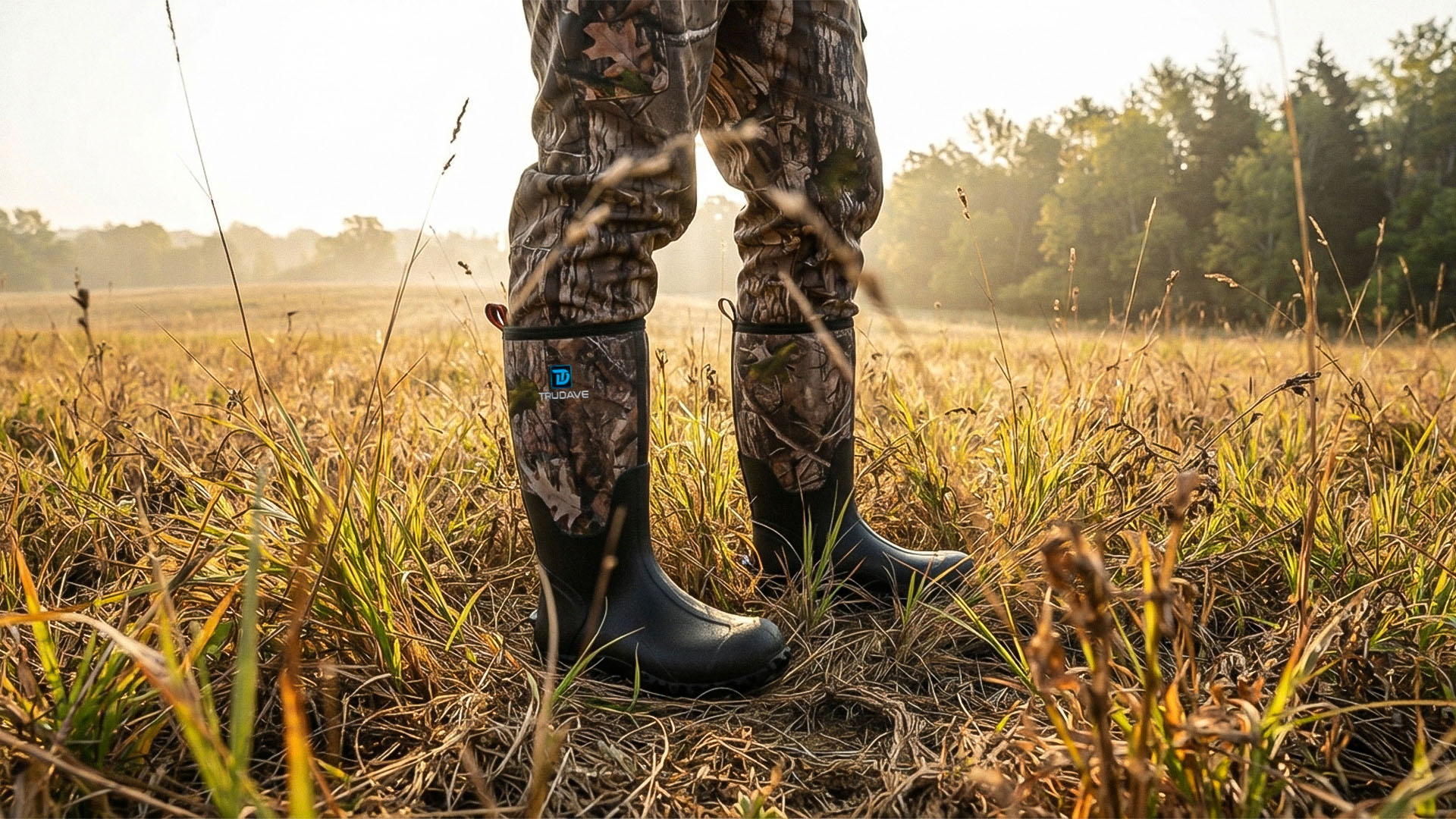
Hunters working these environments may benefit from waterproof hunting boots for mountain goat hunting that provide secure heel retention, strong wet-rock traction, and enough ankle support for steep alpine terrain.
Boot Support Is Extremely Important
Repeated sidehilling and climbing stress:
- Ankles
- Heels
- Knees
A supportive hunting boot improves control.
But support should not come at the cost of excessive weight.
Heel Lock Matters on Steep Climbs
Uphill movement repeatedly lifts the heel.
Poor fit creates:
- Friction
- Blisters
A blister that begins early can ruin the entire climb.
Break boots in before the hunt.
Toe Room Matters Even More on Descents
The descent is often harder on feet than the climb.
Feet slide forward.
Toes impact the boot.
Proper sizing matters.
Traction Should Work on Multiple Surfaces
Mountain goat country may combine:
- Mud
- Wet grass
- Rock
- Snow
- loose gravel
A boot that performs well only on dry dirt is not enough.
Waterproofing Helps During Long Grass Approaches
Even without active rain, alpine vegetation can remain soaked from:
- Dew
- Fog
- Snowmelt
A hunter may walk through wet grass for an hour before reaching the rocks.
Gaiters Can Be Extremely Useful
Gaiters help keep:
- Water
- Snow
- Gravel
out of boots.
They also protect lower legs from:
- Brush
- Scree
Socks Matter Too
Moisture management inside the boot is important.
Use socks appropriate for:
- Temperature
- Activity
Carry a dry backup pair on long hunts.
Do Not Over-Insulate During Active Climbs
Steep climbing produces significant heat.
Overly warm boots may cause sweat.
Sweat becomes a problem during long stationary glassing periods.
Balance insulation carefully.
Trekking Poles Can Improve Stability
Poles can help with:
- Steep climbs
- Descents
- Creek crossings
- Loose scree
They can reduce strain on:
- Knees
- Ankles
Practice with them before the hunt.
Poles Are Especially Useful During Pack-Outs
A heavy load changes balance.
Poles can provide additional points of contact.
Move slower than you did on the approach.
Avalanche Chutes Can Hold Food
Avalanche paths often create open vegetation inside dense mountain forest.
They may contain:
- Shrubs
- Grass
- Forbs
Goats may feed along these openings.
But Avalanche Terrain Requires Respect
Snow conditions can create serious avalanche risk.
Hunters should understand current conditions and avoid hazardous terrain.
Do not enter unstable slopes simply because animals are visible there.
Snowfields Can Remain Late
High mountains may retain snow long after valleys are dry.
Crossing snow introduces:
- Slip risk
- Hidden ice
- Steep runout hazards
Evaluate the slope before crossing.
A Short Snow Crossing Can Be Dangerous
Distance does not determine risk.
A narrow snowfield above:
- Rock
- Cliff
may be more dangerous than a much larger gentle snow patch.
Choose safer routes.
Early Snow Can Completely Change the Hunt
A fall storm can transform:
- Dry rock
- Alpine grass
into icy terrain within hours.
Check forecasts before committing to remote high ground.
Weather Moves Faster at Elevation
A clear valley does not guarantee clear conditions on the ridge.
High country can develop:
- Fog
- Snow
- Rain
- Strong wind
quickly.
Carry layers.
Fog Can Remove the Mountain
A ridge visible ten minutes ago may disappear completely.
When visibility drops:
Stop.
Confirm navigation.
Do not continue blindly toward cliff terrain.
Wind Can Become Dangerous
Exposed alpine ridges can experience extreme gusts.
Strong wind affects:
- Balance
- Temperature
- Glassing
Avoid unnecessary exposure near cliff edges.
Wind Chill Can Be Severe
Even moderate temperatures can become dangerous when combined with:
- Wind
- Wet clothing
Protect:
- Hands
- Face
- Core
Rain Gear Is Essential
A mountain hunter may spend hours exposed to changing weather.
Waterproof layers should be accessible.
Do not bury rain gear at the bottom of the pack.
Avoid Sweating During the Approach
Climbing too fast creates moisture from inside.
Open layers.
Slow down.
Reach the glassing position without completely soaking base layers.
Clothing Should Work While Stationary Too
A hunter may climb hard for an hour and then sit motionless for another hour.
Layering needs to handle both situations.
Carry insulation for glassing stops.
Gloves Matter on Wet Rock
Cold wet hands reduce:
- Grip
- Dexterity
Carry at least one dry backup pair.
Mountain Goats May Use Shade During Warm Periods
When temperatures rise, animals may move toward:
- North-facing cliffs
- Shaded ledges
- Snow edges
Search darker terrain.
Sunny Slopes May Be Better During Cold Weather
In cold conditions, sun-exposed benches may provide:
- Warmth
- Available vegetation
Adjust glassing based on weather.
Food and Security Usually Sit Close Together
Goats often feed where they can retreat quickly into steep terrain.
Look for combinations such as:
- Grass bench below cliff
- Meadow beside rock
- Avalanche chute near escape terrain
Alpine Meadows Can Look Empty Until You Glass Them
Long grass and uneven terrain can hide parts of the animal.
Use optics.
Do not assume an open meadow is easy to search with the naked eye.
Ridge Shoulders Can Hide Goats
A goat walking just below the crest may appear and disappear repeatedly.
Watch the same ridge for extended periods.
Movement creates opportunities.
Morning Glassing Can Be Productive
Early light creates shadows.
These shadows can help reveal:
- Body shape
- Movement
along cliffs and benches.
Midday Glassing Still Works
Bedded animals may remain visible on:
- Rock shelves
- Grass benches
if hunters slow down enough.
Do not assume midday means no activity.
Change Your Glassing Angle
A goat completely hidden from one point may be obvious from another.
Moving only several hundred yards can open a new section of terrain.
Before climbing, try another observation angle.
Spotting Scopes Can Save Energy
In large alpine basins, strong optics help hunters judge:
- Animal location
- Group composition
- Approach options
from a safe distance.
Optics replace unnecessary climbing.
Positive Identification Matters
Depending on the jurisdiction, hunters may need to identify specific legal animals.
Mountain goat identification can require careful observation.
Use current wildlife-agency guidance.
Do not rush identification at long range.
Body Size Alone Can Be Misleading
Distance and terrain distort scale.
Use multiple characteristics.
A solitary animal may appear larger simply because no other goat provides comparison.
Study the Entire Group
Group composition can provide useful context.
Watch:
- Behavior
- Relative size
- Horn characteristics
where relevant to lawful identification.
Let the Animals Settle Before Stalking
If goats are:
- Feeding calmly
- Bedding
you have time.
Use it.
A rushed stalk often creates worse wind and worse terrain.
Stalk Routes Should Prioritize Safety
The best route should consider:
- Visibility
- Wind
- Footing
- Recovery
not simply the shortest distance.
Stay Below Ridge Crests
A silhouette can alert animals.
Move just below the skyline.
When checking the other side:
Expose yourself slowly.
Use Rock Ribs for Concealment
Rock formations can block:
- Sight
- Wind
during portions of the approach.
Move from one terrain feature to another.
Do Not Crawl on Unsafe Rock
Getting low may reduce visibility.
It can also reduce balance.
Do not sacrifice stable footing simply to remain hidden.
Wind Is Still Important
Mountain goats have strong senses.
Keep scent away from the animal whenever possible.
High-country wind can shift around:
- Cliffs
- Saddles
Check frequently.
Cliff Faces Can Create Wind Swirls
A steady ridge wind may behave completely differently beneath a rock wall.
Do not trust one wind check.
Thermals Can Shift During Long Stalks
Morning air may move downhill.
Later, warming slopes can send air upward.
A multi-hour approach must account for these changes.
Safe Shooting Positions Can Be Difficult to Find
Steep terrain may provide few stable options.
Hunters should seek a position that provides:
- Stability
- Safe background
- Comfortable control
Do not shoot from unstable footing.
Stable Footing Is Part of Shot Quality
A perfect rest does not help if the hunter is balancing on loose rock.
Move to a safer position.
The animal may still be there.
Skyline Shots Should Be Avoided
A goat standing against the sky may be easy to see.
But the background is unsafe.
Wait until there is solid terrain behind the animal.
Other Goats May Be Hidden Nearby
A visible animal may have others standing behind:
- Rock
- Brush
Wait for a clearly separated legal target.
Thick Fog Can Create Unsafe Shot Conditions
If visibility becomes uncertain:
Do not shoot.
Mountain backgrounds can change dramatically with weather.
Distance Is Difficult to Judge in Alpine Terrain
Huge cliffs distort scale.
Use reliable ranging methods.
Know your demonstrated effective distance.
Long Range Should Not Replace Good Positioning
Seeing animals far away is normal.
Use terrain to improve position where safe.
Closer opportunities generally improve:
- Confidence
- Recovery
- Wind judgment
Recovery Begins Before the Shot
Before shooting, identify:
- Exact ledge
- Rock formation
- Drainage
- Potential fall direction
Then ask whether the animal can be safely reached.
Pay Attention to What Is Below the Animal
This may matter more than what is beside it.
A goat near a cliff edge creates a very different recovery problem than one on a broad bench.
Mark the Location With Multiple Landmarks
Once you move from the shooting position, the mountain can look completely different.
Use:
- GPS waypoint
- Distinct rock
- Snow patch
- Cliff band
together.
Watch the Animal Carefully After the Shot
Stay focused on:
- Direction
- Last visible location
- Terrain
Do not immediately pack away optics.
Do Not Rush Toward a Steep Recovery
Take time.
Plan the safest route.
An urgent climb across dangerous terrain can turn one problem into two.
Recovery May Require a Long Detour
The animal may be only two hundred yards away visually.
The safe walking route may require:
- Descending
- Traversing
- Climbing again
Accept the longer route.
Heavy Pack-Outs Change Footing
Weight makes:
- Loose rock
- Wet grass
- Mud
more dangerous.
Reduce load size if necessary.
Make Multiple Trips When Needed
There is no advantage to carrying an unsafe load.
Several controlled trips are better than one dangerous descent.
Save Energy Before the Harvest
Do not exhaust yourself simply reaching the animal.
Recovery may require more work than the stalk.
Physical Conditioning Matters
Mountain goat hunting demands:
- Climbing
- Descending
- Sidehilling
- Carrying weight
Prepare with:
- Hill training
- Stair work
- Loaded hikes
before season.
Train Downhill Movement
Descending places heavy stress on:
- Knees
- Quads
- Feet
Many hunters prepare for climbing but underestimate the return.
Pack Weight Should Increase Gradually During Training
Do not begin with extremely heavy loads.
Build conditioning over time.
The goal is durable movement, not one painful workout.
Hydration Matters in Cold High Country
Cool temperatures hide dehydration.
Climbing still causes significant fluid loss.
Carry enough water.
Water Availability Can Be Unreliable
A map may show:
- Snow
- Creek
that is unavailable or inaccessible during the hunt.
Carry enough for the planned route.
Water Treatment May Be Necessary
When relying on natural sources, use appropriate water-treatment practices.
Do not assume clear alpine water is automatically safe.
Calories Matter Too
Long climbs require energy.
Carry compact food that remains easy to eat during:
- Wind
- Rain
- Cold
Do not wait until you feel exhausted.
Navigation Is Critical
Alpine terrain becomes confusing when:
- Fog arrives
- Darkness falls
Use reliable navigation.
Mark:
- Vehicle
- Camp
- Main ridge
- Safe descent
Offline Maps Are Essential
Cell service may be unreliable or nonexistent.
Download:
- Topography
- Ownership
- Trails
before leaving.
Satellite Imagery Helps With Vegetation
Aerial imagery can show:
- Alpine openings
- Timberline
- Rock bands
Use it with topographic maps.
Carry a Headlamp Every Time
A recovery can easily extend into darkness.
Carry:
- Headlamp
- Backup power
even on an early morning hunt.
Emergency Communication Is Valuable
Remote goat habitat can be far from roads.
Depending on the hunt, appropriate satellite or emergency communication adds useful safety redundancy.
Do Not Rely on a Phone Alone
Cold weather drains batteries.
Water damages electronics.
Carry backups appropriate to the level of remoteness.
Access Roads Can Change Quickly
Mountain roads may be affected by:
- Snow
- Landslides
- Fallen trees
Check current conditions.
Do not assume the same access remains open all season.
Late-Season Snow Can Trap Vehicles
A road that was dry in the morning can become difficult after a storm.
Park conservatively.
Always consider the exit.
Public-Land Rules Can Be Specific
Mountain goat hunts are often tightly managed.
Before hunting, verify current:
- Unit boundaries
- Permit requirements
- Season dates
- Legal methods
- Access restrictions
using official wildlife-agency information.
Goat Hunts May Use Limited-Entry Systems
Some jurisdictions tightly limit opportunity.
Do not rely on regulations remembered from another season.
Check the current permit and unit information.
Identification Requirements Can Be Important
Management programs may encourage hunters to distinguish specific age or sex classes depending on the hunt.
Use current agency education materials.
Reporting Requirements May Apply
Some jurisdictions may require:
- Harvest reports
- Biological samples
- Check-in procedures
Know the requirements before hunting.
Do Not Wait Until Harvest to Read the Rules
Remote terrain is the worst place to discover you missed:
- Reporting requirement
- Unit boundary
Prepare in advance.
Species Conservation Is Especially Important
Mountain goat populations can be sensitive because of:
- Low reproductive rates
- Habitat limitations
- Harsh environments
Responsible harvest and management matter.
Habitat Protection Matters
Alpine landscapes can be fragile.
Avoid unnecessary damage to:
- Vegetation
- Trails
and follow land-management rules.
Human Disturbance Can Affect High-Country Wildlife
Use responsible access.
Do not repeatedly pressure animals outside normal hunting contexts.
Common Mountain Goat Hunting Mistakes
Climbing Before Glassing
Use optics to save energy.
Looking Only at Open Meadows
Goats may bed under cliffs or on small ledges.
Choosing the Shortest Route
The safest route is often longer.
Ignoring Recovery Terrain
The terrain below the animal matters tremendously.
Wearing Boots With Poor Heel Lock
Steep climbs and descents punish bad fit quickly.
Underestimating Wet Rock
Rain can turn manageable slopes into dangerous terrain.
Ignoring Weather Changes
High-country conditions can deteriorate rapidly.
Finding the Goat Without Planning the Pack-Out
Recovery is part of the hunt.
Frequently Asked Questions
Where do mountain goats usually live?
Mountain goats commonly use alpine and subalpine terrain containing cliffs, rocky ridges, avalanche chutes, grass benches, talus slopes, and high mountain basins.
What is the best way to find mountain goats?
Glassing large alpine landscapes from stable observation points is one of the most efficient ways to locate goats before committing to a difficult climb.
Are mountain goats difficult to hunt?
Yes. Steep terrain, rapidly changing weather, challenging access, careful identification, and difficult recovery logistics can make mountain goat hunting physically and technically demanding.
Is rain bad for mountain goat hunting?
Rain can reduce visibility and make rock, grass, and logs dangerously slippery. Wet weather also increases the importance of waterproof clothing and careful route selection.
What boots are best for mountain goat hunting?
Waterproof hunting boots with strong heel retention, dependable traction on wet rock and loose terrain, firm ankle support, and enough comfort for long alpine climbs are practical.
Why is recovery planning so important?
Mountain goats often occupy cliff terrain. An animal can move or fall into terrain that is much more difficult or dangerous to reach, so hunters should consider the recovery route before taking an opportunity.
Final Thoughts
Mountain goat hunting teaches hunters that finding the animal is not the same as solving the mountain.
The goat may be visible.
The terrain may not be safe.
A grass bench provides food.
A cliff provides escape.
A saddle provides access.
A rock rib hides the stalk.
Then rain turns every surface slick.
The successful hunter keeps evaluating.
Glass before climbing.
Study the route.
Watch the weather.
Respect wet rock.
Pay attention to the terrain beneath the animal.
Wear boots that let you climb alpine grass, loose scree, wet rock, mud, snow, and steep sidehills without becoming the weakest part of the hunt.
And when a goat appears only a few hundred yards away across a cliff system, resist the urge to think the hunt has become easy.
In mountain goat country, three hundred yards can be farther than three miles.
The mountain decides the real distance.
