
Caribou country can change faster than almost any other big-game landscape.
A valley may be empty in the morning.
No animals.
No movement.
Only tundra stretching toward distant mountains.
By afternoon, several caribou appear on a ridge.
Then twenty more.
By evening, animals are crossing the river bottom in small groups.
The next morning, they may all be gone.
That is one of the defining challenges of caribou hunting.
The landscape is huge.
The animals are mobile.
Weather changes rapidly.
Migration can make yesterday’s perfect hunting location nearly useless today.
Successful hunters learn to stop treating one sighting as a permanent hotspot.
Instead, they watch the larger system:
- Migration direction
- Wind
- River valleys
- Ridges
- Feeding habitat
- Weather
- Terrain funnels
Caribou hunting is often less about holding one location and more about understanding movement.
Caribou Country Is Built on Scale
Caribou can occupy enormous northern landscapes.
Depending on herd and region, hunting country may include:
- Arctic tundra
- Mountain valleys
- River systems
- Wet muskeg
- Shrub tundra
- Alpine ridges
- Coastal plains
The scale can overwhelm hunters.
A basin that looks close may require hours of walking.
A group of animals that appears stationary may cover significant distance while you plan the stalk.
Think bigger.
Migration Changes Everything
Some caribou populations move long distances seasonally.
That means animal distribution can change quickly.
One area may hold:
- Hundreds of animals
for a short period.
Then almost none.
Do not become emotionally attached to yesterday’s location.
Follow current movement.
Fresh Movement Matters More Than Old Sign
Caribou trails can remain visible long after animals leave.
Old tracks may look impressive.
But they do not guarantee current activity.
Look for:
- Fresh hoof prints
- Recent droppings
- Newly disturbed vegetation
- Animals visible in the same direction
Current movement is what matters.
Tracks Can Become Highways
Repeated migration may create obvious trails across tundra.
These routes can connect:
- River crossings
- Mountain passes
- Feeding areas
- Open flats
Use them to understand direction.
Do not assume animals will follow the exact same line every day.
River Valleys Can Funnel Movement
Large rivers and tributaries shape northern landscapes.
Caribou may use valleys because they provide:
- Easier travel
- Vegetation
- Wind shelter
- Natural corridors
Watch both:
- River bottom
- Benches above the river
Movement may occur on either.
River Crossings Can Concentrate Animals
Certain crossing points may provide:
- Shallower water
- Gravel bars
- Gentler banks
Caribou may repeatedly use them.
Fresh tracks and trails can reveal these areas.
Never Assume an Animal Crossing Is Safe for Hunters
Caribou can cross water that may be dangerous for people.
Northern rivers can involve:
- Cold water
- Strong current
- Deep channels
Use proper legal and safe access.
Do not follow animals blindly.
Gravel Bars Are Excellent Scouting Surfaces
Soft gravel and sand preserve tracks well.
Look for:
- Fresh prints
- Direction
- Multiple group sizes
A clean river bar can show whether animals passed recently.
Ridges Can Reveal Moving Caribou
Elevated glassing points provide huge advantages.
From a ridge, hunters can scan:
- Valleys
- River bottoms
- Tundra flats
- Distant passes
Use elevation whenever practical.
Glass Before Walking
Random tundra walking burns enormous energy.
Stop first.
Glass.
Search:
- Ridge shoulders
- Open valleys
- River corridors
- Distant silhouettes
One sighting can save several miles.
Break the Landscape Into Sections
Huge northern landscapes create visual overload.
Search systematically:
- Near ridges
- Mid-distance flats
- River bottoms
- Far slopes
- Skyline passes
Then repeat.
Animals may appear during the second scan.
Caribou Can Be Hard to Judge at Distance
Open tundra contains few size references.
Animals can appear:
- Closer
- Smaller
- Slower
than they really are.
Use reliable optics and ranging methods.
Look for Movement First
At long distance, movement often reveals caribou before body shape does.
Search for:
- Walking lines
- Antler movement
- Dark bodies crossing light tundra
Once one animal appears, glass around it carefully.
Groups May Be Spread Over Miles
One small group may be part of a much larger movement.
Continue glassing beyond the visible animals.
More may be:
- Behind ridge
- Following valley
- Entering the basin
Patience provides context.
Do Not Rush the First Group
A distant group may not offer the best opportunity.
Watch direction.
Other animals may pass closer later.
Migration hunting rewards patience.
Wind Matters During the Stalk
Caribou rely on scent.
Open tundra makes wind easier to feel but not always easier to use.
Plan the approach so scent stays away from the group.
Crosswinds Can Help
A crosswind approach can allow hunters to:
- Use terrain
- Maintain visual contact
- Keep scent away
The exact route depends on ground structure.
Tundra Wind Can Change Quickly
Open country may produce strong gusts.
Small terrain features can redirect wind.
Check constantly during long stalks.
River Valleys Can Funnel Wind
Air may move strongly along drainages.
A good wind on the ridge can be completely different below.
Recheck after changing elevation.
Thermals Matter Near Mountain Slopes
Cool air can settle.
Warming slopes can create rising thermals.
Long northern daylight can keep thermal patterns changing throughout the hunt.
Weather Can Move Animals
Caribou movement may respond to:
- Temperature
- Wind
- Insects
- Snow
- Seasonal migration timing
One weather change can alter where animals travel.
Strong Wind Can Push Movement Into Protected Terrain
During severe wind, animals may use:
- Valleys
- Leeward slopes
- Terrain depressions
Search sheltered routes.
Calm Warm Weather Can Create Insect Pressure
During warmer periods, insects can affect caribou behavior.
Animals may:
- Move more
- Seek wind
- Use exposed ridges
This can create very different patterns from cool weather.
Windy Ridges Can Become Attractive
A ridge that looks too exposed may provide relief from insects.
Watch higher, breezier terrain during warm conditions.
Tundra Vegetation Is More Important Than It Looks
Northern country may appear uniform.
It is not.
Look for changes in:
- Lichen
- Shrubs
- Wet vegetation
- Dry tundra
Feeding activity often concentrates around specific plant communities.
Dry Tundra Can Be Easier to Travel
Hunters naturally prefer:
- Firm ground
- Gravel
- Dry ridges
Caribou may use both dry and wet habitats.
Do not assume your easiest walking route matches animal preference.
Wet Muskeg Changes Everything
Tundra may contain:
- Soft peat
- Standing water
- Hidden channels
- Tussocks
Travel becomes much slower.
A mile on the map may feel like several.
Muskeg Can Look Solid and Still Collapse
Vegetation may float over:
- Water
- Soft mud
Test uncertain areas.
Avoid stepping blindly into dark depressions.
Tussocks Create Constant Balance Problems
Grass hummocks make every step uneven.
Hunters may repeatedly land:
- High
- Low
- Sideways
Slow down.
Fatigue builds quickly.
Tundra Terrain Is Harder Than It Looks
A flat map does not mean easy walking.
Energy gets used on:
- Mud
- Water
- Tussocks
- Brush
Plan shorter realistic distances.
Caribou Hunting Is a Serious Footwear Test
A typical tundra hunt may involve:
- Wet grass
- Muskeg
- Mud
- Shallow water
- Rock
- Early snow
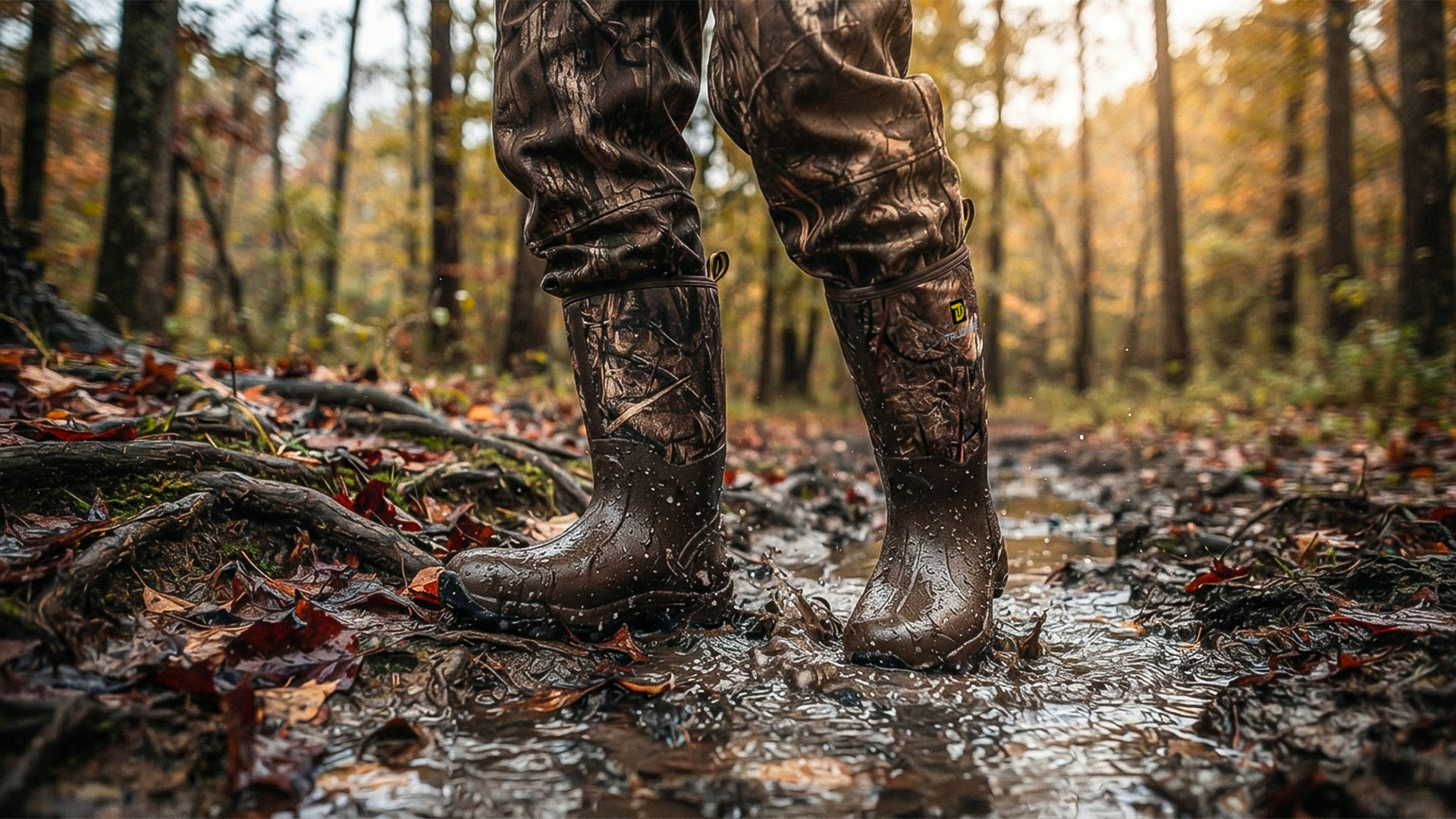
Hunters working these environments may benefit from waterproof hunting boots for caribou hunting that provide secure heel retention, reliable wet-ground traction, and enough support for long days across uneven tundra.
Waterproofing Is Essential
Northern moisture comes from everywhere.
You may encounter:
- Rain
- Dew
- Wet tundra
- Snow
- Creek edges
A boot soaked early may remain wet all day.
Boot Height Matters
Some terrain contains only:
- Wet vegetation
- Shallow mud
Other areas include deeper water.
Choose boot height based on route.
Deeper crossings may require appropriate waders or another path.
Tall Rubber Boots Can Work in Wet Lowlands
Rubber boots provide excellent water protection.
They can be practical around:
- Muskeg
- Wet flats
- Shallow water
But long-distance walking demands good fit.
Supportive Waterproof Boots Can Be Better for Mixed Terrain
If the hunt includes:
- Rock
- Ridge climbing
- Long dry sections
a supportive lace-up waterproof boot may provide better control.
Choose for the whole route.
Heel Retention Matters in Mud
Soft tundra can pull at footwear.
Loose heels create:
- Blisters
- Fatigue
Secure fit reduces wasted movement.
Ankle Support Helps on Tussocks
Constant uneven footing stresses ankles.
Supportive footwear can improve stability.
But hunters should still slow down.
Lightweight Boots Reduce Fatigue
Tundra hunts can involve many miles.
Heavy boots create cumulative energy loss.
Balance:
- Weight
- Waterproofing
- Support
- Insulation
carefully.
Too Much Insulation Can Create Sweat
Northern weather can still produce mild walking conditions.
Active hunters generate heat.
Over-insulated boots may become wet from inside.
Match insulation to:
- Temperature
- Activity
Gaiters Can Help
Gaiters can reduce:
- Water
- Seeds
- Snow
entering boots.
They are useful in wet grass and early snow.
Early Snow Changes Both Movement and Access
Snow can reveal tracks.
It can also:
- Hide holes
- Cover tussocks
- Make slopes slippery
Move more carefully.
Fresh Snow Is Excellent for Current Sign
Tracks may reveal:
- Direction
- Group size
- Passage time
Freshness matters.
Old migration tracks can remain visible for days.
Windblown Ground May Stay Open
Strong northern wind can expose:
- Gravel
- Vegetation
- Ridge tops
Caribou may use these areas for easier travel or feeding.
Deep Snow Can Change Routes
As snow increases, animals may prefer terrain that reduces energy use.
Look for:
- Windblown ridges
- Valleys
- Established trails
Rain Can Arrive Quickly
Northern weather changes fast.
A clear morning can become:
- Rain
- Wind
- Cold
within hours.
Carry layers.
Cold Rain Is More Dangerous Than It Looks
Wet clothing plus wind can create serious heat loss.
Stay dry.
Use appropriate waterproof layers.
Hypothermia Can Begin Above Freezing
Cold wet conditions do not need snow to become dangerous.
Watch for:
- Shivering
- Confusion
- Poor coordination
Take weather seriously.
Avoid Sweating Too Much
Long tundra walks can overheat hunters even in cool weather.
Vent layers.
Slow down.
Dry insulation becomes important later.
Carry Extra Gloves
Wet gloves quickly become uncomfortable.
Keep a dry backup pair protected inside the pack.
Wind Protection Matters
Open tundra offers little natural shelter.
Carry clothing that protects:
- Hands
- Face
- Core
from sustained wind.
Fog Can Remove Every Landmark
Northern fog can reduce visibility dramatically.
One minute mountains are visible.
The next, the world becomes gray.
Use reliable navigation.
Do Not Navigate Only by Distant Mountains
Cloud and fog can remove them.
Carry:
- GPS
- Offline maps
- Compass where appropriate
Mark the Vehicle or Camp
Save important locations before leaving.
Open tundra can look surprisingly similar from every direction.
River Bends Make Useful Landmarks
Natural features such as:
- River bends
- Lakes
- Large ridges
can help orientation.
Use them together with electronic navigation.
Cell Service May Be Nonexistent
Remote caribou country often lacks coverage.
Download everything in advance.
Consider appropriate emergency communication for the level of remoteness.
Carry a Headlamp Even With Long Northern Daylight
Seasonal daylight can change quickly.
Weather and recovery can delay the return.
A headlamp remains essential.
River Crossings Need Conservative Decisions
Water can be:
- Cold
- Fast
- Deeper than expected
Avoid unnecessary crossings.
A better route is worth the extra distance.
A Morning Crossing May Change Later
Rain upstream can increase water levels.
Always think about the return.
Gravel Bars Can Shift
River channels change.
A crossing used previously may no longer be safe.
Evaluate current conditions.
Do Not Follow Caribou Through Water
Animal movement is not proof of human safety.
Use safe established routes.
Boats May Be Part of Access
Some caribou hunts involve river or lake transport.
Boating requires separate planning.
Use appropriate flotation equipment.
Know:
- Weather
- Water
- Load limits
Cold Water Requires Extra Caution
Northern water can become dangerous within minutes.
Treat every boat trip conservatively.
Do Not Overload Small Boats
Game, hunters, fuel, and gear add weight quickly.
Follow capacity requirements.
Multiple trips are safer than one overloaded run.
Aircraft Access May Be Regulated
Remote hunts can involve specialized transportation.
Current wildlife and aviation-related hunting restrictions can be highly specific.
Verify all applicable rules before the hunt.
Do Not Assume You Can Hunt Immediately After Any Flight
Some jurisdictions impose restrictions involving aircraft use and same-day hunting.
Check current official regulations for the exact area.
Public-Land Access Can Still Have Rules
Remote does not mean unrestricted.
Check:
- Motorized access
- Camping rules
- Unit boundaries
- Seasonal restrictions
Caribou Hunting Regulations Can Be Complex
Rules may depend on:
- Herd
- Unit
- Residency
- Season
- Permit
- Sex
Always verify current official wildlife regulations.
Herd-Specific Rules Matter
Different caribou populations may have different management structures.
Do not assume one Alaska or Canada regulation applies to another herd or region.
Species and Sex Identification Matter
Depending on the hunt, legal animals may be defined by:
- Sex
- Antler status
- Season
Caribou antler biology can make identification more complicated than hunters expect.
Study current official identification guidance.
Do Not Rush Long-Distance Identification
At distance, body and antler characteristics can be hard to judge.
Use quality optics.
Wait for a clear legal identification.
Safe Backgrounds Matter Even in Empty-Looking Tundra
Remote country may appear completely empty.
Still know what lies beyond the target.
Avoid shots toward:
- Skyline
- Unknown terrain
- Other animals
Herds Can Overlap Visually
One animal may stand directly behind another.
Wait until the legal target is clearly separated.
Long Distances Are Deceptive
Open tundra makes range estimation difficult.
Use reliable methods.
Know your demonstrated effective distance.
Seeing Far Does Not Mean Shooting Far Is Necessary
Terrain may allow:
- Draw approach
- Ridge cover
- River bank concealment
Use stalking to improve position.
Wind Makes Long Shots Harder
Open tundra often means constant wind.
Longer shots magnify uncertainty.
If conditions are unstable:
Get closer.
Wait.
Or pass.
Stable Shooting Positions Should Be Planned
Open tundra may offer few natural rests.
Hunters may use legal appropriate support such as:
- Pack
- Bipod
- Sitting position
Practice before the hunt.
Do Not Rush Because the Herd Is Moving
Migrating animals create urgency.
That does not change ethical standards.
Wait for:
- Clear identification
- Safe background
- Stable opportunity
Recovery Begins Before the Shot
Mark:
- Exact location
- Ridge
- River
- Distinct tundra patch
before firing.
Open terrain can become surprisingly confusing once you leave the observation point.
Keep Watching After the Shot
Note:
- Direction
- Last visible location
- Herd movement
Do not immediately pack optics away.
Tundra Can Hide an Animal More Than Expected
Low vegetation and terrain folds can block visibility.
Use a waypoint.
Approach methodically.
Fresh Tracks Can Help Recovery
Soft tundra, mud, or snow may preserve movement.
Follow carefully.
Rock Can Remove Tracking Sign
On gravel or stone, look for:
- Disturbed soil
- Hair
- Vegetation
rather than expecting perfect tracks.
Do Not Destroy the Trail
Keep unnecessary hunters away from sign.
Mark confirmed evidence before moving farther.
Pack-Out Planning Matters
A caribou may appear close from a ridge.
The actual route may include:
- River
- Muskeg
- Tussocks
- Elevation
Plan recovery before shooting.
Tundra Makes Heavy Loads Much Harder
A pack that feels manageable on firm ground becomes much harder across:
- Mud
- Tussocks
- Water
Reduce load size.
Make more trips if necessary.
Save Energy Before Success
Do not exhaust yourself completely during the stalk.
Recovery may require more work than hunting.
Warm Early Seasons Require Fast Meat Care
Northern weather is not always cold.
Daytime temperatures can be surprisingly warm.
Begin field care promptly.
Caribou Meat Needs Airflow and Cooling
Prepare appropriate:
- Game bags
- Cooling plan
- Transport
before hunting.
Follow current wildlife and food-safety guidance.
Insects Can Complicate Meat Care
Warm northern periods may bring intense fly activity.
Proper game bags and fast cooling become important.
Rain Makes Pack-Outs Harder
Wet vegetation increases:
- Weight
- Slipperiness
- Cold exposure
Plan accordingly.
Migration Can Create Long Recovery Distances
A moving herd may lead hunters farther from:
- Camp
- Boat
- Road
than expected.
Track your own location throughout the stalk.
Do Not Let the Animals Pull You Into Bad Access
A herd may continue across:
- River
- Dangerous terrain
- Property or unit boundary
Know when to stop.
Unit Boundaries Can Be Hard to See
Remote landscapes rarely contain obvious signs.
Use current maps.
A migrating herd can cross boundaries quickly.
Conservation Depends on Large Connected Landscapes
Caribou rely on vast seasonal ranges.
Habitat connectivity matters.
Migration routes can extend across enormous distances.
Migration Corridors Are Part of the Habitat
Protecting only summer or winter range is not enough.
The routes between them also matter.
Hunters benefit directly from healthy connected northern landscapes.
Disturbance Can Affect Movement
Roads, development, and other landscape changes can alter migration patterns.
Responsible access helps reduce unnecessary impact.
Common Caribou Hunting Mistakes
Hunting Yesterday’s Herd Location
Caribou move quickly.
Walking Before Glassing
Use optics to cover the landscape first.
Following Old Migration Tracks
Freshness matters more than quantity.
Underestimating Tundra Footing
Flat does not mean easy.
Wearing Leaky or Heavy Boots
Wet tundra rewards waterproof support with manageable weight.
Forgetting Wind
Open terrain does not make scent irrelevant.
Crossing Water Because Caribou Did
Animal crossings are not proof of human safety.
Failing to Plan the Pack-Out
Muskeg and tussocks make heavy recovery extremely difficult.
Frequently Asked Questions
Where do caribou usually live?
Caribou may use Arctic tundra, mountain valleys, river corridors, shrub tundra, coastal plains, muskeg, and seasonal migration ranges depending on herd and region.
Do caribou migrate?
Many populations make significant seasonal movements, although migration behavior varies among herds.
Is fresh snow useful for caribou hunting?
Yes. Fresh snow can reveal current movement, migration trails, and travel direction, although deeper snow may also alter routes and access.
Are river valleys good places to find caribou?
They can be. River systems can provide travel corridors, vegetation, terrain funnels, and crossing points.
What boots are best for caribou hunting?
Waterproof hunting boots with secure heel retention, strong wet-ground traction, moderate ankle support, and manageable weight for muskeg, tundra, mud, rock, and early snow are practical.
Why is caribou hunting physically difficult?
Even apparently flat tundra can contain soft muskeg, standing water, tussocks, mud, river crossings, wind, and long distances that make travel much harder than it looks.
Final Thoughts
Caribou hunting teaches hunters that a landscape can look permanent while the animals using it are constantly moving.
One river crossing matters today.
One ridge becomes important tomorrow.
A valley that looked empty suddenly fills with animals.
Then the migration continues.
That is why successful hunters keep watching.
Glass before walking.
Follow current movement.
Use river corridors.
Read fresh tracks.
Watch the wind.
Respect water.
Expect muskeg.
Wear boots that let you cross wet tundra, mud, tussocks, shallow water, gravel, and early snow without allowing your feet to become the limiting factor.
And when a group of caribou appears on a ridge that was completely empty an hour ago, remember the most important lesson of tundra hunting:
You are not hunting a fixed location.
You are hunting movement across one of the largest landscapes in North America.
