
Black bear country can look full of possibilities.
Oak ridges.
Berry-covered slopes.
Creek bottoms.
Logging roads.
Dense mountain laurel.
Miles of timber that seem capable of holding a bear anywhere.
That is exactly the problem.
A hunter can walk all day through good-looking forest and never see fresh sign.
Then one hillside changes.
Acorns cover the ground.
Fresh claw marks appear on a tree.
Dark scat sits beside an old logging road.
Several overturned rocks show recent feeding.
Suddenly the forest becomes much smaller.
That is one of the biggest lessons in black bear hunting.
Do not start by looking for bears.
Start by looking for the food bears are using right now.
Black bears can shift rapidly between:
- Berries
- Soft mast
- Hard mast
- Agricultural food
- Other seasonal natural foods
When the food changes, the bears often change locations with it.
Successful hunters learn to follow that seasonal menu.
Black Bear Habitat Is Extremely Diverse
Black bears can use many different environments.
In Appalachian and eastern mountain country, productive habitat may include:
- Hardwood ridges
- Oak forests
- Mountain laurel
- Regenerating timber cuts
- Creek bottoms
- Berry slopes
- Agricultural edges
- Remote forest basins
The presence of forest alone does not mean one section is equally productive.
Food distribution is often the deciding factor.
Food Should Be the First Question
Before choosing a hunting location, ask:
What are bears eating here right now?
Possible seasonal food can include:
- Berries
- Acorns
- Beech nuts
- Other mast
- Insects
- Agricultural crops where available
Fresh feeding sign around one food source can be far more valuable than miles of random tracks.
Hard Mast Can Change the Entire Hunt
When acorns become available, black bear movement may shift dramatically.
A bear that was using:
- Berry slopes
- Creek bottoms
- Open cuts
may begin spending more time in oak forest.
That means last week’s productive location can suddenly feel empty.
Follow current food.
Not Every Oak Ridge Produces the Same Amount of Mast
One ridge may be covered with acorns.
Another may have almost none.
Do not hunt simply because the map says “hardwoods.”
Walk the ground.
Look for actual mast production.
Fresh Feeding Sign Matters
Bears feeding around acorns may leave:
- Disturbed leaves
- Tracks
- Scat
- Broken branches
Fresh sign should look recent.
Rain and wind can age evidence quickly.
Current activity matters more than old history.
Berries Can Be Extremely Important
Earlier in the season, berry-producing habitat may attract bears.
Depending on location, hunters may find activity around:
- Blackberry
- Blueberry
- Other native fruit
Berry patches can occur in:
- Burns
- Clearcuts
- Powerline corridors
- Mountain openings
These areas can create excellent feeding concentrations.
Regenerating Clearcuts Can Produce Excellent Food
Timber harvest creates sunlight.
Sunlight produces:
- Berries
- Forbs
- Shrubs
Several years after cutting, a clearcut may offer abundant bear food.
The age of the cut matters.
Very Fresh Cuts May Be Too Open
Immediately after logging, vegetation may be limited.
A few growing seasons later, food production can increase dramatically.
Hunters should learn to recognize regeneration stages.
Old Cuts Can Become Difficult to Glass
As young trees and brush grow taller, visibility declines.
The habitat may still hold bears.
Hunters simply need different strategies.
Use:
- Logging roads
- Elevated glassing points
- Small openings
to inspect dense regeneration.
Burns Can Create Similar Opportunities
Wildfire or prescribed burning can stimulate new plant growth.
Post-fire habitat may produce:
- Berries
- Forbs
- Shrubs
depending on region and age.
The edge between recovering vegetation and mature timber can be especially useful.
Do Not Assume Every Burn Is Productive
A fresh severe burn may offer little food.
A much older burn may already have matured beyond ideal berry production.
Study vegetation.
Habitat age matters.
Creek Bottoms Can Hold Summer Bears
Creek systems provide:
- Water
- Cooler temperatures
- Dense vegetation
- Insects
During warm periods, bears may use low shaded habitat.
But food still determines whether they stay.
Creek Benches Can Be Better Than the Water’s Edge
A narrow flat shelf above a creek may provide:
- Easier travel
- Feeding vegetation
- Bedding security
Look for tracks along these benches.
They often connect low ground with oak ridges above.
Bear Trails Can Be Surprisingly Obvious
Repeated use may create trails through:
- Laurel
- Brush
- Ferns
A well-used trail can show:
- Tracks
- Hair
- Scat
But one trail alone does not tell you when bears use it.
Freshness matters.
Logging Roads Are Excellent Scouting Features
Old roads create easy travel through steep forest.
Bears may use them because they provide:
- Efficient movement
- Feeding edges
- Access between habitat types
Look for fresh sign after rain.
Closed Logging Roads Can Be Especially Useful
Roads closed to vehicles may receive less human disturbance.
Vegetation may grow along the edges.
Hunters can walk them quietly while checking:
- Tracks
- Scat
- Feeding sign
Muddy Roads Record Movement
After rain, soft road surfaces become excellent tracking tools.
A fresh bear track can reveal:
- Direction
- Relative size
- Recent use
Check roads connecting major feeding areas.
Learn Fresh Track Characteristics
Recent tracks may show:
- Sharp edges
- Clean pad impressions
- Moist soil
Older prints become:
- Rounded
- Filled with debris
- Rain damaged
Never assume a large old track means the bear is still nearby.
Scat Can Reveal Current Food
Bear scat can contain obvious clues about diet.
Depending on current feeding, hunters may see:
- Berry material
- Plant matter
- Other food remains
This helps confirm what bears are using.
Do not handle wildlife scat unnecessarily.
Feeding Sign Should Match the Season
A berry-filled area with no fresh bear sign may simply be unused.
An oak ridge covered in fresh scat and tracks tells a stronger story.
Use multiple clues together.
One Fresh Clue Is Good
Several fresh clues are better.
Strong bear habitat often contains:
- Fresh tracks
- Fresh scat
- Feeding sign
- Bedding or travel cover
The more evidence overlaps, the more confidence you can have.
Mountain Laurel Can Hide Bears Completely
Dense laurel creates excellent security.
A large bear can disappear inside it.
Look for:
- Trails
- Tunnels
- Openings
through the cover.
Do not assume you need to crawl directly through the thickest section.
Hunt Laurel Edges
Transitions between dense laurel and:
- Open hardwood
- Logging road
- Clearcut
can be productive.
Bears gain security while remaining close to food.
Rhododendron Can Create Similar Cover
In wetter Appalachian environments, dense rhododendron can make visibility extremely short.
Look for travel lanes around:
- Creek edges
- Benches
- Gaps
The thickest cover often shapes movement.
Mountain Terrain Controls Travel
Bears are excellent climbers and can move through steep country easily.
Hunters should pay attention to:
- Ridges
- Saddles
- Benches
- Draws
These features can still influence travel efficiency.
Saddles Can Funnel Movement
A low point between two ridges may connect:
- Feeding areas
- Bedding cover
- Creek systems
Fresh tracks in a saddle deserve attention.
Benches Can Provide Bedding and Travel
A relatively flat shelf on a steep mountain offers easier movement.
Bears may use these locations for:
- Bedding
- Feeding
- Travel
Topographic maps can help identify them.
Ridge Tops Can Hold Mast
Oak-heavy ridges may become important during fall.
Hunters should search:
- Ridge shoulders
- Saddles
- Upper slopes
for current feeding sign.
Do Not Ignore Sidehill Trails
Bears may travel contour lines instead of constantly climbing and descending.
Look for trails wrapping around slopes.
These can connect feeding zones efficiently.
Rain Can Improve Bear Scouting
Rain softens:
- Roads
- Trails
- Mud
making fresh tracks easier to identify.
It can also quiet dry forest litter.
Light Rain Can Help Still-Hunting
Wet leaves make movement quieter.
Hunters can slowly work:
- Ridge edges
- Logging roads
- Feeding areas
with less noise.
Heavy Rain Changes Visibility
Strong rain can reduce:
- Hearing
- Glassing visibility
Bears may also use thicker protected cover.
Adjust expectations.
Wet Forest Can Soak Hunters Quickly
Mountain vegetation retains moisture long after rain ends.
Hunters may brush against:
- Ferns
- Laurel
- Grass
for hours.
This creates constant footwear exposure.
Waterproof Footwear Is Essential in Wet Bear Country
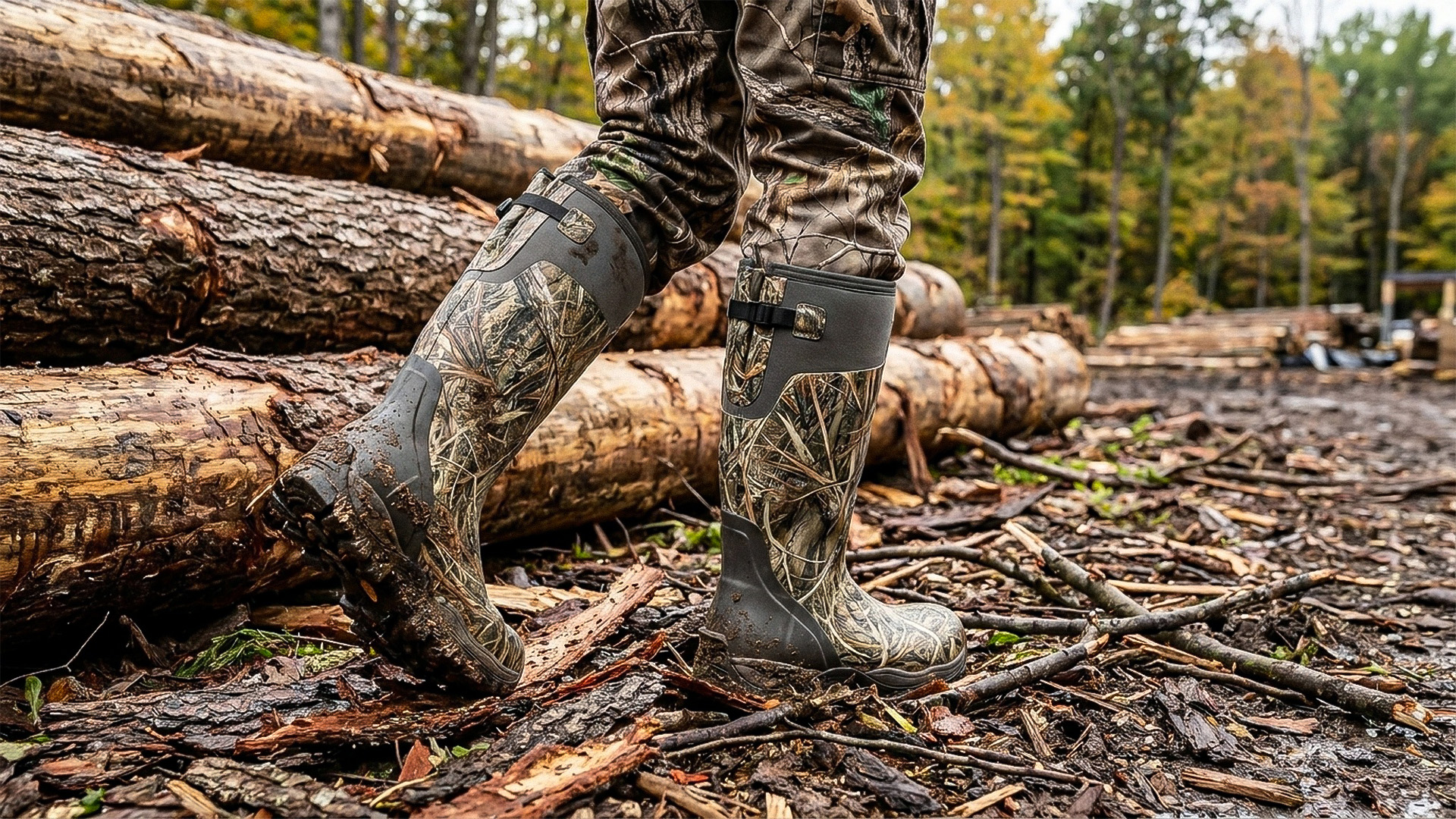
Hunters covering this terrain may benefit from waterproof hunting boots for black bear hunting that provide secure heel retention, dependable wet-ground traction, and enough ankle support for muddy ridges, creek crossings, and steep Appalachian slopes.
Lightweight Support Is Often Better Than Maximum Bulk
Bear hunting can involve significant walking.
Heavy boots create fatigue.
Choose footwear that balances:
- Waterproofing
- Support
- Weight
Heel Retention Matters on Climbs
Mountain terrain produces repeated:
- Uphill
- Downhill
- Sidehill
movement.
A loose heel creates friction and blisters.
Break boots in before the hunt.
Toe Room Matters on Descents
Long downhill routes push feet forward.
Make sure footwear allows enough toe space.
A painful descent can make recovery far more difficult.
Traction Matters on Wet Leaves
Leaves can hide:
- Roots
- Rocks
- Mud
Good tread helps.
Careful foot placement matters more.
Mossy Rock Can Be Extremely Slick
Shaded mountain forests may contain wet moss-covered stone.
Slow down.
Do not jump between rocks during a stalk.
Creek Crossings Need Caution
Rain can raise water quickly.
Use safe crossings.
Do not rush through slippery creeks because fresh bear sign continues on the other side.
Gaiters Can Help
Gaiters may reduce:
- Water
- Seeds
- Mud
entering around the boot opening.
They can also protect lower legs from wet vegetation.
Brush-Resistant Clothing Is Useful
Bear habitat may contain:
- Blackberry
- Briars
- Laurel
Durable clothing lets hunters move through productive habitat without avoiding every thick patch.
Eye Protection Can Help
Branches and brush frequently sit at face height.
Clear protective glasses can reduce eye injuries during:
- Pre-dawn access
- Thick-cover scouting
Bears May Move More During Low-Light Periods
Early morning and late afternoon can produce increased activity around feeding areas.
But weather and food can extend movement.
Do not treat bear hunting as strictly a dawn-and-dusk pursuit.
Overcast Days Can Extend Feeding Activity
Dark conditions may encourage bears to remain in openings longer.
This can improve glassing opportunities in:
- Clearcuts
- Burns
- Berry slopes
Midday Can Still Be Productive
If food is abundant and disturbance is low, bears may move during daylight beyond the traditional edges.
Use current sign.
Do not rely only on general rules.
Wind Is Critical
Black bears have an excellent sense of smell.
Always consider:
- Wind direction
- Thermals
- Terrain airflow
before approaching feeding habitat.
Mountain Thermals Change Throughout the Day
Cool morning air may sink.
Warming slopes can create rising thermals.
A long stalk can fail because the wind changes halfway through.
Monitor constantly.
Thick Forest Does Not Hide Human Scent
A bear you cannot see may still smell you.
Do not use dense vegetation as an excuse to ignore wind.
Crosswind Approaches Can Be Useful
When terrain allows, a crosswind approach may help hunters remain outside the bear’s scent cone while maintaining visibility.
Plan before moving.
Glass Clearcuts Before Entering
A bear may be feeding quietly inside vegetation.
Once the hunter enters:
- Visibility decreases
- Scent spreads
- Noise increases
Use optics first.
Binoculars Are Valuable at Short Range Too
A dark stump in a clearcut can look exactly like a bear.
Binoculars help distinguish:
- Fur
- Bark
- Shadow
before unnecessary movement.
Search for Movement Rather Than Full Animals
A feeding bear may reveal:
- Head movement
- Ear
- Shoulder
- Vegetation shaking
The entire body may never become visible.
Glass Openings Repeatedly
A bear hidden behind brush during the first scan may appear five minutes later.
Do not declare a clearcut empty after one quick look.
Agricultural Edges Can Attract Bears
In some regions, bear habitat borders:
- Corn
- Grain
- Orchards
where lawful and relevant.
These food sources may influence local movement.
Property access is critical.
Hunt Security Cover Near Food
A bear may feed after dark but spend daylight relatively close.
Search nearby:
- Timber
- Laurel
- Creek benches
for fresh sign.
Orchards Can Produce Seasonal Food
Fruit-producing areas can become highly attractive.
Where legal hunting and land access permit, look for fresh sign around:
- Orchard edges
- Adjacent timber
Do not enter private agricultural land without permission.
Human Food Sources Should Never Be Part of the Strategy
Do not intentionally condition bears to human food.
Follow all regulations and wildlife-agency guidance concerning:
- Attractants
- Garbage
- Baiting
where applicable.
Baiting Rules Vary Widely
Some jurisdictions prohibit bear baiting.
Others regulate it heavily.
Never assume methods legal in one state are legal somewhere else.
Verify current official rules.
Dogs May Be Legal in Some Bear Hunting Areas and Prohibited in Others
Hound hunting rules vary greatly.
If considering any dog-assisted bear hunt, check:
- Season
- Land access
- Dog regulations
- Wildlife rules
for the specific jurisdiction.
Do Not Assume One Bear Method Applies Everywhere
Bear hunting regulations can differ substantially between states and regions.
The legal method is part of hunt planning.
Hunting Pressure Changes Bear Behavior
Bears receiving repeated pressure may:
- Become more nocturnal
- Shift feeding locations
- Use thicker cover
Current sign can show whether a location remains active.
Easy Access Receives More Pressure
Clearcuts directly beside roads may look perfect.
They may also be hunted frequently.
Search:
- Closed roads
- Secondary cuts
- Less obvious mast ridges
where habitat remains strong.
Distance Is Not the Same as Security
A secluded pocket may exist only several hundred yards from an open road if:
- Laurel
- Creek
- Steep terrain
discourage hunters.
Look for access difficulty, not only mileage.
Public Land Can Offer Large Bear Habitat
Public forests may contain excellent combinations of:
- Mast
- Cuts
- Creeks
- Thick cover
But pressure varies greatly.
Use maps and fresh sign.
Private Timberland Can Also Be Productive
Where access is legal, managed timberlands may provide:
- Young cuts
- Logging roads
- Berry habitat
Follow landowner rules.
Active Logging Areas Must Be Avoided
Stay clear of:
- Machinery
- Falling operations
- Trucks
Follow all closures.
Logging Roads Change With Weather
Heavy rain can create:
- Washouts
- Mud
- Fallen trees
Check current access.
Do not drive around gates or closures.
Wet Roads Are Easy to Damage
If private or forest roads become soft:
Walk.
Deep ruts can harm future access.
Navigation Is Important in Mountain Forest
Dense hardwood and laurel can hide landmarks.
Use:
- Offline maps
- GPS
- Topographic information
Mark:
- Vehicle
- Main ridge
- Creek
Ridge Systems Can Be Confusing
Once inside forest, one ridge may resemble another.
Check navigation regularly.
Do not wait until dark.
Carry a Headlamp
Bear recovery or a late glassing session can extend into darkness.
Always carry:
- Headlamp
- Backup power
Bears Are Powerful Wild Animals
Maintain situational awareness during:
- Scouting
- Stalking
- Recovery
Do not intentionally approach non-target bears closely.
Never Approach a Bear Just for a Better Photo
Wild bears require space.
Hunting does not remove normal wildlife-safety principles.
Sows With Cubs Require Extra Awareness
Know current legal restrictions.
Avoid placing yourself unnecessarily close to family groups.
Positive identification matters.
Bear Identification Must Be Deliberate
Dense vegetation can make size estimation difficult.
Before shooting, identify:
- Legal animal
- Clear target
- Safe background
Do not rush because the bear is disappearing.
Size Is Hard to Judge
A bear’s apparent size can change based on:
- Distance
- Vegetation
- Body posture
Use multiple visual cues.
Do not base a decision on one impression.
Safe Shooting Backgrounds Matter
Mountain forest may contain:
- Roads
- Trails
- Houses
beyond vegetation.
Do not assume timber automatically creates a safe backstop.
Do Not Shoot at a Dark Shape
A black shape behind brush is not enough.
Positive identification is mandatory.
Branches Can Hide the Target
Wait for a clear opening.
A rushed shot through vegetation increases uncertainty.
Recovery Begins Before the Shot
Before shooting, mark:
- Exact location
- Nearby tree
- Rock
- Trail
Dense forest can make relocation difficult.
Watch the Bear After the Shot
Remain focused on:
- Direction
- Last visible location
- Movement
Do not immediately lower optics or begin moving.
Rain Can Complicate Tracking
Heavy rain can reduce visible blood sign.
Use additional clues:
- Tracks
- Hair
- Disturbed vegetation
where present.
Move methodically.
Leaves Can Hide Tracks
Forest floors contain deep leaf litter.
Look for:
- Turned leaves
- Scuffed soil
- Broken stems
rather than expecting perfect prints.
Do Not Destroy Sign
If tracking is required, keep unnecessary hunters off the trail.
Mark confirmed evidence before continuing.
Thick Laurel Can Make Recovery Difficult
Visibility may shrink to only a few yards.
Move cautiously.
Maintain communication with partners.
Bear Recovery Requires Extra Awareness
Before approaching a downed bear, follow current hunter-safety guidance and ensure the animal is no longer a threat before handling it.
Do not rush into dense cover without knowing the situation.
Game Extraction Can Be Physically Demanding
Mountain bears may be harvested far from:
- Roads
- Trails
Plan recovery beforehand.
Consider:
- Distance
- Elevation
- Weather
Warm Early Seasons Require Fast Game Care
Fall afternoons may remain warm.
Prepare with:
- Game bags
- Cooler capacity
- Ice
according to the hunt and applicable regulations.
Meat Cooling Matters
Dense fur and body mass retain heat.
Begin proper field care promptly.
Follow current wildlife and food-safety guidance.
Bear Meat Requires Proper Cooking
Hunters should follow current food-safety guidance for wild bear meat, including recommendations intended to reduce risks from foodborne parasites and pathogens.
Proper preparation is part of responsible harvest.
Regulations Must Be Checked Carefully
Black bear hunting rules can vary substantially by:
- State
- Zone
- Season
- Hunting method
Before hunting, verify current:
- License requirements
- Tags
- Season dates
- Bag limits
- Legal methods
- Bait or dog rules where relevant
Use current official wildlife-agency information.
Bear Seasons May Have Special Reporting Requirements
Some jurisdictions may require:
- Harvest reporting
- Check stations
- Tooth submission
- Other biological sampling
Verify requirements before hunting.
Do Not Wait Until After Harvest to Learn Reporting Rules
Know:
- Required deadlines
- Locations
- Documentation
in advance.
Public-Land Rules May Add Restrictions
A state hunting method may still face additional restrictions on a particular:
- Forest
- Wildlife area
- Federal property
Check both wildlife and land-management rules.
Habitat Conservation Benefits Bears
Healthy bear populations depend on landscapes providing:
- Mast
- Berry habitat
- Forest cover
- Young regeneration
Diverse forest age classes create more feeding opportunities.
Mast-Producing Forests Are Valuable to Many Species
Protecting productive hardwood systems benefits:
- Bears
- Deer
- Turkey
- Other wildlife
Hunters benefit directly from healthy forest management.
Common Black Bear Hunting Mistakes
Looking for Bears Before Finding Food
Seasonal food usually explains location.
Hunting Every Oak Ridge Equally
Mast production varies dramatically.
Following Old Sign
Current feeding sign matters more.
Glassing Clearcuts Too Quickly
A bear may be hidden behind vegetation.
Ignoring Wind
Thick forest does not defeat a bear’s nose.
Wearing Leaky or Poorly Fitting Boots
Wet mountain terrain demands waterproof traction and support.
Rushing Into Dense Cover After the Shot
Recovery requires caution and planning.
Assuming Bear Hunting Rules Are Simple
Methods and reporting requirements vary significantly.
Frequently Asked Questions
Where do black bears usually live in Appalachian country?
Black bears may use hardwood ridges, berry slopes, regenerating clearcuts, creek bottoms, laurel thickets, burns, and other forest habitats providing seasonal food and secure cover.
Are acorns important for black bear hunting?
Yes. During good mast years, acorns and other hard mast can strongly influence bear movement and feeding locations.
Is rain good for black bear hunting?
Rain can make fresh tracks easier to identify and quiet forest movement, although heavy rain can reduce visibility and complicate recovery.
Are clearcuts good places to find black bears?
They can be, especially when young vegetation produces berries, forbs, and shrubs while mature forest remains nearby for security.
What boots are best for black bear hunting?
Waterproof hunting boots with secure heel fit, dependable traction on wet leaves, mud, roots, and rock, and enough support for steep forest terrain are practical.
Do black bear hunting regulations vary by state?
Yes. Season structure, licenses, hunting methods, baiting, dog use, and harvest-reporting requirements can vary widely, so hunters should always verify current official regulations.
Final Thoughts
Black bear hunting teaches hunters to stop thinking of the forest as one continuous block of habitat.
The bear sees a seasonal menu.
A berry slope in early fall.
A regenerating cut full of soft mast.
An oak ridge dropping acorns.
A creek bench connecting feeding areas.
A laurel thicket providing security only yards away.
Those food sources change.
The bear changes with them.
Find the food first.
Read fresh tracks.
Study current scat and feeding sign.
Glass young cuts slowly.
Use rain to move quietly.
Respect the wind.
Wear boots that let you cross wet leaves, muddy logging roads, creek bottoms, steep ridges, and thick mountain vegetation without choosing only the easiest ground.
And when a bear finally appears on a hillside you already glassed twice, remember why.
The forest was not empty.
You simply had to look long enough—and understand what the bear came there to eat.
