
Snowshoe hare country can look empty even when animals are everywhere.
Fresh snow covers the forest floor.
Young spruce grows tightly together.
Alder and willow form dense walls along low ground.
Tracks cross a logging road and disappear immediately into brush.
A hunter follows them.
Nothing moves.
The forest seems silent.
Then one patch of white shifts underneath a small conifer.
A hare explodes from cover, bounds through the snow, and disappears again almost instantly.
That is snowshoe hare hunting.
These animals survive by using habitat that makes them almost impossible to see.
In winter, their seasonal coat blends with snow.
Their large hind feet help them travel efficiently across soft terrain.
And their preference for dense young cover gives them plenty of places to hide.
Successful hunters do not simply walk through random northern forest.
They learn to identify the small habitat features that consistently hold hares:
- Young conifers
- Brushy wetland edges
- Willow
- Alder
- Logging cuts
- Thick regeneration
- Snow-covered travel corridors
Find the right structure and fresh sign.
The animals become much easier to locate.
Snowshoe Hares Need Dense Cover
Snowshoe hares are strongly associated with northern forests containing thick ground-level vegetation.
Productive habitat may include:
- Young spruce
- Fir regeneration
- Alder
- Willow
- Aspen regrowth
- Brushy clearcuts
- Wetland edges
- Young forest
The key is cover close to the ground.
Mature forest with very little understory may look beautiful.
It often provides less security.
Young Conifers Are One of the Best Places to Start
Dense young spruce and fir provide:
- Concealment
- Wind protection
- Feeding opportunities
- Escape cover
A stand that is difficult for hunters to walk through may be perfect for hares.
Look for trees growing close enough together to create a low tunnel system underneath.
Not Every Conifer Stand Is Equal
One block of young spruce may show dozens of tracks.
Another may appear almost unused.
Differences may come from:
- Browse availability
- Snow depth
- Nearby wetlands
- Cover density
Always confirm habitat with fresh sign.
Fresh Snow Makes Scouting Much Easier
Snowshoe hare hunting becomes much more readable after snowfall.
Fresh snow reveals:
- Tracks
- Feeding routes
- Resting areas
- Escape patterns
A heavily used patch can look completely different from surrounding forest.
Learn What Fresh Tracks Look Like
Recent tracks may have:
- Sharp edges
- Clean impressions
- Little snow filling them
Older tracks may look:
- Rounded
- Wind-filled
- Partially covered
Track freshness helps hunters avoid following yesterday’s activity all morning.
Track Density Matters
One set of tracks may belong to a single hare moving through.
A maze of tracks around one thicket suggests repeated use.
That is where hunters should slow down.
Feeding Sign Can Confirm Use
Snowshoe hares may feed on:
- Twigs
- Bark
- Woody browse
Freshly clipped stems can reveal active feeding areas.
Look for:
- Cleanly cut twigs
- Tracks beneath browse
- Droppings
Several clues together create a much stronger picture.
Willow Can Be Excellent Habitat
Willow provides both:
- Food
- Cover
especially around:
- Wetlands
- Creeks
- Beaver systems
- Low flats
Search dense willow edges carefully.
A hare may sit only a few yards inside.
Alder Creates Similar Security
Alder thickets can become excellent winter cover.
They often occur near:
- Wet ground
- Streams
- Swamps
Hares can move underneath stems while remaining nearly invisible.
Wetland Edges Are Better Than the Wettest Center
Hunters usually do not need to enter deep swamp habitat.
Focus on the transition where:
- Willow
- Alder
- Conifer
- Dry ground
meet.
These edges combine multiple resources.
Beaver Habitat Can Create Productive Cover
Old and active beaver systems can create:
- Willow growth
- Alder
- Wet meadow edges
- Young vegetation
The surrounding habitat may hold snowshoe hares.
Look for tracks along the drier margins.
Young Clearcuts Can Be Excellent
Timber harvest can create dense regeneration.
After several growing seasons, a cut may fill with:
- Spruce
- Aspen
- Birch
- Brush
This can produce ideal hare cover.
Very Fresh Cuts May Be Too Open
Immediately after logging, cover may be limited.
Over time, regeneration creates better security.
The age of the cut matters.
Older Cuts Can Age Out
As trees grow taller and lower branches disappear, ground-level structure may decline.
A cover that held many hares several years ago may eventually become less productive.
Follow forest succession.
Aspen Regeneration Can Add Food
Young aspen may provide valuable browse.
Look for stands where:
- Aspen
- Conifers
- Brush
occur together.
Mixed young forest often creates better habitat than one uniform stand.
Forest Edges Matter
Transitions between:
- Mature forest
- Young regeneration
- Wetland
- Logging road
can concentrate activity.
Hares often travel along these edges while remaining close to security cover.
Old Logging Roads Are Excellent Scouting Lines
Snow-covered roads provide clean tracking surfaces.
Look for crossings.
Repeated tracks may reveal:
- Feeding patch
- Bedding cover
- Travel route
The road itself is useful mainly because it shows movement clearly.
Closed Roads Can Be Even Better
Vehicle-free logging roads receive less disturbance.
They may also grow:
- Grass
- Shrubs
- Young trees
along the edges.
Walk slowly.
Check every fresh crossing.
Tracks Crossing Roads Can Reveal Hidden Habitat
If several hare trails enter the same young spruce patch, that patch deserves attention.
Do not keep walking simply because the road is easier.
The animals are telling you where the cover begins.
Snowshoe Hares Rely on Camouflage
Winter coats make them extremely difficult to see.
A hare may sit:
- Beside snow-covered brush
- Under spruce
- Near a stump
and disappear visually.
Do not search only for a full body.
Look for Shape and Movement
Useful clues include:
- Dark eye
- Ear outline
- Small movement
- Shadow that looks wrong
The animal may reveal itself through one tiny detail.
Pause Often
Constant walking can make hunters miss stationary animals.
Use a stop-and-go approach.
Walk several steps.
Stop.
Scan.
Listen.
Then move again.
A hare that froze during movement may shift position once the forest becomes quiet.
Scan Under Low Conifer Branches
Hares may sit beneath:
- Spruce
- Fir
- Brush
where snow depth is lower and cover is stronger.
Search the dark space under branches.
That is often more productive than looking across open snow.
Dense Cover Means Short Visibility
The best hare habitat may offer only a few yards of visibility.
That can feel frustrating.
It is also why the animals are there.
Do Not Avoid the Thickest Useful Cover
Hunters naturally prefer open walking.
Hares prefer the opposite.
If tracks repeatedly enter dense regeneration, hunt the edge and openings carefully.
Do not spend the entire day on easy trails.
Small Openings Inside Thick Cover Can Be Productive
A tiny gap may create:
- Feeding opportunity
- Visibility
- Travel space
Hares may move across these openings briefly.
Watch them patiently.
Sunny Winter Days Can Change Hare Position
On cold bright days, hares may use protected sunny edges.
Look around:
- South-facing cover
- Wind-protected brush
where conditions are slightly warmer.
Wind Changes Cover Use
Strong wind can push hares deeper into:
- Conifers
- Dense brush
These areas provide better shelter.
Hunt the calm side of major cover.
Leeward Edges Can Be Especially Good
One side of a young conifer stand may be exposed.
The other side may be quiet and sheltered.
Fresh tracks can reveal which side animals prefer.
Deep Snow Changes Movement
Snowshoe hares are well adapted to snow.
Their large hind feet help them stay near the surface.
Hunters do not have the same advantage.
This can make winter access physically demanding.
Hare Tracks May Stay On Top While Hunters Sink
A trail that looks easy can cross extremely soft snow.
Do not assume animal movement indicates easy human travel.
Choose routes carefully.
Packed Trails Can Help
Hares may repeatedly use the same pathways.
Hunters can sometimes follow firmer edges nearby.
But avoid trampling every active trail unnecessarily.
You want to observe movement patterns, not destroy them.
Snow Depth Changes Habitat Use
As snow becomes deeper, some low vegetation gets buried.
Hares may shift toward:
- Taller shrubs
- Dense conifers
- Exposed browse
Habitat that worked early in winter may change later.
Crusted Snow Can Change Travel
Freeze-thaw cycles can create hard crust.
This may:
- Support animals differently
- Make hunter movement louder
Crunchy conditions require slower access.
Fresh Powder Is Quieter
Soft snow can make movement quieter.
It also preserves tracks well.
These conditions can be excellent for scouting.
Snowshoe Hunting Is a Footwear Test
A winter hare hunt may involve:
- Deep snow
- Wet snow
- Slush
- Frozen ground
- Brush
- Mud during thaw
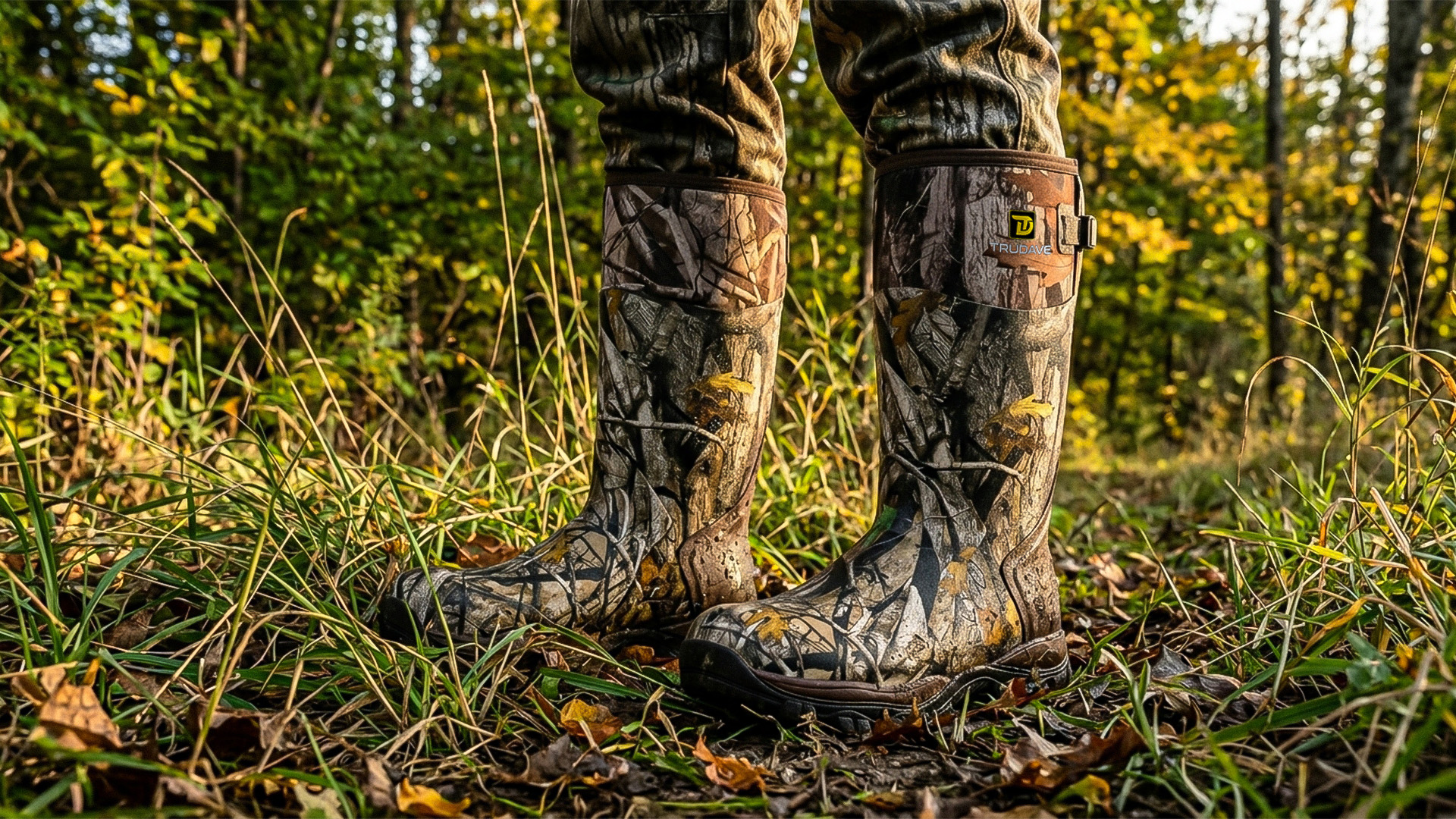
Hunters working these environments may benefit from waterproof hunting boots for winter small game hunting that provide secure heel retention, dependable traction, and enough insulation for active cold-weather walking.
Waterproofing Matters More Than Snow Depth Alone
Snow melts against footwear.
Even powder can eventually create moisture.
Waterproof protection helps keep socks dry through repeated contact.
Insulation Should Match Activity
Hare hunting is usually active.
Too much insulation can cause sweat.
Too little can become uncomfortable during pauses.
Choose boots based on:
- Temperature
- Snow depth
- Walking intensity
Tight Winter Boots Can Make Feet Colder
Heavy socks inside tight boots may reduce circulation.
Make sure footwear has enough room for winter socks without compressing the foot.
Secure Heel Fit Matters in Snow
Deep snow pulls at footwear with every step.
Loose boots increase:
- Fatigue
- Blisters
A secure fit keeps movement efficient.
Gaiters Can Be Extremely Useful
Gaiters help keep:
- Snow
- Slush
- Debris
out of boots.
They are especially useful in deeper powder.
Snowshoes May Be Helpful
In very deep snow, snowshoes can reduce sinking.
They can improve access to remote cover.
But they also add:
- Noise
- Bulk
Practice before hunting.
Snowshoes Change How You Move Through Brush
Dense young conifers can catch large snowshoes.
Choose routes with enough clearance.
The fastest route on a map may not be the easiest in winter cover.
Trekking Poles Can Improve Balance
Poles may help with:
- Deep snow
- Hidden holes
- Icy slopes
They also make it easier to test uncertain footing.
Ice Can Hide Beneath Snow
A thin layer of snow may cover:
- Frozen puddles
- Creek edges
- Slick logs
Use controlled steps.
Good traction helps but cannot remove every hazard.
Frozen Creeks Require Caution
Do not assume a creek is safe because snow covers it.
Ice thickness can vary around:
- Current
- Springs
- Beaver activity
Use established safe crossings.
Animal Tracks Do Not Prove Ice Safety
A hare weighs very little.
Its tracks across ice tell you almost nothing about whether a hunter can cross safely.
Slush Can Be Worse Than Powder
Wet snow quickly saturates clothing and footwear.
Avoid low areas where water rises through snow.
Waterproof gear becomes especially important.
Young Forest Hides Obstacles
Snow may cover:
- Logs
- Stumps
- Holes
Lift your feet.
Move slowly.
Logging Slash Can Be Dangerous Under Snow
A branch buried below the surface can catch a boot unexpectedly.
Avoid running through regeneration.
Brush Can Hide Old Wire
Former agricultural areas may contain old:
- Fence
- Wire
- Posts
Snow makes them harder to see.
Watch for signs of old boundaries.
Durable Pants Help
Young conifer and brush habitat can be rough on clothing.
Durable outer layers help hunters move through:
- Spruce
- Alder
- Willow
without constant snagging.
Eye Protection Can Be Useful
Low conifer branches can strike the face.
Clear glasses can reduce scratches.
This becomes especially useful in dense regeneration.
Gloves Need Dexterity
Small-game hunting requires frequent handling of:
- Optics
- Equipment
Choose gloves that balance:
- Warmth
- Dexterity
Carry a warmer backup pair if needed.
Layer Clothing Carefully
A hunter may overheat while moving through deep snow.
Then cool rapidly during pauses.
Use layers.
Vent during movement.
Add insulation when stopping.
Avoid Sweating Too Much
Sweat becomes a problem later.
Slow down.
Remove layers before overheating.
Dry insulation works better than wet insulation.
Winter Hydration Still Matters
Cold air reduces thirst sensation.
Active snow travel still causes water loss.
Carry drinking water.
Warm Drinks Can Improve Comfort
A thermos can make long winter days more comfortable.
But do not rely on hot drinks instead of regular hydration.
Short Winter Days Affect Planning
Northern winter daylight can be limited.
Plan the route carefully.
Know when you need to turn back.
Carry a Headlamp
Even short hunts can run late.
Carry:
- Headlamp
- Backup power
on every winter trip.
Navigation Is Harder in Snow
Snow covers:
- Trails
- Ground features
Dense forest blocks distant landmarks.
Use reliable navigation.
Mark the Vehicle Before Entering Cover
A logging road that looked obvious in daylight can disappear visually after snowfall.
Save the location.
Offline Maps Are Important
Cell service may be weak in remote northern forest.
Download maps in advance.
Include:
- Roads
- Property boundaries
- Wetlands
Public-Land Rules Still Matter
Snowshoe hare seasons, limits, and legal methods vary by jurisdiction.
Before hunting, verify current:
- Season dates
- Daily limits
- License requirements
- Public-land restrictions
- Legal methods
Use current official wildlife-agency information.
Do Not Assume Rabbit Rules Apply to Hares Everywhere
Different small-game species may have different:
- Seasons
- Limits
- Regulations
Confirm exactly which species you are hunting.
Species Identification Matters
Snowshoe hares may overlap with:
- Cottontail rabbits
- Other small mammals
depending on region.
Learn local identification.
Seasonal Coat Color Helps but Is Not Enough
Snowshoe hares may transition between:
- Brown
- White
depending on season.
Coat color alone should not replace full species identification.
Tracks Can Help With Identification
Their large hind feet create distinctive track patterns in snow.
Use tracks as a clue.
Positive visual identification still matters before harvest.
Hunting With Dogs May Be Legal in Some Areas
Some hunters use beagles or other suitable dogs where permitted.
Rules vary by jurisdiction.
Check current regulations before using dogs.
Dogs Need Winter Protection Too
Snow can affect paws.
Check for:
- Ice buildup
- Cuts
- Cold injury
during the hunt.
Deep Snow Tires Dogs Quickly
Even well-conditioned dogs work harder in powder.
Give regular breaks.
Monitor energy.
Carry Water for Dogs
Snow is not always an adequate hydration source.
Provide clean water when practical.
Recovery Can Be Difficult in Thick Cover
A hare can disappear underneath:
- Spruce
- Brush
- Snow
Mark the exact location immediately.
Snow Can Help Track Movement
Fresh tracks can reveal direction.
But heavy snowfall may cover them quickly.
Start recovery methodically.
Do Not Rush Through the Cover
Running after movement increases:
- Fall risk
- Missed sign
Slow down.
Use tracks.
Thick Conifers Can Hide an Animal Only Yards Away
Search systematically.
Look beneath low branches.
Do not assume it continued far.
Cold Weather Helps Game Care but Does Not Replace It
Proper handling is still important.
Keep harvested game:
- Clean
- Properly stored
according to current food-safety guidance.
Warm Winter Days Still Happen
Direct sun and mild temperatures can warm game quickly.
Plan accordingly.
Habitat Conservation Matters
Snowshoe hares benefit from landscapes containing:
- Young forest
- Dense regeneration
- Willow
- Alder
- Wetland edges
As forests mature, habitat structure changes.
Young Forest Management Can Benefit Multiple Species
Early-successional habitat can support:
- Snowshoe hares
- Grouse
- Other wildlife
A landscape containing several forest age classes often supports more diversity.
Common Snowshoe Hare Hunting Mistakes
Walking Mature Open Forest All Day
Find dense young cover.
Following Old Tracks
Freshness matters.
Looking Only Across Open Snow
Search under conifers and brush.
Walking Too Fast
Hares may remain motionless.
Ignoring Willow and Alder
Wetland edges can be highly productive.
Wearing Poor Winter Footwear
Snow, slush, and cold punish wet feet quickly.
Assuming Hare Tracks Mean Safe Ice
Small animals can cross surfaces unsafe for people.
Forgetting Short Winter Daylight
Plan the return before darkness.
Frequently Asked Questions
Where do snowshoe hares usually live?
Snowshoe hares commonly use dense young conifer forests, willow, alder, brushy clearcuts, wetland edges, and other northern habitats with strong ground-level cover.
Is fresh snow good for snowshoe hare hunting?
Yes. Fresh snow makes tracks easier to read and can reveal heavily used feeding and cover areas.
Why are snowshoe hares hard to see?
Their seasonal coloration and preference for dense low cover allow them to blend extremely well into snowy forest environments.
Are young clearcuts good snowshoe hare habitat?
They can be, especially after enough regeneration develops to provide dense brush, young trees, and feeding opportunities.
What boots are best for winter hare hunting?
Waterproof insulated hunting boots with secure heel fit, good snow and slush traction, and manageable weight for active walking are practical. Gaiters can also help keep snow out.
Do snowshoe hare hunting regulations vary?
Yes. Seasons, bag limits, licenses, dog use, and public-land rules can vary by jurisdiction, so hunters should verify current official regulations before hunting.
Final Thoughts
Snowshoe hare hunting teaches hunters that winter forest is not empty just because everything looks white and still.
One spruce thicket holds cover.
One willow patch provides food.
One old clearcut contains a maze of fresh tracks.
One wetland edge becomes a protected winter corridor.
The snow records all of it.
Find the freshest tracks.
Follow young forest.
Check willow and alder.
Slow down when the cover becomes thick.
Look underneath low conifer branches instead of only across open ground.
Wear boots that let you cross powder, slush, frozen roads, wet snow, and brush without turning winter moisture into the biggest problem of the hunt.
And when a hare suddenly explodes from a place you stared at for ten seconds without seeing anything, remember the lesson.
The animal was not invisible.
It simply understood snow, cover, and stillness better than you did.
