
Southern swamp country can make whitetail hunting feel completely different from hunting farm fields or open hardwood ridges.
Water surrounds everything.
Cypress knees rise from flooded timber.
Sloughs split the forest into pieces.
Mud covers old trails.
Small hardwood islands sit only a few inches above the surrounding bottom.
A hunter looks across the flooded woods and wonders how a deer could move through it efficiently.
Then fresh tracks appear on one narrow strip of dry ground.
More tracks cross a shallow slough.
A rub stands beside a hardwood island.
Suddenly the pattern becomes clear.
Swamp whitetails do not move randomly through wet country.
They use the easiest dry routes available.
A ridge only twelve inches higher than the surrounding swamp can function like a highway.
A narrow crossing can funnel deer from hundreds of acres.
A small island can become bedding cover because everything around it is wet.
Successful swamp deer hunting begins by learning to recognize those small elevation differences.
In bottomland country, inches matter.
Swamp Whitetail Habitat Is About Elevation
Floodplain forests often appear almost perfectly flat.
They are not.
Small terrain differences create:
- Dry travel routes
- Bedding islands
- Feeding zones
- Slough crossings
- Escape cover
A deer notices these differences immediately.
Hunters need to learn to see them too.
Hardwood Islands Can Concentrate Deer
A slightly raised patch of hardwood timber surrounded by wetter ground may provide:
- Dry bedding
- Acorns
- Browse
- Security
These islands can be extremely valuable during periods of flooding.
Look for:
- Beds
- Tracks
- Droppings
- Rubs
around the edges.
Small Islands Can Matter More Than Large Forest Blocks
A ten-acre hardwood island may hold more daytime deer activity than a much larger section of flooded timber.
Why?
Because usable dry ground is limited.
When water rises, deer concentrate.
That makes small topographic features more important.
Study Floodplain Maps Before Walking
Topographic maps and aerial imagery can help identify:
- Natural levees
- Old river channels
- Sloughs
- Hardwood ridges
- Agricultural edges
The difference may be subtle.
Look for long narrow strips of slightly higher terrain.
Those features often control deer movement.
Natural Levees Can Become Deer Highways
Rivers deposit sediment along their banks over time.
This can create slightly elevated natural levees.
These strips may remain drier than surrounding swamp.
Whitetails can use them for:
- Travel
- Feeding
- Bedding transitions
Walk them carefully.
Heavy deer sign often appears where one levee connects two larger dry areas.
Old Logging Roads Can Be Important
Abandoned roads may sit only a few inches above surrounding wet ground.
That is enough.
Deer may use them because they provide:
- Easier walking
- Drier footing
- Direct connections
Fresh tracks after rain can reveal heavy use.
Roads Are Not Always the Best Stand Location
An old road can show excellent deer movement.
But deer may cross it quickly.
Study where trails enter and leave.
The better setup may be:
- Twenty yards inside cover
- Near a trail intersection
- Beside a slough crossing
rather than directly on the road.
Sloughs Shape Deer Movement
Swamp country contains narrow water channels of many sizes.
Some are:
- Shallow
- Easy to cross
Others create strong barriers.
Deer often develop preferred crossings.
These crossings can become excellent funnel locations.
Look for Repeated Slough Crossings
Signs may include:
- Muddy tracks
- Worn banks
- Hair on brush
- Trails entering both sides
A crossing used repeatedly can connect:
- Bedding
- Feeding
- Higher ground
The surrounding trail system tells you why the crossing matters.
Water Depth Changes Crossing Use
A crossing that works during low water may disappear after heavy rain.
Another route may become more attractive.
This means swamp deer patterns can change faster than upland patterns.
Always rescout after major water changes.
Flooding Can Completely Reset the Property
A major rise in water can:
- Eliminate trails
- Concentrate deer
- Change bedding areas
- Push animals toward higher ground
Do not assume last week’s hotspot still works.
The deer may have shifted several hundred yards.
Rising Water Can Concentrate Deer
As low ground becomes unusable, whitetails may move toward:
- Hardwood islands
- Natural levees
- Roadbeds
- Higher field edges
This can make movement more predictable.
Too Much Flooding Can Push Deer Out Entirely
Extreme flooding may force deer toward:
- Adjacent uplands
- Agricultural ground
- Higher timber
A swamp that usually holds deer may temporarily become almost empty.
Follow current sign.
Falling Water Creates New Opportunities
As water recedes, deer may begin reusing:
- Old trails
- Feeding areas
- Creek crossings
Fresh mud makes tracks extremely easy to read.
This can be one of the best times to understand current movement.
Fresh Mud Is an Excellent Scouting Tool
Soft bottomland soil records deer movement clearly.
Look along:
- Slough banks
- Roads
- Field edges
- Dry ridges
Fresh tracks with sharp edges reveal current use.
Tracks After Rain Are More Useful Than Old Trails
A heavily worn trail may have been used for years.
Fresh tracks tell you it is being used now.
Prioritize current sign over historical appearance.
Bottomland Hardwoods Can Provide Excellent Food
Southern floodplain forests may contain mast-producing trees such as:
- Oaks
- Other hardwoods
where locally appropriate.
Acorn availability can strongly influence deer movement.
A productive oak ridge surrounded by wet ground deserves attention.
Acorns Can Override Other Food Sources
When mast is abundant, deer may spend less time near agricultural fields.
This can make traditional field-edge hunting suddenly less productive.
Scout beneath oaks.
Look for:
- Tracks
- Droppings
- Fresh feeding activity
Not Every Oak Flat Produces Equally
One section may have heavy mast.
Another may have almost none.
Find the trees deer are actually using.
Fresh sign matters more than tree species alone.
Agricultural Edges Still Matter
Many southern bottomlands border:
- Soybeans
- Corn
- Food plots
- Pasture
Deer may move between these feeding areas and swamp security cover.
The transition can be extremely productive.
Hunt the Last Dry Cover Before the Field
Rather than sitting directly on the field, look for trails inside:
- Timber
- Brush
- Swamp edge
Deer may stage there before entering open ground.
This can produce better daylight movement.
Bedding Cover Is Often Difficult to Reach
Swamp bucks may bed on:
- Small islands
- Brushy rises
- Remote ridges
surrounded by wet ground.
That difficult access provides security.
Hunters should understand these bedding areas without disturbing them unnecessarily.
Do Not Walk Through Bedding Islands Repeatedly
Pressure can quickly change deer behavior.
Instead, identify:
- Exit trails
- Downwind edges
- Travel corridors
around the bedding area.
Mature Bucks Often Use the Most Inconvenient Ground
Older deer may choose locations that are:
- Wet
- Thick
- Difficult to approach
because human pressure is lower.
That does not mean hunters should take unsafe routes.
It means access difficulty can influence deer security.
Water Can Act Like a Barrier and a Shield
A slough may keep most hunters away.
Deer learn where human traffic usually stops.
Small isolated pockets beyond common access routes can hold less-pressured animals.
Access From Water Can Sometimes Change the Hunt
Where legal and safe, boats or small watercraft may provide access to remote bottomland habitat.
This can reduce:
- Long muddy walks
- Ground scent along deer trails
But water access requires its own safety planning.
Boat Access Requires Conservative Decisions
Swamp water can hide:
- Logs
- Stumps
- Current
- Shallow flats
Use appropriate flotation equipment.
Know the route.
Do not overload small boats.
Cold Water Increases Risk
Late-season southern hunts can still involve dangerously cold water.
A short boat ride deserves the same safety attention as any other water activity.
Wind Still Controls the Hunt
Water does not eliminate scent.
Whitetails rely heavily on their noses.
Plan access so wind does not blow toward:
- Bedding islands
- Main trails
- Feeding areas
Swamp Wind Can Be Difficult to Predict
Dense timber, sloughs, and low ground can create:
- Swirling wind
- Thermal changes
Check conditions at the actual hunting location.
Do not rely only on the forecast.
Morning Thermals Can Follow Low Ground
Cool air may settle into:
- Sloughs
- Creek channels
This can carry scent in unexpected directions.
A stand that seems good on a map may hunt poorly at daylight.
Afternoon Heating Can Change Airflow
As the forest warms, thermals may begin lifting.
Monitor constantly.
Swamp deer do not need much scent information to become cautious.
Heavy Humidity Can Make Scent Behavior Feel Different
Warm wet air may reduce how hunters perceive their own scent.
That does not mean deer cannot detect it.
Continue using disciplined wind strategy.
Rain Can Make Still-Hunting More Effective
Wet leaves reduce noise.
Soft ground allows quiet movement.
This can create good conditions for carefully moving along:
- Dry ridges
- Levee edges
- Hardwood islands
Do Not Walk Continuously
Still-hunting works best when hunters:
- Take a few steps.
- Stop.
- Scan.
- Listen.
- Move again.
Deer may be hidden only yards away.
Look for Horizontal Shapes
Swamp timber contains endless vertical trunks.
A deer’s body creates a horizontal line.
Search for:
- Back
- Belly
- Ear
- Leg
between trees.
Binoculars Help Even in Close Forest
Use optics to inspect dark shapes through:
- Cypress
- Brush
- Hardwood trunks
This reduces unnecessary movement.
Fog Can Be Common
Low wetlands may develop fog.
This can reduce:
- Visibility
- Distance judgment
Move slowly.
Know the background before any shot.
Fog Can Also Extend Deer Movement
Dark, calm conditions may encourage whitetails to remain active longer.
A foggy morning can be productive around:
- Field edges
- Levees
- Hardwood openings
Warm Southern Weather Changes Timing
Early seasons may involve:
- Heat
- Humidity
- Insects
Deer may concentrate movement near cooler periods.
Early morning and late evening can become more important.
Cold Fronts Can Increase Daylight Activity
A major temperature drop may change movement noticeably.
Fresh sign after the front can reveal:
- New feeding patterns
- Increased travel
Rescout.
Rut Behavior Can Increase Movement
During breeding periods, bucks may travel across:
- Slough crossings
- Levees
- Field edges
checking doe groups.
Traditional travel funnels can become even more useful.
Rut Does Not Eliminate Wind Strategy
A distracted buck still has an excellent nose.
Do not abandon careful access because rut activity increased.
Rub Lines Can Reveal Travel Corridors
Look for rubs along:
- Dry ridges
- Island edges
- Old roads
One rub is interesting.
Several fresh rubs along the same route are much more valuable.
Scrapes Can Add Context
Where legal hunting strategy and local conditions allow, fresh scrapes can indicate current buck activity.
Combine them with:
- Tracks
- Rubs
- Trail use
Do not build the entire hunt around one scrape.
Swamp Travel Burns Energy
Walking through:
- Mud
- Water
- Soft soil
is much harder than walking a normal forest trail.
Plan distances conservatively.
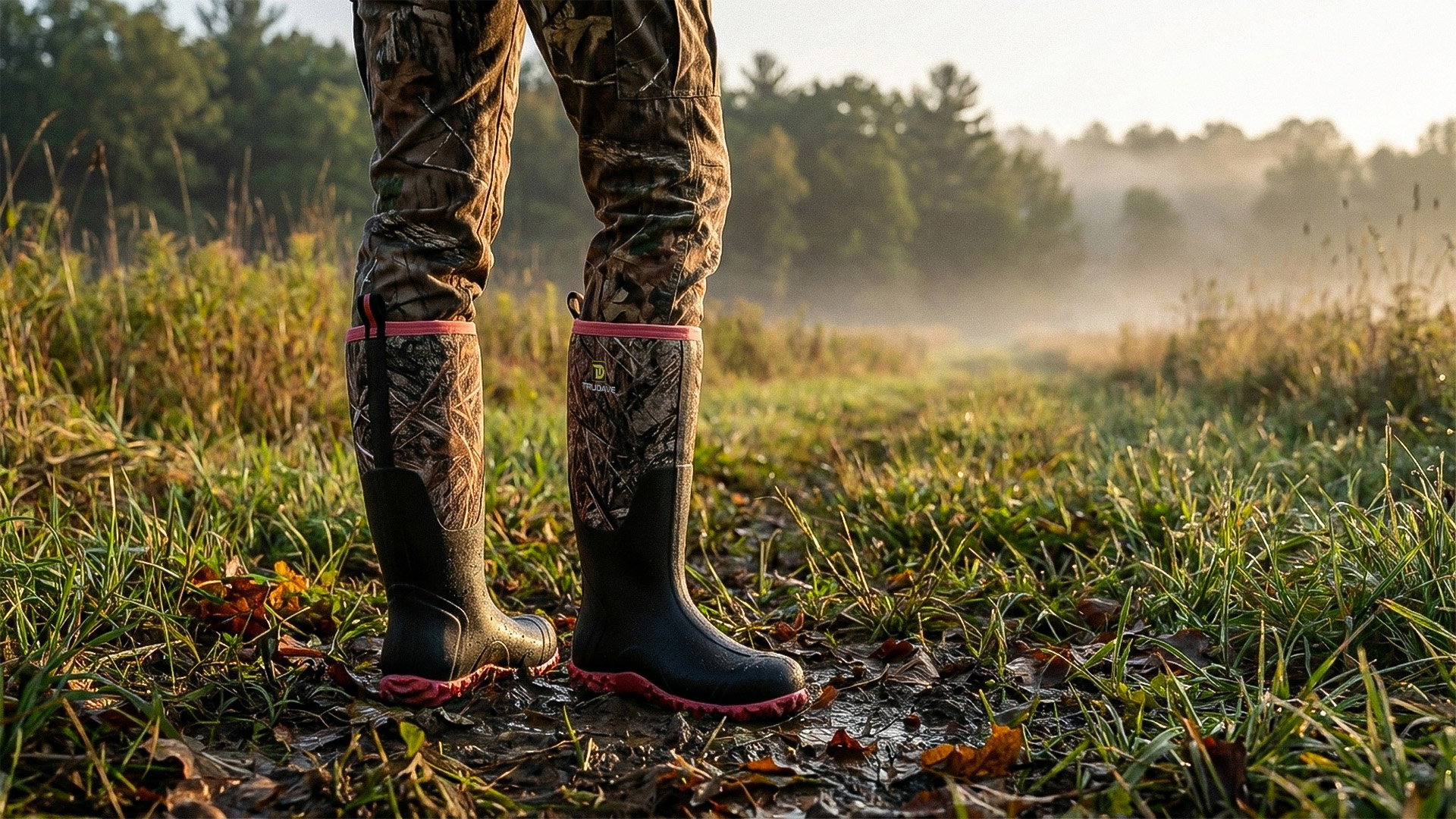
Waterproof Footwear Is Essential
Hunters in this habitat may encounter:
- Flooded timber
- Mud
- Wet grass
- Slough crossings
- Standing water
Hunters may benefit from waterproof hunting boots for swamp deer hunting that provide secure heel retention, strong mud traction, and enough waterproof height for southern bottomland travel.
Tall Rubber Boots Are Extremely Practical
Rubber hunting boots can work well in:
- Mud
- Shallow water
- Wet vegetation
They also help manage repeated creek and ditch crossings.
Fit remains important.
Loose Rubber Boots Become Exhausting
Sticky mud pulls against every step.
Poor heel retention creates:
- Blisters
- Extra fatigue
Choose boots that fit securely.
Waterproof Lace-Up Boots Can Work on Higher Ground
If most of the hunt involves:
- Dry ridges
- Levees
- Firm timber
with only occasional wet sections, supportive lace-up waterproof boots may be more comfortable.
Scout the route first.
Waders May Be Needed in Deeper Conditions
Some flooded bottoms exceed hunting-boot height.
Appropriate waders may help in specific situations.
But deep-water travel adds risk.
Use known safe crossings.
Do Not Enter Unknown Floodwater Blindly
Water may hide:
- Ditches
- Logs
- Deep channels
- Holes
Use a safer route.
A deer trail does not guarantee human safety.
Mud Can Hide Dangerous Obstacles
Soft bottomland ground may conceal:
- Roots
- Old wire
- Debris
Move slowly.
Walking Sticks Can Help
A sturdy walking stick can help test:
- Mud depth
- Water depth
- Uncertain footing
It can also improve balance during wet crossings.
Wet Logs Are Extremely Slippery
Floodplain forests contain abundant fallen timber.
Do not assume a log is a dry shortcut.
Wet bark can cause serious falls.
Cypress Knees Create Footing Hazards
In cypress habitat, protruding knees can be difficult to see beneath:
- Water
- Leaves
- Mud
Slow down.
Watch every step.
Gaiters Can Help on Wet Edges
Where water remains below boot height, gaiters can reduce:
- Splash
- Seeds
- Debris
entering around the top.
Brush-Resistant Clothing Helps
Swamp habitat may contain:
- Greenbrier
- Blackberry
- Dense shrubs
Durable pants allow hunters to follow productive trails without constantly avoiding cover.
Eye Protection Can Be Useful
Branches and vines frequently sit at face level.
Clear protective glasses can reduce injury during:
- Pre-dawn access
- Thick-cover recovery
Mosquitoes Can Be Severe
Warm bottomlands can produce intense mosquito activity.
Use appropriate:
- Repellent
- Clothing
Constant swatting and movement makes hunting more difficult.
Ticks Are Another Concern
Southern deer habitat can support ticks for long periods.
Use appropriate prevention.
Check:
- Clothing
- Skin
- Gear
after the hunt.
Snakes May Remain Active in Warm Weather
Depending on region and season, venomous snakes may occur around:
- Logs
- Water
- Brush
Know local species.
Use caution during low-light access.
Heat and Humidity Can Create Real Risk
Swamp walking is strenuous.
High humidity slows cooling.
Carry water.
Watch for heat illness.
Do Not Underestimate a Short Swamp Walk
One mile through mud can feel much longer than one mile on a trail.
Plan access realistically.
Carry Water Even When Surrounded by Water
Swamp water is not automatically safe to drink.
Bring clean drinking water.
Early Cold Fronts Can Create Hypothermia Risk Too
Wet clothing combined with wind and cooler temperatures can become dangerous.
Stay dry.
Carry an appropriate extra layer.
Fresh Flooding Can Affect Stand Access
A tree stand reachable yesterday may be surrounded by water today.
Always confirm current access before entering.
Tree Selection Requires Extra Care in Floodplain Forest
Flooded or saturated soil can affect tree stability.
Inspect any tree used for elevated hunting carefully and follow all applicable safety practices and equipment instructions.
Fallen Limbs Can Increase After Storms
Wetland forests may experience:
- Wind damage
- Saturated root systems
Look upward before choosing a stationary hunting location.
Dead limbs can be dangerous.
Public Bottomland Can Receive Heavy Pressure
Easy access points attract hunters.
Deer may move toward:
- Remote islands
- Difficult crossings
- Thick cover
after pressure increases.
But Difficult Access Should Still Be Safe Access
Do not cross dangerous water simply because fewer people hunt the far side.
Safety remains more important than pressure avoidance.
Small Overlooked Patches Can Hold Deer
You may not need to travel miles.
A tiny dry island only several hundred yards from parking can receive little pressure if access looks inconvenient.
Study terrain carefully.
Weekday Pressure Can Be Different
On heavily hunted public land, deer may adjust after busy weekends.
Lower-pressure periods can produce different movement.
Private Bottomlands Can Be Excellent
Where permission is available, private floodplain property may contain outstanding habitat.
Respect:
- Crops
- Gates
- Roads
- Livestock
Follow landowner instructions exactly.
Wet Roads Are Easy to Damage
Do not drive soft agricultural or forest roads without permission.
One set of deep ruts can damage both the property and future access.
Property Boundaries Are Hard to See in Swamps
Water and timber often eliminate obvious lines.
Use accurate maps.
A deer crossing a slough does not mean the property boundary moved.
Offline Maps Are Important
Cell service may be weak in bottomlands.
Download:
- Ownership
- Topography
- Wetland imagery
before hunting.
Mark the Vehicle and Safe Crossings
Dense swamp can be surprisingly disorienting.
Save waypoints for:
- Vehicle
- Boat
- Main trail
- Safe slough crossing
Carry a Headlamp and Backup Power
Swamp navigation after dark is difficult.
Reflections from water can make direction harder to judge.
Carry reliable lighting.
Do Not Depend on One GPS Device
Wet conditions are hard on electronics.
Use appropriate backup navigation for remote hunts.
Recovery Can Be Extremely Difficult
A whitetail may enter:
- Water
- Thick vines
- Flooded timber
after the shot.
Mark the last visible location carefully.
Recovery Begins Before Shooting
Ask:
Where can the deer go from here?
A shot beside deep water may create a difficult recovery.
Wait for a better position if necessary.
Watch the Animal Carefully
After the shot, note:
- Direction
- Slough crossing
- Tree
- Brush line
Do not immediately look away.
Blood Tracking in Water Is Difficult
Floodwater can dilute or erase sign.
Look for:
- Hair
- Tracks
- Broken vegetation
- Blood on higher stems where present
Work methodically.
Mud Tracks Can Help Recovery
Even when blood sign becomes limited, fresh tracks may show direction.
Separate deer tracks from your own access route carefully.
Do Not Flood the Trail With Hunters
Too many people moving through mud can destroy valuable sign.
Protect the track.
Mark confirmed evidence.
Water Recovery Can Be Dangerous
Do not enter deep or moving water without appropriate planning and equipment.
A deer is never worth a dangerous recovery attempt.
Game Extraction Can Be Physically Demanding
Mud and water make dragging difficult.
Plan:
- Route
- Assistance
- Appropriate recovery equipment
before hunting remote swamp habitat.
Game Carts Work Poorly in Deep Mud
A wheeled cart may be useful on:
- Levees
- Roads
but nearly useless in flooded timber.
Choose recovery equipment based on actual terrain.
Small Boats May Help in Some Areas
Where legal and safe, boats can assist with:
- Access
- Extraction
Follow capacity limits and water-safety rules.
Warm Weather Makes Meat Care Urgent
Southern deer seasons can include high temperatures.
Have:
- Cooler space
- Ice
- Processing plan
ready before the hunt.
High Humidity Slows Cooling
A cool-feeling swamp morning can become warm quickly.
Begin proper game care promptly.
Do Not Wait Until the Truck to Think About Cooling
Remote swamp recoveries can take hours.
Carry appropriate game-care equipment when necessary.
Whitetail Regulations Must Be Checked Locally
Rules vary significantly by:
- State
- County
- Management unit
- Public property
Before hunting, verify current:
- Season dates
- Tags
- Bag limits
- Legal weapons or methods
- Antler restrictions where applicable
Use current official wildlife-agency information.
Floodplain Wildlife Areas May Have Special Rules
Some public lands may regulate:
- Access
- Boats
- Parking
- Hunting zones
Check the exact property.
Deer Seasons May Overlap Other Hunting Seasons
Swamp habitat may also contain:
- Waterfowl hunters
- Small-game hunters
Maintain awareness of other users.
Positive Identification Remains Essential
Dense brush may reveal only part of an animal.
Do not shoot at:
- Movement
- Partial brown shapes
without clearly identifying a legal deer and confirming the background.
Water Does Not Provide a Safe Backstop
A deer standing beside flooded timber can have:
- Boats
- Hunters
- Homes
far beyond.
Know the background.
Common Swamp Whitetail Hunting Mistakes
Treating the Bottomland as Flat
Small elevation differences control movement.
Ignoring Hardwood Islands
Dry ground can concentrate bedding and feeding activity.
Hunting Last Week’s Trail After Flooding
Water can reset the entire pattern.
Walking Through Bedding Islands
Use surrounding travel routes instead.
Wearing Loose or Leaky Boots
Mud and water punish poor footwear quickly.
Crossing Water Because Deer Did
Animal movement does not prove human safety.
Ignoring Insects and Heat
Southern swamp conditions can become physically demanding.
Shooting Without Considering Recovery
Water and dense vegetation can make retrieval extremely difficult.
Frequently Asked Questions
Where do whitetail deer live in swamp country?
Whitetails may use hardwood islands, natural levees, flooded timber edges, brushy ridges, agricultural transitions, and slightly elevated travel corridors inside bottomlands.
Does flooding change whitetail movement?
Yes. Rising water can eliminate low trails and concentrate deer on higher ground, while falling water may reopen traditional routes.
Are slough crossings good places to hunt deer?
Repeatedly used crossings can be excellent movement funnels when they connect bedding, feeding, or dry-ground habitat.
Is rain good for swamp deer hunting?
Rain can create fresh tracks and quieter forest conditions, but heavy rainfall may also change water levels and access.
What boots are best for swamp whitetail hunting?
Tall waterproof hunting boots with secure heel fit and strong mud traction are practical for flooded bottomlands, wet grass, and shallow water. Deeper conditions may require appropriate waders.
Are hardwood islands good bedding areas?
They can be. Slightly elevated timber surrounded by wet ground can provide dry, secure bedding habitat, particularly when flooding limits other options.
Final Thoughts
Swamp whitetail hunting teaches hunters that the difference between a useless acre and a heavily used acre may be only a few inches of elevation.
One hardwood island stays dry.
One levee connects two feeding areas.
One old logging road becomes a travel corridor.
One shallow slough crossing funnels deer movement.
Then the water rises.
Everything changes again.
That is why successful bottomland hunters keep scouting.
Watch water levels.
Read fresh mud.
Find the highest ground.
Study crossings.
Protect bedding cover.
Use wind carefully.
Wear boots that let you cross mud, wet grass, shallow water, vines, and flooded timber without choosing only the dry routes every other hunter uses.
And when fresh deer tracks suddenly appear on a narrow strip of ground that barely looks higher than the surrounding swamp, pay attention.
To you, it may look like twelve inches of elevation.
To a whitetail living in flooded country, it can be an entire highway.
