
A moose looks impossible to hide.
It is enormous.
Tall.
Dark.
Heavy-bodied.
A hunter sees one crossing an open willow flat and assumes the animal will remain easy to track.
Then it takes three steps into brush.
Gone.
The moose has not run.
It may be standing only forty yards away.
But thick willow, alder, spruce, and wet ground can hide even one of North America’s largest game animals almost completely.
That is one of the biggest lessons in moose hunting.
Do not confuse animal size with visibility.
Moose country is often built around:
- Water
- Willow
- Wet forest
- Beaver habitat
- Regenerating vegetation
- Low terrain
- Hidden travel corridors
The hunter who understands those connections finds moose much more efficiently than the hunter who simply walks through every swamp.
Moose Need Productive Browse
Moose are strongly associated with habitats providing abundant woody and aquatic vegetation.
Useful habitat may include:
- Willow flats
- Alder
- Aspen regeneration
- Birch
- Wet meadows
- Beaver wetlands
- Boreal forest edges
- Burns
- Young forest
The best areas often contain a mixture of food and security.
A huge mature forest may hold moose.
A younger wet landscape with abundant browse may hold more obvious sign.
Willow Is One of the Best Habitat Clues
Willow provides valuable browse and cover.
Look for willow around:
- Creeks
- River bottoms
- Beaver ponds
- Wet flats
- Lake margins
Fresh browsing can reveal current use.
Moose may strip or clip young stems repeatedly.
A willow patch showing heavy fresh use deserves careful attention.
Not Every Willow Flat Is Equal
One willow basin may look perfect but contain little fresh sign.
Another only a mile away may show:
- Tracks
- Droppings
- Fresh browse
- Beds
Current activity matters more than visual appearance.
Always let fresh sign confirm the habitat.
Beaver Wetlands Can Create Excellent Moose Country
Beaver activity changes a landscape dramatically.
It can create:
- Shallow ponds
- Flooded timber
- New willow growth
- Aquatic vegetation
- Wet meadow edges
These habitats can become highly attractive to moose.
Look at the margins.
The deepest pond is usually not the most important feature.
Old Beaver Ponds Can Be Especially Interesting
When a pond drains or changes, the old basin may develop:
- Grass
- Willow
- Shrubs
This creates productive feeding habitat.
Old beaver systems often contain a mosaic of:
- Water
- Wet meadow
- Brush
- Timber
That diversity is worth scouting.
Beaver Dams Can Create Travel Barriers
A flooded creek may force animals toward:
- Narrow crossings
- Dam edges
- Raised banks
Repeated tracks can reveal where moose move through the system.
Do not assume the same crossing is safe for hunters.
Wetland structures can be unstable.
Wet Meadow Edges Deserve Attention
Moose may feed along wet meadow margins where:
- Grass
- Shrubs
- Aquatic vegetation
- Willow
all meet.
These transitions provide a variety of food in one small zone.
Morning and evening can be especially useful for glassing these edges.
Aquatic Vegetation Can Matter
During appropriate seasons, moose may feed in or around shallow water.
They can use:
- Pond edges
- Lakes
- Slow creeks
- Wetland shallows
Water use varies by season and region.
Do not assume every feeding moose will be standing in a pond.
Early Morning Glass Can Save Miles
Swamp country is difficult to walk.
Before entering, glass from any available:
- Road
- Ridge
- Cut
- Elevated bank
Look for:
- Dark body shape
- Antlers
- Ear movement
- Willow movement
One sighting can save several hours of random travel.
Moose Are Easier to See When They Move
A stationary moose in brush can disappear.
Watch for:
- Head movement
- Ear rotation
- Legs between stems
- Vegetation shaking
Do not only search for a full body.
Binoculars Matter Even in Thick Country
Optics help hunters inspect:
- Willow openings
- Beaver pond edges
- Timber gaps
without entering the habitat immediately.
This reduces unnecessary disturbance.
Fresh Tracks Are One of the Best Scouting Clues
Moose tracks are large and easy to recognize in soft ground.
Look around:
- Muddy roads
- Creek crossings
- Wetland edges
- Trail intersections
Fresh tracks can tell you:
- Direction
- Recent use
- Repeated movement
Track Freshness Matters
A large print can survive for days in protected mud.
Recent tracks may show:
- Sharp edges
- Moist soil
- No debris inside
Older tracks become:
- Rounded
- Filled with leaves
- Weathered
Prioritize the freshest sign.
Rain Can Reset the Ground
After rain, old tracks become less distinct.
New tracks stand out.
Check:
- Forest roads
- Mud flats
- Trail crossings
soon after weather changes.
This can quickly reveal current moose movement.
Mud Roads Can Become Excellent Sign Lines
Remote dirt roads often collect tracks from animals crossing between habitats.
Repeated crossings may connect:
- Willow
- Water
- Young forest
The road does not create the habitat.
It reveals the travel pattern.
Alder Can Hold Moose Too
Alder thickets can provide both:
- Browse
- Dense security
These areas may be especially difficult to see into.
Search edges and openings carefully.
A large animal can stand only a few yards inside without being visible.
Young Aspen Regeneration Can Be Productive
Logging, fire, or other disturbance can create young aspen growth.
This can provide high-quality browse.
Look for areas where regeneration sits near:
- Wetlands
- Creeks
- Mature cover
The combination of feeding and security is important.
Burns Can Create New Moose Habitat
Wildfire can stimulate:
- Aspen
- Willow
- Shrub regeneration
over time.
Depending on age, a burn may provide excellent feeding habitat.
Fresh burns may be too open.
Several years of regrowth can change everything.
Burn Edges Can Be Better Than the Center
Surviving forest provides security.
New growth provides food.
The boundary between the two can be extremely productive.
Glass these transitions carefully.
Logging Cuts Can Create Similar Habitat
Timber harvest can produce new browse.
Young cuts may contain:
- Aspen
- Birch
- Willow
- Other shrubs
Moose may feed there while bedding in nearby forest.
Again, age matters.
Regeneration Can Become Too Thick to See Through
Good feeding habitat is not always good hunting visibility.
A cut several years old may hold plenty of moose but almost no open sight lines.
Use:
- Roads
- Wet openings
- Elevated terrain
to observe it.
Creek Bottoms Can Organize Movement
Moose commonly use riparian systems.
Creeks provide:
- Willow
- Water
- Travel structure
- Cooler habitat
Track both the bottom and slightly higher benches.
Slightly Raised Ground Can Be Important
Inside wet country, a ridge only a few feet higher can provide:
- Dry bedding
- Easier travel
Look for:
- Old roadbeds
- Natural levees
- Timber islands
These small elevation differences matter greatly.
Timber Islands Can Hold Moose
A patch of spruce or hardwood surrounded by wet ground provides security.
Look for trails entering and leaving.
A small island may contain:
- Beds
- Droppings
- Rubs
without being obvious from a distance.
Do Not Push Directly Into Bedding Cover
Moose may tolerate some disturbance.
Repeatedly entering secure bedding habitat can still change movement.
Use trails and edges to understand where animals travel.
Hunt the Route Between Food and Bedding
A productive setup often lies between:
- Willow feeding area
- Timber security
Look for concentrated tracks.
A narrow trail through mud may reveal repeated movement.
Rut Behavior Changes Bull Movement
During breeding periods, bulls may travel more while searching for cows.
They may appear in:
- Open willow flats
- Marsh edges
- Travel corridors
where they were less visible earlier.
Seasonal behavior can change a familiar area rapidly.
Calling Can Be Useful Where Legal
Moose hunters may use species-appropriate calling techniques during suitable seasons and where legal.
Calling strategy should match:
- Rut timing
- Local pressure
- Terrain
But calling is only one tool.
Fresh sign and habitat still matter.
Sound Travels Through Wet Country
Still mornings can carry sound surprisingly far.
A response may come from across:
- Swamp
- Timber
- Water
Distance can be deceptive.
Use patience.
Do Not Rush Toward Every Sound
Dense wetland habitat contains:
- Water
- Mud
- Hidden channels
Plan the route before moving.
The shortest line may be unsafe or impossible.
Wind Still Matters
Moose rely heavily on scent.
Check wind before:
- Calling
- Stalking
- Moving toward feeding habitat
Do not allow scent to blow directly into likely cover.
Swamp Wind Can Be Unpredictable
Tall vegetation and forest edges can redirect air.
Low ground may hold cool air.
Check frequently.
One good wind reading at the road is not enough.
Thermals Matter Near Valleys
Morning air can settle into low swamp systems.
As the day warms, airflow may change.
Plan longer stalks with changing thermals in mind.
Fog Can Help and Hurt
Wetland basins frequently develop fog.
Fog can reduce visibility.
But it can also encourage animals to remain in open habitat longer.
Wait for openings.
Do not abandon good habitat immediately.
Moose Can Appear Suddenly at Close Range
Dense willow creates short visibility.
A hunter may move from seeing nothing to being extremely close to a moose.
Stay alert.
Move slowly.
Moose Are Large Wild Animals and Require Space
A moose can be dangerous, especially if stressed or surprised.
Avoid approaching closely without a lawful hunting reason.
Give non-target animals room.
Never treat size or slow movement as harmlessness.
Cows With Calves Require Extra Awareness
Protective behavior can occur.
Do not place yourself between:
- Cow
- Calf
during scouting or travel.
Give them space.
Bulls Can Behave Differently During the Rut
Breeding-season animals may be less predictable.
Maintain situational awareness.
A calling setup should always include a clear plan for:
- Visibility
- Escape route
- Safe position
Wetland Footing Is One of the Biggest Challenges
Moose habitat may include:
- Mud
- Muskeg
- Standing water
- Wet grass
- Creek crossings
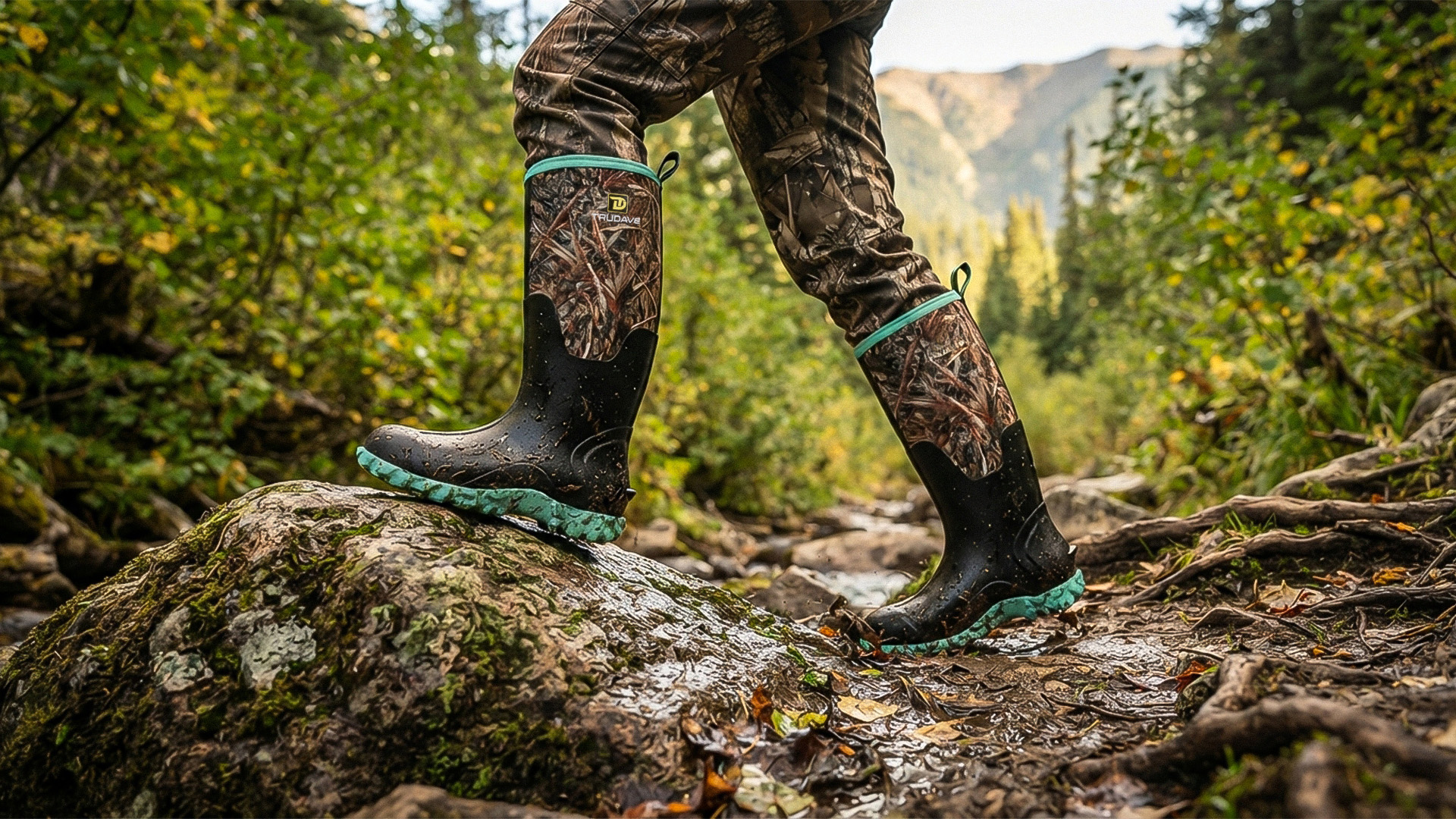
Hunters working these environments may benefit from waterproof hunting boots for moose hunting that provide secure heel retention, strong mud traction, and enough waterproof protection for long days in boreal wet country.
Tall Waterproof Boots Can Be Extremely Practical
Rubber or other tall waterproof hunting boots work well around:
- Shallow swamp
- Wet grass
- Mud
But fit matters.
Loose boots become exhausting in suction mud.
Lace-Up Waterproof Boots Can Be Better on Mixed Terrain
If the hunt includes:
- Forest roads
- Hills
- Rock
- Only moderate wet ground
supportive waterproof lace-ups may provide better comfort.
Choose footwear for the entire route.
Deep Water May Require Waders
Some wetland systems exceed normal boot height.
Appropriate waders may be necessary in specific conditions.
But deeper water also increases risk.
Use safe known crossings.
Do Not Wade Unknown Swamp Water Blindly
Water can hide:
- Beaver channels
- Holes
- Soft mud
- Submerged logs
Test footing.
Avoid unnecessary crossings.
Muskeg Can Be Deceptive
A surface that looks solid may collapse under weight.
Travel along:
- Firmer vegetation
- Raised hummocks
when practical.
Move slowly.
Mud Suction Increases Fatigue
Every step may require extra effort.
Shorter strides reduce energy use.
Secure boots help prevent heel movement.
Wet Logs Are Extremely Slippery
Swamp edges contain fallen timber.
Do not assume a log is easier than mud.
Wet bark can be dangerously slick.
Beaver Channels Can Be Hidden
Vegetation may cover narrow deep water channels.
Watch for changes in:
- Grass height
- Water color
- Vegetation
before stepping.
A Moose Trail Is Not Automatically a Safe Human Trail
Moose are much larger and move differently.
A trail may cross:
- Deep mud
- Water
- Unstable banks
Evaluate every obstacle for yourself.
Rain Creates Even More Water
A route that was manageable yesterday may be flooded today.
Scout access after major rainfall.
Do not rely entirely on old GPS tracks.
Waterproof Footwear Helps, but Route Choice Matters More
No boot makes every swamp safe.
The goal is not walking through the deepest water possible.
Choose the safest efficient path.
Gaiters Can Help in Wet Brush
Where water depth is low but vegetation is soaked, gaiters may reduce moisture entering from above the boot.
They also protect against:
- Seeds
- Brush
Brush-Resistant Clothing Is Useful
Willow and alder can be rough on clothing.
Durable pants and outer layers allow hunters to enter productive habitat without tearing lightweight fabric constantly.
Eye Protection Can Help
Branches frequently sit at face height.
Clear protective glasses can reduce scratches while moving through:
- Willow
- Alder
- Young forest
Insects Can Be Severe
Depending on season and region, moose habitat may contain:
- Mosquitoes
- Black flies
- Other biting insects
Use appropriate protection.
Insect irritation can make slow, quiet hunting much harder.
Ticks May Be Relevant in Some Regions
Check current local risk and use appropriate prevention.
Inspect clothing and skin after hunting.
Warm Weather Creates Heat Stress
Swamp travel is physically demanding.
High humidity can make it worse.
Carry enough water.
Watch for:
- Dizziness
- Weakness
- Confusion
Cold Weather Creates Different Challenges
Late-season moose hunts may involve:
- Frost
- Snow
- Ice
Wet boots become much more serious as temperatures fall.
Stay dry.
Early Snow Can Reveal Movement
Fresh snow creates excellent tracking conditions.
Look for:
- Feeding trails
- Creek crossings
- Bedding routes
A large moose track is easy to see.
Freshness remains important.
Snow Can Hide Wetland Hazards
A white surface may cover:
- Thin ice
- Mud
- Channels
Do not assume snow means the swamp is frozen solid.
Animal Tracks Do Not Prove Ice Is Safe
Moose may cross areas that are not safe for people.
Always assess ice independently.
Frozen Beaver Ponds Require Caution
Ice thickness can vary around:
- Springs
- Flowing water
- Beaver lodges
Use safe established routes.
Avoid uncertain ice.
Navigation Is Critical in Willow Country
Dense wetland brush can remove visual landmarks.
One willow patch looks like another.
Carry reliable navigation.
Mark:
- Vehicle
- Camp
- Major creek
- Safe crossing
Offline Maps Are Essential
Remote boreal country may have no cell service.
Download maps before hunting.
Include:
- Topography
- Wetlands
- Ownership
- Roads
Satellite Images Can Help Identify Wetland Structure
Aerial imagery can reveal:
- Open ponds
- Willow flats
- Timber islands
- Beaver systems
This can help plan routes before entering difficult ground.
Topographic Maps Show High Ground
Contour lines can identify:
- Ridges
- Benches
- Raised travel routes
inside wet landscapes.
Use both map types together.
Carry a Headlamp
Moose recovery can extend far beyond daylight.
Carry:
- Headlamp
- Backup power
on every hunt.
Emergency Communication Matters in Remote Country
Moose habitat can be extremely remote.
Depending on the trip, appropriate satellite or emergency communication can add important safety redundancy.
Do not assume cell coverage.
Roads Can Be Very Limited
Some moose hunting involves:
- Boat access
- ATV access where legal
- Long walks
Plan extraction before hunting.
A moose is too large to improvise recovery easily.
Boats Can Be Useful Where Legal
Waterways may provide access to:
- River bottoms
- Remote willow flats
Boating requires separate safety planning.
Use appropriate flotation devices.
Know water conditions.
Cold Water Creates Serious Risk
Northern waterways can be dangerously cold even when air temperatures are mild.
Treat boat travel conservatively.
Do Not Overload Small Boats
Moose meat and hunting gear add substantial weight.
Follow boat capacity requirements.
Multiple safe trips are better than one overloaded trip.
Remote Roads Can Become Mud Traps
Rain may make forest roads:
- Soft
- Deep
- Impassable
Do not drive beyond safe conditions.
Getting stuck can create a serious recovery problem.
Public-Land Access Rules Vary
Moose hunting may involve state, federal, provincial, or other managed lands depending on region.
Always verify:
- Motorized access
- Seasonal closures
- Camping rules
before hunting.
Moose Hunts Are Often Highly Regulated
Depending on jurisdiction, opportunity may involve:
- Draw tags
- Limited permits
- Specific units
- Sex restrictions
Always check current official wildlife regulations.
Do Not Assume Rules Are Similar Across Regions
Moose management varies substantially.
Verify current:
- Tag
- Season
- Legal methods
- Harvest requirements
for the exact area.
Species and Sex Identification Matter
Hunters may need to distinguish:
- Bull
- Cow
- Calf
according to legal season and tag restrictions.
Dense willow makes identification harder.
Do not rush.
Antler Visibility Can Be Limited
Brush may hide antlers.
Wait until the animal is clearly identified.
Do not shoot at only a dark body shape.
Safe Backgrounds Still Matter
Dense brush does not guarantee a safe backstop.
Other animals may be hidden.
Know the terrain behind the target.
Never Shoot at Movement Alone
A large dark shape in willow is not enough.
Positive identification is mandatory.
Moose Can Stand Close Together
Cows, calves, or multiple animals may overlap visually.
Wait for a clearly separated legal target.
Recovery Planning Is More Important With Moose Than Almost Any Other Big Game
A moose is enormous.
Before the shot, ask:
How will I move hundreds of pounds of meat from here?
Consider:
- Water
- Mud
- Distance
- Temperature
- Terrain
Do Not Shoot in a Location You Cannot Reasonably Recover
A legal animal in deep water can create a very difficult recovery.
Think before shooting near:
- Lakes
- Deep ponds
- Major creeks
A few minutes of patience can prevent hours of dangerous work.
Moose May Move Toward Water After a Shot
Recovery can become significantly harder if the animal reaches:
- Deep swamp
- Pond
- River
Mark the location carefully.
Follow appropriate recovery practices.
Watch the Animal Carefully After the Shot
Note:
- Direction
- Last visible point
- Water nearby
- Terrain
Do not immediately lower your optics.
Blood Tracking Can Be Difficult in Wet Habitat
Water, mud, and vegetation can hide sign.
Look for:
- Hair
- Tracks
- Broken vegetation
- Blood where present
Move methodically.
Preserve the Trail
Avoid multiple hunters walking randomly through the sign.
Mark confirmed evidence.
Then continue.
Dense Willow Can Hide a Moose Surprisingly Well
A downed animal can become nearly invisible inside thick brush.
Use:
- GPS waypoint
- Landmarks
before entering.
Extraction Can Require Multiple Trips
Moose recovery may involve substantial loads.
Use proper pack systems and enough help where practical and legal.
Do not overload yourself.
Wet Ground Makes Heavy Loads More Dangerous
Mud and muskeg dramatically increase fall risk.
Reduce load size.
Take safer routes.
Game Sleds Can Help in Suitable Terrain
Where practical and legal, sleds or other appropriate transport systems may assist on:
- Snow
- Firm wetland edges
- Trails
They are much less effective in tangled willow or deep mud.
Plan based on actual terrain.
Warm Weather Makes Meat Care Urgent
A moose retains a tremendous amount of heat.
Begin field care promptly.
Prepare before hunting with:
- Game bags
- Cooling strategy
- Transport plan
Large Body Size Requires Efficient Cooling
Do not assume cool northern air will automatically cool a large animal quickly.
Proper field processing matters.
Follow current official and food-safety guidance.
Insects Can Complicate Meat Care
Warm seasons may bring heavy fly activity.
Game bags and rapid cooling become especially important.
Common Moose Hunting Mistakes
Walking Random Swamps
Find willow, beaver habitat, and fresh sign first.
Assuming Moose Are Easy to See
Dense brush can hide an enormous animal.
Ignoring Small Pieces of High Ground
Timber islands and raised banks can organize travel.
Following Old Tracks
Freshness matters.
Wearing Loose or Leaky Footwear
Mud and wetland suction punish poor boot fit.
Crossing Water Because Moose Did
Animal travel does not prove human safety.
Failing to Plan Extraction
Moose recovery requires serious logistics.
Taking a Shot Near Deep Water Without Thinking About Recovery
Location matters as much as opportunity.
Frequently Asked Questions
Where do moose usually live?
Moose commonly use willow flats, boreal forests, wetlands, beaver systems, river bottoms, young forest, and other habitats containing abundant browse and water-associated vegetation.
Are beaver ponds good places to find moose?
They can be. Beaver activity creates wetland edges, willow growth, aquatic vegetation, and open feeding areas that may attract moose.
Is fresh rain useful for moose hunting?
Yes. Rain can reset muddy tracking surfaces and make recent movement easier to distinguish, although it can also make wetland access more difficult.
Do moose use clearcuts?
Yes. Young logging cuts can produce aspen, birch, willow, and other browse, particularly when they are near secure forest and wet habitat.
What boots are best for moose hunting?
Tall waterproof hunting boots with secure heel fit and strong mud traction are practical in wet lowlands, while supportive waterproof lace-up boots may be better where the hunt combines swamp with longer firm-ground walking.
Why is moose recovery difficult?
Moose are extremely large, and recovery may involve heavy meat loads, mud, water, brush, long distances, and warm-weather cooling challenges.
Final Thoughts
Moose hunting teaches hunters that wet country is not random.
One willow flat provides food.
One timber island provides bedding.
One beaver pond creates new vegetation.
One raised bank becomes the easiest travel route through the swamp.
One muddy crossing records the movement of an animal you never saw.
Those details organize the landscape.
Find fresh browse.
Read fresh tracks.
Study beaver habitat.
Watch wet meadow edges.
Use optics before entering the swamp.
Respect water and unstable ground.
Wear boots that let you cross mud, muskeg, wet grass, shallow water, and boreal forest without turning every step into a fight.
Most importantly, think about recovery before the shot.
Because finding a moose is only part of the hunt.
Getting one safely out of the country it chose to live in is where the real scale of moose hunting becomes clear.
