
Pronghorn country looks simple from a highway.
Grass.
Sagebrush.
Rolling hills.
A few distant ridges.
Almost no trees.
A hunter sees a buck feeding in an open basin and thinks the stalk should be easy.
There is only one problem.
The pronghorn has probably already seen the hunter too.
That is the defining challenge of pronghorn hunting.
There may be almost no brush large enough to hide a person.
The animal can watch hundreds of yards of open country.
A small movement on a distant ridge can be enough to make the entire herd alert.
Successful hunters do not try to become invisible in open terrain.
They use what little terrain exists.
A shallow draw.
A rolling ridge.
A creek cut.
A road bank.
A sagebrush rise only a few feet high.
In pronghorn country, small terrain features become enormous hunting advantages.
Pronghorn Are Animals of Open Landscapes
Pronghorn commonly occupy western habitats such as:
- Shortgrass prairie
- Sagebrush flats
- High desert
- Rolling plains
- Agricultural edges
- Broad basins
- Shrub-steppe
Their habitat is built around visibility.
Unlike deer that can disappear into thick forest, pronghorn often depend on seeing danger early and escaping across open terrain.
Hunters need to respect that advantage.
Vision Is Their Greatest Defense
Pronghorn are famous for detecting movement at long distance.
That means poor stalks usually fail before hunters realize anything went wrong.
Common mistakes include:
- Standing on skylines
- Walking directly toward the herd
- Moving while animals are watching
- Driving too close
The key is reducing visible movement.
Glass From Farther Away Than You Think Necessary
Do not immediately approach every animal you see.
Find a distant observation point.
Use binoculars or a spotting scope.
Study:
- Number of animals
- Buck quality where relevant
- Feeding direction
- Bedding behavior
- Nearby terrain
A few extra minutes behind optics can save a failed mile-long stalk.
Watch the Entire Herd
A hunter may focus completely on one buck.
That can be a mistake.
Every doe provides another set of eyes.
A herd of fifteen pronghorn means fifteen animals capable of detecting movement.
Watch the animals closest to your approach route.
They may ruin the stalk long before the buck reacts.
Feeding Animals Are Easier to Approach
A herd actively feeding often spends more time with heads down.
This creates brief movement windows.
Do not move continuously.
Instead:
Wait.
Move while several animals are feeding.
Freeze when heads come up.
Pronghorn stalking often becomes a game of seconds.
Bedded Animals Require More Patience
A bedded herd can watch the surrounding country constantly.
If your route requires crossing exposed terrain, waiting may be the better option.
Animals may eventually:
- Feed
- Change position
- Move behind terrain
Patience can create a stalk that did not exist thirty minutes earlier.
Use Terrain Before Distance
The shortest route is rarely the best route.
A direct 500-yard approach across flat ground may be impossible.
A one-mile route through:
- Draw
- Ridge
- Creek bottom
may allow you to remain unseen almost the entire way.
In open-country hunting, hidden distance is more valuable than short distance.
Shallow Draws Can Hide a Hunter Completely
A drainage only several feet deep may not look important from far away.
Once inside it, a hunter can disappear.
Use draws to:
- Close distance
- Move between ridges
- Avoid skylining
Study them on maps before starting the stalk.
Small Ridges Matter
A gentle rolling ridge can block an entire herd’s view.
Stay on the opposite side.
Move parallel to the animals.
Do not cross the crest until you are ready to glass again.
Never Walk Directly on the Crest
A human silhouette on the skyline is extremely obvious.
Stay several yards below the top.
When checking the other side:
Move slowly.
Expose as little of your body as necessary.
Creek Cuts Can Be Excellent Stalking Routes
Even dry creeks can provide concealment.
They may be:
- Deeper than surrounding terrain
- Lined with brush
- Hidden from herd view
A dry drainage through open prairie can become the best route on the entire property.
Road Banks Can Hide Movement
Where legal access and safe conditions allow, a raised roadbed or cut can block visibility.
But roads also attract:
- Vehicles
- Hunters
Use them carefully.
Do not confuse convenient access with good stalking behavior.
Pronghorn Learn Vehicle Patterns
In hunted areas, animals may tolerate distant vehicles but react immediately when one stops.
A vehicle slowing near the herd can become an alarm.
Whenever practical:
Park out of sight.
Then begin the approach on foot.
Do Not Drive Directly Toward the Herd
Even if roads allow closer access, driving aggressively toward animals often creates unnecessary pressure.
Use the vehicle for scouting.
Not as the stalk.
Binoculars Should Stay Accessible
Pronghorn can disappear behind surprisingly small terrain folds.
During a stalk, stop regularly and glass.
Do not assume the herd remains exactly where you last saw it.
Mark the Herd With Landmarks
Open basins can look completely different once you leave the glassing point.
Use features such as:
- Lone rock
- Fence corner
- Distinct sage patch
- Ridge notch
to mark the animal’s position.
Avoid vague references like:
“Halfway across the flat.”
That becomes useless once you are inside the flat.
Range Can Be Deceptive in Open Country
The absence of trees and buildings makes distance difficult to judge.
A pronghorn that appears relatively close may be much farther.
Use reliable ranging methods.
Know your actual effective hunting distance.
Long Sight Lines Do Not Mean Long Shots Are Required
Pronghorn country creates opportunities to see animals from extreme distance.
That does not mean hunters need to shoot from extreme distance.
Terrain may allow a much closer approach.
Use:
- Draws
- Hills
- Ridge backs
to improve position.
Better Stalking Beats Bigger Distance
Reducing distance improves:
- Shot confidence
- Wind judgment
- Recovery
Open country rewards hunters willing to spend more time moving carefully.
Wind Still Matters
Pronghorn rely heavily on sight.
That does not make scent irrelevant.
A stalk should still account for:
- Wind direction
- Terrain airflow
Avoid sending scent directly toward animals.
Crosswinds Can Be Useful
A crosswind may allow hunters to move behind terrain while keeping scent away from the herd.
Plan the final approach so wind and visibility both work in your favor.
Thermals Matter Near Hills
Morning air may move differently around:
- Draws
- Slopes
- Basins
As temperatures rise, airflow can change.
A long stalk may begin with good wind and finish with poor wind.
Check repeatedly.
Sagebrush Creates More Cover Than It Appears To
From a distance, sagebrush looks low.
At ground level, mature sage can break up:
- Body shape
- Movement
Use larger bushes during the final approach.
But do not assume sage can hide a standing hunter.
Stay low when needed.
Tall Sage Can Create Final-Approach Cover
One patch of slightly taller vegetation may allow the hunter to move another fifty yards.
Study vegetation height during glassing.
Those patches become important later.
Crawling May Be Necessary
The final portion of a pronghorn stalk sometimes requires very low movement.
If crawling:
- Protect knees
- Watch cactus
- Keep equipment clean
Move only when animals are not watching.
Do Not Crawl Blindly Through Cactus
Western prairie may contain:
- Prickly pear
- Low thorny plants
Watch hand and knee placement.
A cactus encounter can ruin the stalk quickly.
Knee Protection Can Be Useful
Thin knee pads or durable pants can make low approaches more comfortable.
Practice moving with them before hunting.
Equipment should help rather than create extra noise.
Pronghorn Often Use Slight Elevation
A low ridge can provide animals with enormous visibility.
Herds may feed or bed where they can watch several directions.
This makes the approach difficult.
Look for a terrain route that keeps the ridge itself between you and the animals.
Bedding Below a Ridge Can Create Opportunity
If animals bed just below the crest, they may temporarily lose visibility of one side.
This can create a stalk.
But moving into position requires careful timing.
Water Can Influence Movement in Dry Country
During warm dry periods, reliable water can matter.
Potential sources include:
- Stock tanks
- Springs
- Reservoirs
- Natural water
But water use varies by habitat and season.
Scout current sign rather than assuming every tank receives daily visits.
Tracks Around Water Tell the Story
Look for:
- Fresh hoof prints
- Trails
- Droppings
around legal access points.
Repeated use can reveal travel direction.
Then study where those trails lead.
Do Not Hunt the Water Without Understanding the Route
Animals may approach from multiple directions.
The trail between:
- Bedding
- Feeding
- Water
can create a better opportunity than sitting directly beside the tank.
Agricultural Ground Can Attract Pronghorn
Pronghorn may use open agricultural landscapes where suitable habitat exists.
Potential feeding areas can include:
- Grain
- Alfalfa
- Crop edges
Property boundaries become critical.
Know exactly where legal access ends.
Open Fields Can Make Stalking Difficult
Agricultural ground often contains almost no concealment.
Instead of walking directly across the field, use:
- Ditches
- Fences
- Terrain
around the edge.
Fence Lines Matter to Pronghorn
Pronghorn usually prefer moving under fences rather than jumping them.
Repeated crossings may develop at:
- Low wires
- Washes
- Terrain dips
These locations can become important travel clues.
Never Damage Fencing
Working ranches depend on fences.
Use legal crossing points.
Do not:
- Cut wire
- Alter fence height
Respecting ranch infrastructure protects hunting access.
Fence Crossings Can Concentrate Tracks
Soft soil beneath a frequently used crossing may contain many tracks.
This tells you animals use the route repeatedly.
Use this information to understand movement.
Barbed Wire Is Also a Hunter Hazard
Walking through tall grass can hide lower strands.
Approach fences slowly.
Use safe firearm-handling practices while crossing.
Livestock Country Requires Awareness
Pronghorn habitat often overlaps:
- Cattle
- Sheep
- Ranch operations
Do not shoot toward livestock.
Know where:
- Corrals
- Buildings
- Roads
are located.
Ranch Water May Be Working Infrastructure
Do not disturb:
- Tanks
- Pumps
- Gates
- Pipes
while scouting or hunting.
The hunt occurs inside somebody’s working landscape.
Rain Can Transform Pronghorn Country
A dry basin can become muddy very quickly.
Storms may produce:
- Fresh green growth
- Wet sage
- Muddy roads
- Temporary water
This can alter animal movement.
Fresh Rain Can Improve Tracking
Soft soil may reveal current trails.
Look along:
- Dirt roads
- Water
- Fence crossings
Fresh tracks are easier to distinguish after storms.
Mud Can Destroy Vehicle Access
Western clay roads can become extremely slick.
Driving on them may cause:
- Deep ruts
- Getting stuck
- Landowner conflict
When roads are soft:
Park.
Walk.
Wet Sage Changes Footwear Needs
Pronghorn country is often described as dry.
After rain, hunters may encounter:
- Wet brush
- Clay mud
- Standing water
- Slippery grass
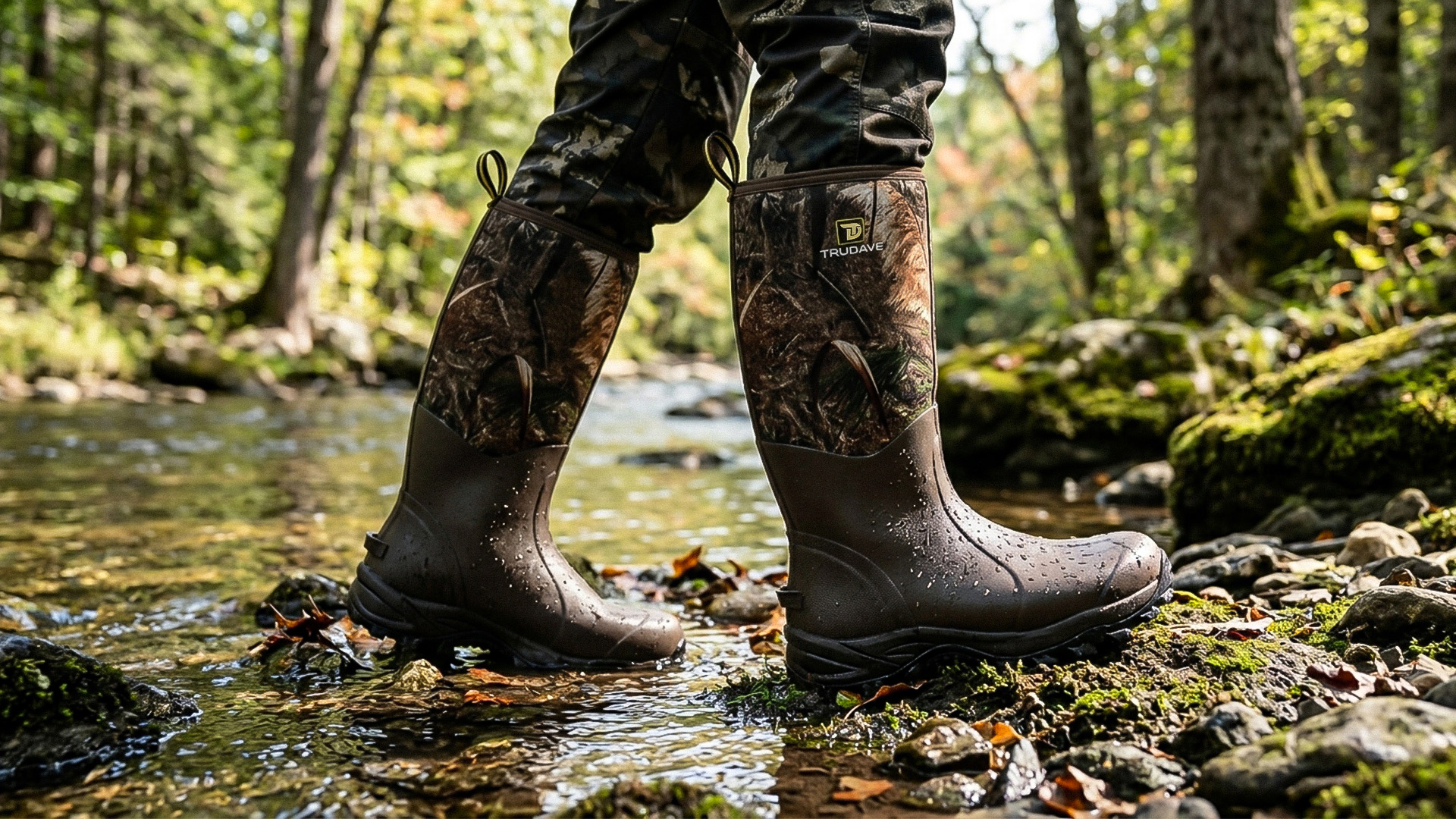
Hunters working these environments may benefit from waterproof hunting boots for pronghorn hunting that provide secure heel retention, good mud and rock traction, and enough support for long western stalks.
Lightweight Footwear Matters
Pronghorn hunts may involve several miles of open-country walking.
Heavy boots create fatigue.
Balance:
- Weight
- Support
- Waterproofing
according to conditions.
Too Much Insulation Can Cause Problems
Many pronghorn hunts occur during relatively mild or warm weather.
Heavily insulated boots may create excessive sweating.
Choose footwear based on:
- Temperature
- Activity level
rather than simply the fact that you are hunting.
Heel Retention Still Matters
Rolling prairie may appear easy.
Stalks can involve:
- Sidehills
- Draw crossings
- Long descents
A secure heel prevents hot spots and blisters.
Traction Matters on Dry Loose Soil
High-plains terrain may contain:
- Gravel
- Loose dirt
- Rock
Good outsole grip improves stability during stalks.
After Rain, Clay Becomes Extremely Slick
The same trail that was easy yesterday may become difficult today.
Take shorter steps.
Avoid steep muddy banks where possible.
Gaiters Can Help With Seeds and Wet Vegetation
Low gaiters may reduce:
- Grass seeds
- Mud
- Moisture
entering footwear.
They can be useful during early-morning wet grass.
Grass Seeds Can Be Annoying
Western grasslands may contain:
- Burrs
- Awns
- Sharp seeds
Check:
- Socks
- Boots
- Pants
during long walks.
Small irritation can become painful after several miles.
Heat Can Be More Dangerous Than Cold
Early-season pronghorn hunting may occur during:
- High temperatures
- Direct sun
- Low humidity
Carry enough water.
Open country provides very little shade.
Dry Air Hides Dehydration
Sweat evaporates quickly.
Hunters may not realize how much water they are losing.
Drink regularly.
Do not wait until you feel extremely thirsty.
Carry Water on Every Stalk
The herd appears close.
The stalk looks short.
Then the animals move.
A twenty-minute approach becomes two hours.
Carry your water with you.
Sun Protection Matters
Open prairie offers little shade.
Use appropriate:
- Hat
- Sunscreen
- Clothing
Long exposure can affect both comfort and concentration.
Wind Can Increase Dehydration
Strong dry wind removes moisture quickly.
Even cool days can be dehydrating.
Keep drinking water.
Thunderstorms Create Serious Open-Country Risk
Prairie hunters may have little shelter.
If lightning approaches:
Leave exposed ridges.
Follow appropriate severe-weather safety procedures.
No animal is worth remaining on a skyline during a thunderstorm.
Storms Can Build Quickly
Western weather may change rapidly.
Watch:
- Clouds
- Wind
- Forecast
throughout the day.
Do not focus so completely on a distant herd that you ignore approaching weather.
Early Snow Can Change Pronghorn Behavior
Later-season hunts may encounter:
- Snow
- Cold wind
- Frozen ground
Animals may shift toward areas with:
- Better food access
- Lower snow depth
- Wind protection
Rescout after major storms.
Fresh Snow Makes Tracks Easy to Find
Tracks can reveal:
- Fence crossings
- Feeding routes
- Water use
This can help hunters understand patterns much faster.
Snow Also Improves Visibility
Pronghorn often stand out against white ground.
But terrain and brush can still hide them.
Continue glassing carefully.
Windblown Terrain Can Stay Open
Strong wind may expose:
- Grass
- Forage
on ridges.
Pronghorn may use these areas during snowy periods.
Cold Wind Can Push Herds Into Lower Ground
During harsh conditions, animals may seek:
- Basins
- Terrain depressions
with less exposure.
Use weather to narrow the search.
Hunting Pressure Changes Herd Behavior
Animals near roads may become:
- Nervous
- Vehicle-sensitive
- Quick to move
Pressure can make stalking more difficult as season progresses.
Look Beyond Obvious Roadside Herds
Roadside pronghorn are easy to locate.
They may also be the most pressured.
Search basins that require:
- Walking
- Longer glassing
- Less obvious access
But Remote Does Not Always Mean Better
A basin three miles from the road is useless if it contains poor food and little current sign.
Habitat still matters more than distance.
Public-Land Boundaries Can Be Complicated
Western pronghorn country often contains a patchwork of:
- Public land
- Private ranch
- State land
Use accurate mapping.
Do not assume one open fence means unrestricted access.
Landlocked Public Parcels Require Legal Access
Public ownership does not always mean legal physical access across surrounding private property.
Verify routes before hunting.
Do not trespass to reach public ground.
Ask Permission Clearly
When approaching private landowners, be specific about:
- Hunting dates
- Number of hunters
- Vehicles
If access is granted:
Follow instructions exactly.
Leave Gates As Directed
Do not automatically close or open every gate.
Ranch operations vary.
Ask the landowner what they prefer.
Avoid Wet-Road Damage
One careless drive after rain can damage a ranch road and future access.
When conditions deteriorate:
Walk.
Spot-and-Stalk Requires Physical Patience
Pronghorn hunting may not involve extreme mountain elevation.
But long crawls and open-country walking still create fatigue.
Condition for:
- Distance
- Kneeling
- Low movement
before season.
Practice Shooting From Field Positions
A final opportunity may require:
- Sitting
- Kneeling
- Prone
rather than a perfect benchrest.
Practice positions you may realistically use.
Stable Positions Improve Confidence
Open terrain often provides time to build a stable setup.
Use legal and appropriate supports such as:
- Pack
- Bipod
- Natural terrain
rather than rushing.
Never Shoot Only Because the Animal Is About to Leave
A herd becoming nervous creates pressure.
Do not let urgency override:
- Safe background
- Positive identification
- Effective range
Let the opportunity go if necessary.
Skyline Shots Are Not Safe
Pronghorn frequently stand on:
- Ridge crests
which creates dangerous backgrounds.
Wait until the animal moves with solid terrain behind it.
Know What Is Beyond the Herd
Open country can contain:
- Roads
- Livestock
- Homes
far beyond the animals.
Long visibility does not mean the background is empty.
Herds Can Overlap
One animal may stand directly behind another.
Wait for a clearly separated target.
Never assume only the visible animal occupies the line of fire.
Recovery Begins Before the Shot
Mark:
- Exact animal location
- Nearby ridge
- Sage patch
- Fence
before shooting.
Once you start walking, open country becomes less recognizable.
Stay Focused After the Shot
Watch:
- Direction
- Last visible point
- Herd movement
Do not immediately lower optics.
The information may be critical for recovery.
Blood Tracking Can Be Hard on Dry Ground
Dry grass and rock may show little visible sign.
Look for:
- Tracks
- Disturbed soil
- Hair
- Blood where present
Move methodically.
Fresh Snow Can Make Recovery Easier
Tracks and blood where present may become more visible.
But blowing snow can also erase sign.
Begin recovery appropriately and methodically.
Do Not Destroy Sign
If tracking becomes necessary, keep unnecessary people away from the trail.
Mark confirmed evidence.
Then continue.
Game Extraction Can Still Be Significant
Open-country animals can appear close while being much farther from roads than expected.
Before the shot, consider:
- Distance
- Terrain
- Temperature
Plan extraction.
Warm Weather Makes Meat Care Important
Pronghorn seasons can include warm daytime temperatures.
Have:
- Game bags
- Ice
- Cooler space
ready before hunting.
Begin proper field care promptly.
Direct Sun Increases Heat Quickly
An animal lying in open prairie receives full sun.
Move meat to appropriate cooling conditions as soon as practical.
Follow current wildlife and food-safety guidance.
Cooler Nights Do Not Solve Midday Heat
The morning may be cold.
The afternoon may become warm.
Plan for the highest likely temperature.
Regulations Must Be Checked Carefully
Pronghorn hunting is often managed through:
- Specific units
- Tags
- Limited-entry systems
depending on jurisdiction.
Verify current:
- Season dates
- Tag requirements
- Unit boundaries
- Weapon restrictions
- Legal methods
using official wildlife-agency information.
Public and Private Access Rules Differ
Having a valid tag does not provide access to private land.
Know the ownership map.
Secure permission where required.
Buck and Doe Tags May Differ
Some jurisdictions offer different hunt structures based on:
- Sex
- Unit
- Season
Confirm exactly what your tag allows.
Do Not Rely on Old Unit Information
Pronghorn regulations and quotas can change.
Use the current season’s official materials.
Species Identification Still Matters
Pronghorn are distinctive.
Hunters still need to confirm:
- Legal animal
- Tag requirements
before shooting.
Horn Evaluation Takes Practice
If the hunt has specific selection goals, study live animals before season.
Do not rush identification at long distance.
Use optics.
Conservation Depends on Open Landscapes
Pronghorn rely on connected western grassland and shrub-steppe habitat.
Fences, development, and habitat fragmentation can affect movement.
Protecting migration and seasonal habitat benefits populations.
Wildlife-Friendly Fencing Can Matter
Because pronghorn commonly travel under fences, fence design can influence movement.
Land-management programs that improve wildlife passage can benefit populations.
Hunters benefit directly from connected habitat.
Common Pronghorn Hunting Mistakes
Starting the Stalk Too Quickly
Watch the herd first.
Walking Directly Toward Animals
Use terrain instead.
Skylining on Ridges
Pronghorn detect silhouettes easily.
Focusing Only on the Buck
Other animals may detect you first.
Assuming Flat Country Has No Cover
Small draws and terrain folds matter greatly.
Wearing Heavy or Non-Waterproof Boots
Long prairie miles reward lightweight support and protection after storms.
Carrying Too Little Water
Open dry country dehydrates hunters quickly.
Taking a Shot Without a Safe Backstop
Open-country distance makes background awareness critical.
Frequently Asked Questions
Where do pronghorn usually live?
Pronghorn commonly occupy western grasslands, sagebrush flats, high desert, rolling prairie, agricultural edges, and other open landscapes.
What is the best way to hunt pronghorn?
Spot-and-stalk hunting using optics, terrain, wind, and patient movement is a common approach in suitable open country.
Why are pronghorn difficult to stalk?
They live in open terrain and have excellent vision, allowing them to detect human movement from long distances.
Is rain good for pronghorn hunting?
Rain can create fresh tracks and change vegetation, but it may also make clay roads and open-country footing muddy and difficult.
What boots are best for pronghorn hunting?
Lightweight waterproof hunting boots with secure heel fit, good traction on prairie, sagebrush, gravel, and post-rain mud, and enough support for long stalks are practical.
Does snow change pronghorn hunting?
Yes. Snow can reveal tracks, improve visual contrast, and alter feeding or travel patterns depending on depth and weather.
Final Thoughts
Pronghorn hunting teaches hunters how much difference a few feet of terrain can make.
A shallow draw becomes a highway.
A low ridge becomes a wall.
A patch of tall sage becomes final-approach cover.
A fence crossing becomes a predictable travel route.
Open country is not actually featureless.
It only looks that way until the hunter learns to read it.
Glass first.
Watch the entire herd.
Use terrain.
Move only when the animals give you an opportunity.
Stay below the skyline.
Carry enough water.
Respect ranch access.
Wear boots that let you cross wet sage, gravel, clay mud, grass, and long prairie miles without turning the stalk into a fight with your feet.
And when a pronghorn spots you from a distance that seemed impossible, do not blame bad luck.
Study what happened.
The animal just showed you exactly how valuable visibility is in open country.
The next stalk begins by taking that advantage away.
