
Mule deer country can look almost too big to hunt.
Sagebrush basins stretch for miles.
Ridges disappear into distant mountains.
Small patches of juniper break the open country.
A hunter can sit behind binoculars for an hour and see nothing.
Then one ear appears above the sage.
A gray back moves across a sunlit slope.
Another deer stands from a bed only a few yards away.
Suddenly a hillside that looked empty contains an entire group.
That is mule deer hunting.
The challenge is not simply finding deer.
It is understanding why they are using one part of a huge western landscape while ignoring another.
Mule deer movement can change with:
- Food
- Elevation
- Snow
- Hunting pressure
- Rut timing
- Migration
- Water
- Weather
The best hunters do not keep hunting the exact same basin because it produced early in the season.
They follow changing conditions.
Mule Deer Need Large Landscapes
Mule deer may occupy a wide variety of western habitats.
Productive country can include:
- Sagebrush basins
- Pinyon-juniper
- Mountain shrub
- High desert
- Aspen edges
- Burns
- Agricultural transitions
- Alpine foothills
The important point is scale.
A mule deer may move farther between seasonal habitats than many hunters expect.
One mountain can be excellent in September and nearly empty later.
Start With Food
Mule deer location often begins with available forage.
Look for current food sources such as:
- Browse
- Forbs
- Shrubs
- Agricultural crops where relevant
- Post-fire vegetation
The best feeding areas vary by season.
Do not rely only on what the habitat looked like during summer scouting.
Sagebrush Country Is More Complicated Than It Looks
A huge sage basin may appear uniform.
It is not.
Look for differences in:
- Sage height
- Shrub density
- Forb abundance
- Terrain
- Moisture
One small bench may provide better food than hundreds of surrounding acres.
That is where deer concentrate.
Glass Before Walking
Open western deer country rewards patience.
Find a stable glassing point.
Then search:
- Basin bottoms
- Ridge shoulders
- Brush edges
- Shade lines
- Small openings
Do not immediately hike across the basin.
Let optics do the first miles for you.
Divide the Landscape Into Sections
Random glassing causes hunters to miss deer.
Search systematically.
For example:
- Ridge top
- Upper slope
- Mid-slope benches
- Basin bottom
- Brush pockets
Then repeat.
A bedded deer may stand between scans.
Look for Parts of a Deer
Mule deer can disappear surprisingly well in sage.
Search for:
- Ears
- Antler tips
- Horizontal back lines
- Leg movement
Do not expect the whole animal to be visible.
Early Morning Light Can Help
Low sunlight creates contrast.
Deer moving across:
- Open sage
- Ridge lines
- Brush edges
can become easier to detect.
Morning light can also reveal shadows that hide animals later.
Midday Glassing Still Matters
Bedded mule deer do not vanish.
They may simply move into:
- Shade
- Juniper
- Rock outcrops
Midday can be an excellent time to carefully glass known bedding country.
Patience matters more than movement.
Shade Is a Habitat Feature
During warm conditions, deer may prefer slopes offering:
- Juniper
- Rock shade
- North-facing cover
Search the shadow line.
A deer may be invisible only because it chose a darker background.
North- and South-Facing Slopes Hunt Differently
Slope aspect changes:
- Vegetation
- Snow depth
- Temperature
- Moisture
Early season may favor one exposure.
Later snow may shift use dramatically.
Learn both sides of the mountain.
Benches Can Hold Bedded Deer
Steep western country often contains small flatter shelves.
These benches can provide:
- Bedding
- Feeding
- Easier travel
A subtle bench visible on topographic maps may hold deer repeatedly.
Ridge Shoulders Are Excellent Glassing Areas
Deer may travel just below the crest rather than directly on the skyline.
Watch:
- Ridge shoulders
- Small saddles
- Sidehill trails
These routes provide security while allowing efficient movement.
Saddles Funnel Travel
A saddle between two high points may connect:
- Feeding basin
- Bedding slope
- Migration route
Fresh tracks can confirm whether deer are currently using it.
Pinyon-Juniper Provides Security
Juniper country can hold deer that disappear from open sage.
Look around:
- Edge habitat
- Openings
- Small draws
The thickest woodland may be difficult to glass.
The transition usually provides more visibility.
Juniper Islands Can Hide Bucks
A small group of trees in otherwise open country can provide enough shade and concealment for a mule deer to bed.
Glass every isolated tree cluster carefully.
One dark shape beneath a juniper may be the only clue.
Burns Can Create Excellent Feeding Habitat
Wildfire can stimulate:
- Forbs
- Shrubs
- New growth
over time.
Burn edges often provide food next to secure unburned cover.
The age of the burn matters.
Fresh Burns Can Be Too Open
Immediately after severe fire, habitat may lack:
- Cover
- Established forage
Several years later, the same area may improve dramatically.
Watch vegetation recovery.
Agricultural Edges Can Concentrate Deer
Where mule deer habitat borders:
- Alfalfa
- Grain
- Other crops
animals may feed near the transition.
Private-property boundaries become especially important.
Know where legal access ends.
Hunt the Security Cover Beside Food
A deer feeding at night may spend daylight only a short distance away.
Search:
- Sage
- Juniper
- Draws
near agricultural edges.
The bedding cover often provides better daylight opportunity than the field itself.
Migration Changes Everything
Some mule deer populations make seasonal movements between:
- Summer range
- Transitional range
- Winter range
Weather can accelerate this shift.
A basin full of deer one week may empty after a major storm.
First Snow Can Trigger Movement
Snow does more than make tracks visible.
It can change where deer live.
As snow deepens at higher elevations, deer may begin moving toward:
- Lower basins
- South-facing slopes
- Traditional migration corridors
This can completely reset the hunt.
Follow the Snow Line
The transition between heavy snow and open ground can be especially interesting.
Deer may feed where vegetation remains accessible while staying near secure higher terrain.
Watch this elevation band carefully.
Fresh Snow Is Excellent for Tracks
Look for current movement around:
- Saddles
- Roads
- Brush edges
- Migration routes
Fresh tracks can confirm whether deer moved through overnight.
Old Tracks Can Mislead
Snow preserves history.
A trail containing dozens of tracks may look exciting.
But if all tracks are weathered, the deer may already be miles away.
Freshness matters.
Windblown Ridges Can Stay Open
Strong wind may remove snow from:
- Ridge tops
- South-facing slopes
making forage easier to access.
These exposed areas can become important after storms.
Deep Snow Increases Travel Cost
Mule deer often choose efficient routes when snow becomes deeper.
Look for:
- Packed trails
- Saddles
- Windblown terrain
- Lower-elevation corridors
Energy conservation becomes more important.
Migration Corridors Can Be Narrow
A broad seasonal movement may funnel through surprisingly small terrain features.
Examples include:
- Saddle
- Canyon opening
- Bench
- Ridge gap
Repeated tracks can reveal these routes.
Do Not Assume Every Deer Is Migrating
Some animals may remain resident.
Others move long distances.
Current sign matters more than general assumptions.
Hunt what the landscape is telling you today.
Rut Behavior Can Override Normal Patterns
During breeding periods, bucks may:
- Travel more
- Visit doe groups
- Appear in open country longer
A buck that spent weeks hidden in thick cover may suddenly move widely.
Doe Groups Can Reveal Buck Activity
During the rut, spend time watching groups of does.
A mature buck may appear:
- Above them
- Behind cover
- Later in the day
Do not glass only the visible animals.
Search the surrounding terrain.
Rut Does Not Eliminate Caution
A buck focused on breeding may still detect:
- Wind
- Movement
- Human pressure
Do not abandon basic stalking strategy.
Hunting Pressure Changes Deer Location
Accessible roads and basins often receive the most pressure.
Mule deer may respond by moving toward:
- Steeper slopes
- Thick brush
- Roadless pockets
Find habitat where deer can avoid repeated disturbance.
Roadless Does Not Always Mean Far
A pocket only half a mile from a road can receive little pressure if terrain makes access difficult.
Distance alone does not determine hunting pressure.
Difficulty does.
Glass From Roads, Hunt Away From Them
Road systems can help hunters locate deer.
But animals near easy access may be heavily pressured.
Once productive habitat is identified, find a quieter approach.
Dirt Roads Are Great Tracking Surfaces
After rain or snow, roads reveal crossings.
Look for:
- Fresh tracks
- Direction
- Repeated use
A single road crossing can point toward an entire bedding basin.
Rain Can Improve Scouting
Rain creates soft ground.
Tracks become easier to read.
It can also freshen vegetation in dry country.
But storms create new travel hazards.
Clay Roads Become Dangerous After Rain
Western dirt roads may become:
- Slick
- Deep
- Impassable
Do not drive aggressively through wet terrain.
Respect road closures and property rules.
Mud Changes Footwear Needs
Mule deer country may appear dry for most of the year.
One storm can create:
- Clay mud
- Wet sage
- Creek crossings
- Snow
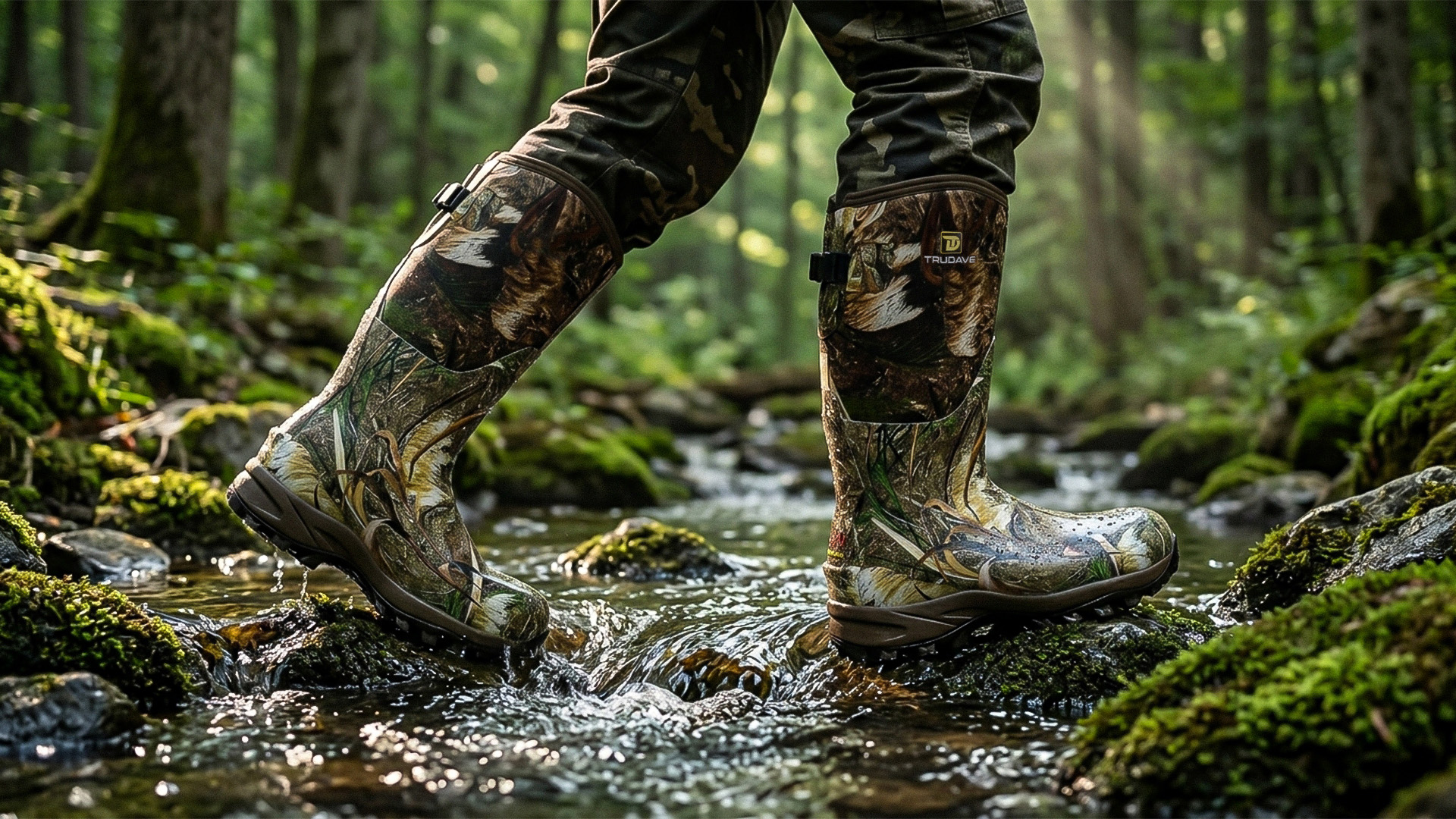
Hunters working these conditions may benefit from waterproof hunting boots for mule deer hunting that provide secure heel retention, strong traction, and enough support for long days in rocky western terrain.
Mountain Support Matters
Mule deer hunts often involve:
- Sidehilling
- Climbing
- Loose rock
A supportive boot reduces fatigue and improves stability.
The goal is enough structure without excessive weight.
Heel Lock Is Critical
Steep climbs create upward heel movement.
Long descents create forward foot movement.
Poor fit leads quickly to:
- Blisters
- Hot spots
Test boots on real hills before the hunt.
Toe Room Matters
Long downhill walks punish short-fitting boots.
Make sure toes have enough space during descents.
Mountain footwear should be fitted for actual terrain.
Traction Matters on Loose Rock
Sagebrush hills can contain:
- Scree
- Gravel
- Dry rock
Use controlled steps.
Do not chase moving deer recklessly.
Wet Rock Can Be Even More Dangerous
Snowmelt or rain makes stone slick.
Slow down around:
- Rock shelves
- Creek bottoms
- Shaded slopes
Gaiters Can Help in Snow and Mud
Gaiters reduce:
- Snow
- Seeds
- Mud
entering footwear.
They can also protect pants from wet sage.
Wet Sage Can Soak Hunters
After rain or snowmelt, sagebrush transfers water constantly.
A hunter can become wet without stepping into a creek.
Waterproof lower layers can improve comfort.
Long-Distance Walking Requires Smart Footwear
Mule deer hunting can involve many miles.
Heavy boots create cumulative fatigue.
Balance:
- Support
- Waterproofing
- Weight
- Insulation
based on season and terrain.
Over-Insulated Boots Can Become a Problem
Active mountain hunting produces heat.
Too much insulation can create sweat.
Sweaty feet become cold once the hunter stops.
Match insulation to current conditions.
Hydration Still Matters in Cold Weather
High desert air can be extremely dry.
Hunters may lose significant moisture without noticing.
Carry water.
Do not judge hydration only by thirst.
Elevation Increases Physical Demand
Mountain hunts may combine:
- Thin air
- Steep slopes
- Heavy pack
Conditioning matters.
Prepare before season.
Train for Descents Too
Hunters often train climbing.
Downhill movement stresses:
- Knees
- Quads
- Feet
Long descents deserve preparation.
Trekking Poles Can Help
Poles can improve stability on:
- Loose rock
- Snow
- Mud
They may also reduce downhill strain.
Practice before hunting.
Wind Is Critical During Stalks
Mule deer rely heavily on scent.
Before leaving the glassing point, determine:
- Current wind
- Expected thermal changes
A perfect visual route may be impossible with the wrong wind.
Thermals Change During the Day
Cool air may settle downhill in the morning.
As slopes warm, thermals often begin rising.
A stalk can take hours.
Plan for future wind.
Not only current wind.
Do Not Rush the Stalk
Once a bedded deer is found, hunters often become impatient.
If the deer is comfortable:
Wait.
Study:
- Wind
- Terrain
- Approach
Time can improve the setup.
Bed the Deer With Your Eyes
Before moving, identify:
- Exact bed
- Nearby landmarks
- Escape routes
Once you descend from the glassing ridge, visibility may disappear.
Use Fixed Landmarks
Mark the animal relative to:
- Rock
- Lone tree
- Brush patch
- Terrain fold
Do not rely on “that spot halfway up the hill.”
Everything looks different from below.
Recheck During the Stalk
If possible, stop at intermediate points and glass again.
The deer may:
- Stand
- Move
- Rebed
Do not continue blindly toward an outdated location.
Terrain Can Hide Deer Completely
A small ridge can block visibility.
This creates both:
- Opportunity
- Risk
Use terrain to approach unseen.
But avoid accidentally appearing too close with no safe shot setup.
Skyline Shots Are Unsafe
A mule deer standing on a ridge can look perfect.
If the background is sky, the shot is not.
Wait until the animal moves into a safe position with a known backstop.
Open Country Requires Strict Backstop Awareness
Long distances make terrain deceptive.
Know what lies beyond:
- Deer
- Ridge
- Basin
Never assume an apparently empty western landscape is safe.
Distance Is Easy to Misjudge
Large basins reduce visual references.
A deer that looks close may be much farther.
Use reliable range estimation methods.
Know your ethical effective distance.
Long Range Should Never Replace Stalking
Seeing an animal far away does not create an obligation to shoot from there.
Use terrain to close distance when safe and practical.
Better position improves:
- Accuracy
- Confidence
- Recovery
Wind Makes Distance More Difficult
Crosswinds have greater effects at longer range.
If conditions are unstable:
Get closer.
Wait.
Or pass.
Stable Shooting Positions Matter
Western terrain may provide:
- Prone
- Sitting
- Pack support
Practice realistic field positions.
Do not depend on unsupported shooting after a long climb.
Recovery Begins Before the Shot
Before shooting, note:
- Exact location
- Escape direction
- Nearby landmarks
Open sage can still hide a deer quickly once you leave the glassing point.
Watch the Deer After the Shot
Stay focused.
Note:
- Movement
- Last visible position
- Direction
Do not immediately begin packing gear.
Those observations may determine recovery success.
Snow Can Help Recovery
Fresh tracks may reveal movement.
Blood where present can contrast clearly.
But snow can also cover sign during active weather.
Move methodically.
Rocky Ground Can Hide Sign
Bare stone may show little.
Search softer pockets for:
- Tracks
- Disturbed soil
Use vegetation for additional clues.
Do Not Destroy the Trail
If tracking is necessary, avoid having multiple hunters spread out immediately.
Protect sign.
Mark confirmed evidence before moving forward.
Recovery Terrain Can Be Harder Than the Stalk
A deer may end up in:
- Canyon
- Brush
- Steep slope
Move safely.
Do not turn a successful hunt into an injury.
Plan Extraction Before Shooting
Before committing to a difficult animal, ask:
How will I get it out?
Consider:
- Distance
- Elevation
- Snow
- Temperature
The pack-out is part of the hunt.
Warm Early Seasons Require Fast Meat Care
High-desert temperatures can remain warm.
Carry:
- Game bags
- Cooling plan
before hunting.
Do not leave essential recovery equipment at the vehicle if you are several miles away.
Late-Season Cold Does Not Remove All Game-Care Needs
Cold helps.
But proper handling remains important.
Follow current wildlife and food-safety guidance.
Migration Hunts Can Become Logistically Difficult
Snow that moves deer can also:
- Close roads
- Increase mud
- Lengthen recovery
Plan access before entering remote winter range.
High-Country Roads Can Close Quickly
A road that was dry yesterday may become inaccessible after snow.
Check current conditions.
Keep alternate routes.
Do Not Risk a Vehicle for Better Access
Getting stuck several miles from pavement can become a serious winter problem.
When uncertain:
Park.
Walk.
Navigation Is Essential
Open sagebrush country can be surprisingly confusing.
Use:
- Offline maps
- GPS
- Topographic information
Mark:
- Vehicle
- Major ridge
- Property line
Cell Service Is Often Unreliable
Download maps before leaving.
Carry appropriate emergency communication for remote hunts.
Headlamps Belong in Every Pack
A stalk may take longer than expected.
Recovery may extend after sunset.
Carry:
- Headlamp
- Backup power
Property Boundaries Matter
Mule deer country can contain a patchwork of:
- Public land
- Private ranch
- State land
Know access before hunting.
A deer crossing a boundary does not create permission.
Private Ranches Require Respect
When permission is granted:
- Follow roads
- Respect livestock
- Leave gates correctly
- Avoid wet-road damage
Responsible access protects future hunting.
Public-Land Units Can Have Specific Rules
Check the exact hunting unit and property.
Do not assume rules from one region apply to another.
Mule Deer Regulations Can Be Complex
Before hunting, verify current:
- Tag requirements
- Season dates
- Unit boundaries
- Weapon restrictions
- Antler restrictions where applicable
Use current official wildlife-agency information.
Migration Closures May Exist
Some areas may restrict access seasonally to protect wildlife.
Respect:
- Road closures
- Winter-range closures
Conservation rules matter.
Species Identification Matters
Some western areas contain:
- Mule deer
- White-tailed deer
- Black-tailed deer
depending on region.
Hunters should know local identification and legal definitions.
Do Not Identify Deer Only by Distance or Habitat
Use:
- Ear size
- Tail pattern
- Body characteristics
and current agency identification guidance.
Positive identification comes first.
Habitat Conservation Is Central to Mule Deer Hunting
Healthy mule deer populations depend on:
- Seasonal range
- Migration corridors
- Winter habitat
- Connected landscapes
Development and fragmentation can disrupt those systems.
Hunters benefit directly from conservation protecting large connected habitat.
Migration Corridors Deserve Protection
A deer may depend on multiple seasonal ranges.
Protecting only one basin is not enough.
The routes connecting seasonal habitat are also important.
Common Mule Deer Hunting Mistakes
Hiking Before Glassing
Use optics first.
Treating Every Sage Basin Equally
Food and terrain vary.
Hunting the Same Elevation All Season
Weather and migration change deer distribution.
Ignoring Benches and Saddles
Small terrain features can control movement.
Wearing Heavy or Non-Waterproof Boots
Western terrain rewards support, traction, and manageable weight.
Rushing a Bedded Deer
Use time to improve the stalk.
Taking Skyline Shots
A safe background is mandatory.
Forgetting the Pack-Out
Recovery planning begins before the trigger pull.
Frequently Asked Questions
Where do mule deer usually live?
Mule deer occupy a wide range of western habitats including sagebrush, mountain shrub, pinyon-juniper, high desert, burns, agricultural edges, and seasonal mountain ranges.
Is sagebrush good mule deer habitat?
Yes. Sagebrush landscapes can provide important food, security, and seasonal habitat, especially when mixed with varied terrain and other shrubs or forbs.
Does snow improve mule deer hunting?
Fresh snow can reveal tracks and trigger seasonal movement, although deeper snow can also change access and push deer toward lower elevations.
Do mule deer migrate?
Some mule deer populations make significant seasonal migrations between summer, transitional, and winter ranges. Movement patterns vary by herd and region.
What boots are best for mule deer hunting?
Waterproof hunting boots with secure heel fit, dependable rock and mud traction, moderate ankle support, and manageable weight for long-distance western hunting are practical.
What is the best way to find mule deer in open country?
Glassing from elevated positions, focusing on food, shade, terrain benches, and current seasonal conditions is one of the most efficient approaches.
Final Thoughts
Mule deer hunting teaches hunters that western landscapes change faster than they appear.
A basin that holds deer in September may be empty after the first major snow.
A summer feeding slope becomes a winter travel corridor.
A saddle that looked insignificant becomes the easiest route between two ranges.
A south-facing ridge becomes valuable because snow melted there first.
The deer follow those changes.
Hunters need to do the same.
Glass before walking.
Find current food.
Study benches and saddles.
Watch the snow line.
Follow fresh tracks.
Respect migration corridors.
Use wind and thermals instead of fighting them.
Wear boots that let you cross wet sage, mud, loose rock, snow, and long western miles without turning your feet into the weakest part of the hunt.
And when a basin that looked empty suddenly reveals six deer after twenty minutes of careful glassing, remember what mule deer hunting rewards most:
Not speed.
Not distance.
Not random mileage.
Patience—and the ability to notice where the landscape is changing.
