
Mountain turkey hunting can make a bird sound much closer than it really is.
A gobbler answers from somewhere across the hollow.
The call is loud.
The hunter assumes the bird is only a few hundred yards away.
He drops down the ridge.
Crosses a creek.
Climbs the opposite slope.
Forty minutes later, the gobbler answers again.
Still above him.
Still farther than expected.
That is Appalachian turkey hunting.
Mountains distort sound.
Ridges block visibility.
Creeks complicate approaches.
Mountain laurel can hide a turkey only thirty yards away.
And a bird that sounds like it is coming directly toward you may actually be walking along a bench several hundred feet above your position.
Successful mountain turkey hunting requires hunters to understand more than calling.
You need to understand:
- Ridges
- Saddles
- Benches
- Hollows
- Roost trees
- Feeding areas
- Weather
- Wind
- Terrain barriers
The birds already understand all of those things.
The hunter needs to learn how to use the same mountain.
Appalachian Turkey Country Is a Vertical Landscape
Eastern wild turkeys can occupy many environments.
In Appalachian country, productive habitat may include:
- Mature hardwood forest
- Oak ridges
- Mountain laurel
- Creek hollows
- Logging roads
- Forest openings
- Agricultural edges
- Timber cuts
- Ridge saddles
The important difference from flatter country is elevation.
A turkey can be:
- Above you
- Below you
- Across a hollow
while remaining relatively close on a map.
That changes everything.
Start With Ridges
Mountain ridges are one of the most useful features to understand.
Turkeys may use ridges for:
- Travel
- Strutting
- Feeding
- Roost access
Ridges also allow sound to travel.
A gobbler standing on a ridge may be heard from multiple drainages.
That makes high ground valuable for early-morning listening.
Get High Before Daylight
When practical and safe, reaching a listening ridge before sunrise can help locate multiple birds.
From high ground, hunters may hear gobbles from:
- Adjacent ridge systems
- Hollows
- Creek bottoms
The goal is not immediately moving toward the first sound.
Listen long enough to understand the bird’s position.
One extra gobble can tell you whether the turkey is:
- Across the drainage
- On your ridge
- Farther away
Mountain Sound Is Deceptive
A turkey calling across a hollow can sound extremely close.
Terrain can amplify and redirect sound.
Do not rush downhill based on one gobble.
Wait for another response.
Change your listening position slightly if necessary.
Sound becomes more useful when combined with terrain knowledge.
Gobbles Can Sound Higher or Lower Than They Are
Steep terrain makes vertical position difficult to judge.
A gobbler may appear to be:
- On the ridge
when it is actually:
- On a bench below the ridge
This distinction matters.
The approach route to each location is completely different.
Benches Are One of the Most Important Mountain Features
A bench is a relatively flat shelf on an otherwise steep slope.
Turkeys may use benches because they provide:
- Easier walking
- Feeding
- Strutting room
- Visibility
Small benches can become excellent hunting locations.
Topographic maps are extremely useful for identifying them.
Look for Benches Below Major Ridges
A gobbler may spend the morning walking a bench rather than staying directly on top.
Hunters sitting only on the ridge can sometimes hear the bird without ever seeing it.
Study contours.
A flatter strip halfway down the mountain deserves attention.
Saddles Funnel Movement
A saddle is a low point between higher terrain.
Wildlife often uses these natural crossings.
Turkeys may move through saddles while traveling between:
- Ridge systems
- Feeding areas
- Roosting habitat
A saddle containing:
- Fresh scratching
- Tracks
- Droppings
can be an excellent setup.
Saddles Are Also Good Calling Locations
Sound can travel through low gaps in the ridge.
A hunter positioned near a saddle may reach birds on both sides.
But concealment matters.
Avoid sitting directly on the most obvious skyline.
Use nearby timber or brush.
Oak Ridges Can Provide Food
Hardwood mast can influence turkey habitat.
Oak ridges may produce:
- Acorns
- Invertebrates
- Leaf-litter feeding opportunities
Look for scratching beneath mature oaks.
Fresh scratching can reveal current turkey use.
Learn Fresh Turkey Scratching
Turkeys move leaves while searching for food.
Fresh scratching often shows:
- Dark soil
- Leaves thrown backward
- Sharp edges
- Tracks nearby
Old scratching becomes flattened and weathered.
Fresh sign is much more useful.
Scratching Direction Can Tell a Story
A line of feeding sign may reveal where birds moved.
Follow the overall pattern visually.
Do not walk directly through every scratch.
Ask:
Where does this feeding route lead?
Possible destinations include:
- Ridge
- Creek
- Field
- Roosting timber
Creek Hollows Can Hold Birds
Mountain hollows provide:
- Water
- Moist soil
- Insects
- Cooler cover
Turkeys may feed or travel through these areas.
But hunters need to remember that creeks also create barriers.
A bird answering from across water may refuse to cross.
Creeks Can Stop a Perfect Turkey Hunt
A gobbler may respond repeatedly.
The hunter assumes calling will bring it across.
The bird reaches the creek.
Then stops.
Turkeys can cross water.
That does not mean they want to.
If a creek lies between hunter and bird, consider repositioning before calling aggressively.
Cross the Obstacle Before Setting Up
Whenever possible, get on the same side of major barriers before committing to the setup.
Barriers may include:
- Creek
- Cliff
- Fence
- Deep ravine
- Thick laurel
The best calling cannot always overcome bad terrain.
Mountain Laurel Can Be Excellent Security Cover
Dense mountain laurel provides:
- Concealment
- Weather protection
- Travel cover
Turkeys may use openings and edges around laurel.
Hunters should avoid trying to crawl directly through every thicket.
Look for:
- Logging roads
- Open hardwood lanes
- Small gaps
Hunt Laurel Edges
Where laurel meets open hardwoods, turkeys gain both security and feeding opportunity.
These transitions can hold:
- Scratchings
- Dusting sites
- Tracks
Move slowly.
Visibility may be short.
Logging Roads Can Be Excellent Turkey Habitat
Old logging roads provide:
- Easy walking
- Open ground
- Insects
- Strutting space
Turkeys may follow them through steep country.
A road crossing a ridge or bench can be especially valuable.
Closed Roads Often Receive Less Pressure
Roads closed to vehicles may become quiet travel corridors.
Vegetation can grow along the edges.
Hunters can use these routes for:
- Access
- Listening
- Scouting
Walk slowly.
A turkey may be feeding just around the next bend.
Road Intersections Can Concentrate Sign
Where logging roads meet:
- Ridge trails
- Saddles
- Fields
look for tracks and scratching.
These intersections often provide several travel options.
Small Forest Openings Can Become Strut Zones
Gobblers often like areas where they can:
- Display
- See hens
- Remain near cover
Potential openings include:
- Logging landings
- Gas-line cuts
- Old fields
- Small clearings
A tiny opening surrounded by timber can be more useful than a huge exposed pasture.
Strut Zones May Show Sign
Look for:
- Tracks
- Droppings
- Wing-drag marks
- Feathers
where appropriate.
Repeated sign can indicate regular use.
Do Not Walk Through the Opening Before the Hunt
Approach from timber.
Avoid leaving scent and disturbance in the exact area you expect birds to use.
Set up with visibility toward the opening.
Roost Trees Can Organize Morning Strategy
Turkeys often roost in mature trees where suitable.
Mountain roost sites may occur near:
- Ridges
- Creek slopes
- Mature hardwoods
Locating a roost does not mean sitting directly underneath it.
Give birds room.
Roosted Birds Need a Comfortable Fly-Down Route
Before setting up, look at terrain below the roost.
A turkey may prefer flying toward:
- Open bench
- Logging road
- Field edge
rather than steep brush.
Predict the easiest landing zone.
Do Not Crowd the Roost
Approaching too closely before daylight can:
- Flush birds
- Change movement
- Educate the gobbler
Stay far enough away to enter quietly.
Patience is often more useful than extreme proximity.
Evening Roost Scouting Can Help
Listening near sunset can reveal where birds spend the night.
Avoid disturbing them after locating the area.
Mark the general position.
Then plan the morning approach.
Spring Green-Up Changes Feeding Areas
As spring progresses, new vegetation appears first in certain locations.
Look for:
- South-facing slopes
- Fields
- Creek bottoms
- Logging roads
depending on elevation and weather.
Fresh green growth can attract insects and feeding turkeys.
South-Facing Slopes Warm Earlier
Sun exposure can create earlier spring conditions.
These slopes may develop:
- Green vegetation
- Insect activity
before shaded slopes.
They can be useful during colder early-season periods.
North-Facing Slopes Can Remain Cooler
Later in spring, cooler slopes may offer:
- Moisture
- Shade
- Comfortable midday habitat
Bird movement shifts with temperature.
Do not hunt one slope direction all season.
Rain Changes Turkey Behavior
Spring turkey season often includes wet weather.
Rain can change:
- Feeding
- Movement
- Calling
- Habitat use
Hunters who refuse to hunt rain may miss good opportunities.
Light Rain Can Make Forest Movement Quieter
Wet leaves reduce crunching.
Hunters can move more quietly along:
- Ridges
- Roads
- Timber
This can be useful when repositioning.
Heavy Rain Can Push Turkeys Toward Openings
During heavy rain, forest sound becomes difficult to interpret.
Turkeys may spend more time in:
- Fields
- Logging roads
- Open ridges
where visibility is better.
These areas deserve attention during wet weather.
Open Fields Can Become Better During Rain
A turkey in heavy timber has limited ability to see approaching danger when rain and wind create noise.
Open ground provides better visibility.
That can make pasture and openings more productive than usual.
Rainy-Day Turkeys May Gobble Less
A quiet morning does not necessarily mean birds are absent.
Use:
- Tracks
- Scouting
- Known travel routes
instead of relying entirely on vocalization.
Hunt Known Patterns When Birds Are Quiet
If previous scouting revealed a regular:
- Field edge
- Saddle
- Bench
set up patiently.
Silent turkeys can still follow normal travel routes.
Wind Can Make Calling Difficult
Strong wind reduces your ability to hear gobbles.
It also makes it harder for turkeys to pinpoint calls.
Use louder terrain features strategically.
Call from:
- Ridges
- Openings
where sound can travel farther.
Windy-Day Birds May Use Protected Hollows
Strong ridge wind can push turkeys into:
- Hollows
- Leeward slopes
- Timber pockets
Search quieter habitat.
Do Not Overcall
One of the classic turkey-hunting mistakes is believing more calling always produces more response.
Sometimes a gobbler already knows where you are.
Constant calling may cause it to:
- Hang up
- Wait for the hen
Use calls deliberately.
Give the Bird Time
Mountain travel is slower than it appears.
A gobbler may need to:
- Descend
- Cross bench
- Climb
before reaching the setup.
A quiet fifteen minutes does not mean it left.
Listen for Non-Gobbling Clues
A turkey approaching quietly may produce:
- Footsteps
- Leaf movement
- Drumming
Stay still.
Many mountain birds arrive without another gobble.
Gobblers Can Circle Terrain
A bird may not walk directly toward the call.
It may use:
- Road
- Bench
- Ridge
to approach more comfortably.
Watch every possible route.
Set Up Before Calling When Possible
Calling before finding a good tree can create a problem.
The bird answers.
Now the hunter must move.
Movement may ruin the opportunity.
When possible:
Find a setup first.
Then call.
Choose a Tree With Visibility
A good setup provides:
- Back cover
- Comfortable sitting position
- Safe shooting lanes
Do not choose the biggest tree automatically.
Choose the tree that controls the most likely approach.
Avoid Sitting Where the Bird Can See You First
If a gobbler reaches a ridge edge before entering shooting range, it may look directly toward the call.
Use terrain so the bird must come close before gaining full visibility.
A Ridge Crest Can Be Dangerous for Setups
A bird approaching from below may see a hunter silhouetted.
Sit slightly off the top.
Use the opposite slope or nearby cover.
Decoys Are Not Always Necessary
In some terrain, a gobbler cannot see the setup until it is already close.
Calling and positioning may be enough.
Where decoys are legal and appropriate, visibility and safety should guide placement.
Dense Timber Changes the Role of Decoys
If the bird only sees twenty yards ahead, a decoy placed fifty yards away provides little benefit.
Match strategy to visibility.
Safety Around Decoys Is Critical
Turkey hunters may imitate both:
- Appearance
- Sound
of game.
This makes safe identification especially important.
Avoid setups where another hunter could approach the decoy from an unsafe direction.
Never Stalk Turkey Sounds Blindly
A gobble or turkey call may come from another hunter.
Do not sneak toward sound without positive visual identification.
Turkey hunting requires strict target awareness.
Do Not Wear Exposed Turkey-Like Colors
Follow standard turkey-hunting safety practices and current local guidance.
Visible red, white, or blue near the head or upper body can resemble turkey coloration.
Plan clothing carefully.
Know Where Other Hunters May Enter
Public mountain land may have:
- Multiple trailheads
- Logging roads
- Ridge access
Avoid shooting toward:
- Roads
- Trails
- Blind terrain
Blaze Orange Rules Vary
Some jurisdictions may require or recommend blaze orange during certain overlapping seasons or movements.
Verify current local rules.
Turkey-specific concealment does not eliminate general hunting-safety requirements.
Public-Land Turkeys Learn Quickly
Mountain birds receiving heavy pressure may:
- Gobble less
- Avoid roads
- Change timing
Do not assume silence means failure.
Look for areas requiring more effort to access.
Move Away From Obvious Access
Birds near:
- Parking areas
- Easy ridge roads
may experience the highest pressure.
A secondary ridge or closed logging road can hold less-disturbed turkeys.
But Do Not Walk Miles Through Bad Habitat Just to Avoid People
Remote does not automatically mean productive.
Habitat still matters.
Look for the best combination of:
- Food
- Roosting timber
- Terrain
- Low pressure
Midday Can Be Extremely Productive
Many hunters leave after the morning gobbling period.
That can create opportunity.
Later in the morning, gobblers may separate from hens and become more responsive.
Use midday to:
- Listen
- Call occasionally
- Hunt travel routes
Ridge Running Can Work Carefully
A hunter can move between listening points on connected ridges.
At each location:
Stop.
Listen.
Call sparingly.
Then wait.
Do not constantly walk and call.
Afternoon Birds Can Use Feeding Areas
Where legal hunting hours allow, birds may move toward:
- Fields
- Open timber
- Feeding ridges
later in the day.
Study current regulations and bird patterns.
Fresh Tracks After Rain Are Valuable
Mud along:
- Roads
- Creek crossings
- Field edges
can reveal recent turkey movement.
A cluster of fresh tracks is especially useful when birds are silent.
Turkey Tracks Can Reveal Direction
Look at toe orientation and trail pattern.
Repeated tracks may show birds moving between:
- Roosting
- Feeding
- Strutting habitat
Use the information to select a setup.
Muddy Roads Can Hold Excellent Sign
Closed forest roads are particularly useful after rain.
Fresh tracks crossing the road may identify hidden travel routes through otherwise dense forest.
Dusting Areas Can Confirm Regular Use
Turkeys use dry loose soil for dusting.
Look for shallow depressions containing:
- Feathers
- Tracks
near productive habitat.
Repeated dusting activity suggests birds spend significant time nearby.
Feathers Can Add Context
A single feather may tell little.
Several feathers combined with:
- Tracks
- Droppings
- Scratching
create a stronger habitat picture.
Spring Turkey Hunting Is Hard on Footwear
Mountain turkey hunting may involve:
- Wet leaves
- Mud
- Creeks
- Steep slopes
- Rain-soaked grass
- Long ridge walks
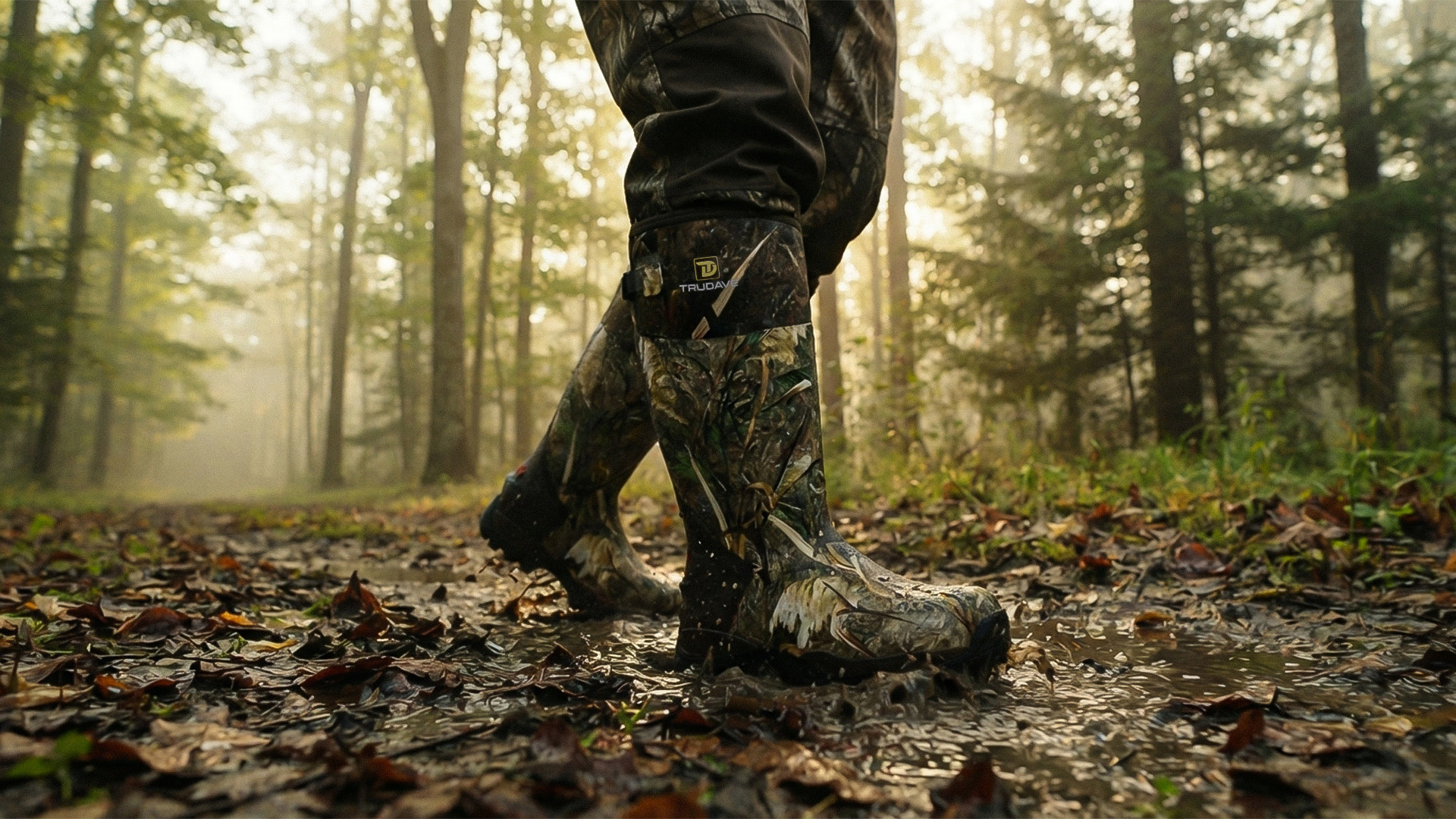
Hunters working these environments may benefit from waterproof hunting boots for spring turkey hunting that provide secure heel retention, reliable traction, and enough support for wet Appalachian terrain without becoming unnecessarily heavy.
Waterproofing Is More Important Than It Looks
A morning may begin under clear skies.
Vegetation can still be soaked from:
- Overnight rain
- Dew
- Creek moisture
Non-waterproof boots may become wet long before the first gobble.
Lightweight Boots Help During Long Ridge Walks
Turkey hunting often involves significant repositioning.
Heavy boots increase fatigue.
Choose footwear that balances:
- Waterproofing
- Support
- Weight
Ankle Support Matters on Steep Terrain
Appalachian hillsides can involve:
- Loose leaves
- Rock
- Sidehills
Supportive footwear helps maintain stability.
Wet Leaves Are Extremely Slippery
Leaves can hide:
- Rock
- Roots
- Mud
Move carefully downhill.
Do not run toward a gobbling bird.
One fall can end the hunt.
Secure Heel Fit Prevents Blisters
Repeated climbing creates heel movement.
Poor fit leads to:
- Hot spots
- Blisters
Break boots in before turkey season.
Toe Room Matters on Descents
The walk back often involves steep downhill travel.
Make sure toes are not repeatedly hitting the front of the boot.
Creek Crossings Can Be Slick
Spring water levels may be higher.
Use safe crossings.
Do not rush simply because a gobbler is calling.
A Gobbler Is Not Worth a Dangerous Crossing
Mountain excitement can encourage poor decisions.
If a creek is unsafe:
Find another route.
The hunt can continue another day.
Gaiters Can Help During Wet Spring Conditions
Gaiters reduce:
- Water
- Mud
- Seeds
entering around the boot opening.
They also protect lower pants from wet vegetation.
Mountain Laurel Can Tear Lightweight Clothing
Durable hunting pants help when moving through:
- Laurel
- Briars
- Young timber
The easiest route is not always the best hunting route.
Eye Protection Can Be Useful
Dense spring woods contain:
- Branches
- Laurel stems
- Briars
Clear protective glasses can reduce eye injuries during low-light approaches.
Ticks Become Increasingly Important in Spring
Turkey season overlaps periods of increasing tick activity in many regions.
Use appropriate prevention.
Check:
- Clothing
- Skin
- Gear
after hunting.
Mosquitoes Can Appear Later in the Season
Warmer wet areas may develop insect activity.
Repellent and suitable clothing can improve comfort.
Snakes May Become Active as Weather Warms
Depending on region and temperature, venomous snakes may become increasingly active during spring.
Use caution around:
- Rock
- Logs
- Sunny slopes
Know local species and safety guidance.
Hydration Still Matters in Cool Weather
Long ridge climbs create significant effort.
Carry water.
Do not assume cool temperatures eliminate dehydration.
A Short Turkey Move Can Become a Long Loop
A gobbler across one hollow may require:
- Major descent
- Creek crossing
- Climb
Carry enough water and essential gear even during a “short” reposition.
Topographic Maps Are Extremely Valuable
Mountain turkey hunters should learn to identify:
- Ridges
- Saddles
- Benches
- Creeks
before entering the forest.
Map knowledge reduces unnecessary climbing.
Satellite Imagery Adds Habitat Context
Aerial imagery can reveal:
- Clearcuts
- Fields
- Logging roads
- Openings
Combine it with topographic information.
Terrain plus vegetation gives the complete picture.
Offline Maps Are Essential
Cell service may disappear in mountain hollows.
Download maps before the hunt.
Mark:
- Vehicle
- Property boundary
- Major trail
- Creek
Carry a Headlamp
Turkey hunters often enter before daylight.
Carry:
- Headlamp
- Backup power
Do not depend entirely on phone light.
Approach Lighting Should Be Controlled
Use enough light to travel safely.
Avoid unnecessary illumination near known roosts.
Safety comes first.
Stealth comes second.
Public-Land Boundaries Can Be Complicated
Appalachian forests may include:
- National forest
- State land
- Private inholdings
Use accurate ownership maps.
A gobbler crossing a boundary does not provide legal access.
Private Farm Edges Can Be Productive
Mountain farms may offer:
- Pasture
- Crop fields
- Hardwood edges
Obtain permission.
Respect:
- Livestock
- Gates
- Crops
Do Not Block Forest Roads or Gates
Spring forestry and land-management operations may still occur.
Park only where legal and safe.
Logging Activity Can Change Turkey Patterns
Timber harvest creates:
- Openings
- New roads
- Regeneration
Turkeys may respond to those habitat changes.
Active work areas must still be avoided.
Burns Can Create Excellent Turkey Habitat
Prescribed fire and wildfire can create:
- Open understory
- Fresh vegetation
- Insect availability
depending on timing and severity.
Burn edges deserve scouting.
Freshly Burned Ground Can Reveal Tracks
Dark bare soil makes turkey footprints easier to see.
Look for travel between burned and unburned habitat.
Habitat Improvement Changes With Time
A burn or timber cut can be productive at one stage and less useful later.
Continue scouting.
Mountain habitat changes constantly.
Shot Opportunities Are Usually Close
Turkey hunting typically involves waiting until the bird enters an appropriate range and presents a clear, safe opportunity.
Dense forest can shorten visibility.
Prepare mentally before calling.
Do Not Shoot Through Brush
Branches can obscure:
- Target
- Background
Wait for a clear opportunity.
The bird escaping is better than an unsafe shot.
Positive Identification Is Mandatory
Never shoot at:
- Movement
- Sound
- A partial shape
without clearly identifying a legal turkey.
Public-land turkey hunting especially demands extreme caution.
Know What Is Behind the Bird
Mountain terrain can hide:
- Roads
- Homes
- Hunters
beyond the target.
A hillside is not automatically a safe backstop unless you understand the terrain.
Recovery Begins Immediately
After a successful shot, approach safely according to current hunting practices and regulations.
Maintain awareness of:
- Other hunters
- Terrain
throughout recovery.
Warm Spring Weather Makes Game Care Important
Later-season temperatures can rise quickly.
Handle harvested birds properly.
Keep game:
- Clean
- Cool
according to current wildlife and food-safety guidance.
Regulations Must Be Checked Every Season
Wild turkey hunting rules vary significantly by:
- State
- Zone
- Season
- Public property
Before hunting, verify current:
- Season dates
- Bag limits
- Legal shooting hours
- Tag requirements
- Weapon rules
- Calling regulations where applicable
Use current official wildlife-agency information.
Spring and Fall Turkey Seasons Can Have Different Rules
Do not assume the same regulations apply across seasons.
Bag limits, legal birds, and methods may differ.
Check the exact season being hunted.
Public Wildlife Areas May Have Special Rules
Some properties may require:
- Permits
- Draw hunts
- Specific access times
Always check area-specific regulations.
Common Appalachian Turkey Hunting Mistakes
Dropping Into Every Hollow After One Gobble
Mountain sound is deceptive.
Ignoring Benches
Gobblers may travel below ridge tops.
Calling With a Creek Between Hunter and Bird
Remove major barriers first when possible.
Walking Too Continuously
Slow movement improves detection and reduces disturbance.
Overcalling
Give approaching birds time.
Wearing Leaky or Heavy Boots
Spring mountain hunting requires waterproof mobility.
Ignoring Rain
Wet weather can create productive opportunities.
Stalking Turkey Sounds Without Visual Identification
Another hunter may be making the call.
Frequently Asked Questions
Where do wild turkeys live in Appalachian mountains?
Eastern wild turkeys commonly use hardwood ridges, creek hollows, benches, logging roads, forest openings, agricultural edges, and other habitats combining food with secure roosting and travel cover.
Are ridges good for turkey hunting?
Yes. Ridges can be useful for travel, feeding, strutting, and sound transmission, making them excellent scouting and listening locations.
Why are benches important for mountain turkey hunting?
Benches provide relatively level travel and feeding ground on steep slopes. Gobblers may use them instead of walking directly along ridge tops.
Is turkey hunting good in rain?
It can be. Light rain can quiet forest movement, while heavier rain may encourage birds to use roads, fields, and other openings where visibility is better.
Can a creek stop a gobbler from approaching?
Yes. Turkeys can cross creeks, but terrain barriers can cause birds to hesitate or choose another route. Setting up on the same side of major obstacles can improve the situation.
What boots are best for spring turkey hunting?
Lightweight waterproof hunting boots with secure heel fit, dependable wet-leaf and mud traction, and enough ankle support for steep ridge and creek terrain are practical.
Final Thoughts
Mountain turkey hunting teaches hunters that the shortest distance between hunter and gobbler is rarely the easiest path.
A bird may stand only four hundred yards away.
Between you and him:
A ridge drops.
A creek flows.
Mountain laurel blocks the slope.
A bench wraps around the mountain.
The turkey already knows the easiest route.
The hunter needs to find it.
Listen from high ground.
Study benches.
Use saddles.
Cross major barriers before committing to the setup.
Watch how rain changes bird behavior.
Slow down inside wet timber.
Carry enough water.
Wear boots that let you climb muddy ridges, cross creeks, walk wet leaves, and push through spring vegetation without avoiding the terrain birds actually use.
And when a gobbler answers from across a hollow, do not immediately start running toward the sound.
Look at the mountain first.
The turkey is not only telling you where he is.
The terrain is telling you how to reach him.
