
Roosevelt elk country does not always look like classic elk country.
There may be no giant alpine basin.
No open ridge covered in bugling bulls.
No mile-long view across dry mountain slopes.
Instead, there is rain.
Dark timber.
Fern-covered hillsides.
Clearcuts disappearing into fog.
Creeks cutting through steep coastal forest.
A hunter can stand only a hundred yards from an elk and never see it.
Then a branch snaps.
A dark body moves between two fir trees.
For three seconds, the animal becomes visible.
Then the forest closes again.
That is Roosevelt elk hunting.
These elk live in some of the wettest, thickest big-game habitat in North America.
Finding them requires a different strategy than hunting elk across open western mountains.
You need to understand:
- Young clearcuts
- Dark timber
- Creek bottoms
- Small meadows
- Logging roads
- Wind
- Rain
- Terrain
- Seasonal food
Most importantly, you need to learn how elk move between visibility and security.
That transition is where many of the best opportunities begin.
Roosevelt Elk Are Built for Coastal Forest
Roosevelt elk inhabit portions of the Pacific Northwest.
Their habitat can include:
- Temperate rainforest
- Coastal mountains
- Conifer forest
- Clearcuts
- Burns
- Meadows
- Creek valleys
- Brushy slopes
Compared with elk living in open interior landscapes, Roosevelt elk often spend much more time in dense forest.
That makes visual hunting difficult.
Hunters may rely more heavily on:
- Sign
- Sound
- Fresh tracks
- Feeding habitat
to locate animals.
Start With Food Beside Security
Elk are large animals.
They need substantial food.
But they also want security.
A productive location often contains feeding habitat immediately beside thick timber.
Look for transitions such as:
- Clearcut beside mature forest
- Meadow beside conifers
- Logging road beside brush
- Creek opening beside dark timber
The elk can feed while remaining only seconds away from cover.
Clearcuts Can Be Excellent Feeding Habitat
Logging opens forest canopy and stimulates new vegetation.
Depending on age, a clearcut may contain:
- Grass
- Fireweed
- Blackberry
- Shrubs
- Young hardwoods
- Forbs
These plants can attract elk.
But clearcut age matters.
Very Fresh Clearcuts May Be Too Open
Immediately after harvest, some cuts contain limited forage.
They can also feel exposed.
A few growing seasons later, vegetation may increase dramatically.
That is often when the cut becomes much more interesting.
Older Clearcuts Can Become Too Dense
Clearcuts change quickly.
Young conifers eventually grow tall enough to hide elk.
Brush can become nearly impossible to walk through.
The feeding value may remain high, but visibility decreases.
Hunters need to understand the age of the cut.
Hunt Clearcut Edges
Elk frequently use the transition between feeding vegetation and mature timber.
Look for trails entering the cut.
Fresh sign may include:
- Tracks
- Droppings
- Rubs
- Browsed vegetation
One heavily used corner can be much more productive than the rest of the opening.
Timber Fingers Can Hide Elk Movement
Mature forest sometimes extends into clearcuts through narrow fingers.
These strips provide covered travel.
Elk can move deep into feeding habitat without spending much time exposed.
Study these fingers carefully.
They may connect:
- Bedding areas
- Creeks
- Feeding slopes
Dark Timber Is More Than Bedding Cover
Hunters sometimes think of dark timber only as a daytime hiding place.
Roosevelt elk may spend significant time inside dense forest.
Timber can provide:
- Thermal protection
- Wind protection
- Security
- Travel routes
Good hunters learn to hunt the forest itself.
Not only the openings.
Still-Hunting Can Work in Wet Timber
Rain creates an advantage.
Dry leaves become quiet.
Branches soften.
Footsteps make less noise.
This allows a hunter to move slowly through timber.
A useful rhythm is:
- Take several steps.
- Stop.
- Scan.
- Listen.
- Move again.
Spend more time stopped than walking.
Do Not Walk Like You Are Hiking
Continuous walking creates constant movement.
Elk can detect it.
Still-hunting requires patience.
Move from:
- Tree
- Stump
- Brush patch
to the next.
Use cover.
Search every opening before stepping forward.
Look for Pieces of Elk
Dense forest rarely shows the whole animal.
Look for:
- Leg
- Ear
- Antler
- Horizontal back
- Tan patch
A standing elk can look like:
- Stump
- Shadow
- Fallen log
until something moves.
Binoculars Are Useful Even at Fifty Yards
Do not assume thick timber makes optics unnecessary.
Binoculars help hunters inspect:
- Brush openings
- Tree gaps
- Dark shapes
without moving closer.
That reduces unnecessary noise.
Fresh Tracks Can Be More Valuable Than Sightings
In wet coastal soil, elk tracks can be extremely clear.
Look along:
- Logging roads
- Creek banks
- Muddy trails
- Clearcut edges
Fresh prints tell you where animals are moving now.
Learn Track Freshness
Recent tracks may show:
- Sharp edges
- Moist soil
- Clean impressions
Older tracks may contain:
- Rain erosion
- Leaves
- Debris
Constant wet weather can erase sign quickly.
The freshest track matters most.
Logging Roads Are Excellent Scouting Tools
Old forest roads provide easy surfaces for detecting tracks.
A road crossing can reveal:
- Travel direction
- Herd size
- Habitat connection
Do not simply follow the road.
Ask where the elk came from and where they were going.
Closed Roads Can Be Especially Productive
A road closed to vehicle traffic may receive:
- Less disturbance
- More vegetation
- More wildlife use
These routes can become effective walking corridors for hunters.
Move quietly.
Fresh elk may be only a short distance away.
Road Intersections Can Concentrate Sign
Where several logging roads meet, hunters may find multiple elk trails.
Study which crossings are freshest.
Then identify the surrounding habitat.
A road junction near:
- Clearcut
- Creek
- Bench
deserves attention.
Small Meadows Can Be Better Than Huge Openings
Roosevelt elk do not need enormous grasslands.
A hidden meadow inside timber may provide:
- Food
- Low disturbance
- Quick access to security
These small openings can be excellent at:
- Dawn
- Dusk
- Overcast periods
Wet Meadows Can Hold Good Feed
Coastal moisture keeps vegetation green.
Elk may use damp grassy openings even when surrounding hillsides become less productive.
Look for tracks around:
- Meadow edges
- Mud
- Creek crossings
Do Not Walk Through the Meadow Before Hunting It
Approach from cover.
Glass first.
Use wind.
Walking directly through the feeding area can leave:
- Scent
- Disturbance
that affects later movement.
Creek Bottoms Can Be Elk Highways
Creek systems create natural travel corridors.
They offer:
- Water
- Cooler temperatures
- Vegetation
- Terrain structure
Elk may move along benches above the creek rather than in the wettest bottom.
Search the First Bench Above Water
Steep coastal drainages often contain small flat shelves.
These benches can provide:
- Bedding
- Travel
- Feeding
while remaining close to water.
A narrow bench may hold an entire group of elk.
Creek Crossings Reveal Movement
Muddy crossings preserve tracks well.
If several animals repeatedly cross the same point, study both sides.
The crossing may connect:
- Bedding timber
- Feeding cut
- Ridge route
Water Does Not Need to Be the Destination
In wet coastal climates, elk may have access to water almost everywhere.
That means water itself may be less important than the habitat around it.
Use creeks primarily as clues to:
- Travel
- Terrain
- Vegetation
Mountain Benches Are Critical
Steep country forces large animals to seek efficient routes.
Flat benches provide a break from constant climbing.
Elk may use them for:
- Bedding
- Feeding
- Travel
Topographic maps can help identify these hidden shelves.
Tiny Benches Matter
Do not look only for huge flat areas.
A bench fifty yards wide can be enough.
If it contains:
- Feeding vegetation
- Security timber
it deserves investigation.
Saddles Can Funnel Movement
A saddle provides an easier crossing between ridge systems.
Elk may use it when moving between:
- Drainages
- Feeding areas
- Bedding habitat
Fresh tracks after rain can confirm current use.
Ridge Systems Can Connect Habitat
Elk may travel along ridges rather than repeatedly crossing steep canyons.
Look for:
- Tracks
- Rubs
- Trails
near flatter ridge sections.
Rain Can Be an Advantage
Many hunters dislike hunting in rain.
Roosevelt elk live in it.
Light to moderate rain can provide:
- Quieter movement
- Fresh tracks
- Darker conditions
that favor still-hunting.
Rain Keeps Vegetation Wet Long After the Storm
Even when the sky clears, moisture remains on:
- Ferns
- Salal
- Brush
- Conifers
A hunter can become soaked without another drop of rain falling.
Waterproof Hunting Gear Matters
Staying dry improves:
- Comfort
- Concentration
- Temperature regulation
This includes both clothing and footwear.
Wet feet become especially problematic during long mountain hunts.
Waterproof Boots Are Essential in Roosevelt Elk Country
A typical hunt may involve:
- Rain
- Mud
- Wet ferns
- Logging roads
- Creeks
- Mountain slopes
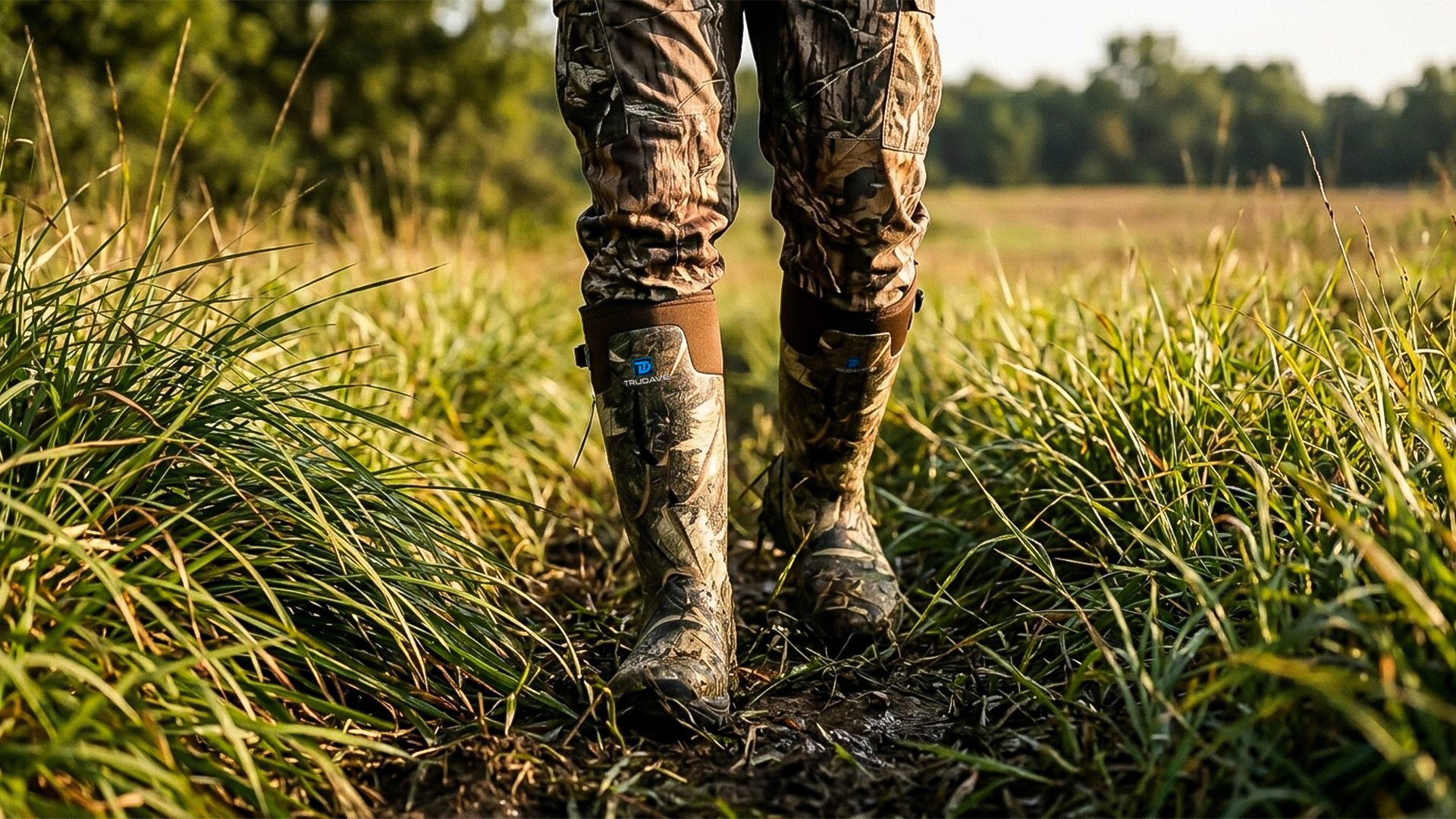
Hunters working these environments may benefit from waterproof hunting boots for Roosevelt elk hunting that provide secure heel retention, dependable traction, and enough support for long days in wet coastal mountains.
Lace-Up Waterproof Boots Often Make Sense
Serious elk hunting usually involves:
- Long approaches
- Steep terrain
- Sidehilling
Supportive lace-up waterproof boots can provide more control than loose-fitting footwear.
Fit matters tremendously.
Rubber Boots Have Their Place
Tall rubber hunting boots may work well in:
- Low wet terrain
- Mud
- Shorter hunts
But steep mountain terrain can expose limitations in:
- Support
- Heel retention
Choose for the majority of the hunt.
Heel Lock Matters on Climbs
Long uphill travel pulls the heel upward.
Poor fit creates friction.
Repeated friction creates blisters.
Break boots in well before elk season.
Toe Room Matters Downhill
The return route often includes long descents.
Feet slide forward.
A poorly fitted toe box can make every downhill step painful.
Test footwear on real slopes.
Traction Matters on Wet Roots
Pacific Northwest forest contains:
- Moss
- Roots
- Wet logs
- Mud
All can become extremely slippery.
Good outsole traction helps.
Slow movement helps more.
Wet Logs Are Dangerous
Do not casually walk along fallen logs.
Rain makes bark slick.
Step over or around when practical.
One fall can end an elk hunt quickly.
Ferns Hide Obstacles
Dense ferns may conceal:
- Holes
- Branches
- Rock
- Logging slash
Watch your feet.
Stop when glassing.
Do not try to scan animals and negotiate hidden obstacles simultaneously.
Logging Slash Is Hard on Ankles
Clearcuts contain:
- Limbs
- Stumps
- Loose debris
Take shorter steps.
Avoid rushing after elk.
The animal will always move faster through familiar terrain.
Gaiters Can Help
Gaiters can reduce moisture and debris entering around the boot cuff.
They are useful around:
- Wet grass
- Ferns
- Mud
- Brush
Wind Matters More Than Rain
Rain may hide noise.
It does not hide scent.
Elk have an excellent sense of smell.
Always check:
- Wind
- Thermals
- Terrain airflow
before approaching.
Coastal Wind Can Be Unpredictable
Mountain forests create complicated airflow.
Wind may move:
- Along creek bottoms
- Around ridges
- Through clearcuts
Check frequently.
One bad swirl can end the stalk.
Thermals Change With Temperature
Morning air may sink toward drainages.
Later, warming slopes can create rising air.
Weather conditions determine how strong those thermals become.
Never assume one wind check is enough.
Rainy Days Can Reduce Thermal Predictability
Overcast weather may reduce strong solar heating.
Thermals can become weaker or less predictable.
This makes direct wind monitoring even more important.
Fog Can Improve Elk Confidence
Fog reduces visibility.
Elk may feel comfortable using:
- Clearcuts
- Meadows
- Road edges
longer.
Hunters may also move with greater concealment.
Fog Also Makes Hunting Harder
Reduced visibility means:
- Harder glassing
- More difficult navigation
- Uncertain backgrounds
Use patience.
Do not take questionable shots.
Wait for Fog to Lift Around Good Habitat
A feeding clearcut may become visible suddenly.
If fresh sign indicates elk are present, waiting can be more productive than immediately leaving.
Bugling Can Help Locate Bulls
During breeding periods, vocalizations may reveal elk location.
Sound travels differently through:
- Drainages
- Timber
- Fog
Do not assume the bull is exactly where it sounds.
Terrain can distort direction.
Close Timber Calling Requires Caution
Calling can bring animals close quickly.
Before calling, identify:
- Safe shooting lanes
- Wind
- Escape cover
Do not wait until an elk appears at twenty yards to decide where a safe shot exists.
Calling Is Only One Tool
Silent elk still leave:
- Tracks
- Rubs
- Droppings
- Beds
Do not abandon good habitat just because nothing is vocalizing.
Rubs Can Reveal Bull Activity
Fresh rubs may show:
- Bright wood
- Fresh bark
- Recent debris
Look along:
- Ridge trails
- Timber edges
- Clearcut entrances
Several fresh rubs together can indicate consistent use.
Wallows Can Confirm Activity
During certain seasonal periods, bulls may use muddy wallows.
Fresh sign can include:
- Mud
- Tracks
- Hair
- Strong odor
Treat wallows as information.
Do not assume every elk visits them during daylight.
Droppings Tell You More Than Presence
Fresh droppings combined with:
- Tracks
- Feeding sign
- Beds
can reveal how intensively an area is being used.
One clue is good.
Several fresh clues together are much better.
Bedding Cover Can Be Nearly Impenetrable
Roosevelt elk may bed in:
- Dense conifers
- Brush
- Regeneration
Hunters should be cautious about pushing directly into secure bedding habitat.
Pressure can move elk quickly.
Hunt Travel Routes Around Bedding Areas
Instead of walking through the center, identify:
- Entry trails
- Exit trails
- Feeding transitions
This can reduce disturbance.
Hunting Pressure Changes Elk Behavior
Accessible clearcuts receive attention.
Elk may respond by:
- Feeding earlier
- Moving later
- Using thicker timber
- Avoiding road systems
Fresh sign helps identify how pressure changed the pattern.
Closed Roads Can Reduce Pressure
An elk herd may tolerate habitat only a mile from an open road if human access is restricted by:
- Gate
- Walking distance
- Brush
Do not automatically assume remote means five miles from vehicles.
Difficulty matters.
Steep Ground Can Protect Elk From Hunters
A drainage that looks inconvenient may receive much less pressure.
Elk notice.
Do not seek dangerous terrain simply for isolation.
But recognize that moderate access difficulty can create better security.
Use Maps to Find Overlooked Pockets
Look for areas between:
- Roads
- Clearcuts
- Creeks
that require an awkward approach.
Small overlooked habitat can sometimes hold animals regularly.
Elk Trails Can Be Extremely Obvious
A heavily used elk trail may look almost like a human path.
But not every major trail is used during daylight.
Study fresh sign.
Determine whether it connects:
- Feeding
- Bedding
- Water
Trail Intersections Deserve Attention
Where multiple elk trails meet, look for:
- Tracks
- Rubs
- Droppings
This can indicate a larger movement corridor.
Old Sign Can Mislead Hunters
Large elk tracks and ancient rubs can survive for a long time.
Do not spend days hunting a location only because it looks historically good.
Prioritize freshness.
Winter and Late-Fall Weather Change Habitat
As temperatures drop, elk may change:
- Elevation
- Feeding areas
- Shelter use
Follow current sign.
Do not assume early-season locations remain productive all season.
Snow Can Make Tracking Easier
At higher elevations, early snow may reveal:
- Herd movement
- Trail use
- Feeding areas
Fresh tracks can help confirm whether elk remain in the basin.
Snow Makes Wet Terrain More Complicated
Snow can hide:
- Logs
- Mud
- Holes
Travel becomes slower.
Waterproof boots and careful footing become even more important.
Snow-Covered Logging Roads Can Be Slick
Frozen mud beneath snow creates unstable footing.
Do not assume a flat road is safe.
Slow down.
Creek Crossings Need Respect
A route across a creek may change after rain.
Water can rise quickly.
Use:
- Bridges
- Known crossings
- Safer alternate routes
when available.
A Morning Crossing May Be Different in the Afternoon
Heavy rainfall upstream can raise water later.
Consider the return before committing to a crossing.
Elk Tracks Are Not Proof of a Safe Crossing
Large animals can cross water that may be unsafe for hunters.
Evaluate conditions independently.
Physical Conditioning Matters
Roosevelt elk hunting can involve:
- Steep climbs
- Mud
- Brush
- Heavy pack-outs
Train before season.
Useful preparation can include:
- Hill walking
- Stair climbing
- Loaded hikes
Fitness increases hunting options.
Mud Makes Every Mile Harder
Soft ground increases energy use.
Plan distances conservatively.
A five-mile mountain hunt in mud is not the same as five miles on a trail.
Save Energy for Recovery
Finding an elk is only half the job.
Do not exhaust yourself completely before the shot opportunity.
Recovery can require much more work.
Plan the Pack-Out Before Shooting
Before taking a difficult opportunity, consider:
- Elevation
- Distance
- Creek crossings
- Road access
- Temperature
Ask:
How will I get the animal out?
Big Animals Change the Logistics
Roosevelt elk are large.
Recovery may require:
- Multiple trips
- Multiple hunters
- Appropriate pack equipment
where lawful and suitable.
Preparation matters.
Warm Coastal Weather Makes Meat Care Important
Even during rainy conditions, temperatures may be relatively mild.
A large animal retains heat.
Begin field care promptly.
Humidity Can Slow Cooling
Cool wet air may feel cold to the hunter.
That does not necessarily cool meat quickly enough.
Use proper field-care practices.
Follow current wildlife and food-safety guidance.
Game Bags Should Be Ready Before the Hunt
Do not leave essential recovery equipment in the truck during a long backcountry hunt.
Carry what the realistic hunt requires.
Mark the Animal’s Location Before Leaving Your Shooting Position
Dense forest makes relocation difficult.
Use:
- GPS waypoint
- Stump
- Tree
- Creek
- Distinct terrain
A large elk can disappear surprisingly well inside brush.
Watch Carefully After the Shot
Note:
- Direction
- Last visible location
- Behavior
Do not immediately move.
Information gathered during those first seconds can significantly improve recovery.
Rain Can Complicate Tracking
Heavy rainfall may wash away visible sign.
Look for:
- Hair
- Tracks
- Broken vegetation
- Blood where present
Move methodically.
Brush Can Hold Sign Above Ground
Blood may transfer to:
- Ferns
- Branches
- Salal
rather than only the forest floor.
Search at the correct height.
Do Not Destroy the Trail
If tracking is necessary, keep unnecessary foot traffic away.
Mark confirmed sign.
Then continue carefully.
Dense Timber Requires Extra Recovery Caution
Visibility may be extremely short.
Maintain:
- Firearm safety
- Communication
- Situational awareness
throughout recovery.
Bears May Share Roosevelt Elk Habitat
Pacific Northwest elk country can overlap bear habitat.
Hunters should follow current regional guidance concerning:
- Carcass handling
- Food
- Encounters
Stay alert during recovery.
Remote Hunting Benefits From Emergency Communication
Cell service may be unreliable.
Depending on remoteness, consider appropriate emergency communication equipment.
The farther you travel from roads, the more important redundancy becomes.
Offline Maps Are Essential
Download maps before the hunt.
Include:
- Topography
- Ownership
- Roads
- Trails
Do not assume live map access will work in coastal mountains.
Logging-Road Networks Can Be Confusing
One spur can resemble another.
Mark:
- Vehicle
- Main junction
- Gate
before entering timber.
Carry a Headlamp Every Time
Elk hunting frequently begins and ends in darkness.
Carry:
- Headlamp
- Spare power
even on a planned short morning hunt.
Private Timberland Rules Can Change
Commercial forest owners may control:
- Vehicle access
- Walk-in access
- Fire restrictions
- Closures
Check current conditions before traveling.
Gates Can Change From Open to Closed
Logging operations and seasonal rules may alter access quickly.
Never plan a hunt entirely around one road without checking alternatives.
Active Logging Areas Must Be Avoided
Follow all:
- Signs
- Closures
- Worker instructions
Stay away from operating machinery and falling timber.
Logging Trucks Require Extra Awareness
On permitted forest roads, expect heavy vehicles.
Do not:
- Block roads
- Park in turnarounds
- Assume the road is empty
Follow landowner rules.
Public-Land Regulations Vary
Roosevelt elk hunts may occur across different:
- States
- Units
- Land-management systems
Always verify current rules.
Elk Tags Can Be Highly Unit-Specific
Before hunting, confirm:
- Season dates
- Tag type
- Weapon restrictions
- Antler restrictions where applicable
- Unit boundaries
Use current official wildlife-agency information.
Do Not Rely on Last Year’s Regulations
Big-game rules can change.
Always review the current season information before the hunt.
Species Identification Matters
Roosevelt elk can overlap geographically with other elk management classifications depending on region.
Hunters should understand the legal definitions used by the relevant wildlife agency.
Safe Shooting Backgrounds Are Essential
Dense forest is not automatically a backstop.
Do not shoot at an elk:
- On a skyline
- With uncertain terrain behind it
- Through heavy brush
Wait for a clear, safe opportunity.
Do Not Shoot at Sound
An elk moving through brush can make enormous noise.
Sound is not identification.
Confirm the entire target.
Brush Can Hide Other Elk
A visible elk may have other animals standing behind it.
Wait for separation.
Know Your Effective Distance in Timber
Close-range visibility does not make shooting automatically easy.
Hunters may deal with:
- Awkward positions
- Branches
- Short windows
Practice realistic field positions before season.
Better Position Is More Valuable Than Faster Shooting
If the opportunity is poor:
Wait.
Let the animal move.
A clean shot is more important than taking the first available opening.
Common Roosevelt Elk Hunting Mistakes
Hunting Only Big Clearcuts
Small meadows and timber edges can be just as productive.
Walking Continuously Through Timber
Still-hunt slowly.
Ignoring Clearcut Age
Vegetation and visibility change rapidly.
Treating Rain Only as Bad Weather
Wet conditions can make quiet movement easier.
Wearing Leaky or Weak Footwear
Rain, mud, ferns, creeks, and steep slopes demand waterproof support.
Ignoring Wind Because the Forest Is Dense
Elk still rely heavily on scent.
Following Old Sign
Fresh tracks matter more than historic rubs.
Finding Elk Without Planning the Pack-Out
Recovery is part of the hunt.
Frequently Asked Questions
Where do Roosevelt elk usually live?
Roosevelt elk commonly use Pacific Northwest coastal forests, clearcuts, creek valleys, meadows, regenerating timber, and mature conifer cover.
Are clearcuts good for Roosevelt elk hunting?
Yes. Regenerating clearcuts can provide excellent forage, particularly when located beside secure mature timber. The age and vegetation structure of the cut are important.
Is rain good for Roosevelt elk hunting?
Rain can quiet the forest, create fresh tracks, and sometimes make still-hunting more effective. Heavy rain can also reduce visibility and complicate recovery.
Can you hunt Roosevelt elk inside timber?
Yes. Slow still-hunting in wet timber can be effective when fresh sign, wind, and habitat indicate elk are nearby.
What boots are best for Roosevelt elk hunting?
Waterproof hunting boots with secure heel retention, strong traction on mud, roots, wet logs, and slopes, and enough ankle support for long mountain hunts are practical.
Are Roosevelt elk hunting regulations the same everywhere?
No. Tag systems, seasons, weapon restrictions, unit boundaries, and land-access rules vary by jurisdiction. Hunters should always verify current official regulations.
Final Thoughts
Roosevelt elk hunting teaches hunters to stop waiting for the forest to open.
Sometimes it never does.
The elk may feed in a clearcut for twenty minutes and spend the rest of the day inside timber.
A creek bench becomes a travel route.
A small meadow becomes a feeding area.
A closed logging road becomes a quiet corridor.
A muddy track becomes the only proof that an entire herd passed before daylight.
That is enough.
Find fresh food.
Find fresh tracks.
Study clearcut age.
Slow down inside timber.
Respect the wind.
Use rain to move quietly instead of treating every wet day as a lost hunt.
Wear boots that let you cross mud, ferns, creek banks, wet logging slash, and steep coastal mountains without choosing easier but less productive ground.
And when an elk finally appears between two fir trees for only a few seconds, you will understand why Roosevelt elk hunting feels different.
You are not hunting an animal that lives beside the forest.
You are hunting an animal that knows how to disappear inside it.
