
A cut cornfield after rain does not look comfortable.
Mud clings to boots. Tire ruts hold water. Corn stalks lie broken across the rows, and every step feels heavier than the last. A hunter dragging decoys across the field may wonder why any bird would want to land there.
Then the first flock appears.
The geese drop from high above the tree line, swing once over the field, and begin backpedaling into the muddy stubble. They are not worried about clean ground, dry boots, or easy walking.
They are looking for food, visibility, safety, and a landing zone.
For Canada geese, a muddy harvested cornfield can be exactly what they want.
For hunters, it can be one of the most rewarding and frustrating places to hunt. Field hunting geese requires more than putting decoys in the middle of the field. It requires scouting, reading bird behavior, managing access, hiding in limited cover, protecting the field from damage, and understanding how rain changes both goose movement and hunter strategy.
Mud does not ruin the hunt.
It simply punishes poor planning.
Why Cut Cornfields Attract Canada Geese
Harvested cornfields provide waste grain, open visibility, and space for geese to land and feed.
Canada geese often prefer fields where they can see danger from a distance. Open agricultural ground allows them to land in groups, feed efficiently, and watch for predators.
A productive field may offer:
- Waste corn
- Open landing space
- Safe visibility
- Nearby roost water
- Limited hunting pressure
- Comfortable feeding areas
- Wind-friendly landing direction
- Access to other fields nearby
Not every cut cornfield is equal.
Geese may ignore one field and feed heavily in another only a few hundred yards away. The difference can come down to food availability, pressure, field shape, wind, road disturbance, and how the birds have been using the area recently.
Scout the Feed Before You Hunt It
The most important part of field goose hunting happens before the hunt.
You need to know where geese are actually feeding.
Do not assume birds will use a field because it looks good to you. Watch them from a distance.
Scout during the morning and evening when geese move between roosting water and feeding fields.
Pay attention to:
- Exact field location
- Where birds land in the field
- Time of arrival
- Direction of approach
- Number of birds
- Whether they return multiple days
- Nearby roads and houses
- Wind direction during their landing
- Other fields they check before committing
A field with geese feeding in it tonight is more valuable than a field that looks perfect but has no current bird use.
The X Matters
Goose hunters often talk about “the X.”
That means the exact spot birds want to land.
In a large cornfield, geese may consistently use one specific section.
They may choose it because of:
- Waste grain concentration
- Wind direction
- Field elevation
- Less mud
- Better visibility
- Distance from roads
- Proximity to the roost
- Previous safe feeding
- A dry rise within the field
- Open stubble with fewer standing stalks
Do not just get permission for the field.
Find the spot within the field.
Setting up two hundred yards away from the X can lead to birds landing out of range even when the overall field is correct.
Rain Can Change the X
A field that was perfect before rain may change overnight.
Low areas fill with water.
Ruts become deeper.
Some parts of the field become difficult for geese to walk in, while other parts remain more open and comfortable.
After rain, geese may shift toward:
- Higher ground
- Firmer stubble
- Areas with visible waste corn
- Field edges away from standing water
- Ridges within the field
- Spots protected from strong wind
- Sections farther from human disturbance
Scout again after major weather changes.
Do not assume yesterday’s landing zone remains the best location after the field turns muddy.
Mud Can Concentrate Birds
Mud is uncomfortable for hunters, but it can make goose patterns more predictable.
If much of the field becomes sloppy, birds may prefer the firmer sections.
If nearby fields are too wet, geese may concentrate in the one field that still offers good feeding and landing conditions.
Look for birds choosing:
- Slight rises
- Better-drained corners
- Harvested high ground
- Areas near gravel lanes
- Stubble with less standing water
- Corn rows where food is exposed
A few inches of elevation can matter more than it appears from the road.
Do Not Damage the Field
This is one of the most important rules of field hunting.
A muddy cornfield belongs to someone.
Driving into it carelessly can create ruts, damage soil, upset the landowner, and end future permission.
Before entering the field, ask the landowner:
- Where to park
- Whether driving is allowed
- Which lanes can be used
- Where not to walk
- Whether livestock or equipment are nearby
- Whether field conditions are too wet
- Where gates should be left
- Whether any tile lines, soft spots, or hazards exist
When in doubt, walk.
Carrying decoys farther is better than losing access permanently.
Walking In Requires Planning
A muddy field can make a short approach feel long.
Decoys, blinds, shotguns, bags, flags, and extra clothing all add weight.
Before the hunt, decide:
- How many decoys are actually needed
- Whether layout blinds can be carried efficiently
- Who carries what
- Which route causes the least damage
- How long the walk will take
- Where hunters will park
- How to exit without crossing active bird areas
- How to retrieve birds safely
The best setup is not always the one that requires the most gear.
A smaller, smarter spread in the right location can beat a huge spread placed poorly because hunters were exhausted before sunrise.
Footwear Can Decide How Long You Stay Effective
Muddy field hunting is hard on feet.
Hunters may deal with standing water, heavy clay, corn stalks, frozen ruts, wet grass, and long walks before daylight.
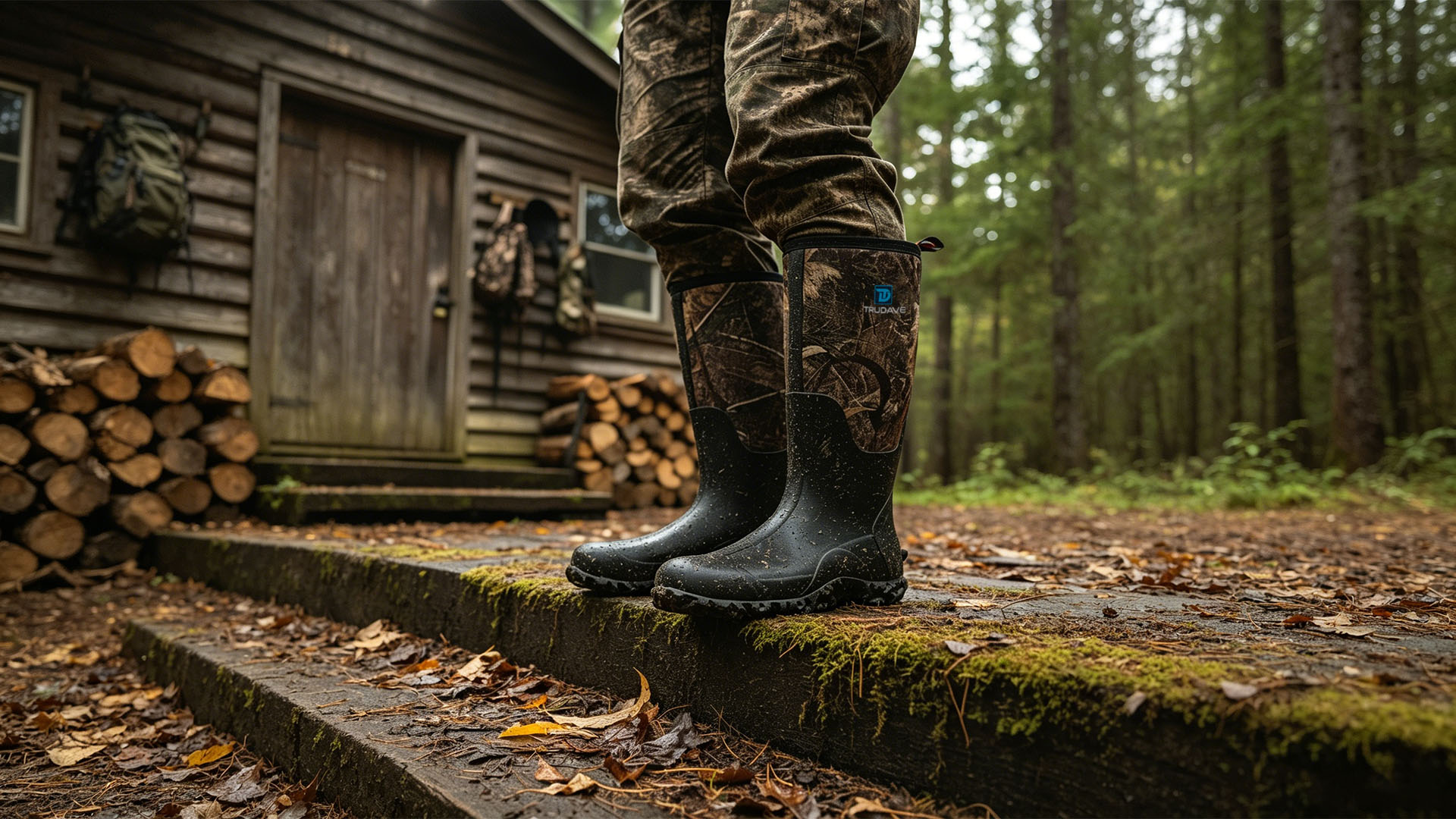
For these conditions, waterproof hunting boots for muddy field hunting can help provide traction, moisture protection, and secure heel fit while walking through wet crop ground.
The best field-hunting boot should match the conditions.
Deep mud may require taller waterproof protection.
Frozen ruts may require better ankle support.
Long decoy hauls may require lighter weight and comfort.
A loose boot that slips at the heel can become miserable once mud starts pulling against every step.
Mud Suction Is a Real Problem
Cornfield mud can grab boots aggressively.
Every step becomes work.
If the boot fits poorly, the heel lifts while the boot stays stuck. That creates blisters, fatigue, and noise.
Move with shorter steps.
Avoid the deepest ruts when possible.
Use rows, grassy edges, or firmer lanes when the landowner allows.
Do not carry more equipment than you can safely manage.
A hunter struggling through mud with too much gear is more likely to fall, damage equipment, or arrive late.
Frozen Mud Creates Different Hazards
A field that was soft in the afternoon may freeze overnight.
Frozen ruts can twist ankles.
Corn stalks become stiff.
Ice forms in low spots.
Walking becomes noisy and uneven.
Scout the access route in daylight when possible.
Use a headlamp carefully before sunrise.
Step around deep frozen tracks rather than into them.
Frozen mud may not soak your boots, but it can create worse footing than soft mud.
Goose Scouting Should Include Access
Many hunters scout only birds.
They watch geese land, get permission, and plan the decoy spread.
Then they arrive in the dark and discover the field cannot be reached without crossing a ditch, climbing a fence, or walking half a mile through knee-deep mud.
When scouting, identify:
- Legal parking
- Field entry
- Firm walking routes
- Safe ditch crossings
- Gate locations
- Nearby houses
- Livestock areas
- Equipment storage
- Places where vehicles should not go
A hunt can fail before daylight if access was not planned.
Wind Controls the Landing Zone
Geese usually prefer to land into the wind.
Your spread should be arranged with that in mind.
In a muddy cornfield, wind direction affects:
- Decoy opening
- Blind placement
- Bird approach
- Shooting direction
- Visibility
- Where birds want to finish
- Whether mud affects retrieval
Do not place hunters directly where birds expect to land.
Leave a clean landing pocket.
Place blinds where they remain hidden but close enough for ethical shot opportunities.
Leave a Landing Hole
A decoy spread should invite geese into range.
It should not fill every available space.
Leave an opening where birds can finish naturally.
In muddy fields, this landing hole may be most effective on firmer ground or slightly higher stubble.
A common mistake is placing decoys too densely in the exact spot birds want to land.
The flock approaches, sees no clear pocket, and slides to the side.
A good spread guides birds.
It does not block them.
Match the Spread to the Flock Size
If scouting shows small groups of geese using the field, a massive spread may look unnatural.
If hundreds of birds are feeding there, a small spread may lack visibility.
Match the setup to what birds have been doing.
Consider:
- Number of birds observed
- Pressure level
- Field size
- Visibility
- Weather
- Wind
- Migration activity
- Local bird behavior
Realism matters more than simply using every decoy you own.
Full-Body Decoys Look Good but Are Harder to Haul
Full-body goose decoys can look realistic in fields, but they take space and effort to transport.
Muddy conditions make that effort harder.
Shells, silhouettes, socks, and full bodies all have places depending on conditions.
Ask what the hunt requires.
If the field is far from parking and mud is deep, a lighter spread placed precisely may outperform a large spread that exhausts the group and delays setup.
The goal is not proving how much gear you own.
The goal is making geese believe the field is safe.
Mud Changes Decoy Appearance
Mud can make decoys look unnatural if they become excessively dirty, tilted, or half-sunk.
Check your spread after placement.
Make sure decoys are:
- Upright
- Visible
- Facing natural directions
- Not buried in mud
- Not clustered unrealistically
- Not shining with unnatural glare
- Not placed where stakes fail
In soft ground, stakes may lean.
In frozen ground, stakes may be hard to place.
Carry tools appropriate for the field condition, but avoid damaging the landowner’s property.
Hide the Blinds Better Than You Think
Geese have excellent eyesight.
A muddy cornfield may provide limited natural cover after harvest.
Layout blinds can stand out if they are not brushed properly.
Use available material carefully:
- Corn stubble
- Broken stalks
- Natural field debris
- Mud-colored cover
- Grass from approved edges
- Low-profile blind placement
Do not strip cover from places the landowner does not want disturbed.
Do not make the blind look like a square mound in a flat field.
The best blind looks like part of the field before the birds are directly overhead.
Mud Can Help Hide the Blind
In some situations, mud-colored surroundings make concealment easier.
A blind with a clean, bright outline may stand out.
A blind blended with dark stubble and damp soil may disappear.
However, do not cover everything in wet mud if it creates shine, smell, or equipment problems.
Blend naturally.
Look at the blind from the direction birds will approach.
A setup that looks hidden from ground level may be obvious from above.
Shadows Matter in Fields
On sunny mornings after rain, low-angle light can expose blinds, hunters, and decoys.
Pay attention to where shadows fall.
A blind placed in a natural shadow or low spot may disappear better.
A blind sitting on a bright rise may flare birds.
Cloud cover can help concealment, but do not depend on it.
Light changes throughout the morning.
Check the setup as visibility improves.
Do Not Move When Birds Are Working
Geese often circle and inspect the field carefully.
They may notice small movements inside blinds.
Keep faces covered.
Control hands.
Keep dog movement limited.
Avoid turning heads quickly.
If multiple hunters are calling, flagging, or watching birds, coordinate movement so the entire blind line does not shift at once.
Geese do not need to identify a person.
They only need to see something wrong.
Calling Should Match Bird Behavior
Some flocks respond well to aggressive calling.
Others flare from too much noise.
Listen to the birds.
Watch their wings.
If they turn toward the spread, maintain realistic sound.
If they begin sliding away, adjust.
Do not call just because you are excited.
Good field calling is a conversation, not a contest.
On pressured local geese, less calling can be more effective.
On active migrators, stronger calling may help get attention.
Flagging Can Help at Distance
In open fields, flagging can attract attention from geese far away.
However, movement must stop when birds get close.
Use flagging to imitate wing motion and create visibility, then hide it before birds are committed.
Over-flagging close birds can flare them.
Coordinate with callers.
One hunter flagging wildly while another calls softly can create an unnatural presentation.
Rain Can Make Birds Feed Longer
Wet weather may change goose feeding behavior.
On some rainy days, geese may move later, feed longer, or return to fields during midday.
On other days, heavy rain and wind may keep birds closer to roosts or protected areas.
Observe local behavior.
A rainy forecast does not automatically mean bad hunting.
It may reduce pressure and keep birds comfortable in feeding fields.
Be ready to hunt beyond the first morning flight when conditions suggest birds may move later.
After a Storm, Birds May Recheck Fields
Heavy rain can change food availability.
Waste corn may become exposed in some areas and covered in others.
Birds may fly over multiple fields before deciding where to land.
A field that held birds before the storm may still attract them, but the exact landing zone may shift.
Watch how birds behave on the first post-storm morning.
They may circle more, check several fields, or land cautiously.
Concealment becomes especially important when birds are uncertain.
Snow and Mud Create Mixed Conditions
Late-season goose fields may include snow, mud, frozen stalks, and open patches.
Geese may prefer exposed feed where snow has melted or blown away.
Set decoys where birds can see the feed and landing zone.
A spread placed on deep snow may look wrong if real birds are feeding on exposed muddy stubble nearby.
Match the current field.
Late-season geese are often experienced and cautious.
Small mistakes matter.
Do Not Ignore Puddled Sections
Standing water in a cornfield can attract geese under certain conditions.
Birds may loaf, drink, or land near puddles if they feel safe.
However, puddles can also make the field harder to hunt.
They may affect:
- Blind placement
- Decoy stakes
- Bird landing direction
- Retrieval
- Walking routes
- Dog safety
- Field damage risk
If birds are using wet low spots, set up carefully along the edge rather than damaging the softest part of the field.
Field Edges Can Be Better Than the Middle
Many hunters rush to the center of the field.
Sometimes the better setup is along an edge, rise, or corner where birds naturally enter.
Field edges may provide:
- Better concealment
- Easier access
- Less mud
- Natural stubble variation
- Safer retrieval
- A better wind angle
- Less damage to the field
The edge only works when birds are willing to finish there.
Scouting tells you whether edge setups are realistic.
Avoid Setting Up Too Close to Roads
Geese may tolerate roads in some areas, but hunting too close to traffic, houses, or public routes can create safety and legal issues.
Consider:
- Safe shooting direction
- Legal distance requirements
- Passing vehicles
- Houses and barns
- Livestock
- Neighboring properties
- Public visibility
- Retrieval areas
A field may hold geese but still not provide a safe or legal setup.
Permission does not replace judgment.
Dogs Need a Plan in Muddy Fields
A retriever can be valuable in field goose hunting, but mud creates challenges.
Dogs may deal with:
- Deep ruts
- Frozen stalks
- Standing water
- Barbed wire
- Long retrieves
- Heavy birds
- Cold wind
- Mud fatigue
- Road hazards
Place the dog where it can see birds fall but remain hidden and controlled.
Use a dog blind or natural cover when appropriate.
Keep the dog warm and dry between retrieves during cold weather.
Mark Falls Carefully
In a flat muddy field, distance can be deceptive.
A goose may fall farther than it appears.
Mark the fall immediately using:
- A field row
- A decoy line
- A tree in the background
- A fence post
- A farm building
- A GPS point if needed
- A partner’s line of sight
Retrieve birds promptly and safely.
Do not trample unnecessary sections of the field during recovery.
Mud Makes Carrying Geese Harder
Canada geese are large birds.
Carrying multiple geese across a muddy field is physically demanding.
Plan for retrieval and exit.
Bring a game strap, sled where appropriate, cart if field conditions and landowner permission allow, or enough help to carry birds responsibly.
Do not drive into the field for retrieval unless the landowner clearly permits it and conditions allow.
Avoid creating damage after the hunt just because the shooting is over.
Keep Gear Organized
Mud consumes time.
A dropped shell, glove, call, or blind stake can be hard to find before daylight.
Keep equipment in specific pockets or bags.
Use waterproof storage for:
- Licenses
- Phone
- Keys
- Calls
- Extra gloves
- Ammunition
- Snacks
- Electronics
- Headlamp
A muddy field rewards organization.
It punishes loose gear.
Keep Calls Protected
Rain and mud can affect calls.
Keep them clean and accessible.
Avoid dropping calls into mud or wet corn stubble.
Carry a backup call if possible.
A call covered in mud or frozen moisture may not sound right when birds are working.
Simple gear care matters during wet field hunts.
Clean Mud From Firearms and Equipment
Mud can enter actions, barrels, sling swivels, blind frames, and decoy bags.
After the hunt, inspect equipment.
Clean and dry firearms according to manufacturer guidance.
Do not transport muddy gear into storage and forget about it.
Wet agricultural soil can cause rust, odors, and damage.
A good hunt should not ruin equipment.
Watch the Muzzle Around Mud
When setting layout blinds, crawling into position, or retrieving birds, keep the firearm muzzle away from mud and debris.
If the muzzle contacts the ground, stop and safely inspect it.
Never fire with a blocked barrel.
Muddy field hunting involves awkward movement.
Safety habits must remain consistent.
Non-Toxic Shot and Waterfowl Rules Apply
Canada geese are migratory birds.
Hunters must follow current federal and state regulations.
These may include:
- Season dates
- Bag limits
- Possession limits
- Shooting hours
- Licenses
- Federal duck stamp requirements
- State stamps or permits
- HIP registration
- Non-toxic shot requirements
- Plugged shotgun rules
- Baiting regulations
- Field access rules
Always verify current regulations before hunting.
Do not assume rules are the same across states or seasons.
Know Baiting Rules Around Agricultural Fields
Hunting geese in harvested agricultural fields can be legal when the field is handled under normal agricultural practices, but baiting rules are strict and detailed.
Hunters should never manipulate grain, add feed, scatter corn, or hunt over illegally placed attractants.
If uncertain, check official wildlife-agency guidance before hunting.
A good field hunt must be legal as well as productive.
Do not rely on casual advice from another hunter.
Permission Should Be Specific
When asking a farmer or landowner for permission, be clear.
Ask about:
- Which field
- Which date
- How many hunters
- Whether dogs are allowed
- Parking location
- Vehicle access
- Gate rules
- Field conditions
- Whether other hunters have permission
- Retrieval rules
- Any no-go areas
Do not assume permission for one field means permission for every field.
Do not bring extra hunters without asking.
Good communication earns return access.
Leave the Field Cleaner Than You Found It
Pick up:
- Shells
- Wads when practical
- Food wrappers
- Blind grass materials not from the field
- Broken decoy parts
- Flagging
- Trash from others if reasonable
A muddy hunt can scatter gear without you noticing.
Do a final sweep before leaving.
Landowners remember who treats their property well.
Public-Land Field Hunts Require Backup Plans
Some public areas include agricultural fields managed for wildlife.
These can attract geese and hunters.
Prepare for competition.
Have multiple setups ready.
Avoid crowding another group.
Follow area-specific rules about parking, blinds, decoys, shooting zones, and access times.
If your first field is occupied, move safely and respectfully.
Do not ruin another group’s hunt by setting up too close.
Weather Can Affect Other Hunters
Bad weather often reduces pressure.
That can help.
But it can also concentrate the hunters who do show up into the few fields with birds.
Scout both birds and people.
If a field is popular, geese may become wary quickly.
A smaller, less obvious feed with fewer hunters may produce better results than the largest flock in the county.
Traffic Patterns Matter
Geese respond to disturbance.
A field beside a busy highway may still attract birds if they are used to traffic.
But they may avoid unusual vehicles, people walking, dogs, or hunters setting up in the open.
Scout from a distance.
Avoid parking where birds can easily associate your vehicle with danger.
Use natural terrain, hedgerows, buildings with permission, or field edges to approach without being obvious.
Late-Season Geese Are Harder to Fool
Local and late-season geese often know the difference between safe fields and hunted fields.
They may circle wider, land short, or avoid spreads that look too perfect.
For late-season birds:
- Hide better
- Use realistic spacing
- Reduce unnecessary calling
- Match flock behavior
- Avoid overhunted fields
- Scout exact feeds
- Consider smaller spreads when appropriate
- Keep blinds low and natural
Experienced geese do not forgive obvious mistakes.
Common Muddy Cornfield Goose Hunting Mistakes
Hunting a Good-Looking Field Without Scouting
Birds must be using it now.
Ignoring the Exact X
The right field is not enough. The exact landing spot matters.
Driving Into Soft Ground
Field damage can end future permission.
Bringing Too Much Gear
Mud makes every extra pound harder.
Filling the Landing Hole With Decoys
Geese need a natural place to finish.
Hiding Blinds Poorly
Flat muddy fields expose unnatural outlines.
Calling Too Much
Match bird behavior instead of calling constantly.
Wearing Poor Footwear
Mud, frozen ruts, and wet stubble demand waterproof protection and traction.
Forgetting Regulations
Waterfowl rules, non-toxic shot, stamps, and baiting laws must be followed.
Frequently Asked Questions
Are muddy cornfields good for goose hunting?
Yes. Harvested cornfields can provide waste grain and open landing space, and mud may concentrate birds on firmer or higher sections of the field.
How do you find where geese are feeding?
Scout from a distance during morning and evening flights. Watch where birds land, how many use the field, and whether they return consistently.
Where should you place goose decoys in a cornfield?
Place decoys near the exact area birds want to land, but leave an open landing pocket based on wind direction and bird approach.
Can you drive into a muddy field to set decoys?
Only if the landowner clearly allows it and conditions will not cause damage. When in doubt, walk.
What boots are best for muddy goose field hunting?
Choose waterproof boots with secure fit, reliable traction, and enough comfort for mud, wet stubble, frozen ruts, and long decoy hauls.
Do waterfowl baiting rules apply to cornfield goose hunting?
Yes. Hunters must follow all federal and state waterfowl rules, including baiting regulations. Fields should be hunted only when legal under current rules and normal agricultural practices.
Final Thoughts
Muddy cornfields are not easy places to hunt.
They make decoy hauling harder.
They expose poor footwear.
They punish bad access.
They reveal whether hunters truly planned the setup or simply followed birds into a field.
But geese do not care if the field is comfortable for you.
They care about food, visibility, wind, safety, and habit.
Scout the exact feed.
Respect the landowner.
Protect the field.
Travel lighter when mud demands it.
Hide the blinds carefully.
Leave birds a natural landing hole.
Match your calling to their behavior.
And choose gear that lets you stay focused after the first hundred muddy steps.
A wet cut cornfield may be miserable before sunrise.
But when a flock locks up, drops its feet, and finishes exactly where you planned, the mud suddenly feels worth it.
