
Fresh snow makes snowshoe hare hunting look easy.
The tracks are obvious. Long hind feet leave paired marks across logging roads, frozen swamp edges, and young conifer cover. A hunter sees the trail, follows it into the timber, and expects to find the hare sitting just ahead.
Then the track disappears into a wall of cedar.
The snow under the branches is thin. Tracks overlap. Old trails cross new trails. The hare circles, doubles back, slips beneath deadfall, and seems to vanish without ever leaving the ground.
That is snowshoe hare hunting.
The sign is easy to see.
The animal is not.
Snowshoe hares survive winter by using dense cover, confusing travel patterns, camouflage, and escape routes that make perfect sense to them but often frustrate hunters. Their tracks can teach you where they feed, bed, circle, and hide—but only if you learn how to read more than the first obvious line in the snow.
Cedar swamps, young spruce, alder edges, cutover conifers, and tangled lowland cover can all hold hares. The best hunters do not simply follow every track until they get tired.
They learn which tracks are fresh, which cover actually holds daytime hares, and where to stand when the animal circles back through the same thick cover it has trusted all winter.
Why Snowshoe Hares Love Thick Winter Cover
Snowshoe hares are built for snowy northern habitats.
Their large hind feet help them move across soft snow, and their seasonal white coat helps them blend into winter cover.
But camouflage alone is not enough.
A hare also needs dense structure.
Productive winter habitat often includes:
- Cedar swamps
- Young spruce and fir
- Alder edges
- Regenerating clear-cuts
- Willow thickets
- Brushy creek bottoms
- Young aspen mixed with conifers
- Fallen timber
- Swamp margins
- Thick lowland cover
The best locations usually combine food and security.
A hare may feed on twigs, bark, buds, and low woody vegetation, then rest in a protected form beneath cedar limbs, deadfall, or thick young conifers.
Open woods may contain tracks, but dense cover usually explains where hares survive daylight.
Cedar Swamps Offer Shelter
Cedar swamps can be excellent snowshoe hare habitat because they provide overhead cover, wind protection, and travel structure.
Snow depth beneath cedar branches is often lower than in nearby openings. That makes movement easier for hares and creates protected resting sites.
A good cedar swamp may include:
- Low hanging branches
- Small openings
- Fallen logs
- Browse along the edges
- Trails under the canopy
- Nearby alder or willow
- Slightly raised hummocks
- Frozen wetland routes
Do not judge the swamp only from the outside.
A wall of cedar may look impossible to enter, but hares may have well-used tunnels and lanes beneath the branches.
The challenge is seeing them before they see or hear you.
Start on the Edge
The center of a cedar swamp can be confusing.
Visibility is poor.
Tracks overlap.
Footing is uneven.
A better approach is often to begin at the edge.
Look where cedar meets:
- Alder
- Young aspen
- Old logging roads
- Clear-cuts
- Creek bottoms
- Spruce regeneration
- Frozen marsh
- Brushy field edges
Edges provide feeding opportunities and access to dense cover.
Hares may leave the cedar to feed at night and return before daylight.
Fresh tracks entering the swamp can show where they are bedding.
A hunter who starts on the edge can understand the pattern before diving into the thickest cover.
Fresh Tracks Matter
Snowshoe hare tracks can remain visible for days depending on weather.
Not every track is worth following.
Fresh tracks often show sharper edges and loose snow kicked up by the feet. Older tracks may look rounded, filled with new snow, windblown, or softened by sun.
When judging freshness, consider:
- Recent snowfall
- Wind
- Temperature
- Sun exposure
- Snow crust
- New tracks crossing old tracks
- Whether snowflakes lie inside the print
- How sharp the toe and heel marks appear
Fresh tracks made after the latest snowfall are the most valuable.
A track from yesterday may still tell you the area holds hares, but a track from this morning tells you where one may be now.
Do Not Follow Every Track Blindly
Snowshoe hare trails can become complicated quickly.
A hare may use the same route repeatedly, crossing its own tracks several times. In good habitat, multiple hares may create a network of trails.
A hunter who follows every turn can spend hours chasing old loops.
Instead, step back and study the pattern.
Ask:
- Is the track entering or leaving feeding cover?
- Does it lead toward dense daytime cover?
- Are several trails converging?
- Is there fresh feeding sign nearby?
- Does the trail circle back?
- Is there a likely escape route?
- Can I see ahead without stepping directly on the trail?
The goal is not walking exactly where the hare walked.
The goal is predicting where the hare is likely to be or where it may circle when disturbed.
Feeding Sign Helps Confirm Active Cover
Tracks show movement.
Feeding sign shows use.
Snowshoe hares feed on woody vegetation during winter. Fresh cutting, gnawing, and clipped twigs can reveal current activity.
Look for:
- Cleanly cut twigs
- Bark stripped from small stems
- Fresh droppings
- Tracks beneath browsed shrubs
- Chewed saplings
- Cut ends above snow level
- Repeated feeding around low cover
Fresh cuts often appear lighter or moist compared with older weathered stems.
If tracks and fresh feeding sign occur together near dense cover, slow down. A hare may be close.
Droppings Can Mark Core Areas
Snowshoe hare droppings may appear as small round pellets on top of the snow or beneath cover.
A few pellets along a trail may only indicate passing activity.
Clusters of droppings beneath cedar branches, fallen logs, or protected openings may show a resting or feeding area.
Check for droppings near:
- Low cedar limbs
- Brush piles
- Hummocks
- Fallen trees
- Dense spruce
- Alder edges
- Small openings inside thick cover
A concentration of pellets, tracks, and feeding sign suggests a core use area rather than a random travel route.
Hares Often Circle
One of the classic traits of rabbit and hare hunting is circling behavior.
When disturbed, a snowshoe hare may run in a loop and eventually return near its original area.
This does not mean it runs a perfect circle every time.
Terrain, cover, pressure, snow depth, and escape routes influence the path.
A hare may circle through:
- Cedar tunnels
- Young spruce
- Alder strips
- Logging-road edges
- Frozen swamp lanes
- Brushy creek bottoms
- Deadfall openings
Hunters using dogs often rely on this behavior, placing themselves where the hare is likely to come back through.
Hunters without dogs can still use the idea by studying natural loops in the cover.
If You Jump a Hare, Watch the Escape Route
When a hare flushes, do not immediately rush after it.
Watch where it goes.
A snowshoe hare may stop briefly, cross an opening, or disappear into a specific tunnel beneath cover.
Mark:
- Direction of travel
- Last visible location
- Trail entered
- Type of cover used
- Whether it crossed a road or opening
- Where the cover loops back
Then decide whether to follow, wait, or move to a likely crossing.
Rushing blindly through cedar often only pushes the hare farther and makes the track harder to read.
Old Logging Roads Are Valuable
Old logging roads provide access and visibility in thick hare cover.
They also create edges where hares may feed and cross.
Look for roads that pass through or beside:
- Cedar swamps
- Young conifer cuts
- Alder bottoms
- Aspen regeneration
- Brushy wetlands
- Old clear-cuts
Fresh tracks crossing a road can reveal where hares move between feeding and bedding cover.
Do not simply walk down the center of the road at full speed.
Stop often.
Scan both sides.
A hare may sit just inside the cover, allowing the hunter to pass before moving.
Road Crossings Can Become Shot Opportunities
In dense cover, visibility may be limited to a few yards.
A logging road, skid trail, or frozen lane can provide one of the few open shooting windows.
If tracks show a hare commonly crossing at a specific location, a hunter can set up nearby and wait when pressure or a dog moves the animal.
Good crossings often occur where:
- Dense cover touches both sides
- A trail exits under low branches
- The road bends
- A fallen tree narrows movement
- Multiple tracks converge
- The road separates feeding and bedding cover
The crossing is valuable because it creates visibility, not because the hare spends much time there.
Hunt the Thick Cover Slowly
Snowshoe hares often sit tight.
Their white coat can make them nearly invisible against snow, especially when they remain motionless.
Move slowly through likely cover.
Take a few steps.
Stop.
Scan.
Look for:
- A dark eye
- Black-tipped ears
- A rounded back
- A patch of fur different from snow
- A sitting shape beneath branches
- Fresh tracks leading into a hiding spot
- A small movement under cedar limbs
Many hares are missed because hunters look for a running animal instead of a sitting one.
Look Low
In cedar swamps and spruce thickets, hunters often scan too high.
Snowshoe hares live close to the ground.
Search beneath:
- Low cedar branches
- Deadfall
- Brush piles
- Sapling clusters
- Root tangles
- Snow-covered logs
- Overhanging banks
- Small dark holes under cover
A hare may be sitting in a form only inches above the snow.
Its outline can disappear under shadow.
Slow visual searching matters more than fast walking.
Fresh Snow Can Make Hares More Visible—and More Hidden
Fresh snow creates tracks, but it also improves camouflage.
A hare in its white winter coat can blend perfectly into fresh powder.
On cloudy days, flat light reduces shadows and makes shape detection harder.
On sunny days, bright snow creates glare.
Use binoculars even in close cover when possible.
Scan shaded areas carefully.
A hare sitting in shadow may appear as only a slight change in texture.
Overcast Days Can Be Productive
Bright sun on snow can make hunting uncomfortable and visually difficult.
Overcast days often provide softer light and reduce glare.
Hares may also feel more secure moving during dim conditions.
Good conditions may include:
- Light snow
- Cloud cover
- Calm wind
- Fresh powder
- Mild temperatures
- Recent tracks
Heavy wind, icy crust, and loud snow can make hunting harder.
Adjust your movement speed to the condition of the snow.
Snow Crust Changes the Hunt
A soft powder day is different from a crusted snow day.
Crust can make walking loud.
It can also hold hares differently than hunters.
A hare may travel across crust more efficiently than a person breaking through.
During crust conditions, look for:
- Packed hare trails
- Cedar cover with less crust
- Logging roads
- Windblown openings
- Areas where the crust supports your weight
- Softer edges where hares enter cover
Move slowly.
Loud crust can alert hares long before you reach them.
Wind Pushes Hares Into Protected Cover
Strong winter wind makes open areas uncomfortable.
Hares may spend more time beneath dense conifers, on the lee side of cover, or inside low protected pockets.
Search:
- Downwind cedar edges
- Spruce thickets
- Low swamp cover
- Brush behind ridges
- Fallen timber pockets
- Dense alder protected by terrain
Wind also makes it harder to hear movement and dogs.
Stay aware of partner and dog locations in thick cover.
Dogs Change the Strategy
Beagles and other rabbit dogs are commonly used for hare hunting because they can trail and circle hares.
A good dog can turn confusing tracks into a moving hunt.
However, cedar swamps and snow create challenges.
Dogs may face:
- Deep snow
- Ice
- Hidden water
- Sharp sticks
- Old wire
- Cold temperatures
- Fatigue
- Losing the track in dense cover
- Predators in some regions
Hunters should monitor dogs closely and avoid pushing them beyond safe limits.
A fresh hare track is exciting, but the dog’s safety matters more.
Know Where the Dog Is Before Shooting
Thick cover can hide a dog quickly.
A hare may circle back with the dog close behind.
Before shooting, know the dog’s location.
Use bells, GPS collars, beepers, or other legal tracking tools appropriate for the hunt.
Never shoot at sound, movement, or a flash of white in brush.
Identify the hare.
Confirm a safe background.
Know where partners and dogs are located.
Dense winter cover leaves little margin for careless shooting.
Hunting Without Dogs Is Still Possible
Snowshoe hares can be hunted without dogs.
The approach is slower and more sign-focused.
Without dogs, focus on:
- Fresh tracks
- Feeding sign
- Core cover
- Logging-road crossings
- Cedar edges
- Sitting forms under branches
- Escape routes
- Track networks after fresh snow
Move carefully through high-quality habitat and pause often.
When a hare jumps, watch where it goes.
Then reposition instead of charging directly behind it.
Patience replaces speed.
Still-Hunting Works Best in Manageable Cover
Some cedar swamps are too dense to hunt effectively from inside.
In that case, work the edges and openings.
Still-hunt where you can actually see:
- Logging roads
- Cut edges
- Frozen swamp lanes
- Small openings
- Alder strips
- Young conifer edges
- Brushy field borders
The best cover for hares is not always the best place for a hunter to stand.
Hunt where hare movement and hunter visibility overlap.
Track Networks Reveal Population Density
One track may mean one hare passed through.
A network of trails, feeding sign, droppings, and repeated crossings suggests a stronger local population.
High-quality hare cover often looks busy after a fresh snow.
You may see:
- Trails weaving under cedar
- Tracks entering multiple tunnels
- Droppings at several rest sites
- Feeding cuts in many locations
- Repeated road crossings
- Old and new tracks layered together
When you find this kind of sign, slow down and work the area carefully.
Do not leave because the first trail became confusing.
The confusion may be the proof that you are in the right place.
Young Clear-Cuts Can Hold Hares
Regenerating cuts can provide excellent hare habitat when young conifers, brush, and hardwood sprouts create dense cover.
The best cuts often include:
- Spruce or fir regeneration
- Aspen sprouts
- Alder edges
- Slash piles
- Brushy skid trails
- Nearby cedar or swamp cover
- Low woody browse
A brand-new clear-cut may lack cover.
An older cut may become too tall or open depending on regrowth.
Look for the stage where ground-level cover is dense enough to hide hares but still provides feeding and travel lanes.
Alder Edges Are Worth Checking
Alder often grows near wet ground, creek bottoms, and swamp edges.
Snowshoe hares may use alder for feeding and travel, especially when it connects to denser conifer cover.
Check alder where it borders:
- Cedar swamps
- Young spruce
- Beaver meadows
- Logging roads
- Frozen creek bottoms
- Brushy cuts
Fresh tracks moving between alder and conifer cover can reveal feeding-to-bedding patterns.
A hare may feed in alder and rest under cedar.
Beaver Meadows Can Add Food and Openings
Old beaver meadows, pond edges, and wetland openings can create a mix of brush, willow, alder, and young growth.
Hares may feed along these edges but retreat into thicker cover.
Look for tracks along:
- Meadow edges
- Old dam approaches
- Willow lines
- Frozen channels
- Cedar points reaching the wetland
- Brushy islands
Use caution around ice.
A hare track crossing frozen wet ground does not prove it is safe for a person.
Ice Safety Matters
Snowshoe hare hunters often cross frozen wetlands, creeks, and swamp channels.
Do not assume the ice is safe.
Snow can hide weak ice, moving water, springs, beaver channels, and thin edges.
Avoid questionable ice.
Stay on firm ground when possible.
Use a walking stick to test uncertain spots.
Tell someone your hunting route.
Cold water in winter cover can become life-threatening quickly.
Footwear Is Part of Safety
Hare cover often includes snow, wet swamp ground, frozen mud, shallow water, icy logs, and long walks through cold lowland timber.
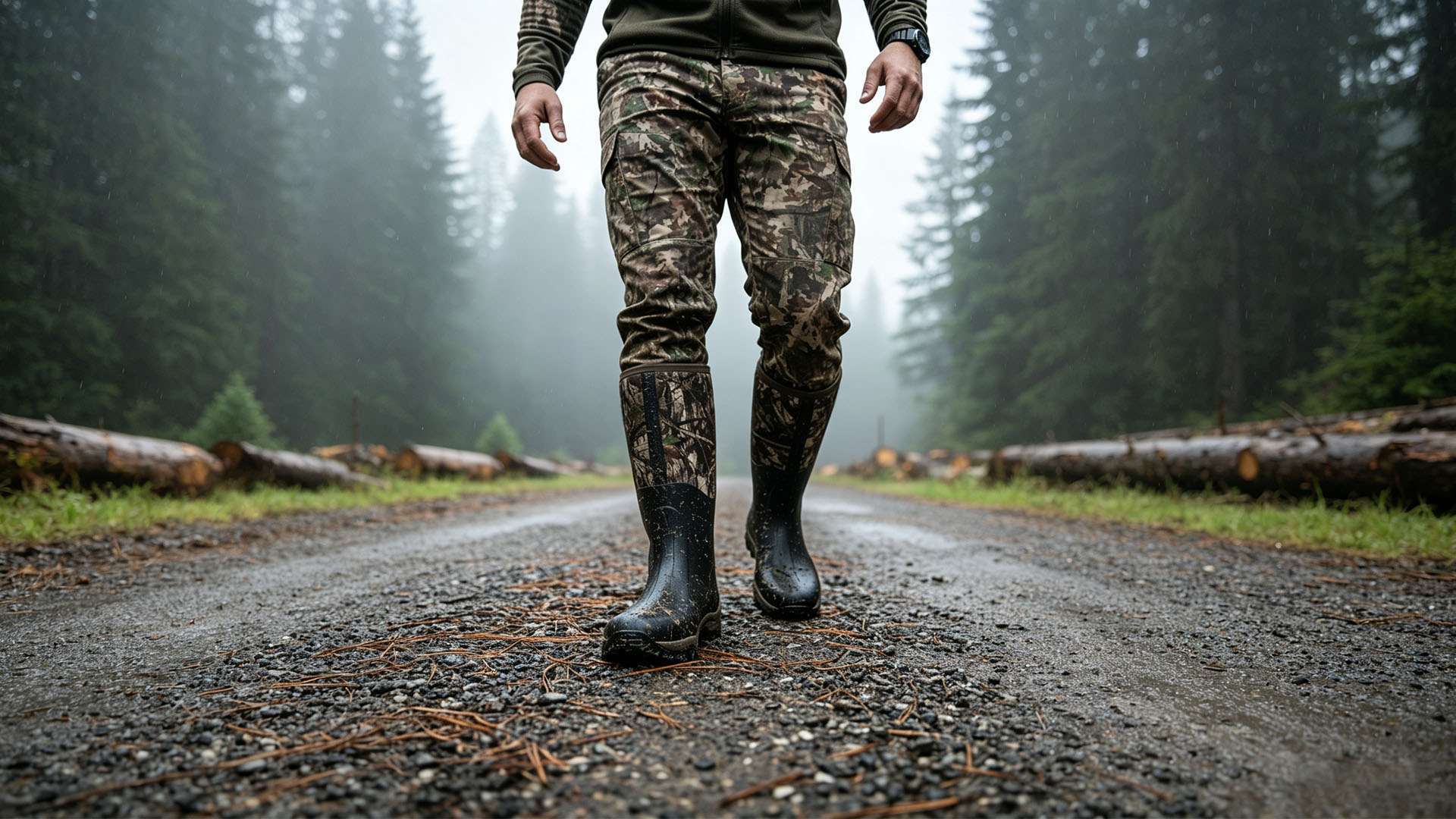
Hunters in these conditions may benefit from waterproof hunting boots for snowy swamp hunting that provide warmth, traction, moisture protection, and secure fit without becoming so bulky that movement becomes clumsy.
The right boot depends on conditions.
Deep snow may require more insulation and height.
Active tracking may require lighter weight and better flexibility.
Swamp edges demand waterproof protection.
Icy logs and frozen roads demand traction.
Cold feet reduce patience, but poor footing creates real danger.
Gaiters Help in Deep Snow
Even waterproof boots can fail if snow spills over the top.
Gaiters can help keep snow, ice, and brush debris out of boots.
They also protect lower pants from wet brush and crusted snow.
Choose gaiters that fit securely and do not create excessive noise.
In thick cedar, loose straps can catch on branches.
Test your full system before the hunt.
Avoid Overheating During Active Tracking
Winter hunters often overdress.
Following hare tracks through swamp cover can be physically demanding.
Sweat becomes a problem when you stop.
Use layers that can be vented.
Start slightly cool if you plan to walk.
Add insulation when waiting at a crossing or standing still while dogs work.
Moisture management is as important as warmth.
Carry Dry Gloves
Snow-covered cedar branches soak gloves quickly.
Cold wet hands make it harder to handle a firearm safely, use a GPS, leash a dog, or work through brush.
Carry a spare pair in a waterproof pocket or bag.
Change before your hands become numb.
Small comfort decisions keep hunters safer and more patient.
Do Not Trust Every White Shape
Snowshoe hare habitat is full of white patches.
Snow-covered roots, broken branches, clumps of snow, and ice formations can all look like animals.
Use binoculars or careful observation before moving.
A real hare often shows:
- A black eye
- Black ear tips
- Rounded body shape
- Subtle breathing movement
- Tracks leading into the form
- A slight contrast against snow shadow
The longer you hunt them, the better you become at separating snow from hare.
Shot Selection in Thick Cover
Snowshoe hares often provide quick, close shots.
Dense cover makes those shots complicated.
Before shooting, confirm:
- Clear view of the hare
- Safe background
- Dog and partner locations
- No roads, houses, livestock, or trails beyond
- No branches blocking the shot
- Legal season and method
- Reasonable recovery chance
Do not shoot at a running shape through brush.
A clean miss is better than an unsafe or unethical shot.
Snow Can Help Recovery
A downed hare is easier to find on fresh snow than on bare ground, but thick cover can still hide it.
Mark the spot immediately.
Look for:
- Hair
- Tracks
- Disturbed snow
- Blood
- The last direction of movement
- Holes under cover
- Fallen logs
- Brush pockets
If using dogs, control them during recovery so they do not scatter sign unnecessarily.
Make every reasonable effort to retrieve game.
Public Land Hare Hunting Can Be Excellent
Many northern public forests contain cedar swamps, young timber, alder bottoms, and regenerating cuts.
Good areas may include:
- State forests
- National forests
- Wildlife management areas
- County forests
- Timber company lands where access is allowed
- Public hunting lands with young forest management
Public land also requires awareness.
Other users may include:
- Deer hunters
- Trappers
- Bird hunters
- Snowmobilers
- Skiers
- Hikers
- Other rabbit hunters
Wear required visibility clothing.
Know overlapping seasons.
Respect other hunters and land users.
Trapping Activity Requires Awareness
Snowy swamp habitats may overlap with legal trapping activity.
Keep dogs under control.
Do not disturb traps, sets, flags, stakes, or equipment.
If you hunt public or private land with dogs, understand trapping seasons and local practices.
Use dog-safe routes when possible.
Communication with landowners and local users can prevent problems.
Snowmobile Trails Can Change Hare Movement
Snowmobile trails may pack snow and create easier travel for people and animals.
Hares may cross them, follow edges, or avoid heavy activity depending on pressure.
These trails can also create safety issues.
Do not hunt directly on active recreational trails.
Watch for riders.
Keep dogs away from traffic corridors.
Use crossings and adjacent habitat carefully and legally.
Mark Productive Cover
Snowshoe hare habitat changes over time as forests grow.
A young cut that holds hares this year may become less productive later.
A newly regenerating stand may improve in several seasons.
Mark productive areas and record:
- Cover type
- Forest age
- Snow depth
- Track density
- Feeding sign
- Dog performance
- Weather
- Number of hares seen
- Access route
Over time, you will build a map of habitat stages, not just locations.
That makes future scouting much more efficient.
Do Not Overhunt One Small Cover
A small patch of cedar or young spruce may hold several hares, but repeated pressure can reduce hunting quality.
Rotate locations when possible.
Give productive cover time to rest.
This is especially important when hunting with dogs.
A good hare cover can remain useful through the season if not overpressured.
Regulations Must Be Verified Locally
Snowshoe hare seasons, limits, legal methods, public-land rules, dog-use regulations, and hunter-orange requirements vary by state and area.
Hunters should verify current rules through the responsible wildlife agency before hunting.
Check:
- Season dates
- Daily bag limits
- Possession limits
- License requirements
- Public-land restrictions
- Dog rules
- Firearm rules
- Trapping overlap
- Blaze orange requirements
Use current official information every season.
Do not rely on old articles or another hunter’s memory.
Common Snowshoe Hare Hunting Mistakes
Following Every Track Too Far
Track networks can be confusing. Look for patterns, feeding areas, and core cover.
Ignoring Cedar Edges
Edges often show feeding-to-bedding movement more clearly than the center of the swamp.
Walking Too Fast
Hares may sit tight and rely on camouflage.
Looking Too High
Search low under branches, logs, and brush.
Assuming Old Tracks Are Fresh
Snow conditions determine track value.
Trusting Ice Because Hares Crossed It
A hare track does not prove ice is safe for humans.
Wearing Poor Footwear
Snowy swamp hunting requires warmth, waterproofing, traction, and secure fit.
Shooting Without Knowing Dog Location
Thick cover and circling hares create safety concerns.
Overhunting One Small Patch
Rotate covers to preserve activity and hunting quality.
Frequently Asked Questions
Where do you find snowshoe hares in winter?
Look for cedar swamps, young spruce and fir, alder edges, regenerating clear-cuts, brushy creek bottoms, and dense lowland cover with fresh tracks and feeding sign.
How do you know if snowshoe hare tracks are fresh?
Fresh tracks usually have sharp edges, loose kicked snow, and clear detail. Wind, sun, crust, and new snowfall can make older tracks look different.
Can you hunt snowshoe hares without dogs?
Yes. Hunters can still-hunt fresh tracks, feeding areas, road crossings, cedar edges, and dense cover without dogs, though dogs can make circling hares easier to pursue.
Do snowshoe hares circle back?
Often they do when pushed, though the route depends on cover, terrain, snow, and pressure. They may loop through familiar trails and dense cover.
What habitat is best for snowshoe hare hunting?
Dense young conifer cover, cedar swamps, alder edges, brushy cuts, and areas with both food and overhead security are often productive.
What boots are best for snowy swamp hare hunting?
Choose waterproof boots with warmth, traction, secure fit, and enough mobility for snow, frozen mud, wet swamp edges, and long walks through dense winter cover.
Final Thoughts
Snowshoe hare hunting begins with tracks, but it does not end there.
Tracks show movement.
Feeding sign shows use.
Droppings show core areas.
Cedar cover shows security.
Logging-road crossings show opportunity.
A hunter who only follows the first line in the snow may spend the day tangled in cedar with little to show for it.
A hunter who studies how the hare uses the cover begins to see the pattern.
Feed on the edge.
Rest under cedar.
Circle through tunnels.
Cross the road at the same narrow gap.
Disappear beneath low branches.
Fresh snow gives you the map.
The swamp gives the hare protection.
Your job is to slow down enough to read both.
