
A trail can look perfect in September.
Fresh tracks cross the soft ground. Rubs appear along the edge of thick cover. Deer move through the same opening every evening, and a trail camera confirms regular daylight activity.
Then the leaves fall.
The woods open up.
The trail that once looked heavily used suddenly appears abandoned. Camera activity slows, fresh tracks become harder to find, and deer seem to disappear from a property they used consistently only a few weeks earlier.
The deer probably did not leave.
Their habitat changed.
Leaf drop affects visibility, security cover, food availability, wind exposure, and hunting pressure. Whitetails often respond by shifting their travel routes, bedding locations, and daylight movement.
Hunters who continue relying on early-season patterns may spend the rest of the fall watching empty trails.
The solution is not always moving farther into the woods. It is understanding what the loss of foliage changed and finding the cover deer now consider safe.
Leaf Drop Changes the Woods Overnight
Before leaf drop, vegetation creates visual barriers.
Low branches, green leaves, tall weeds, brush, and understory growth help deer move without feeling exposed. A trail only fifty yards from a road may feel secure because surrounding vegetation blocks visibility.
Once the leaves fall, that same route can become wide open.
Deer can see farther.
Hunters can see farther.
More importantly, deer may feel visible from several directions at once.
Mature bucks are especially likely to adjust when familiar travel routes lose overhead or side cover.
The old trail may still exist physically, but it may no longer provide the security deer preferred earlier in the season.
Deer Usually Shift Before They Completely Abandon an Area
A decline in trail-camera photos does not necessarily mean every deer moved to another property.
Whitetails often make relatively small adjustments.
They may begin traveling:
- Ten yards deeper inside cover
- Along the opposite side of a ridge
- Through a brushier parallel trail
- Lower in a drainage
- Behind a fallen treetop
- Along an overgrown fence row
- Through young timber instead of mature hardwoods
These changes can be difficult to notice.
A hunter monitoring only one obvious trail may assume movement stopped when the deer simply shifted outside the camera’s detection zone.
When a productive location slows down after leaf drop, expand your search before abandoning the area.
Security Cover Becomes More Important
Food attracts deer, but security influences when they use it.
After leaf drop, mature hardwoods can become visually open. Deer may continue feeding nearby while spending daylight hours in thicker habitat.
Look for cover that remains dense after deciduous leaves disappear.
Examples include:
- Young pine stands
- Cedar thickets
- Mountain laurel
- Honeysuckle
- Briars
- Regenerating clear-cuts
- Tall grass
- Cattails
- Brushy creek bottoms
- Blowdowns
Evergreen vegetation becomes especially important because it continues providing visual protection throughout late fall and winter.
Young Timber Often Becomes Better Than Mature Timber
Open hardwoods look like traditional deer country.
Hunters can see long distances, mature trees provide comfortable stand locations, and old trails remain easy to identify.
But young forests often provide more of what deer need.
They offer:
- Dense bedding cover
- Browse at reachable height
- Wind protection
- Multiple escape routes
- Reduced visibility for hunters
A five-year-old clear-cut may be difficult to walk and nearly impossible to see through. That inconvenience is exactly what makes it attractive to pressured deer.
Instead of walking directly into the thickest cover, identify trails entering and leaving it.
Look for Parallel Trails
Whitetails frequently use more than one route through the same area.
An obvious trail may remain active at night while a less visible parallel trail receives daylight movement.
Check ten to forty yards inside nearby cover.
Look for:
- Fresh tracks
- Broken stems
- Hair on fences
- Recently disturbed leaves
- Rubs on smaller trees
- Droppings
- Low branches pushed aside
Secondary trails may be faint.
They often become more important when hunting pressure increases and visibility changes.
Food Sources Change at the Same Time
Leaf drop often overlaps with major changes in food availability.
Agricultural fields may be harvested.
Acorns may become more concentrated in certain locations.
Soft mast disappears.
Green vegetation becomes less available.
Browse patterns change.
A trail leading toward an early-season food source may lose activity because the food itself is no longer attractive.
Scout current feeding areas rather than assuming deer continue using the same destination.
Depending on the region and season, late-fall food may include:
- Remaining acorns
- Waste grain
- Brassicas
- Clover
- Woody browse
- Honeysuckle
- Clear-cut regeneration
- Field-edge vegetation
Follow fresh feeding sign back toward security cover.
Acorn Distribution Can Move Deer Quickly
Not every oak produces equally each year.
One ridge may receive heavy deer activity while another similar ridge remains quiet.
After leaf drop, spend time identifying where acorns are actually available.
Look for disturbed leaves, tracks, droppings, and feeding activity beneath productive trees.
Do not assume every oak flat is equally valuable.
A small group of producing trees near thick bedding cover can outperform a much larger stand of mature timber.
Wind Exposure Changes After the Canopy Opens
Leaves reduce and redirect wind.
Once they fall, air moves through the woods differently.
Previously protected trails may become more exposed.
Ridgetops may experience stronger wind.
Open hardwoods can become noisy and uncomfortable during severe weather.
Deer may shift toward:
- Leeward slopes
- Creek bottoms
- Dense conifer cover
- Lower benches
- Protected draws
- Thick field corners
Pay attention to where deer can escape direct wind without losing access to food.
Thermal Behavior May Become Easier to Notice
As vegetation disappears and temperatures fall, hunters often notice more distinct thermal movement.
Cool air settles into drainages and low ground.
Sunlit slopes warm differently from shaded slopes.
Scent movement can change throughout the morning and evening.
A stand that worked during early season may become difficult to hunt after leaf drop because the surrounding airflow changed.
Continue using wind indicators throughout the hunt.
Do not rely only on the forecast.
Hunting Pressure Becomes More Visible
Leaf drop affects hunters too.
Improved visibility encourages people to move farther, glass more terrain, and hunt open hardwoods.
Deer may encounter:
- More foot traffic
- More visible tree stands
- Increased vehicle activity
- Hunters following obvious trails
- Additional pressure near food sources
Whitetails learn where disturbance occurs.
They may begin using cover that appears inconvenient, wet, steep, or too close to human activity.
Study human movement with the same attention you give deer sign.
Old Logging Roads Can Become Deceptive
Logging roads are easy to walk and often contain visible tracks.
They can also receive significant human traffic.
After leaf drop, deer may continue crossing these roads without traveling along them for long distances.
Place cameras where thick cover intersects the road rather than automatically monitoring the center of the easiest walking route.
Fresh crossing tracks can reveal which side of the road holds bedding and which direction deer travel toward food.
Creek Bottoms May Gain Security Value
Creek bottoms often retain thicker vegetation than surrounding ridges.
They may contain fallen trees, brush, steep banks, and irregular terrain that limits visibility.
These features can create secure travel corridors after the open woods become exposed.
However, creek bottoms also create difficult wind and access conditions.
Cold air settles into low ground, and scent can follow the drainage.
Scout carefully before choosing a setup.
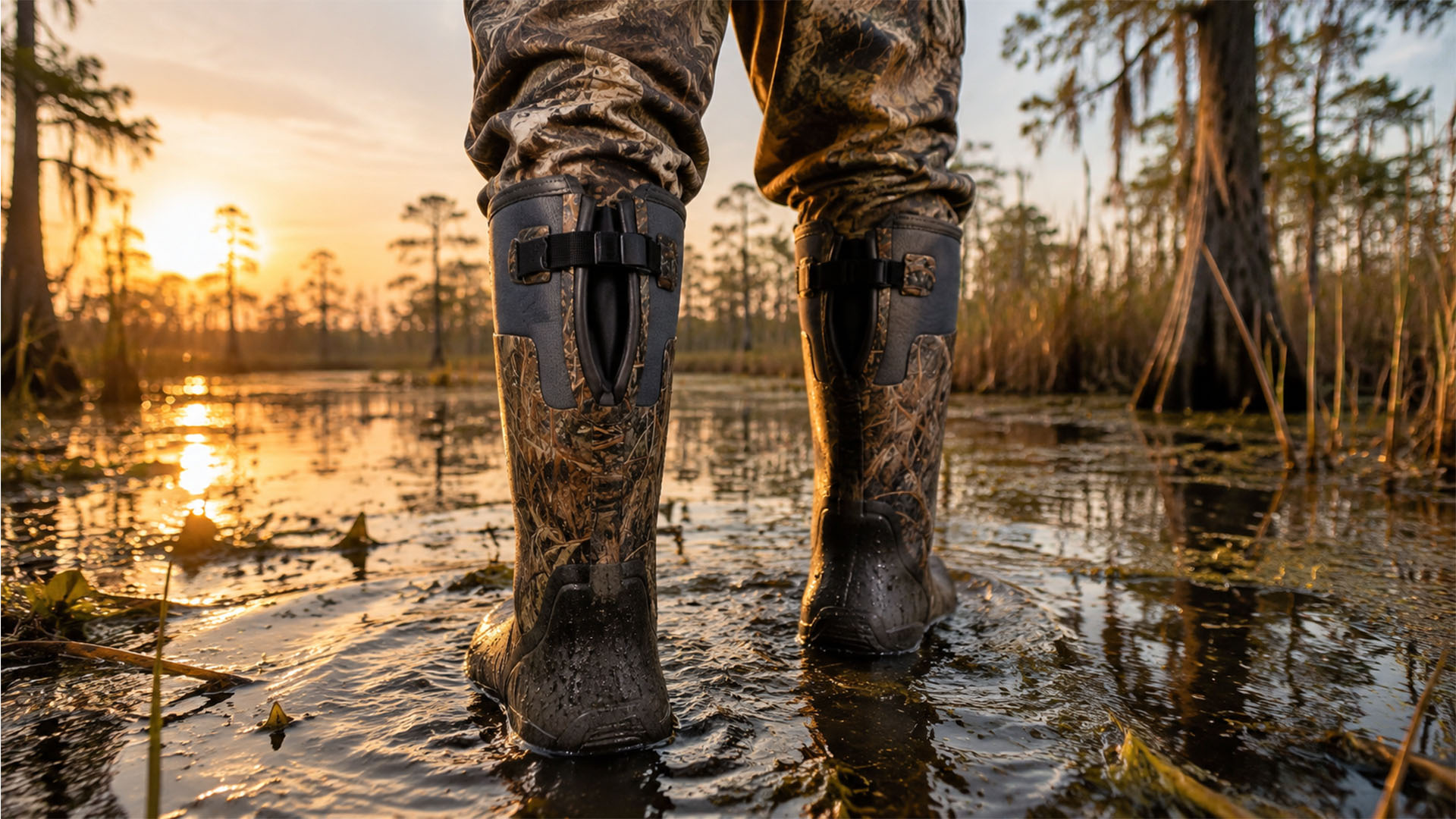
Hunters covering muddy banks, wet leaves, shallow crossings, and saturated low ground may benefit from waterproof hunting boots for late-fall scouting that provide reliable traction and allow them to investigate changing travel routes without cutting the scouting trip short.
The footwear should match the walking distance, terrain, temperature, and expected water depth.
Fallen Trees Create More Than Obstacles
Storm-damaged trees and logging debris can shape deer movement.
A large fallen treetop may provide:
- Visual screening
- Wind protection
- Bedding security
- A barrier that concentrates travel
- Browse from downed branches
Look for trails moving around the ends of blowdowns.
Deer commonly choose the easiest opening through complicated cover.
Several fallen trees can create a natural funnel that becomes more important after leaf drop.
Field Corners Still Matter, but Access Changes
Field corners often connect food, timber, fence rows, and drainage systems.
They remain useful scouting locations throughout the season.
The challenge is reaching them without being detected.
After leaf drop, deer can see farther from staging cover.
Hunters may need to:
- Enter from a different direction
- Stay behind terrain
- Use standing crops when available
- Walk through a drainage
- Set up farther inside cover
- Wait for a more favorable wind
A productive location can become unhuntable when the access route becomes exposed.
Do Not Move Cameras Too Quickly
A sudden reduction in camera activity encourages hunters to move equipment immediately.
Sometimes that is correct.
Sometimes movement returns after a short seasonal transition.
Before relocating a camera, examine:
- Current food availability
- Wind direction
- Hunting pressure
- Nearby secondary trails
- Fresh tracks outside the camera frame
- Changes in vegetation
Moving a camera twenty yards may reveal the new route without abandoning the entire location.
Use Snow or Mud to Confirm New Routes
Late-fall rain and early snow create excellent tracking conditions.
Soft ground records current movement.
Focus on:
- Creek crossings
- Field entrances
- Logging-road intersections
- Gaps in fences
- Muddy trails
- Wet leaves
- Narrow cover transitions
Fresh tracks can reveal small route adjustments that are difficult to identify on dry ground.
Follow them carefully without walking directly on the trail.
Scout From the Outside In
Do not immediately enter known bedding cover because camera activity slowed.
Begin with the edges.
Look for fresh trails entering and leaving.
Study wind.
Identify nearby food.
Use terrain to predict bedding locations.
Aggressive scouting can provide useful information, but it can also push deer from the exact area you hope to hunt.
Balance information gathering with disturbance.
Late-Morning Scouting Can Be Effective
When appropriate for the property and hunting conditions, late morning may provide a useful scouting window.
Deer may have returned to bedding areas.
Hunters can examine travel routes and food sources while reducing the chance of disturbing evening movement.
There is no universally safe time to scout.
Local deer behavior, hunting pressure, property size, and season all matter.
Use current observations rather than following a rigid schedule.
Common Leaf-Drop Scouting Mistakes
Assuming the Deer Left the Property
Movement may have shifted only a short distance into thicker cover.
Watching Only the Original Trail
Search for parallel and secondary routes nearby.
Ignoring Changing Food Sources
Deer travel changes when preferred food becomes unavailable.
Hunting Open Hardwood Stands Because Visibility Improved
Deer may feel less secure in those same open areas.
Moving Cameras Without Investigating
A small adjustment may reveal the new route.
Walking Through Bedding Cover Too Early
Aggressive scouting can create additional pressure.
Ignoring Access Visibility
Leaf drop makes hunters easier for deer to see.
Frequently Asked Questions
Why do deer trails change after the leaves fall?
Leaf drop reduces visual cover, changes wind exposure, affects food availability, and makes human activity easier for deer to detect. Whitetails often shift into thicker or more protected travel routes.
Do deer leave open hardwoods after leaf drop?
Not completely. Deer may continue feeding and traveling through open hardwoods, but daylight movement often shifts closer to security cover.
Where should you scout deer in late fall?
Focus on current food sources, evergreen cover, young timber, briar patches, creek bottoms, blowdowns, leeward slopes, and trails connecting bedding cover with food.
Should you move a trail camera after leaf drop?
Move it when fresh sign shows that deer changed routes. First check nearby parallel trails and thicker cover before relocating it to another part of the property.
Do mature bucks change travel routes after leaf drop?
They can. Mature bucks may shift toward thicker cover, less visible trails, and areas receiving less hunting pressure.
How does leaf drop affect hunting access?
Reduced vegetation makes hunters easier to see. Access routes that worked during early season may require more terrain cover, longer approaches, or different wind conditions.
Final Thoughts
When deer trails appear to disappear after leaf drop, the deer may still be close.
The landscape simply stopped providing the same security.
Open hardwoods became more visible.
Wind reached areas that were previously protected.
Food sources changed.
Hunter movement became easier to detect.
Successful late-fall hunters recognize these changes and adjust.
Search for secondary trails.
Find evergreen and young cover.
Follow current food.
Use mud and snow to identify fresh movement.
Reconsider access routes.
Monitor wind and thermals.
And avoid abandoning a productive area before investigating the cover around it.
Whitetails do not need to move miles to avoid pressure.
Sometimes they only need to step twenty yards deeper into the brush.
The hunter who finds that small adjustment often finds the deer again.
