
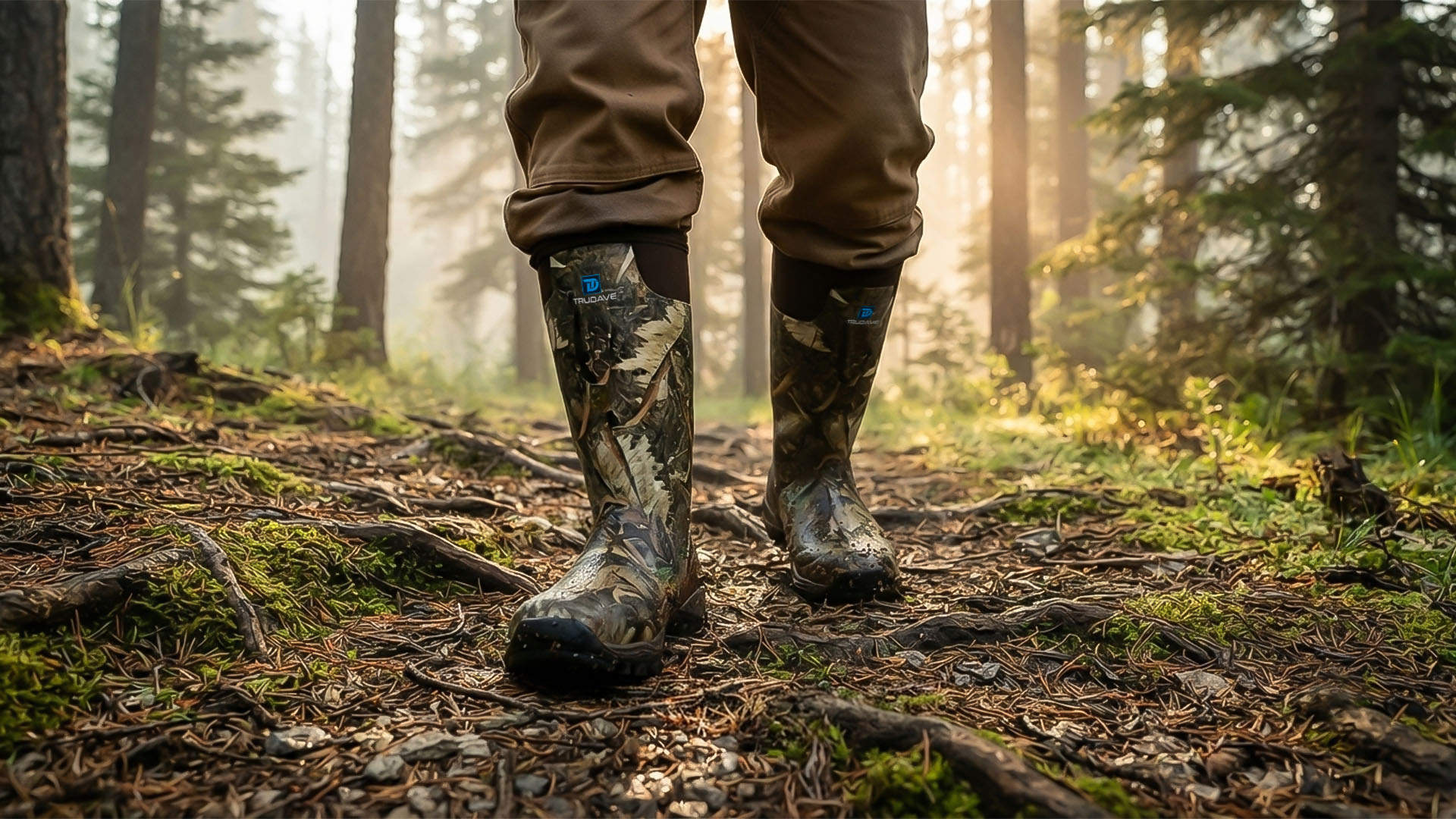
You step out of the woods after a long morning and pull off your hunting boots.
Your socks are damp.
The inside of the boots feels wet.
The conclusion seems obvious.
The boots are leaking.
Maybe they are.
But wet feet do not automatically mean water passed through the outside of your hunting boots.
Sweat, condensation, water entering over the top, wet socks, damaged liners, improper drying, and actual material failure can all create the same result.
If you replace hunting boots every time your feet feel damp, you may spend money without solving the real problem.
Before deciding that your waterproof boots failed, you need to figure out where the moisture came from.
Why Waterproof Hunting Boots Can Feel Wet Inside
Waterproof footwear manages moisture from two directions.
Outside moisture tries to enter the boot.
Internal moisture needs to escape.
Rain, mud, wet grass, creek water, and standing water create the first problem.
Sweat creates the second.
A boot may successfully block outside water while moisture accumulates inside.
This is particularly common during long walks, warm weather, and hunts involving heavy insulation.
The first step is identifying whether the water came from outside or inside.
Reason 1: Your Feet Are Sweating
This is one of the most common explanations.
Feet sweat.
The amount depends on temperature, activity level, socks, insulation, and individual physiology.
A hunter walking several miles can produce significant heat.
If the boots are heavily insulated or do not release moisture quickly, sweat accumulates.
Socks become damp.
The boot lining feels wet.
When the hunter removes the boots, it appears that water leaked through.
But the moisture came from inside.
How to Tell
Pay attention to where the wetness appears.
Sweat-related moisture is often distributed across the foot.
Both boots may feel similarly damp.
There may be no single wet spot.
The problem may become worse during long walks and warmer temperatures.
How to Fix It
Choose insulation appropriate for the weather.
Wear moisture-managing socks.
Avoid cotton.
Slow your walking pace when necessary.
Carry spare socks.
Allow boots to dry completely after every hunt.
Reason 2: Water Entered Over the Top
Waterproof boots only protect below their maximum height.
Step into water that reaches above the boot opening and moisture enters.
Walk through tall wet grass and water can run down your pants into the boot.
Cross a creek carelessly and one unexpected hole can create the same problem.
Once water enters, waterproof construction can slow the drying process.
How to Tell
The upper boot lining may be wetter than lower areas.
One boot may contain significantly more moisture.
You may remember stepping into deep water or walking through saturated vegetation.
How to Fix It
Know the height of your boots.
Leave a safety margin during water crossings.
Use gaiters when appropriate.
Adjust rain pants so water sheds outside the boot instead of entering the opening.
Reason 3: Your Socks Were Already Wet
Hunters sometimes put dry boots over damp socks.
This happens during multi-day hunts.
The previous day’s socks did not dry completely.
Feet sweat while driving.
The hunter walks through camp in wet footwear.
Then the damp socks go into hunting boots.
Hours later, the boots feel wet.
The footwear may not be the problem.
How to Fix It
Start hunts with dry socks.
Carry replacements in waterproof storage.
Do not leave wet socks inside boots overnight.
Dry socks and boots separately.
Reason 4: Condensation Is Building Inside the Boot
Warm, moist air inside a boot can interact with colder boot surfaces.
Moisture condenses.
This can be particularly noticeable during cold-weather hunts.
The hunter walks to the stand.
Feet become warm.
Sweat enters the air inside the boot.
The hunter stops moving.
Outside temperatures remain low.
Moisture collects inside.
The result is damp socks and a wet lining.
How to Fix It
Manage activity levels.
Avoid unnecessary insulation.
Use appropriate socks.
Change damp socks during long hunts.
Dry boots thoroughly after use.
Condensation cannot always be eliminated.
It can be managed.
Reason 5: The Boot Has a Small Puncture
Rubber boots can develop small holes.
Thorns.
Sharp rocks.
Fencing.
Metal debris.
Repeated flexing.
A puncture may be difficult to see.
Water enters slowly.
The hunter notices wet socks only after extended exposure.
How to Find the Leak
Clean the boot.
Dry it completely.
Inspect the exterior under good lighting.
Pay attention to high-flex areas and places that regularly contact brush.
For certain types of rubber boots, filling the boot carefully with water may reveal external leaks.
However, always follow manufacturer recommendations before using a leak-testing method.
Some insulated or membrane-based boots should not be filled with water.
Reason 6: Seams or Bonded Areas Are Failing
Hunting boots contain connection points.
Outsoles attach to uppers.
Rubber sections join other materials.
Seams and bonded areas experience repeated stress.
Over time, separation can occur.
Water may enter through a damaged seam.
Warning Signs
Look for:
- Cracking
- Separation
- Loose material
- Visible gaps
- Discoloration
- Repeated wetness in one location
Small failures often become larger.
Inspect boots regularly.
Reason 7: You Never Fully Dried the Boots
This is another common mistake.
The boots became wet during yesterday’s hunt.
You removed them.
Placed them in the garage.
Returned the next morning.
The exterior felt dry.
The interior was still damp.
Now you walk several hours.
Your socks absorb the remaining moisture.
The boots appear to be leaking again.
They never dried.
How to Fix It
Remove insoles.
Increase airflow.
Use a compatible boot dryer when appropriate.
Allow enough time.
Do not store damp boots in sealed containers.
How to Test Whether Hunting Boots Actually Leak
Before replacing your boots, perform a controlled test.
Step 1: Clean the Boots
Remove mud and debris.
Leaks can hide beneath dirt.
Step 2: Dry Them Completely
You need a dry starting point.
Remove insoles.
Use airflow.
Wait until the interior is completely dry.
Step 3: Wear Dry Socks
Use socks you know are dry.
Step 4: Test in Shallow Water
Stand in shallow water below the top of the boot.
Remain there for several minutes.
Avoid moving aggressively.
Step 5: Check for Localized Moisture
Remove the boots.
Inspect the socks.
A specific wet spot may indicate an actual leak.
General dampness may suggest sweat or condensation.
Step 6: Repeat if Necessary
One test may not reveal a slow leak.
Increase exposure time carefully.
Do not exceed safe water depths.
Pay Attention to Where the Moisture Appears
Location provides clues.
Wet Toes
Possible causes include a puncture, seam failure, condensation, or sweat.
Wet Heel
Check for cracks, outsole separation, and worn materials.
Wet Upper Socks
Water may be entering over the top.
Both Feet Equally Damp
Sweat and condensation become more likely.
One Small Wet Spot
A localized leak becomes more likely.
Diagnose before replacing.
Waterproof Does Not Mean Maintenance-Free
Hunting footwear takes abuse.
Mud.
Water.
Rocks.
Brush.
Temperature changes.
Repeated flexing.
Long walks.
Storage.
Cleaning and inspection matter.
After wet hunts:
Remove heavy mud.
Clean the outsole.
Inspect the exterior.
Remove insoles.
Dry the interior.
Store boots correctly.
Small problems are easier to manage before they become complete failures.
Match Footwear to Repeated Wet Exposure
A hunter who crosses one shallow creek each season has different needs from someone who spends every weekend in swamps, marsh edges, flooded timber, muddy fields, and wet public land.
Frequent exposure increases the importance of waterproof construction, fit, outsole traction, drying time, and material durability.
Hunters regularly dealing with moisture may want to consider waterproof hunting boots for consistently wet hunting conditions that match the expected water depth, walking distance, temperature, and terrain.
No boot lasts forever.
But using footwear designed for the environment can reduce unnecessary failures.
Do Not Repair Every Boot With Random Adhesive
A small puncture may be repairable.
A separating outsole may require a different solution.
Using the wrong adhesive can create a temporary repair that fails in the field.
Follow manufacturer repair recommendations.
Use products designed for the boot material.
Clean and dry the repair area.
Allow enough curing time.
Test the repair before relying on the boots during a long hunt.
When Should You Replace Hunting Boots?
Replacement may be necessary when:
- Cracks are spreading
- Multiple leaks develop
- Outsoles separate
- Traction is significantly worn
- The boot no longer fits securely
- Repairs repeatedly fail
- Waterproof construction is permanently compromised
- Materials have become brittle
Do not wait for complete failure during hunting season.
Inspect footwear before opening day.
Common Waterproof Hunting Boot Mistakes
Assuming Every Wet Sock Means a Leak
Sweat, condensation, and water entering over the top are common causes.
Buying Too Much Insulation
Excess heat increases sweating.
Wearing Cotton Socks
Cotton holds moisture and dries slowly.
Failing to Dry Boots Between Hunts
Yesterday’s moisture becomes today’s wet socks.
Ignoring Small Damage
Punctures and separation can become worse.
Standing in Water Above the Boot Opening
Waterproof materials cannot prevent water from entering over the top.
Replacing Boots Before Testing Them
Diagnose the source of moisture first.
Frequently Asked Questions
Why are my feet wet in waterproof hunting boots?
Possible causes include sweat, condensation, water entering over the top, wet socks, incomplete drying, punctures, and material failure.
How do you know if waterproof boots are leaking?
Dry the boots completely, wear dry socks, test them in shallow water below the boot opening, and look for localized moisture.
Can sweat make waterproof boots wet inside?
Yes.
Sweat can accumulate inside waterproof footwear, especially during long walks, warm conditions, and when wearing excessive insulation.
Can rubber hunting boots develop leaks?
Yes.
Punctures, cracks, material fatigue, and separation can allow water to enter.
How long should hunting boots take to dry?
Drying time depends on boot materials, insulation, airflow, humidity, and how wet the interior became.
Remove insoles and use appropriate airflow to improve drying.
Should you replace hunting boots if they leak?
Not always.
Small punctures may be repairable.
Extensive material failure, repeated leaks, worn traction, and sole separation may justify replacement.
Final Thoughts
Wet feet do not prove your hunting boots are leaking.
The moisture may come from sweat.
Condensation.
Wet socks.
Water entering over the top.
Boots that never dried after the previous hunt.
Or actual damage.
Diagnose the problem before spending money on new footwear.
Dry the boots completely.
Test them under controlled conditions.
Inspect for damage.
Pay attention to where moisture appears.
Match insulation to your activity level.
Use appropriate socks.
And maintain your footwear throughout the season.
Waterproof hunting boots are tools.
Understanding how they fail—and how hunters sometimes mistake internal moisture for a leak—can help you stay drier, spend less money, and choose better footwear for the conditions you actually hunt.
