
You watched the deer run into the timber.
The shot felt good.
You marked the exact location where the animal was standing and waited before climbing down.
Then the weather changed.
Rain began falling harder.
By the time you reached the point of impact, the leaves were wet, the ground was dark, and the small amount of blood you expected to find was already disappearing.
Fifty yards later, the trail was gone.
No bright drops on leaves.
No blood on grass.
No obvious tracks.
Only wet woods and several possible directions of travel.
Tracking a wounded deer after rain is one of the most difficult situations a hunter can face.
Rain can dilute blood, wash sign from vegetation, fill tracks with water, and make it harder to separate the wounded animal’s trail from older deer movement.
The correct response is not to walk faster.
It is to become more disciplined.
Slow down.
Protect the last known sign.
Use terrain.
Look for more than blood.
And avoid turning a difficult tracking job into an impossible one.
Start Before You Leave the Stand
A successful recovery begins immediately after the shot.
Watch the deer.
Do not look down at your bow or firearm.
Do not celebrate.
Do not immediately begin gathering equipment.
Pay attention to:
- The exact location where the deer was standing
- The direction it ran
- The last place you saw the animal
- The deer’s body position
- Its reaction to the shot
- Any unusual sounds
- Nearby terrain features
Choose specific landmarks.
A large tree.
A rock.
A fallen log.
A field corner.
A gap in vegetation.
Do not rely on memory alone.
Distances look different from the ground than they do from a tree stand.
Mark the Point of Impact
Once you leave your hunting position, go to the exact place where the deer was standing.
Mark it.
Use a mapping application, biodegradable marking material where legal, or another method that allows you to return to the location.
Then search carefully.
Look for:
- Blood
- Hair
- Tracks
- Disturbed leaves
- Broken vegetation
- Bone fragments
- Tracks indicating a hard push-off
The point of impact provides the starting line for the entire recovery.
Do not rush through it.
Rain Changes How Long You Should Wait
Hunters often ask how long they should wait before tracking a wounded deer.
There is no single answer.
Shot placement matters.
The deer’s reaction matters.
Weather matters.
A well-hit deer may expire quickly.
A poorly hit deer may require several hours before tracking should begin.
Rain creates additional pressure because hunters worry about losing the blood trail.
That concern is understandable.
But pushing a wounded deer can create a much larger problem.
If the deer is still alive and you force it from a bed, it may travel much farther.
Before beginning the track, evaluate the shot carefully.
When in doubt, seek help from an experienced tracker or legal tracking dog service where available.
Do Not Assume All Blood Will Disappear Immediately
Rain affects blood trails differently.
Light rain may leave useful sign under vegetation.
Blood can remain on:
- The underside of leaves
- Tree trunks
- Tall grass
- Brush
- Logs
- Protected ground
- The deer’s hair
- Bedding locations
Look beyond the trail surface.
A hunter staring only at the ground may walk past useful sign at knee height.
Use a flashlight even during daylight.
Different angles of light can make small amounts of blood easier to see.
Mark Every Confirmed Sign
This is one of the most important tracking habits.
Every time you find confirmed blood, hair, or another reliable indicator, mark the location.
Do not move the marker until you find the next sign.
The pattern helps reveal the animal’s direction of travel.
If you lose the trail, return to the last confirmed location.
Without markers, hunters often become confused and begin searching from the wrong place.
A straight line of markers can also help identify the likely direction the deer continued traveling.
Stop Walking on the Trail
Hunters destroy sign without realizing it.
They walk directly on the blood trail.
Step on tracks.
Turn over leaves.
Push mud into prints.
Then they lose the trail and attempt to return.
Now the area is covered in human tracks.
Whenever possible, walk beside the trail.
Keep the suspected path undisturbed.
This is especially important when several hunters are helping.
Limit the number of people searching the immediate trail.
More boots do not always create a better tracking job.
Look for Tracks, Not Just Blood
Rain may remove visible blood.
Tracks can remain.
Identify the wounded deer’s track when possible.
Look for:
- Hoof size
- Stride length
- Direction
- Uneven steps
- Drag marks
- Stumbling
- Deep impressions
- Mud kicked onto vegetation
A wounded deer may move differently from a healthy animal.
It may favor one side.
Shorten its stride.
Drag a leg.
Stumble.
Enter thick cover.
Tracks can become the primary trail when blood disappears.
Soft Ground Can Help
Rain creates mud.
Mud creates tracks.
Check:
- Logging roads
- Creek banks
- Field edges
- Ditches
- Wet trails
- Low ground
- Muddy crossings
A wounded deer crossing soft ground may leave a clear track.
The challenge is separating it from other deer.
Look at the direction of travel.
Compare the track to the last confirmed sign.
Follow only when the evidence makes sense.
Use the Deer’s Direction of Travel
Wounded deer do not always travel in a straight line.
But direction matters.
From the last confirmed sign, look ahead.
What terrain features are nearby?
Possible destinations include:
- Thick cover
- Creek bottoms
- Drainages
- Bedding cover
- Low ground
- Water
- Security cover
Do not assume the deer will always go downhill or always go to water.
These are common tracking beliefs, not guaranteed rules.
Use terrain as a guide.
Not as proof.
Search Likely Bedding Areas Carefully
Wounded deer often seek cover.
Thick vegetation can provide security.
Beds may contain blood that is protected from rain.
Move slowly.
Glass ahead.
Look under vegetation.
Do not immediately walk into every thick area.
If the deer may still be alive, pushing it can extend the recovery.
Evaluate each situation carefully.
Use a Grid Search Only After the Trail Is Truly Lost
Grid searching too early can destroy sign.
First:
Return to the last confirmed blood.
Search in small circles.
Check vegetation.
Look for tracks.
Study terrain.
Reconstruct the likely direction.
Only begin a larger grid search when other tracking methods have failed.
Organize the search.
Do not allow several hunters to wander randomly.
Use mapping applications to track searched areas.
Maintain communication.
Wet Terrain Requires the Right Equipment
Tracking can last much longer than expected.
A recovery that begins as a 100-yard blood trail may turn into several hours of slow movement through mud, wet vegetation, creek bottoms, and standing water.
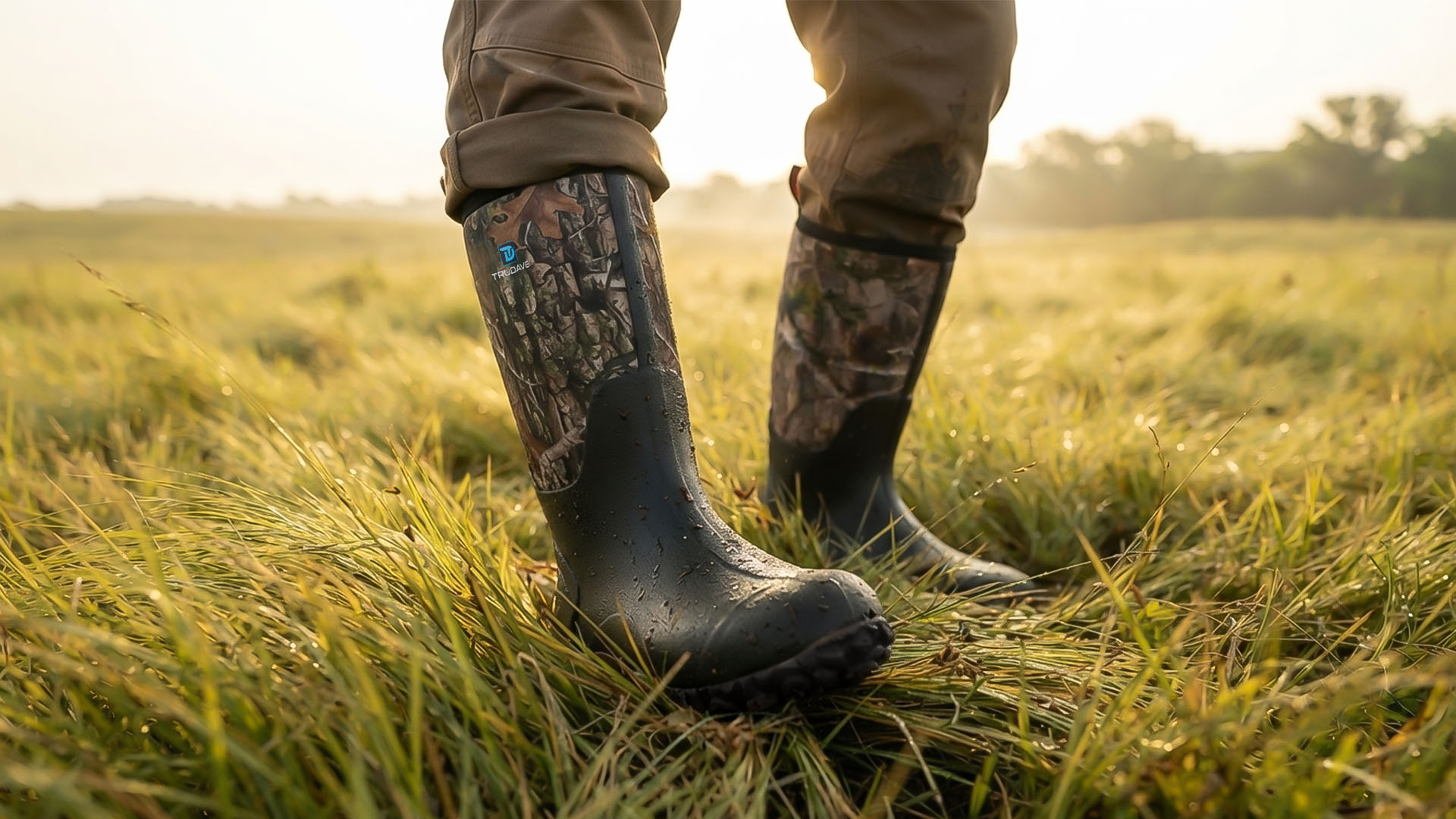
Hunters who regularly track game in these conditions may benefit from waterproof hunting boots for long hours in wet terrain that provide reliable traction, secure fit, and protection from repeated exposure to moisture.
The goal is not simply comfort.
Cold, wet feet and poor traction can cause hunters to rush, lose concentration, or end a search earlier than planned.
Equipment should allow you to remain patient.
Carry More Than One Light Source
Many tracking jobs continue after dark.
Carry:
- A primary flashlight
- A headlamp
- Backup batteries
- A second light source
Do not rely entirely on your phone.
A flashlight held low to the ground can reveal blood and tracks differently from a headlamp.
Try multiple angles.
Rain and fog can reflect light and reduce visibility.
Adjust brightness when necessary.
Protect Your Phone and Mapping Equipment
Wet tracking conditions can damage electronics.
Use waterproof storage.
Keep your phone charged.
Consider carrying a portable battery.
Mark:
- Point of impact
- Last visual location
- Blood sign
- Beds
- Tracks
- Search boundaries
Mapping your search prevents repeated coverage of the same ground.
It also helps organize additional trackers.
Know When to Call a Tracking Dog
Legal tracking dogs can be extremely effective.
Regulations vary by state.
Know the rules before hunting season.
If the blood trail disappears and the recovery becomes uncertain, contacting a tracker early may improve the chance of success.
Avoid contaminating the area unnecessarily.
Too many hunters walking through the track can make the dog’s job more difficult.
Provide the tracker with accurate information.
Do not exaggerate shot placement or blood sign.
Do Not Track Alone in Dangerous Conditions
Tracking creates tunnel vision.
Hunters focus on the ground.
They stop paying attention to terrain.
Wet leaves, steep banks, creeks, cliffs, and darkness create hazards.
Tell someone where you are.
Carry navigation equipment.
Wear appropriate clothing.
Slow down near dangerous terrain.
Recovering an animal is important.
So is returning safely.
Common Mistakes When Tracking Deer After Rain
Starting Too Soon Because Rain Is Falling
Fear of losing blood can cause hunters to push wounded deer.
Evaluate shot placement before tracking.
Looking Only at the Ground
Blood can remain on vegetation, logs, and other protected surfaces.
Failing to Mark the Last Sign
Without markers, hunters lose direction.
Mark every confirmed location.
Walking Directly on the Trail
Protect tracks and blood.
Walk beside the trail when possible.
Bringing Too Many People
Large groups can destroy sign.
Use a small, organized tracking team.
Grid Searching Too Early
Exhaust careful tracking methods first.
Assuming the Deer Went to Water
Terrain patterns can help, but wounded deer do not follow guaranteed rules.
Follow evidence.
Giving Up When Blood Disappears
Tracks, disturbed vegetation, beds, terrain, and tracking dogs can continue the recovery.
Frequently Asked Questions
Does rain wash away deer blood trails?
Heavy rain can dilute or remove visible blood from exposed surfaces.
However, blood may remain under vegetation, on tree trunks, in bedding areas, and in other protected locations.
Should you track a wounded deer immediately if rain is coming?
Not automatically.
The decision should depend primarily on shot placement and the likelihood that the deer is still alive.
Pushing a wounded deer can make recovery more difficult.
How do you track a deer when there is no blood?
Look for tracks, disturbed vegetation, hair, beds, terrain features, and changes in the animal’s stride.
Return to the last confirmed sign and search systematically.
Do wounded deer always go downhill?
No.
Wounded deer may use terrain in different ways depending on injury, pressure, habitat, and individual behavior.
Do not rely on one rule.
Should you use a tracking dog after rain?
A legal tracking dog may be helpful when blood and visual sign are limited.
Check state regulations and contact experienced trackers when necessary.
How long should you search for a wounded deer?
Continue as long as conditions are safe and there is a reasonable recovery strategy.
Hunters may pause, bring additional help, contact a tracking dog team, or return under better conditions when appropriate.
Final Thoughts
Rain can erase a blood trail.
It does not erase your responsibility to make a careful recovery effort.
Start by watching the deer after the shot.
Mark the point of impact.
Wait the appropriate amount of time.
Protect every piece of sign.
Look for tracks.
Study terrain.
Search bedding cover carefully.
Use mapping tools.
Call experienced trackers when necessary.
And avoid turning uncertainty into panic.
The best deer trackers are patient.
They do not measure progress by how quickly they move through the woods.
They measure progress by how much information they collect before taking the next step.
When the rain removes the obvious trail, discipline becomes your most important tracking tool.
