
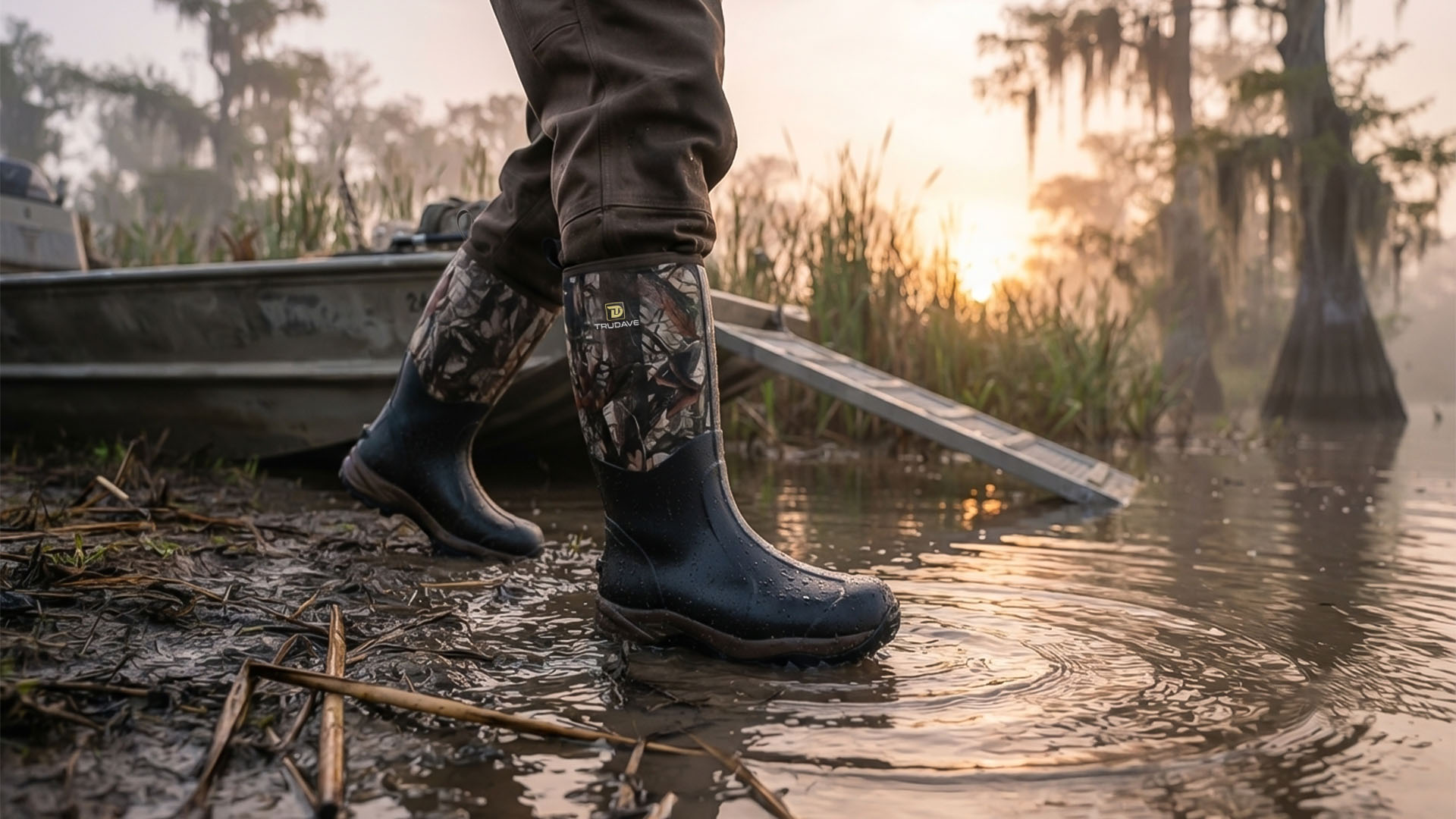
The first step feels normal.
The second sinks a little deeper.
By the fourth step, the mud is above your ankles and pulling against your boots every time you try to move forward.
The decoy bag suddenly feels heavier.
Your shotgun is in one hand.
The water is getting deeper.
You look back toward the bank and realize you have only traveled thirty yards.
Marsh mud can turn a short walk into a serious problem.
Duck hunters regularly cross wetlands, flooded fields, tidal marshes, shallow ponds, muddy shorelines, and soft-bottomed water to reach productive hunting locations.
Most of the time, the walk is simply uncomfortable.
But deep mud, hidden channels, unstable bottoms, cold water, heavy equipment, and poor visibility can create real safety risks.
Learning how to move through marsh terrain safely is just as important as choosing the correct blind location or decoy spread.
Why Marsh Mud Is Difficult to Cross
Mud creates resistance.
Every step pushes your foot downward.
When you try to lift the boot, suction holds it in place.
The deeper you sink, the more energy you need to move.
Now add hunting equipment.
A shotgun.
Decoys.
A blind bag.
Extra clothing.
A dog.
Maybe a small boat or sled.
The additional weight increases fatigue.
Cold temperatures make the situation worse.
Hunters may have reduced mobility because of heavy clothing.
Cold water can reduce dexterity.
Poor visibility before daylight makes it difficult to identify safe routes.
The problem is rarely one dramatic hazard.
It is several small problems combining at the same time.
Scout Marsh Access During Daylight
Do not make your first trip into unfamiliar wetlands in complete darkness.
Preseason scouting is important.
Visit the area during daylight.
Identify:
- Firm bottom
- Deep mud
- Drainage channels
- Ditches
- Beaver runs
- Drop-offs
- Stable crossings
- Boat access
- Emergency exit routes
Water levels change.
A route that works in September may be deeper in November.
Tidal marshes can change within hours.
Scout more than one access route.
Mark important locations on your mapping application.
Knowing the terrain reduces unnecessary risk.
Test the Bottom Before Committing
The surface does not tell you how deep the mud is.
Use a walking stick, trekking pole, or similar tool to test the ground.
Push downward.
Check resistance.
Test the next step before shifting your full body weight.
This is particularly important when entering water you cannot see through.
A firm bottom can suddenly become deep mud.
A shallow flat can contain a hidden channel.
Slow movement provides time to recognize changes.
Take Short Steps
Long steps increase instability.
Keep your feet relatively close to the ground.
Move slowly.
Use short steps.
Maintain a wider stance when possible.
If one foot begins sinking deeply, avoid immediately pulling straight upward with maximum force.
Shift the boot slightly.
Move your leg forward and backward.
Break the suction.
Then lift.
Trying to force the boot directly upward wastes energy and may pull your foot out of loose footwear.
Keep Your Hands Available for Balance
Carrying too much equipment in your hands creates problems.
If you slip, you need to react.
A hunter carrying a shotgun, decoy bag, blind bag, and other equipment may have limited ability to regain balance.
Use:
- Backpacks
- Decoy sleds
- Boats
- Shoulder straps
- Gear carts where terrain allows
Distribute weight.
Keep at least one hand available when crossing difficult terrain.
Always handle firearms safely and follow applicable firearm safety practices.
Secure Your Firearm
Mud and water are bad places to lose control of a firearm.
Use a sling when appropriate.
Maintain safe muzzle direction.
Keep the action and barrel away from mud and debris.
If you fall and the firearm contacts mud or water, inspect it before continuing to hunt.
A blocked barrel can create a dangerous situation.
Never fire a shotgun if you suspect the barrel contains mud, water, or another obstruction.
Understand How Water Depth Changes the Risk
Shallow mud is uncomfortable.
Deep water changes the situation.
As water rises, movement becomes slower.
Clothing absorbs water.
Cold exposure increases.
Current can affect balance.
A hidden drop-off can put a hunter in water much deeper than expected.
Know the limitations of your footwear and clothing.
Do not continue simply because you have already traveled part of the route.
Turning around is always an option.
Avoid Walking Alone in Unfamiliar Marshes
Solo hunting is common.
It requires additional planning.
Tell someone:
- Where you are hunting
- Your expected route
- When you plan to return
Carry communication equipment appropriate for the location.
Keep your phone protected from water.
Remote wetlands may have poor cellular service.
Consider additional emergency communication devices when hunting isolated areas.
The farther you travel from easy access, the more important preparation becomes.
Use the Correct Footwear for the Terrain
Footwear should match water depth and bottom conditions.
Tall rubber hunting boots may work for shallow marsh edges, muddy fields, and wet access routes.
Chest waders may be necessary for deeper water.
However, waders introduce additional considerations related to fit, water depth, temperature, and safety.
For hunters who regularly approach blinds through mud, shallow water, saturated fields, and wet shoreline terrain, waterproof hunting boots for muddy hunting terrain can provide useful protection while maintaining more mobility than heavier equipment intended for deep water.
No boot makes unsafe terrain safe.
The purpose of footwear is to improve traction, keep feet dry within appropriate water depths, and remain secure when mud creates suction.
Boot Fit Matters in Deep Mud
Loose boots can become a serious problem.
Deep mud holds the outsole.
The hunter lifts his leg.
The heel moves.
The foot begins coming out of the boot.
Correct fit helps reduce this problem.
Your heel should remain secure.
The boot should provide enough room for hunting socks without excessive movement.
Test footwear before hunting season.
Walk through realistic terrain.
Do not discover a fit problem while carrying equipment through a marsh before daylight.
Do Not Overload Yourself
Duck hunters carry a lot of gear.
More decoys.
Extra ammunition.
Food.
Water.
Calls.
Clothing.
Blind materials.
Camera equipment.
The temptation is to carry everything in one trip.
That may not be the safest decision.
Heavy loads increase fatigue and reduce balance.
Make multiple trips when necessary.
Use a sled or small boat where legal and practical.
Prioritize essential equipment.
The goal is arriving safely.
Not proving how much gear you can carry.
Watch for Hidden Ditches and Channels
Agricultural wetlands and marshes may contain drainage systems that are difficult to see.
Vegetation can hide edges.
Dark water makes depth difficult to judge.
A hunter may step from knee-deep water into a much deeper channel.
Study maps.
Scout during daylight.
Use a walking stick.
Move slowly.
Pay particular attention near:
- Levees
- Water-control structures
- Creek mouths
- Tidal channels
- Beaver dams
- Drainage ditches
These features can create sudden depth changes.
Cold Water Changes Everything
A difficult walk becomes more serious when temperatures are low.
Cold water removes body heat quickly.
Wet clothing increases heat loss.
Wind makes the problem worse.
Know the signs of cold stress.
Carry dry clothing when conditions justify it.
Protect extra layers in waterproof storage.
If you become completely wet in cold conditions, evaluate whether continuing the hunt is safe.
A successful hunt is not more important than getting home.
Plan for the Walk Out
Water levels may change.
Weather may change.
Tides may change.
Ice may develop.
Fatigue will increase.
The route you used before daylight may be more difficult after several hours of hunting.
Check conditions before leaving the blind.
Do not wait until complete darkness to think about access.
If necessary, leave earlier.
Use an alternative route.
Use a Headlamp That Allows You to See the Ground
Visibility matters.
A headlamp with appropriate brightness can help identify:
- Water edges
- Mud
- Vegetation
- Obstacles
- Equipment
- Trail markers
Carry backup lighting.
Cold temperatures can reduce battery performance.
Store extra batteries where they remain dry.
Do not rely on a phone flashlight as your only light source.
Keep Electronics in Waterproof Storage
Phones, vehicle keys, GPS devices, and emergency equipment should remain protected.
Use waterproof containers or sealed storage bags.
Assume you may fall.
If critical equipment cannot survive brief water exposure, protect it before entering the marsh.
Know When to Turn Around
Hunters often continue because the blind is close.
The birds are flying.
Friends are waiting.
The hunt only lasts a few hours.
None of those reasons make unsafe conditions better.
Turn around when:
- Water is deeper than expected
- Mud makes movement extremely difficult
- You cannot identify a safe route
- Weather is worsening
- Equipment problems reduce safety
- You become exhausted
- Cold exposure becomes a concern
Good judgment is hunting equipment too.
Common Marsh Access Mistakes
Entering Unfamiliar Wetlands in Complete Darkness
Scout access routes during daylight.
Carrying Too Much Gear at Once
Heavy loads reduce balance and increase fatigue.
Pulling Straight Up Against Deep Mud
Shift the boot to break suction before lifting.
Wearing Loose Footwear
Secure fit reduces the risk of losing a boot in deep mud.
Ignoring Water Depth Changes
Use a walking stick and move slowly.
Failing to Protect Electronics
Assume you may fall.
Store critical equipment accordingly.
Continuing When Conditions Become Unsafe
Turning around is always an option.
Frequently Asked Questions
How do you walk through deep marsh mud?
Move slowly, take short steps, test the bottom, use a walking stick, and shift your boot to break suction before lifting.
Avoid carrying excessive weight.
Can mud pull hunting boots off your feet?
Yes.
Deep mud creates suction.
Loose footwear increases the risk.
Proper fit and careful movement can help keep boots secure.
Are rubber hunting boots good for duck hunting?
Rubber hunting boots can work well for shallow water, muddy fields, marsh edges, and wet access routes.
Deeper water may require waders or other appropriate equipment.
Should you carry decoys through deep mud?
Avoid carrying excessive loads through difficult terrain.
Use multiple trips, sleds, boats, or other equipment when practical.
How do you stay safe while hunting marshes alone?
Tell someone your location and return time, protect communication equipment, scout access routes, carry appropriate emergency gear, and avoid unnecessary risks.
What should you do if your shotgun barrel gets mud in it?
Do not fire the shotgun.
Unload and inspect the firearm safely.
Remove any obstruction using appropriate methods before continuing to hunt.
Final Thoughts
Marsh mud does not look dangerous from the parking lot.
The risk becomes obvious when every step requires effort, water depth changes unexpectedly, and hunting equipment begins affecting your balance.
Scout access routes.
Test the bottom.
Move slowly.
Keep loads manageable.
Protect critical equipment.
Wear footwear appropriate for the terrain.
Plan the return trip.
And turn around when conditions become unsafe.
Duck hunting rewards preparation.
The best blind location does not matter if reaching it requires taking risks you cannot manage.
Know the marsh.
Respect the water.
And make sure the route home is part of your hunting plan before you ever leave the truck.
