
The forecast said the wind was perfect.
A steady northwest breeze should have carried your scent away from the trail.
You checked the wind at the truck.
Checked it again halfway to the stand.
Everything looked right.
Then daylight came.
A doe entered the creek bottom below you, stopped without warning, raised her head, and stared in your direction.
Seconds later, she blew and disappeared.
The wind had not changed.
At least, the forecast had not.
So what happened?
In many hunting situations, the answer is thermals.
Air does not move only from north to south, east to west, or whatever direction appears on your weather application.
Temperature differences cause air to rise and fall.
Terrain influences that movement.
Creek bottoms, valleys, ridges, slopes, fields, and thick vegetation can create local air currents that behave differently from the general wind forecast.
For whitetail hunters, understanding thermals can improve stand selection, access routes, and decisions about when a location is safe to hunt.
What Are Thermals in Deer Hunting?
Thermals are air currents created by temperature differences.
Warm air rises.
Cool air sinks.
That basic principle affects how scent moves through hunting terrain.
In the morning, sunlight begins warming the ground.
As the surface temperature increases, air near the ground warms and begins moving upward.
These are commonly called rising thermals.
In the evening, the ground begins cooling.
Cooler, denser air moves downhill and settles into lower terrain.
These are falling thermals.
The concept sounds simple.
Real hunting conditions are more complicated.
Cloud cover, wind speed, vegetation, water, terrain, and changing weather can all influence thermal movement.
Still, understanding the basic pattern gives hunters another tool for predicting where scent may travel.
Morning Thermals Usually Rise
Before daylight, cool air tends to settle into low areas.
Valleys, creek bottoms, drainage systems, and low fields may hold cold air.
As the sun rises, the ground begins warming.
Air starts moving uphill.
This transition can create unstable scent conditions.
A hunter may enter a stand while air is moving downhill.
Thirty minutes later, warming temperatures begin pulling scent upward.
That can be useful.
It can also create problems.
If deer are bedding above your location, rising thermals may carry scent directly toward them.
Always consider what is located uphill.
The correct wind direction on a forecast is not enough.
Evening Thermals Usually Fall
As sunlight decreases, the ground begins losing heat.
Cool air moves toward lower terrain.
Scent follows.
A stand located above a trail may appear perfect based on the general wind.
But falling thermals can pull scent downhill toward deer movement.
This is particularly important when hunting:
- Ridges
- Mountain terrain
- Creek bottoms
- Valleys
- Drainages
- Steep hillsides
Evening thermal movement often becomes noticeable near sunset.
Hunters should test conditions throughout the hunt.
Do not assume the air is moving the same way it was two hours earlier.
Creek Bottoms Can Create Difficult Wind Conditions
Creek bottoms are attractive hunting locations.
They provide water.
Travel corridors.
Terrain funnels.
Cover.
Access routes.
They can also create unpredictable scent movement.
Cold air settles into low ground.
Water can affect local temperatures.
Terrain channels wind.
Dense vegetation changes airflow.
A forecast showing a steady west wind may not accurately describe what happens inside a narrow creek drainage.
Wind can swirl.
Thermals can pull scent downstream or downhill.
Air can become trapped.
Hunters should spend time observing these locations before committing to aggressive setups.
Use Milkweed or Another Wind Indicator
Weather applications are useful.
They are not enough.
You need information about what the air is doing at your exact location.
Milkweed seeds are popular among deer hunters because they remain visible over longer distances.
Release a small piece.
Watch it.
Does it rise?
Fall?
Move sideways?
Circle back?
Travel toward the expected deer movement?
One wind check is not enough.
Test conditions repeatedly.
Thermals change as temperatures change.
Access Routes Matter as Much as Stand Location
A perfect stand is useless if your access route contaminates the area.
Hunters often think about wind only after reaching the stand.
That is too late.
Consider scent movement during the entire approach.
A creek bottom may provide hidden access.
But falling morning air can carry scent through the drainage.
A ridge may allow easier walking.
But rising thermals can move scent toward bedding cover.
Map the complete route.
Ask:
Where are deer likely to be?
Where will my scent travel?
How will air movement change between the truck and the stand?
What happens when temperatures begin rising or falling?
Good access planning begins before the hunt.
Wet Creek Bottoms Create Another Challenge
Low terrain often holds moisture.
Morning dew.
Mud.
Standing water.
Small creeks.
Wet vegetation.
Flooded trails.
Hunters using creek bottoms to stay hidden may need to travel through conditions that ordinary footwear does not handle well.
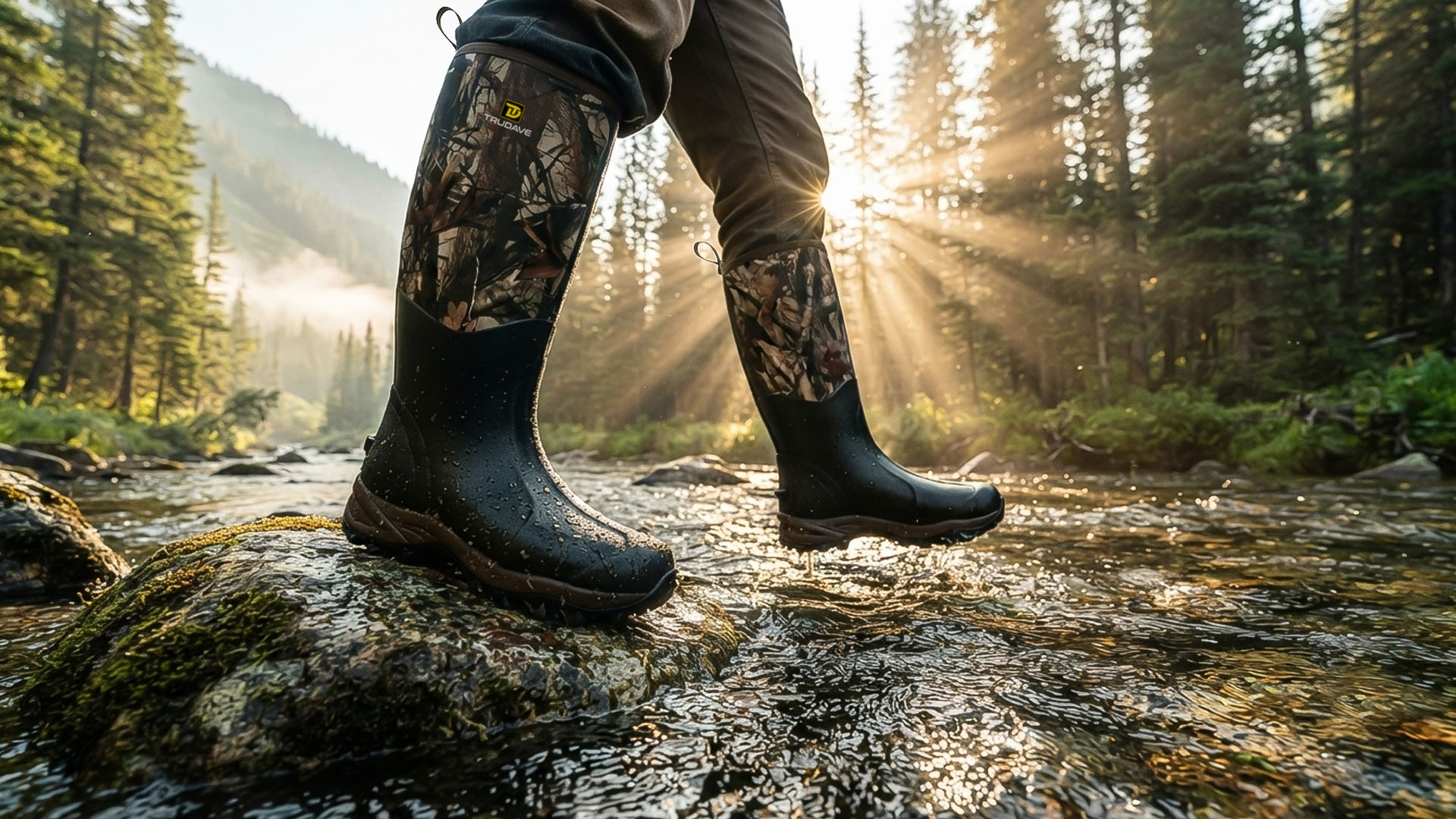
When wet access is a regular part of your hunting strategy, waterproof hunting boots for wet creek-bottom access can help keep mud, shallow water, and saturated vegetation from shortening the hunt before you reach your setup.
Footwear does not solve bad wind strategy.
But reliable equipment allows hunters to use effective access routes when terrain becomes wet.
Thermals Can Carry Scent Farther Than Expected
Hunters often imagine scent moving in a straight line.
Real air movement is three-dimensional.
Rising thermals can lift scent above ground level.
Falling thermals can pull it into drainages.
Terrain can concentrate scent.
A deer may detect a hunter without ever crossing the exact path used to enter the woods.
This is why hunters sometimes get winded by deer located in unexpected places.
Study the terrain.
Think about air movement vertically.
Not just horizontally.
Strong Wind Can Overpower Thermal Movement
Thermals are not equally important every day.
Strong general winds can dominate local air movement.
A steady 15-mile-per-hour wind may reduce the influence of weak thermals.
Calm conditions make thermals more noticeable.
This is why low-wind mornings and evenings can create difficult hunting situations.
The forecast may show a consistent wind direction.
On the ground, air movement can become unstable.
Hunters should adjust based on actual conditions.
Cloud Cover Can Delay Thermal Changes
Sunlight warms the ground.
Cloud cover reduces that warming.
On overcast mornings, rising thermals may develop more slowly.
In the evening, cloud cover can also affect how quickly temperatures fall.
Weather conditions influence timing.
Do not follow rigid rules such as:
“Thermals always rise at 8 a.m.”
They do not.
Observe temperature changes and actual air movement.
South-Facing and North-Facing Slopes Behave Differently
Sun exposure affects terrain temperature.
In the Northern Hemisphere, south-facing slopes generally receive more direct sunlight.
They may warm earlier.
North-facing slopes may remain cooler longer.
This can affect thermal development.
Vegetation also matters.
Open slopes warm faster than heavily shaded timber.
A hunter positioned between different terrain exposures may experience complicated air movement.
Use wind indicators.
Learn the specific property.
Water Can Influence Local Temperatures
Large creeks, rivers, lakes, and wetlands can affect nearby air movement.
Water changes temperature more slowly than land.
This can create temperature differences between the water surface and surrounding terrain.
Hunters near major water features should pay attention to local conditions.
Do not assume standard morning and evening thermal patterns always apply.
Observe.
Record what happens.
Use experience from repeated hunts.
Thermals Can Help You Access Bedding Areas
Thermals are not only a problem.
They can create opportunities.
Suppose deer bed on the upper third of a ridge.
A hunter approaching from below during stable falling thermals may keep scent moving downhill.
Later, as temperatures rise, the situation changes.
Timing becomes important.
Some locations may only be huntable during specific thermal windows.
Understanding these windows can help hunters get closer to bedding cover without being detected.
Do Not Stay Too Long When Conditions Change
Hunters often become attached to a setup.
The wind was good when they arrived.
Deer sign is strong.
The stand feels perfect.
Then thermals change.
Scent begins moving toward bedding cover.
The hunter stays.
That decision can educate deer even if no animals appear.
Know when to leave.
Protect the location.
One extra hour is not always worth contaminating an area you plan to hunt again.
Use Terrain to Predict Scent Movement
Topographic maps can help identify:
- Ridges
- Valleys
- Drainages
- Saddles
- Creek bottoms
- Benches
- Points
Before hunting, study how air may move through these features.
Then verify your prediction on the ground.
Mapping applications provide useful information.
They do not replace field observation.
Every property behaves differently.
Record Wind and Thermal Behavior
Keep notes.
After each hunt, record:
- Forecast wind
- Actual wind
- Temperature
- Cloud cover
- Time thermals changed
- Wind behavior near the stand
- Deer movement
- Deer reactions
Patterns may appear over time.
You may discover that a creek-bottom stand only works with stronger winds.
Another location may become huntable during a short morning thermal transition.
Experience becomes more useful when you record it.
Common Thermal Hunting Mistakes
Trusting the Weather App Completely
Forecasts describe general wind conditions.
Local terrain can create different air movement.
Checking the Wind Only Once
Thermals change throughout the hunt.
Test conditions regularly.
Ignoring Vertical Scent Movement
Air rises and falls.
Think in three dimensions.
Hunting Too Close to Bedding Areas During Unstable Conditions
Swirling wind and changing thermals can expose your presence.
Give yourself more margin.
Forgetting About Access
Your scent can reach deer before you reach the stand.
Plan the complete route.
Staying After Conditions Become Wrong
Protect good locations.
Leave when air movement begins carrying scent toward deer.
Assuming Thermals Behave the Same Every Day
Wind, clouds, temperature, vegetation, and water affect local conditions.
Observe what is actually happening.
Frequently Asked Questions
What are thermals in deer hunting?
Thermals are air currents created by temperature differences.
Warm air generally rises, while cool air sinks.
These movements can carry human scent uphill, downhill, or into low terrain.
Do thermals rise in the morning?
Morning thermals often begin rising as sunlight warms the ground.
The timing depends on weather, terrain, vegetation, and cloud cover.
Do thermals fall in the evening?
As the ground cools, denser air often moves downhill and settles into lower terrain.
This can carry scent toward valleys, creek bottoms, and drainages.
Are creek bottoms bad places to hunt because of thermals?
Not necessarily.
Creek bottoms can provide excellent deer habitat and access routes.
However, local air movement may be complicated.
Hunters should monitor actual conditions.
How do you check thermals while deer hunting?
Use lightweight wind indicators such as milkweed seeds, powder, or other materials that allow you to observe air movement.
Check repeatedly throughout the hunt.
Can thermals override the wind direction?
Local thermal currents can influence scent movement, particularly during calm conditions.
Strong general winds may overpower weaker thermal movement.
Final Thoughts
The wind can be right and your scent can still reach deer.
That is the lesson thermals teach.
Morning air rises.
Evening air falls.
Creek bottoms collect cold air.
Sunlight warms different slopes at different speeds.
Cloud cover changes timing.
Water influences local temperatures.
Terrain channels airflow.
Whitetail hunters who ignore these factors are relying on an incomplete picture of scent movement.
Check the forecast.
Then check the actual air.
Study terrain.
Monitor thermals throughout the hunt.
Plan access routes based on where deer are likely to be before you arrive.
And leave when conditions begin working against you.
You cannot control the wind.
But the more you understand how air moves through the terrain you hunt, the fewer times you will be surprised when a deer detects you from a direction you thought was safe.
