
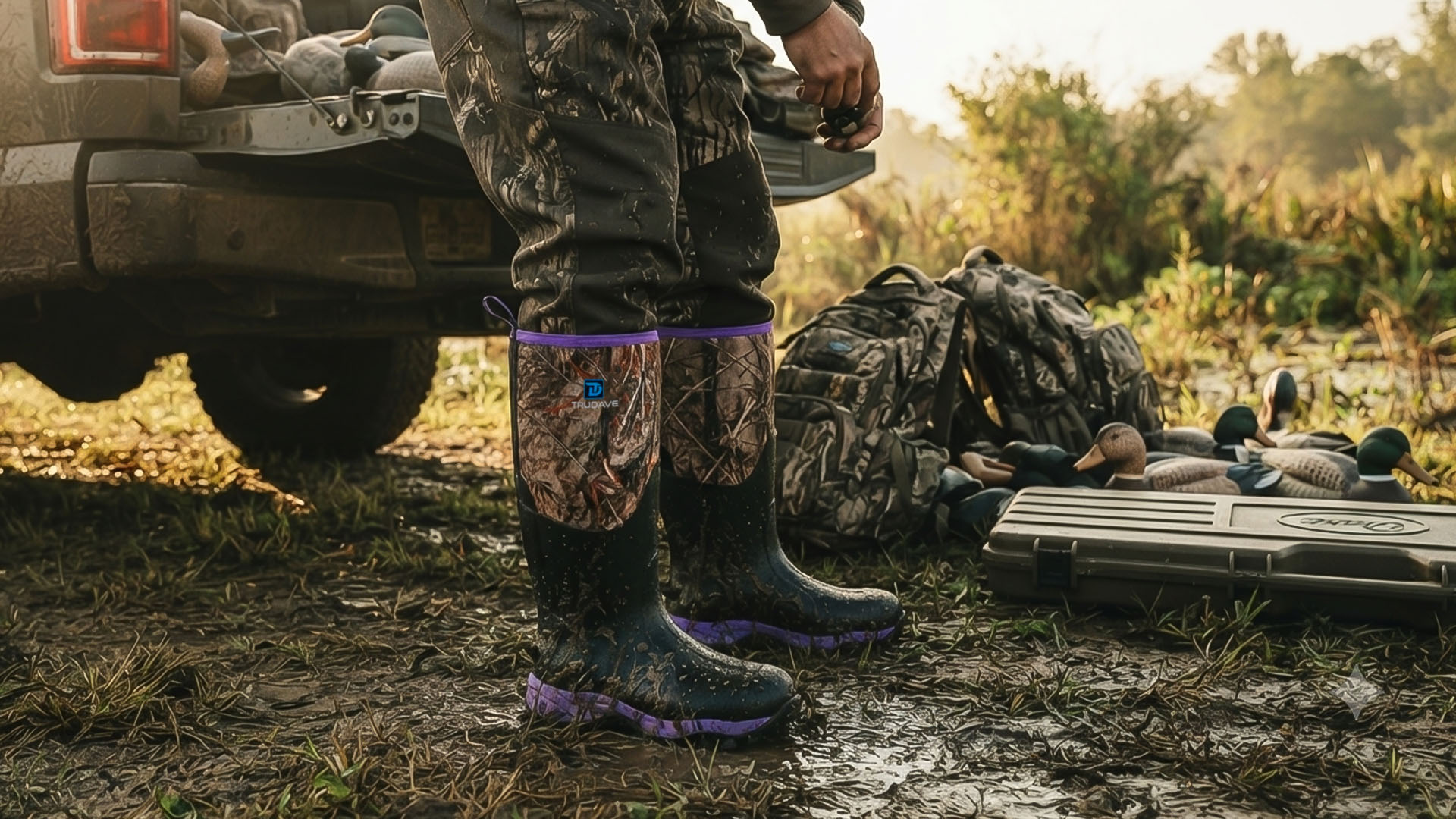
At daylight, the logging road is frozen solid.
Every rut is hard enough to support your weight. Mud from yesterday has turned into uneven ridges, and shallow puddles are covered with a thin layer of ice.
Walking is easy.
Six hours later, everything changes.
The temperature climbs above freezing. Sunlight reaches the road. Ice disappears from the puddles, and the ground that felt solid during the morning becomes deep, sticky mud.
Your boots collect another layer of clay with every step.
By the time you start walking back to the truck, the temperature is dropping again.
Wet mud begins to stiffen.
Water freezes around the edges of the outsole.
Traction changes.
Your feet are damp from sweat, the ground is getting colder, and the same pair of boots has been exposed to frozen soil, standing water, mud, and falling temperatures in a single day.
These are freeze-thaw conditions.
They are common during late hunting seasons across much of the United States, and they create one of the most difficult environments for hunting footwear.
The problem is not simply cold.
It is constant change.
What Are Freeze-Thaw Conditions?
Freeze-thaw conditions occur when temperatures repeatedly move above and below 32 degrees Fahrenheit.
During the coldest part of the day, water in the ground freezes.
Mud becomes firm.
Puddles develop ice.
Wet vegetation can become stiff.
Then temperatures rise.
Frozen soil softens.
Ice melts.
Water collects in low areas.
Trails become muddy.
Later, temperatures fall again and the process repeats.
Hunters may experience several freeze-thaw cycles during a week.
Sometimes the entire cycle happens during one hunt.
This creates footwear challenges that do not exist during consistently cold or consistently warm weather.
Frozen Ground Can Be More Difficult Than Snow
Snow is obvious.
Hunters expect it.
They prepare for cold temperatures, moisture, and traction problems.
Frozen mud can be less predictable.
A logging road may look dry.
But the surface can contain uneven frozen ruts.
Leaves may hide ice.
Shallow puddles can freeze overnight.
Creek banks become slippery.
Hard ground increases impact on your feet during long walks.
Boots with soft, flexible outsoles may feel different when temperatures drop.
Traction that worked well in soft mud may not perform the same way on frozen ground.
Late-season hunters need to prepare for changing surfaces.
Mud Becomes Heavier During the Thaw
When temperatures rise, frozen ground begins to soften.
The result is often thick mud.
Clay soils can be particularly difficult.
Mud fills outsole tread.
Every step adds weight.
Deep mud creates suction around the boot.
Walking becomes slower.
A boot that felt lightweight during the morning can become noticeably heavier after collecting mud.
Hunters should pay attention to outsole design.
Deep tread can provide useful traction.
But some patterns hold mud more easily than others.
No outsole completely eliminates the problem.
When possible, use firm ground, vegetation, gravel, and higher terrain to reduce unnecessary travel through deep mud.
Waterproofing Matters During Temperature Changes
Late-season hunters often focus on insulation.
That makes sense.
Cold feet can end a hunt.
But freeze-thaw conditions create significant moisture problems.
Melting frost.
Standing water.
Wet snow.
Mud.
Creek crossings.
Water moving through previously frozen ground.
All of these conditions can expose footwear to moisture.
Once socks and boot linings become wet, staying warm becomes more difficult.
Hunters who regularly encounter these changing conditions should prioritize waterproof hunting boots built for cold, wet ground that provide protection from outside moisture while remaining appropriate for their activity level and hunting temperatures.
Waterproofing is only part of the system.
Sock choice, insulation, fit, and moisture management still matter.
Too Much Insulation Can Still Cause Problems
It is cold outside.
That does not automatically mean you need the maximum insulation available.
Activity level matters.
A hunter walking three miles through hills produces more heat than a hunter sitting in a blind near the truck.
Heavy insulation during a long approach can cause feet to sweat.
Then the hunter stops moving.
Temperatures fall.
Moisture trapped inside the boot begins to feel cold.
This creates a common late-season problem.
The boots are waterproof.
The weather is cold.
But the hunter still has wet feet.
The moisture came from inside.
Choose insulation based on the combination of temperature and activity.
Use a Sock System That Matches Your Hunt
Socks are part of hunting footwear.
They should not be an afterthought.
Avoid cotton.
Cotton absorbs moisture and dries slowly.
Wool and synthetic hunting socks are common options because they can manage moisture more effectively.
Some hunters use a liner sock beneath a heavier hunting sock.
Others prefer one appropriately weighted sock.
The correct system depends on:
- Boot fit
- Temperature
- Walking distance
- Sweat levels
- Personal preference
Do not wear socks so thick that the boot becomes tight.
Compressed insulation and restricted movement can reduce comfort.
Test your sock system before a long hunt.
Carry Dry Socks
A spare pair of socks is one of the simplest late-season gear upgrades.
Store them in a waterproof bag.
If your feet become wet from sweat, water entering the boot, or an unexpected creek crossing, change socks when conditions allow.
Dry socks can improve comfort and reduce the risk of cold-related foot problems.
They are especially useful during all-day sits and multi-day hunts.
The weight penalty is minimal.
Watch for Ice Under Leaves
Thin ice is difficult to see.
Leaves can hide frozen puddles.
Frost can make roots slippery.
Wooden bridges and logs may develop ice.
Slow down.
Use shorter steps.
Test uncertain surfaces.
Consider carrying trekking poles when traveling through steep or icy terrain.
A fall with a loaded hunting pack or firearm can create a serious situation.
Traction is not only about outsole design.
Safe movement requires attention.
Mud Can Pull Loose Boots Off Your Feet
Deep mud creates suction.
Pull-on rubber hunting boots are especially dependent on correct fit in these conditions.
If the heel is too loose, the boot may remain stuck while your foot begins to pull out.
Move carefully.
Avoid forcing the foot straight upward.
Shift the boot slightly to break the suction.
Then step forward.
Secure heel retention becomes important when crossing deep mud repeatedly.
Plan Different Access Routes for Morning and Evening
A route that works before daylight may be difficult later.
Frozen trails can become muddy.
Shallow water may rise as snow and ice melt.
Creek banks may soften.
Steep slopes can become slippery.
Consider how temperature changes will affect your exit.
If possible, identify alternative routes.
A ridge may provide better evening access than a creek bottom.
A gravel road may become preferable to a muddy logging trail.
Good access planning considers the entire hunt.
Not just the walk in.
Do Not Leave Wet Boots in the Truck Overnight
After a cold, muddy hunt, it is tempting to remove your boots and forget about them.
That can create problems.
Moisture remains inside.
Mud freezes.
Boots become difficult to put on the next morning.
Repeated freezing and thawing can also be hard on certain materials.
Clean heavy mud.
Remove the insoles if possible.
Dry the boots using appropriate airflow and moderate temperatures.
Do not place them directly against a heater or open flame.
Prepare footwear for the next hunt before going to bed.
Dry Boots Without Damaging Them
High heat can damage hunting footwear.
Avoid placing boots directly beside:
- Fireplaces
- Wood stoves
- Space heaters
- Radiators
- Open flames
Excessive heat can damage rubber, foam, adhesives, waterproof membranes, and other materials.
Use airflow.
Remove insoles.
Open the boots as much as possible.
Allow enough drying time.
A boot dryer may be useful when compatible with the footwear.
Follow manufacturer care instructions.
Clean Mud From the Outsole
Mud affects traction.
It also adds weight.
During multi-day hunts, clean the outsole after returning from the field.
Use water and a brush.
Remove packed clay from the tread.
Inspect the boot for damage.
Look for:
- Cracks
- Cuts
- Sole separation
- Worn tread
- Damaged seams
- Loose components
Finding a problem at camp is better than discovering it several miles from the truck.
Check the Weather Hour by Hour
Daily high and low temperatures do not tell the entire story.
A forecast showing a low of 25°F and a high of 42°F indicates significant changes.
But when do those temperatures occur?
How long will the ground remain frozen?
Is rain expected during the thaw?
Will wind increase in the afternoon?
Is the temperature dropping quickly after sunset?
Use hourly forecasts.
Plan footwear, clothing, and access based on the conditions you will actually experience.
Adjust Walking Speed
Late-season hunters often make one of two mistakes.
They walk too fast and sweat.
Or they move too slowly and become cold.
Find a sustainable pace.
Open clothing layers during long climbs.
Vent heat.
Avoid soaking your base layers and socks with sweat.
Before reaching your hunting location, slow down.
Allow your body temperature to stabilize.
Add layers before you become cold.
Footwear is part of a larger moisture-management system.
Use Gaiters When Conditions Make Sense
Gaiters can provide additional protection from:
- Snow
- Mud
- Wet vegetation
- Debris
They can help prevent moisture and dirt from entering the top of certain boots.
However, gaiters also add another layer around the lower legs.
Consider temperature and activity level.
Equipment should solve a real problem.
Not simply add complexity.
Common Freeze-Thaw Hunting Boot Mistakes
Choosing Boots Only for Cold Temperatures
Moisture, mud, and changing ground conditions matter too.
Wearing Maximum Insulation for Long Walks
Excessive insulation can increase sweating.
Choose based on activity level.
Ignoring the Evening Exit
Morning access conditions may change significantly during the day.
Plan alternative routes.
Leaving Mud on Boots Overnight
Frozen mud can make footwear difficult to use and inspect.
Clean boots after the hunt.
Drying Boots With Extreme Heat
High temperatures can damage materials.
Use controlled airflow.
Wearing Cotton Socks
Cotton holds moisture and dries slowly.
Choose socks designed for outdoor activity.
Assuming Waterproof Boots Guarantee Dry Feet
Sweat can create significant internal moisture.
Manage heat and activity.
Frequently Asked Questions
What boots are best for freeze-thaw hunting conditions?
The best boots depend on temperature, activity level, terrain, and moisture.
Hunters should prioritize appropriate waterproofing, reliable traction, secure fit, suitable insulation, and comfort for expected walking distances.
Are rubber hunting boots good in frozen mud?
Rubber hunting boots can provide useful waterproof protection.
Hunters should evaluate traction, insulation, fit, and walking comfort for their specific conditions.
How do you keep feet warm and dry during late-season hunts?
Use properly fitted waterproof footwear, appropriate insulation, moisture-managing socks, controlled walking pace, and dry replacement socks when necessary.
Can hunting boots freeze overnight?
Wet boots and mud can freeze when left in cold vehicles, garages, or camps.
Clean and dry footwear after hunting whenever possible.
Should you wear heavily insulated boots for late-season hunting?
Not always.
Hunters who remain stationary in extreme cold may benefit from heavy insulation.
Mobile hunters may need less insulation to reduce sweating during long walks.
How do you improve traction on frozen hunting ground?
Choose footwear with appropriate outsole traction, walk carefully, use shorter steps, avoid hidden ice, and consider trekking poles or traction devices when conditions require them.
Final Thoughts
Freeze-thaw conditions expose weaknesses in hunting footwear.
The ground changes.
Frozen trails become mud.
Mud becomes water.
Water freezes again.
Traction changes.
Temperatures change.
Moisture comes from both outside the boot and inside it.
The right late-season footwear must handle more than cold.
It needs to protect against water, provide reliable traction, fit securely in deep mud, and match the hunter’s activity level.
Choose insulation carefully.
Manage sweat.
Carry dry socks.
Watch hourly weather changes.
Plan more than one access route.
Clean and dry your boots after the hunt.
Late-season conditions are rarely consistent.
Your footwear strategy should not be either.
