
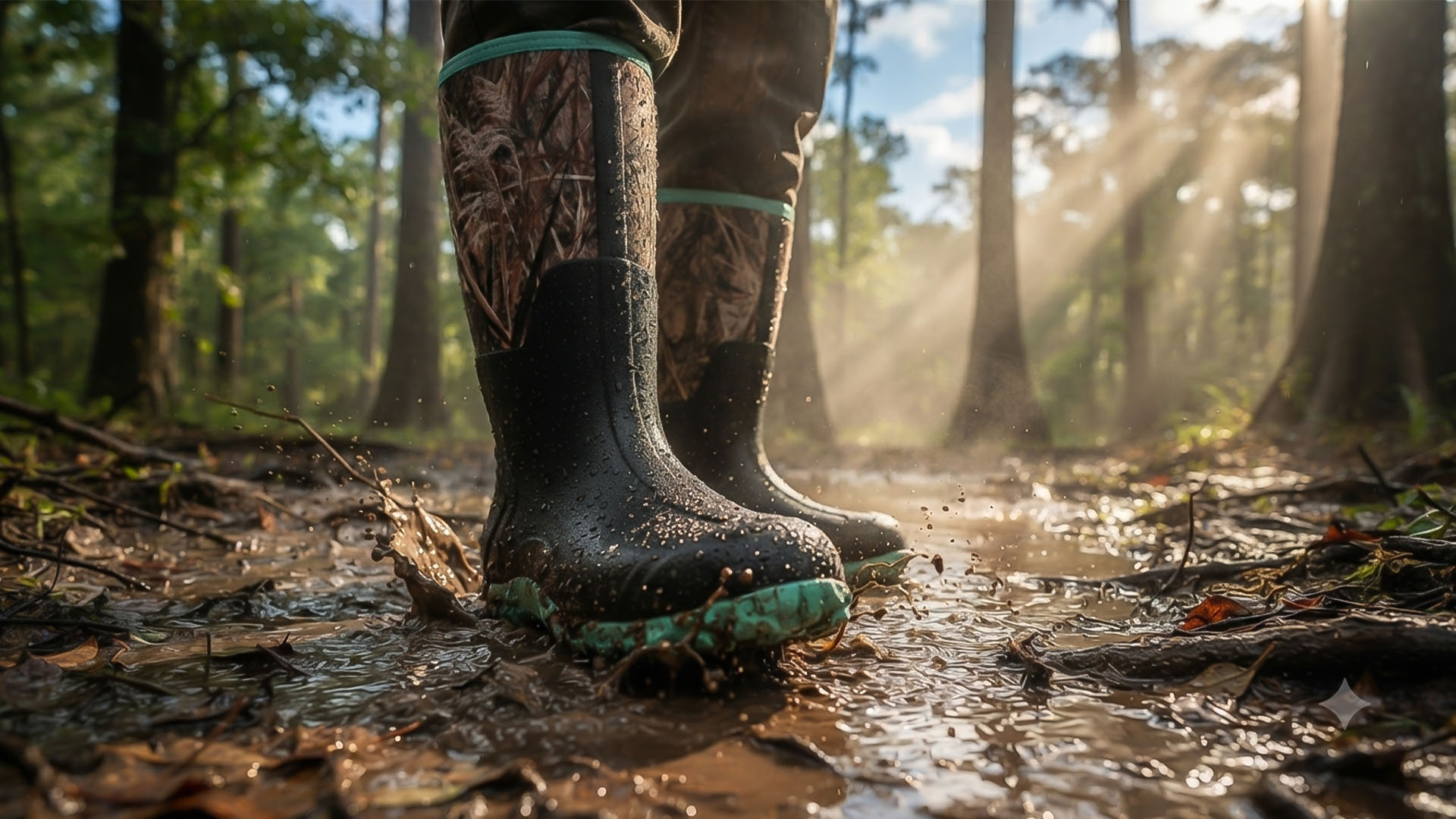
The boots felt fine in the store.
You wore your hunting socks.
Walked around for ten minutes.
Checked the toe room.
Nothing hurt.
Then hunting season started.
The first mile was comfortable. The climb to the ridge caused no problems.
But on the way down, your feet began sliding forward.
Every steep section pushed your toes into the front of the boots.
By the time you reached the truck, your toenails were sore, the front of your feet hurt, and you were already thinking about buying a different pair.
This is a common hunting boot problem.
And buying a larger size does not always fix it.
When your toes hit the front of hunting boots during downhill walking, the real cause may involve boot length, heel retention, lacing, sock thickness, foot volume, or the shape of the boot.
Understanding the difference can save your feet and prevent you from replacing boots that may simply need a better fit.
Why Do Feet Slide Forward in Hunting Boots?
Walking downhill changes how your feet interact with footwear.
Gravity pushes your body forward.
Your feet naturally move toward the front of the boot.
A properly fitted hunting boot limits that movement.
Your heel remains secure.
The midfoot stays stable.
Your toes have enough room to avoid hitting the front.
When the fit is wrong, the foot slides.
Even a small amount of repeated movement can become painful over several miles.
The most common causes include:
- Boots that are too large
- Boots that are too short
- Poor heel retention
- Loose lacing
- Incorrect sock thickness
- Insoles that do not stabilize the foot
- A boot shape that does not match your foot
- Excessive internal volume
The solution depends on identifying which problem you actually have.
Bigger Hunting Boots Can Make the Problem Worse
Many hunters assume toe pressure means the boot is too small.
Sometimes that is correct.
But if the boot is too large, your entire foot may slide forward during descents.
The extra space becomes a problem.
Your heel lifts.
Your foot moves.
Your toes repeatedly hit the front.
Buying an even larger size creates more movement.
This is why hunting boots should not be sized based only on toe room.
Heel retention and overall foot stability matter just as much.
Check Your Toe Room While Standing
Start with basic boot length.
Put on the socks you plan to wear while hunting.
Lace the boots correctly.
Stand normally.
Your toes should not touch the front of the boot.
There should be enough space for natural foot expansion during long walks.
But excessive room is not automatically better.
A boot that is much longer than your foot can create instability.
The goal is functional space.
Not maximum space.
Test the Boots on a Downhill Surface
Walking across a flat store floor is not enough.
Hunting terrain is rarely flat.
If possible, test footwear on an incline.
Some outdoor retailers provide artificial ramps for this purpose.
Walk uphill.
Then downhill.
Pay attention to what happens.
Do your heels lift?
Do your feet slide forward?
Do your toes contact the front?
Does the boot bend naturally?
Does the ankle feel secure?
A boot that feels comfortable on flat ground may perform very differently on steep terrain.
Heel Retention Is Critical
Your heel should remain relatively stable inside the boot.
A small amount of movement may occur depending on the footwear design.
Excessive heel lift is a warning sign.
When the heel moves upward, the entire foot becomes less stable.
During downhill walking, that instability allows the foot to slide forward.
Heel movement can also create friction and blisters.
Several factors affect heel retention:
- Boot shape
- Lacing
- Insole thickness
- Sock thickness
- Foot volume
- Boot size
Do not ignore heel movement because the toe box feels comfortable.
A secure heel is one of the most important parts of hunting boot fit.
Learn to Use Your Laces
Hunters often lace boots the same way every time.
That can be a mistake.
Different lacing techniques can change how the boot holds your foot.
For downhill terrain, the goal is often to secure the heel and midfoot without creating excessive pressure over the toes.
Heel-lock or surgeon’s-knot lacing methods may help reduce forward movement in certain lace-up boots.
The exact technique depends on the boot design.
Do not overtighten the entire boot.
Excessive pressure can create discomfort, reduce circulation, and cause numbness.
Adjust different sections of the lacing system based on where additional support is needed.
Rubber Hunting Boots Create a Different Fit Challenge
Pull-on rubber boots do not use traditional laces.
That means hunters have fewer options for adjusting fit.
Heel retention depends heavily on:
- Boot shape
- Correct sizing
- Internal construction
- Insole choice
- Sock thickness
If a rubber boot is too loose, the foot may move excessively.
If it is too tight, thick socks can create pressure and reduce comfort.
Hunters buying pull-on hunting boots should pay close attention to manufacturer sizing information and test the boots with realistic hunting socks.
Socks Change the Fit of Hunting Boots
The same boot can fit differently with different socks.
A thick winter sock takes up more internal volume.
A thin early-season sock takes up less.
If you buy boots while wearing thin casual socks and later use heavy hunting socks, the fit may become too tight.
If you size boots for thick socks but wear thin socks during early season, your feet may move more.
Test footwear with the sock system you actually plan to use.
Hunters who use different sock thicknesses throughout the season should consider whether one pair of boots can comfortably handle all conditions.
Sometimes separate early-season and late-season footwear makes more sense.
Insoles Can Affect Forward Movement
Factory insoles vary significantly.
Some provide minimal structure.
Others offer more support.
An insole that stabilizes the heel and arch may reduce excessive foot movement.
However, thicker insoles also reduce internal boot volume.
That can create pressure if the boot already fits tightly.
Do not automatically replace the insole with the thickest option available.
Evaluate how the change affects:
- Heel position
- Arch comfort
- Toe room
- Overall volume
- Walking stability
The best insole is the one that improves fit without creating new problems.
Your Feet Swell During Long Hunts
Foot size is not completely constant.
Walking, heat, and long hours on your feet can cause swelling.
Boots that fit perfectly early in the morning may feel tighter later.
This is another reason to leave appropriate toe room.
Try boots later in the day when possible.
Your feet may be slightly larger than they are first thing in the morning.
Hunters who cover long distances should be particularly careful about buying boots that barely fit in the store.
Downhill Terrain Punishes Poor Fit
Flat ground can hide footwear problems.
Steep descents reveal them.
Every step pushes your body weight forward.
If the boot does not hold your foot securely, your toes absorb repeated impact.
Over time, this can lead to:
- Sore toes
- Blisters
- Damaged toenails
- Bruising
- Hot spots
- Reduced walking efficiency
Hunters who regularly cover hills, ridges, rocky slopes, and uneven ground should prioritize secure fit when choosing hunting boots designed for long days in rough terrain.
Waterproofing and insulation matter.
But a boot that does not control foot movement can become painful long before weather protection becomes relevant.
Trim Your Toenails Before Long Hunts
This is simple and often overlooked.
Long toenails increase the chance of contact with the front of the boot.
Repeated downhill impact can create pain and bruising.
Keep toenails trimmed.
Do not cut them excessively short immediately before a hunt.
Maintain them regularly.
Basic foot care can prevent problems that expensive equipment cannot fix.
Do Not Ignore the Width of the Boot
Boot length receives most of the attention.
Width matters too.
A boot that is too narrow can compress the foot.
A boot that is too wide can allow excessive side-to-side movement.
Foot shape varies.
Some hunters have narrow heels and wide forefeet.
Others have high-volume feet.
A boot built on the wrong last shape may never fit correctly, regardless of size.
Try different models.
Do not remain loyal to a boot that does not match your foot.
Break Boots In Before the Season
New boots should be tested before a serious hunt.
Wear them during:
- Preseason scouting
- Short hikes
- Yard work
- Training walks
- Trail camera checks
Gradually increase distance.
Pay attention to pressure points.
Test downhill movement.
Adjust lacing.
Try different socks if necessary.
Opening morning should not be the first time you walk several miles in new hunting footwear.
Carry Blister Treatment
Even well-fitted boots can create problems during long hunts.
Moisture, heat, steep terrain, and unusual walking distances increase friction.
Carry basic foot-care supplies.
Useful items may include:
- Blister bandages
- Athletic tape
- Moleskin
- Antiseptic wipes
- Spare socks
Treat hot spots early.
Do not wait until the skin is badly damaged.
A two-minute stop can prevent several painful miles later.
Change Socks When They Become Wet
Wet socks increase friction.
That can make poor fit even more noticeable.
If your feet sweat heavily or water enters the boots, change into dry socks when possible.
Carry spare socks in waterproof storage.
This is particularly useful during multi-day hunts and long-distance public land hunts.
Common Hunting Boot Fit Mistakes
Buying Boots Too Large for Extra Sock Space
Excessive room allows the foot to slide.
Choose boots that fit correctly with the socks you actually wear.
Testing Boots Only on Flat Ground
Use an incline when possible.
Downhill walking reveals forward movement.
Ignoring Heel Lift
A comfortable toe box does not compensate for an unstable heel.
Overtightening the Entire Boot
More pressure is not always more support.
Adjust lacing strategically.
Assuming Insoles Fix Every Problem
Insoles can improve fit.
They cannot correct a boot shape that is fundamentally wrong for your foot.
Wearing the Wrong Socks
Sock thickness changes internal boot volume and foot movement.
Waiting Until Hunting Season to Break In Boots
Test footwear before opening day.
Frequently Asked Questions
How much room should be in the toe of hunting boots?
There should be enough room to prevent your toes from touching the front during normal walking and downhill movement.
The exact amount depends on foot shape, sock thickness, boot design, and expected swelling.
Why do my toes hurt when walking downhill in hunting boots?
Your feet may be sliding forward because of poor heel retention, incorrect sizing, loose lacing, excessive boot volume, or a boot shape that does not match your foot.
Should hunting boots be a size bigger?
Not automatically.
Some hunters size up to accommodate thick socks, but buying boots too large can increase foot movement and cause blisters or toe impact.
Always test boots with realistic hunting socks.
How do you stop your feet from sliding forward in boots?
Check sizing, improve heel retention, adjust lacing, use appropriate socks, and evaluate whether different insoles improve stability.
If the boot shape does not match your foot, a different model may be necessary.
Should your heel move in hunting boots?
A small amount of movement may occur depending on the boot design.
Excessive heel lift can create friction, blisters, and forward foot movement.
Can thick socks make hunting boots fit better?
Sometimes.
Thicker socks reduce internal volume.
However, they can also create excessive pressure, heat, and moisture.
Use socks appropriate for the weather and boot fit.
Final Thoughts
If your toes hit the front of your hunting boots during downhill walks, do not immediately assume you need a larger size.
The problem may be too much space.
Your heel may be moving.
Your laces may not be securing the midfoot.
Your socks may be changing the fit.
The boot shape may simply be wrong for your foot.
Test hunting boots on realistic terrain.
Pay attention to heel retention.
Use the socks you actually hunt in.
Leave enough room for foot swelling.
Break footwear in before the season.
And treat hot spots before they become blisters.
Hunting boots are supposed to help you cover difficult ground.
If every downhill section ends with sore toes and damaged toenails, something about the fit needs to change.
Fix it before the next long walk back to the truck.
