
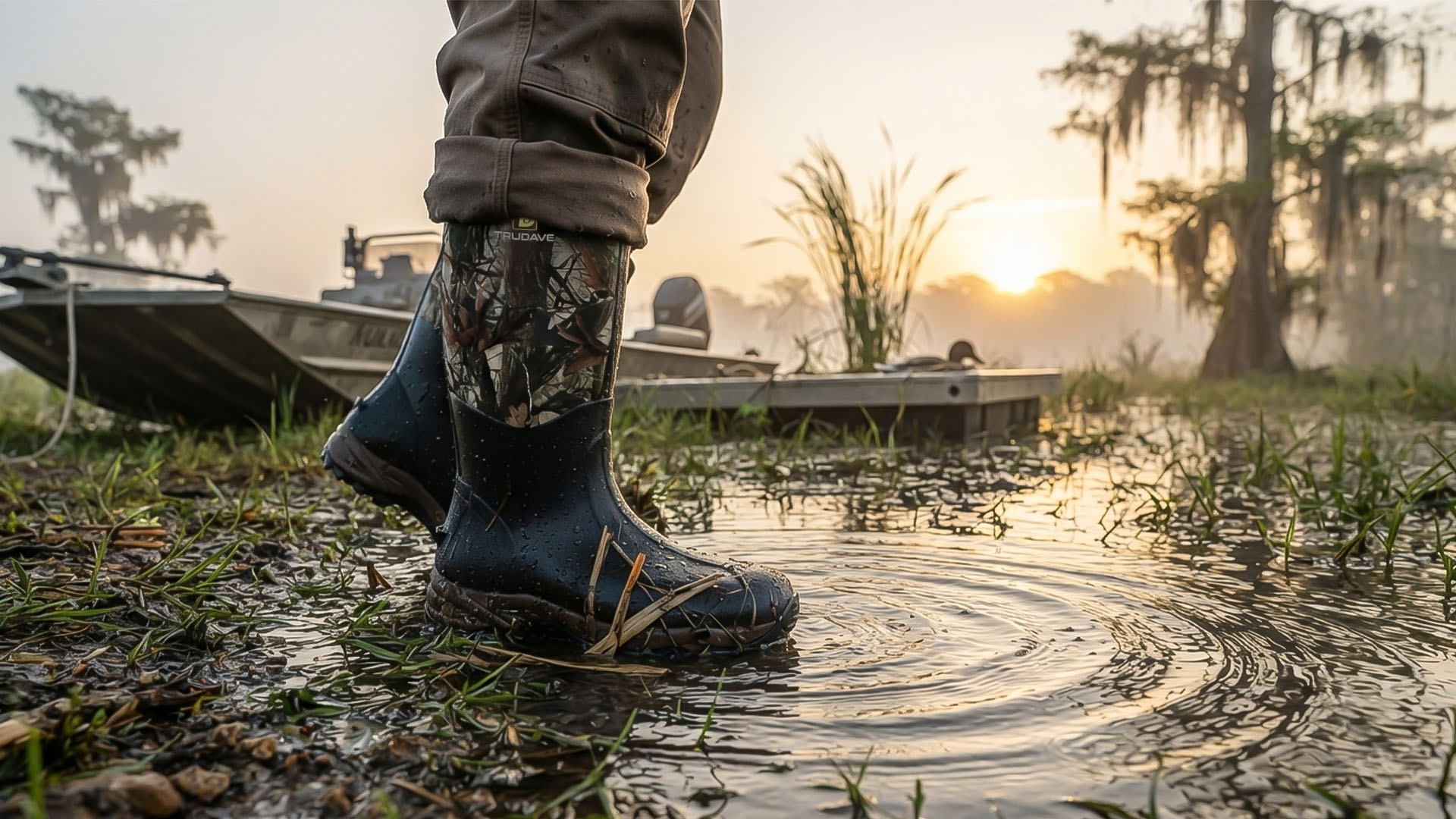
The outsole looks aggressive.
Deep lugs.
Wide channels.
Sharp edges.
A tread pattern that looks like it belongs on an off-road tire.
Then you walk 200 yards through sticky clay.
The spaces between the lugs fill with mud.
The boot becomes heavier.
Traction gets worse.
By the time you reach the next hill, the aggressive tread that looked impressive in the store has turned into a smooth layer of packed soil.
This is one of the biggest misunderstandings about hunting boot traction.
Deep lugs can help.
But deeper tread does not automatically mean better performance in every type of mud.
Soil type, lug spacing, outsole shape, rubber compound, walking direction, terrain angle, and the ability of the tread to release mud all affect how well a hunting boot performs.
Hunters who regularly cross wet fields, logging roads, creek bottoms, marsh edges, and muddy public land should understand how outsole design works before choosing footwear based on appearance alone.
Why Hunting Boot Traction Matters
Poor traction creates more than inconvenience.
It increases fatigue.
Every unstable step requires additional effort.
Hunters slow down.
Mud adds weight to the boots.
Steep banks become more difficult.
Sidehills become less predictable.
A fall can damage equipment or cause injury.
Traction also affects hunting strategy.
A hunter who cannot safely use a muddy access route may be forced to approach from a direction that creates more noise or exposes scent to deer.
Reliable footwear expands access options.
Not All Mud Is the Same
The word “mud” describes many different surfaces.
Each creates different traction problems.
Soft Loam
Loose, wet soil may allow aggressive lugs to penetrate and reach firmer ground below.
Deep tread can work well.
Sticky Clay
Clay packs between lugs.
The outsole becomes heavier.
If the tread cannot release the material, traction decreases.
Shallow Surface Mud
A thin layer of mud over hard ground can be extremely slippery.
Deep lugs may not penetrate far enough to create grip.
Marsh Mud
Soft wetland soil can create suction.
Secure boot fit becomes just as important as outsole traction.
Mud Over Rocks
The outsole must deal with two surfaces.
Soft mud requires penetration.
Wet rock requires rubber contact and grip.
No tread pattern performs perfectly everywhere.
What Are Lugs on Hunting Boots?
Lugs are the raised sections of rubber on the outsole.
They contact the ground and create traction.
Lug design includes several variables:
- Depth
- Width
- Shape
- Direction
- Spacing
- Edge design
- Rubber compound
Hunters often focus only on depth.
That is a mistake.
The complete tread pattern determines how the outsole interacts with terrain.
When Deep Lugs Work Well
Deep lugs can be useful when they penetrate soft ground.
Mud, loose soil, snow, and certain wet surfaces may provide enough depth for the tread to dig in.
This can improve traction during:
- Steep climbs
- Muddy logging roads
- Wet fields
- Soft creek banks
- Loose forest soil
But penetration is only useful if the tread can continue working.
If every space fills with packed mud, the outsole loses its original shape.
Why Lug Spacing Matters
Mud needs somewhere to go.
Closely spaced lugs may trap material.
Wider channels can allow mud to move away from the outsole.
This is sometimes called self-cleaning ability.
The term does not mean the boot magically remains clean.
It means the tread pattern is designed to release mud during walking.
Flexing of the outsole can help push material out.
Wide spaces can reduce packing.
The correct design depends on the type of soil.
Sticky Clay Is One of the Hardest Conditions
Clay creates serious footwear problems.
It sticks.
Builds layers.
Adds weight.
Fills tread.
A boot may gain noticeable weight after a short walk.
Hunters in clay-heavy regions should pay attention to how easily an outsole releases mud.
Extremely deep, narrow tread channels may hold clay.
Wider, more open patterns may perform better.
The best way to evaluate a boot is real use in local terrain.
Product photos cannot show everything.
Outsole Flexibility Affects Mud Release
A completely rigid outsole may hold packed mud differently from one that flexes.
As the boot bends during walking, movement can help release material.
Too much flexibility can reduce stability.
Too little flexibility can affect comfort and mud shedding.
The correct balance depends on terrain and hunting style.
Mobile hunters may prioritize different characteristics than hunters walking short distances to fixed stands.
Rubber Compound Matters on Hard Surfaces
Mud is not always deep.
Sometimes the most dangerous condition is a thin layer of wet soil over rock, roots, wood, or hard clay.
In these situations, lug depth may provide limited help.
The rubber compound itself affects grip.
Softer compounds may provide better surface contact in certain conditions.
Harder compounds may offer different durability characteristics.
Outsole design always involves tradeoffs.
Hunters should evaluate the surfaces they encounter most often.
Directional Lugs Can Help on Hills
Some tread patterns use lugs oriented in different directions.
The front of the outsole may provide traction during climbs.
The heel may provide braking during descents.
Side lugs can improve lateral stability.
This matters in hill country.
Walking uphill and downhill creates different forces.
A tread pattern that performs well on flat muddy fields may not provide the same control on steep terrain.
Heel Braking Matters During Descents
Hunters often evaluate traction by walking uphill.
Downhill control is equally important.
A defined heel section can provide braking.
This helps reduce sliding during descents.
However, mud-packed tread can reduce the effectiveness of the heel.
Move carefully.
Use shorter steps.
Do not rely entirely on footwear.
Mud Traction Also Depends on Boot Fit
The best outsole cannot help if your foot moves excessively inside the boot.
Loose heels reduce control.
Feet slide forward.
Ankles work harder.
Deep mud can pull loose boots from your feet.
Hunters should evaluate traction and fit together.
Secure footwear allows the hunter to use the outsole effectively.
Heavy Mud Increases Fatigue
Mud adds weight.
Every step becomes more difficult.
This is especially noticeable during long walks.
Hunters may compensate by changing their stride.
That can increase fatigue in the feet, ankles, knees, and legs.
When possible, stop and remove heavy mud from the outsole.
Use a stick.
Walk through vegetation or shallow water where safe.
Choose firmer ground.
Small decisions reduce energy use over several miles.
Wet Ground Requires More Than Aggressive Tread
Hunters dealing with mud often deal with water too.
Standing water.
Wet grass.
Creeks.
Marsh edges.
Flooded trails.
An aggressive outsole on a boot that allows water inside does not solve the complete problem.
Hunters who regularly travel through these environments should evaluate hunting boots designed for muddy and wet ground based on waterproof protection, outsole performance, secure fit, walking comfort, and expected temperature.
Do not choose footwear based on one feature.
The complete system matters.
Test Boots on the Terrain You Actually Hunt
Store floors are clean.
Hunting terrain is not.
If possible, test footwear during preseason scouting.
Use the boots on:
- Mud
- Hills
- Wet grass
- Creek banks
- Sidehills
- Long walks
Pay attention to:
- Mud packing
- Heel movement
- Downhill control
- Lateral stability
- Weight
- Comfort
Opening day should not be the first real test.
Clean the Tread After Hunting
Packed mud hides damage.
It can remain in the outsole for days.
After wet hunts:
Rinse the boots.
Use a brush or stick to remove packed material.
Inspect the tread.
Look for cuts.
Check for separation.
Allow the boots to dry properly.
Cleaning footwear is also an opportunity to identify problems before the next hunt.
Worn Lugs Reduce Performance
Outsoles do not last forever.
Walking on roads, gravel, rock, and hard surfaces gradually wears tread.
Edges become rounded.
Lugs become shorter.
Traction changes.
Inspect your boots before hunting season.
If the outsole is heavily worn, consider whether replacement is necessary.
A waterproof upper does not compensate for unsafe traction.
Do Not Assume Expensive Boots Have the Best Tread for Your Terrain
Price does not guarantee perfect performance.
A premium mountain hunting boot may be designed for rock and steep terrain.
A rubber boot may be designed for mud and standing water.
A lightweight hunting boot may prioritize walking comfort.
Choose based on conditions.
Not price alone.
Common Hunting Boot Traction Mistakes
Choosing the Deepest Tread Available
Depth is only one part of traction.
Spacing and mud release matter.
Ignoring Local Soil Type
Clay behaves differently from loam and marsh mud.
Testing Boots Only on Flat Ground
Hills and sidehills reveal traction problems.
Ignoring Boot Fit
Loose footwear reduces control.
Allowing Mud to Build Up
Packed tread reduces traction and adds weight.
Wearing Worn-Outsoles
Reduced lug depth and rounded edges affect performance.
Choosing Boots Based on Appearance
Aggressive-looking tread does not guarantee good performance.
Frequently Asked Questions
What hunting boot tread is best for mud?
The best tread depends on soil type and terrain.
Deep lugs can improve penetration in soft ground, while wider spacing may help release sticky mud.
Fit and outsole compound also matter.
Are deeper lugs always better for hunting boots?
No.
Deep lugs may trap mud, increase weight, and provide limited benefit on thin mud over hard surfaces.
What does self-cleaning tread mean?
Self-cleaning tread refers to outsole designs that help release mud during walking through lug spacing, flexing, and channel design.
No outsole remains completely free of mud.
Are rubber hunting boots good for mud?
Rubber hunting boots can provide waterproof protection and effective traction when the outsole is appropriate for the terrain.
Secure fit is important in deep mud.
Why do my hunting boots slip in mud?
Possible causes include packed tread, worn lugs, poor outsole design for the soil type, loose fit, or a slippery hard surface beneath shallow mud.
How do you clean mud from hunting boot tread?
Use water and a brush or stick to remove packed material.
Clean boots after wet hunts and inspect the outsole for wear or damage.
Final Thoughts
Deep lugs look capable.
Sometimes they are.
But hunting boot traction is more complicated than tread depth.
Mud type matters.
Lug spacing matters.
Outsole flexibility matters.
Rubber compound matters.
Terrain angle matters.
Boot fit matters.
A tread pattern that performs well in loose soil may pack with clay.
A mud-focused outsole may feel different on wet rock.
A heavy boot may provide traction but increase fatigue over long distances.
Choose footwear based on the ground you actually hunt.
Test boots before the season.
Pay attention to mud release.
Keep tread clean.
Replace footwear when the outsole becomes excessively worn.
The best hunting boot tread is not the one that looks most aggressive in a product photo.
It is the one that continues providing control after the trail stops being dry.
