
Flooded timber can look perfect almost everywhere.
Oak trunks rise out of dark water.
Leaves float between knees of old trees.
A shallow slough disappears into hardwoods.
Water stretches through the forest farther than a hunter can see.
It feels like ducks could land anywhere.
They usually do not.
A flock of mallards circles above the canopy.
They pass one opening.
Then another.
They disappear behind the trees.
Seconds later they swing back toward one small hole in the flooded woods and drop through the branches.
That is flooded timber hunting.
The challenge is not simply finding water in the woods.
It is finding the part of the flooded woods mallards actually want to use.
Successful hunters learn to connect:
- Water depth
- Food
- Open landing holes
- Timber density
- Wind
- Water movement
- Hunting pressure
- Quiet resting cover
One hundred acres of flooded hardwoods may contain only a few places birds consistently prefer.
Flooded Timber Is More Than Trees Standing in Water
Productive flooded forest usually contains variation.
Look for combinations of:
- Oak flats
- Sloughs
- Natural openings
- Creek channels
- Slightly deeper holes
- Shallow feeding water
Mallards respond to those differences.
Water Depth Matters
A flooded forest may vary from:
- Ankle deep
- Knee deep
- Much deeper channels
within a short distance.
For feeding, shallower water can be especially important where birds can easily reach available food.
Deep Water Is Not Automatically Better
More water does not necessarily mean better mallard habitat.
If birds cannot efficiently reach food, they may use the area differently.
Slightly Deeper Holes Can Still Matter
Deeper pockets may provide:
- Resting water
- Landing space
- Travel corridors
inside shallower timber.
Think About Function
Ask whether an area is being used mainly for:
- Feeding
- Resting
- Travel
- Roosting
The answer changes how you should read the habitat.
Oak Flats Can Be Highly Productive
Bottomland hardwoods containing mast-producing trees may offer natural food after flooding.
Where acorns remain available, mallards may feed extensively.
Not Every Oak Flat Has Equal Food
One area may contain plenty of accessible mast.
Another may have little.
Look for current bird activity and feeding evidence.
Falling Water Can Concentrate Food
As water recedes, available feeding zones may shrink.
Birds may focus on the remaining shallow flats.
Rising Water Can Open New Habitat
Rain or river flooding may cover previously dry forest floor.
That can expose new feeding areas.
Newly Flooded Timber Deserves Scouting
A forest that held few ducks last week may become attractive after water rises.
Mallards can shift quickly.
Flooding Timing Matters
Water arriving during migration can change regional bird distribution dramatically.
Do not rely only on historical locations.
Open Holes Are Important
Mallards need room to enter flooded forest.
A small natural opening can act like a landing pocket.
Not Every Opening Is Good
The best holes often combine:
- Enough room to land
- Nearby food
- Security
- Favorable wind
Bigger Is Not Always Better
A huge opening may feel exposed.
A smaller hole surrounded by timber may offer more security.
Timber Density Changes Bird Comfort
Very dense forest may make entry difficult.
Very open forest may feel less protected.
The best balance varies.
Watch How Birds Enter
Scouting flights can reveal whether mallards prefer:
- Creek corridors
- Wider timber gaps
- Open sloughs
Sloughs Can Function Like Runways
Long narrow water openings through hardwoods can help birds enter and leave.
They may also provide easier hunter access.
Slough Edges Can Hold Food
Where shallow water meets:
- Oak litter
- Grass
- Mud
feeding may concentrate.
Creek Channels Create Structure
Flooded timber often contains old channels or natural drainage lines.
These can influence:
- Water depth
- Travel
- Current
Channels Can Be Much Deeper Than Surrounding Flats
Never assume consistent footing.
Water Movement Matters
Some flooded timber is nearly still.
Other areas experience:
- River current
- Drainage flow
- Changing water levels
These differences affect access and safety.
Current Can Make Wading Dangerous
A flooded forest may look calm around the trees while deeper channels carry moving water.
Use conservative routes.
Never Follow Ducks Into Unsafe Water
A productive hole is not worth a dangerous crossing.
Wind Still Matters Inside Timber
Trees reduce wind at water level.
But wind direction above the canopy influences how birds approach.
Birds Often Need a Usable Entry Route
A mallard trying to descend through branches may adjust several times.
Study which openings work best under different wind.
Crosswinds Can Change Landing Direction
One hole may be perfect with a north wind and awkward with a south wind.
Calm Days Can Be Difficult
Birds may circle longer and inspect the hole closely.
Movement becomes easier for them to detect.
Concealment Matters
Flooded timber provides natural vertical cover.
Hunters still need to minimize:
- Head movement
- Sudden standing
- Bright equipment
Use Tree Trunks Naturally
Large trees can break up the human outline.
But do not damage living trees unnecessarily.
Stay Still When Birds Circle
Mallards looking down through open canopy can detect movement surprisingly well.
Hunting Pressure Changes Mallard Behavior
Birds using heavily hunted timber learn quickly.
They may:
- Circle higher
- Avoid obvious holes
- Shift deeper into quiet areas
- Use timber later in the day
Quiet Timber Can Become More Valuable
Areas requiring more effort to reach may receive less disturbance.
But access difficulty alone does not guarantee birds.
Habitat Comes First
Find:
- Food
- Water depth
- Good entry
- Security
before chasing remoteness.
Scouting From a Distance Helps
Repeatedly walking or boating through the exact hole birds prefer can push them elsewhere.
Observe when possible without disturbing the core area.
Watch Morning Flight Lines
Mallards moving from roost water may reveal which timber systems they prefer.
Evening Movement Helps Too
Birds leaving flooded woods can show:
- Feeding-to-roost direction
- Preferred exits
Follow Repetition
One random flock means little.
Repeated use of the same gap or slough matters much more.
Weather Changes Timber Use
Mallards can respond to:
- Cold fronts
- Rain
- Wind
- Freeze-up
very quickly.
Cold Fronts Can Bring New Birds
Fresh migration may transform a quiet timber system.
Rain Can Expand Flooded Habitat
A small water rise may open:
- New oak flats
- Additional sloughs
- Fresh food
Mallard Hunting After Rain Can Be Excellent
Freshly flooded timber may offer feeding opportunities that did not exist days earlier.
But Rising Water Changes Access
A safe wading route can become deeper quickly.
Rescout.
Falling Water Can Expose Mud
As water leaves, hunters may face:
- Sticky bottoms
- exposed roots
- unstable banks
Freeze-Up Can Concentrate Birds
As shallow wetlands freeze, remaining open water may become more important.
Timber Can Stay Open Longer in Some Conditions
Moving water or overhead canopy may delay freezing locally.
Never assume ice conditions are uniform.
Thin Ice Creates Serious Hazards
Flooded forest ice may be weak around:
- Trees
- Current
- Channels
Never Trust Wildlife Tracks on Ice
Bird or deer movement does not prove human-safe conditions.
Fog Makes Flooded Timber Confusing
Trees repeat visually.
A familiar route can become difficult to follow.
Offline Maps Are Valuable
Download:
- Sloughs
- Property boundaries
- Roads
- waterways
before hunting.
Mark the Access Point
Flooded timber can pull hunters through several similar openings.
Save:
- Boat
- vehicle
- trailhead
location.
Carry a Headlamp
Waterfowl hunts often begin before daylight.
But Scout Routes in Daylight First
Learn:
- deep channels
- logs
- holes
- fence lines
before entering darkness.
Flooded Timber Is Extremely Hard on Footwear
A typical hunt may involve:
- mud
- shallow water
- flooded leaves
- roots
- submerged logs
- creek channels
- slick banks
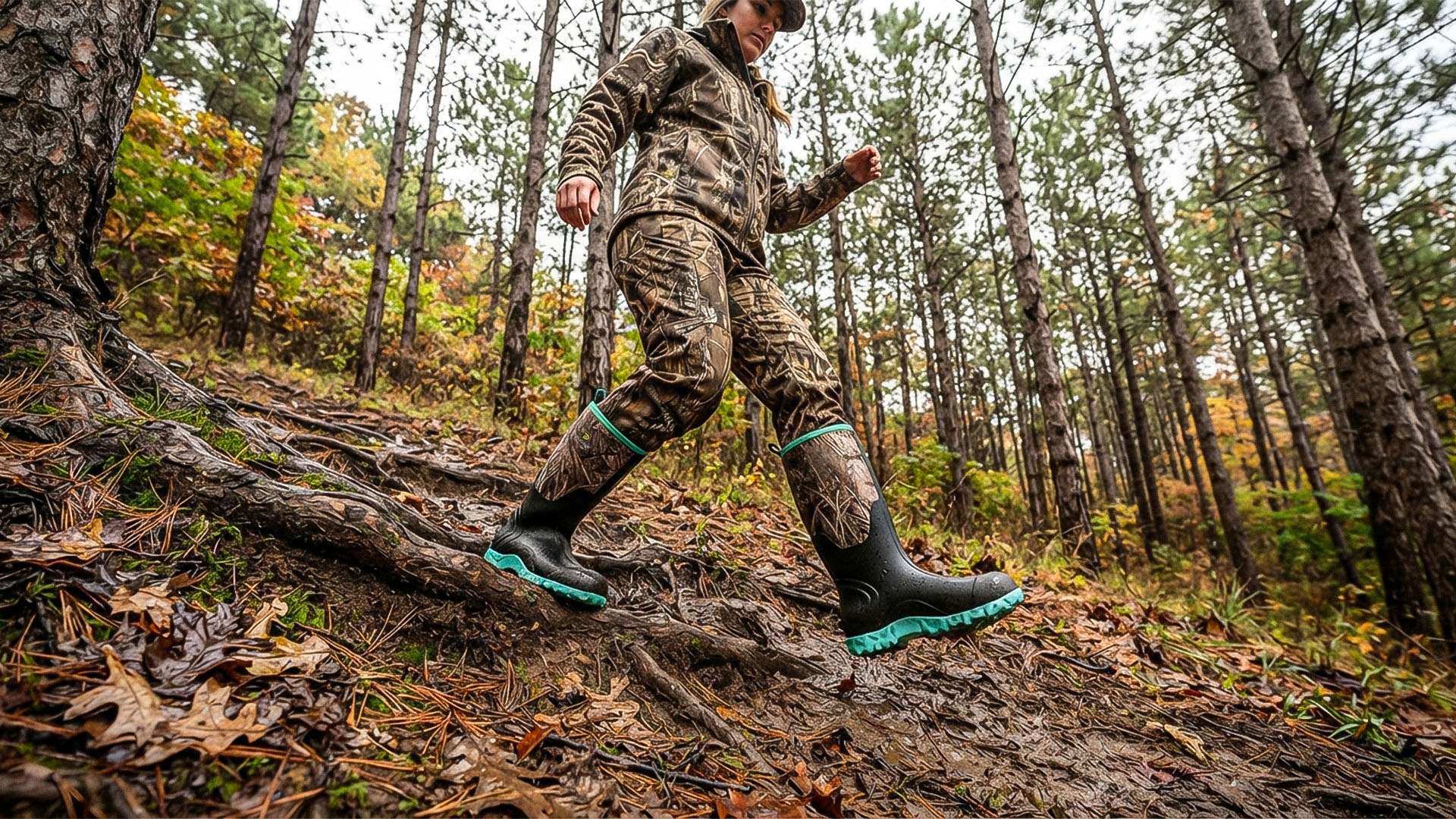
Hunters may benefit from waterproof hunting boots for flooded timber hunting that provide secure heel retention, dependable mud traction, and enough protection for wet bottomland access.
Tall Rubber Boots Can Work in Shallow Timber
Where water remains below boot height, tall waterproof boots offer simple protection.
Boot Height Must Match Reality
A single deeper depression can fill a shorter boot instantly.
Secure Fit Matters
Mud suction can pull at every step.
Loose boots become exhausting.
Rubber Boots Need Good Traction
Smooth soles perform poorly on:
- mud
- wet roots
- boat ramps
Lace-Up Waterproof Boots May Work on Drier Approaches
If most travel is on:
- levees
- roads
- dry hardwood ridges
with limited shallow water, supportive waterproof lace-ups can be more comfortable.
Choose Footwear for the Full Route
Think about:
- parking area
- forest trail
- slough crossing
- hunting location
not only the final setup.
Waders Are Often Useful in Flooded Timber
Where water exceeds normal boot height, properly fitted hunting waders may be necessary.
Waders Do Not Make Flooded Forest Safe
They provide waterproof coverage.
They do not eliminate:
- deep holes
- current
- submerged obstacles
Use a Wading Staff Where Appropriate
A sturdy staff helps test:
- depth
- bottom firmness
- hidden channels
Submerged Logs Are Common
Dark water can hide:
- trunks
- branches
- stumps
Lift Your Feet Deliberately
Dragging steps can catch on hidden wood.
Roots Can Create Tripping Hazards
Flooded oak flats may have uneven ground around tree bases.
Mud Can Trap Boots
Pull slowly and maintain balance.
Do Not Rush Through Water
A falling hunter creates greater risk than a missed flight.
Proper Wader Fit Matters
Loose or oversized gear can reduce walking control.
Follow Manufacturer Guidance
Use waders and belts according to their intended safety instructions.
Deep Water Should Be Avoided
Wading equipment is not a substitute for flotation or swimming safety.
Boats May Be Used in Larger Timber Systems
Where legal and suitable, shallow-draft boats may improve access.
Boat Safety Still Applies in Forest
Trees do not make water harmless.
Wear appropriate flotation equipment.
Hidden Wood Can Damage Boats
Submerged stumps and logs may strike:
- hull
- motor
- propeller
Travel Slowly in Unknown Water
Scout channels first.
Do Not Overload Small Boats
Hunters, dogs, waders, decoys, and gear add weight quickly.
Weight Distribution Matters
Keep the boat balanced.
Cold Water Raises Consequences
A fall during late-season hunting can become serious very quickly.
Dress for Water Exposure
Do not judge risk only by air temperature.
Dogs Can Be Valuable Retrievers
A trained retriever can help locate mallards in:
- flooded grass
- timber
- shallow sloughs
Timber Creates Dog Hazards
Possible problems include:
- submerged logs
- current
- deep channels
- sharp branches
Do Not Send Dogs Into Unsafe Water
A retrieve is not worth an injured dog.
Cold Water Can Chill Dogs Quickly
Monitor:
- shivering
- weakness
- reduced coordination
Give Dogs a Dry Resting Area
Standing on cold wet ground between retrieves increases heat loss.
Carry Fresh Drinking Water
Do not depend on floodwater.
Mud Can Exhaust Dogs
Wading through soft bottom requires substantial effort.
Check Paws
Flooded timber may contain:
- sharp shells
- sticks
- wire
Recovery Can Be Difficult
A downed mallard can disappear behind:
- trees
- grass
- floating debris
Mark Every Bird
Use:
- large tree
- slough bend
- opening edge
as reference.
Keep Watching the Bird
Do not immediately look back toward the next flock.
Current Can Move Downed Birds
Even gentle water movement matters.
Wind Can Push Birds Across Open Holes
Watch both.
Dogs Improve Recovery
A trained retriever can search areas where visibility is limited.
Without a Dog, Search Methodically
Work from the marked fall point.
Ethical Shot Selection Starts With Recovery
If a bird is crossing toward:
- deep channel
- unsafe current
- closed property
consider passing.
Timber Can Hide Other Hunters
Dense trees reduce visibility.
Know partner positions.
Establish Safe Shooting Zones
Before legal shooting time, agree on:
- directions
- tree lanes
- no-shoot areas
Low-Flying Ducks Require Discipline
Birds may move between tree trunks at relatively low height.
Never shoot toward:
- hunters
- dogs
- boats
- roads
Trees Are Not Reliable Backstops
Know what lies beyond the immediate timber.
Private Boundaries Can Be Hard to See
Floodwater can cover:
- fences
- road edges
- markers
Water Does Not Change Ownership
Know exactly where legal access ends.
Public Timber May Have Special Rules
Wildlife management areas can regulate:
- entry times
- boats
- blinds
- hunting days
- permits
Check the Exact Property
Do not rely only on statewide rules.
Flood Conditions Can Trigger Temporary Closures
High water may affect:
- roads
- public areas
- access
Check current property information before hunting.
Mallards Are Migratory Game Birds
Before hunting, verify current official regulations covering:
- season dates
- daily bag limits
- possession limits
- legal shooting hours
- license and stamp requirements
- non-toxic ammunition
- property-specific restrictions
Do Not Use Last Year’s Waterfowl Rules
Migratory bird regulations can change annually.
Mallards May Have Sex-Specific Limits
Some jurisdictions may restrict the number of certain sexes within the daily duck limit.
Check current regulations.
Positive Identification Matters
Flooded timber may contain:
- mallards
- wood ducks
- gadwall
- other waterfowl
depending on region.
Learn Hens as Well as Drakes
Low light and timber shadows make identification harder.
Do Not Identify Only by Green Heads
Not every mallard seen during hunting is an adult drake.
Study:
- hens
- immature birds
- wing patterns
Wood Ducks Can Appear Suddenly
Their flight through timber may be fast.
Know the difference before the season.
Mixed Flocks Can Occur
Identify the individual bird rather than assuming the entire group is one species.
If Identification Is Uncertain
Do not shoot.
Wet Timber Is Physically Demanding
Standing in water for hours can create:
- cold feet
- fatigue
- lower-back discomfort
Move Carefully During Long Hunts
Short breaks on firm ground can help when practical.
Cold Feet Often Begin With Moisture
Sweat inside waders or boots can reduce comfort.
Choose Appropriate Socks
Moisture-management layers help.
Carry Spare Socks
A flooded boot does not need to end the entire hunt if dry clothing is available.
Layering Matters
Hunters may work hard during setup and then stand still for hours.
Vent During the Walk In
Avoid soaking base layers with sweat.
Add Insulation After Setup
Dry insulation is much more effective.
Windproof Clothing Helps
Open holes and sloughs may expose hunters to more wind than dense timber.
Gloves Need Water Resistance
Handling:
- wet decoys
- boats
- dogs
can soak hands quickly.
Carry a Dry Backup Pair
This is one of the easiest comfort improvements.
Rain Gear Still Matters
Even flooded woods can become much colder during prolonged rain.
Waterproof Gear Should Not Prevent Ventilation
Manage sweat as well as outside water.
Food and Water Still Matter
Cold wet hunts can be surprisingly draining.
Carry:
- drinking water
- simple food
Warm Drinks Can Improve Comfort
Especially during stationary late-season hunts.
Common Flooded Timber Mallard Hunting Mistakes
Assuming All Flooded Timber Is Equal
Food, depth, openings, and pressure create major differences.
Hunting the Biggest Hole
Smaller protected openings can be better.
Ignoring Newly Flooded Oak Flats
Rising water can open excellent feeding habitat.
Entering Unknown Timber in Darkness
Hidden channels and logs create serious risk.
Assuming Waders Make Deep Water Safe
They do not.
Wearing Poorly Fitting Boots or Waders
Mud and roots punish sloppy fit.
Overlooking Wind Above the Canopy
Bird approach still depends on wind.
Using Old Migratory-Bird Regulations
Check the current season every year.
Frequently Asked Questions
Where do mallards usually feed in flooded timber?
Mallards may use shallow flooded hardwood flats, oak areas with available mast, slough edges, and other forested wetlands where food is accessible.
How deep should flooded timber be for mallard hunting?
There is no single ideal depth. Shallow water that allows easy feeding can be highly productive, while deeper holes and channels may serve as landing or resting habitat.
Are oak flats good for mallard hunting?
They can be excellent where flooding makes available mast accessible and birds are actively using the area.
Does rain help flooded timber duck hunting?
Rain can raise water levels and flood new feeding areas, potentially changing bird distribution quickly. It can also make access deeper and more hazardous.
What boots are best for flooded timber hunting?
Waterproof hunting boots with secure heel fit and strong mud traction are useful for shallow bottomland access. Where water regularly exceeds boot height, properly fitted hunting waders may be more appropriate.
Are chest waders necessary for flooded timber?
Not always. Some timber can be accessed with tall waterproof boots, while deeper systems require waders. Equipment should match actual water depth and bottom conditions.
Can retrievers hunt flooded timber?
Yes. Trained retrievers can be very valuable, but submerged logs, deep channels, cold water, and current require careful dog management.
Do mallard hunting regulations vary?
Yes. Season dates, daily limits, sex-specific restrictions, possession limits, shooting hours, licensing, ammunition rules, and property-specific regulations vary by jurisdiction and season. Hunters should verify current official rules.
Final Thoughts
Flooded timber mallard hunting teaches hunters that water alone does not create good duck habitat.
One oak flat provides food.
One slough gives birds an entry route.
One small hole offers a protected landing zone.
One water rise floods fresh forest floor.
One quiet section of timber gives pressured birds somewhere to rest.
The flooded woods may look the same from one tree to the next.
The mallards notice the differences.
Learn to notice them too.
Watch water levels.
Find the food.
Study how birds enter the canopy.
Check the wind.
Use shallow safe access.
Respect deep channels, cold water, property boundaries, and refuge rules.
Wear boots that let you cross muddy bottomland trails, wet leaves, shallow sloughs, slick roots, and flooded hardwood edges without losing control.
Use properly fitted waders when the water is deeper than boots can safely handle.
And when a flock passes over acres of flooded forest and drops through the branches into one small oak hole, remember the lesson.
Mallards did not choose the flooded timber.
They chose one specific piece of flooded timber that gave them food, water, cover, and a safe way in.
