
Winter coyote country can look empty for hours.
Snow covers the fields.
Corn stubble sticks through frozen ground.
A narrow creek winds between two farms.
Brush lines fill the low places.
Nothing moves.
Then fresh tracks appear on a drifted field road.
They cross the road.
Follow the creek.
Disappear into a brushy drainage.
Suddenly the landscape begins to make sense.
That is one of the biggest advantages of winter coyote hunting.
Snow removes much of the guesswork.
Coyotes still move across huge areas.
But their tracks reveal how they connect:
- Food
- Cover
- Water
- Field edges
- Creek bottoms
- Farm roads
The challenge is learning which sign is fresh and which routes are still being used.
Coyotes Adapt to Agricultural Landscapes
Coyotes can use a wide variety of habitats.
In farm country, productive areas may include:
- Crop fields
- Grass waterways
- Creek bottoms
- Brushy fence lines
- Pastures
- Small woodlots
- Frozen wetlands
They rarely need wilderness.
They need connected cover and reliable food.
Winter Makes Travel Routes Easier to Read
Fresh snow can show:
- Track direction
- Repeated crossings
- Travel corridors
- Hunting activity
A trail that was invisible in fall may become obvious overnight.
Track Freshness Matters
Fresh tracks often have:
- Sharp edges
- Clean snow displacement
- Little wind fill
Older tracks soften.
Sun, drifting snow, and thawing can age tracks quickly.
One Track Is Only a Clue
A single coyote may cross almost anywhere.
Repeated tracks through the same location are more useful.
Look for patterns.
Creek Bottoms Can Be Major Travel Corridors
Coyotes often use low terrain because it provides:
- Concealment
- Easier travel
- Access to multiple fields
A creek can connect miles of agricultural habitat.
Frozen Creeks Can Change Movement
When conditions are safely frozen, coyotes may use:
- Creek edges
- Ice-adjacent trails
- Low banks
for efficient travel.
Hunters should never assume wildlife tracks prove ice is safe for people.
Hunt the Banks, Not the Ice
Brushy creek shoulders often provide:
- Cover
- Tracks
- Travel routes
without requiring risky ice travel.
Creek Intersections Deserve Attention
Where tributaries meet, several travel routes may converge.
Look for:
- Tracks
- Droppings
- Trail intersections
Bridge Crossings Can Funnel Movement
Road bridges and culverts may influence how coyotes cross roads or waterways.
Search nearby snow for repeated use.
Field Edges Are Important
Coyotes frequently travel where habitat changes.
Useful transitions include:
- Corn stubble to grass
- Pasture to brush
- Woodlot to field
- Creek bottom to crop ground
Edge Cover Provides Concealment
A coyote crossing the center of an open field is easy to see.
A coyote traveling a brushy edge can remain hidden much longer.
Grass Waterways Can Be Excellent
Farm drainage strips often contain:
- Tall grass
- Weeds
- Small shrubs
and can connect larger cover blocks.
Snow Reveals Their Importance
Tracks entering and leaving these narrow strips show whether coyotes use them regularly.
Fence Lines Can Guide Movement
Old fences often accumulate:
- Grass
- Brush
- Small trees
creating natural travel corridors.
Fence Gaps Can Become Crossings
Repeated tracks may appear around:
- Gates
- Low spots
- Broken sections
Do Not Damage Fences
Use legal crossings and respect private property.
Corn Stubble Can Hold Food
Agricultural fields can support:
- Rodents
- Rabbits
- Other prey
that attract coyotes.
Hunt the Cover Beside the Food
Coyotes may move through open stubble.
But brushy edges often give them safer travel.
Frozen Marsh Edges Can Be Productive
Wetlands that were difficult to approach in fall may become easier to scout in winter.
But frozen marshes remain variable.
Never Trust Snow-Covered Ice Blindly
Hidden channels or current can create weak spots.
Stay on established safe ground.
Small Woodlots Can Matter
In heavily farmed landscapes, even a few acres of timber may provide:
- Bedding cover
- Wind protection
- Daytime security
Hunt the Downwind Edge
Coyotes often use cover with scent conditions that help them detect danger.
Wind should guide your approach.
Wind Is One of the Most Important Variables
A perfect location can fail if human scent reaches the area first.
Check wind repeatedly.
Winter Wind Can Be Strong
Open farm country provides little protection.
Use:
- Creek bottoms
- Low ridges
- Brush lines
to stay sheltered where possible.
Wind-Driven Snow Changes Sign
Tracks may disappear quickly.
Recent scouting becomes even more important.
Leeward Slopes Can Hold Activity
Coyotes may favor areas with less wind during severe weather.
Small terrain differences matter.
Snow Drifts Can Create Natural Travel Lines
Animals may avoid deep drifts and use:
- Windblown edges
- Packed trails
- Lower snow corridors
Hard Snow Crust Changes Movement
Crusted surfaces may make travel easier in some places and noisier in others.
Watch track patterns.
Fresh Snow Can Concentrate Hunting Activity
Coyotes may move more noticeably after weather systems.
But conditions vary by region.
Current sign always matters more than assumptions.
Cold Weather Can Increase Feeding Pressure
Winter requires energy.
Coyotes may spend more time searching for food.
Agricultural Areas Can Concentrate Prey
Look around:
- Hay fields
- Brush piles
- Barn edges
- Grass strips
where rodents and rabbits may remain active.
Never Hunt Too Close to Occupied Buildings Without Legal and Safe Clearance
Farm country contains:
- Homes
- Livestock
- Workers
- Roads
Know the full surroundings.
Livestock Operations Can Affect Coyote Movement
Coyotes may travel around:
- Pastures
- Calving areas
- Farm lanes
depending on local conditions.
Landowner Communication Is Essential
Ask about:
- Livestock locations
- Safe hunting areas
- Parking
- Roads
- Property boundaries
Do Not Assume Permission Includes Every Field
Large farms may have:
- Leased ground
- Neighboring parcels
- No-hunt zones
Clarify before entering.
Winter Roads Can Be Deceptive
A frozen farm road may support a vehicle in the morning.
Afternoon thaw can turn it into mud.
Do Not Rut Private Roads
Park farther away when necessary.
Landowner relationships matter more than convenience.
Snow Can Hide Road Ditches
Pulling too far off a farm lane can place a vehicle into deep snow or drainage.
Scout parking.
Coyotes Often Use Farm Roads at Night
Snow-covered two-tracks can preserve clear footprints.
Road Tracks Reveal Direction
Look for where animals leave the road and enter:
- Brush
- Grass
- Creek bottoms
Use Tracks to Find Habitat, Not to Chase Endlessly
A coyote can cover enormous distance.
The goal is to learn which habitat features it uses repeatedly.
Brush Piles Can Attract Prey
Old farm brush piles may support:
- Rabbits
- Rodents
which can attract predators.
Do Not Climb Onto Unstable Brush
Hidden wire and metal can cause injury.
Frozen Ground Changes Footing
Mud disappears.
But ruts become hard and uneven.
Hoof Holes Can Twist Ankles
Pastures may contain frozen cattle tracks beneath snow.
Walk carefully.
Snow Hides Rocks and Holes
Open farmland looks smooth.
The surface underneath may not be.
Winter Coyote Hunting Is Hard on Footwear
A typical day may involve:
- Snow
- Frozen mud
- Wet grass
- Creek edges
- Ice
- Corn stubble
- Long farm-road walks
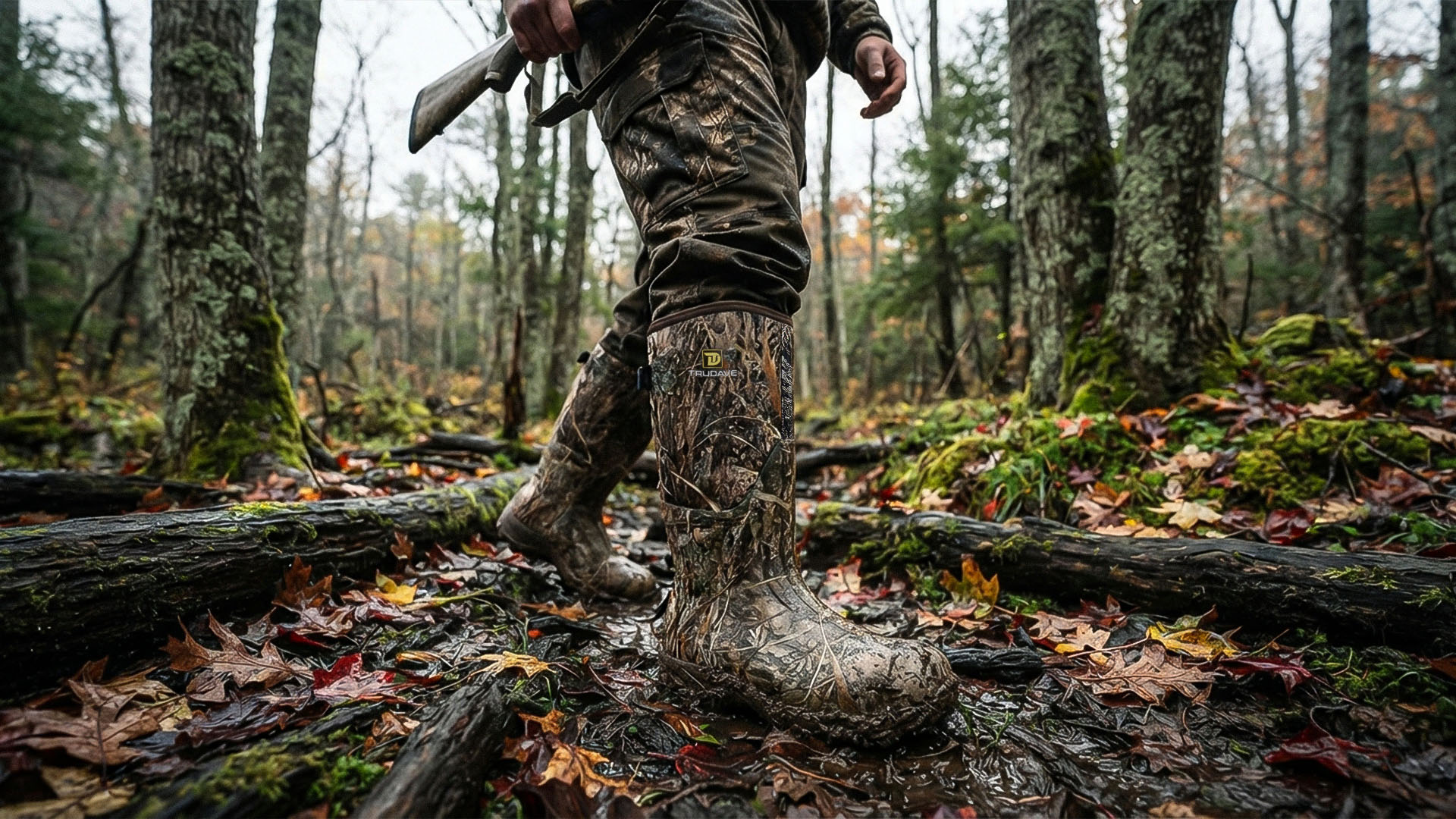
Hunters may benefit from waterproof hunting boots for winter coyote hunting that provide secure heel retention, dependable traction, and enough insulation for cold open-country conditions without becoming excessively heavy.
Waterproofing Still Matters Below Freezing
Snow melts against warm footwear.
Wet feet can become cold quickly.
Insulation Should Match Activity
Coyote hunting may involve:
- Long walks
- Long stationary periods
Too much insulation can cause sweat during movement.
Sweaty Feet Become Cold During Stops
Moisture management matters.
Secure Heel Fit Helps in Deep Snow
Snow resistance makes every step harder.
Loose footwear creates:
- Blisters
- Hot spots
- Fatigue
Gaiters Are Extremely Useful
Gaiters help keep:
- Snow
- Slush
- Seeds
- Frozen debris
out of boots.
Tall Rubber Boots Can Work During Thaws
Where winter conditions include:
- Slush
- Mud
- Shallow standing water
insulated rubber boots can be practical.
Rubber Boots Need Proper Cold-Weather Rating
Not every rubber boot is suitable for prolonged freezing conditions.
Lace-Up Boots Often Provide Better Walking Control
Long-distance scouting across:
- Hills
- fields
- frozen ruts
may favor supportive lace-up hunting boots.
Traction Matters on Ice
Packed snow and frozen farm roads can become extremely slick.
No outsole makes all ice safe.
Take Short Steps
Speed causes falls.
Frozen Creek Banks Can Be Slick
Snow over ice or mud creates poor traction.
Wet Grass Under Snow Can Slide
A thin snow layer can hide flattened vegetation.
Plan Routes Around Safer Ground
The shortest path is not always the best path.
Cold Wind Can Be More Difficult Than Temperature
Open prairie and farmland offer almost no natural protection.
Windproof Layers Matter
A good wind-blocking outer layer can make a major difference.
Avoid Sweating on the Walk In
Open clothing before overheating.
Add Insulation Once Stationary
Dry layers keep hunters warmer.
Gloves Need Dexterity
Choose gloves that allow safe handling of gear.
Carry a Backup Pair
Snow and wet brush can soak the first set.
Face Protection Helps
Strong winter wind can make exposed skin uncomfortable quickly.
Eye Protection Can Help in Blowing Snow
Clear glasses may improve comfort around:
- Wind
- Brush
- Snow
Hydration Still Matters
Hunters often drink less in winter.
Cold air does not eliminate fluid loss.
Keep Water From Freezing
Use insulated storage where necessary.
High-Energy Food Helps on Long Hunts
Cold conditions increase energy needs.
Winter Daylight Is Short
Plan access and return time carefully.
Carry a Headlamp
Even if the hunt begins after daylight, recovery or walking out may extend into darkness.
Carry Backup Power
Cold temperatures reduce battery performance.
Offline Maps Are Important
Agricultural ownership can be complicated.
Download:
- Property boundaries
- Roads
- Creeks
- Field edges
before the hunt.
Snow Can Cover Boundary Clues
Fence lines and signs may be difficult to see.
Use current mapping information.
Coyotes Can Cross Several Properties Quickly
A track moving off your legal access does not give you permission to follow.
Stay Within Authorized Ground
This is especially important in checkerboard farmland.
Public Land Rules Can Differ
Some public areas may have restrictions involving:
- Vehicle access
- Legal weapons
- Hunting hours
Check the exact property.
Local Predator Regulations Vary
Coyote seasons and methods are not identical everywhere.
Before hunting, verify current official rules concerning:
- Season dates
- License requirements
- Shooting hours
- Legal equipment
- Night hunting
- Electronic calls
- Public-land restrictions
- Reporting where applicable
Do Not Assume Coyotes Are Unregulated Everywhere
Rules vary substantially.
Night Hunting Rules Can Be Especially Different
Some jurisdictions permit certain methods.
Others restrict them.
Use current official information.
Artificial-Light Rules May Differ
Do not rely on advice from another state.
Positive Identification Is Essential
Farm country may contain:
- Domestic dogs
- Foxes
- Other wildlife
Hunters must identify the animal clearly.
Never Shoot at a Distant Shape Without Confirmation
Snow can distort size and contrast.
Use optics.
Domestic Dogs Can Travel Far From Homes
This makes identification especially important near rural communities.
Coyotes and Wolves Can Overlap in Some Regions
Where ranges overlap, hunters must be able to distinguish legal species.
Use official wildlife identification resources.
Tracks Alone Are Not Enough
Large canine tracks can overlap in appearance depending on:
- Snow
- Melt
- Substrate
Confirm Before Taking Any Opportunity
Legal identification comes first.
Safe Background Matters
Flat farmland offers little natural backstop.
Know what lies behind the animal.
Brush Is Not a Backstop
A hedgerow may hide:
- Road
- House
- Livestock
- Another hunter
Snow Can Make Distance Deceptive
Open white terrain reduces visual reference.
Use safe judgment.
Partner Positions Must Stay Clear
If hunting with others, agree on:
- Areas
- movement
- safe directions
before separating.
Do Not Move Across Another Hunter’s Area Without Communication
Open fields can create long sight lines and unsafe confusion.
Fresh Tracks Can Help Confirm Activity After a Setup
After leaving an area, check whether new tracks appeared.
That can improve future scouting.
Repeated Sign Builds a Better Pattern
One hunt rarely tells the entire story.
Compare:
- Snow conditions
- Track locations
- Wind
- time of day
Winter Habitat Can Change Week to Week
Deep snow may shift travel.
Thawing may open new routes.
Agricultural activity can change food availability.
Rescout After Major Weather
A blizzard or thaw can reorganize movement across the property.
Frozen Wetlands May Become Travel Corridors
Coyotes may use firm edges that were difficult earlier in the season.
Again, human ice safety remains separate from animal movement.
Late Winter Can Change Prey Distribution
Small game may concentrate around:
- Brush
- Feed
- Farm cover
which can influence predator activity.
Watch the Habitat, Not Just the Predator Tracks
The best coyote areas usually contain reasons for coyotes to visit.
Small-Game Sign Can Be Useful Context
Fresh:
- Rabbit tracks
- Rodent activity
around cover may help explain repeated predator movement.
Habitat Diversity Often Helps
A property containing:
- Field
- grass
- brush
- creek
- timber
provides more travel and feeding options than one uniform field.
Brushy Creek Systems Can Be Especially Productive
They combine:
- Cover
- travel
- prey habitat
within one narrow corridor.
Wind-Blown Fence Lines Can Stay Relatively Snow-Free
These areas may expose:
- Grass
- small-game activity
during deeper snow.
Farm Equipment Areas Require Caution
Hunting access may bring you near:
- Machinery
- Grain bins
- structures
Respect operations.
Do Not Block Working Farms
Park only where instructed.
Leave Gates As Directed
Livestock management comes first.
Pick Up All Trash
Leave no:
- Food packaging
- Equipment debris
- Disposable warmers
behind.
Winter Gloves and Small Items Are Easy to Lose
Check the setup before leaving.
Habitat Stewardship Matters
Creek buffers, grass strips, and brush edges support:
- Small game
- birds
- predators
- many other species
Avoid Unnecessary Vehicle Damage
Frozen prairie soils can become vulnerable during thaw.
Stay on Authorized Roads
Do not create new tracks.
Common Winter Coyote Hunting Mistakes
Walking Randomly Through Huge Fields
Use snow tracks and habitat structure to narrow the search.
Ignoring Creek Bottoms
They can be major travel corridors.
Treating One Old Track as Current Activity
Freshness matters.
Underestimating Wind
Coyotes rely heavily on scent.
Skylineing Yourself on Open Ridges
Use low terrain for movement.
Wearing Overly Heavy or Poorly Fitting Boots
Winter hunting alternates between walking and stationary periods.
Ignoring Afternoon Thaw
Frozen roads and fields can become muddy quickly.
Assuming Predator Regulations Are the Same Everywhere
Always verify current local rules.
Frequently Asked Questions
Where do coyotes live in winter farmland?
Coyotes commonly use creek bottoms, brushy field edges, grass waterways, crop fields, pastures, small woodlots, fence lines, and other connected agricultural cover.
Is fresh snow good for coyote hunting?
Fresh snow can be extremely useful for scouting because it reveals recent tracks, travel directions, crossings, and repeated routes.
Are creek bottoms good coyote habitat?
Yes. Creek systems can provide travel cover, prey habitat, water, and protected terrain through otherwise open farmland.
Does wind affect coyote hunting?
Yes. Wind strongly affects scent detection, travel routes, hunter approaches, and how coyotes use exposed versus protected terrain.
Is winter coyote hunting good after snow?
Snow can make fresh movement easier to identify and may concentrate travel along windblown or protected routes, although deep snow can make hunter access more difficult.
What boots are best for winter coyote hunting?
Waterproof insulated hunting boots with secure heel fit, reliable traction on snow, frozen mud, wet grass, and icy farm roads, and enough comfort for long walks are practical.
Are rubber boots good for winter coyote hunting?
Insulated rubber hunting boots can work well during wet thaws, muddy creek bottoms, and slush, while long-distance cold-weather walking may favor supportive lace-up waterproof boots.
Do coyote hunting regulations vary?
Yes. Seasons, licenses, night hunting rules, legal equipment, electronic calls, artificial lights, public-land restrictions, and other requirements can vary significantly by jurisdiction. Hunters should verify current official regulations before hunting.
Final Thoughts
Winter coyote hunting teaches hunters that snow does more than cover the landscape.
It records movement.
One creek bottom shows repeated travel.
One fence gap creates a crossing.
One brushy field edge holds prey.
One windblown strip stays easier to walk.
One fresh track after a midnight snowfall tells you more than a week of old sign.
Use that information.
Read the newest tracks.
Study the creek systems.
Watch the wind.
Use terrain instead of exposing yourself across open fields.
Respect private farms, roads, livestock, and property boundaries.
Wear boots that let you cross snow, frozen mud, wet grass, icy field roads, creek edges, corn stubble, and miles of winter farmland without making cold, wet, or blistered feet the reason the hunt ends early.
And when fresh tracks appear in the same narrow creek crossing after every snowfall, remember the lesson.
The coyote may roam a huge territory.
But even a wide-ranging predator still prefers certain routes.
Snow simply makes those routes easier for you to see.
