
Roosevelt elk country can make an enormous animal disappear at twenty yards.
The forest is dark.
Sword fern covers the ground.
Rain falls through cedar and hemlock.
Moss grows across logs.
A creek runs somewhere below the slope.
A hunter hears a branch break.
Nothing appears.
Then a brown shape moves between two trees.
One step.
Another.
And an animal weighing hundreds of pounds vanishes back into vegetation thick enough to hide almost anything.
That is Roosevelt elk hunting.
The Pacific Northwest creates a completely different elk hunt from open Rocky Mountain country.
Visibility can be measured in yards rather than miles.
Rain may continue for hours.
Logging roads become mud.
Brush holds water long after storms stop.
Every hillside contains:
- Ferns
- Salal
- Fallen timber
- Young regeneration
- Creeks
- Steep ground
Successful hunters learn to stop searching for long-distance visibility.
Instead, they search for clues.
Fresh tracks.
Rubbed trees.
Droppings.
Muddy trails.
Feeding cuts.
Creek benches.
Hidden openings.
In wet timber, the forest rarely shows you the elk first.
It usually shows you where the elk have been.
Roosevelt Elk Are Built for Wet Coastal Forest
Roosevelt elk occupy portions of the Pacific Northwest and are closely associated with moist coastal and forest environments.
Depending on location and season, useful habitat may include:
- Temperate rainforest
- Young timber cuts
- Mature forest
- Creek bottoms
- River valleys
- Brushy slopes
- Clearcuts
- Logging-road systems
The challenge is not always finding habitat.
Much of the landscape can look suitable.
The challenge is determining which part of the forest elk are using today.
Visibility Changes the Entire Hunting Strategy
In open elk country, hunters may glass enormous basins.
In coastal timber, visibility may be:
- Fifty yards
- Twenty yards
- Ten yards
Optics still have value in openings.
But sign and movement become much more important.
Learn to Hunt the Forest Floor
Wet ground can preserve information extremely well.
Look for:
- Tracks
- Droppings
- Mud
- Broken vegetation
The wetter the forest becomes, the easier recent movement may be to identify.
Fresh Tracks Can Be Extremely Valuable
Soft mud preserves elk tracks clearly.
Look around:
- Logging roads
- Creek crossings
- Muddy trails
- Clearcut edges
Track Freshness Matters
A track created several days ago may still look obvious in shaded wet soil.
Look for clues such as:
- Sharp edges
- Moist disturbance
- Fresh vegetation pressed down
Use multiple clues together.
Rain Can Erase Old Sign
A heavy storm may soften or destroy older tracks.
That makes new prints after the rain especially useful.
Logging Roads Are Excellent Tracking Surfaces
Old forest roads often collect:
- Mud
- Soft gravel
- Puddles
Elk crossing them can leave obvious sign.
Road Crossings Reveal Direction
Do not simply celebrate finding a track.
Ask:
Which way did the elk go?
Into:
- Clearcut
- Timber
- Creek drainage
- Ridge cover
Direction tells you what habitat they selected.
Multiple Crossings Can Reveal a Travel Corridor
If the same section of road repeatedly shows elk sign, look for a trail system connecting both sides.
That corridor may be more important than the road itself.
Closed Logging Roads Can Be Excellent
Where legal access allows foot travel, gated roads may provide:
- Quiet entry
- Fresh sign
- Easier walking
through otherwise difficult forest.
Do Not Assume Closed Means Walkable
Access rules vary.
Check current land-management or private timber-company regulations.
Active Logging Roads Require Extra Caution
Timber trucks and heavy equipment may operate early.
Never block:
- Gates
- Roads
- Turnouts
Follow local access rules.
Clearcuts Can Be Major Feeding Areas
Young cuts can produce:
- Grasses
- Forbs
- Shrubs
- Regrowth
that attract elk.
But the best clearcut is often not simply the newest one.
Very Fresh Cuts May Be Too Open
Immediately after harvest, there may be limited security cover.
As vegetation regenerates, feeding value may increase.
Older Cuts Can Become Extremely Thick
Several years of regrowth can produce:
- Blackberry
- Salmonberry
- Young trees
- Dense brush
which can hold elk while making visibility difficult.
Hunt the Cut-Timber Edge
The transition where feeding habitat meets mature forest can be especially useful.
Elk can feed near the opening and step back into security cover almost instantly.
Early Morning Can Favor Clearcuts
Elk may remain near open feeding areas around first light before moving into thicker timber.
Glass from a distance when possible.
Evening Can Produce Similar Movement
Late-day feeding activity may pull elk back toward:
- Cuts
- Meadows
- Roadside openings
Midday Does Not Mean Elk Are Gone
They may simply be bedded inside:
- Thick timber
- Brushy benches
- Protected slopes
Creek Benches Can Be Excellent Bedding Habitat
Steep forest country often contains small flat benches beside drainages.
These areas can provide:
- Easier bedding
- Water
- Cooler conditions
- Security
Benches Are Easy to Miss
From below, a hillside may look continuously steep.
Topographic maps can reveal flat shelves hidden by timber.
Hunt Above the Wettest Creek Bottom
The lowest channel may contain:
- Deep mud
- Thick brush
- Difficult footing
Elk may use slightly higher benches nearby.
Creek Crossings Reveal Movement
Look for trails where elk repeatedly cross:
- Small streams
- Drainages
- Wet bottoms
Tracks can be obvious.
Creeks Can Also Be Hunter Barriers
A narrow stream can become much larger after rain.
Always think about the return route.
Water Levels Can Rise Quickly
Pacific Northwest storms can increase creek flow rapidly.
A crossing that looked easy in the morning may be difficult later.
Never Force a Dangerous Crossing
Take the longer route.
The elk’s path does not need to become your path.
Rain Defines Roosevelt Elk Country
Rain is not an occasional inconvenience.
It can be a central part of the hunt.
Hunters may face:
- Steady drizzle
- Heavy showers
- Fog
- Wet brush
- Saturated ground
Elk Hunting in Rain Can Improve Tracking
Fresh wet soil captures tracks.
Quiet leaves and vegetation may also reduce hunter noise.
Rain Can Make Close Approaches Quieter
Dry leaves disappear as a noise problem.
But dripping vegetation creates another challenge:
Hearing becomes harder.
Heavy Rain Can Hide Animal Movement
Branches and rain noise may cover:
- Footsteps
- Breaking sticks
Stay visually alert.
Fog Can Reduce Visibility Even Further
A clearcut visible from several hundred yards away may disappear.
Adapt by moving closer to known habitat.
Rain Changes Scent and Wind Perception
Wet forest can make air movement harder to read.
Check wind frequently.
Timber Wind Is Unpredictable
Dense forests, ridges, and drainages can create swirling air.
Do not assume the wind remains consistent because the treetops move one direction.
Thermals Still Matter
Temperature changes can move air through:
- Valleys
- Drainages
- Slopes
especially during calmer periods.
Creek Bottoms Can Funnel Scent
A drainage may move air differently from the ridge above.
Test conditions before approaching bedding cover.
Wet Vegetation Holds Scent
Hunters brushing against vegetation leave odor on:
- Ferns
- Branches
- Grass
Route choice matters.
Do Not Walk Directly Through the Expected Travel Route
Whenever possible, remain outside the corridor elk are most likely to use.
Roosevelt Elk Often Use Thick Security Cover
Dense coastal vegetation provides excellent concealment.
Look for places where hunters naturally avoid walking.
Fern-Covered Slopes Can Hide Elk Completely
Sword fern can reach significant height.
An elk may be visible only from:
- Shoulder
- Antler
- Ear
for a few seconds.
Look Through Vegetation, Not At It
Focus on:
- Horizontal body lines
- Tan patches
- Antler tips
- Ear movement
Salal and Brush Can Create Near-Zero Visibility
Move carefully.
Close-range encounters can happen suddenly.
Slow Walking Matters
In thick timber:
Fast hunters usually see fewer elk.
Use short movements.
Stop frequently.
Listen.
Pause Longer Than Feels Necessary
Elk may hear you first.
If movement stops, they may reveal themselves by:
- Stepping
- Turning
- Making sound
Use Natural Openings
Small gaps can provide short viewing lanes.
Examples include:
- Creek channels
- Old roads
- Fallen timber openings
- Young cuts
Windthrow Can Create Feeding Pockets
Storm-damaged forest may open the canopy.
New vegetation can grow around fallen trees.
These small openings may attract elk.
Fallen Timber Is Also Difficult to Cross
Wet logs can be extremely slippery.
Do not climb over unstable deadfall carelessly.
Moss-Covered Logs Are Especially Dangerous
A thick layer of moss may hide:
- Rotten wood
- Slick bark
Step around whenever practical.
Logging Slash Can Be Even Worse
Clearcuts may contain:
- Broken limbs
- Stumps
- Root balls
under vegetation.
Do Not Rush Across Slash
An ankle injury deep in wet forest can become a serious problem.
Roosevelt Elk Hunting Is a Serious Footwear Test
A typical hunt may involve:
- Continuous rain
- Wet ferns
- Mud
- Moss-covered logs
- Creek crossings
- Steep slopes
- Logging roads
- Long mileage
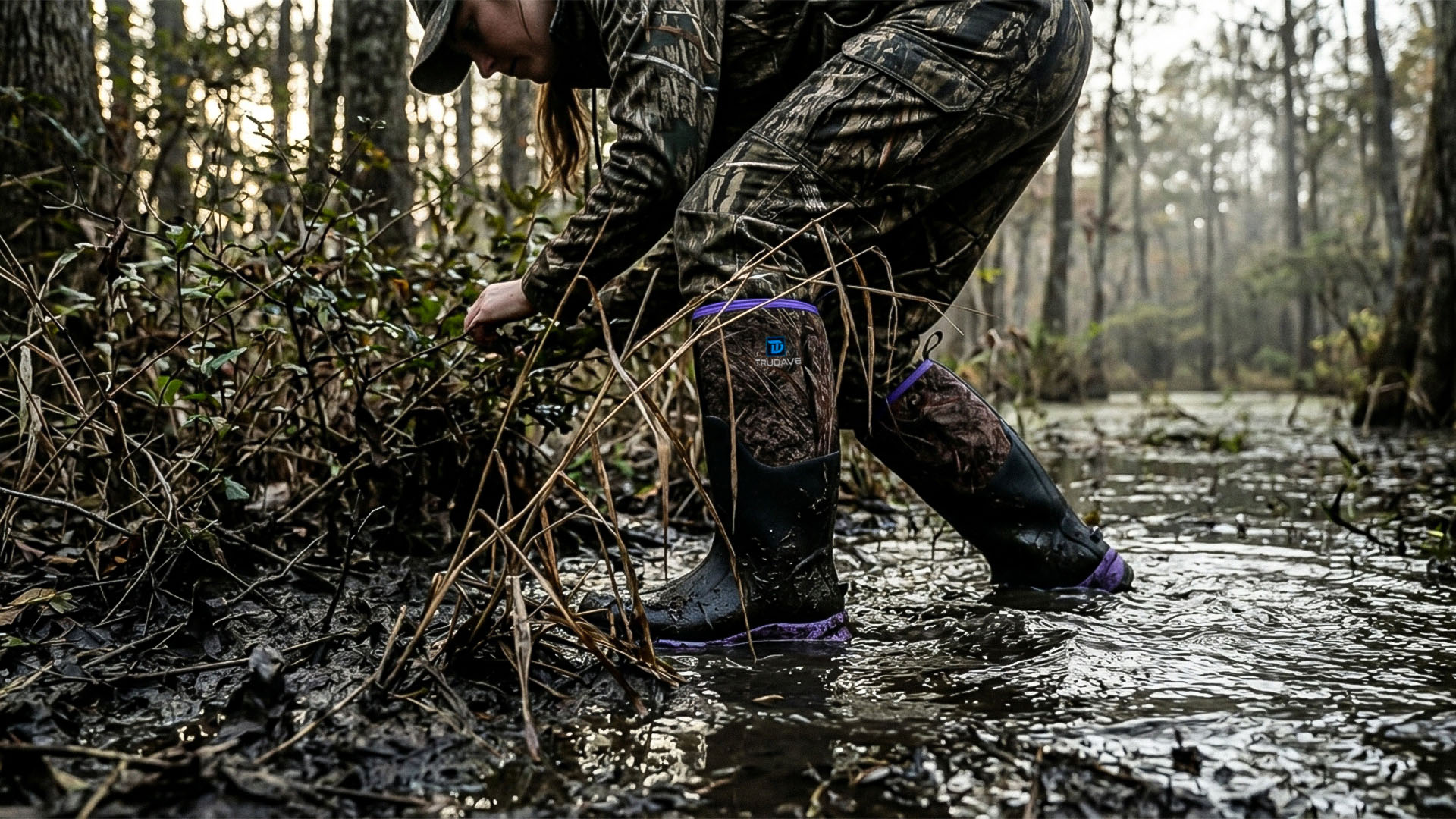
Hunters may benefit from waterproof hunting boots for elk hunting that provide secure heel retention, dependable traction on wet forest surfaces, and enough ankle support for broken coastal terrain.
Waterproofing Is Essential
In coastal elk habitat, moisture may come from every direction.
Even when it stops raining, vegetation remains wet.
A hunter can become soaked below the knees simply by walking through brush.
Wet Ferns Can Soak Boots From Above
Water runs down:
- Pants
- Gaiters
- Boot collars
Lower-leg protection matters.
Gaiters Are Extremely Useful
Gaiters can help reduce:
- Rain runoff
- Mud
- Forest debris
entering footwear.
Tall Rubber Boots Can Work in Some Lowland Areas
Rubber hunting boots can be practical around:
- Mud
- Wet grass
- Shallow water
especially on flatter ground.
Rubber Boots Become Harder on Steep Slopes
Long climbs and sidehilling often benefit from more structured footwear.
Lace-Up Waterproof Boots Can Be Better for Mountain Timber
They may provide:
- Heel lock
- Ankle support
- More precise footing
Secure Heel Fit Is Critical
Wet steep slopes require control.
Heel movement inside the boot reduces stability.
Traction Matters Constantly
Hunters may encounter:
- Wet clay
- Moss
- Mud
- Rock
- Wood
all in the same mile.
Wet Roots Can Be Extremely Slick
Avoid stepping directly on large exposed roots when possible.
Mud Over Hard Clay Is Dangerous
A thin slick layer can provide almost no grip.
Use short deliberate steps.
Steep Descents Are Often Harder Than Climbs
Wet downhill slopes place heavy stress on:
- Knees
- Toes
- Ankles
Save energy.
Toe Room Matters
Repeated downhill pressure can injure toes if boots are too short.
Moderate-to-Strong Ankle Support Helps
Coastal forest hides uneven ground beneath:
- Ferns
- Leaves
- Brush
Boot Weight Still Matters
Heavy waterproof boots may feel secure but create fatigue over long mileage.
Balance protection with mobility.
Breathability Matters Too
Waterproof hunting often causes hunters to focus only on keeping outside moisture away.
Internal sweat can still create damp feet.
Choose Socks Carefully
Moisture-managing socks help during:
- Steep climbs
- Long wet days
Carry Spare Socks
If water enters from above, a dry pair can restore comfort.
Pack Foot Care Supplies
Long elk hunts justify basic blister prevention and treatment.
Forest Roads Can Be Mud Traps
Logging roads that look firm may contain:
- Deep ruts
- Soft shoulders
- Standing water
Vehicle Access Can Change After Rain
A road passable in dry weather may become difficult quickly.
Do Not Damage Private Timber Roads
If conditions become too soft:
Park.
Walk.
Timber Company Access Can Change
Road rules, closures, fire restrictions, and gates may vary.
Check current property information before entering.
Public and Private Timber Can Look Identical
A forest does not visually tell you who owns it.
Use accurate current maps.
Property Boundaries Matter
Roosevelt elk country may include:
- National forest
- State land
- Private timber
- Tribal land
- Industrial forest
Know where hunting is lawful.
A Bull Crossing a Boundary Does Not Create Access
Stay legal.
Recovery Across Boundaries Needs Planning
Before hunting near property edges, understand retrieval requirements.
Elk Trails Can Reveal Daily Movement
Large animals create obvious pathways.
But not every large trail is actively used.
Fresh Mud Helps Identify Current Trails
Look for:
- New tracks
- Droppings
- Broken vegetation
Droppings Can Reveal Recent Presence
Freshness clues may include:
- Moisture
- Color
- Condition
Use them with tracks.
Rubs Can Show Bull Activity
During appropriate seasonal periods, rubbed trees may indicate bull presence.
But an old rub may remain visible long after elk have left.
Fresh Rubs Look Different
Recently exposed wood tends to appear lighter.
Nearby bark may still be on the ground.
Wallows Can Be Important Seasonal Sign
Wet depressions used by elk may contain:
- Tracks
- Mud
- Hair
depending on season.
Do Not Assume Every Mud Hole Is a Wallows
Look for multiple signs.
Vocal Activity Can Help During Certain Seasons
Bulls may become more vocal during rut periods.
Sound can reveal location in thick timber.
Timber Distorts Sound
A bull may sound:
- Closer
- Farther
- Off to one side
than it actually is.
Use Terrain to Confirm Direction
Move carefully to another listening position when appropriate.
Do Not Charge Straight Toward Every Sound
A bull may already be moving.
Think about:
- Wind
- Creek
- Ridge
- Bedding cover
first.
Cow and Calf Groups Can Reveal Habitat Quality
Where elk groups are consistently using an area, the combination of:
- Food
- Security
- Water
is probably favorable.
Herds Can Shift Quickly Under Pressure
Once hunters enter the timber, elk may move toward:
- Steeper cover
- Private boundaries
- Remote drainages
Road Pressure Matters
Elk may respond strongly to vehicle traffic and human activity.
Areas near open roads can hunt very differently from gated systems.
Do Not Assume More Miles From the Truck Always Means Better
Some gated road networks provide excellent low-pressure habitat without extreme terrain.
Habitat Quality Comes First
Find:
- Food
- Cover
- Water
- Current sign
before chasing remoteness.
Burns and Cuts Can Complement Mature Timber
Elk may feed in:
- Regeneration
- Clearcuts
- Burned openings
and retreat into forest security.
Hunt the Connection
The route between feeding and bedding habitat may be more predictable than either location alone.
Narrow Timber Fingers Can Funnel Movement
A strip of mature cover between openings may function as a travel corridor.
Creek Corridors Can Do the Same
Look for consistent tracks.
Small Meadows Can Be Valuable
A hidden opening surrounded by thick forest may offer feeding with minimal exposure.
Remote Meadows Deserve Glassing
Arrive early enough to observe before entering.
Elk May Enter Openings Only Briefly
Timing matters.
Night Feeding Can Leave Only Sign
If elk use a clearcut after dark, morning tracks may still reveal:
- Entry points
- Exit trails
Follow the Exit Direction
That can point toward daytime bedding cover.
Bedding Areas Require Caution
Approaching too aggressively can push elk farther into thick timber.
Use Wind Above All Else
A quiet approach means little if scent reaches the herd.
Thick Forest Encourages Close Encounters
That increases the importance of:
- Positive identification
- Safe target background
Never Shoot at Partial Movement
Branches and brush may obscure the animal.
Wait for a clear view.
Know What Is Beyond the Elk
Timber can hide:
- Roads
- Other hunters
- Structures
Public-Land Pressure Requires Extra Awareness
Other hunters may approach the same vocal or visible elk.
Maintain communication and safe identification.
Blaze Orange Rules Vary
Follow current jurisdiction requirements and hunter-safety guidance.
Regulations Can Be Unit-Specific
Elk hunting rules may vary significantly by:
- Unit
- Season
- Tag type
- Legal sex
- Weapon
Roosevelt Elk Tags May Differ From Other Elk Opportunities
Do not assume a general elk rule applies to every hunt.
Verify Current Official Regulations
Before hunting, confirm:
- Tag validity
- Season dates
- Hunt-unit boundaries
- Legal sex or antler requirements
- Weapon restrictions
- Shooting hours
- Access rules
- Reporting requirements
Private Timber May Add Its Own Access Rules
These can involve:
- Vehicle permits
- Walk-in access
- Seasonal closures
- Fire restrictions
Harvest Reporting May Be Required
Know the process before entering areas with poor cell service.
Remote Wet Forest Makes Recovery Difficult
An elk can be far harder to recover than to locate.
Plan the pack-out first.
Ask the Recovery Question Before Dropping Into a Canyon
If successful at the bottom:
Can you get the meat back out safely?
Steep Wet Terrain Multiplies Pack-Out Difficulty
A mile carrying weight through:
- Mud
- Slash
- Ferns
can feel much longer.
Multiple Trips May Be Necessary
Do not overload dangerously.
Heavy Loads Change Footing
Wet roots and logs become even more dangerous under pack weight.
Trekking Poles Can Help
They may improve:
- Balance
- Descents
- Creek crossings
- Heavy pack-outs
Meat Care Is Critical
Coastal weather may be cool.
But elk are large animals.
Proper cooling still matters.
Rain Does Not Automatically Cool Meat Safely
Wet conditions can create their own handling challenges.
Follow current wildlife-agency and food-safety guidance.
Clean Game Bags Help
Protect meat from:
- Mud
- Leaves
- Insects
- Dirty vegetation
Airflow Matters
Dense wet forest can make cooling more difficult than hunters expect.
Plan Storage Before the Hunt
Know where harvested meat will go after reaching the vehicle.
Do Not Leave Meat Inside a Warm Enclosed Vehicle
Appropriate cooling is essential.
Navigation Can Be Difficult in Thick Timber
Visibility is limited.
One drainage may look like another.
Offline Maps Are Essential
Download:
- Property boundaries
- Roads
- Topography
- Trails
before the hunt.
Mark the Vehicle
A close-range elk chase can pull hunters across:
- Creek
- Ridge
- Logging road
without realizing distance.
Carry a Headlamp
Elk recovery often continues after dark.
Carry Backup Light
Wet conditions can affect electronics.
Waterproof Important Gear
Protect:
- Phone
- Map
- Batteries
- Emergency supplies
Cold Rain Can Become a Hypothermia Risk
Wet clothing plus wind increases heat loss.
Rain Gear Must Actually Work
A lightweight emergency shell may not be enough for an all-day coastal storm.
Vent During Climbs
Even waterproof clothing can trap sweat.
Open vents before overheating.
Add Layers When Stationary
A hunter glassing a clearcut can cool rapidly after a steep climb.
Gloves Need Water Resistance
Wet hands lose warmth and function.
Carry a Dry Backup Pair
One extra pair is worth the weight.
Head Protection Matters
A brim can help keep rain away from:
- Eyes
- Optics
Optics Need Protection Too
Rain can make binoculars nearly useless.
Carry:
- Lens cloth
- Protective covers
Do Not Wipe Mud Across Lenses
Clean carefully to avoid scratches.
Common Roosevelt Elk Hunting Mistakes
Walking Too Fast Through Timber
Visibility is short and elk may be close.
Ignoring Logging Roads as Tracking Surfaces
Mud can reveal extremely useful fresh movement.
Hunting Only Mature Forest
Clearcuts and young regeneration may provide important feeding habitat.
Ignoring Creek Benches
Flat secure terrain can be valuable bedding habitat.
Treating Rain as Only a Problem
Rain can improve tracking and reduce movement noise.
Wearing Boots With Poor Wet-Surface Traction
Moss, roots, clay, and mud demand dependable grip.
Underestimating the Pack-Out
Wet forest makes heavy recovery much harder.
Assuming All Elk Regulations Are the Same
Tag, unit, legal-animal, and access rules can differ substantially.
Frequently Asked Questions
Where do Roosevelt elk usually live?
Roosevelt elk commonly use moist coastal forests, river valleys, timber cuts, creek bottoms, brushy slopes, mature forest, and other habitats of the Pacific Northwest.
Are clearcuts good places to find Roosevelt elk?
They can be excellent feeding habitat once suitable vegetation develops, especially when mature timber or other security cover lies nearby.
Is elk hunting good in the rain?
Rain can improve tracking by softening mud and quieting dry vegetation, but heavy rain reduces visibility, changes creek conditions, and increases slipping hazards.
Are logging roads useful for Roosevelt elk hunting?
Yes. Logging roads can provide access, glassing locations, feeding edges, and excellent surfaces for finding fresh tracks. Access legality should always be verified.
Why are creek benches important?
Small flat areas above creek bottoms can provide secure bedding and travel terrain in otherwise steep forest.
What boots are best for Roosevelt elk hunting?
Waterproof hunting boots with strong wet-surface traction, secure heel retention, and enough ankle support for steep forest terrain are practical. Boot weight should still be low enough for long mileage.
Are rubber boots good for Roosevelt elk hunting?
Tall rubber boots can work well in flatter muddy lowlands, but steep slopes and long mountain walks may favor supportive waterproof lace-up hunting boots.
Do Roosevelt elk hunting regulations vary?
Yes. Seasons, hunt units, tag types, legal animals, weapon rules, private timber access, public-land restrictions, and reporting requirements can vary. Hunters should verify current official regulations for the exact hunt.
Final Thoughts
Roosevelt elk hunting teaches hunters that an enormous animal does not need enormous space to disappear.
One fern-covered slope hides the herd.
One clearcut provides food.
One muddy road records last night’s movement.
One creek bench gives elk somewhere flat to bed.
One timber finger connects all of it.
The forest looks chaotic.
The elk are still following patterns.
Read the mud.
Watch clearcut edges.
Follow fresh road crossings.
Slow down in thick timber.
Use creek benches.
Respect private timber access.
Plan the pack-out before dropping into steep country.
Wear boots that let you cross soaked ferns, slippery roots, mossy logs, sticky mud, logging roads, creek bottoms, and steep wet slopes without losing confidence in every step.
And when a Roosevelt elk suddenly appears between two trees at a distance where you expected to see nothing but green vegetation, remember the lesson.
In coastal elk country, seeing farther is not always the advantage.
Learning to read what happened in the forest before you arrived often matters more.
