
Canvasback country can feel enormous.
Open water stretches from one reed line to another.
A distant point disappears into morning haze.
Small islands break up the lake.
Wind pushes waves across miles of shallow marsh water.
A hunter can see ducks.
That does not mean he is anywhere close to understanding where they want to be.
A flock of canvasbacks crosses the lake.
They stay low.
Pass one point.
Ignore another.
Circle a shallow bay.
Then settle over a patch of water that looks exactly like everything around it.
That is the challenge of canvasback hunting.
The lake may appear uniform.
Under the surface, it is not.
Depth changes.
Vegetation changes.
Current changes.
Food changes.
Wind changes how birds approach all of it.
Successful hunters learn to connect:
- Submerged vegetation
- Water depth
- Wind
- Points
- Bays
- Travel lanes
- Resting water
The birds are not choosing random open water.
They are responding to structure that hunters often cannot see from shore.
Canvasbacks Are Diving Ducks
Canvasbacks are built differently from shallow-water dabblers.
They commonly use larger bodies of water and feed by diving.
Productive habitat may include:
- Large marsh lakes
- Shallow bays
- Reservoirs
- River systems
- Coastal or inland wetlands
- Open-water vegetation beds
The important habitat is often below the surface.
Think Below the Waterline
A lake can look completely empty above water while containing extensive underwater food.
Possible feeding zones may include areas with:
- Submerged aquatic vegetation
- Tubers
- Roots
- Aquatic invertebrates
depending on location and season.
Hunters need to understand what lies beneath.
Submerged Vegetation Can Concentrate Birds
One section of lake may contain dense underwater vegetation.
Another may contain mostly:
- Mud
- Sand
- Deeper water
Birds can respond strongly to those differences.
Look for Repeated Diving Activity
Canvasbacks feeding actively may repeatedly:
- Dive
- Surface
- Move short distances
within one zone.
That pattern can reveal a productive food bed.
Feeding Flocks Tell You More Than Maps
Vegetation maps and satellite imagery help.
Actual birds are better.
Watch where they spend time.
If birds repeatedly return to one patch:
There is a reason.
Water Depth Matters
Canvasbacks can use relatively deep water compared with many dabbling ducks.
But they still need to efficiently reach food.
The most productive depth often depends on:
- Food species
- Lake structure
- Water levels
Changing Water Levels Can Move Birds
A productive feeding bed may become:
- Too deep
- Too shallow
- Exposed
as lake levels change.
Rescout.
One Foot of Water Change Can Matter
On shallow marsh lakes, a small change can move the useful feeding zone hundreds of yards.
Do not assume last season’s exact location remains best.
Large Lakes Are Rarely Uniform
Break the water into smaller pieces.
Look for:
- Points
- Bays
- Islands
- Channels
- Vegetation edges
- Depth transitions
These features help organize bird movement.
Points Can Funnel Travel
A shoreline point extending into open water may influence how canvasbacks move between:
- Feeding areas
- Resting water
- Large bays
Birds may pass predictable distances off the tip.
Not Every Point Is Equal
One point may align with:
- Wind
- Food
- Travel direction
while another sees almost no traffic.
Scout bird movement before choosing.
Windward Points Can Produce Bird Traffic
Depending on conditions, wind can push food and change how birds fly.
Birds may approach certain points more consistently.
Leeward Points Can Offer Better Boat Handling
The best bird location is not always the safest hunter location.
Balance:
- Bird traffic
- Wind
- Wave exposure
- Access
Bays Can Provide Feeding and Resting Habitat
Protected bays may offer:
- Calmer water
- Shallow depth
- Submerged vegetation
Canvasbacks may use them heavily during certain weather conditions.
Large Bays Need to Be Broken Down Further
Do not treat a thousand-acre bay as one habitat unit.
Search for:
- Vegetation beds
- Depth changes
- Narrow entrances
- Small islands
Bay Entrances Can Funnel Birds
A narrow opening between points may concentrate travel.
Watch how birds move in and out.
Islands Change Wind and Current
Even a small island can create:
- Protected water
- Current breaks
- Flight structure
Study both sides.
The Downwind Side Can Be Very Different
Water behind an island may remain calmer.
Birds may use that zone for resting.
The Upwind Side May Hold Feeding Birds
Wave action can change food access and visibility.
Actual bird behavior determines which side matters.
Wind Is One of the Biggest Variables
Canvasbacks are large, powerful ducks.
Wind affects:
- Travel height
- Landing direction
- Flock movement
- Water conditions
Strong Wind Can Push Birds Into Predictable Lanes
Birds may favor lower routes along:
- Islands
- Shorelines
- Points
instead of crossing large exposed sections.
Wind Can Also Create Dangerous Water
A productive location can become unsafe quickly.
Do not let bird activity override boating conditions.
Open-Water Waves Build Fast
A lake that seemed calm at launch can develop substantial waves within a short period.
Watch:
- Wind direction
- Fetch
- Gusts
Fetch Matters
Wind blowing across several miles of open water creates larger waves than the same wind blowing across a protected bay.
Lake shape matters.
Crosswinds Can Change Approaches
Birds may adjust final landing direction significantly.
A setup positioned perfectly yesterday may be wrong today.
Scout Under Similar Conditions
If possible, observe birds under the wind you expect to hunt.
That provides much better information.
Calm Days Can Be Harder
With little wind, birds may:
- Fly higher
- Circle longer
- Approach from less predictable directions
Movement and concealment become more important.
Canvasbacks Can Be Cautious
Pressured diving ducks may stay away from:
- Obvious boat traffic
- Heavily hunted points
- Repeated disturbance
Scouting Pressure Matters
Do not run a boat directly through every flock to see what they are doing.
Observe from distance.
Use optics.
Binoculars Are Valuable
Large water demands good glass.
Watch:
- Flock direction
- Diving behavior
- Landing zones
from shore or safe observation points.
Spotting Scopes Can Help on Huge Lakes
Where practical, higher magnification can reveal feeding activity across long distances.
Study the First Hour of Movement
Morning flights often reveal:
- Travel routes
- Feeding direction
- Preferred open-water zones
Record more than bird numbers.
Direction Is More Important Than Count Alone
Twenty birds crossing the same lane repeatedly may be more useful than two hundred birds scattered across a huge lake.
Repeated Travel Creates Opportunity
When birds consistently connect the same:
- Bay
- Point
- Feeding bed
the pattern becomes huntable.
Birds Rest Too
Canvasbacks do not feed continuously.
They may move between:
- Feeding areas
- Resting water
during the day.
Resting Water Can Be More Open
A large raft sitting offshore may be using water for security rather than food.
Do not confuse resting location with the best feeding habitat.
Rafted Birds Can Move as a Group
When one section of the flock shifts, many others may follow.
Watch for changes in wind or disturbance.
Boat Traffic Can Relocate Birds
Fishing boats and other lake users may move ducks between:
- Bays
- Open water
- Islands
Human activity becomes part of the pattern.
Weekend Pressure Can Change Everything
A quiet weekday lake may behave differently when more boats arrive.
Recent scouting matters.
Cold Fronts Can Bring New Birds
Migration can rapidly change canvasback numbers.
A lake that looked average may become much more productive after weather movement.
Do Not Depend on Calendar Dates Alone
Migration timing varies from year to year.
Use current bird observations.
Temperature Changes Feeding Conditions
Cold weather can affect:
- Aquatic vegetation
- Ice
- Food access
Birds may shift accordingly.
Freeze-Up Can Concentrate Birds
As shallow bays begin to freeze, canvasbacks may move toward:
- Deeper open water
- Wind-kept channels
Ice Can Also Cut Off Access
A ramp or shoreline that was open yesterday may freeze overnight.
Always check current conditions.
Thin Ice Is Not Safe Access
Do not assume:
- Bird use
- Footprints
- Boat tracks
prove ice is safe.
Ice Edges Can Attract Birds
Open water beside ice may concentrate diving ducks.
But hunting near ice creates additional boating and recovery risk.
Floating Ice Can Damage Boats
Wind-driven slabs can move unexpectedly.
Avoid being trapped between:
- Ice
- Shore
- Shallow water
Snow Changes Visibility
Open water may appear darker and more attractive after surrounding land turns white.
Bird movement can shift.
Fog Is a Serious Big-Water Hazard
A shoreline visible at launch can disappear within minutes.
Navigation becomes critical.
Do Not Depend on Visual Landmarks Alone
Carry reliable:
- GPS
- Offline maps
- Backup navigation
appropriate to the lake.
Mark the Launch
Save the exact:
- Ramp
- Vehicle
- Safe channel
before leaving.
Headlamps Are Essential
Many waterfowl hunts begin before daylight.
Carry:
- Primary headlamp
- Backup light
- Spare power
Launches Can Be Slick
Mud, algae, frost, and ice create dangerous footing.
Walk carefully around ramps.
Canvasback Hunting Is Often a Boat Hunt
Large water may require:
- Boat
- Canoe
- Marsh boat
depending on location.
Every boat introduces another layer of planning.
Boat Capacity Matters
Hunters often carry:
- Decoys
- Dogs
- Fuel
- Clothing
- Other gear
Weight adds quickly.
Do Not Overload
More equipment does not always mean a better hunt.
Stay within safe boat capacity.
Freeboard Matters
A heavily loaded boat sits lower.
That reduces the margin for:
- Waves
- Wake
- Shifting weight
Secure Gear
Loose decoy bags or equipment can move suddenly.
Keep weight organized.
Weight Distribution Matters
Too much load in one end can make the boat unstable.
Balance:
- Hunters
- Gear
- Dog
carefully.
Cold Water Is the Biggest Safety Concern
Late-season diving-duck hunting often occurs on dangerously cold water.
A fall can become serious very quickly.
Appropriate Flotation Equipment Is Essential
Follow current boating-safety requirements and cold-water best practices.
Wear Flotation While Traveling
A life jacket stored under gear does little good during an unexpected fall.
Dress for the Water, Not Only the Air
Air temperature can feel comfortable while water remains extremely cold.
Plan accordingly.
Never Let Birds Pull You Beyond Safe Water
If conditions worsen:
Leave.
The birds will still be there another day.
Protected Routes Are Better Than Short Routes
A longer path behind islands or shore may be safer than a direct crossing.
Know Your Emergency Landing Options
Before leaving shore, identify:
- Protected coves
- Alternate ramps
- Accessible shoreline
Cell Service May Be Unreliable
Do not rely exclusively on a phone.
Waterproof Electronics
Spray and waves can disable navigation or communication devices.
Use protected storage.
Shore-Based Hunts Are Possible in Some Areas
Where legal and bird movement allows, hunting from:
- Points
- Marsh edges
- Islands
may reduce boating exposure.
Shore Access Still Requires Planning
Lake margins can contain:
- Mud
- Reed beds
- Wet rock
- Steep banks
Mud Can Be Extremely Deep
Marsh lake edges may look firm.
They may not be.
Test uncertain ground.
Reed Mats Can Hide Water
Vegetation may float above:
- Soft mud
- Channels
Never assume it supports full body weight.
A Walking Stick Helps
Use it to test:
- Bottom depth
- Mud firmness
- Bank stability
Waders May Be Useful
Properly fitted hunting waders can help with:
- Shallow setup
- Decoy placement
- Retrieval
when conditions are appropriate.
Waders Do Not Make Deep Water Safe
They provide waterproof protection.
They do not create:
- Flotation
- Stable footing
Never Wade Unknown Drop-Offs
Open-water lakes can transition from:
- Knee deep
- Several feet deep
very quickly.
Scout depth.
Soft Bottom Can Be Worse Than Water Depth
Thigh-deep water over firm sand may be easier than knee-deep water over deep mud.
Know the substrate.
Wader Belts and Proper Fit Matter
Use equipment according to manufacturer guidance and current water-safety practices.
Waterproof Hunting Boots Still Matter Around Access
Even when waders are used, much of the day may involve:
- Muddy ramps
- Wet grass
- Marsh banks
- Boat loading
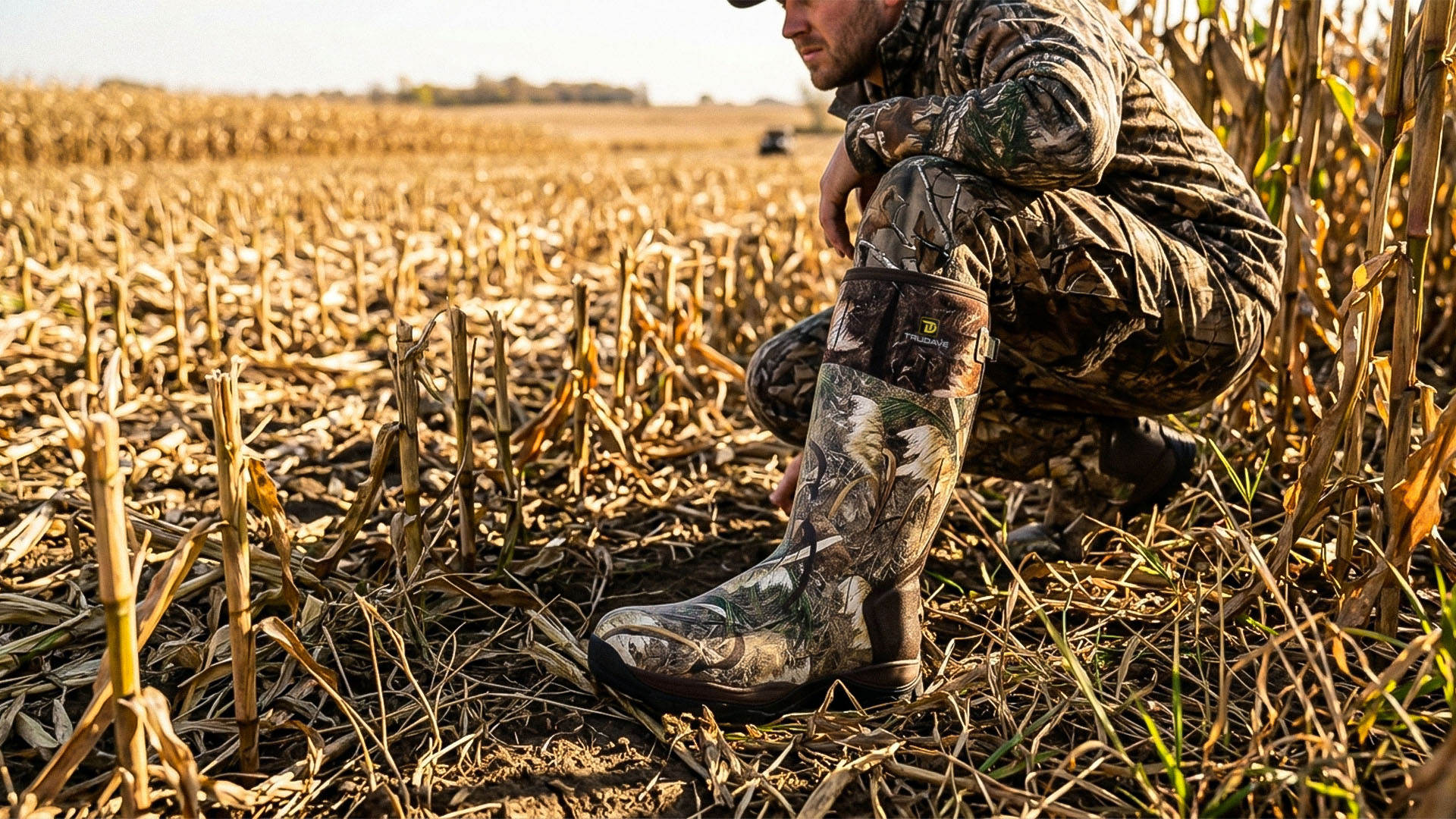
Hunters may benefit from waterproof hunting boots for marsh lake hunting that provide secure heel retention, dependable traction, and enough warmth for wet shoreline conditions.
Tall Rubber Boots Can Work Around Shallow Access
Rubber hunting boots are practical for:
- Mud
- Wet reeds
- Shallow shoreline
Traction Is Critical
Lake mud and algae can make surfaces extremely slick.
Aggressive tread helps.
Secure Heel Fit Matters in Mud
Suction pulls at footwear.
Loose boots become exhausting.
Insulation Should Match Conditions
Canvasback hunting can range from:
- Mild migration weather
- Severe winter cold
Choose boots based on actual conditions.
Too Much Insulation Can Cause Sweat
Hunters carrying decoys and boats generate heat.
Sweaty feet become colder when sitting still.
Thick Socks Need Room
Compressed footwear can reduce circulation.
Proper fit matters.
Gaiters Can Help During Shore Approaches
Wet grass and reeds may soak lower legs before hunters even reach the water.
Reed Edges Can Cut Lightweight Clothing
Dry marsh stems can be surprisingly abrasive.
Durable outer layers help.
Gloves Need Water Resistance
Waterfowl hunters constantly handle:
- Wet lines
- Decoys
- Boats
Cold wet hands lose function quickly.
Carry Spare Gloves
A dry second pair can transform the hunt.
Layering Is Essential
Hunters may alternate between:
- Hard physical setup
- Long stationary waits
Vent during work.
Add insulation later.
Avoid Sweating Before Sunrise
Opening layers early can keep base clothing drier.
Windproof Clothing Matters on Open Water
There may be no natural windbreak.
A relatively mild temperature can feel much colder offshore.
Face and Neck Protection Helps
Long exposure to cold lake wind can become uncomfortable quickly.
Dogs Can Be Valuable for Recovery
Trained retrievers may help recover canvasbacks where:
- Water
- Weather
- Distance
are safe for the dog.
Diving Ducks Can Create Long Retrieves
Canvasbacks may remain mobile after hitting the water.
Recovery can become much more demanding than a short marsh retrieve.
Do Not Send Dogs Into Unsafe Big Water
No bird is worth risking a dog in:
- Large waves
- Strong wind
- Dangerous cold
Boat-Based Retrieval May Be Safer
Conditions determine the appropriate method.
Plan before shooting.
Dogs Need Flotation Too Where Appropriate
Cold open-water retrieves can exhaust even strong swimmers.
Use suitable equipment and current dog-safety practices.
Dogs Need Warm Recovery Space
After water work, protect them from:
- Wind
- Cold boat floors
Carry Fresh Drinking Water
Lake water may not be an appropriate sole drinking source.
Bring clean water.
Watch for Hypothermia
Signs such as:
- Shivering
- Weakness
- Reduced coordination
require immediate attention.
Even Mild Air Temperatures Can Be Dangerous After Wet Retrieves
Wind accelerates cooling.
Recovery Starts Before the Shot
Ask:
If that bird falls there, can I retrieve it safely?
If not:
Pass.
Mark Every Bird
Open water has few landmarks.
Use:
- Island tip
- Shoreline tree
- Buoy
- Point
to maintain reference.
Water Movement Can Shift Birds
Wind and current can move a downed bird quickly.
Watch continuously.
Diving Birds May Disappear
A wounded diving duck may go underwater and surface elsewhere.
Maintain visual contact.
One Hunter Can Watch While Another Handles Retrieval
Team coordination can prevent losing sight of the bird.
Do Not Rush the Boat
Sudden movements in small craft create instability.
Recover safely.
Decoy Placement Needs to Match Bird Movement
The most important factor is not simply quantity.
It is positioning the setup where birds already travel.
Leave Open Landing Water
Do not completely fill the preferred area with equipment.
Birds need a visible place to land.
Wind Direction Should Shape the Layout
Expect birds to use the wind during final approach.
Position equipment accordingly.
Large Water Can Make Small Spreads Look Tiny
That does not automatically mean more is always better.
Location remains more important than quantity.
Heavy Decoy Loads Increase Boat Risk
Every extra bag adds:
- Weight
- Setup time
- Retrieval time
Use what conditions safely allow.
Current Can Move Decoys
Check anchors and lines.
Deep Water Requires More Anchor Line
Equipment should match actual water depth.
Tangled Lines Are More Than an Inconvenience
Loose line around:
- Feet
- Dog
- Boat hardware
can create safety problems.
Keep gear organized.
Species Identification Is Essential
Large open-water flocks may contain several diving-duck species.
Hunters need to identify canvasbacks confidently.
Canvasbacks Can Mix With Other Divers
Depending on region, hunters may see:
- Redheads
- Scaup
- Ring-necked ducks
- Other diving ducks
Canvasback and Redhead Identification Deserves Attention
Study differences involving:
- Head shape
- Body profile
- Bill
- Plumage
- Wing appearance
using current official waterfowl identification resources.
Distance Makes Identification Harder
A flock crossing several hundred yards away may look very different from birds overhead.
Wait for clear identification.
Low Light Adds Difficulty
Sunrise conditions can hide important plumage details.
If uncertain:
Do not shoot.
Female Identification Can Be More Difficult
Hunters should study:
- Both sexes
- Immature birds
not only adult drakes.
Mixed Flocks Require Individual Identification
One canvasback in the flock does not make every bird a canvasback.
Species-Specific Limits Can Apply
Migratory duck regulations may include specific limits for canvasbacks.
Hunters must know the current rule.
Canvasback Regulations Can Change
Seasons and limits may vary between years and jurisdictions.
Always check current official information.
Verify Current Migratory-Bird Rules
Before hunting, confirm:
- Season dates
- Daily bag limits
- Possession limits
- Species-specific canvasback limits
- Legal shooting hours
- License and stamp requirements
- Non-toxic ammunition requirements
- Property-specific rules
Do Not Rely on Old Regulation Screenshots
Migratory waterfowl rules can change annually.
Use the current season.
Public Marshes May Have Additional Restrictions
Management areas may regulate:
- Hunting days
- Blind locations
- Boat use
- Permits
- Entry times
Refuge Boundaries Matter
A lake may contain:
- Huntable water
- Closed sanctuary
- Refuge zones
within the same visible landscape.
Water Does Not Make Boundaries Obvious
Use current maps.
Do Not Drift Into Closed Water
Wind and boat movement can push hunters or equipment across boundaries.
Know the line.
Private Shore Access Requires Permission
Launching or walking from private shoreline still requires lawful access.
Boat Ramps May Have Specific Rules
Check:
- Opening hours
- Parking
- Launch fees
- Seasonal closures
Do Not Block Ramps
Prepare gear away from the launch when possible.
Habitat Conservation Matters
Canvasbacks depend on healthy aquatic systems.
Submerged vegetation beds can be critical feeding habitat.
Water Quality Affects Food
Changes in:
- Sediment
- Pollution
- Nutrient load
- Water clarity
can influence underwater vegetation.
Wetland Loss Changes Migration Habitat
Large marsh lakes and connected wetlands provide important resting and feeding areas.
Responsible Hunters Should Protect Vegetation Beds
Avoid unnecessary disturbance in shallow habitat.
Prevent Invasive Species Spread
Clean boats and gear according to current local guidance when moving between water bodies.
Aquatic Plants Can Travel on Trailers
Inspect:
- Propellers
- Hulls
- Trailers
before leaving.
Pick Up All Waste
Remove:
- Food packaging
- Broken line
- Other equipment debris
from the lake.
Lost Line Can Harm Wildlife
Retrieve it whenever safely possible.
Common Canvasback Hunting Mistakes
Treating the Entire Lake as Equal
Underwater structure creates major differences.
Scouting Only the Shoreline
Canvasbacks may feed far offshore.
Ignoring Submerged Vegetation
Food beds often determine bird location.
Forgetting Wind Changes Boat Safety
Productive water can become dangerous quickly.
Carrying Too Much Gear in a Small Boat
Extra weight reduces safety margin.
Assuming Waders Make Deep Water Safe
They do not.
Wearing Boots With Poor Mud Traction
Shore access can be extremely slippery.
Failing to Study Canvasback vs. Redhead Identification
Diving-duck identification can be challenging at distance.
Using Old Waterfowl Regulations
Canvasback-specific limits may change.
Frequently Asked Questions
Where do canvasbacks usually live during hunting season?
Canvasbacks may use large marsh lakes, reservoirs, rivers, bays, and other open-water wetlands where suitable submerged food and resting habitat are available.
Why is submerged vegetation important for canvasbacks?
Canvasbacks are diving ducks and may feed heavily on aquatic plant material and other underwater food, making productive submerged beds important habitat.
Does wind affect canvasback hunting?
Yes. Wind influences bird travel, landing direction, wave conditions, boat safety, and which parts of a lake remain protected.
Are points good places to hunt canvasbacks?
They can be when points intersect established travel routes between feeding and resting areas. Actual bird movement should determine whether a specific point is useful.
What boots are best for marsh lake hunting?
Waterproof hunting boots with secure heel fit, dependable traction in mud, wet grass, algae, and ramps, and insulation appropriate to current temperatures are practical for lake access and shallow shoreline work.
Are waders useful for canvasback hunting?
Yes, properly fitted hunting waders may be useful for shallow decoy placement, boat loading, and retrieval, but they do not make deep water, sudden drop-offs, or rough conditions safe.
Can dogs retrieve canvasbacks?
Trained retrievers can be useful under appropriate conditions, but diving ducks, cold water, long retrieves, waves, and wind require conservative decisions.
Are canvasback limits different from general duck limits?
They can be. Canvasbacks may have species-specific restrictions within broader migratory duck regulations, so hunters should verify the exact current season rules before hunting.
Final Thoughts
Canvasback hunting teaches hunters that open water is rarely truly open.
The structure is simply hidden.
One submerged vegetation bed provides food.
One point redirects flight.
One island creates calm water.
One wind turns a quiet bay into a travel corridor.
One small depth change moves feeding birds several hundred yards.
The lake gives you very few obvious clues.
So watch the birds.
Watch where they dive.
Watch how they use the wind.
Watch which points they pass.
Study the water below them, not only the sky above them.
Carry only what the boat can safely handle.
Respect cold water.
Know your refuge boundaries.
Wear boots that let you cross muddy ramps, soaked reeds, shallow lake edges, slick banks, and cold marsh access without losing traction before you ever reach the boat.
Use properly fitted waders only where the water and bottom make wading appropriate.
And when a flock of canvasbacks ignores miles of apparently identical open water and settles over the same underwater bed you watched them use the evening before, remember the lesson.
The lake was never featureless.
Most of its important habitat was simply underwater.
