
Montezuma quail country does not look like classic desert quail country.
The elevation is higher.
Oak trees break up rolling hillsides.
Grass can reach knee height.
Small drainages cut through mountain slopes.
After a good monsoon season, the ground may look surprisingly green.
A hunter walks a grassy oak hillside.
Nothing moves.
The dog suddenly stops.
Everything becomes quiet.
One step.
Two steps.
Then several birds explode almost directly underfoot.
Unlike scaled quail running hundreds of yards ahead, Montezuma quail may hold extremely tight.
That difference defines the hunt.
These birds depend on a combination of:
- Tall grass
- Oak woodland
- Moist soil
- Mountain slopes
- Seasonal green-up
- Dense ground cover
The best habitat often occurs where Southwestern desert begins transitioning into higher, cooler country.
Successful hunters learn to search for the exact mixture of oak canopy, grass structure, moisture, and slope that gives these birds everything they need.
Montezuma Quail Are Mountain Grassland Birds
Montezuma quail occupy portions of the Southwestern United States and Mexico.
Productive habitat may include:
- Oak savannas
- Mountain grasslands
- Pine-oak woodland
- Grassy canyon slopes
- Rolling foothills
- Monsoon-influenced uplands
Compared with Gambel’s and scaled quail, they are generally associated with cooler and more vegetated country.
Elevation Changes the Hunt
Montezuma quail habitat often sits higher than typical Sonoran Desert quail habitat.
That means hunters may deal with:
- Steeper slopes
- Cooler mornings
- Wetter grass
- Rocky terrain
Footwear and conditioning become more important.
Oak-Grassland Transitions Are Key
One of the strongest habitat combinations is open oak woodland mixed with dense grass.
Oak provides:
- Shade
- Structure
- Food-related habitat
Grass provides:
- Security
- Feeding cover
- Concealment
The best areas often have both.
Dense Forest Is Usually Less Interesting
Closed-canopy woodland may contain too little grass underneath.
Look for open stands where sunlight reaches the ground.
Too-Open Grassland Can Also Be Less Productive
A completely treeless slope may lack enough shade or structural diversity.
Again, the transition matters.
Grass Height Matters
Montezuma quail often use relatively dense grass.
This is one major difference from scaled quail, which frequently use more open running cover.
If the grass looks thick enough to hide the bird completely:
Slow down.
Birds Can Hold Extremely Tight
Montezuma quail may remain motionless while hunters pass surprisingly close.
Their camouflage is excellent.
A hunter may walk within yards of a bird without seeing it.
Do Not Assume Quiet Cover Is Empty
If:
- Habitat looks right
- Dog becomes interested
- Fresh sign is present
stay patient.
The birds may simply be holding.
Dogs Can Be Extremely Valuable
Pointing dogs are especially useful because Montezuma quail often hold tightly.
A good dog can locate scent before the hunter walks directly past the covey.
Let the Dog Work Carefully
Do not rush every change in behavior.
A dog may:
- Slow
- Circle
- Relocate
before establishing the exact position.
Tight Holds Can Produce Explosive Flushes
The final rise can happen almost beneath the hunter.
Be prepared.
Do not let the surprise create unsafe shooting.
Coveys May Be Small
Hunters should not judge habitat quality only by large bird numbers.
A small covey using high-quality habitat can still indicate excellent country.
One Covey Often Means Similar Habitat Nearby
If birds are found on one oak-and-grass slope, look for nearby areas with:
- Similar elevation
- Similar slope aspect
- Similar vegetation
Pattern the habitat.
Monsoon Rainfall Matters
Southwestern summer rainfall strongly influences vegetation.
A productive monsoon season can create:
- Tall grass
- More insects
- Greener cover
- Better moisture
throughout mountain habitat.
Wet Years Can Completely Change the Landscape
A slope that looked sparse during drought may become:
- Thick
- Green
- Difficult to walk
after good rainfall.
Bird distribution can respond.
Dry Years Can Reduce Cover
Drought may shorten grass and reduce food.
Coveys may become more concentrated around:
- Better moisture
- Productive canyon systems
Do Not Hunt Last Year’s Habitat From Memory
Southwestern upland conditions change dramatically from year to year.
Scout the current season.
Moist Soil Can Be a Useful Clue
Montezuma quail feed partly by digging and scratching at the ground.
Soft soil can make feeding easier.
Look for areas where moisture remains longer.
Canyon Bottoms Can Hold Moisture
Small drainages may support:
- Greener grass
- Softer soil
- Larger oak trees
than exposed ridges.
Hunt Slightly Above the Bottom
The lowest point may be:
- Too wet
- Too brushy
The productive band may sit just above it.
Side Slopes Can Be Excellent
Grass-covered slopes above drainages combine:
- Moisture
- Oak cover
- Good drainage
and deserve careful hunting.
North-Facing Slopes Stay Cooler
They may retain:
- Moisture
- Green grass
longer than highly exposed slopes.
During dry conditions, this can matter.
South-Facing Slopes Warm Earlier
During cold winter mornings, sunnier slopes may become more comfortable sooner.
Bird use can shift with temperature.
Follow the Weather
Do not assume one slope aspect is always better.
Season and temperature matter.
Springs Can Create High-Value Habitat
Small mountain springs may support:
- Green grass
- Moist soil
- Thick vegetation
for significant distances around them.
Seeps Can Be Even More Subtle
A seep may show no obvious open water.
Look for:
- Greener vegetation
- Softer soil
- Moist leaf litter
Water Sources Should Be Scouted Carefully
Birds may use habitat around moisture without visiting obvious open water frequently.
The vegetation response can be more important than the water itself.
Oak Leaves Can Hide Birds
Leaf litter beneath oaks combines with:
- Brown grass
- Shadow
to create excellent camouflage.
Look for Movement Rather Than Color
A head turn or step may reveal a bird that otherwise disappears visually.
Binoculars Can Help Across Slopes
Open oak savanna allows hunters to glass:
- Grass openings
- Opposite slopes
- Canyon edges
before committing to a long climb.
Use Elevated Positions
A small ridge can provide a much better view of habitat structure.
Look for:
- Grass thickness
- Oak distribution
- Drainage lines
Do Not Glass While Walking
Mountain grassland hides:
- Rocks
- Holes
- Cactus
Stop first.
Mountain Terrain Makes Walking Harder Than It Looks
Rolling country can accumulate substantial elevation gain over a day.
A hunt may involve:
- Repeated climbs
- Sidehilling
- Descents
Save Energy
You do not need to climb every slope.
Look for the best habitat first.
Topographic Maps Can Help
Maps can reveal:
- Saddles
- Canyon heads
- Gentle benches
- Drainages
before the hunt.
Benches Can Be Productive
Small flat areas on a slope may contain:
- Thicker grass
- Oak shade
- Moist soil
and can hold birds.
Saddles Can Connect Habitat
Low ridge crossings may provide easier bird and hunter movement between slopes.
Canyon Heads Are Worth Checking
Where several drainages begin, vegetation can become more diverse.
This creates:
- Grass
- Oak
- Moisture
- Terrain variety
within a small area.
Rocky Ground Can Reduce Grass
Large barren rock patches may offer less feeding cover.
Look around the edges where grass resumes.
Rock-Grass Transitions Can Still Hold Birds
Small patches of rock can create:
- Openings
- Feeding edges
inside dense grass.
Montezuma Quail Usually Do Not Behave Like Scaled Quail
One of the biggest mistakes is assuming all Southwestern quail behave the same.
Scaled quail may run aggressively.
Montezuma quail are often much more likely to hold.
Do Not Push Cover Too Fast
Fast walking can cause sudden flushes before hunters are balanced and ready.
Move steadily.
Pause Around Dog Points
Check:
- Dog position
- Partner position
- Safe shooting lanes
before walking in.
Covey Rises Can Still Be Chaotic
Several birds may erupt simultaneously from dense grass.
Pick one bird.
Never Shoot Into the Middle of the Covey
Target discipline improves:
- Safety
- Recovery
Low Birds Require Extra Caution
Quail often stay relatively close to the ground when flushing.
Know where:
- Dogs
- Partners
are at all times.
Mountain Slopes Complicate Shooting Angles
One hunter may be:
- Higher
- Lower
than another.
Establish positions before approaching birds.
Never Shoot Across Another Hunter’s Elevation
A bird flying downhill can create a tempting but unsafe angle.
Let it go.
Spread Out Carefully
In open oak country, hunters can work parallel lines.
Maintain:
- Visual contact
- Communication
- Safe spacing
Dense Grass Can Hide Dogs
Even open-looking country may hide a dog completely once grass becomes tall.
Use reliable control.
Bells or Legal Tracking Systems May Help
Where permitted, locating equipment can improve awareness.
Training still comes first.
Dogs Need Conditioning
Mountain quail hunting can be demanding.
Dogs may travel:
- Farther
- Faster
- Up steeper terrain
than hunters.
Paw Care Matters
Habitat may include:
- Rock
- Dry grass
- Cactus
- Oak litter
Check pads regularly.
Grass Seeds Can Be a Serious Issue
Seeds may work into:
- Ears
- Paws
- Coat
Inspect often.
Cactus Can Still Occur in Higher Country
Even oak savannas may contain:
- Prickly pear
- Other cactus
depending on elevation and region.
Carry Appropriate Removal Tools
Do not assume higher elevation means no cactus problems.
Thorny Shrubs Can Occur in Canyons
Durable pants and gloves improve comfort.
Eye Protection Can Help
Oak branches and brush may sit at face height.
Clear glasses reduce injury risk.
Montezuma Quail Hunting Is Hard on Footwear
A typical hunt may involve:
- Wet grass
- Loose rock
- Mud after rain
- Steep slopes
- Oak litter
- Creek crossings
- Long distances
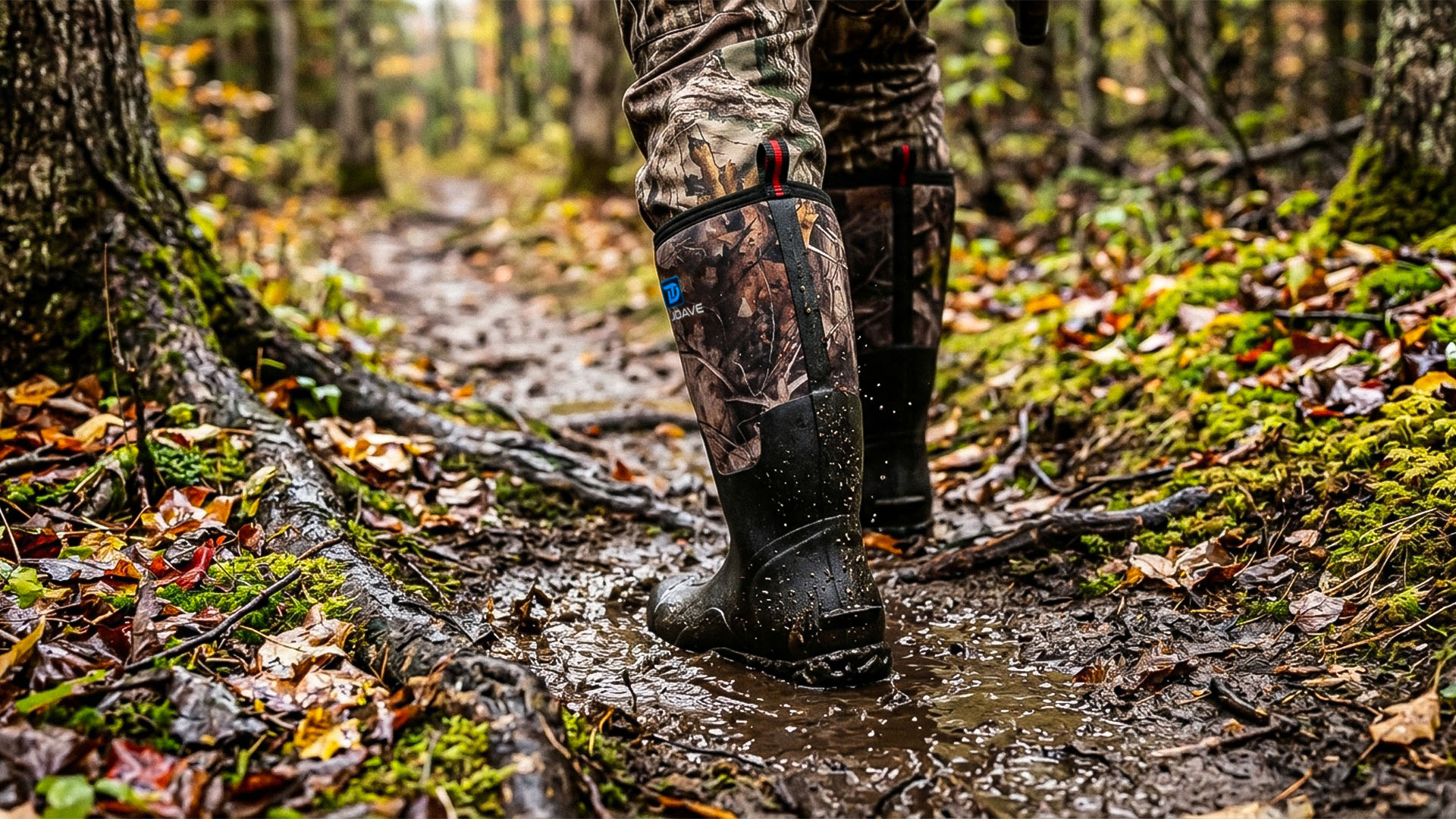
Hunters may benefit from waterproof hunting boots for mountain quail hunting that provide secure heel retention, dependable traction, and enough ankle support for broken Southwestern upland terrain without excessive weight.
Waterproofing Matters More Than Hunters Expect
These mountains can be much wetter than nearby desert flats.
Hunters may encounter:
- Heavy dew
- Frost
- Wet grass
- Snowmelt
- Mud
Morning Grass Can Soak Boots Quickly
A field can look dry from the road.
Walking through knee-high grass transfers water constantly.
Lightweight Boots Still Matter
The hunt involves substantial walking.
Heavy boots increase fatigue.
Balance:
- Support
- Waterproofing
- Weight
Secure Heel Fit Matters on Climbs
Repeated uphill steps create heel movement.
Poor fit causes:
- Hot spots
- Blisters
Toe Room Matters Downhill
Long descents push feet forward.
Make sure footwear fits real mountain conditions.
Moderate Ankle Support Helps
Sidehilling across:
- Grass
- Rock
- Uneven soil
places continuous stress on ankles.
Traction Matters on Wet Oak Leaves
Leaf litter can slide over hard soil and rock.
Use short controlled steps.
Wet Grass Can Hide Rocks
Do not trust the surface.
Lift your feet and place them carefully.
Mud Around Springs Can Be Slick
Green ground may hide saturated soil.
Approach water cautiously.
Tall Rubber Boots Are Usually Less Ideal for Big Mountain Mileage
They can work in wetter low ground.
But repeated climbing may favor supportive waterproof lace-up boots.
Choose Boots for the Full Route
A wet canyon bottom may represent only ten percent of the day.
Think about:
- Elevation gain
- Distance
- Temperature
- Moisture
Gaiters Are Extremely Useful
Gaiters can keep:
- Wet grass
- Seeds
- Mud
- Snow
out of boots.
Frost Can Wet Hunters as Much as Rain
Frozen dew melts against:
- Pants
- Boots
as the morning warms.
Winter Snow Is Possible
Higher-elevation oak country can receive:
- Snow
- Ice
- Frozen mud
Snow Can Reveal Tracks
Fresh snow may show:
- Covey movement
- Feeding areas
but birds can still be difficult to locate.
Snow Hides Rock
Move carefully.
A thin layer can cover unstable footing.
South-Facing Slopes May Clear Earlier
Sunlight can expose:
- Grass
- Feeding habitat
after snowfall.
Cold Mornings Can Become Mild Afternoons
Layering is essential.
Do not carry excessive insulation if the day will warm significantly.
Avoid Sweating on Climbs
Open layers before overheating.
Sweat becomes uncomfortable during stops.
Wind Can Be Strong on Ridges
Carry a lightweight wind-resistant layer.
Hunt Protected Slopes During Harsh Wind
Leeward sides can offer:
- Better comfort
- Better dog work
Scenting Conditions Change With Weather
Dogs may perform differently under:
- Dry wind
- Moist mornings
- Cold air
Trust behavior, not assumptions.
Rain Can Improve Tracking Conditions
Wet soil and vegetation may retain scent better in some situations.
Rain Also Creates Mud
Mountain roads can become difficult quickly.
Do Not Damage Wet Roads
Public and private dirt access can rut badly.
Park and walk if necessary.
Monsoon Storms Can Create Flash Flooding
Canyon systems may receive runoff from storms not directly overhead.
Avoid drainage bottoms during flood risk.
Lightning Is a Major Mountain Hazard
Open oak ridges and grasslands provide limited shelter.
Follow severe-weather safety guidance.
Do Not Remain on Exposed Ridges During Thunderstorms
Move toward safer terrain.
Navigation Matters
Oak savannas can look easy to navigate.
After crossing several ridges and canyons, orientation becomes more difficult.
Offline Maps Are Useful
Download:
- Topography
- Roads
- Property boundaries
- Water
before the hunt.
Mark the Vehicle
Following a covey can pull hunters into another drainage.
Save the starting point.
Carry a Headlamp
Late recovery and long walks may extend beyond sunset.
Darkness Makes Cactus and Rock More Dangerous
Return before dark when possible.
Carry lighting anyway.
Property Boundaries Can Be Complicated
Montezuma quail habitat may occur across:
- National forest
- State land
- Private ranch
- Other managed land
Know legal access.
Open Oak Woodland Does Not Mean Public Access
Use current ownership information.
Private Ranch Permission Matters
Respect:
- Gates
- Roads
- Cattle
- Water
- Dog restrictions
Leave Gates As Directed
Do not automatically open or close them.
Follow landowner instructions.
Livestock Often Shares the Habitat
Cattle may be hidden behind:
- Oak
- Terrain
- Tall grass
Know the background.
Fence Lines Can Be Hard to See
Old barbed wire can disappear in grass.
Watch:
- Dogs
- Footing
Dogs Can Hit Fence Wire at Speed
Know major fence locations whenever possible.
Positive Identification Matters
Southwestern mountain habitat may contain other quail species depending on location.
Hunters should know local identification.
Montezuma Quail Are Distinctive
Adult males show striking head and body patterns.
Females and young birds are less dramatic.
Study all age and sex classes.
Do Not Identify Only the Male
A covey may contain birds that look substantially different.
Use official wildlife resources.
Habitat Alone Is Not Enough
A quail in oak grassland is not automatically Montezuma quail.
Confirm visually.
Regulations Can Be Very Location-Specific
Before hunting, verify current official:
- Season dates
- Daily bag limits
- Possession limits
- License requirements
- Legal methods
- Public-land restrictions
Quail Species May Have Different Season Structures
Do not assume Gambel’s, scaled, and Montezuma quail share identical rules.
Unit or County Rules May Differ
Check the exact jurisdiction.
Public Land May Have Vehicle Restrictions
Stay on authorized roads.
Avoid damaging grassland or wet areas.
Habitat Conservation Is Closely Linked to Grass Quality
Montezuma quail benefit from healthy mountain grasslands.
Loss of dense grass can reduce suitable cover.
Drought Can Be Especially Important
Extended dry conditions may reduce:
- Grass height
- Food
- Moisture
Good Rainfall Can Improve Habitat
Monsoon moisture supports:
- Grass
- Forbs
- Insects
Oak Savanna Conservation Benefits Many Species
These landscapes may also support:
- Deer
- Turkey
- Songbirds
- Pollinators
Avoid Unnecessary Off-Road Damage
Driving across wet grass or meadows can damage habitat.
Protect Springs and Seeps
Small water sources are important to many species.
Do not disturb them.
Pick Up All Trash
Leave no:
- Food wrappers
- Dog supplies
- Equipment debris
behind.
Recovery Can Be Difficult
A downed Montezuma quail can disappear instantly in:
- Tall grass
- Oak leaves
- Brush
Mark the Fall Immediately
Use:
- Oak tree
- Rock
- Grass opening
- Canyon edge
as references.
Use Multiple Landmarks
One oak is rarely enough.
Combine features.
Dogs Can Greatly Improve Recovery
A trained dog can locate birds hidden in dense grass.
Let the Dog Work Before Trampling the Area
Human movement can complicate scent.
Without a Dog, Search Methodically
Start at the marked location.
Work:
- Small circles
- Parallel passes
Birds May Carry Farther Than Expected
Search beyond the apparent fall point.
Ethical Shot Selection Matters
If a bird disappears behind:
- Oak
- Dense brush
- Another hunter
let the opportunity go.
Warm Afternoon Temperatures Require Game Care
Southwestern mountain country can warm quickly.
Keep harvested birds:
- Clean
- Cool
according to current food-safety guidance.
Common Montezuma Quail Hunting Mistakes
Treating Them Like Scaled Quail
Montezuma quail often hold much tighter.
Hunting Open Desert Instead of Oak Grasslands
Elevation and vegetation structure matter.
Ignoring Moisture
Springs, seeps, and green canyon systems can improve habitat.
Walking Too Fast Through Good Grass
Birds may sit almost underfoot.
Wearing Heavy or Non-Waterproof Boots
Mountain grasslands reward waterproof support without unnecessary weight.
Underestimating Wet Morning Grass
Dew and frost can soak footwear quickly.
Letting Dogs Range Too Far
Steep terrain, fences, cactus, and hidden birds require control.
Assuming All Southwestern Quail Regulations Are the Same
Species and jurisdiction rules can differ.
Frequently Asked Questions
Where do Montezuma quail usually live?
Montezuma quail commonly use Southwestern oak savannas, mountain grasslands, pine-oak woodland, grassy canyon slopes, and other higher-elevation habitat containing dense ground cover.
Are oak grasslands good for Montezuma quail?
Yes. Open oak woodland mixed with thick grass provides a strong combination of shade, feeding habitat, security, and ground-level cover.
Do Montezuma quail run like scaled quail?
They can move on foot, but they are well known for holding tightly in dense grass, often allowing hunters or dogs to approach relatively close before flushing.
Does rain affect Montezuma quail habitat?
Yes. Monsoon rainfall strongly influences grass growth, insects, moisture, and seasonal habitat quality. Wet and dry years can produce very different hunting conditions.
What boots are best for Montezuma quail hunting?
Lightweight waterproof hunting boots with secure heel fit, dependable traction on wet grass, mud, rock, and oak leaves, plus moderate ankle support for mountain slopes, are practical.
Can dogs help hunt Montezuma quail?
Yes. Pointing dogs can be extremely effective because the birds often hold tightly. Hunters should manage range, hydration, paw condition, cactus, grass seeds, fences, and elevation carefully.
Why are Montezuma quail hard to find?
They blend exceptionally well with grass and oak habitat, may occur in relatively small coveys, and often remain motionless instead of revealing themselves by running across open ground.
Do Montezuma quail regulations vary?
Yes. Seasons, limits, licenses, species rules, public-land regulations, and access requirements vary by jurisdiction. Hunters should verify current official rules before hunting.
Final Thoughts
Montezuma quail hunting teaches hunters that Southwestern bird country is not always desert.
Climb higher.
The cactus becomes grass.
The creosote gives way to oak.
Dry basins become green canyon slopes.
One spring keeps grass thick.
One north-facing hillside stays cooler.
One open oak bench provides exactly the right combination of feeding cover and security.
And somewhere inside that grass, a covey may be sitting completely still while you walk past.
Slow down.
Trust the dog.
Look for oak-and-grass transitions.
Follow moisture.
Scout current monsoon conditions.
Watch fences and cattle.
Carry enough water.
Wear boots that let you cross wet morning grass, loose rock, muddy seeps, oak litter, canyon slopes, and miles of mountain country without making your feet the weakest part of the hunt.
And when the ground suddenly explodes beneath you after ten silent minutes of perfect dog work, remember the lesson.
Montezuma quail do not need to outrun the hunter.
Sometimes they win simply by refusing to move at all.
