
Raccoon country often looks ordinary during daylight.
A creek cuts through hardwood timber.
Corn grows beside the woods.
A few giant hollow trees stand along the bottom.
Muddy tracks cross an old farm road.
Nothing about the landscape seems unusual.
Then darkness arrives.
The creek bottom changes.
Tracks appear along the mud.
Animals move between crop fields and den trees.
Dogs may strike a trail that was invisible to the hunter only minutes earlier.
That is one of the defining features of raccoon hunting.
Much of the habitat can be studied during daylight.
But raccoon movement is often most noticeable after dark.
Successful hunters learn to connect three basic resources:
- Food
- Water
- Security cover
Find where those features overlap and the landscape becomes easier to understand.
A creek beside mature hardwoods and agricultural food can be much more valuable than miles of random forest.
Raccoons Are Highly Adaptable
Raccoons can occupy many environments across North America.
Productive habitat may include:
- Hardwood forests
- Creek bottoms
- River corridors
- Swamps
- Agricultural edges
- Woodlots
- Wetlands
- Brushy farm country
Their adaptability means hunters may find sign in many places.
The challenge is determining which habitat is being used now.
Start With Water
Creeks and rivers are among the most reliable landscape features for finding raccoon activity.
Waterways provide:
- Travel corridors
- Food
- Muddy tracking surfaces
- Den trees
- Thick vegetation
Even a relatively small creek can organize movement through a large property.
Creek Banks Preserve Excellent Sign
Soft mud can reveal:
- Tracks
- Direction
- Repeated crossings
Fresh raccoon tracks may show distinct toes.
Look along:
- Sandbars
- Mud flats
- Shallow crossings
after rain.
Freshness Matters
A clear footprint does not automatically mean recent activity.
Look for tracks with:
- Sharp edges
- Moist soil
- Little debris inside
Older tracks may become:
- Rounded
- Dry
- Filled with leaves
Current sign is much more valuable.
Rain Can Reset the Creek Bottom
After a storm, old tracks disappear or soften.
New tracks become easier to identify.
This makes post-rain scouting extremely useful.
Check:
- Creek crossings
- Farm roads
- Muddy field edges
soon afterward.
Creek Crossings Can Become High-Use Locations
Raccoons may repeatedly cross where:
- Water is shallow
- Banks are gentle
- Cover continues on both sides
A heavily used crossing may connect:
- Food
- Denning cover
- Travel habitat
Study both sides of the creek.
Sandbars Can Tell a Complete Story
A soft sandbar may contain tracks from:
- Raccoons
- Deer
- Foxes
- Other wildlife
Look for repeated raccoon travel in the same direction.
Several fresh track sets indicate stronger activity than one isolated print.
River Bottom Hardwoods Can Be Excellent Habitat
Large bottomland trees provide:
- Cavities
- Food
- Travel cover
Raccoons frequently use mature hardwood corridors.
Look especially for:
- Hollow trees
- Large oaks
- Sycamores
- Cottonwoods
where locally present.
Den Trees Are Important
Raccoons may use tree cavities for shelter.
Potential den trees often include:
- Large mature hardwoods
- Broken trunks
- Hollow sections
A creek bottom containing many old cavity trees can provide strong security habitat.
One Den Tree Does Not Explain the Whole Pattern
Finding a hollow tree is useful.
But food and travel routes still matter.
Ask:
What surrounds the den?
Look for nearby:
- Creek
- Corn
- Oak mast
- Wetland
Oak Mast Can Attract Raccoons
During mast periods, acorns can influence movement.
Bottomland oak forests may become particularly productive.
Look for tracks around:
- Oak ridges
- Creek flats
- Feeding areas
Mast Availability Changes Patterns
A raccoon that regularly visited a cornfield may begin using hardwoods more heavily when natural food becomes abundant.
Seasonal food shifts matter.
Rescout rather than assuming last month’s route remains best.
Cornfield Edges Can Be Important
Agricultural landscapes frequently provide concentrated food.
Raccoons may travel between:
- Hardwood cover
- Creek
- Cornfields
during nighttime periods.
The transition between forest and crop can become a predictable corridor.
Hunt the Route, Not Only the Field
The field itself may be large.
The better clue is often the narrow trail connecting it to security cover.
Look for:
- Tracks
- Worn grass
- Fence crossings
along field edges.
Harvest Changes the Landscape
Standing corn offers:
- Food
- Concealment
After harvest, much of that security disappears.
Raccoons may shift closer to:
- Creek bottoms
- Hedgerows
- Timber
while continuing to use waste grain.
Corn Stubble Can Still Hold Food
Harvest does not remove every kernel.
Raccoons may continue visiting fields.
Fresh tracks after rain can reveal whether activity remains strong.
Fence Lines Can Create Travel Routes
Farm fences often contain:
- Brush
- Grass
- Trees
that connect crop fields with woodland.
Raccoons may follow these protected edges.
Fence Crossings Can Reveal Repeated Movement
Look for:
- Muddy tracks
- Flattened vegetation
- Hair on wire
around commonly used crossings.
Never damage fencing.
Working Farms Require Respect
Private agricultural land may include:
- Livestock
- Equipment
- Crops
- Homes
Always obtain permission.
Follow the landowner’s instructions exactly.
Leave Gates As Directed
Do not assume every gate should be closed.
Working livestock systems vary.
Ask.
Then leave the gate exactly as instructed.
Muddy Farm Roads Can Be Excellent Tracking Surfaces
After rain, roads record movement.
Tracks may show animals moving between:
- Creek
- Field
- Woodlot
But wet roads are also easy to damage.
Do Not Drive Soft Roads Unnecessarily
Deep ruts create problems for landowners.
When conditions are poor:
Park.
Walk.
Small Woodlots Can Hold Strong Activity
Raccoons do not require enormous wilderness.
A relatively small woodlot can provide:
- Den trees
- Creek access
- Food
especially when surrounded by agriculture.
Habitat Connections Matter More Than Acreage
A forty-acre woodlot connected to a creek and cornfield may be more productive than a much larger isolated forest.
Study the relationships.
Swamp Edges Can Be Excellent
Wetlands provide:
- Water
- Food
- Dense security cover
Look at the transition between:
- Swamp
- Hardwood
- Farm field
rather than pushing blindly into the deepest water.
Beaver Ponds Can Create Productive Corridors
Beaver wetlands may provide:
- Shallow water
- Mud
- Timber
- Aquatic food sources
Raccoons may use dam edges and flooded timber corridors.
Beaver Dams Require Careful Footing
Do not assume a dam is a safe bridge.
They may contain:
- Deep channels
- Loose sticks
- Mud
Use known safe crossings.
Wetland Mud Can Hide Deep Holes
A flat-looking surface can suddenly become:
- Deep mud
- Water
Test uncertain ground.
Do not rush through darkness.
Nighttime Changes How Terrain Feels
A simple creek bottom in daylight can become confusing after dark.
Familiar features disappear.
Water reflections can distort depth.
Trees block distant landmarks.
Scout first.
Daylight Scouting Is Extremely Valuable
Before a nighttime hunt, learn:
- Access route
- Creek crossings
- Property boundaries
- Roads
- Dangerous water
during daylight.
This reduces unnecessary risk later.
Mark Important Locations
Save:
- Vehicle
- Creek crossing
- Gate
- Major trail
on an offline map.
Do not rely only on memory.
Carry Reliable Lighting
Night hunting demands dependable illumination.
Carry a primary light plus backup power.
A second light can be important if the first fails far from the vehicle.
Do Not Depend Only on a Phone Light
Phones are useful.
They are not ideal as the only navigation and lighting system in remote wet woods.
Battery life and weather can become problems.
Headlamps Keep Hands Free
A headlamp can make it easier to manage:
- Navigation
- Mud
- Equipment
- Dogs where legal
while moving through timber.
Avoid Blinding Hunting Partners
Bright lights reduce night vision.
Communicate before sweeping lights across another hunter.
Know Everyone’s Position
Dark timber can hide people only a few yards away.
Maintain:
- Communication
- Known travel direction
- Safe firearm handling
throughout the hunt.
Nighttime Shooting Requires Extra Discipline
Limited visibility increases uncertainty.
Never shoot at:
- Eyeshine alone
- Movement
- Sound
- An unidentified shape
Positive identification is mandatory.
Eyeshine Is Not Species Identification
Many animals produce visible eye reflection.
It does not tell you with certainty whether the animal is:
- Raccoon
- Cat
- Dog
- Other wildlife
Always visually identify the target.
Homes Can Be Hidden Beyond Timber
Rural creek bottoms may run behind:
- Houses
- Barns
- Roads
that are difficult to see after dark.
Study maps and daylight terrain beforehand.
Vegetation Is Not a Backstop
Brush and tree limbs do not automatically create a safe shooting background.
Know what lies beyond the target.
Dogs Are Commonly Associated With Raccoon Hunting
In jurisdictions where legal, trained coonhounds may be used to locate and trail raccoons.
Dogs can work scent through:
- Creek bottoms
- Hardwood forest
- Agricultural edges
and may eventually indicate where an animal has taken refuge.
Dog Regulations Vary
Before hunting with dogs, verify current rules involving:
- Seasons
- Public land
- Dog use
- Property boundaries
Do not assume methods legal in one state are legal elsewhere.
Dogs Can Travel Farther Than Expected
Once following scent, a dog may cross:
- Creek
- Fence
- Road
- Property line
Hunters need to understand surrounding access before releasing dogs.
Property Boundaries Matter Even When the Dog Crosses
A dog entering neighboring property does not automatically give the hunter permission to follow.
Know local laws and landowner agreements.
Roads Are a Serious Dog Hazard
Creek systems and farm woods often cross roads.
Scout nearby:
- Highways
- Farm lanes
before the hunt.
Reflective Dog Gear Can Improve Visibility
Where lawful and appropriate, visible tracking equipment can make it easier to locate dogs at night.
Reliable control and awareness remain essential.
GPS Tracking Can Help With Location Awareness
Electronic dog tracking may help hunters understand where dogs are moving where permitted.
But electronics do not replace:
- Training
- Land-access knowledge
- Safety judgment
Creek Crossings Can Be Difficult for Dogs
Fast or deep water can create danger.
Do not encourage dogs through unsafe crossings.
Choose safer routes.
Cold Water Can Affect Dogs Quickly
Late-season creek hunting may involve very cold water.
Monitor dogs for:
- Shivering
- Fatigue
- Reduced coordination
Carry Clean Water
Do not rely on farm drainage or creek water as the only hydration source for dogs.
Bring clean water when practical.
Check Dogs After the Hunt
Inspect:
- Paws
- Eyes
- Skin
for injuries from:
- Briars
- Wire
- Rocks
Barbed Wire Is Common in Farm Country
Dogs and hunters may encounter fencing hidden by darkness.
Slow down around field edges.
Look for posts before crossing.
Old Wire Can Be Harder to See Than Active Fencing
Abandoned wire may lie:
- In leaves
- Across creek banks
where it creates a trip hazard.
Briars Can Be Severe in Creek Bottoms
Floodplain edges often contain:
- Blackberry
- Greenbrier
- Thick brush
Durable clothing can make travel much easier.
Brush-Resistant Pants Are Useful
Nighttime movement through briars is difficult enough.
Lightweight fabric that tears easily creates another problem.
Choose durable layers.
Gloves Can Protect Hands
Fence crossings and thorny vegetation can scratch hands.
Light gloves provide useful protection.
Eye Protection Can Be Valuable
Branches are much harder to see at night.
Clear protective glasses can help reduce eye injuries.
Creek Bottoms Are a Footwear Test
A typical hunt may involve:
- Mud
- Wet leaves
- Shallow creek water
- Grass
- Slippery banks
- Farm roads
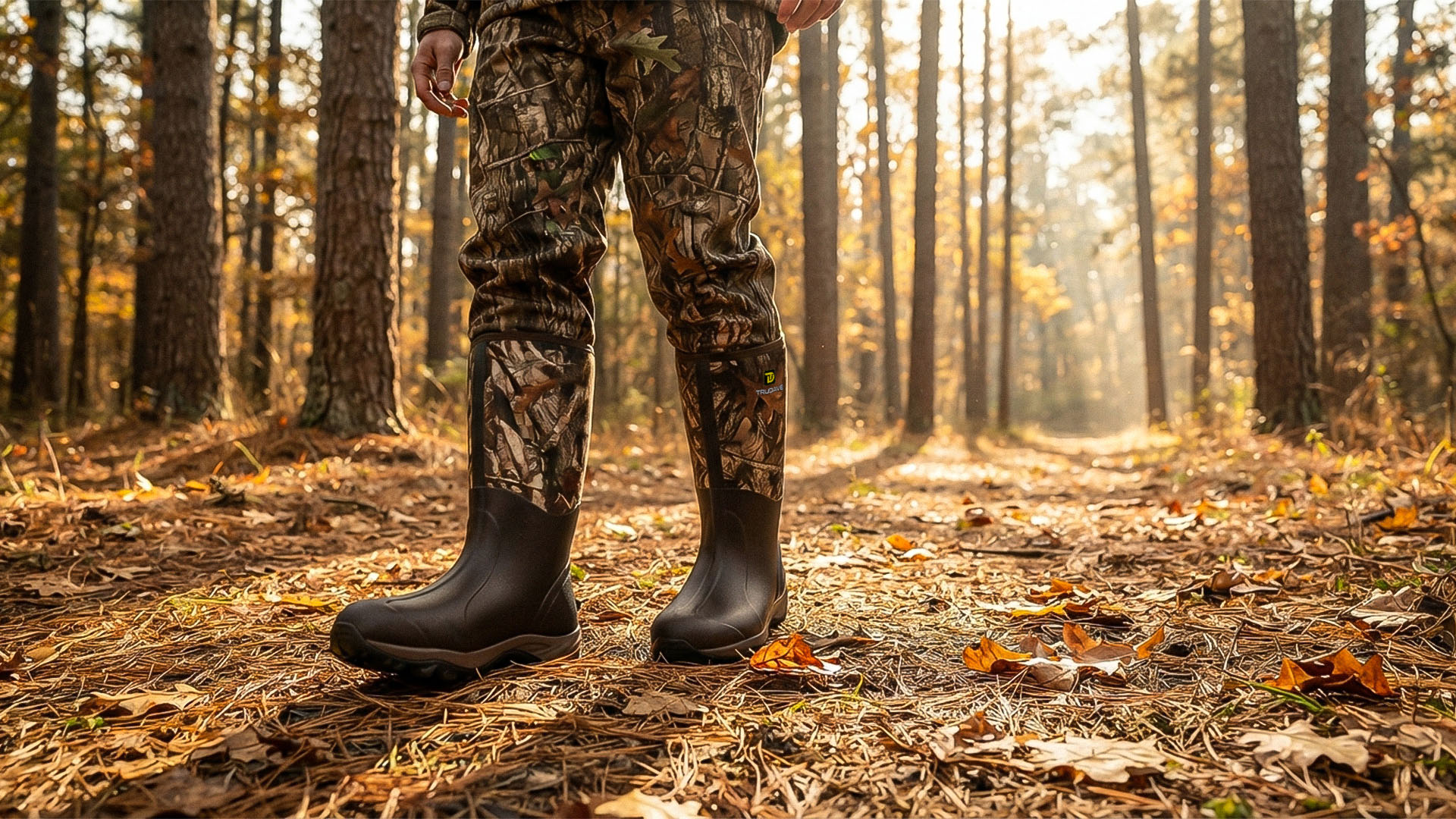
Hunters may benefit from waterproof hunting boots for creek bottom hunting that provide secure heel retention, dependable mud traction, and enough waterproof protection for long nighttime walks through wet hardwood terrain.
Waterproofing Matters Immediately After Rain
One creek crossing is not the only moisture source.
Wet:
- Grass
- Leaves
- Mud
can gradually soak non-waterproof footwear.
Tall Rubber Boots Can Work Well
Rubber hunting boots are practical for:
- Mud
- Shallow creek edges
- Wet fields
They provide reliable moisture protection.
Fit Is Critical During Long Night Walks
Loose rubber boots create heel movement.
Over several miles this can lead to:
- Blisters
- Hot spots
- Fatigue
Choose secure footwear.
Lace-Up Waterproof Boots May Be Better for Rolling Terrain
Where the property includes:
- Hills
- Long forest roads
- Limited shallow water
supportive waterproof lace-up boots may provide more walking control.
Choose Footwear for the Whole Route
Do not select equipment only for the creek.
Consider:
- Mileage
- Mud
- Slopes
- Temperature
Wet Leaves Can Be Extremely Slippery
Leaves may slide across:
- Clay
- Rock
- Roots
Use short controlled steps.
Creek Banks Can Collapse
Soft banks may be undercut by water.
Do not stand directly on uncertain edges.
Fallen Logs Are Dangerous at Night
Wet logs can be:
- Slick
- Rotten
- Unstable
Walk around them whenever practical.
Water Depth Is Difficult to Judge in Darkness
A shallow-looking creek may contain:
- Deep holes
- Channels
Use a known crossing.
A Walking Stick Can Help
A sturdy stick can help test:
- Mud
- Water depth
- Bank stability
before stepping.
Do Not Wade Unknown Fast Water
Raccoon habitat may follow rivers and large creeks.
Avoid dangerous crossings.
Take the longer safe route.
Gaiters Can Help in Wet Vegetation
Where water remains below boot height, gaiters may reduce moisture entering from above.
They can also keep:
- Seeds
- Leaves
out.
Cold Rain Creates a Different Challenge
Wet nights can rapidly lower body temperature.
Bring appropriate waterproof outerwear.
Stay dry.
Hypothermia Is Possible Above Freezing
Rain, wind, and inactivity can reduce body temperature even without snow.
Watch for:
- Shivering
- Confusion
- Reduced coordination
Layer for Walking and Waiting
Hunters may alternate between:
- Active walking
- Standing while listening
Use layers that can be adjusted.
Avoid soaking clothing with sweat.
Warm Nights Create Their Own Problems
Early-season hunts may be:
- Hot
- Humid
Creek bottoms can feel especially warm.
Carry water.
Mosquitoes Can Be Severe
Wet hardwoods may contain heavy insect activity.
Use appropriate repellent and clothing.
Constant swatting makes nighttime hunting unpleasant.
Ticks Remain a Concern
Check clothing and skin after hunts in:
- Brush
- Tall grass
- Hardwood edges
Use appropriate prevention.
Snakes May Be Active in Warm Conditions
Depending on region and season, venomous snakes may occur around:
- Creeks
- Logs
- Rock
Use caution in darkness.
Never Reach Blindly Into Hollow Trees
Tree cavities may contain:
- Wildlife
- Sharp debris
Observe from a safe distance.
Do not place hands into unknown cavities.
Den Trees Should Be Respected
Tree cavities are important wildlife habitat.
Do not damage trees unnecessarily.
Follow legal hunting methods and land-management rules.
Sows With Young Require Identification Awareness
Wildlife regulations can contain restrictions or ethical considerations regarding different animals and seasons.
Positive identification matters.
Regulations Vary Significantly
Raccoon seasons and hunting methods differ by jurisdiction.
Before hunting, verify current official rules for:
- Season dates
- Bag or possession limits where applicable
- License requirements
- Hunting hours
- Dog use
- Legal weapons
- Night hunting
- Public-land restrictions
Night-Hunting Rules Deserve Special Attention
Rules involving nighttime pursuit can differ greatly by state and property.
Do not assume a method shown online is legal in your area.
Artificial Light Rules Can Differ
Use of:
- Handheld lights
- Headlamps
- Other lighting equipment
for hunting purposes may be regulated.
Verify current rules.
Public Land May Have Additional Restrictions
A method allowed statewide can still be prohibited on a specific:
- Wildlife management area
- National forest property
- Other public tract
Check the exact property.
Private Landowners May Set Stricter Rules
Permission may include limitations on:
- Dogs
- Nighttime access
- Vehicles
- Roads
Follow them exactly.
Do Not Assume “Furbearer” Means Unrestricted Hunting
Species classification varies.
Hunting laws still apply.
Always verify the specific rules.
Harvest Reporting May Apply in Some Areas
Certain jurisdictions may require:
- Registration
- Reporting
- Other documentation
Know requirements before the hunt.
Identification With Other Species Is Important
Nighttime conditions make mistakes easier.
Raccoon habitat can overlap with:
- Opossum
- Domestic cats
- Other mammals
Confirm the target completely.
Never Use Silhouette Alone
Darkness removes color and detail.
Use sufficient legal lighting and wait for clear identification.
Sound Is Not Identification
A branch moving above a dog does not confirm what animal is present.
See the animal clearly.
Trees Create Difficult Shooting Backgrounds
Upward shots deserve particular caution.
A tree canopy is not a safe backstop.
Know where the projectile could travel beyond the target.
Avoid Shooting Toward Roads or Homes
Creeks often run behind developed rural property.
Map surrounding structures before the hunt.
Recovery Begins With Marking the Location
Darkness makes every tree look similar.
Use:
- GPS waypoint
- Creek bend
- Large trunk
- Fence corner
to mark important locations.
Do Not Rush Through Mud During Recovery
Fast movement increases the chance of:
- Falls
- Missed hazards
- Crossing into unsafe terrain
Slow down.
Water Can Complicate Recovery
If an animal enters:
- Creek
- Flooded bottomland
do not enter unsafe water.
Plan the safest route.
Handle Harvested Wildlife Properly
Use appropriate hygiene when handling wild mammals.
Wear gloves when suitable.
Follow current food-safety and wildlife-health guidance.
Avoid Handling Abnormally Acting Animals Casually
If an animal shows signs of:
- Disorientation
- Unusual aggression
- Severe illness
use caution and follow local wildlife guidance.
Warm Weather Requires Prompt Game Care
Early-season nights can remain warm.
Handle harvested game promptly according to local guidance and intended lawful use.
Habitat Conservation Benefits Raccoons and Many Other Species
Healthy riparian corridors provide habitat for:
- Raccoons
- Deer
- Turkey
- Birds
- Amphibians
Protecting creek vegetation benefits entire ecosystems.
Large Hollow Trees Have High Wildlife Value
Cavity trees may support many species.
Responsible land management often benefits from retaining safe mature den trees where appropriate.
Wetland Buffers Matter
Vegetated creek edges help:
- Stabilize soil
- Filter runoff
- Provide wildlife cover
Hunters benefit directly from healthy riparian habitat.
Common Raccoon Hunting Mistakes
Hunting Random Forest Instead of Creek Corridors
Water, food, and den cover often organize movement.
Following Old Tracks
Fresh mud sign matters more.
Ignoring Agricultural Food
Crop edges can strongly influence travel.
Entering Unknown Creek Bottoms for the First Time at Night
Scout during daylight.
Wearing Leaky or Loose Boots
Mud, water, and long nighttime walks punish poor footwear quickly.
Letting Dogs Hunt Without Understanding Roads and Property Lines
Creek corridors can cross multiple hazards and ownership boundaries.
Using Eyeshine as Identification
Positive species identification is mandatory.
Assuming Night-Hunting Rules Are the Same Everywhere
Regulations vary widely.
Frequently Asked Questions
Where do raccoons usually live?
Raccoons commonly use hardwood forests, creek bottoms, river corridors, swamps, agricultural edges, woodlots, and other habitats providing water, food, and secure denning cover.
Are creek bottoms good places for raccoon hunting?
Yes. Creek systems can provide travel routes, food, muddy tracking surfaces, water, and mature den trees.
Is raccoon hunting good after rain?
Rain can reset muddy tracking surfaces and make fresh movement easier to identify, although it also creates slippery banks and more difficult access.
Do raccoons use cornfields?
They can use agricultural food sources such as corn where available, particularly when fields are close to secure timber and water.
Can raccoons use hollow trees as dens?
Yes. Mature cavity trees can provide important shelter and denning habitat.
What boots are best for raccoon hunting?
Waterproof hunting boots with secure heel fit, good traction on mud, wet leaves, and creek banks, and enough protection for shallow water and long nighttime walking are practical.
Can dogs be used for raccoon hunting?
In many areas trained hounds are traditionally used, but dog hunting rules vary by jurisdiction and property. Hunters should verify current regulations before hunting.
Final Thoughts
Raccoon hunting teaches hunters that nighttime movement becomes easier to understand when the daylight landscape is studied first.
One creek creates a travel corridor.
One cornfield provides food.
One hollow hardwood provides security.
One muddy crossing records last night’s movement.
One fence line connects all of them.
The pattern is already there before darkness arrives.
Scout during daylight.
Read fresh mud.
Follow creek systems.
Study field edges.
Know every road and property boundary.
Respect the water.
Keep track of dogs where they are legally used.
Wear boots that let you cross wet leaves, sticky mud, shallow creeks, farm roads, and hardwood bottoms without making your feet the weakest part of a long night.
And when fresh tracks cross a creek bank only hours after a rainstorm, pay attention.
The mud is doing more than showing you that a raccoon passed.
It is showing you exactly how the animal connects the landscape after dark.
