
Gray squirrel hunting looks simple until you actually enter the woods.
The forest is full of oak trees.
Leaves cover the ground.
Branches stretch across the canopy.
Every trunk seems capable of holding a squirrel.
A hunter walks slowly along a ridge.
Nothing moves.
Then an acorn shell drops through the leaves.
A branch shakes.
A gray tail disappears around the back of an oak trunk.
The squirrel was there the entire time.
That is squirrel hunting.
The challenge is rarely finding forest.
The challenge is finding the part of the forest squirrels are using right now.
Gray squirrels respond strongly to food.
When one group of trees begins producing heavily, the woods around it can suddenly become active.
When the food disappears, squirrel activity can shift quickly.
Successful hunters learn to follow:
- Acorns
- Hickory nuts
- Beech mast
- Walnuts
- Creek-bottom food
- Seasonal tree crops
Find the food first.
Then slow down enough to notice the squirrels using it.
Gray Squirrels Are Hardwood-Forest Specialists
Gray squirrels commonly use deciduous and mixed forests containing mature mast-producing trees.
Productive habitat may include:
- Oak ridges
- Hickory forest
- Creek bottoms
- Beech stands
- Mixed hardwoods
- Woodlot edges
- Mature suburban-rural forest where hunting is legal
- Agricultural woodland transitions
Large mature trees provide:
- Food
- Den sites
- Travel routes
- Escape cover
But not every mature forest holds the same number of squirrels.
Food production changes everything.
Start With Mast
One of the most important questions during squirrel season is:
Which trees are producing right now?
Potential foods include:
- Acorns
- Hickory nuts
- Beechnuts
- Walnuts
- Other seasonal mast
A beautiful oak ridge with no current mast may hold fewer squirrels than a small creek-bottom stand loaded with nuts.
Not Every Oak Produces Equally
Two oak trees growing side by side may produce very different amounts of mast.
Look on the ground.
Search for:
- Acorns
- Cut shells
- Feeding debris
- Fresh squirrel activity
Actual food matters more than tree identification alone.
Feeding Debris Is One of the Best Clues
Squirrels often leave pieces of food beneath feeding trees.
Look for:
- Cut nut shells
- Acorn caps
- Chewed fragments
- Fresh debris
beneath the canopy.
A concentrated pile can indicate regular use.
Fresh Shells Matter More Than Old Shells
Old feeding debris may remain for weeks.
Fresh shell pieces often look:
- Clean
- Moist
- Bright inside
while older pieces become:
- Dark
- Weathered
- Leaf-covered
Current sign deserves the most attention.
Hickory Trees Can Be Extremely Productive
When hickory nuts are available, squirrels may concentrate around them.
Listen for:
- Nut cutting
- Shell fragments falling
- Branch movement
Sometimes you hear the squirrel before you see it.
Hickory Feeding Can Be Noisy
A feeding squirrel may drop:
- Shell pieces
- Nut fragments
through the canopy.
In a quiet forest, that sound can travel surprisingly far.
Stop.
Listen.
Do not immediately walk toward every noise.
Try to locate the tree first.
Oak Ridges Are Classic Squirrel Habitat
Oak-covered ridges can provide large amounts of fall food.
They also offer excellent canopy connections.
Squirrels can travel from tree to tree without spending much time on the ground.
Look for ridges containing:
- Multiple producing oaks
- Nearby den trees
- Thick canopy
Ridge Shoulders Can Be Better Than the Top
A ridge crest may be windy and exposed.
Squirrels may spend more time just below the top where:
- Trees are larger
- Wind is reduced
- Food remains available
Hunt both sides.
South-Facing Slopes Can Warm Earlier
During cold weather, sun-exposed slopes may become active sooner.
Squirrels may leave dens and begin feeding earlier where sunlight reaches the trees.
Watch sunny hardwood slopes on cold mornings.
North-Facing Slopes Can Hold Moist Forest
Cooler slopes may support different tree communities.
Beech, oak, and other mast species may create productive habitat.
Do not ignore them simply because they receive less sunlight.
Creek Bottoms Can Be Excellent
Bottomland hardwoods often contain:
- Mature oaks
- Hickories
- Walnuts
- Large den trees
Creek systems also provide travel structure.
A narrow creek bottom can concentrate several food sources in one place.
Creek Banks Create Quiet Travel Corridors
Hunters can use creek noise and terrain to move carefully.
But wet creek bottoms also create:
- Mud
- Slick roots
- Water crossings
Good access matters.
Large Den Trees Are Important
Gray squirrels may use cavities in mature trees.
Look for:
- Large hardwoods
- Hollow trunks
- Visible openings
- Old woodpecker cavities
A productive feeding zone near den trees deserves extra attention.
Tree Cavities Can Hold Multiple Squirrels
During poor weather or cold periods, several squirrels may use the same general denning area.
Do not assume a quiet tree means the woods are empty.
Weather may simply reduce activity temporarily.
Leaf Nests Can Also Indicate Squirrel Use
Squirrels may build leafy nests high in trees.
Look for dense balls of leaves positioned in branch forks.
One nest does not guarantee current hunting activity.
But multiple nests in productive mast habitat are a good sign.
Do Not Hunt Only Nest Trees
Nests indicate habitat use.
Food still controls much of daily activity.
Find where squirrels are feeding now.
Early Morning Can Be Productive
At first light, squirrels may leave den sites and move toward food.
Listen for:
- Bark movement
- Leaves
- Nut cutting
- Alarm calls
The woods can reveal activity before visibility improves.
Do Not Rush Into the Woods at Daylight
A fast noisy entry can push squirrels into trees before you reach productive habitat.
Move quietly.
Use trails when possible.
Midmorning Can Be Excellent
Squirrels do not always move immediately at first light.
Cold conditions may delay activity.
As the woods warm, movement can increase.
Stay patient.
Midday Activity Depends on Weather
On mild fall days, squirrels may continue feeding well into midday.
During colder weather, activity may become more concentrated.
Use current conditions rather than rigid assumptions.
Late Afternoon Can Produce Another Feeding Period
Before returning to dens, squirrels may feed again.
Watch productive mast trees during the last part of legal hunting time.
Wind Makes Squirrel Hunting Harder
Strong wind moves:
- Leaves
- Branches
- Entire treetops
This makes spotting squirrels difficult.
It also masks subtle feeding sounds.
Hunt Protected Slopes During Wind
Look for:
- Creek bottoms
- Leeward ridges
- Sheltered hollows
where canopy movement is reduced.
Squirrels may prefer these calmer areas too.
Calm Mornings Make Sound Extremely Useful
On still mornings, hunters may hear:
- Bark scratching
- Acorn cutting
- Dropped shells
- Squirrel chatter
from surprising distances.
Use your ears as much as your eyes.
Rain Changes the Forest
Light rain can reduce leaf noise.
Wet leaves become quieter underfoot.
This can make still-hunting more effective.
Squirrel Hunting After Rain Can Be Excellent
Once rain stops, squirrels may resume feeding.
The wet forest gives hunters quieter movement.
Look around:
- Oak ridges
- Creek bottoms
- Producing hickories
Heavy Rain Can Delay Activity
During strong storms, squirrels may stay in dens longer.
After the weather improves, feeding activity may increase.
Patience can pay off.
Wet Leaves Improve Stealth but Hurt Footing
The same wet leaves that make walking quiet can hide:
- Mud
- Roots
- Rock
Move carefully.
Fog Can Make Canopy Hunting Difficult
Low fog can reduce visibility in tall hardwoods.
Use the time to hunt:
- Lower slopes
- Creek bottoms
- Shorter-distance habitat
rather than trying to scan distant canopy.
Still-Hunting Is One of the Best Methods
Move slowly through productive hardwoods.
A simple rhythm works well:
- Walk several steps.
- Stop.
- Scan the canopy.
- Listen.
- Move again.
Spend more time stopped than walking.
Continuous Walking Misses Squirrels
A squirrel may freeze when it detects movement.
If you keep walking, you may pass directly beneath it.
Stopping forces the woods to become quiet again.
Sometimes the squirrel moves first.
Use Large Trees as Concealment
Move from:
- Trunk
- Brush patch
- Terrain fold
to the next.
Avoid crossing wide open forest gaps unnecessarily.
Squirrels Often Move to the Opposite Side of the Tree
One classic squirrel behavior is circling a trunk to remain hidden from the hunter.
If you saw a squirrel disappear:
Stop.
Do not chase directly around the tree.
Wait for the Squirrel to Reveal Itself
A squirrel hiding behind the trunk may eventually:
- Peek
- Shift branches
- Move higher
Patience often works better than constant repositioning.
Use a Partner Carefully
Where safe and legal, a second hunter can sometimes change the viewing angle around a large tree.
Both hunters must maintain:
- Clear communication
- Safe firearm direction
- Known positions
Safety comes first.
Scan Branch Junctions
Squirrels can flatten themselves along large limbs.
Look where branches meet:
- Main trunk
- Heavy limbs
- Leaf clusters
A small section of tail or head may be the only clue.
Look for Horizontal Shapes
Tree trunks are mostly vertical.
A squirrel body often creates a small horizontal shape against them.
Train your eyes to notice that difference.
Tail Movement Is Often the First Clue
The tail may:
- Flick
- Shift
- Hang below a branch
before the whole squirrel becomes visible.
Watch suspicious branch areas carefully.
Binoculars Can Be Useful
Small binoculars help hunters inspect:
- High branches
- Tree cavities
- Distant feeding trees
without moving closer.
This can reduce unnecessary disturbance.
Do Not Glass While Walking
Forest floors contain:
- Roots
- Logs
- Holes
Stop first.
Then use optics.
Mature Forest Can Look Too Open
Open hardwoods may lack ground vegetation but still contain excellent squirrel habitat if mast production is strong.
This differs from rabbit hunting, where ground-level cover often matters more.
Young Forest Can Be Less Productive for Gray Squirrels
Dense saplings may offer cover but fewer mature mast trees.
The best squirrel country often includes older food-producing trees.
Forest Edges Can Still Be Valuable
Where mature hardwood meets:
- Crop field
- Pasture
- Young timber
squirrels may use both habitats.
Edge trees often receive good sunlight and can produce heavily.
Cornfield Edges Can Attract Activity
Where legal and appropriate, squirrels may feed around agricultural grain.
Look for woods immediately beside:
- Corn
- Other crops
But property boundaries and shooting safety matter greatly.
Do Not Shoot Toward Fields Without Knowing the Background
Farm country may contain:
- Homes
- Livestock
- Roads
- Equipment
beyond the trees.
Scout thoroughly.
Fence Rows Can Connect Woodlots
Squirrels may use tree lines as travel corridors between larger forest blocks.
Where mature trees connect:
- Woodlot
- Creek
- Farm edge
look for activity.
Small Woodlots Can Be Productive
A small hardwood block surrounded by agriculture may contain concentrated squirrel habitat.
Size alone does not determine quality.
Food does.
Public Forests Can Offer Excellent Hunting
Gray squirrel habitat may occur on:
- State forests
- Wildlife management areas
- National forests
- Other public lands where hunting is permitted
Look for mature hardwood stands.
Easy Trails Receive More Human Pressure
Squirrels near frequently used trails may become wary.
Walk secondary ridges and creek bottoms when safe and legal.
But You Do Not Always Need to Hike Miles
A producing oak stand only a short distance from parking may hold plenty of squirrels if few hunters notice it.
Habitat quality matters more than distance.
Look Up Before Walking Farther
One of the easiest mistakes is leaving a productive tree too quickly.
If fresh cuttings are falling:
Stay.
The squirrel may simply be hidden.
Alarm Calls Can Reveal Squirrels
Squirrels may vocalize when disturbed.
Learn common local squirrel sounds.
An alarm call can reveal:
- Location
- Direction
but does not always mean the animal is fully visible.
Birds Can Reveal Predator Activity Too
Songbirds may become alarmed around:
- Hawks
- Other predators
This can temporarily affect squirrel movement.
Pay attention to the entire woods.
Hawks Influence Squirrel Behavior
In open canopy conditions, squirrels may spend more time close to tree trunks and dense branches.
Predator pressure shapes how they move.
Dogs Can Be Used Where Legal
Some hunters use trained squirrel dogs to locate and tree squirrels.
Dog regulations vary by jurisdiction.
Check current rules.
Treeing Dogs Change the Hunt
A dog may locate squirrels by:
- Ground scent
- Tree scent
- Visual activity
and direct hunters toward occupied trees.
Dogs Need Control Around Roads
Small woodlots may sit beside:
- Highways
- Farm roads
Maintain control.
Do not release dogs into unsafe traffic situations.
Check Dogs Around Fences
Farm woods can contain:
- Barbed wire
- Old woven wire
that may injure running dogs.
Carry Water for Dogs
Even cool-weather working dogs need hydration.
Bring clean water when practical.
Hunting Without Dogs Works Extremely Well
Gray squirrel hunting is naturally suited to:
- Still-hunting
- Sitting near feeding trees
A hunter does not need dogs to be effective.
Sitting Can Be Better Than Walking
Once a productive mast area is found, choose a quiet location and wait.
Squirrels disturbed by your arrival may resume activity after the woods settles.
Give the Woods Time
After entering a feeding ridge:
Sit quietly for fifteen to thirty minutes.
The exact timing depends on conditions.
The main principle is patience.
Do Not Constantly Change Trees
A productive area may seem inactive simply because squirrels noticed you.
Let them settle.
Sitting Near Multiple Food Trees Is Better
Choose a position where you can watch:
- Several oaks
- Hickories
- Creek trees
instead of one isolated trunk.
Use Natural Back Cover
Sit against:
- Large tree
- Terrain
- Brush
to reduce visible movement.
Avoid Skylining on Ridges
A hunter standing on a ridge crest is easier to detect.
Stay slightly below the top where possible.
Forest Roads Can Be Useful Scouting Routes
Old logging roads provide:
- Quiet access after rain
- Clear travel
- Track visibility
Look for fresh nut debris and squirrel crossings.
Closed Roads Can Be Especially Good
Less vehicle traffic reduces disturbance.
Walk slowly and watch mature trees along the edges.
Rain Makes Roads Muddy
After storms, logging roads can become:
- Slick
- Rutted
- Soft
This is where footwear becomes important.
Squirrel Hunting Is Harder on Boots Than It Looks
A typical squirrel hunt may involve:
- Wet leaves
- Morning dew
- Mud
- Creek crossings
- Hills
- Root-covered slopes
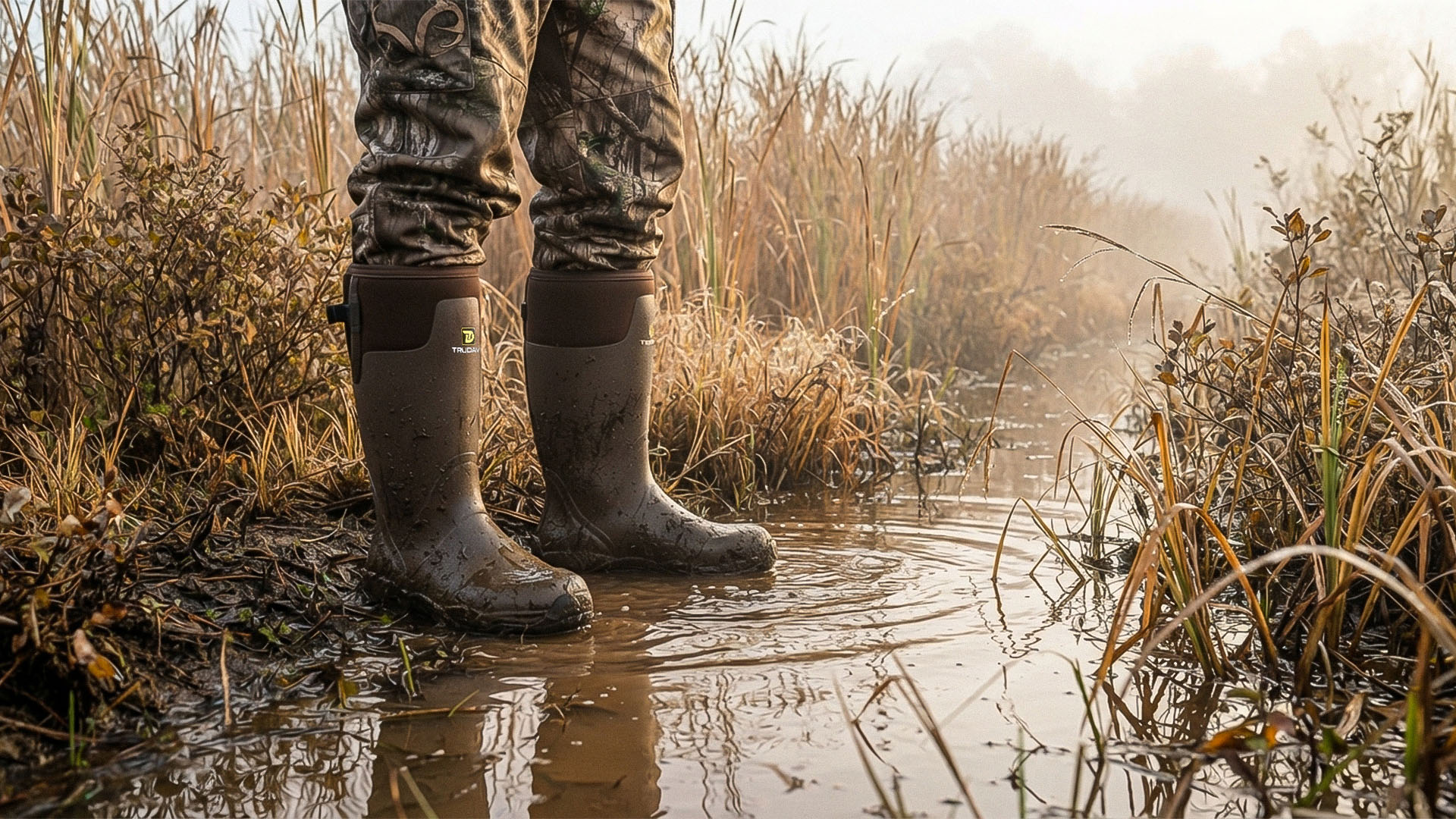
Hunters may benefit from waterproof hunting boots for squirrel hunting that provide secure heel retention, dependable traction, and enough support for long hardwood-forest walks without unnecessary bulk.
Waterproofing Matters on Dewy Mornings
A forest can look dry.
But low vegetation and grass along access trails may be soaked.
Non-waterproof footwear can become wet before reaching the first oak ridge.
Lightweight Boots Are Usually Practical
Squirrel hunting involves lots of:
- Walking
- Stopping
- Repositioning
Heavy mountain boots may be unnecessary in moderate terrain.
Balance support and weight.
Lace-Up Waterproof Boots Work Well in Rolling Woods
They can provide:
- Secure fit
- Traction
- Walking comfort
for long ridge-and-hollow hunts.
Rubber Boots Can Work in Wet Bottomlands
Tall waterproof rubber boots may be useful around:
- Mud
- Creek bottoms
- Flooded hardwood edges
Fit is still critical.
Loose Boots Create Blisters
Constant walking causes heel movement.
Choose footwear that stays secure.
Traction Matters on Wet Leaves
A thick layer of leaves can slide over:
- Rock
- Clay
- Roots
Take shorter steps on slopes.
Wet Roots Are Extremely Slippery
Avoid stepping directly on smooth roots when possible.
Good tread helps, but careful foot placement matters more.
Creek Banks Can Be Dangerous
Mud and leaves may conceal steep drop-offs.
Use known safe crossings.
Do Not Jump Creeks With a Loaded Firearm
Choose a safe crossing.
Maintain proper firearm handling.
The hunt is not worth a fall.
Fallen Logs Are Often Slick
Wet bark can become almost frictionless.
Step around unstable logs when possible.
Gaiters Can Help
Low gaiters may reduce:
- Wet leaves
- Seeds
- Mud
entering footwear.
They are especially useful during wet early-season hunts.
Brush-Resistant Pants Can Be Useful
Some squirrel habitat contains:
- Briars
- Young brush
- Blackberry
Durable pants make creek-bottom travel easier.
Eye Protection Can Help
Branches and vines can strike the face.
Clear glasses reduce injury risk during thick-cover movement.
Ticks Can Be Present During Warm Seasons
Early squirrel seasons may overlap high tick activity.
Use appropriate prevention.
Check:
- Skin
- Clothing
- Gear
after the hunt.
Mosquitoes Can Be Heavy Near Creek Bottoms
Warm humid hardwoods may hold mosquitoes.
Use appropriate repellent and clothing.
Snakes May Be Active During Early Season
Depending on region and weather, venomous snakes may occur in:
- Rock
- Logs
- Creek bottoms
Watch footing carefully.
Warm Weather Requires Hydration
Early fall squirrel hunting can become hot.
Carry water.
Do not assume shaded forest eliminates heat stress.
Humidity Can Increase Fatigue
Steep hardwood terrain combined with humidity can be physically demanding.
Take breaks.
Cold Weather Changes Squirrel Activity
During colder conditions, squirrels may delay leaving dens.
Sun-exposed feeding areas can become more productive later in the morning.
Snow Can Make Tracks Visible
Where snow occurs, hunters may see squirrel travel between:
- Den trees
- Feeding areas
Track patterns can reveal heavily used woods.
Snow Also Reveals Feeding Debris
Dark nut shells can stand out clearly against white ground.
Use them to locate active feeding trees.
Windblown Ridge Tops Can Be Uncomfortable
During winter wind, squirrels may prefer:
- Leeward slopes
- Protected creek bottoms
Hunt terrain that offers shelter.
Sunny Trees Can Produce Midday Activity
A calm sunny winter day may bring squirrels out after a cold morning.
Do not automatically end the hunt early.
Safe Shooting Angles Matter
Squirrels are frequently above the hunter.
That creates unique background concerns.
Never take a shot without knowing what lies beyond the animal.
Upward Shots Require Extra Awareness
A tree canopy is not a reliable backstop.
Consider:
- Roads
- Homes
- Other hunters
far beyond the tree.
Do Not Shoot Toward a Ridge With Unknown Terrain Beyond
Even when the squirrel is in a tree, the projectile continues past it if missed.
Know the entire direction.
Public-Land Hunters Need to Know Other Users Are Nearby
Hardwood forests may also contain:
- Deer hunters
- Hikers
- Other small-game hunters
Wear required visibility equipment and remain aware.
Blaze Orange Requirements Vary
Check current local rules.
Some jurisdictions require high-visibility clothing during certain overlapping seasons.
Positive Identification Matters
Gray squirrels may overlap with:
- Fox squirrels
- Red squirrels
- Other species
depending on region.
Know which species are legal.
Color Alone Is Not Always Enough
Regional squirrel coloration can vary.
Use:
- Body size
- Tail
- Habitat
- Local identification guidance
together.
Regulations Vary by State
Before hunting, verify current:
- Season dates
- Bag limits
- Possession limits
- License requirements
- Legal methods
- Public-land restrictions
Do Not Assume All Squirrel Species Share the Same Season
Species rules may differ.
Check the exact regulation.
Public Areas May Add Special Restrictions
Some properties may have rules involving:
- Weapon type
- Hunting zones
- Overlapping seasons
Always check property-specific information.
Private Woodlots Require Permission
Small private hardwoods can offer excellent hunting.
Always obtain permission.
Respect:
- Crops
- Roads
- Livestock
- Homes
Do Not Damage Farm Roads After Rain
Soft woodland roads rut easily.
Park where directed.
Walk instead.
Harvested Squirrels Require Proper Handling
Keep game:
- Clean
- Cool
according to current food-safety guidance.
Warm Early Seasons Require Faster Cooling
Do not leave harvested squirrels in direct sun.
Use appropriate cooling methods.
Wear Gloves When Appropriate
Clean field-processing practices help reduce exposure to wildlife pathogens.
Follow current local health guidance where relevant.
Recovery Begins With Marking the Fall
A squirrel can disappear in:
- Leaves
- Ferns
- Brush
after falling.
Mark the exact location.
Do Not Keep Looking Up Before Recovering
If another squirrel remains in the tree, it can be tempting to stay focused on it.
Recover the first animal carefully before creating unnecessary confusion.
Leaf Litter Can Hide a Squirrel Completely
Search around:
- Logs
- Tree bases
- Brush
methodically.
Dogs Can Help With Recovery
Where trained squirrel dogs are used legally, they may help locate downed game.
Still mark the fall visually.
Common Gray Squirrel Hunting Mistakes
Hunting Every Hardwood Stand Equally
Find the trees producing food now.
Walking Too Fast
Squirrels often freeze and hide behind trunks.
Leaving a Productive Tree Too Quickly
Feeding squirrels may reappear after the woods settles.
Ignoring Creek Bottoms
Large hardwoods and mast can make them excellent habitat.
Hunting Only at First Light
Weather can shift activity later.
Wearing Non-Waterproof Footwear
Dew, wet leaves, mud, and creek bottoms can soak feet quickly.
Shooting Into the Canopy Without Considering the Background
Tree cover is not a backstop.
Assuming All Squirrel Regulations Are the Same
Species, seasons, and property rules vary.
Frequently Asked Questions
Where do gray squirrels usually live?
Gray squirrels commonly use mature hardwood and mixed forests containing oaks, hickories, beech, walnuts, den trees, creek bottoms, and connected woodland edges.
What is the best food source for finding squirrels?
Seasonal mast such as acorns and hickory nuts can strongly influence activity. The most productive food source changes with location and season.
Is squirrel hunting good after rain?
It can be. Wet leaves make hunter movement quieter, and squirrels may resume feeding after storms. Mud also makes current tracks easier to identify.
What time of day is best for squirrel hunting?
Morning and late afternoon can be productive, but cool weather may shift activity toward later morning or midday.
Can you hunt gray squirrels without dogs?
Yes. Still-hunting through productive mast habitat or sitting near feeding trees can both be highly effective.
What boots are best for squirrel hunting?
Lightweight waterproof hunting boots with secure fit, dependable traction on wet leaves, mud, roots, and creek banks, and enough support for long hardwood-forest walking are practical.
Why do squirrels hide on the back side of trees?
Moving around the trunk keeps the tree between the squirrel and the perceived threat, allowing it to remain concealed while monitoring the hunter.
Final Thoughts
Gray squirrel hunting teaches hunters to stop seeing the hardwood forest as one continuous wall of trees.
One oak is producing.
Another is not.
One hickory has fresh cuttings beneath it.
One creek bottom contains mature den trees.
One protected ridge becomes active after the sun reaches it.
Those small differences determine where squirrels spend their time.
Find the mast.
Listen for feeding.
Slow down.
Stop often.
Watch the opposite side of tree trunks.
Check creek bottoms.
Use rain to move quietly.
Wear boots that let you cross wet leaves, muddy roads, creek banks, roots, and rolling hardwood slopes without forcing you to avoid the most productive habitat.
And when the first nut shell suddenly drops beside you after ten silent minutes, do not start walking again.
Look up.
The woods just told you exactly where the squirrel is.
