
Alaska tundra can make a hunter feel like there should be birds everywhere.
Low vegetation stretches toward distant mountains.
Willow follows river bottoms and wet depressions.
Muskeg breaks the landscape into patches of water, grass, and brush.
There are few trees.
Visibility seems unlimited.
Then a hunter walks two miles and sees nothing.
No birds.
No tracks.
No feathers.
The country looks perfect.
But perfect-looking tundra is not the same as productive ptarmigan habitat.
A little farther ahead, the ground changes.
Willow becomes thicker.
Berry-producing plants appear.
A wet drainage cuts across the slope.
Suddenly several willow ptarmigan rise from the brush.
Then more birds flush behind them.
The flock had been concentrated in a small strip of habitat surrounded by miles of ground that looked almost identical.
That is willow ptarmigan hunting.
The challenge is not simply covering Alaska.
It is learning which parts of the tundra offer the right combination of willow, food, moisture, shelter, seasonal cover, and snow conditions.
Find those details and the country becomes much smaller.
Willow Ptarmigan Are Birds of Northern Shrub Country
Willow ptarmigan are closely associated with northern habitats containing low woody vegetation and tundra structure.
Productive habitat may include:
- Willow thickets
- River bottoms
- Tundra valleys
- Muskeg edges
- Shrubby slopes
- Wet depressions
- Alder transitions
- Low-elevation alpine country
They are not simply birds of “open Alaska.”
They need structure.
The presence of willow is one of the most obvious clues.
Start With Willow
Their name provides a major habitat hint.
Willow can offer:
- Food
- Cover
- Wind protection
- Travel structure
Large stretches of barren tundra may hold relatively few birds compared with a productive willow drainage.
When scouting, identify willow systems first.
Then study what surrounds them.
River Corridors Can Hold Excellent Habitat
Alaska river valleys often create ribbons of vegetation through open country.
Along these corridors you may find:
- Willow
- Alder
- Berry plants
- Gravel bars
- Wet ground
Ptarmigan can move along these systems while remaining close to food and security.
You do not necessarily need to hunt directly beside the river.
The broader river-bottom vegetation may be the real attraction.
Small Creeks Can Be Even Better
A narrow creek can create a concentrated strip of willow.
This gives birds:
- Cover
- Moisture
- Feeding habitat
while still allowing access to open tundra.
Look where small streams intersect:
- Low ridges
- Wet flats
- Shrubby benches
These transitions can be excellent.
Willow Edges Often Matter More Than the Thickest Center
Dense willow can be difficult to hunt.
Birds may feed and move along the outer edge where vegetation becomes more open.
Work:
- Willow-to-tundra transitions
- Creek edges
- Openings inside brush
- Low grassy strips
The exact border between dense cover and open ground can hold more birds than either habitat alone.
Ptarmigan Can Form Groups
Depending on season, hunters may encounter multiple birds together.
Once one bird is located, search the entire surrounding area.
Others may be:
- Feeding nearby
- Hidden beneath willow
- Walking through low brush
Do not focus only on the first bird.
A single flush may reveal a much larger concentration.
Watch Where the Group Lands
Ptarmigan may not fly enormous distances after every flush.
They can relocate into another:
- Willow patch
- Tundra fold
- Shrubby drainage
Watch carefully.
Use fixed landmarks such as:
- Large willow clump
- Rock
- Creek bend
- Gravel bar
The second approach can be productive if birds settle.
Do Not Chase Immediately
Let flushed birds settle.
A rushed approach can push the flock farther.
Pause.
Reload safely.
Study the landing area.
Then approach slowly.
Ground Color Changes Bird Visibility
Ptarmigan plumage changes seasonally.
That makes them remarkably difficult to see in transitional conditions.
A bird may blend into:
- Brown tundra
- Patchy snow
- Willow shadows
Do not search only for a full bird.
Look for:
- Head shape
- Movement
- Dark eye
- Body outline
First Snow Creates a Strange Hunting Window
Early snow can make ptarmigan either easier or harder to see depending on plumage stage and background.
Patchy snow creates high-contrast terrain.
Birds may stand out against dark tundra.
Or disappear against snow-covered vegetation.
Use binoculars.
Movement becomes more useful than color.
Fresh Snow Is Excellent for Tracks
Snow records bird movement.
Look for tracks around:
- Willow
- Feeding areas
- Creek edges
- Wind-protected cover
Repeated tracks can show where flocks are spending time.
One isolated trail is useful.
A concentration of tracks around one willow system is much better information.
Tracks Can Reveal Feeding Areas
Ptarmigan may leave ground sign where they feed.
Fresh snow can show:
- Walking patterns
- Repeated loops
- Tracks between shrubs
If tracks remain concentrated in one area, slow down.
The birds may still be close.
Wind Changes Everything on Open Tundra
Alaska tundra can be extremely windy.
Wind affects:
- Bird location
- Hunter comfort
- Dog work
- Shooting
During strong conditions, ptarmigan may seek:
- Willow
- Leeward slopes
- River cuts
- Depressions
Do not spend the entire day walking exposed ridges.
Find shelter.
The birds may be doing the same.
Leeward Willow Patches Can Be Productive
One side of a drainage may receive direct wind.
The other may remain noticeably calmer.
That protected side can offer:
- Better feeding conditions
- Thermal relief
- Security
Small differences in exposure matter greatly in northern country.
Tundra Ridges Can Help With Glassing
Use slight elevation to inspect:
- Willow systems
- Creek corridors
- Open tundra
Binoculars can save enormous amounts of walking.
You may see birds:
- Crossing snow
- Feeding in openings
- Moving between willow
A five-minute scan can identify the best route.
Glassing Is Underrated for Ptarmigan
Ptarmigan are upland birds, but the country is enormous.
Use optics for habitat selection.
You are not always trying to count birds.
Sometimes the goal is identifying:
- Thick willow
- Snow-free feeding ground
- Wet depressions
- Better vegetation
The best hunters use eyes before legs.
Tundra Distance Is Deceptive
An area that appears close can be much farther than expected.
Open landscapes provide few size references.
A willow patch that looks half a mile away may be much farther.
Plan water and energy accordingly.
Muskeg Changes Walking Speed
Muskeg can look flat and easy.
It is not.
Hunters may encounter:
- Soft peat
- Standing water
- Hidden holes
- Floating vegetation
- Mud
Movement slows dramatically.
A route across a wet basin may take much longer than a map suggests.
Tussocks Are a Major Footing Challenge
Northern tundra often contains uneven grass tussocks.
Each step may land:
- High
- Low
- Between clumps
This creates constant ankle movement.
Hunters should slow down.
Trying to maintain road speed across tussocks is a good way to fall.
Tussock Walking Burns Energy
The terrain may appear flat.
Your legs disagree.
Stepping repeatedly over uneven vegetation increases fatigue.
Use:
- Controlled pace
- Short steps
Do not underestimate distance simply because elevation gain is minimal.
Wet Ground Makes Footwear Critical
Willow ptarmigan habitat can include:
- Muskeg
- Wet tundra
- Mud
- Creek crossings
- Snow
- Rain
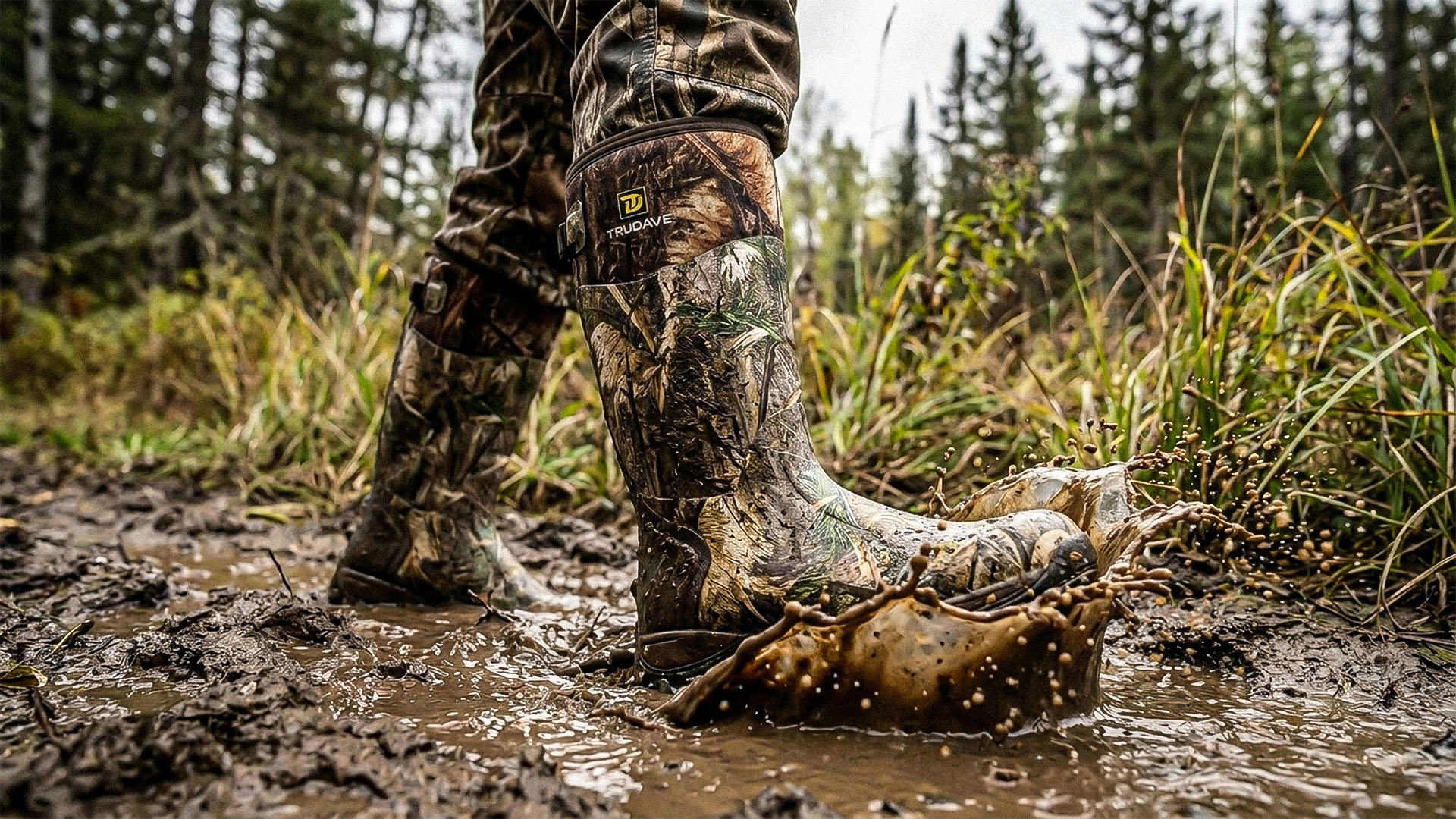
Hunters covering these conditions may benefit from waterproof hunting boots for Alaska upland hunting that provide secure heel fit, dependable wet-ground traction, and enough waterproof protection for long days in tundra.
The challenge is balancing water protection with walking comfort.
Waterproofing Is Essential
Tundra moisture comes from everywhere.
You may encounter:
- Rain
- Wet grass
- Muskeg water
- Snowmelt
- Creek edges
A boot that becomes wet early can remain wet all day.
Waterproof protection dramatically improves comfort.
Boot Height Matters
Some routes involve only:
- Wet grass
- Shallow mud
Others contain deeper muskeg or water.
Tall waterproof hunting boots may work well in shallow wet habitat.
Deeper crossings may require appropriate waders or an alternate route.
Scout before choosing.
Rubber Boots Can Work Well in Wet Lowlands
Tall rubber boots can provide excellent water protection.
But long tundra walks expose their weaknesses if fit is poor.
Look for:
- Secure heel
- Stable outsole
- Adequate support
A loose rubber boot in muskeg becomes exhausting.
Supportive Waterproof Boots Can Be Better for Long Mileage
If the hunt includes:
- Rocky slopes
- Long dry sections
- Moderate wet ground
a supportive waterproof hunting boot may offer better walking comfort.
Choose based on the majority of the route.
Not just one shallow creek.
Mud Suction Can Pull Boots Loose
Muskeg mud can grip footwear aggressively.
A secure heel fit helps prevent:
- Blisters
- Lost balance
- Excessive fatigue
Use shorter steps.
Avoid the darkest soft mud when firmer vegetation exists nearby.
Wet Tundra Can Hide Deep Holes
Vegetation may appear continuous.
Underneath may be:
- Water
- Soft peat
- Drainage channels
Test uncertain ground.
A walking stick can be useful.
Never assume one bird track proves the route is safe for a person.
Creeks Can Rise Quickly After Rain
Alaska weather can change water levels fast.
A small morning creek may become harder to cross later.
Consider the return route before crossing.
Never create a situation where success leaves you trapped on the wrong side.
Cold Water Is a Serious Risk
Even during relatively mild air temperatures, northern water can be very cold.
Avoid unnecessary deep crossings.
Use known safe routes.
A ptarmigan hunt is not worth a dangerous immersion.
Rain Can Improve Bird Hunting Conditions
Light rain may:
- Reduce dust
- Improve scenting for dogs
- Create fresh tracks in mud
But it can also increase:
- Hypothermia risk
- Slippery footing
- Creek flow
Dress for sustained moisture.
Weather Changes Extremely Fast
Alaska conditions can shift from:
- Sun
- Rain
- Wind
- Snow
within a short period.
Carry layers.
Do not dress only for the conditions at the vehicle.
Early Snow Can Arrive Suddenly
A mild fall hunt can turn into a winter-looking landscape overnight.
Snow changes:
- Navigation
- Bird visibility
- Footing
- Travel speed
Check forecasts and carry enough clothing for unexpected cold.
Wind Chill Can Become Serious
Open tundra provides little shelter.
Even moderate cold feels much worse in strong wind.
Protect:
- Hands
- Face
- Core
- Feet
Comfort is not only about enjoyment.
Cold reduces judgment and dexterity.
Bring Dry Gloves
Wet vegetation and rain can soak gloves quickly.
Carry a spare dry pair.
Cold wet hands make:
- Firearm handling
- Navigation
- Dog management
more difficult.
Dogs Can Be Useful in Ptarmigan Country
A trained bird dog can help locate birds hidden in low vegetation.
However, Alaska terrain creates additional challenges.
Dogs may encounter:
- Muskeg
- Cold water
- Willow
- Large distances
- Wildlife
Control matters.
Dog Range Should Match Visibility
Open tundra may encourage wide-ranging dogs.
But willow patches can hide them quickly.
Keep range manageable.
A dog working too far ahead may push birds beyond the hunters.
Wet Ground Is Hard on Dogs Too
Muskeg increases fatigue.
Dogs must constantly:
- Jump
- Balance
- Pull from mud
Give breaks.
Watch movement quality.
A dog can tire faster on flat tundra than on firm rolling grassland.
Cold Water Can Affect Dogs Quickly
If dogs cross:
- Creeks
- Wet muskeg
- Snowmelt
monitor for:
- Shivering
- Slowed movement
- Reduced coordination
Dry them during longer breaks where practical.
Carry Clean Water
Do not assume every natural water source is appropriate for drinking.
Carry enough clean water for both hunter and dog when practical.
Remote country reduces your options.
Wildlife Awareness Matters
Alaska upland hunting can overlap habitat used by:
- Bears
- Moose
- Other large wildlife
Maintain situational awareness.
Do not allow dogs to chase large animals.
Give wildlife plenty of space.
Moose Can Be Dangerous at Close Range
Dense willow is classic moose habitat.
A hunter focused on ptarmigan may suddenly encounter one at short distance.
Stay alert.
Do not push through thick willow blindly.
If an animal is present, give it space.
Bear Awareness Is Part of Remote Hunting
Follow current local guidance regarding bear safety.
Manage:
- Food
- Camp
- Game
appropriately.
Ptarmigan hunting may seem low-risk because the target is small.
The landscape remains wild.
Remote Country Requires Navigation
Alaska tundra can be disorienting.
Fog removes mountains.
Snow covers trails.
Willow hides drainages.
Carry reliable navigation.
Mark:
- Vehicle
- Camp
- Main creek
- Safe crossings
Do Not Depend Entirely on Cell Service
Remote hunting often means limited or no coverage.
Use:
- Offline maps
- Dedicated navigation
- Appropriate emergency communication
according to the remoteness of the trip.
Fog Can Remove Every Landmark
One minute you can see mountains.
The next, visibility is only a few hundred yards.
When fog develops:
- Slow down
- Check navigation
- Avoid wandering
Do not assume you can simply walk toward the vehicle.
Carry a Headlamp Even for Day Hunts
A long flock relocation or difficult muskeg return can extend the hunt.
Northern daylight changes quickly by season.
A headlamp and backup power provide simple insurance.
Access Roads Can Be Rough
Ptarmigan habitat may be reached through:
- Gravel roads
- Dirt tracks
- Trail systems
Rain can change these routes.
Check current access.
Do not force a vehicle through soft or damaged ground.
Public Land Rules Must Be Checked
Alaska contains enormous public landscapes, but hunting regulations still vary.
Before hunting, verify:
- Season dates
- Bag limits
- Units
- Access restrictions
- Legal methods
Use current official wildlife-agency information.
Different Ptarmigan Species Can Overlap
Hunters may encounter more than one ptarmigan species depending on region and elevation.
Species may include:
- Willow ptarmigan
- Rock ptarmigan
- White-tailed ptarmigan in appropriate areas
Learn identification.
Do not assume every bird in tundra is the same species.
Habitat Helps With Identification
Habitat can provide clues.
Willow ptarmigan are strongly associated with:
- Willow
- Lower shrub tundra
- River corridors
Other ptarmigan may favor different elevations and terrain.
Habitat is helpful.
Positive identification still matters.
Plumage Changes Through the Year
Ptarmigan seasonal plumage can change dramatically.
Study current-season appearance before hunting.
Do not rely only on one photograph taken during winter.
The same species may look very different earlier in the season.
Shooting Opportunities Can Be Sudden
A flock may flush from low willow at close range.
Stay prepared.
But maintain discipline.
Pick one bird.
Know the background.
Do not fire simply because several birds erupted at once.
Low Flushes Require Extra Care
Ptarmigan may fly low over tundra.
Know where:
- Partners
- Dogs
- Roads
- Buildings
are located.
If the background is uncertain, let the bird go.
Multiple Hunters Need Spacing
In open country, hunters can spread out.
But terrain folds and willow can hide people.
Establish:
- Direction
- Spacing
- Shooting zones
before entering productive habitat.
Mark Every Downed Bird
Ptarmigan can disappear into:
- Tundra
- Willow
- Snow
surprisingly quickly.
Mark the exact fall using:
- Willow clump
- Rock
- Creek feature
Walk directly to the location.
White Plumage Can Make Recovery Difficult
During snowy periods, a downed bird may blend almost perfectly into the ground.
Look for:
- Tracks
- Feathers
- Disturbed snow
A dog can be extremely valuable.
Do Not Chase the Flock Before Recovery
The remaining birds may land nearby.
That does not matter until the downed bird is located.
Ethical recovery comes first.
Warm Early Seasons Still Require Game Care
Alaska is not always cold.
Early-season weather may be mild or warm.
Keep harvested birds:
- Clean
- Cool
- Protected from direct sun
Follow current transport and food-safety guidance.
Common Willow Ptarmigan Hunting Mistakes
Walking Random Tundra
Find willow and moisture structure first.
Ignoring Small Creek Corridors
Narrow drainages can hold excellent habitat.
Walking Too Fast Through Muskeg
Uneven ground punishes rushed movement.
Wearing Poor Waterproof Footwear
Wet tundra can soak hunters without one obvious deep-water crossing.
Underestimating Wind
Birds and hunters both seek protected terrain.
Forgetting Seasonal Plumage
Identification and visibility change through the year.
Chasing the Flock Immediately
Watch landings and recover downed birds first.
Treating Alaska Like Ordinary Upland Country
Weather, water, wildlife, and remoteness require extra preparation.
Frequently Asked Questions
Where do willow ptarmigan live?
Willow ptarmigan commonly use northern shrub tundra, willow-covered river valleys, wet lowlands, and related habitats with adequate food and security cover.
Is willow habitat important for ptarmigan?
Yes. Willow is strongly associated with willow ptarmigan habitat and provides both food and cover.
Is fresh snow good for ptarmigan hunting?
Fresh snow can reveal tracks and movement while also changing how well birds blend with the landscape.
Can you hunt willow ptarmigan with a dog?
Where legal, trained bird dogs can help locate birds in low vegetation, though muskeg, cold water, wildlife, and remote terrain require careful dog management.
What boots are best for Alaska ptarmigan hunting?
Waterproof hunting boots with secure heel fit, dependable wet-ground traction, and enough support for tundra, muskeg, mud, rain, and early snow are practical.
Are willow ptarmigan and rock ptarmigan the same?
No. They are separate species with differences in habitat, appearance, and seasonal use. Hunters should learn local identification before hunting.
Final Thoughts
Willow ptarmigan hunting teaches hunters that Alaska is not one giant piece of bird habitat.
The birds make choices.
Willow beside a creek.
A protected drainage out of the wind.
A wet tundra edge with better vegetation.
A patch of shrub cover that remains usable after the first snow.
Those small differences matter.
Glass before walking.
Follow willow.
Study fresh tracks.
Use wind-protected habitat.
Slow down through muskeg.
Wear boots that let you cross wet tundra, mud, shallow water, rain, and snow without spending the entire day thinking about your feet.
And when several ptarmigan suddenly rise from one small willow patch after miles of apparently perfect empty country, study that location carefully.
The flock just showed you the difference between tundra—and actual ptarmigan habitat.
