
Mearns’ quail country does not look like classic desert quail habitat.
The elevation is higher.
Oak trees cover rolling hills.
Native grasses grow beneath open woodland.
Small canyons cut through mountain country.
Winter rain can leave the soil dark and soft.
A hunter may walk through hundreds of yards of beautiful grass without seeing a single bird.
Then the dog stops.
Nothing moves.
There is no obvious brush pile.
No thick cactus patch.
No visible flock running ahead.
The hunter takes another step.
A covey explodes almost vertically from the grass.
Birds scatter between oaks and disappear over the slope.
That is Mearns’ quail hunting.
These birds can hold extremely tight.
They often live in habitat where their patterned plumage disappears into grass, leaves, and shadow.
And unlike Gambel’s quail, which frequently run ahead through desert washes, Mearns’ quail may sit quietly until hunters and dogs get surprisingly close.
Successful hunting begins by understanding the relationship between oak woodland, grass structure, moisture, food, and elevation.
Find those pieces together and the mountains become much easier to read.
Mearns’ Quail Are Different From Desert Quail
Mearns’ quail, also commonly called Montezuma quail, occupy specialized habitat in portions of the Southwest.
They are strongly associated with environments such as:
- Oak grasslands
- Madrean woodland
- Mountain foothills
- Native grass slopes
- Canyon edges
- Pine-oak transitions
This is not the open cactus country many hunters associate with Arizona quail hunting.
Mearns country often feels more like a mountain upland hunt.
The terrain can be:
- Cool
- Wet
- Steep
- Grassy
- Rocky
especially during winter.
That makes both hunting strategy and footwear different from lower-desert quail hunts.
Oak Grassland Is the Foundation
One of the best habitat clues is open oak woodland with grass underneath.
Look for areas containing:
- Scattered mature oaks
- Native bunch grasses
- Open understory
- Gentle to moderate slopes
The combination matters.
Dense forest with almost no grass may provide less useful habitat.
Completely open grassland with no oak structure may also be less attractive.
The transition between tree cover and grass creates valuable feeding and security conditions.
Look Beneath the Oaks
Oak trees influence the ground around them.
They create:
- Leaf litter
- Shade
- Moisture retention
- Different plant communities
Mearns’ quail may use grassy zones between and below oaks.
Do not hunt only the open spaces.
Work the entire oak-grass pattern.
Birds can sit where grass, fallen leaves, and tree shadow create almost perfect camouflage.
Native Bunch Grass Matters
Mearns’ quail need usable ground-level habitat.
Healthy bunch grasses create:
- Concealment
- Feeding areas
- Travel space
The ground should not necessarily be completely covered by one dense mat.
Look for varied structure.
Small spaces between grass clumps allow birds to move and feed while remaining hidden from above.
Grass Height Can Tell You a Lot
Extremely short heavily disturbed grass may provide too little security.
Extremely dense vegetation may become difficult to move through.
Productive habitat often contains a mixture of:
- Taller grass
- Shorter openings
- Oak leaf litter
- Bare soil
The best-looking area from a quail’s perspective may appear messy to a hunter.
That is usually a good sign.
Moist Soil Can Be a Major Clue
Mearns’ quail are closely tied to environments where they can feed by digging or scratching around underground food resources.
Moist soil can make this easier.
After seasonal rain, hunters may notice:
- Fresh digging
- Scratched soil
- Disturbed leaves
- Small feeding pits
These signs can help identify active areas.
A patch of soft dark soil beneath grass and oak deserves attention.
Winter Rain Can Improve Habitat
Southern Arizona winter weather can transform upland habitat.
Rain may:
- Soften soil
- Improve vegetation
- Create fresh tracking conditions
- Increase available moisture
This can also improve hunting conditions by reducing dust and making dry vegetation quieter.
But wet weather creates new challenges underfoot.
Mud, wet grass, and slick slopes become part of the hunt.
Fresh Digging Can Reveal Recent Feeding
Mearns’ quail may leave subtle feeding evidence.
Look for small disturbed patches where birds have worked through:
- Soil
- Leaves
- Grass
Fresh sign may show:
- Dark soil
- Sharp edges
- Recently moved litter
Old feeding areas fade quickly into the background.
Learn to identify what looks fresh.
Do Not Expect Huge Obvious Feeding Zones
Unlike feral hog rooting or turkey scratching, Mearns’ quail sign may be subtle.
A hunter can walk past productive feeding areas without noticing them.
Slow down around:
- Moist oak slopes
- Grassy benches
- Canyon shoulders
Small clues can identify the exact habitat the covey prefers.
Elevation Changes the Habitat
Mearns’ quail are often associated with higher elevations than Gambel’s quail.
As elevation increases, the vegetation can transition from desert toward:
- Oak
- Grassland
- Pine-oak woodland
Use elevation as a scouting filter.
If the country looks too much like open Sonoran Desert, you may be searching for the wrong quail species.
Canyon Systems Can Hold Productive Cover
Mountain canyons create:
- Moisture
- Shade
- Elevation transitions
- Protected slopes
Search around:
- Canyon shoulders
- Side draws
- Grassy benches
- Oak-covered slopes
The deepest canyon bottom is not always the best hunting location.
Birds may use slightly higher ground where grass remains strong.
Small Side Draws Deserve Attention
A tiny side drainage may create just enough additional moisture to change vegetation.
Look where it intersects:
- Oak slopes
- Grass benches
- Main canyons
These small features can create localized feeding habitat.
One subtle draw may hold the only covey on an otherwise similar-looking hillside.
Benches Can Be Excellent
Mountain terrain often includes small flatter shelves.
These benches can provide:
- Easier movement
- Better grass
- Moist soil
- Feeding opportunity
From below, they may be difficult to see.
Study topographic maps and terrain carefully.
A bench only fifty yards wide can be worth hunting slowly.
North and South Slopes Can Hunt Differently
Sun exposure changes:
- Soil moisture
- Snow persistence where present
- Vegetation
- Temperature
One slope may stay cooler and wetter.
Another may warm faster.
Bird location can shift with current weather.
Do not assume one aspect is always best.
Compare habitat quality.
Morning Frost Can Change Movement
Winter mornings in Arizona mountain country can be cold.
Grass may be covered with frost.
Soil may temporarily harden.
Birds may remain in protected cover until sunlight warms the slope.
This can make midmorning activity productive.
Follow temperature changes rather than only the clock.
Sunny Slopes Can Become Attractive After Cold Nights
After a cold night, south- or east-facing slopes may warm first.
Search around:
- Oak openings
- Grass benches
- Protected hillsides
Birds may begin feeding more actively as conditions soften.
A quiet sunrise does not mean the entire day will be poor.
Midday Can Be Very Productive
Mearns’ quail hunting does not always peak at dawn.
Cool winter weather can keep conditions comfortable for birds, dogs, and hunters through much of the day.
Midday may provide:
- Better scenting
- Softer ground
- More bird activity
especially after frost disappears.
Do not quit simply because morning passed without a covey.
Birds Can Hold Extremely Tight
One of the defining characteristics of Mearns hunting is how tightly birds can hold.
A covey may remain in place while hunters approach within only a few yards.
This creates exciting flushes.
It also means hunters should slow down around good dog work.
Do not assume the birds ran away because nothing flushed immediately.
Trust the Dog
A pointing dog may indicate birds even when the cover appears completely empty.
Do not rush past the dog.
Approach carefully.
Watch for:
- Body tension
- Head direction
- Relocation behavior
Mearns’ quail can sit extremely close to the point.
Coveys May Sit Almost Underfoot
Hunters accustomed to running desert quail can become impatient.
That is a mistake.
Take controlled steps.
Prepare for the possibility of a sudden close flush.
A bird may rise from grass you already looked at.
Pointing Dogs Shine in Mearns Country
This style of hunting is especially suited to good pointing dogs.
Dogs can help locate birds hidden beneath:
- Grass
- Oak leaves
- Low vegetation
The hunter gains time to organize:
- Partner positions
- Shooting lanes
- Dog location
before the flush.
Dog Range Should Match the Terrain
Open-looking oak hills can tempt dogs to range widely.
But mountain slopes and vegetation can hide them quickly.
Keep range appropriate for:
- Visibility
- Terrain
- Other hunters
The goal is finding birds without losing control.
Dry Conditions Can Make Scent Difficult
Even during winter, southwestern air can become dry.
Wind can also shift around canyons.
Dogs may struggle with inconsistent scent.
Give them time.
Do not constantly call them away from birdy cover because a point does not develop immediately.
Rain Can Improve Scenting
Moist ground often creates more favorable scenting conditions than extremely dry soil.
After rain, dogs may work more confidently.
Hunters may also move more quietly.
This can make post-storm hunting especially enjoyable.
Dogs Need Water Even During Cool Weather
Mountain winter conditions can hide dehydration.
A working dog may cover several times the distance of the hunter.
Carry clean water.
Do not depend entirely on:
- Cattle tanks
- Creeks
- Natural pools
Water availability can be unpredictable.
Paw Condition Matters
Mearns terrain can include:
- Rock
- Dry grass
- Thorns
- Cactus in lower zones
Check paws throughout the hunt.
Look for:
- Cuts
- Abrasions
- Spines
- Limping
Small problems can become bigger after several miles.
Grass Seeds Can Create Dog Problems
Some upland vegetation contains seeds and awns that can irritate:
- Eyes
- Ears
- Nose
- Paws
Inspect dogs after every hunt.
Persistent irritation should receive appropriate veterinary attention.
Cactus Can Still Appear
Although Mearns habitat is generally higher and different from classic Gambel’s country, cactus may still occur on some slopes.
Watch for:
- Prickly pear
- Other low desert plants
Do not assume every grassy oak hillside is free of spines.
Snakes May Be Less Active in Winter but Still Require Awareness
Cold weather reduces activity, but local conditions vary.
Warm sunny periods can change wildlife behavior.
Know regional snake risks.
Watch dogs around:
- Rock piles
- Brush
- Sunny slopes
Covey Size Can Vary
Hunters may encounter:
- Small groups
- Larger coveys
Do not judge habitat from one flush.
A small covey may still indicate excellent habitat.
The important question is why the birds were there.
Study Every Flush Location
After birds rise, look at the ground.
Ask:
- How tall was the grass?
- Was soil moist?
- Were oaks nearby?
- Was the slope steep or flat?
- Was there feeding sign?
Every covey teaches you how to find the next one.
Watch Where Birds Land
Mearns’ quail may scatter after the flush.
Track individual birds carefully.
Use landmarks such as:
- Large oak
- Rock
- Canyon bend
- Grass opening
Do not immediately chase.
Mark first.
Singles Can Hold Extremely Tight
Scattered birds may sit quietly after landing.
This can create excellent second opportunities.
Let the birds settle.
Then work the area carefully with the dog.
Do not rush through it.
Do Not Overshoot a Covey
When a large covey rises, excitement can create poor discipline.
Pick one bird.
Track it.
Avoid shooting blindly at the group.
Controlled shooting improves:
- Safety
- Accuracy
- Recovery
Low Flushes Require Awareness
Mearns’ quail may stay relatively low after rising.
Know where:
- Dogs
- Partners
- Livestock
are located.
Never fire toward uncertain ground.
Establish Partner Spacing Before Entering Cover
Good Mearns habitat can become surprisingly thick.
Before working a likely covey area, establish:
- Direction
- Hunter spacing
- Safe shooting zones
Do not improvise after birds flush.
Blaze Orange Can Improve Safety
Follow local legal requirements.
Visible clothing can help partners maintain awareness around:
- Oak
- Grass
- Canyons
Even open country can hide a hunter behind one terrain fold.
Hunting Without a Dog Is Possible but Harder
Mearns’ quail can be difficult to locate without canine help because they may:
- Hold tight
- Remain almost invisible
- Use subtle habitat
Without a dog, focus strongly on:
- Feeding sign
- Moist oak grasslands
- Benches
- Known covey habitat
Walk slowly.
Pause often.
Do Not Randomly Cover Entire Mountains
Mountain terrain makes random hunting expensive.
Use a habitat route.
For example:
- Start on an oak-grass bench.
- Follow a moist side drainage.
- Hunt the next grassy slope.
- Finish near a canyon shoulder.
This puts effort into high-probability habitat.
Topographic Maps Can Help
Maps reveal:
- Benches
- Drainages
- Slope aspect
- Access routes
Satellite imagery can help identify oak-grassland structure.
Use both.
The goal is finding places where terrain and vegetation overlap.
Glassing Can Help More Than Expected
Mearns’ quail are usually hunted at close range, but optics can still help evaluate habitat.
From a ridge, study:
- Oak density
- Grass openings
- Water
- Canyon structure
You are not necessarily glassing for individual birds.
You are glassing for the best place to send your boots and dog.
Walking Distance Adds Up Quickly
Mountain quail hunting may involve significant elevation changes.
A loop that appears short on a map may include:
- Repeated climbs
- Sidehills
- Canyon crossings
Plan realistically.
Do not spend all your energy reaching the first covey.
Sidehills Can Be Hard on Feet
Oak grassland often grows on rolling and steep terrain.
Sidehilling places repeated pressure on:
- Ankles
- Heels
- Knees
Secure footwear reduces fatigue.
Fit matters as much as outsole design.
Wet Winter Grass Can Soak Feet
After rain or heavy dew, long grass can transfer water constantly.
A hunter may never step into a creek and still finish with soaked footwear.
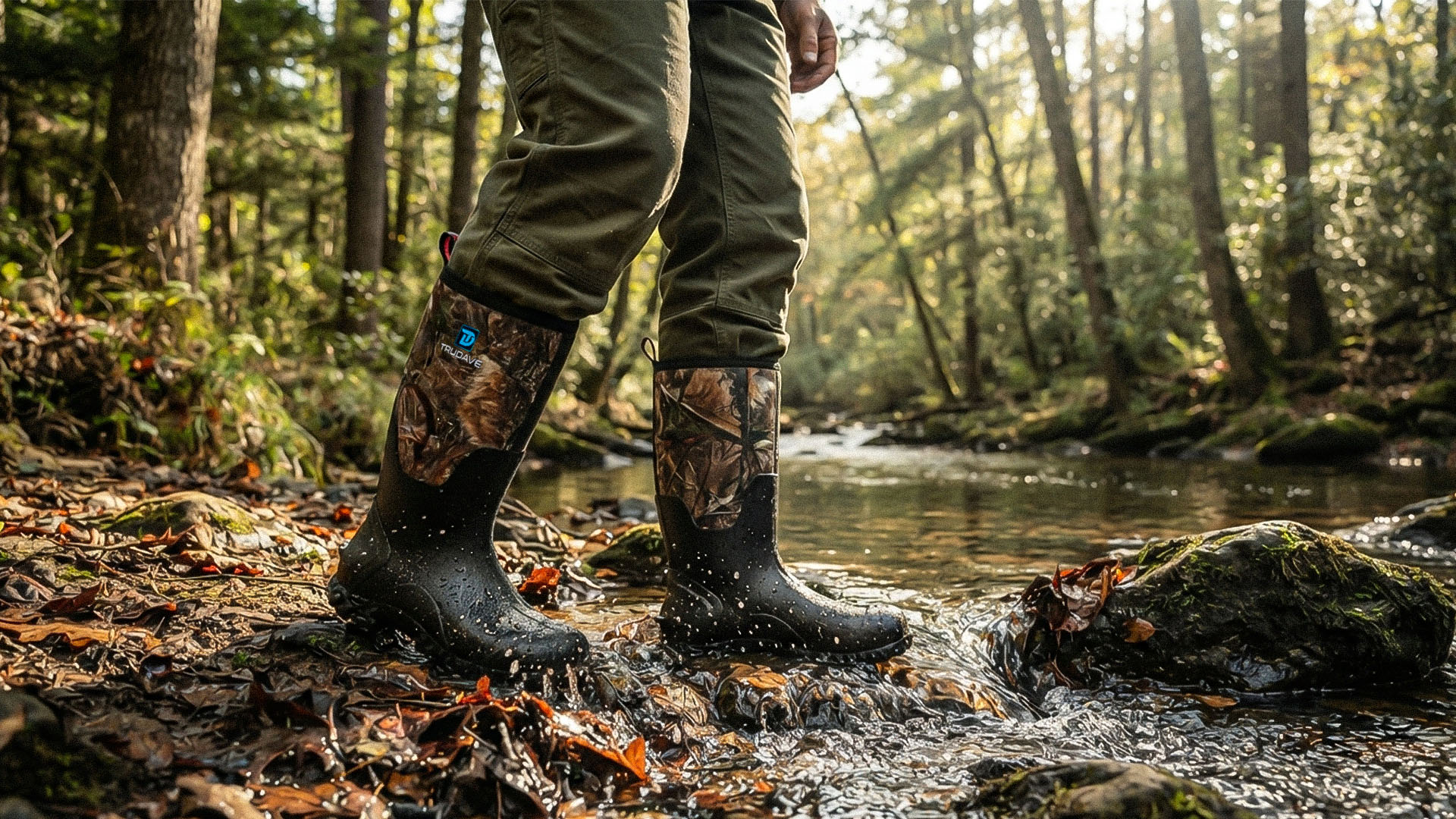
Hunters covering these conditions may benefit from waterproof hunting boots for Arizona upland hunting that provide comfortable long-distance fit, secure heel retention, and traction for wet grass, mud, rock, and mountain slopes.
Waterproofing Matters More Here Than in Lower Desert Hunts
Mearns country can be surprisingly wet compared with Arizona’s lower desert.
Conditions may include:
- Rain
- Frost melt
- Mud
- Wet grass
- Small creeks
A waterproof hunting boot can be far more practical than a highly breathable but unprotected desert shoe.
Lightweight Still Matters
This remains active upland hunting.
Heavy footwear adds fatigue over thousands of steps.
Choose a boot that balances:
- Waterproofing
- Support
- Weight
- Durability
The ideal Mearns boot is usually different from a heavy stationary winter boot.
Traction Matters on Oak Leaves
Wet leaves can cover:
- Rock
- Roots
- Mud
and become slippery.
Use controlled steps.
Especially on descents.
A bird flush is not worth rushing downhill.
Mud Can Develop Around Cattle Areas
Some oak grassland overlaps working ranch country.
Mud may concentrate around:
- Tanks
- Gates
- Roads
- Creek crossings
Outsole traction becomes important.
Clean packed clay when necessary.
Heel Retention Prevents Blisters
Repeated climbing makes poor heel fit obvious.
A loose boot creates friction.
Break boots in well before hunting.
Test them on actual hills.
Pavement does not reveal mountain fit.
Toe Room Matters on Descents
Downhill walking pushes feet forward.
Boots that fit too short may cause toe impact.
Choose appropriate sizing.
A painful descent can turn the return hike into the hardest part of the hunt.
Gaiters Can Help
Low gaiters can reduce:
- Wet grass
- Seeds
- Debris
- Mud
entering boots.
They are useful when moving through tall winter grass.
Brush-Resistant Pants Are Helpful
Oak grassland may still contain:
- Thorny brush
- Grass seeds
- Low woody plants
Durable pants improve comfort.
You do not need extremely heavy brush armor, but fragile hiking clothing may take damage.
Weather Can Change Quickly
Southern Arizona mountains can experience:
- Rain
- Frost
- Wind
- Occasional snow
- Warm afternoon sun
Layer clothing.
Do not dress only for the temperature at the vehicle before sunrise.
Snow Can Appear in Higher Country
Winter storms may leave snow on some slopes.
This can change:
- Bird location
- Footing
- Moisture
Search areas where snow is shallow or melting and grass remains accessible.
Fresh snow may also reveal tracks.
Wind Can Push Birds Toward Protected Terrain
Strong wind can make exposed ridges uncomfortable.
Search:
- Leeward slopes
- Protected canyons
- Oak pockets
Wind also affects dog scenting.
Use terrain to reduce its impact.
Public Land Can Offer Good Habitat
Arizona upland opportunities may include large public landscapes.
Research:
- Legal hunt units
- Access
- Roads
- Private inholdings
- Regulations
Habitat quality is more important than acreage.
One productive oak basin can outperform a much larger marginal area.
Ranch Boundaries Matter
Oak grasslands often overlap ranching landscapes.
Respect:
- Gates
- Cattle
- Water systems
- Fences
Do not disturb livestock unnecessarily.
Leave property infrastructure as instructed.
Avoid Damaging Wet Roads
After winter rain, dirt roads can become soft.
Do not create deep ruts.
Respect road closures.
If necessary, park and walk.
Protecting access is part of responsible hunting.
Barbed Wire Can Hide in Grass
Old and active fences may be difficult to see.
Watch dogs.
Use gates where appropriate.
Never damage fencing to pursue birds.
A covey crossing onto inaccessible property ends that portion of the hunt.
Navigation Matters in Canyon Country
Oak hills can look similar.
Mark:
- Vehicle
- Main drainage
- Roads
- Property boundaries
Carry offline mapping.
A route that seemed obvious in daylight can become confusing after sunset.
Carry a Headlamp
A late covey relocation can extend the hunt.
A headlamp provides simple insurance.
Do not rely entirely on a phone battery for navigation and lighting.
Regulations Must Be Checked Every Season
Mearns’ quail seasons, bag limits, legal methods, and hunt areas are subject to current state regulations.
Before hunting, verify:
- Season dates
- Daily limits
- Possession limits
- License requirements
- Open areas
- Public-land restrictions
Use current official wildlife-agency information.
Species Identification Matters
Arizona may offer opportunities involving several quail species.
Hunters should know the differences between:
- Mearns’ quail
- Gambel’s quail
- Scaled quail where relevant
Habitat provides clues.
Positive identification still comes before the shot.
Population Conditions Can Change With Weather
Quail abundance can vary between years.
Rainfall and habitat conditions influence:
- Reproduction
- Food
- Cover
Do not assume last season’s hotspot will produce the same results.
Scout current habitat.
Conservation Matters
Mearns’ quail depend on healthy grassland and oak woodland systems.
Responsible hunting should support:
- Habitat conservation
- Sustainable harvest
- Respectful land use
Avoid unnecessary damage to grasslands, water sources, and ranch infrastructure.
Common Mearns’ Quail Hunting Mistakes
Hunting Low Desert Habitat
Mearns’ quail are associated more strongly with higher oak-grassland country.
Walking Too Fast
These birds can hold extremely tight.
Ignoring Moist Soil and Feeding Sign
Small disturbed patches can reveal active habitat.
Assuming Birds Will Run Like Gambel’s Quail
Mearns often rely more heavily on holding and camouflage.
Wearing Heavy or Non-Waterproof Boots
Mountain miles and wet winter grass demand mobility plus protection.
Ignoring Dog Hydration
Cool temperatures do not eliminate water needs.
Chasing Scattered Birds Immediately
Let singles settle before working them again.
Failing to Study the Flush Location
Every covey tells you what good habitat looks like.
Frequently Asked Questions
Where do Mearns’ quail live in Arizona?
They are commonly associated with higher-elevation oak grasslands, grassy mountain slopes, canyon systems, and related Madrean woodland habitat in suitable portions of southern Arizona.
Are Mearns’ quail harder to hunt than Gambel’s quail?
They present a different challenge. Gambel’s quail often run aggressively, while Mearns’ quail may hold extremely tight and rely on camouflage in grass.
Is a bird dog useful for Mearns’ quail?
Yes. A trained pointing dog can be especially valuable because birds may remain hidden until hunters are very close.
Is Mearns’ quail hunting good after rain?
Rain can soften soil, improve vegetation and scenting conditions, and make fresh feeding sign easier to identify.
What boots are best for Mearns’ quail hunting?
Lightweight waterproof hunting boots with secure heel fit, good wet-grass and mud traction, and enough support for rolling mountain terrain are practical.
What habitat should hunters look for?
Open oak woodland with healthy grass, suitable moisture, feeding sign, benches, and canyon transitions is a strong place to begin.
Final Thoughts
Mearns’ quail hunting teaches hunters to stop expecting birds to reveal themselves.
They usually do not.
The grass hides them.
Oak shadows hide them.
Leaves hide them.
Their behavior does the rest.
Find healthy oak grassland.
Look for moist soil.
Study small feeding signs.
Trust the dog.
Slow down when the habitat feels right.
Wear boots that let you cross wet winter grass, mud, oak leaves, rocky slopes, and mountain canyons without turning every step into a distraction.
And when a covey suddenly explodes from a patch of grass that looked completely empty, remember exactly where you were standing.
The birds just showed you what good Mearns habitat looks like.
