
The hardwood creek bottom feels completely different after sunset.
The daytime birds become quiet.
Fog begins forming above the water.
Cornfields disappear into darkness.
A hunter switches on a headlamp and hears a hound open somewhere beyond the creek.
One bark.
Then another.
The sound moves deeper into the timber.
Suddenly the quiet woods become a map.
That is raccoon hunting.
Unlike many game animals that hunters pursue around sunrise and sunset, raccoons are strongly associated with nighttime activity.
They move between den trees, creeks, crop fields, wetlands, mast-producing hardwoods, and other food sources while most people are asleep.
Successful raccoon hunters learn that darkness does not eliminate habitat patterns.
It makes those patterns more important.
Find food.
Find water.
Find denning cover.
Then understand the routes connecting them.
That is where the hunt begins.
Raccoons Are Nighttime Generalists
Raccoons can occupy an enormous variety of environments.
Productive habitat may include:
- Hardwood forests
- Creek bottoms
- River corridors
- Cornfields
- Wetlands
- Farm ponds
- Woodlots
- Swamps
- Agricultural edges
They are highly adaptable.
But good hunting habitat usually provides several basic resources:
- Food
- Water
- Denning sites
- Security cover
One property containing all four can support consistent raccoon activity.
Start With Water
Water is one of the most useful habitat clues.
Raccoons frequently travel around:
- Creeks
- Rivers
- Ponds
- Marshes
- Beaver wetlands
These areas provide both water and food.
Creek systems also act as natural travel corridors.
A narrow drainage running through several farms may connect multiple feeding and denning areas.
Follow the water system and the rest of the habitat often begins making sense.
Creek Bottoms Are Natural Raccoon Highways
A wooded creek bottom can provide:
- Mature den trees
- Muddy tracking surfaces
- Aquatic food
- Brush
- Easy travel
Look for trails along:
- Creek banks
- Gravel bars
- Mud flats
- Fallen logs
Fresh tracks after rain can reveal exactly where animals are crossing.
The creek may be narrow.
Its influence can extend across the entire landscape.
Mud Makes Tracks Easy to Find
Raccoon tracks are often easiest to identify in soft soil.
Good tracking areas include:
- Creek edges
- Pond banks
- Muddy field roads
- Culverts
- Drainage crossings
Fresh tracks can reveal:
- Direction of travel
- Current activity
- Frequently used crossings
Repeated tracks matter more than one isolated print.
If several fresh trails converge around one creek crossing, slow down.
The area is active.
Learn Raccoon Tracks
Raccoon tracks are distinctive.
Their front feet can look almost hand-like, with five long toes.
Rear tracks are generally longer.
When scouting, study complete track patterns rather than one distorted print.
Mud depth can change appearance.
Rain can enlarge old tracks.
Freshness matters.
A crisp track on top of yesterday’s tire print tells you much more than a weathered print along an old creek bank.
Cornfields Can Become Major Feeding Areas
Agricultural crops may strongly influence raccoon movement.
Corn can be especially attractive.
Look along field edges for:
- Broken stalks
- Partially eaten ears
- Tracks
- Trails entering timber
The strongest hunting locations often occur where corn sits near:
- Creek bottom
- Mature woods
- Brush
- Water
Raccoons can feed in the field and return quickly to security cover.
Hunt the Edge Instead of the Middle
Walking through the center of a large cornfield is rarely the most efficient way to understand raccoon movement.
Focus on:
- Field corners
- Creek crossings
- Timber edges
- Drainage ditches
These features concentrate travel.
A twenty-yard strip between corn and hardwoods may see more nighttime movement than hundreds of acres of crop interior.
Harvest Changes the Pattern
After corn is harvested, raccoon behavior can shift.
Standing corn provides both:
- Food
- Concealment
Harvest removes much of that security.
Raccoons may begin feeding more quickly or use field edges differently.
Scout again after major agricultural changes.
Do not assume a September pattern will remain identical in November.
Oak Forests Can Become Important
Raccoons also use mast-producing hardwoods.
During good acorn years, oak ridges and bottoms may provide abundant food.
Look for:
- Mature oaks
- Creek-side hardwoods
- Acorns
- Tracks beneath feeding trees
A strong mast crop can reduce dependence on agricultural fields.
That is why current food conditions matter.
Persimmons Can Create Local Hotspots
Where native persimmon grows, ripe fruit may attract wildlife including raccoons.
Look beneath productive trees for:
- Tracks
- Droppings
- Fruit disturbance
Small food sources can concentrate nighttime activity.
A single fruit-producing patch beside a creek may be more useful than a much larger forest with little current food.
Den Trees Matter
Raccoons commonly use tree cavities and other protected locations for shelter.
Large mature hardwoods may provide suitable denning opportunities.
Look for:
- Large hollow trees
- Old sycamores
- Cottonwoods
- Oaks
- Trees near water
Do not disturb den structures unnecessarily.
Their presence simply tells you the surrounding habitat may support regular raccoon activity.
Hollow Trees Near Creeks Are Especially Interesting
A mature den tree beside good feeding habitat reduces travel distance.
That makes the surrounding area more attractive.
Search for trails connecting:
- Denning timber
- Creek edge
- Corn
- Mast
The animal’s entire nighttime routine may fit inside a relatively small area.
Abandoned Buildings Can Also Hold Raccoons
Rural landscapes may include:
- Old barns
- Sheds
- Abandoned structures
Raccoons sometimes use these places.
However, old buildings create serious hazards.
Never enter without permission.
Watch for:
- Weak floors
- Nails
- Wells
- Electrical hazards
- Collapsing walls
Finding wildlife sign is never a reason to ignore property safety.
Culverts Are Excellent Scouting Locations
Road and farm culverts concentrate movement.
They allow animals to cross:
- Roads
- Drainages
- Fence lines
while staying relatively concealed.
Check mud near both ends.
Fresh tracks can reveal whether raccoons are using the same crossing repeatedly.
This can also help identify productive creek systems without walking the entire drainage.
Roads Require Extra Caution at Night
Night hunting creates obvious visibility challenges.
Raccoon habitat may overlap:
- Gravel roads
- Farm lanes
- Highways
Never assume a dark road is empty.
Know where dogs, vehicles, houses, and other hunters are located.
Legal shooting rules around roads can vary significantly.
Verify local regulations before hunting.
Night Scouting Changes Everything
Habitat that looked obvious during daylight can become confusing after dark.
Scout important locations in daylight first.
Learn:
- Creek crossings
- Fences
- Roads
- Buildings
- Property boundaries
- Deep water
Do not make the first exploration of an unfamiliar creek bottom at midnight.
Daytime preparation makes nighttime hunting safer.
GPS Waypoints Are Extremely Useful
Before dark, mark:
- Vehicle
- Property corners
- Creek crossings
- Gates
- Roads
- Dangerous areas
At night, distance and direction become difficult to judge.
A familiar tree line can look completely different under a headlamp.
Reliable navigation removes unnecessary guesswork.
Carry More Than One Light
A headlamp is essential for many nighttime hunting situations.
But electronics fail.
Carry a backup light.
Consider:
- Spare batteries
- Secondary flashlight
- Backup headlamp
Losing your only light several miles from the vehicle can turn a simple hunt into a serious navigation problem.
Redundant Lighting Is Safety Gear
Hunters often treat extra lighting as optional weight.
At night, it is safety equipment.
A backup light helps with:
- Navigation
- Dog handling
- Creek crossings
- Recovery
- Equipment problems
Keep one backup separate from the primary system.
If one pack or battery fails, you still have light.
Raccoon Hunting With Hounds Is a Classic Tradition
Hound hunting has a long history in American raccoon hunting where legal.
A trained coonhound may:
- Locate scent
- Follow a track
- Trail through difficult cover
- Indicate where an animal has climbed
The hunter’s job is not simply following the dog.
It is managing the entire situation safely.
That includes knowing:
- Dog location
- Property boundaries
- Roads
- Water
- Other hunters
Learn the Dog’s Voice
Experienced handlers can often distinguish different hound behaviors by sound.
Changes in vocalization may indicate:
- Trail progression
- Increasing scent intensity
- Treeing behavior
Learning your dog reduces unnecessary movement.
Do not sprint through dark woods every time the bark changes.
Listen.
Use tracking equipment where legal and appropriate.
Move carefully.
GPS Dog Collars Can Improve Awareness
Where legal, tracking collars can help handlers monitor:
- Direction
- Distance
- Proximity to roads
- Property boundaries
Technology does not replace training.
But it can provide important safety information.
Know how to use the equipment before releasing dogs.
Do not learn the interface while a dog is moving toward a highway.
Property Boundaries Are Critical With Dogs
A raccoon can move wherever it wants.
A dog may follow.
Hunters still need to obey property laws.
Before hunting, understand:
- Permission boundaries
- Neighboring properties
- Public-land borders
- Road systems
Communicate with landowners where appropriate.
A dog crossing a boundary can create a complicated situation very quickly.
Build a Boundary Plan Before the Hunt
Do not wait until the dog is 500 yards away to think about land ownership.
Study maps.
Identify:
- No-access areas
- Roads
- Homes
- Livestock
- Difficult creek crossings
Good preparation reduces conflicts.
Creeks Can Stop Hunters but Not Dogs
A hound may cross a creek with little hesitation.
The hunter may face:
- Deep water
- Mud
- Steep banks
- Current
Do not attempt unsafe crossings just because the dog crossed.
Use:
- Bridges
- Known shallow points
- Established crossings
The shortest line is not always the safest route.
Recent Rain Can Make Hunting Productive
Rain can improve scenting conditions in some circumstances and create fresh tracking surfaces.
After rain, hunters may find:
- Clear tracks
- Soft ground
- Quiet leaves
But rainfall also creates hazards:
- Higher creeks
- Mud
- Slick banks
Every weather advantage comes with another consideration.
Wet Leaves Make Night Walking Slippery
Hardwood leaves become slick after rain.
Under darkness, hazards are even harder to see.
Watch for:
- Roots
- Rocks
- Mud
- Small ditches
Move slowly.
Use a headlamp that provides enough ground visibility.
Do not stare only toward the dog or canopy while walking.
Creek Banks Can Collapse
Soft banks may be undercut by water.
A grassy edge can look solid and still collapse under body weight.
Stay back from uncertain edges.
Test footing.
Avoid jumping across creek banks in darkness.
A fall into cold water can become dangerous quickly.
Nighttime Footwear Matters
Raccoon hunting may require hours of movement through:
- Mud
- Wet grass
- Creek bottoms
- Farm fields
- Rain
- Shallow water
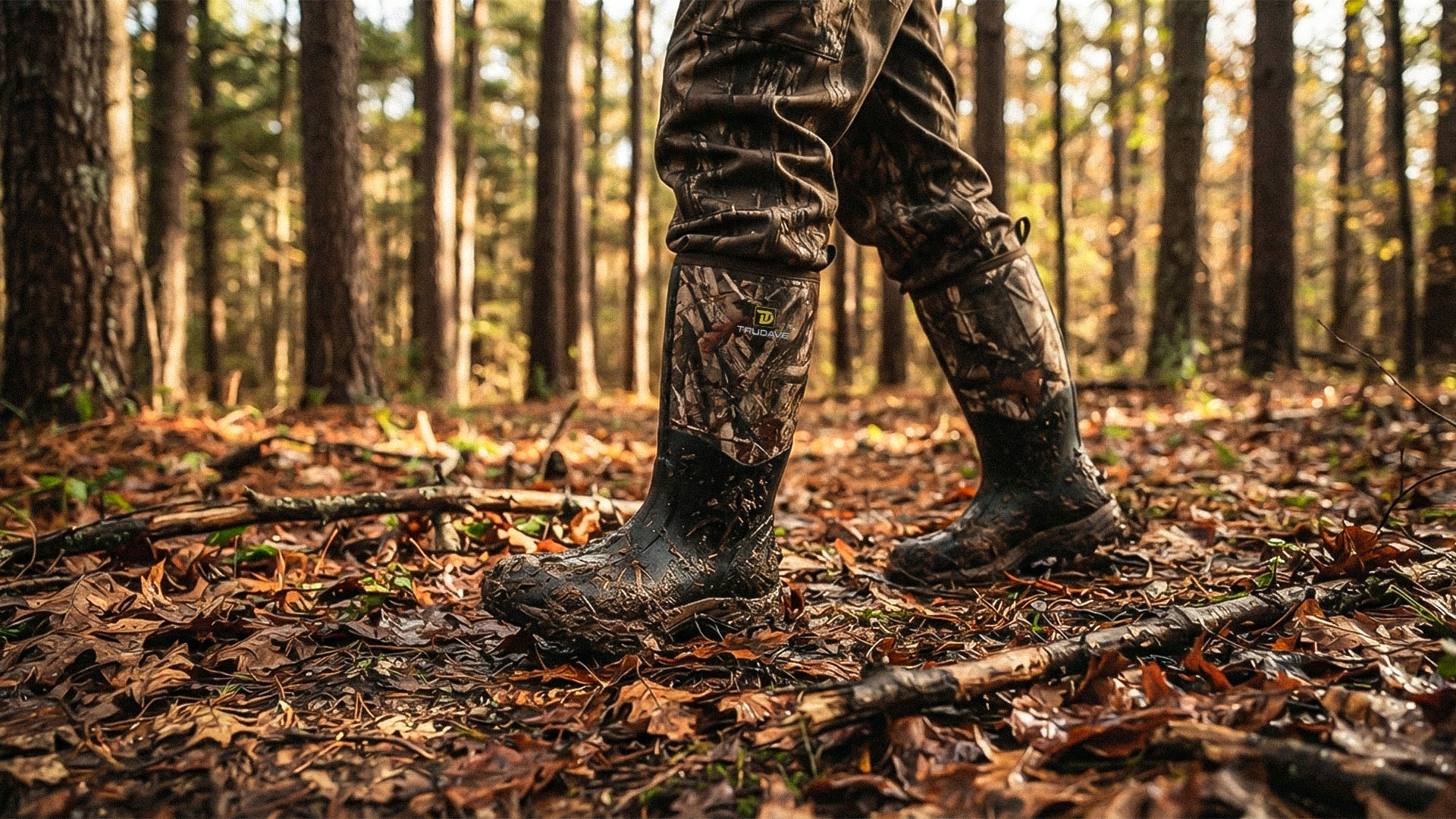
Hunters covering these conditions may benefit from waterproof hunting boots for nighttime raccoon hunting that provide reliable waterproofing, secure heel fit, and dependable mud traction.
At night, good footing matters even more because you often see obstacles only moments before stepping on them.
Tall Waterproof Boots Can Be Useful
Creek-bottom hunting may involve:
- Shallow crossings
- Mud
- Standing water
A taller waterproof boot can help keep feet dry.
However, height should still be balanced with walking comfort.
Raccoon hunters may cover several miles during one night.
A boot that feels heavy or loose becomes exhausting.
Rubber Boots Can Work Well in Wet Habitat
Tall rubber hunting boots provide useful protection in:
- Creek mud
- Wet fields
- Swamps
But secure fit matters.
Mud suction can pull at loose boots.
Choose a design that keeps the heel controlled.
Lace-Up Waterproof Boots Can Offer Better Support
Where the hunt includes:
- Hills
- Long woodland walks
- Rocky creek banks
supportive waterproof lace-up boots may offer better control.
The ideal choice depends on:
- Water depth
- Distance
- Terrain
Match footwear to the actual hunting route.
Mud Suction Creates Fatigue
Deep mud grabs footwear.
Every step requires extra energy.
Use shorter steps.
Walk firmer edges where possible.
Do not walk straight through the deepest mud simply because the dog is on the other side.
A small detour can save considerable effort.
Cold Water Changes the Risk
Late-season raccoon hunts may occur during cold weather.
Wet feet become more serious when temperatures drop.
Protect against:
- Creek water
- Rain
- Snowmelt
Carry spare socks in waterproof storage on longer hunts.
Dry feet improve both comfort and safety.
Gaiters Can Help in Wet Vegetation
Low gaiters may help prevent:
- Wet grass
- Mud
- Seeds
from entering over the boot cuff.
They are especially useful when crossing:
- Field edges
- Tall weeds
- Creek-bank vegetation
Choose something flexible enough for constant movement.
Briars and Brush Require Durable Clothing
Creek bottoms often contain:
- Greenbrier
- Blackberry
- Multiflora rose
- Tangled vines
Durable pants and sleeves make night travel safer and more comfortable.
Avoid rushing through brush.
Hidden wire can be more dangerous than the thorns themselves.
Eye Protection Is Valuable at Night
Branches become much harder to judge under artificial light.
Clear protective glasses can reduce injuries from:
- Twigs
- Briars
- Low branches
This is particularly useful when moving quickly toward a dog.
Your eyes need protection even when the hunt does not involve dense brush continuously.
Old Barbed Wire Is a Serious Hazard
Farm and creek country may contain abandoned fences.
At night, wire can become nearly invisible.
Watch for:
- Fence posts
- Straight vegetation lines
- Old gates
Slow down whenever these clues appear.
Dogs can also be injured by hidden wire.
Do Not Run Through Dark Woods
Excitement makes hunters hurry.
That is when injuries happen.
Night forests can contain:
- Holes
- Logs
- Rocks
- Wire
- Creek drops
Move with purpose.
Not panic.
If the dog is safely tracked, a few additional minutes rarely change the hunt.
Raccoons Can Use Tree Canopies to Disappear
Once treed, locating a raccoon can still be difficult.
Dense branches and leaves may hide the animal.
Use lights carefully.
Search:
- Main trunk
- Large branch forks
- Hollow openings
- Canopy edges
Do not assume the animal is visible simply because the dog indicates the tree.
Look for Eye Reflection Carefully
Artificial light can sometimes reveal eye shine.
But never treat eye reflection alone as sufficient target identification.
Other animals may be present.
Confirm the complete animal and legal target before any shot.
Positive identification is essential.
Hollow Trees Can End the Track
A raccoon may enter a cavity.
If the animal is not safely and legally visible, do not attempt unsafe methods to remove it.
Respect the den structure and current regulations.
A successful hunt does not require forcing every track to end in a harvest.
Species Identification Still Matters at Night
Darkness makes identification harder.
Raccoon habitat may also contain:
- Opossums
- Domestic cats
- Other wildlife
Never shoot at:
- Eye shine
- A silhouette
- Movement
without clear identification.
Night hunting requires more discipline, not less.
Artificial Light Regulations Vary
Rules concerning lights, night hunting, dogs, firearms, and legal methods vary significantly by state and locality.
Before hunting, verify current requirements regarding:
- Artificial lights
- Night hunting hours
- Legal equipment
- Hunting from vehicles
- Firearm discharge
- Dogs
Do not assume a legal method in one state is legal in another.
Local Rules Can Be More Restrictive
County or municipal regulations may restrict firearm discharge even when state hunting rules allow raccoon hunting.
This matters particularly near:
- Farms
- Suburbs
- Roads
- Houses
Research local rules before the hunt.
Never Shoot Toward an Uncertain Sky Background
A raccoon may be positioned high in a tree.
That creates a major background problem.
Before shooting, know exactly what lies behind and beyond the animal.
Do not fire at steep upward angles when a safe backstop is not available.
Branches and darkness are not backstops.
Tree Shots Require Extreme Discipline
The fact that the target is visible does not mean the shot is safe.
Consider:
- Nearby homes
- Roads
- Livestock
- Other hunters
If the background cannot be confirmed, do not shoot.
Let the animal go.
Safety outranks the outcome of one hunt.
Know Where Every Hunter Is
A group may become separated while following dogs.
Before any shot, confirm partner locations.
Use:
- Radio communication
- GPS
- Verbal confirmation where appropriate
Never assume another hunter stayed behind.
Night movement changes positions constantly.
Livestock Can Be Hidden in Darkness
Farm-country hunting may take place around:
- Cattle
- Horses
- Other livestock
Know where animals are located before the hunt.
Avoid shooting anywhere near uncertain pasture backgrounds.
A dark field can hide much more than wildlife.
Roads Can Become Extremely Dangerous for Dogs
Coonhounds may follow a track across large distances.
Roads are one of the biggest hazards.
Before turning dogs loose:
- Study nearby traffic routes
- Know crossing points
- Monitor GPS
- Maintain communication
A productive hunting area beside a major highway may not be worth the risk.
Rivers Require Even More Planning
Large rivers create serious barriers.
Dogs may enter water while following scent.
Handlers must consider:
- Current
- Temperature
- Width
- Boat traffic
Do not release dogs into terrain where water creates an unacceptable risk.
Cold Weather Affects Dogs Too
Dogs working at night may encounter:
- Cold rain
- Snow
- Icy water
Monitor:
- Energy
- Paw condition
- Shivering
- Behavior
Dry the dog after wet hunts.
Provide appropriate recovery and shelter.
Paw Checks Matter
Long nights through:
- Mud
- Rock
- Ice
- Corn stubble
can damage paws.
Inspect feet after the hunt.
Watch for:
- Cuts
- Abrasions
- Ice buildup
- Limping
Small injuries can worsen quickly.
Corn Stubble Can Be Hard on Dogs
Harvested corn leaves stiff stalks and residue.
Dogs moving fast may encounter:
- Cuts
- Eye irritation
- Paw injuries
Check dogs regularly.
Do not assume agricultural ground is safer than forest.
Keep Clean Water for Dogs
Do not depend entirely on creeks and farm ponds.
Some water may contain:
- Agricultural runoff
- Stagnant conditions
- Other contaminants
Carry clean drinking water when practical.
Especially during warmer early-season nights.
Warm Nights Can Still Cause Overheating
Nighttime does not automatically mean cool conditions.
Early seasons may remain humid and warm.
Dogs working through thick cover can overheat.
Watch for:
- Heavy panting
- Weakness
- Poor coordination
Take breaks.
Do not allow excitement to override dog safety.
Hunters Need Water Too
Long nighttime walks can be physically demanding.
Carry enough drinking water.
Dehydration can reduce:
- Concentration
- Navigation ability
- Judgment
The cool darkness can hide how much effort you are using.
Night Hunting Requires More Calories Than Expected
Several hours following dogs over hills and creeks burns energy.
Carry simple food.
Cold weather increases demand further.
Fatigue makes:
- Falls
- Navigation errors
- Poor decisions
more likely.
Public Land Can Offer Opportunities
Some public forests and wildlife areas permit legal raccoon hunting.
Check property-specific rules carefully.
They may regulate:
- Night access
- Parking
- Dogs
- Gates
- Firearms
Do not assume a public property remains open twenty-four hours.
Gates May Close at Night
Some public areas allow hunting but restrict vehicle access after certain hours.
Know:
- Parking rules
- Gate schedules
- Legal entry points
before starting.
Returning to a locked vehicle route at 2 AM creates an avoidable problem.
Private-Land Permission Can Be Extremely Valuable
Raccoon hunting often overlaps farm country.
Landowner relationships matter.
When asking permission, explain:
- Number of hunters
- Dogs
- Vehicle locations
- Approximate hunting hours
Night activity around homes and livestock requires additional courtesy.
Clear communication builds trust.
Tell Landowners When You Are Leaving
If hunting private land at night, landowners may appreciate knowing when the group exits.
Do not create unnecessary concern by leaving vehicles or lights on the property without explanation.
Follow whatever communication arrangement the landowner prefers.
Close Gates Correctly
Night hunting can involve crossing multiple pastures.
Leave every gate exactly as instructed.
Do not guess.
Some gates need to remain:
- Closed
- Open
for livestock operations.
Ask beforehand.
Avoid Driving Muddy Farm Roads
After rain, farm lanes can become extremely soft.
Do not create ruts simply to get closer to the dogs.
Park on approved firm ground.
Walk.
Landowner access matters more than saving ten minutes.
Raccoon Populations and Management Vary
Raccoon populations can vary significantly by region and habitat.
Hunters should pay attention to:
- Local wildlife-agency information
- Disease advisories
- Harvest regulations
- Population trends
Responsible hunting means understanding the local resource rather than assuming every area should be hunted the same way.
Disease Awareness Matters
Raccoons can carry diseases and parasites relevant to humans and dogs.
Avoid handling animals carelessly.
Use appropriate protective practices such as gloves when field dressing or handling harvested wildlife, and follow public-health and wildlife-agency guidance.
Keep dogs vaccinated according to veterinary recommendations.
Never Approach Abnormally Acting Wildlife Casually
An animal showing unusual behavior may be sick.
Signs can include:
- Lack of normal fear
- Disorientation
- Unusual aggression
- Severe weakness
Avoid direct contact.
Follow local wildlife or animal-control guidance where appropriate.
Game Handling Should Be Clean
If harvesting raccoons for lawful use, follow current local guidance for:
- Field handling
- Cooling
- Transport
- Preparation
Use clean equipment.
Wear gloves.
Do not allow dogs to chew on carcasses unnecessarily.
Common Raccoon Hunting Mistakes
Hunting Without Daylight Scouting
Night makes unfamiliar terrain much more dangerous.
Ignoring Creek Systems
Water corridors often connect food and denning habitat.
Failing to Track Property Boundaries
Dogs can cover ground quickly.
Carrying Only One Light
Lighting redundancy is essential.
Running Through Dark Woods
Slow movement prevents injuries.
Wearing Poor Footwear
Mud, creeks, wet grass, and long nights demand waterproof traction.
Assuming Eye Shine Means a Legal Target
Positive identification is required.
Ignoring Roads
Traffic can be one of the greatest risks to hunting dogs.
Forgetting Local Night-Hunting Rules
Artificial-light and firearm laws can vary significantly.
Frequently Asked Questions
Where do raccoons usually live?
Raccoons commonly use hardwood forests, creek and river bottoms, agricultural edges, wetlands, farm ponds, and other habitats combining food, water, and secure denning locations.
What time are raccoons most active?
Raccoons are primarily nocturnal, although activity patterns can vary with season, weather, food, hunting pressure, and local conditions.
Are creek bottoms good for raccoon hunting?
Yes. Creek bottoms can provide water, food, den trees, muddy tracking surfaces, and natural travel corridors.
Is raccoon hunting good after rain?
Rain can create fresh tracking surfaces and quiet forest conditions, but higher water, slippery banks, and mud can also make hunting more difficult.
Can you hunt raccoons without dogs?
Legal hunting methods vary by jurisdiction. Hound hunting is a traditional method in many areas, while other legal approaches may also exist depending on current regulations.
What boots are best for raccoon hunting?
Waterproof hunting boots with secure heel fit, reliable mud traction, and enough height for wet grass, creek bottoms, and shallow water are practical for nighttime raccoon hunting.
Final Thoughts
Raccoon hunting teaches hunters to understand a landscape after everyone else goes home.
A creek becomes a highway.
A cornfield becomes a feeding area.
A culvert becomes a crossing.
A giant hollow oak becomes shelter.
And a set of fresh tracks in mud becomes proof that the night is not nearly as quiet as it looks.
Scout during daylight.
Learn the creek system.
Find the food.
Understand the property boundaries.
Carry backup lights.
Know where the roads are before releasing dogs.
Wear boots that let you cross mud, wet leaves, shallow water, and farm ground safely in darkness.
And remember:
Night does not erase wildlife patterns.
It simply hides them from hunters who have not learned where to look.
