
A mature northern forest looks like perfect grouse country.
Tall hardwoods.
Open trails.
Clean understory.
Enough visibility to carry a shotgun comfortably.
And sometimes almost no grouse.
Then the hunter crosses an old logging road into a ten-year-old cut filled with young aspen, alder, raspberry canes, ferns, and tangled regeneration.
Visibility drops immediately.
Branches hit the shotgun.
Wet leaves brush against pants.
Walking becomes slower.
Twenty yards later, a ruffed grouse erupts from beside a sapling and disappears between the stems before the hunter gets a clear shot.
That is one of the most important lessons in ruffed grouse hunting.
The easiest forest for a hunter to walk is often not the best forest for a grouse to live in.
Ruffed grouse depend heavily on young, structurally diverse forest where food and security cover exist close together.
Successful hunters learn to stop looking for beautiful woods and start looking for productive mess.
Young Forest Is the Foundation
Ruffed grouse are closely associated with early-successional forest.
That means areas where disturbance has created dense new growth.
Productive habitat may include:
- Young aspen
- Alder
- Birch regeneration
- Logging cuts
- Brushy creek bottoms
- Raspberry and blackberry cover
- Young hardwood saplings
- Regenerating forest edges
- Abandoned field transitions
The exact plant mix varies by region.
The principle does not.
Grouse need ground-level and mid-level structure.
A mature forest with huge trees and little understory may provide some food and roosting opportunity, but it often lacks the dense security cover birds need throughout the day.
Aspen Age Matters
Not every aspen stand is equally productive.
Very young cuts may be too open.
Older stands may become too tall and clean underneath.
The most useful age classes often contain dense stems close enough together to provide concealment while still supporting feeding and movement.
When scouting, compare stands.
Look for places where:
- Saplings are dense
- Understory plants are present
- Ground cover is varied
- Old logging roads create edges
- Mature timber sits nearby
A mixture of forest ages often holds more birds than one uniform block.
Alder Is Worth Getting Wet For
Alder grows in many damp northern environments.
It often forms dense cover along:
- Creeks
- Swamps
- Beaver ponds
- Wet depressions
- Logging roads
- Low forest edges
Hunters frequently avoid alder because it is unpleasant to walk through.
That can make it valuable grouse cover.
Alder provides structure, buds, insects, and protection.
When it borders young aspen or mixed hardwood regeneration, the combination can be especially productive.
Do not walk only the dry ridge above the alder.
Hunt the transition.
Wet Edges Can Hold Birds
Ruffed grouse are not marsh birds, but wet habitat often creates the plant diversity they use.
Look around:
- Beaver pond margins
- Small creeks
- Seep edges
- Alder bottoms
- Wet logging-road ditches
- Low aspen flats
These locations may produce:
- More insects
- More soft vegetation
- Berry plants
- Dense shrubs
During warmer portions of the season, insects can be especially important for young birds.
A damp forest edge can be much more productive than dry open timber nearby.
Old Logging Roads Are Excellent Hunting Routes
Old logging roads create one of the best ways to hunt dense grouse habitat efficiently.
They provide:
- Easier walking
- Better visibility
- Edge habitat
- Clover and grasses
- Berry plants
- Open flushing lanes
Grouse often use the edge rather than the center.
Walk slowly down old roads while watching several yards inside the cover.
Pay special attention to:
- Road bends
- Ditch crossings
- Young cuts
- Alder intersections
- Clover patches
- Berry-producing edges
The road allows the hunter to move.
The cover beside it holds the bird.
Closed Roads Can Be Better Than Active Roads
A road receiving constant vehicle traffic may still hold grouse, but abandoned or gated logging roads often develop better cover.
Grass grows into the track.
Shrubs invade the edges.
Young trees begin narrowing the corridor.
These semi-open roads can offer an excellent balance between feeding and security.
They are also easier to hunt quietly than dense forest interior.
Where legal, walk closed roads rather than only scouting from a vehicle.
Hunt the Inside Corners
Where a logging road bends around a young cut, the inside corner can concentrate habitat.
These locations may combine:
- Thick regeneration
- Open feeding edge
- Multiple escape directions
- Small terrain changes
Grouse often occupy corners because several cover types meet within a small space.
Slow down before entering the bend.
A bird may flush across the road and disappear immediately into the opposite cover.
Berry Patches Matter Early in the Season
During late summer and early fall, ruffed grouse may use areas with:
- Raspberries
- Blackberries
- Blueberries
- Other soft mast
Berry patches often occur in disturbed forest.
Look around:
- Logging landings
- Clear-cut edges
- Powerline openings
- Old roads
- Young forest transitions
Fresh droppings and feeding activity can help confirm use.
As seasonal foods change, grouse may shift.
Do not assume a September berry patch will remain equally productive later in the fall.
Clover Can Attract Grouse
Logging roads and forest openings sometimes contain clover and other green vegetation.
Grouse may feed along these areas during early or late parts of the day.
Walk the edge quietly.
A bird feeding in the road may move into nearby cover before the hunter sees it.
Tracks in mud, droppings, and feathers may reveal use even when birds are not visible.
Apple Trees Can Create Local Hotspots
Old homesteads and abandoned farms occasionally contain apple trees.
Fallen fruit can attract wildlife, including grouse in some regions.
Good old orchard habitat often combines:
- Apples
- Brush
- Young forest
- Old fences
- Thick escape cover
Do not focus only on the tree.
Search nearby regeneration.
A grouse may feed near the fruit and spend most daylight hours only a short distance away in dense cover.
Grouse Need Escape Cover Immediately
Ruffed grouse survive through explosive flight and fast access to concealment.
Productive habitat rarely leaves birds far from cover.
A feeding opening becomes much more valuable when thick saplings begin only a few yards away.
Ask:
If a grouse feeds here, where does it go when a hawk appears?
That nearby escape cover may be where the bird spends most of its time.
Listen for Drumming During Scouting
Male ruffed grouse are known for drumming displays.
Drumming can help identify occupied habitat.
A male may use a log or similar structure in suitable cover.
Hearing drumming during scouting tells you grouse are using the broader area.
Do not assume the bird will remain directly beside the drumming log throughout hunting season.
Use the sound as habitat confirmation.
Then search nearby young forest, feeding areas, and travel cover.
Drumming Logs Are Habitat Clues
A drumming log may be found in dense forest structure rather than open mature woods.
Surrounding habitat often includes:
- Saplings
- Shrubs
- Young hardwoods
- Good escape cover
If you find a likely or known drumming area, study the vegetation around it.
The habitat surrounding the site is often more useful to a hunter than the exact log itself.
Avoid unnecessary disturbance during sensitive periods.
Early Season Grouse Can Hold Differently
When leaves remain on trees, visibility is limited.
Birds may hold relatively tight in dense cover.
This creates quick close-range flushes.
Early-season hunters should expect:
- Limited shot windows
- Heavy vegetation
- Wet leaves
- Warm temperatures
- More difficult bird recovery
Move slowly enough to stay ready.
The bird may provide only a second or two of visibility.
Leaf Drop Changes the Hunt
After leaves fall, the same forest becomes visually open.
Grouse may detect hunters sooner.
They may also move toward thicker cover.
A productive early-season aspen stand can remain productive, but birds may use the densest portion rather than the open edge.
Adjust your approach.
Later in fall:
- Slow down sooner
- Hunt thicker stem density
- Expect longer flushes
- Use terrain and wind to reduce noise
The forest changes.
So does the hunt.
Windy Days Push Birds Toward Protected Cover
Strong wind makes the forest noisy.
That can help hide hunter movement.
But it also changes where grouse are comfortable.
Look for:
- Leeward slopes
- Low draws
- Conifer edges
- Alder bottoms
- Protected logging roads
Birds may avoid exposed ridge tops during strong wind.
Use the terrain to find quieter pockets.
A sheltered twenty-acre cut may hold several birds while surrounding exposed cover appears empty.
Conifers Add Important Security
Ruffed grouse often use mixed habitat rather than pure hardwoods.
Small conifer patches can provide:
- Wind protection
- Snow shelter
- Escape cover
- Winter security
Look where spruce, fir, pine, or cedar meet:
- Aspen
- Birch
- Alder
- Brushy cuts
A bird feeding in hardwood cover may retreat toward conifers when weather becomes severe.
The transition can be more productive than the center of either habitat type.
Snow Changes Grouse Behavior
Winter adds another layer.
Fresh snow can reveal:
- Tracks
- Feeding areas
- Roosting behavior
- Travel between cover
During soft deep snow, ruffed grouse may use snow roosts under suitable conditions.
Hunters should focus on habitat rather than attempting to disturb known roost sites unnecessarily.
Winter grouse need access to woody foods and protection from wind.
Young hardwoods beside conifer shelter can become increasingly important.
Buds Become Important Winter Food
As berries and green plants disappear, ruffed grouse rely more heavily on woody vegetation.
Aspen and other suitable trees can provide buds.
This is another reason young forest and aspen-dominated landscapes can remain valuable later in the season.
Watch for bird tracks and droppings beneath areas where grouse have been feeding.
Food patterns change through the season.
Good hunters change with them.
Walking Too Fast Is a Major Mistake
Ruffed grouse hunting encourages constant movement.
That does not mean moving quickly.
Dense cover provides birds many opportunities to slip away.
Use a stop-and-go rhythm.
Walk several yards.
Pause.
Look.
Listen.
Then continue.
A grouse that feels uncertain may flush during the pause.
Constant predictable footsteps sometimes allow it to move ahead without revealing itself.
Pause Near Cover Changes
Stopping becomes especially useful near:
- Young-cut corners
- Creek crossings
- Alder edges
- Conifer patches
- Brush piles
- Logging-road intersections
These are places where birds are more likely to be present.
Do not rush through the best ten yards of habitat simply because the previous hundred yards were empty.
Look Before Stepping Around a Bend
Old logging roads twist through cover.
A bird may be feeding around the next corner.
Before walking into full view, slow down.
Look through gaps.
A cautious approach may allow you to spot movement or force a closer flush.
A hunter walking loudly around every bend often sees only the bird leaving.
Grouse Flushes Are Explosive
Ruffed grouse rarely give hunters much time.
The bird may rise almost vertically, accelerate between trees, and disappear.
That speed creates rushed shots.
Good shotgun handling matters.
Mount smoothly.
Identify the bird.
Look beyond it.
Take the shot only when the opening is safe.
There is no value in shooting blindly through saplings.
Trees Create Difficult Shot Windows
Unlike open-country upland hunting, forest grouse shots often include branches and narrow gaps.
Do not focus so heavily on the bird that you ignore the obstacles.
A clean safe shot may exist for only a moment.
If the opportunity disappears, let the bird go.
Do not fire through thick brush hoping pellets will find the target.
Responsible shot selection improves both safety and recovery.
Know Where Your Partner Is
Dense young forest can hide another hunter only a few yards away.
Before entering cover, establish:
- Direction of travel
- Spacing
- Shooting zones
- Meeting points
Use appropriate blaze orange.
Never fire at a low bird crossing toward another hunter.
Young forest creates poor visibility.
Communication must compensate for it.
Dogs Can Be Extremely Helpful
Both pointing and flushing dogs can be useful for ruffed grouse.
A good dog helps hunters locate birds in cover humans struggle to search.
But dense forest creates challenges.
Dogs may disappear quickly behind:
- Alder
- Aspen
- Spruce
- Terrain
GPS collars, bells, or other legal tools can help maintain contact.
Know where the dog is before shooting.
Grouse Can Run Before Flushing
Ruffed grouse are not always stationary.
They may move on the ground ahead of hunters or dogs.
A dog’s behavior can reveal this.
Watch for:
- Repeated relocation
- Increased intensity
- Sudden loss and recovery of scent
Do not rush the dog.
A moving bird requires patience.
The final flush may happen at an unexpected angle.
Hunting Without a Dog Works Too
Many successful grouse hunters hunt on foot without dogs.
The strategy becomes habitat-focused.
Prioritize:
- Young cuts
- Alder
- Logging-road edges
- Conifer transitions
- Food sources
Move slowly.
Pause frequently.
Cover the highest-quality habitat rather than trying to walk the entire forest.
Knowledge can replace some of the ground a dog would otherwise help search.
Rain Can Improve Quiet Movement
Wet leaves reduce crunch.
Branches become less brittle.
A hunter may move more quietly after rain.
That can improve close-range opportunities.
But wet vegetation creates another problem.
Everything becomes soaked.
A short walk through alder and young aspen can leave pants and footwear drenched even after the rain stops.
Wet Woodland Footwear Matters
Ruffed grouse habitat can be surprisingly hard on feet.
A hunting day may include:
- Wet grass
- Muddy logging roads
- Creek crossings
- Leaf-covered slopes
- Alder swamps
- Slick roots
- Brush
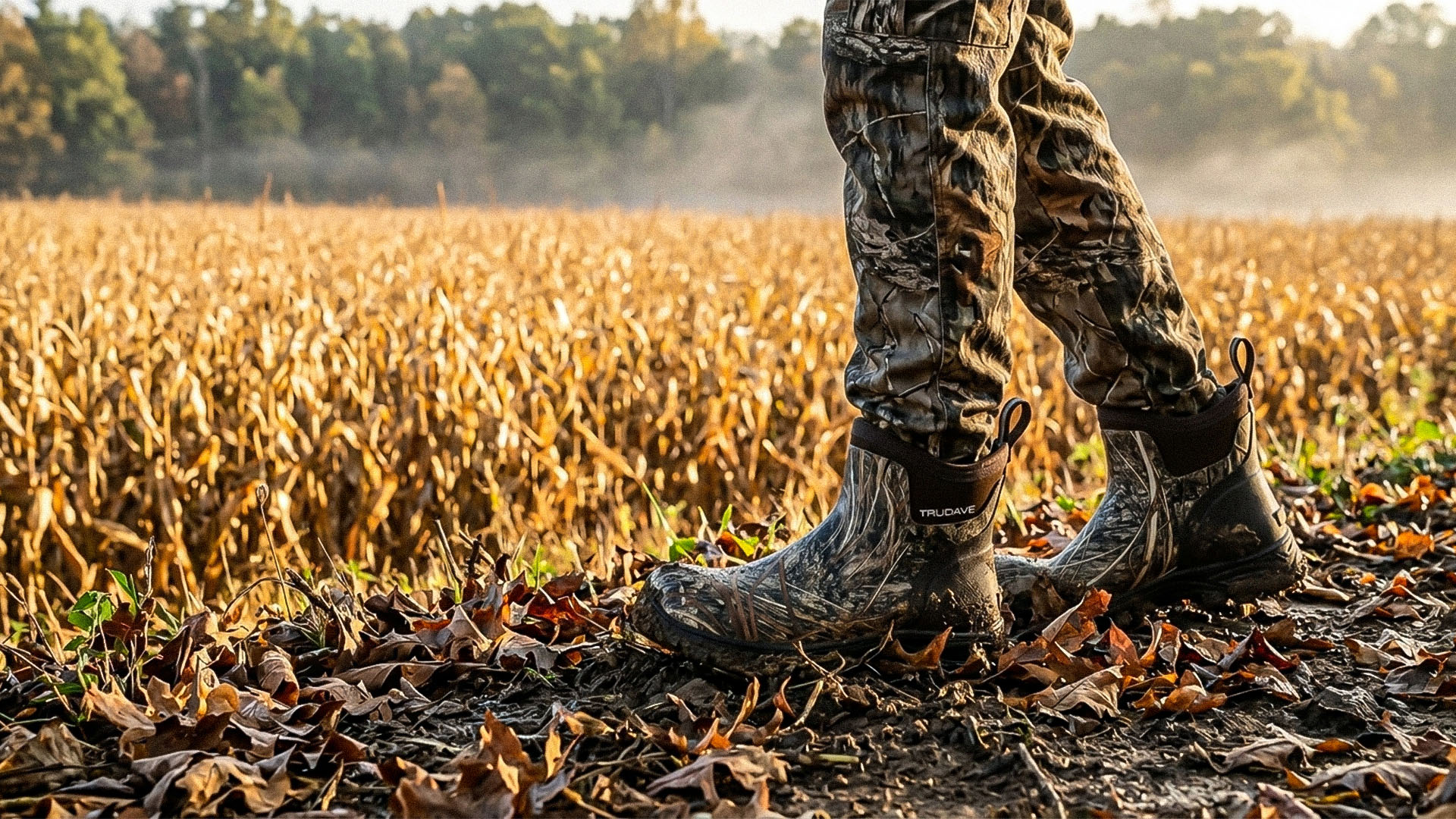
Hunters covering these conditions may benefit from waterproof hunting boots for wet woodland bird hunting that provide secure fit, reliable traction, and enough waterproof protection without excessive weight.
Grouse hunting is active.
Heavy boots create fatigue.
Leaky boots create discomfort.
The best option balances both problems.
Wet Leaves Are Slippery
A carpet of wet fall leaves can hide:
- Rocks
- Roots
- Mud
- Small holes
Move carefully on slopes.
Do not watch the dog while ignoring the ground.
Stop before looking into the canopy or scanning ahead.
Most grouse terrain does not look extreme.
That makes it easy to underestimate footing hazards.
Muddy Logging Roads Can Be Worse Than Trails
Old roads collect water.
Vehicle ruts and clay soil can become slick.
Watch for:
- Deep mud
- Puddles
- Hidden stones
- Broken branches
- Washed-out sections
A waterproof boot with good traction makes these transitions easier.
Do not assume the road is automatically the safest surface simply because it is open.
Gaiters Can Help in Alder and Wet Grass
Light gaiters can keep:
- Water
- Seeds
- Mud
- Small debris
from entering boots.
They may also reduce moisture traveling down the lower leg.
Choose something flexible enough for constant walking.
Grouse hunters are rarely stationary for long.
Mobility matters.
Eye Protection Is Useful in Young Forest
Branches, alder stems, and brush frequently hit face level.
Protective glasses can reduce eye injuries.
Clear or lightly tinted lenses work well in darker forest conditions.
Eye protection becomes even more valuable when following a dog into dense regeneration.
A bird hunt is not worth a scratched cornea.
Durable Pants Make the Hunt Better
Young forest can be rough on clothing.
Expect:
- Briars
- Saplings
- Wet brush
- Fallen timber
Durable brush pants can improve comfort and reduce distractions.
Quiet fabric is useful.
The objective is clothing that allows you to push through productive habitat instead of walking around every difficult section.
Ticks Can Remain Active
Depending on location and temperature, ticks may remain active during portions of grouse season.
Check:
- Clothing
- Skin
- Dogs
after hunting.
Use appropriate prevention.
Young forest and brush habitat can hold significant tick populations.
Do not assume cooler fall weather eliminates the risk entirely.
Porcupines Can Be a Dog Hazard
In some northern forests, bird dogs may encounter porcupines.
Dense young cover makes it difficult to see what the dog is investigating.
Maintain control.
If the dog becomes unusually focused on something other than bird scent, investigate carefully.
A porcupine encounter can end a hunt quickly.
Know how to contact veterinary help in remote areas.
Old Wire Is Another Hazard
Logging areas and abandoned farmland can contain:
- Barbed wire
- Old fences
- Metal debris
- Farm equipment
Vegetation may hide everything.
Watch for old posts.
Control dogs near historical property edges.
An invisible strand of rusty wire can cause serious injuries.
Beaver Ponds Require Caution
Grouse habitat often overlaps beaver wetlands and alder bottoms.
These areas can hold excellent cover.
They can also contain:
- Deep mud
- Hidden channels
- Unstable dams
- Thin ice later in the season
Do not follow a bird or dog blindly onto unsafe ground.
Use the dry or firm edge whenever possible.
Public Forests Can Be Excellent Grouse Country
Many ruffed grouse opportunities exist on public forestland.
Look for evidence of habitat disturbance and forest management.
Potentially productive areas include:
- Recent timber cuts
- Regenerating aspen
- Old logging roads
- Young forest management areas
Mature uninterrupted forest may look appealing but can be less productive.
Search maps and management information for varied forest age classes.
Habitat diversity is often the key.
Timber Harvest Can Create Future Grouse Habitat
Logging is sometimes viewed only as habitat loss.
For ruffed grouse, appropriate forest regeneration can create valuable young-forest habitat.
The quality depends on:
- Forest type
- Regrowth
- Size and layout of cuts
- Surrounding mature cover
- Local management
A landscape containing multiple age classes supports more habitat options than one uniform forest.
Hunters should learn to recognize these patterns.
Do Not Judge a Cut by the Parking Area
The edge beside the road may receive significant pressure.
Walk farther.
A large cut can contain very different habitat sections.
Birds may concentrate near:
- Wet pockets
- Aspen regeneration
- Creek edges
- Conifer borders
- Interior logging roads
A half-mile inside can hunt completely differently than the roadside fifty yards.
Pressure Moves Birds
After repeated hunting, grouse may use thicker or less obvious cover.
Search:
- Small cuts
- Wet alder pockets
- Steeper terrain
- Secondary roads
- Habitat behind popular areas
Do not assume the forest is empty because the main logging road stopped producing.
Birds respond to hunters.
Change the route.
Mark Every Flush
When you flush a grouse, record the exact habitat.
Note:
- Forest age
- Tree species
- Moisture
- Nearby food
- Edge type
- Time of day
- Weather
Patterns emerge over time.
You may discover that most birds come from one particular combination, such as young aspen beside alder within fifty yards of a logging road.
That knowledge is more valuable than simply recording GPS coordinates.
A Flush Is Habitat Information
Even a missed bird teaches you something.
Do not immediately continue walking.
Study where the bird came from.
Why was that exact spot better than the surrounding forest?
Was there:
- Thicker regeneration?
- A food source?
- A creek?
- Conifer cover?
- Better sunlight?
The better you answer that question, the faster you find the next bird.
Mark Where the Bird Lands
If you can follow the flight safely, watch where the grouse lands.
It may not travel far.
Use:
- Large trees
- Logging-road bends
- Rock features
- Conifer patches
as landmarks.
Wait briefly.
Then approach carefully.
A relocated bird may provide another opportunity, though it can be more alert after the first flush.
Do Not Run After a Flushed Bird
Rushing creates noise and poor footing.
It also pushes the bird again before you understand where it settled.
Walk deliberately.
Use cover.
Stay ready.
A grouse landing two hundred yards away is not escaping into another county.
Patience often creates a second hunt.
Recovery Can Be Hard in Thick Cover
A downed grouse can disappear immediately beneath:
- Ferns
- Leaves
- Saplings
- Logs
- Grass
Mark the exact location.
Do not trust memory.
Walk directly to the fall.
Search carefully.
A trained dog can be extremely valuable for recovery.
Without a dog, use a systematic grid rather than wandering randomly.
Feathers Can Lead to the Bird
If the grouse is not immediately visible, look for:
- Feathers
- Blood
- Disturbed leaves
- Tracks in soft ground
Begin from the location where you last saw it.
Expand slowly.
Do not continue hunting until reasonable recovery effort is complete.
Small game deserves the same recovery discipline as big game.
Warm Early-Season Days Require Game Care
Early grouse seasons can still be warm.
Keep harvested birds:
- Cool
- Clean
- Shaded
Follow current rules regarding field dressing, transport, and identification.
Do not leave birds sealed inside a hot vehicle for hours.
Proper meat care begins during the hunt.
Regulations Must Be Checked Locally
Ruffed grouse regulations vary by state, province, season, and land type.
Hunters should verify current requirements involving:
- Season dates
- Daily bag limits
- Possession limits
- License requirements
- Shooting hours
- Public-land restrictions
- Blaze-orange requirements
- Weapon rules
Use current official wildlife-agency information.
Do not rely on an old article for legal guidance.
Common Ruffed Grouse Hunting Mistakes
Hunting Mature Open Forest
Young dense regeneration is often far more productive.
Avoiding Alder Because It Is Wet
Difficult cover can be excellent grouse habitat.
Walking Too Fast
Pause around productive transitions.
Ignoring Logging Roads
Road edges provide food, travel, and visibility.
Looking Only for Birds Instead of Habitat
Finding the right forest structure is the real skill.
Wearing Heavy or Leaky Footwear
Active wet-woods hunting requires mobility plus waterproof protection.
Shooting Through Thick Brush
Wait for a safe clear window.
Losing Track of Partners or Dogs
Dense young forest can hide them quickly.
Failing to Study Flush Locations
Every bird teaches you what habitat is working.
Frequently Asked Questions
What habitat is best for ruffed grouse?
Young forest containing dense aspen, alder, birch, shrubs, logging cuts, and nearby food and security cover is often productive.
Why are logging roads good for grouse hunting?
They create habitat edges, feeding vegetation, easier travel, and open shooting lanes beside dense security cover.
Is alder good ruffed grouse habitat?
Yes. Alder areas, especially near young hardwoods, wetlands, and creek systems, can provide valuable food and cover.
Is grouse hunting good after rain?
Wet conditions can quiet leaves and make stalking easier, though wet vegetation also makes waterproof footwear and clothing more important.
Can you hunt ruffed grouse without a dog?
Yes. Hunters can successfully still-hunt young cuts, alder, logging roads, and habitat transitions without dogs.
What boots are best for ruffed grouse hunting?
Lightweight waterproof hunting boots with good traction, secure fit, and enough protection for mud, wet leaves, creek edges, and long walking days are a practical choice.
Final Thoughts
Ruffed grouse hunting changes the way hunters look at forests.
Big trees are not always better.
Clean ground is not always better.
Easy walking is definitely not always better.
The bird often chooses the young, tangled, wet, inconvenient piece of forest everyone else wants to walk around.
Look for aspen regeneration.
Hunt the alder edge.
Walk old logging roads slowly.
Watch berry patches and conifer transitions.
Pause when the habitat looks right.
Wear footwear that lets you enter wet cover instead of avoiding it.
And after every flush, study the place the bird came from.
The grouse already told you what good habitat looks like.
You only have to remember it.
