
A hunter used to Gambel’s quail expects noise.
Calling.
Running birds.
Coveys moving ahead through washes.
Tracks in sand.
Fast birds flushing from desert brush.
Then he steps into Mearns’ quail country and everything feels different.
The hills are covered in oak grassland. The ground rolls sharply into draws and benches. Bunchgrass hides pockets of bare soil, and scattered oaks break up the slope. There may be no obvious dusting area, no loud covey calling, and no running birds visible ahead.
The hunter walks too fast.
Nothing flushes.
The hillside seems empty.
Then, ten yards away, the dog locks up.
A covey of Mearns’ quail erupts almost straight from beneath the hunter’s boots.
The birds rise loudly, scatter through the grass and oaks, and vanish into terrain that looked ordinary only seconds earlier.
Mearns’ quail hunting is different from most other desert quail hunting.
These birds often hold tight, rely heavily on grass cover, and live in country where small changes in slope, soil moisture, oak cover, and ground vegetation matter more than long open washes or obvious water sources.
Hunters who treat them like Gambel’s quail or scaled quail often walk past birds without knowing they were ever there.
Success begins by slowing down and learning the habitat at ground level.
What Makes Mearns’ Quail Different
Mearns’ quail, also known as Montezuma quail, are one of the most distinctive upland birds in the American Southwest.
They are secretive.
They often hold tight.
They use grass cover differently from many other quail species.
They may be present in a hillside that appears empty from a distance.
Unlike Gambel’s quail, which are often vocal and visible around washes, roads, and desert brush, Mearns’ quail can remain silent and hidden until the hunter is nearly on top of them.
This creates a unique style of hunting.
The hunter does not always hear the covey first.
The dog may not establish scent until very close.
The flush may happen at boot distance.
A good Mearns’ hunt is often measured by careful coverage of high-quality habitat rather than miles walked through random country.
Start With Oak Grasslands
Mearns’ quail are strongly associated with oak grassland and oak-savanna habitat in parts of the Southwest.
Productive country often includes:
- Scattered oaks
- Bunchgrass
- Rolling hills
- Draws
- Shallow canyons
- South-facing and east-facing slopes
- Open grassy benches
- Patches of bare soil beneath grass
- Nearby moisture from seasonal rains
- Diverse seed and tuber-producing plants
The best habitat rarely looks like flat desert.
It is often steeper, grassier, and more broken than new hunters expect.
If you are walking wide open sand flats or dry desert washes with little grass and no oak structure, you may be in better Gambel’s quail country than Mearns’ country.
Grass Structure Matters More Than Height Alone
New hunters often look for “grass” and stop there.
But not all grass cover is equal.
Mearns’ quail need grass that provides concealment while still allowing them to move and feed.
Good grass cover may include:
- Bunchgrass with open spaces between clumps
- Grass mixed with oak leaf litter
- Slopes where birds can hide at ground level
- Areas with forbs and seed-producing plants
- Cover dense enough to hide birds but not so solid that feeding becomes difficult
A hillside of uniform tall grass may not be as productive as a slope with patchy grass, bare soil, oak shade, and plant diversity.
The best cover often looks messy at your feet but readable once you slow down.
Look Under the Oaks
Oaks shape Mearns’ habitat.
They provide shade, leaf litter, insects, acorns, and structure. Their edges can create small feeding and loafing pockets that birds use throughout the day.
Do not simply walk between oaks.
Hunt the space around them.
Check:
- Grass beneath low branches
- Openings at the edge of shade
- Leaf-litter pockets
- Bare soil around roots
- Small benches below oak clusters
- Draws lined with oaks
- Transitions between oak shade and open grass
A covey may hold in the grass beside an oak and flush only when the hunter or dog enters the exact pocket.
Moisture Drives Habitat Quality
Mearns’ quail populations and distribution can respond strongly to rainfall and seasonal moisture.
Moisture influences plant growth, insects, seeds, and the underground foods these birds may use.
After good seasonal rains, oak grasslands can produce better cover and feeding conditions.
During dry years, birds may be more scattered or numbers may be lower.
Hunters should pay attention to:
- Summer monsoon patterns
- Grass growth
- Green-up
- Soil softness
- Plant diversity
- Insect activity
- Seed production
A slope that held coveys during a wet year may feel empty after drought.
Current habitat condition matters more than old memories.
Hunt Slopes With Variety
The best Mearns’ habitat is rarely one uniform hillside.
Look for slopes containing several features close together:
- Oak trees
- Bunchgrass
- Small draws
- Benches
- Loose soil
- Forbs
- Rock pockets
- Shade
- Open feeding spots
- Escape cover
Birds may feed in one microhabitat and rest in another only a few yards away.
A hunter walking too quickly sees only a grassy hill.
A careful hunter sees pockets, edges, shade lines, and likely holding cover.
Draws Can Hold Birds Without Looking Obvious
Small draws are important in oak grasslands.
They may collect moisture, support thicker vegetation, and provide travel structure.
Mearns’ quail may use draws for:
- Feeding
- Shade
- Escape
- Movement between slopes
- Protection from wind
- Access to better grass cover
Focus on the upper edges and side slopes rather than only the bottom.
Birds may hold halfway up the bank where grass meets oak shade.
A tiny side draw that barely appears on a map can hold a covey if the surrounding habitat is right.
Benches Deserve a Slow Search
A bench is a flatter spot on an otherwise sloping hillside.
Mearns’ quail may use benches because they provide easier feeding and movement while remaining near escape terrain.
When you reach a bench, slow down.
Let the dog work.
Scan the ground carefully.
Check the oak edges, grass clumps, and small rises around the bench.
A covey may sit tight until you are close enough to step on the edge of it.
Fast walking through a bench is one of the easiest ways to miss birds.
Mearns’ Quail Often Hold Tight
Many quail species run ahead of hunters.
Mearns’ quail are famous for holding tight.
This can be exciting, but it also creates problems.
A hunter may walk through a hillside and assume there are no birds because nothing ran, called, or flushed at distance.
The birds may have remained hidden just outside the search line.
This is why careful coverage matters.
A productive slope should be hunted slowly and thoroughly, especially when using a dog.
Do not leave good habitat simply because it does not immediately produce noise.
A Good Dog Can Change Everything
Mearns’ quail hunting is often associated with pointing dogs for good reason.
A trained dog can locate birds hidden in grass that hunters would never see.
However, Mearns’ scenting conditions can be tricky.
Birds may hold tightly in small pockets.
Wind can swirl around draws.
Moisture, temperature, and grass structure all affect scent.
Watch the dog carefully for subtle changes:
- Slowing down
- Tightening the search
- Head position changing
- Pausing near oak edges
- Returning to one patch of grass
- Working a small area repeatedly
- Sudden intensity before a point
Do not rush the dog.
Let it solve the scent problem.
Keep the Dog Close Enough to Matter
Wide-ranging dogs may work well in some open country, but Mearns’ quail often require detailed coverage.
If a dog ranges too far over broken terrain, the hunter may not reach the point before birds flush.
Thick grass, oaks, and hills can hide the dog quickly.
Use bells, GPS collars, beepers, or other legal tools appropriate for the area and hunting style.
The correct range depends on:
- Terrain
- Visibility
- Wind
- Dog experience
- Bird behavior
- Hunter fitness
The goal is not maximum distance.
The goal is controlled contact with birds.
Hunting Without a Dog Is Hard—but Not Impossible
Mearns’ quail are much harder to hunt without a dog, but careful hunters can still find opportunities.
Without a dog, focus on the best habitat and move slowly.
Use a deliberate pattern.
Stop often.
Listen for sudden movement in grass.
Check oak edges, benches, and draws carefully.
When a covey flushes, mark where singles land and follow up slowly.
Without a dog, recovery also becomes more difficult, so shot selection should be conservative.
Do not shoot birds that are likely to fall into thick grass where they cannot be recovered.
The First Flush May Be Explosive
A Mearns’ covey can hold so tight that the flush feels shocking.
Birds may rise from only a few yards away.
This can cause rushed shooting.
The best response is controlled and deliberate.
Before entering likely cover, know:
- Where the dog is
- Where partners are
- Which direction is safe
- What lies beyond the birds
- Where the slope drops
- Whether livestock, roads, or homes are nearby
Do not fire at sound or movement.
Identify the bird and confirm a safe shot.
Singles Can Hold Even Tighter
After the covey rise, individual birds may scatter into nearby grass and oak cover.
These singles can provide excellent hunting.
They may hold even tighter than the covey.
Watch where birds land.
Mark landmarks carefully:
- A specific oak
- A rock outcrop
- A grass patch
- A draw edge
- A small rise
- A dead branch
- A color change in the slope
Approach slowly and let the dog work.
A single may sit almost motionless until the dog points or the hunter steps too close.
Do Not Overwork One Covey
Because Mearns’ quail can be localized and covey numbers vary by year, responsible pressure matters.
After a covey flush and a reasonable attempt at singles, consider moving on.
This is especially important during dry years or when coveys are small.
A good hunt should not require chasing the same birds until they are scattered across several ridges.
Healthy coveys support future seasons and better hunting over time.
Weather Changes Daily Movement
Mearns’ quail hunting can be affected by temperature, wind, recent rain, and sunlight.
During warmer days, birds may use shade and thicker grass.
During cooler mornings, they may feed more actively.
Wind can make dog work harder and push birds into protected pockets.
After rain, scenting and ground conditions may change.
Do not hunt every day the same way.
Ask what the birds need under current conditions:
- Shade?
- Warmth?
- Moist soil?
- Wind protection?
- Feeding cover?
- Reduced exposure?
Then search the slope that provides it.
Wind Can Make Scent Complicated
Oak grassland terrain is rarely flat.
Small draws, ridges, benches, and oak clusters can redirect wind.
The dog may appear uncertain not because no birds are present, but because scent is moving inconsistently.
Work into or across the wind when possible.
When the wind swirls, slow down.
Let the dog re-check the cover from different angles.
A rushed approach may bump birds before the dog can pin them.
Midday Hunting Can Still Produce
Some quail hunting is best early in the morning, but Mearns’ quail may still be found later in the day if conditions are suitable.
In cooler weather, birds may remain active across a longer period.
Midday slopes with shade, moisture, and cover can still hold birds.
However, warm conditions require caution for both hunters and dogs.
Carry enough water.
Watch the dog.
Do not keep climbing steep hills simply because one more draw looks promising.
Footing Is a Serious Part of the Hunt
Mearns’ country can be steeper and rougher than it first appears.
Oak grasslands may include:
- Loose rock
- Hidden holes
- Wet grass
- Slippery slopes
- Cattle trails
- Erosion cuts
- Thorny brush
- Oak roots
- Mud after rain
A hunter watching the dog can easily stop watching the ground.
That is when falls happen.
Move carefully, especially on sidehills and descents.
Boots Need to Be Light, Supportive, and Secure
Mearns’ quail hunting is active.
Hunters may climb slopes, cross draws, sidehill beneath oaks, and work through wet grass after monsoon moisture or winter storms.
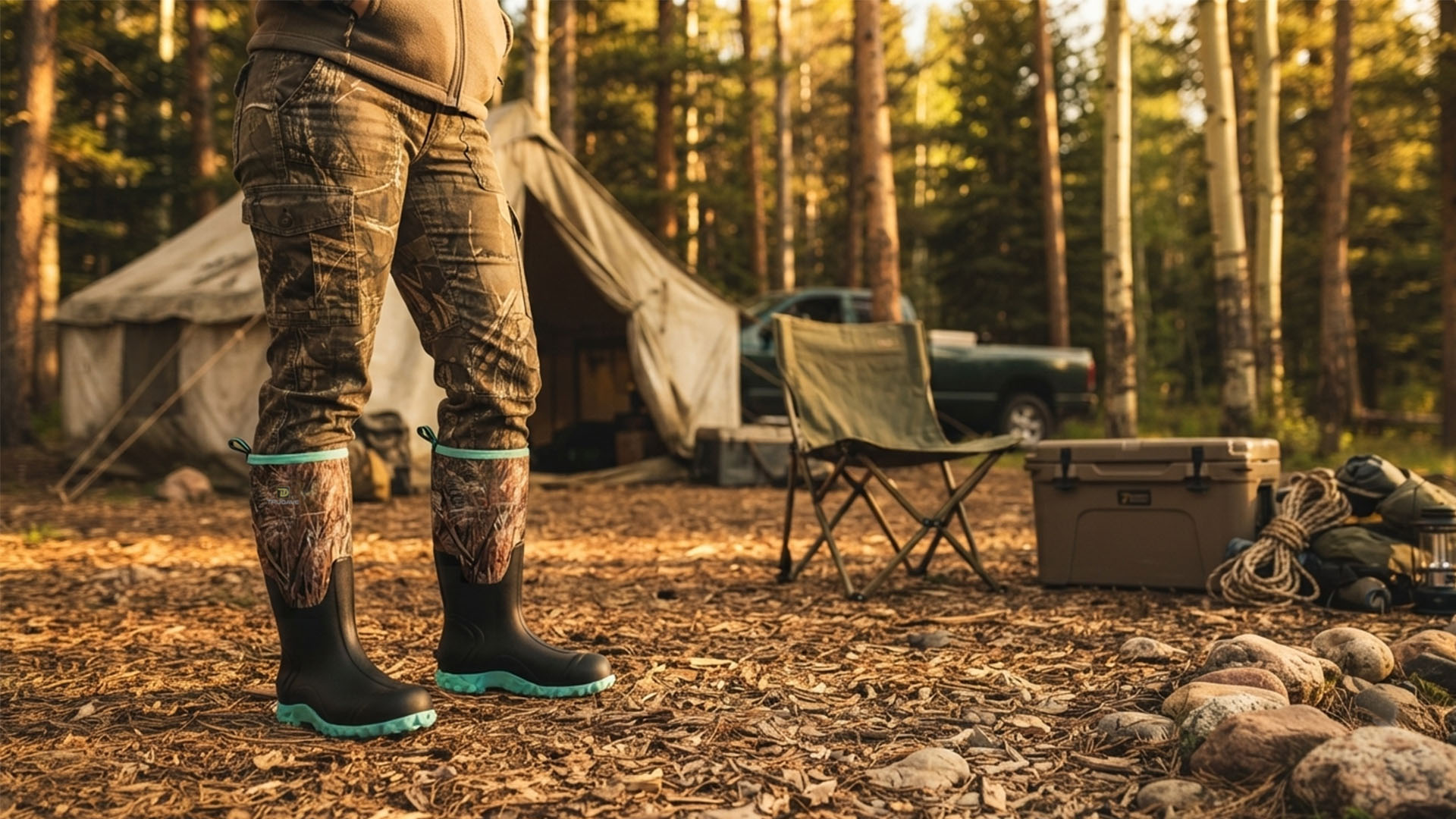
For these conditions, lightweight waterproof hunting boots for oak grassland quail hunting can provide useful protection without the bulk of heavy cold-weather footwear.
Look for boots that balance:
- Secure heel fit
- Good traction on grass and rock
- Waterproof protection for wet vegetation
- Breathability for active walking
- Enough support for uneven ground
- Manageable weight for long days
A boot that is too heavy can cause fatigue.
A boot that is too soft can feel unstable on sidehills.
A boot that does not fit securely can create blisters before the first covey is found.
Wet Grass Can Soak Feet Quickly
Even in country that looks dry from a distance, morning dew or recent rain can soak boots and pants.
Walking through grass for several hours exposes footwear to constant moisture.
Waterproof protection helps keep feet comfortable, but breathability still matters.
If your feet sweat heavily during climbs, moisture builds from the inside.
Use socks suited to the temperature and activity level.
Carry a dry pair on long hunts.
Grass Seeds and Debris Can Cause Problems
Oak grasslands can fill boots and socks with seeds, stems, and small debris.
This creates irritation and hot spots.
Gaiters may help keep debris out while protecting lower pants from wet grass and brush.
Choose breathable gaiters for active hunting.
Stop during breaks to remove seeds before they become painful.
Small discomfort early in the hunt can become a major problem after several miles.
Cattle Country Requires Awareness
Much of the oak grassland habitat used by Mearns’ quail overlaps with grazing country.
Hunters may encounter:
- Cattle
- Water tanks
- Fences
- Gates
- Ranch roads
- Old wire
- Corrals
- Salt blocks
- Stock trails
Respect ranch operations.
Do not block gates.
Leave gates as you found them unless instructed otherwise.
Avoid disturbing livestock.
Keep dogs under control.
A good hunting spot is not worth damaging access relationships.
Fences Can Hide in Grass
Old barbed wire and loose fencing can be hard to see in grass.
Dogs are especially vulnerable.
Move slowly near old fence lines, homesteads, and water developments.
Watch for:
- Rusted wire
- Broken posts
- Low strands
- Wire wrapped around trees
- Old corrals
- Discarded ranch materials
Carry first-aid supplies for both hunter and dog.
Water for Dogs Is Non-Negotiable
Even in cooler weather, dogs working steep country need water.
Do not assume natural water will be available.
Carry enough for the dog and yourself.
Offer water regularly.
Watch for signs of fatigue or heat stress:
- Heavy panting
- Slowing pace
- Stumbling
- Excessive drooling
- Refusal to hunt
- Loss of coordination
End the hunt before the dog is in trouble.
No covey is worth risking a dog’s health.
Snakes May Be Present in Warm Conditions
Southwestern bird country can include venomous snakes during warm periods.
Watch where you step and where the dog works.
Avoid placing hands under rocks, into grass clumps, or near shaded cover without looking.
Know local snake risk and emergency procedures.
If a snake is encountered, move away and give it space.
Do not try to handle it.
Thorny Plants Can Injure Dogs
Depending on the area, hunters and dogs may encounter:
- Cactus
- Catclaw
- Mesquite thorns
- Yucca
- Agave
- Sharp grass awns
- Oak branches
- Thorny shrubs
Inspect the dog often.
Check paws, legs, chest, ears, eyes, and mouth.
Small thorns or seeds can become serious if ignored.
Protective dog gear may help in some terrain, but it must be fitted and tested before the hunt.
Mark Every Covey Location
Mearns’ quail habitat can be patchy.
When you find birds, record the exact conditions.
Note:
- Slope direction
- Elevation
- Grass type
- Oak density
- Recent moisture
- Nearby draw
- Time of day
- Dog behavior
- Weather
- Covey size
Over time, these notes become more valuable than random waypoints.
The goal is to understand why birds were there.
Once you understand the pattern, you can find similar habitat elsewhere.
Do Not Judge Habitat From the Road Only
Mearns’ quail country often reveals itself only on foot.
From the road, a hillside may look like ordinary grass and scattered oaks.
On foot, you may notice:
- Better soil moisture
- More bunchgrass
- Small benches
- Hidden draws
- Oak leaf litter
- Forb diversity
- Feeding pockets
- Tracks or droppings
- Dog interest
Roadside scouting helps, but boots-on-ground evaluation is essential.
The best covey may be just over the first roll in the terrain.
Glassing Can Help Choose Slopes
You may not spot many Mearns’ quail through binoculars, but glassing can help identify habitat worth walking.
From a distance, look for:
- Oak density
- Grass condition
- Slope breaks
- Benches
- Draws
- Shade pockets
- Water developments
- Access routes
Glassing saves energy by helping avoid slopes that lack structure or cover.
It also helps plan a route that allows the dog to work the wind.
Public Land Requires Backup Plans
Popular Mearns’ areas can receive bird-hunting pressure.
Other hunters may already be working the drainage you planned to hunt.
Have multiple options.
Look for:
- Smaller side canyons
- Less obvious slopes
- Areas farther from roads
- Habitat behind a difficult access point
- Public parcels connected by legal access
- Slopes overlooked because they appear ordinary
Do not crowd another hunter or dog.
Choose another drainage and maintain safe spacing.
Legal Access Can Be Complicated
Southwestern hunting country may contain public land, private ranches, state trust lands, tribal lands, military lands, and mixed ownership.
Confirm legal access before hunting.
Do not assume open grassland is public.
Do not follow a covey across a boundary without permission.
Use official maps and current signage.
If in doubt, choose clearly legal access.
Regulations Must Be Checked Every Season
Mearns’ quail seasons, bag limits, legal methods, and access rules vary by state and area.
Hunters should verify current regulations through the responsible wildlife agency before hunting.
Check:
- Season dates
- Daily bag limits
- Possession limits
- License requirements
- Public-land access rules
- Non-toxic ammunition areas
- Dog restrictions
- Road closures
- Special unit rules
Do not rely on old information or another hunter’s memory.
Recovery Can Be Difficult in Grass
A downed Mearns’ quail can disappear quickly.
Thick grass, slope, rocks, and oak leaves make recovery challenging.
Mark the fall immediately.
Use a clear landmark.
If hunting with a dog, give the dog time to work.
Without a dog, search slowly in a grid.
Avoid taking marginal shots where recovery is unlikely.
Ethical wingshooting includes making every reasonable effort to retrieve birds.
Shot Angles Can Be Awkward
Birds may flush from below, above, or directly beside the hunter.
The terrain may place partners and dogs at different elevations.
Before entering cover, agree on shooting zones.
Know where everyone is.
Never swing through a dog, another hunter, livestock, roads, or buildings.
Because Mearns’ often flush close, the safest shot may be the one you do not take.
Common Mearns’ Quail Hunting Mistakes
Hunting Them Like Gambel’s Quail
Mearns’ quail often hold tight and use grass-oak habitat rather than open desert washes.
Walking Too Fast
Birds can be present without calling or running ahead.
Ignoring Grass Structure
The right bunchgrass and ground cover matter more than grass presence alone.
Leaving After One Empty Slope
Habitat is patchy. Evaluate several slopes with similar features.
Letting Dogs Range Too Far
Broken terrain and tight-holding birds reward controlled coverage.
Wearing Heavy Boots
Active oak-grassland hunting favors lightweight support, traction, and waterproof protection.
Forgetting Dog Water
Steep country and dry air can dehydrate dogs quickly.
Overpressuring Small Coveys
Responsible restraint matters, especially in dry or low-number years.
Failing to Check Access Rules
Mixed land ownership is common in the Southwest.
Frequently Asked Questions
Where do you find Mearns’ quail?
Look for oak grasslands, bunchgrass slopes, small draws, benches, and habitat with good seasonal moisture and ground cover.
Are Mearns’ quail the same as Montezuma quail?
Yes. Mearns’ quail are commonly known as Montezuma quail.
Do you need a dog to hunt Mearns’ quail?
A good bird dog is extremely helpful because these birds often hold tight in grass. Hunting without a dog is possible but more difficult.
What makes Mearns’ quail hunting different?
They are quieter, more secretive, and often hold tighter than many other desert quail species. Habitat selection is also more focused on oak grasslands and bunchgrass cover.
What boots are best for Mearns’ quail hunting?
Choose lightweight waterproof boots with secure fit, good traction, and enough support for steep grass slopes, draws, wet vegetation, and rocky ground.
When is Mearns’ quail hunting best?
Timing depends on state seasons, rainfall, habitat conditions, and local bird numbers. Hunters should verify current regulations and scout current habitat.
Final Thoughts
Mearns’ quail reward patience.
They do not always call loudly.
They do not always run across open ground.
They may not reveal themselves until the dog freezes or the covey erupts from the grass at your feet.
To hunt them well, stop thinking like a desert-road hunter and start thinking at ground level.
Find oak grasslands.
Study bunchgrass.
Check draws, benches, shade pockets, and moisture.
Let the dog work carefully.
Move slower than feels necessary.
Protect your feet, your dog, and your access.
And when you find a covey, pay attention to every detail.
Mearns’ quail country does not always announce itself.
Sometimes the best slope looks ordinary from the road.
Only after the flush do you realize it had everything the birds needed.
