
A wet hardwood forest can feel empty at first light.
The leaves are dark. The tree trunks shine with moisture. Acorns disappear into the soaked leaf litter, and every sound seems softened by the rain that passed overnight.
Then a branch shakes high in an oak.
A cut acorn drops.
A gray squirrel slips around the back side of the trunk, freezes, and vanishes into the canopy before most hunters even raise their binoculars.
Squirrel hunting after rain can be excellent.
Wet leaves make walking quieter. Damp bark can reveal fresh climbing marks. Recently fallen mast becomes easier to identify, and light rain often keeps other hunters out of the woods.
But rain also changes how squirrels move, feed, and use cover.
The best wet-weather squirrel hunters do not simply walk random timber until something moves. They focus on current food, active den trees, fresh cuttings, sheltered hardwood edges, and the small sounds that remain after the forest goes quiet.
Why Rain Can Improve Squirrel Hunting
Dry leaves make squirrel hunting difficult.
Every step crunches.
Every branch snap carries through the woods.
A squirrel feeding on the forest floor may hear a hunter from far away and disappear before the hunter ever sees it.
Rain changes that.
Wet leaves are quieter. Damp ground reduces foot noise. Light drizzle can mask small movements. After rain, a careful hunter may move through hardwoods much more quietly than during dry conditions.
This creates better opportunities for still-hunting.
Instead of sitting in one place all morning, the hunter can move slowly from food source to food source while stopping often to listen and glass.
Rain does not make squirrels careless.
It simply gives the hunter a better chance to approach without being detected immediately.
Light Rain and Heavy Rain Are Different Hunts
A soft overnight rain followed by calm conditions is often useful.
A cold downpour with strong wind is a different situation.
Squirrels may remain in dens, move less, or feed in more protected locations during rough weather.
When planning a wet-weather hunt, consider:
- Rain intensity
- Wind speed
- Temperature
- Time of day
- Mast availability
- Den-tree locations
- Hunting pressure
- Leaf cover
A light rain can quiet the forest.
A hard storm can reduce visible activity.
The best period is often when rain has slowed or stopped and squirrels begin feeding again.
Start With the Food
Squirrels are usually found where food is available now.
In hardwood country, that often means mast.
Important food sources may include:
- White oak acorns
- Red oak acorns
- Hickory nuts
- Walnuts
- Beech nuts
- Pecans in suitable regions
- Soft mast
- Corn edges
- Osage orange seeds in some areas
- Maple seeds during certain seasons
Do not assume every oak flat is productive.
One ridge may be covered in acorns while another produced poorly.
Scout the ground beneath individual trees.
Look for fresh cuttings, shell pieces, droppings, tracks in mud, and feeding activity.
The best squirrel tree is not always the largest oak.
It is the tree squirrels are using today.
Fresh Cuttings Tell the Truth
A squirrel feeding in a tree often drops pieces of nuts, hulls, and shells.
These cuttings can reveal active feeding before the hunter sees the animal.
After rain, old cuttings may look dark and flattened.
Fresh cuttings often appear brighter, cleaner, or more recently disturbed.
Look beneath:
- Hickory trees
- Oaks
- Walnuts
- Beech trees
- Nut-producing field edges
- Trees with visible mast clusters
If fresh pieces are scattered below one tree while nearby trees show little sign, slow down.
Sit nearby.
Watch the trunk, large limbs, and neighboring trees.
Squirrels may return to the same feeding area after a short pause.
Listen for Falling Debris
In wet woods, sound becomes more specific.
Dry leaves rustling everywhere can make it hard to separate squirrel movement from background noise.
After rain, the forest may become quiet enough to hear:
- Nut pieces hitting leaves
- Claws scraping bark
- A squirrel jumping between limbs
- Bark flakes falling
- Branch tips shaking
- Leaves dripping differently from feeding movement
Stop often.
Listen for repeated sounds from the same tree.
A single drop may be rainwater.
Several small pieces falling from one limb may be a feeding squirrel.
Watch the Tree, Not Only the Ground
New hunters often stare at the forest floor.
Squirrels spend much of their time above it.
Once you hear movement or see fresh cuttings, scan upward.
Look for:
- A tail flick
- A rounded body on a limb
- Ears above a branch
- Movement around the back of a trunk
- Bark disturbed by climbing
- Leaves shaking without wind
- A squirrel stretching to reach mast
Use binoculars in tall timber.
A squirrel sitting still against wet bark can be difficult to see with the naked eye.
Wet Bark Makes Movement Easier to Spot
Rain darkens tree trunks and limbs.
A gray squirrel moving against wet bark may stand out briefly when it crosses an open section.
But once it stops, it can blend in quickly.
Watch for small changes in shape.
A knot that was not there a moment ago may be a squirrel pressed against the trunk.
When a squirrel hides on the opposite side of a tree, do not rush.
Sit still.
Many squirrels eventually circle back around or move to another limb when they feel safe.
Den Trees Become More Important in Bad Weather
During heavy rain, wind, or cold conditions, squirrels may spend more time near den trees.
Den trees often contain cavities, broken limbs, hollow trunks, or old woodpecker openings.
Good den-tree areas may include:
- Mature oaks
- Old hickories
- Beech trees
- Creek-bottom hardwoods
- Large maples
- Sycamores
- Trees with visible holes
- Snag-filled timber edges
A den tree does not guarantee activity, but several den trees near active mast can create a strong hunting location.
If weather is poor, watch the area after conditions improve.
Squirrels may emerge to feed once the rain weakens.
Leaf Nests Are Useful Clues
Squirrels build leafy nests, often called dreys.
These are usually visible high in trees after leaf drop, but hunters can notice them earlier when scanning carefully.
Leaf nests may appear in:
- Forked limbs
- Dense oak branches
- Hickory crowns
- Timber edges
- Trees near food sources
Not every nest is active.
Some are old.
Some are used occasionally.
But a cluster of nests near mast-producing trees suggests regular squirrel use.
Combine nest observations with current feeding sign before choosing a setup.
Creek Bottoms Can Be Excellent After Rain
Creek bottoms often hold large hardwoods, soft soil, diverse mast, and travel cover.
After rain, they may become productive because moisture increases quiet movement and fresh mud reveals tracks.
Look for squirrel activity near:
- Sycamores
- Oaks
- Hickories
- Walnuts
- Beech
- Creek crossings
- High banks
- Old logging roads
- Floodplain benches
However, creek bottoms can create unstable wind, slick banks, and muddy access.
Move carefully.
Do not let quiet ground make you careless around water and steep banks.
Hardwood Ridges Dry Faster Than Bottoms
After heavy rain, low areas may remain soaked or flooded.
Squirrels may shift toward higher hardwood ridges where feeding remains easier.
South-facing slopes may warm earlier.
Wind-protected benches may hold activity when exposed ridge tops are uncomfortable.
Search for ridges containing both food and den trees.
A ridge with scattered hickories and oaks may produce steady squirrel movement after the forest begins drying.
Field Edges Can Hold Morning Activity
Squirrels often use edges between hardwoods and agricultural fields, especially where corn, mast trees, brush, and den sites occur close together.
After rain, field edges may reveal fresh tracks in mud or soft soil.
Check:
- Cornfield borders
- Fence rows with nut trees
- Overgrown field corners
- Creek lines beside crops
- Small woodlots
- Hedgerows connected to timber
Do not walk the open edge too quickly.
Squirrels may feed just inside the woods where they can escape into trees immediately.
Wind Makes Squirrel Hunting Harder
Rain helps quiet the woods, but wind can make squirrels difficult to detect.
Strong wind moves branches constantly.
Falling water and leaves create background noise.
Squirrels may feed in more protected areas or remain closer to dens.
During windy conditions, focus on:
- Leeward slopes
- Creek bottoms protected by terrain
- Lower benches
- Dense hardwood pockets
- South-facing protected timber
- Edges out of direct wind
Watch for movement lower in the tree rather than only high in the canopy.
Squirrels may avoid exposed upper branches during strong gusts.
Still-Hunting Works Well in Wet Leaves
Still-hunting means moving slowly, stopping frequently, and watching carefully.
Wet leaves make this approach more effective.
A simple rhythm works well:
Take five to ten careful steps.
Stop.
Listen.
Scan the ground for cuttings.
Scan the trees.
Wait.
Then move again.
The stopping is as important as the walking.
Squirrels often freeze when they hear something unusual.
If the hunter stops too, the squirrel may eventually move first.
Sit Longer Around Active Food
When fresh feeding sign is obvious, do not leave too quickly.
A hunter may arrive just after squirrels retreated into cover.
Sit against a tree with a good background.
Wait fifteen to thirty minutes.
Watch nearby trunks and connecting limbs.
Squirrels often return to feeding once the woods feel quiet again.
This is especially true when mast is concentrated around only a few trees.
Use Binoculars in Tall Timber
Binoculars are not only for western big-game hunting.
In mature hardwoods, they help locate squirrels hidden high in branches.
Use binoculars to inspect:
- Hickory crowns
- Oak limbs
- Den holes
- Leaf nests
- Vines
- Trunk forks
- Movement behind branches
Glassing reduces unnecessary walking.
Instead of chasing every sound, confirm activity from a distance.
Vines Can Hide Squirrels
Grapevines and climbing vegetation create excellent squirrel cover.
Squirrels can move through vines without exposing themselves on open limbs.
They may also use vines as travel routes between trees.
Watch vine-covered trees carefully.
Look for shaking that does not match wind movement.
A squirrel may be feeding or hiding behind leaves and stems.
Wet Vines and Logs Are Slippery
Wet hardwood habitat is full of hazards.
Hunters may cross:
- Mossy logs
- Wet roots
- Creek banks
- Slippery rocks
- Muddy trails
- Vine tangles
- Leaf-covered holes
A squirrel hunt may seem low-risk because it happens close to home or on familiar ground.
Most injuries happen during simple movement.
Watch every step, especially while looking upward.
Footwear Matters in Wet Hardwood Timber
Squirrel hunters often underestimate footwear because small-game hunts feel casual compared with big-game seasons.
But wet hardwoods can soak ordinary boots quickly.
Morning dew, wet leaves, creek crossings, muddy bottoms, and rain-soaked brush can turn a short hunt uncomfortable.
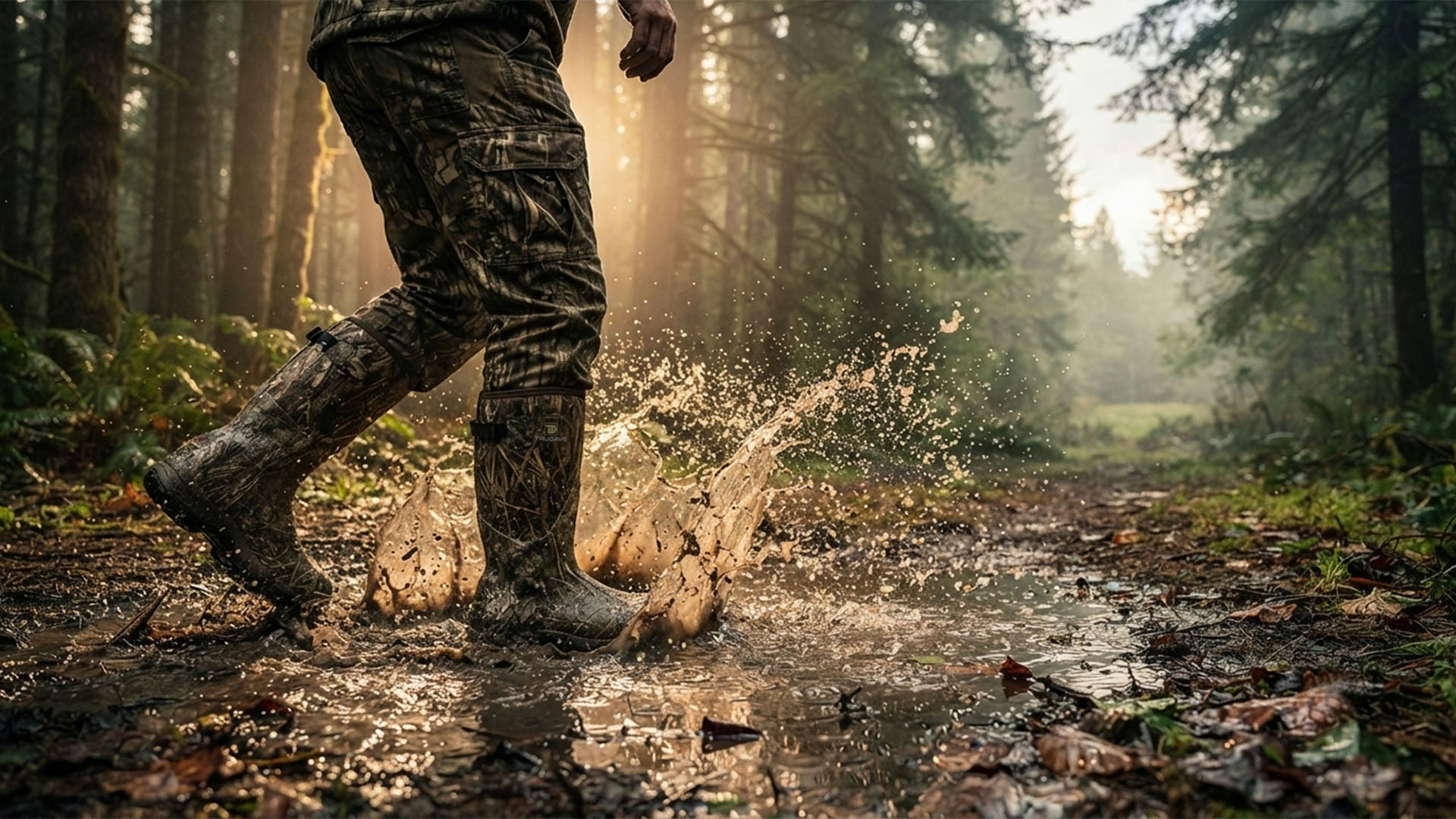
Hunters spending hours in these conditions may benefit from waterproof hunting boots for wet hardwood hunting that provide dependable traction, secure fit, and enough walking comfort for slow still-hunting.
The best boot depends on terrain.
Low creek bottoms may require more waterproof height.
Hill-country hardwoods may require better ankle support and outsole grip.
Choose footwear based on the woods you actually hunt.
Avoid Boots That Are Too Loud
Some boots perform well in mud but sound stiff or squeaky in quiet timber.
Squirrel hunting rewards quiet movement.
Test boots before the hunt.
Walk slowly on leaves, logs, gravel, and wet soil.
Listen for:
- Squeaking material
- Loose heel movement
- Loud outsole slap
- Brush catching on hardware
- Wet leather noise
A waterproof boot still needs to move quietly enough for small-game hunting.
Keep Your Steps Short
Wet leaves can slide underfoot.
Long steps increase noise and reduce balance.
Use short, controlled steps.
Place the foot flat.
Avoid stepping directly on sticks when possible.
If a branch is unavoidable, step slowly rather than snapping it quickly.
A squirrel may tolerate one soft sound but disappear after a sharp crack.
Rain Can Hide Your Sound and Your Target’s Sound
Damp woods are quieter underfoot, but dripping water can cover squirrel movement.
During or shortly after rain, listen for patterns.
Random dripping comes from many directions.
Feeding movement often repeats from the same tree.
Watch for visual confirmation before committing to a stalk.
Do not chase every sound.
Move After the Rain Breaks
The period just after rain slows can be productive.
Squirrels may leave dens or sheltered positions and begin feeding.
The woods remain quiet.
Fresh sign is easier to read.
Other hunters may still be waiting at home.
If the forecast shows several hours of clearing after overnight rain, plan to be in position when the forest starts waking up.
Early Season and Late Season Require Different Focus
Early-season squirrel hunting often occurs when leaves remain on trees.
Visibility is limited.
Food may be spread across many sources.
Focus on sound, cuttings, and fresh feeding sign.
Late season often brings better visibility after leaf drop.
Squirrels may become more concentrated around remaining mast and den trees.
Cold rain, wind, and snow may reduce movement or shift it toward sheltered timber.
Adjust your strategy as the season changes.
Acorn Availability Changes Everything
During heavy mast years, squirrels may be spread across the woods.
During poor mast years, they concentrate around the few producing trees.
Scout several areas.
Do not assume last year’s oak flat remains productive.
Look beneath the trees.
If every tree dropped acorns, search for den trees, squirrel nests, and protected feeding sites.
If only a few trees produced, hunt those trees carefully.
Hickory Trees Are Worth Checking First
In many regions, hickory trees attract strong squirrel activity when nuts are available.
The sound of hickory cuttings falling can be one of the best clues in the woods.
Look for shell pieces and husks beneath the canopy.
A single active hickory can hold multiple squirrels.
Sit quietly nearby and watch connecting trees as well.
Squirrels may carry food from one tree to another before feeding.
Fox Squirrels and Gray Squirrels May Use Habitat Differently
Depending on the region, hunters may encounter gray squirrels, fox squirrels, or both.
Gray squirrels often favor mature hardwoods, creek bottoms, and forested areas.
Fox squirrels may use more open woodlots, field edges, pine-hardwood mixtures, and agricultural borders in many regions.
Local habitat varies.
Identify which species are present and how they use the property.
The best rainy-day setup may differ depending on the squirrel species and available food.
Public Land Squirrel Hunting Can Be Excellent
Small-game hunting pressure is often lighter than deer or turkey pressure in many areas.
Public hardwoods, wildlife management areas, national forests, and river bottoms can provide good opportunities.
Still, respect other users.
Public land may include:
- Deer hunters
- Hikers
- Bird hunters
- Dog walkers
- Mushroom hunters
- Trappers
- Wildlife staff
Wear required visibility clothing.
Know safe shooting directions.
Avoid crowding other hunters.
Avoid Deer-Hunter Conflict
Squirrel seasons often overlap with deer scouting or hunting.
A squirrel hunter moving through bedding cover at daylight can affect deer hunters nearby.
Check current seasons.
Wear orange where required or recommended.
Avoid walking directly beneath occupied tree stands.
Communicate politely when you encounter others.
Public land works best when hunters respect each other’s goals.
Dogs Can Add Another Style of Hunt
Squirrel dogs locate and tree squirrels, creating a faster and more active hunt.
Wet conditions can influence scent and tracking.
A dog may work well after rain when scent holds near the ground, but heavy rain can wash scent and reduce effectiveness.
Monitor the dog for:
- Cuts
- Paw irritation
- Overheating
- Cold stress
- Creek hazards
- Barbed wire
- Roads
Keep the dog under control near other hunters and property boundaries.
Hunting Without a Dog Requires Patience
Many squirrel hunters hunt successfully without dogs.
The key is reading the woods.
Focus on:
- Current mast
- Fresh cuttings
- Den trees
- Leaf nests
- Creek-bottom hardwoods
- Movement in the canopy
- Repeated feeding sounds
Move slowly and sit often.
A patient hunter can find squirrels without covering much distance.
Shot Selection Matters in Wet Woods
Wet branches, leaves, and poor visibility can complicate shots.
Always confirm:
- Legal species
- Safe background
- Distance
- Clear shooting lane
- Position of roads, homes, livestock, people, and dogs
Never shoot only at movement.
A squirrel partially hidden by leaves can tempt a rushed shot.
Wait for a clear and safe opportunity.
Know What Is Beyond the Tree
Squirrel hunting often involves shooting upward.
This makes background awareness essential.
A bullet or shot pattern can travel beyond the animal.
Understand your firearm, ammunition, range, and local regulations.
Do not shoot toward roads, buildings, trails, livestock, or unknown areas beyond the tree.
Safe shooting matters more than recovering one squirrel.
Rimfire and Shotgun Strategies Differ
Some hunters use shotguns in leafy early-season woods.
Others prefer rimfire rifles where legal and safe.
Each choice affects range, shot angle, and hunting style.
Shotguns may work better when squirrels move quickly through leaves.
Rimfires require extremely careful backstop awareness.
Follow all local regulations and choose equipment appropriate for the terrain and safety conditions.
Rain Requires Extra Firearm Care
Moisture can affect firearms and ammunition.
After a wet hunt:
- Wipe down metal surfaces
- Dry exposed parts
- Check the bore
- Remove mud or debris
- Follow manufacturer cleaning guidance
- Store firearms properly
Do not allow a casual small-game hunt to become careless equipment neglect.
Rainy conditions require maintenance.
Keep Ammunition Dry
Wet pockets, rain, mud, and dripping vegetation can affect ammunition storage.
Carry ammunition in a protected pouch.
Inspect it if it becomes wet or dirty.
Do not use damaged ammunition.
Keep mud and debris away from the firearm chamber and barrel.
Mark Productive Trees
A good squirrel tree may remain useful throughout the season.
Mark productive mast trees on a map.
Record:
- Tree species
- Date
- Weather
- Fresh cuttings
- Number of squirrels seen
- Nearby den trees
- Access route
Over time, you will build a reliable small-game map.
Some trees produce activity year after year.
Others are useful only during heavy mast seasons.
Return After a Pause
If you bump squirrels from an active feeding area, do not assume the spot is ruined for the day.
Move away quietly or sit still.
Squirrels may return after the area settles.
This is especially true on calm wet mornings when food is concentrated.
Patience can turn one brief sighting into several opportunities.
Do Not Overhunt One Small Woodlot
Small properties can produce good squirrel hunting, but repeated pressure can make squirrels wary or shift activity.
Rotate locations when possible.
Give productive trees time to rest.
This is especially useful if you also hunt deer or turkey on the same property.
Small-game hunting should not damage your broader hunting strategy.
Respect Private Land and Neighborhood Edges
Squirrels often live near farms, rural homes, parks, and suburban woodlots.
Hunting permission and safety rules are critical.
Always confirm:
- Property boundaries
- Legal discharge distance
- Local ordinances
- Neighboring homes
- Livestock areas
- Roads and trails
- Permission details
Never assume a woodlot is huntable because squirrels are present.
Regulations Must Be Checked Locally
Squirrel seasons, bag limits, legal methods, firearm restrictions, hunter-orange requirements, and public-land rules vary by state and property.
Always verify current regulations through the responsible wildlife agency.
Some areas may have different rules for gray squirrels, fox squirrels, or specific public lands.
Use current official information before hunting.
Common Rainy-Day Squirrel Hunting Mistakes
Walking Too Fast
Wet leaves help, but squirrels still detect careless movement.
Ignoring Fresh Cuttings
Cuttings often reveal active feeding before squirrels are visible.
Hunting Every Oak Flat Equally
Current mast production determines where squirrels concentrate.
Leaving Active Food Too Soon
Sit longer when fresh sign is present.
Looking Only at the Ground
Squirrels may be high in the canopy or hidden behind trunks.
Wearing Poor Footwear
Wet hardwoods require traction, quiet movement, and waterproof protection.
Forgetting Firearm Care
Rainy small-game hunts still require proper cleaning and storage.
Shooting at Movement
Always identify the animal and confirm a safe background.
Overlooking Creek Bottoms
Wet hardwood bottoms often provide food, den trees, and fresh sign.
Frequently Asked Questions
Is squirrel hunting good after rain?
Yes. Wet leaves can make still-hunting quieter, and squirrels often resume feeding after light rain slows or stops.
Where should you look for squirrels after rain?
Focus on active mast trees, creek-bottom hardwoods, den trees, hickories, oak flats, field edges, and areas with fresh cuttings.
Do squirrels move during rain?
They may move during light rain, but heavy rain and strong wind can reduce activity or keep squirrels closer to dens and protected cover.
What are squirrel cuttings?
Cuttings are pieces of nuts, hulls, shells, and other food debris dropped by feeding squirrels. Fresh cuttings indicate recent activity.
Can you hunt squirrels without a dog?
Yes. Still-hunting and sitting near active food sources can be effective without a dog.
What boots are best for wet hardwood squirrel hunting?
Choose quiet waterproof boots with reliable traction, secure fit, and enough support for wet leaves, mud, creek bottoms, and uneven forest ground.
Final Thoughts
Rain does not make squirrel hunting easy.
It makes the woods quieter.
That gives careful hunters a chance.
Find the food.
Look for fresh cuttings.
Watch den trees.
Listen for falling shells.
Move slowly through wet leaves.
Sit longer around active mast.
Use binoculars in tall timber.
Protect your feet, firearm, and footing.
The best rainy-day squirrel hunt may happen in a hardwood bottom that looked empty when you first walked in.
The forest is rarely empty.
Sometimes it is only waiting for you to slow down enough to hear one acorn shell hit the leaves.
