
The cover does not look inviting.
Alder stems grow close enough to catch every loose strap on your vest. The ground alternates between black mud, shallow water, moss-covered roots, and grass hummocks that move when you step on them.
Visibility is limited.
Walking is slow.
Every branch seems positioned at eye level.
Then the dog stops.
Its posture changes, the tail locks, and a small brown bird explodes from the cover with a sharp flutter of wings.
The shot opportunity lasts only a few seconds.
Then the woodcock disappears behind the next wall of brush.
American woodcock hunting rarely takes place in the clean, open woods many hunters prefer. These birds often use damp young forests, alder runs, creek-bottom brush, abandoned farmland, regenerating cuts, and wet transition cover that can be difficult to enter and even harder to hunt effectively.
The best woodcock hunters do not simply walk through every swampy thicket they find.
They learn to identify the specific combination of soft soil, feeding conditions, young cover, and seasonal movement that makes one wet patch productive while another remains empty.
Why Woodcock Prefer Moist Ground
American woodcock feed primarily by probing soft soil with their long bills.
Moist ground makes that feeding behavior easier.
Productive habitat often contains soil that remains soft enough for birds to reach earthworms and other invertebrates.
This is why woodcock hunters frequently focus on:
- Alder bottoms
- Creek edges
- Damp young forests
- Seep areas
- Wet field corners
- Aspen regeneration
- Abandoned pastures
- Brushy drainages
- Moist logging cuts
The ground does not need to be covered in deep water.
In fact, extremely flooded habitat may be less useful than soft, damp soil beside higher resting cover.
The ideal location often includes both feeding ground and nearby protection.
Moisture Alone Does Not Create Good Woodcock Habitat
A muddy field can look promising without holding birds.
Woodcock also need security cover.
Open wet ground exposes them to predators and provides limited protection during the day.
Productive locations usually contain dense stems or low vegetation near the feeding area.
Look for habitat where moisture overlaps with:
- Young alder
- Aspen saplings
- Willow
- Dogwood
- Young maple
- Shrubby field edges
- Regenerating clear-cuts
- Thick creek-bottom growth
The best cover allows woodcock to feed while remaining only a short distance from concealment.
Young Forest Structure Matters
Woodcock are closely associated with early-successional habitat.
These are areas where younger trees, shrubs, grasses, and low vegetation dominate.
A mature hardwood forest may contain damp soil, but if the understory is open, it may provide limited daytime security.
Young forest cover creates dense vertical stems close to the ground.
This structure helps birds remain hidden and provides multiple short escape routes.
Hunters should pay attention to the age of the vegetation rather than simply identifying tree species.
A young alder stand can be productive.
An old alder stand with an open floor may hold fewer birds.
Look for Habitat Transitions
The center of a large wet thicket is not always the best place to begin.
Woodcock often use transitions where different habitat types meet.
Useful edges may include:
- Alder beside young aspen
- Wet brush beside an old field
- Creek-bottom cover beside dry hardwoods
- Clear-cuts meeting mature timber
- Damp soil beside an overgrown logging road
- Willow edges surrounding a small opening
These transitions provide several resources within a short distance.
Birds can feed in soft ground, rest in dense stems, and move toward drier cover as conditions change.
Start with the edges, then work deeper when fresh sign or dog behavior justifies it.
Alder Runs Are Classic Woodcock Cover
Alder is one of the first habitat types many experienced woodcock hunters investigate.
It commonly grows in moist soil and creates dense stem cover.
However, not every alder run is equal.
Look for alder that is:
- Young enough to remain dense
- Growing over soft soil
- Mixed with small openings
- Connected to other young forest
- Protected from heavy disturbance
- Accessible without crossing deep water
Long, uniform alder stands can be difficult to hunt.
The most productive sections often contain bends, small openings, creek intersections, or transitions into another cover type.
Aspen Regeneration Can Hold Birds
Young aspen cuts can provide valuable daytime cover.
The stem density offers security, while nearby low ground may provide feeding opportunities.
Focus on aspen regeneration near:
- Creeks
- Wet roads
- Seep areas
- Alder bottoms
- Beaver meadows
- Abandoned fields
A dry aspen cut on a rocky ridge may look similar from aerial imagery but offer very different feeding conditions.
Ground moisture helps separate productive cover from ordinary young timber.
Creek Bottoms Deserve Careful Attention
Small creeks create diverse habitat.
Their banks may contain alder, willow, dogwood, young hardwoods, and damp soil.
Woodcock may use the creek corridor without standing directly beside the water.
Search the slightly higher ground along the edge.
Look for:
- Soft soil
- Dense stems
- Small benches
- Floodplain brush
- Old crossings
- Side channels
- Seepage areas
Avoid walking directly through the creek when a parallel bank route is available.
The goal is to hunt the cover, not turn the entire approach into a difficult water crossing.
Seep Areas Can Remain Productive During Dry Weather
During periods of limited rainfall, many normally damp areas become too dry for easy feeding.
Small springs and hillside seeps can remain soft.
These locations may concentrate birds when the surrounding ground hardens.
Seeps can be subtle.
Look for:
- Dark soil
- Moss
- Water-loving plants
- Small drainage lines
- Mud beneath leaf litter
- Persistent green vegetation
A seep flowing into young cover can be worth checking repeatedly during dry portions of the season.
Abandoned Farms Create Excellent Habitat Diversity
Old farms often contain the complicated habitat woodcock use.
A former pasture may grow into shrubs and young trees.
Old drainage ditches remain wet.
Fence rows create edges.
Apple trees, brush piles, and abandoned lanes break up the cover.
Productive features may include:
- Overgrown field corners
- Wet ditches
- Young woodlots
- Brushy springs
- Old roads
- Alder-lined creeks
- Regenerating pasture edges
These properties can also contain hidden wire, wells, equipment, foundations, and other hazards.
Move carefully and confirm legal access before scouting or hunting.
Logging Activity Can Create Future Woodcock Cover
Timber harvests allow sunlight to reach the ground.
Young vegetation follows.
When the cut overlaps with moist soil, the result can become productive woodcock habitat after sufficient regeneration develops.
Look for:
- Wet skid trails
- Creek buffers
- Young aspen
- Alder edges
- Low logging landings
- Seep areas inside cuts
A brand-new clear-cut may provide limited concealment.
A cut several years into regeneration can become much more valuable.
Habitat age should always be considered.
Overgrown Logging Roads Are Worth Walking Slowly
Old logging roads create edges and easier access through dense cover.
Water often collects in ruts and low sections, while grasses and young plants grow along the margins.
Woodcock may feed beside the road and retreat into thicker cover.
Watch the dog carefully near:
- Muddy bends
- Drainage crossings
- Grass-covered ruts
- Young alder intersections
- Small openings
- Road ends
Do not walk quickly down the center while ignoring the vegetation on both sides.
The road is often useful because of the cover beside it.
Woodcock Sign Is Easy to Miss
Unlike deer or turkeys, woodcock do not leave large, obvious tracks across most hunting terrain.
Hunters often rely more heavily on habitat, dog behavior, and actual flushes.
Possible signs include:
- Small probing holes in soft soil
- Droppings
- Tracks in mud
- Feathers
- Repeated bird contacts in similar cover
Probing holes can be confused with other small disturbances.
They are more useful when combined with appropriate habitat and current bird activity.
One flush can confirm that the cover deserves a slower search.
Use the Dog’s Behavior as Information
A trained bird dog can reveal subtle changes in scent that hunters cannot see.
Pay attention when the dog:
- Slows down
- Begins quartering more tightly
- Carries its head differently
- Returns repeatedly to one patch
- Becomes more deliberate
- Establishes point near an edge
Do not rush past these changes.
Woodcock can sit extremely tight.
A dog may work scent for several minutes before locating the exact bird.
Allow the dog enough room to solve the problem.
Woodcock May Hold Very Close
One reason woodcock hunting creates exciting shots is that birds often remain still until the hunter or dog comes near.
The flush may occur only a few yards away.
This creates fast, close-range opportunities.
It also increases the need for safe firearm handling.
Hunters should always know:
- The dog’s location
- The position of partners
- Safe shooting lanes
- What lies beyond the bird
- Whether the bird is fully identified
Never fire at an unidentified shape moving through brush.
Stop Before Entering the Best Cover
When the dog becomes birdy near a high-probability patch, slow down.
Check partner positions.
Prepare for a close flush.
Look for small openings that may provide a safe shot.
Entering quickly can cause a rushed opportunity or put the hunter too close to the dog.
A short pause improves both safety and readiness.
Dense Stems Change Shooting Opportunities
Woodcock cover can limit shots to narrow openings.
The bird may appear for only a second before disappearing.
Hunters should practice:
- Mounting the shotgun smoothly
- Keeping both eyes on the bird
- Moving the feet safely
- Avoiding branches
- Passing on blocked shots
The best shot is not always the first shot.
When the background is unclear or the bird flies toward the dog or another hunter, do not fire.
Lightweight Equipment Helps in Thick Cover
Loose straps, long accessories, and oversized packs catch on brush.
Woodcock hunters usually benefit from carrying only essential equipment.
Common items may include:
- Ammunition
- Water
- Navigation
- First-aid supplies
- Dog equipment
- Weather protection
- Required licenses and stamps
- Small game bag
- Basic emergency gear
Secure every strap.
Keep gear close to the body.
A streamlined setup reduces noise and fatigue.
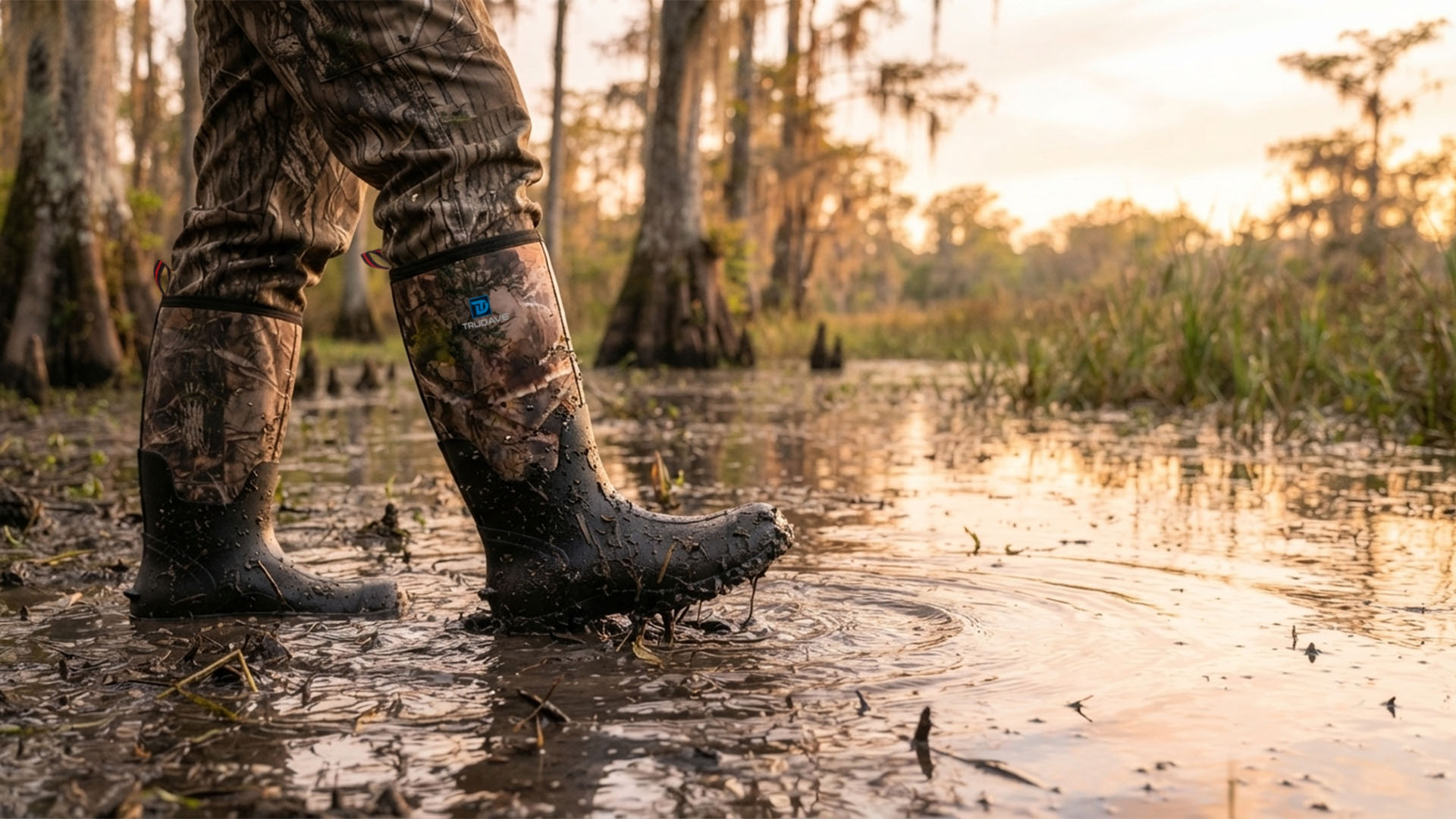
Wet Cover Demands Appropriate Footwear
Woodcock habitat commonly includes mud, shallow water, wet grass, soft creek banks, slick roots, and saturated leaf litter.
Hunters may walk for hours while repeatedly stepping between firm ground and wet depressions.
For these conditions, waterproof hunting boots for wet upland bird cover can help provide reliable traction, secure heel retention, and moisture protection without adding unnecessary weight.
The correct boot depends on expected water depth and distance.
Tall rubber boots can work well in muddy lowlands and shallow water.
Supportive waterproof lace-up boots may be more comfortable where the hunt includes hills, rocks, and longer mileage.
Heavy Boots Can Cause Unnecessary Fatigue
Woodcock hunting is active.
Hunters step over logs, push through brush, cross ditches, and change direction constantly.
A heavily insulated boot designed for stationary late-season hunting may become hot and tiring.
Choose insulation based on temperature and activity level.
Dry feet are important, but sweat can create internal moisture even when the boot does not leak.
Use appropriate socks and carry a dry replacement pair during long hunts.
Mud Suction Can Pull at Loose Footwear
Soft black soil and marsh mud create suction.
Loose pull-on boots may begin slipping at the heel.
Every step requires more effort.
Before the season, test footwear in realistic conditions.
A secure fit improves control and reduces the chance of leaving a boot behind in deep mud.
Do not assume thicker socks will correct a poorly matched boot shape.
Wet Roots and Logs Can Be Dangerous
The forest floor in woodcock cover is rarely smooth.
Leaves hide roots.
Moss covers logs.
Mud reduces traction.
Hunters focused on the dog may stop watching their feet.
Take shorter steps.
Avoid stepping directly on wet logs when possible.
Use one hand for balance when crossing difficult terrain.
A bird hunt is not worth a preventable fall.
Eye Protection Is Valuable
Alder and young hardwood stems create constant eye-level hazards.
Branches can strike without warning, especially when the hunter follows a dog through dense cover.
Clear or lightly tinted protective glasses can reduce risk while preserving visibility.
A hat with a brim may provide additional protection.
Do not push through brush so aggressively that you lose awareness of the terrain.
Durable Clothing Matters
Thin clothing can tear quickly in briars and young forest.
Brush pants, gaiters, gloves, and durable outer layers can improve comfort.
Hunter orange is particularly important in thick cover where partners may disappear from sight within seconds.
Follow all state requirements.
Consider wearing more visible orange than the minimum when hunting with a group.
Early Season Can Be Hot and Wet
Some woodcock opportunities occur while temperatures remain relatively warm.
Heavy vegetation holds humidity.
Hunters and dogs can overheat quickly.
Carry water.
Take breaks.
Monitor the dog for:
- Heavy panting
- Reduced coordination
- Loss of energy
- Reluctance to continue
- Excessive drooling
Plan shorter routes during warm conditions.
Wet ground does not guarantee cool temperatures.
Migration Can Change a Cover Overnight
American woodcock are migratory.
A location holding few birds one day may receive new arrivals after suitable weather movement.
Likewise, a productive cover can become quiet as birds continue south.
This is one reason woodcock hunters revisit high-quality habitat throughout the season.
Current conditions matter.
A cover that produced last year is not guaranteed to hold birds on the same calendar date this year.
Cold Fronts Can Bring New Birds
Weather systems can influence migration timing.
Hunters often monitor cold fronts and changing winds during the fall.
A good cover may suddenly hold multiple woodcock after birds move into the region.
Do not rely only on generalized migration predictions.
Local habitat still determines whether traveling birds stop and remain.
Check several known covers after meaningful weather changes.
Resident and Migrating Birds May Use Cover Differently
Some birds may remain in a region for longer periods, while migrating birds can arrive and leave quickly.
Hunters may notice changes in bird numbers and distribution.
A small patch that held one bird repeatedly may suddenly hold several.
This makes note-taking valuable.
Record:
- Date
- Weather
- Wind
- Temperature
- Ground moisture
- Number of flushes
- Cover type
Patterns may become clearer over several seasons.
Frost Can Push Birds Toward Softer Ground
As temperatures fall, some feeding areas become harder.
Woodcock may concentrate where soil remains soft.
Look near:
- Springs
- Seep areas
- Creek edges
- Wet lowlands
- Protected south-facing pockets
- Areas beneath dense vegetation
Frozen ground can make familiar cover less productive.
The birds may shift a short distance toward a softer feeding site.
Heavy Rain Can Temporarily Flood Good Cover
Moist soil is useful.
Standing water across the entire feeding area is different.
After major rain, birds may move toward slightly higher ground beside the flooded cover.
Search:
- Raised edges
- Old roadbeds
- Hummocks
- Timber points
- Upper creek banks
- Dry brush islands
Do not assume the birds left the general area.
They may have shifted only enough to remain above the water.
Dry Weather Can Shrink Productive Habitat
During drought or extended dry periods, broad areas of young cover may become less useful.
Moisture concentrates around springs, shaded creeks, low alder, and beaver-influenced ground.
Hunters can save time by checking soil conditions before working the entire property.
Push a boot into the leaf litter.
Examine whether the ground beneath remains soft and damp.
Wind Affects Both Birds and Dogs
Strong wind moves vegetation and can make scenting conditions complicated.
Woodcock may use more protected cover.
Hunters should focus on:
- Leeward slopes
- Dense alder
- Creek bottoms
- Evergreen edges
- Brushy pockets behind terrain
Work the cover in a way that allows the dog to use the wind.
Crosswind approaches often help the dog encounter scent while quartering.
Small Patches Can Hold Multiple Birds
Woodcock habitat does not need to cover hundreds of acres.
A small wet thicket beside an old field may hold several birds during migration.
Search isolated patches containing the correct soil and cover.
These spots may receive less hunting pressure because they look insignificant on a map.
Mark every productive patch.
Several small covers can create an efficient half-day route.
Large Covers Should Be Divided Into Sections
A huge alder bottom can be exhausting to hunt randomly.
Break it into manageable pieces.
Use:
- Creeks
- Logging roads
- Cover transitions
- Drier ridges
- Openings
- Property lines
Hunt one section thoroughly.
Record flush locations.
Birds may concentrate in only a small portion where soil and cover are ideal.
Return to Productive Flush Locations
Woodcock may use the same general habitat feature repeatedly.
A location producing a bird today may hold another bird later in the migration.
Mark:
- Exact cover type
- Soil condition
- Nearby edge
- Vegetation height
- Relationship to water
Do not simply remember the broad property.
The small habitat details explain why the bird was there.
Public Land Can Provide Excellent Opportunities
Many public forests and wildlife areas contain woodcock habitat.
Look for active management that creates young forest, wetland edges, and regenerating cuts.
Public-land challenges include:
- Other bird hunters
- Deer hunters
- Small-game hunters
- Trappers
- Recreational users
- Limited parking
- Dog conflicts
Know current seasons and regulations.
Use visible clothing.
Communicate with other hunters.
Have backup covers prepared.
Avoid Crowding Another Hunter’s Dog
If another hunter is already working a small cover, choose another location.
Multiple dogs and hunters can create confusion and safety problems.
Public land often contains additional suitable habitat nearby.
Respectful spacing improves everyone’s hunt.
Trapping Activity Requires Awareness
Wet lowland habitat may contain legal trapping activity.
Keep dogs under control.
Watch for posted warnings or visible sets where regulations require them.
Do not touch traps or equipment.
Communicate with land managers or trappers when possible.
A GPS dog collar can help keep the dog close in dense cover.
Check the Dog After Every Cover
Wet brush, thorns, wire, and debris can injure a dog.
Inspect:
- Eyes
- Ears
- Paws
- Chest
- Legs
- Coat
Look for cuts, seeds, burrs, thorns, swelling, and foreign material.
Dry the dog during cold weather.
Carry basic canine first-aid supplies and know the location of nearby veterinary care.
Regulations Must Be Checked Before Hunting
American woodcock are migratory game birds.
Seasons, bag limits, shooting hours, required licenses, stamps or registrations, and legal methods can vary.
Always verify current federal and state requirements before hunting.
Do not rely on a previous season’s regulations or advice from another jurisdiction.
Common Woodcock Hunting Mistakes
Hunting Wet Ground Without Young Cover
Moisture alone does not provide enough security.
Walking Too Quickly
Woodcock may hold tightly in small, productive patches.
Ignoring Habitat Edges
Transitions often combine feeding soil and concealment.
Wearing Heavy Stationary-Hunting Footwear
Active bird hunters need manageable weight, fit, traction, and waterproof protection.
Focusing Only on Large Covers
Small isolated patches can hold multiple migrating birds.
Failing to Watch the Dog
Subtle behavioral changes may be the first sign of a nearby bird.
Shooting at Unidentified Movement
Always positively identify the bird and confirm a safe background.
Hunting One Cover Only Once
Migration can change bird numbers overnight.
Ignoring Current Regulations
Migratory-game-bird rules require current verification.
Frequently Asked Questions
What habitat is best for American woodcock?
Productive habitat often combines soft, moist soil with dense young cover such as alder, willow, aspen regeneration, brushy creek bottoms, and abandoned farmland.
Why do woodcock prefer wet ground?
Soft soil allows them to probe for earthworms and other invertebrates more efficiently.
When is the best time to hunt migrating woodcock?
Timing varies by region and weather. Hunters often monitor fall weather changes and revisit productive habitat throughout the migration period.
Are alder thickets good for woodcock hunting?
Yes. Young alder over moist soil can provide excellent feeding and security cover, especially when mixed with small openings and other young forest.
Can you hunt woodcock without a dog?
Yes, but a trained bird dog can help locate birds in dense cover and identify areas holding scent. Hunters without dogs should move slowly and focus on high-probability habitat.
What boots work best for woodcock hunting?
Choose footwear based on water depth, temperature, and walking distance. Waterproof protection, secure fit, traction, and moderate weight are especially important in wet upland cover.
Final Thoughts
The best woodcock cover rarely looks easy.
It is wet.
Dense.
Brushy.
Uneven.
Full of alder stems, mud, roots, creeks, and young trees.
Those difficult conditions provide the soft feeding ground and security cover woodcock need.
Start with moisture.
Then look for young forest structure.
Hunt the transitions.
Check creek bottoms, alder runs, seep areas, abandoned farms, and regenerating cuts.
Move slowly.
Watch the dog.
Prepare for close flushes.
Protect your eyes and footing.
Return after weather changes.
Most importantly, do not judge woodcock habitat by how comfortable it is to walk through.
The cover that soaks your pants, grabs your vest, and forces you to watch every step may be the best cover you hunt all season.
