
Before opening morning, the property looks full of deer.
Trail cameras capture bucks near field edges. Fresh tracks cross logging roads, and rubs appear along the same trails hunters watched during bow season.
Then gun season begins.
Truck doors close before daylight. Headlamps move through the timber. Hunters walk ridges, climb into stands, and surround the most obvious food sources.
By midmorning, the deer seem to have disappeared.
The fields are empty.
The familiar trails show no movement.
A buck photographed every evening for two weeks never appears again during legal shooting light.
Many hunters assume the deer left the property or became completely nocturnal.
Sometimes they do shift their schedules or move into neighboring cover. More often, they respond to pressure by using terrain, security cover, and escape routes that hunters failed to scout.
Whitetails do not need to travel five miles to avoid danger.
A mature buck may survive opening weekend by moving only a few hundred yards into a small bedding pocket, crossing a creek at an overlooked location, or waiting inside cover that hunters consider too close, too wet, or too difficult to hunt.
Understanding escape routes can help hunters predict where deer move when normal patterns are disrupted.
Hunting Pressure Begins Before the First Shot
Gun-season pressure does not begin when shooting starts.
It begins when hunters enter the property.
Deer can detect:
- Vehicles arriving
- Doors closing
- Human voices
- Flashlights
- Footsteps
- Scent along access routes
- ATVs
- Repeated movement near stands
A deer bedding near a parking area may hear several hunters arrive before daylight.
Another deer may smell someone crossing a trail used during the night.
By legal shooting time, many whitetails have already changed position.
Opening-day strategy should account for hunter movement before the first visible deer enters a field.
Deer Respond to Patterns, Not Just Individual Hunters
One person walking through the woods creates disturbance.
Several people using predictable access routes create a pattern.
Whitetails learn:
- Which trails hunters follow
- Where vehicles stop
- Which ridges receive pressure
- When people leave for lunch
- Which stands are hunted repeatedly
- Which cover hunters avoid
This knowledge develops over multiple seasons.
A mature buck surviving on heavily hunted ground may understand human routines better than a new hunter understands the property.
When pressure increases, the buck does not move randomly.
It often chooses a location that has worked before.
Escape Cover Is Different From Normal Bedding Cover
A deer may use one bedding area during low-pressure conditions and another when disturbed.
Normal bedding cover may provide comfort, food access, and favorable wind.
Escape cover prioritizes security.
It may be:
- Thicker
- Wetter
- Steeper
- Closer to human activity
- Harder to approach
- Smaller than expected
- Surrounded by barriers
A pressured buck may abandon a comfortable ridge bed and move into a briar-choked drainage where visibility is limited but human access is unlikely.
Hunters should scout both normal bedding habitat and emergency security cover.
Mature Bucks Often Move Toward Obstacles
Hunters naturally avoid difficult terrain.
Deer recognize that advantage.
Pressure may push bucks toward:
- Swamps
- Marsh islands
- Steep creek banks
- Blowdowns
- Brush piles
- Young clear-cuts
- Cattails
- Rock ledges
- Thick conifers
- Drainage ditches
- Private-property boundaries
These obstacles do not need to be impossible.
They only need to discourage most hunters.
A muddy creek crossing or fifty yards of dense briars may protect a small bedding pocket from nearly everyone using the property.
The First Barrier From the Parking Area Matters
Many hunters believe they must walk several miles to escape pressure.
Sometimes the best security cover is much closer.
Study the first significant obstacle between public access and productive habitat.
It may be:
- A creek
- A steep bank
- A swamp edge
- A drainage ditch
- A fence
- A thick clear-cut
- A fallen-timber section
Most hunters follow the easiest route around the obstacle.
Deer may bed immediately beyond it.
The location can be close to vehicles while remaining protected by inconvenience.
Escape Routes Often Follow Terrain
A pressured deer rarely runs without direction for the entire day.
After the initial disturbance, it may use a terrain feature that provides efficient travel toward security cover.
Common escape routes include:
- Creek bottoms
- Saddles
- Drainages
- Ridge points
- Benches
- Fence rows
- Logging-road crossings
- Brushy ditches
- Timber fingers
- Marsh edges
The best route usually connects a pressured location with a secure destination.
Finding one track does not prove a major escape corridor.
Look for repeated sign and logical habitat connections.
Creek Crossings Can Concentrate Pressured Movement
Creeks create both barriers and travel corridors.
When hunters enter from one side of a property, deer may cross toward quieter cover.
They usually choose stable banks, shallow water, gravel bottoms, or narrow sections.
Look for:
- Fresh tracks
- Muddy slides
- Hair on brush
- Trails climbing the opposite bank
- Rubs near the crossing
- Multiple routes merging above the creek
Avoid standing directly on the crossing if your access contaminates it.
The better setup may be inside cover on the destination side.
Saddles Can Become Escape Funnels
In hill country, saddles provide easier passage across ridges.
Hunters use them.
Deer use them too.
When pressure approaches from a valley or ridge, whitetails may cross through a saddle toward another drainage.
A productive saddle usually connects useful habitat rather than existing as an isolated low point.
Study:
- Bedding cover on both sides
- Wind direction
- Hunter access
- Nearby benches
- Escape terrain beyond the saddle
A saddle receiving heavy hunter traffic may lose daylight value.
An overlooked secondary saddle can be more productive.
Benches Allow Sidehill Movement
A bench provides relatively level travel across a slope.
Deer can use it to move around hunters without climbing over the ridge or dropping into the bottom.
Pressured bucks may follow narrow benches beneath the main ridgeline, especially when hunters walk the top.
Look for:
- Fresh tracks
- Rubs
- Beds
- Parallel trails
- Points connecting to the bench
- Cover changes
The best setup may be where the bench narrows around a point or drainage.
Deer May Circle Behind Hunters
A hunter enters from the south and expects deer to escape north.
The deer may allow the hunter to pass and then move behind the access route.
This behavior places the deer in ground that feels recently disturbed but is temporarily empty.
Whitetails can use scent and sound to monitor hunter direction.
Do not assume pressure always pushes deer in a straight line away from parking.
Consider:
- Where hunters are going
- What areas become empty after daylight
- Which routes allow deer to move behind them
- Where wind helps deer monitor access
A small pocket near the original entry route may become secure once everyone has moved deeper.
Parking-Lot Cover Can Hold Mature Deer
Some of the least hunted cover is near the parking area.
Hunters arrive and immediately walk away from it.
A mature buck may bed in:
- Roadside briars
- Small cedar patches
- Brush behind a gate
- Wet cover near a ditch
- A neglected timber corner
- An island between access roads
The area may receive vehicle noise but little foot traffic.
Deer often distinguish predictable vehicles from hunters moving through cover.
Always confirm legal and safe shooting distances from roads and parking areas.
Property Boundaries Become Security Features
A pressured buck may move toward a boundary where hunters hesitate to follow.
The animal does not understand property law, but it learns where human pressure stops.
Boundaries may include:
- Private land
- Posted farms
- Residential areas
- Safety zones
- Refuge boundaries
- No-hunting zones
- Roads
Hunters should identify these features before the season.
Do not crowd a boundary without considering recovery, shooting direction, landowner relationships, and local regulations.
A deer crossing the line may become legally unrecoverable without permission.
Small Sanctuaries Can Hold Multiple Deer
A sanctuary does not need to cover hundreds of acres.
A ten-acre patch of thick cover may hold several pressured deer when surrounding habitat receives heavy activity.
The most effective sanctuaries often include:
- Limited access
- Multiple escape routes
- Nearby food
- Water
- Visual screening
- Difficult wind
- Terrain barriers
Hunters should decide whether entering the sanctuary is worth the risk.
Sometimes the better strategy is intercepting deer along the edge.
Do Not Walk Directly Into Security Cover Too Early
Fresh tracks entering a thick bedding area can create excitement.
Charging into it may push deer farther.
Before entering, evaluate:
- Wind
- Time of day
- Cover size
- Exit routes
- Other hunters
- Property boundaries
- Safe shooting opportunities
A small bedding pocket can be ruined quickly.
Set up along a likely exit or wait for conditions that support a careful approach.
Aggressive hunting can work, but it should be based on current information rather than impatience.
Hunter Movement Can Create Predictable Deer Movement
Opening morning often produces a wave of disturbance.
Hunters walk toward stands before daylight.
Some leave between 9:00 and 11:00 a.m.
Others return after lunch.
Each movement period can push deer.
A hunter positioned near an escape route may benefit from staying in place while others move through the property.
Midmorning can be productive when:
- Hunters begin leaving
- Small-game activity increases
- Drives occur nearby
- Vehicles move between access points
- Deer shift from temporary cover
Do not assume deer movement ends after the first hour.
Stay Longer Than the Hunters Around You
Many gun hunters follow predictable schedules.
They hunt sunrise.
Leave for breakfast.
Return during the afternoon.
Deer can respond to those routines.
Remaining in the stand through late morning may create opportunities as hunters walk back toward vehicles.
A buck that held inside cover may move after hearing people approach from multiple directions.
The best escape-route stand may produce when traditional feeding stands become quiet.
Do Not Depend on Accidental Pressure
Other hunters can move deer, but relying on them creates uncertainty.
You do not control:
- Their direction
- Noise level
- Timing
- Shooting
- Safety
- Whether they enter your area
Use expected pressure as one factor, not the entire strategy.
Always assume another hunter could appear unexpectedly.
Know every safe shooting direction.
Coordinated Drives Require Planning
Where legal, organized deer drives can be effective.
They also require strict communication and safety.
Every participant should understand:
- Driver routes
- Stand locations
- Safe shooting zones
- Start and stop times
- Communication signals
- Property boundaries
- Emergency procedures
Never fire at sound or movement.
Positively identify the deer and confirm a safe background.
Unplanned individuals walking through the woods are not part of a coordinated drive.
Wind Still Matters During Pressure Events
A deer escaping hunters still uses its senses.
It may choose a route that allows it to monitor danger.
A buck may travel with the wind in its favor rather than taking the shortest path.
Study how prevailing wind interacts with:
- Bedding cover
- Ridges
- Creek bottoms
- Access roads
- Escape destinations
A stand on the wrong wind may alert deer before pressure sends them toward it.
Hunting pressure does not replace scent strategy.
Thermals Can Redirect Escape Movement
In hill country, morning and evening thermals influence how deer use slopes and drainages.
A buck avoiding hunters may stay on a terrain level where it can use both wind and thermal currents.
Cold air settling into a creek bottom can also carry hunter scent farther than expected.
Use wind indicators throughout the hunt.
An escape route that looks perfect on a map may be difficult to hunt because of unstable air.
Rain Can Make Escape Cover More Attractive
Wet weather reduces leaf noise and may lower hunter participation.
It can also make low ground, swamps, and creek crossings more difficult for people.
Deer may gain additional security in these areas.
After rain, scout:
- Muddy crossings
- Drainage trails
- Marsh edges
- Wet logging roads
- High ground inside lowland cover
Fresh tracks can reveal which escape routes remain active.
Avoid damaging saturated roads or fields.
Snow Reveals the Pressure Response
Fresh snow is one of the best tools for understanding how deer avoid hunters.
It records:
- Deer direction
- Human access
- Parking-area movement
- Crossing points
- Bedding shifts
- Trails behind stands
- Boundary use
Scout after the season or during legal low-impact periods.
Compare deer tracks with hunter routes.
You may discover that bucks travel closer to people than expected while remaining just outside their normal line of movement.
Trail Cameras Should Watch Funnels, Not Only Food
Food-source cameras show which deer remain on the property.
Escape-route cameras show how they respond to pressure.
Place cameras near:
- Creek crossings
- Saddles
- Security-cover edges
- Boundary trails
- Brushy funnels
- Secondary access routes
- Logging-road intersections
Avoid checking them frequently during gun season.
A camera placed inside an escape corridor loses value if every visit adds human disturbance.
Camera Direction Helps Explain Movement
A photo of a buck at 10:30 a.m. is useful.
Knowing which direction it traveled is more useful.
Angle cameras along trails.
Record nearby hunter activity, wind, and weather.
Patterns may reveal:
- Morning escape routes
- Midday returns
- Boundary movement
- Downwind travel
- Pressure from specific access points
One photo is interesting.
Repeated movement under similar pressure becomes huntable information.
Rubs Can Mark Security-Cover Travel
Fresh rubs inside thick cover may identify buck travel that receives limited daylight visibility.
Look along:
- Creek banks
- Bench trails
- Boundary edges
- Young clear-cuts
- Cedar transitions
- Wetland islands
Gun-season rubs do not always indicate current rut behavior.
They can still confirm that bucks use the route.
Combine them with fresh tracks and camera activity.
Fresh Beds Tell a Better Story Than Old Rubs
A large old rub may attract attention.
A fresh bed can reveal current security use.
Look for beds containing:
- Recently compressed vegetation
- Hair
- Fresh tracks
- Droppings
- Melted snow
- Warm or moist ground under suitable conditions
Study the bed’s position.
What can the deer see?
Which wind protects it?
Where are the escape routes?
A bed becomes valuable when its location explains survival behavior.
Boots Determine Which Escape Cover You Can Scout
The best security cover is often difficult to reach.
Hunters may cross mud, wet leaves, shallow creeks, steep banks, brush, and uneven public-land terrain.
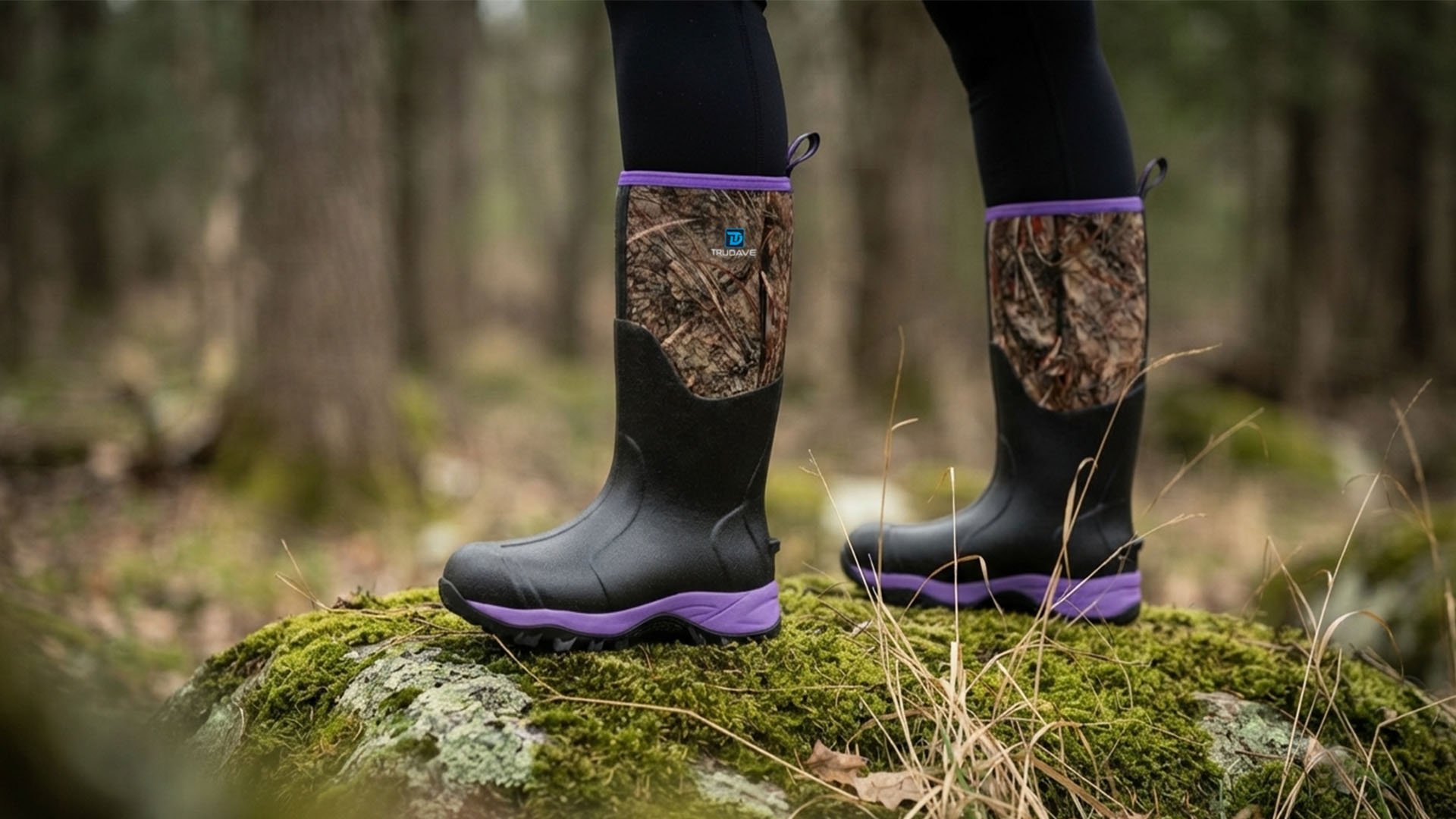
Those scouting remote locations may benefit from waterproof hunting boots for scouting remote escape cover that provide dependable traction, secure heel retention, and enough walking comfort for long off-trail days.
Boot height and insulation should match the conditions.
Heavy late-season insulation may be useful for stationary hunts but excessive during active scouting.
Fit remains critical when mud, slopes, and long distances combine.
Quiet Footwear Does Not Replace Quiet Movement
A soft outsole cannot make careless walking silent.
Move slowly.
Avoid kicking branches.
Step beside dry sticks rather than on them.
Pause frequently.
Use wet ground, grass, and soft soil when available.
Opening-day deer may already be alert.
One rushed approach can push them out of the intended corridor.
Access From an Unexpected Direction
Most hunters use the same roads and trails.
A different access route can reduce disturbance, provided it is safe and legal.
Possibilities include:
- Creek approaches
- Field edges
- Secondary gates
- Terrain below a ridge
- Long boundary routes
- Wetland margins
Do not choose difficulty for its own sake.
The route should protect wind and avoid deer movement.
An unusual access that crosses bedding cover is worse than a common route used carefully.
Exit Routes Matter Too
A stand can be hunted successfully and then damaged by a poor exit.
After dark, avoid walking through:
- Feeding areas
- Bedding cover
- Active crossings
- Staging trails
- Security pockets
Use the same low-impact route when possible.
If deer remain nearby, wait until they move or ask a partner to create controlled vehicle disturbance where appropriate and legal.
Protect tomorrow’s hunt.
Public Land Requires More Flexibility
On public land, you cannot control other hunters.
A planned escape-route setup may already be occupied.
Someone may enter from an unexpected direction.
Prepare multiple locations.
Identify:
- Primary setup
- Backup funnel
- Close-to-access option
- Midday location
- Low-pressure parcel
- Alternate wind setup
Do not argue over a location.
Move safely and adapt.
The deer are responding to pressure in real time, and the hunter must do the same.
Small Public Parcels Can Produce
Large public forests receive attention.
Small parcels may contain powerful escape cover when surrounded by private land, agriculture, roads, or development.
A thirty-acre tract can become a temporary refuge if nearby pressure pushes deer toward it.
Study:
- Legal access
- Safety zones
- Boundaries
- Neighboring pressure
- Cover density
- Food connections
Small properties require careful shooting and recovery planning.
Private-Land Neighbors Affect Movement
Your property may be quiet.
The neighboring property may host several hunters.
Their activity can move deer across the boundary.
Communicate when possible.
Know stand locations and shooting directions.
Do not build a strategy that depends on another person behaving predictably.
Pressure from neighbors can create opportunity, but safety and landowner relationships remain more important.
Recovery Planning Is Critical Near Escape Cover
Security habitat often contains difficult terrain.
A deer may fall in:
- Deep mud
- Thick brush
- A creek bottom
- A steep ravine
- Wetland vegetation
- Boundary cover
Before taking the shot, consider:
- Can I reach the animal?
- Can I recover it legally?
- Is help available?
- What route avoids dangerous terrain?
- Will darkness create additional risk?
- Does the deer have access to private land?
Ethical hunting includes a realistic recovery plan.
Avoid Forcing Unsafe Shots
Pressured deer may move quickly.
They may stop for only a few seconds.
Do not let excitement create a poor shot.
Wait for:
- Positive identification
- A clear shooting lane
- A safe background
- Stable position
- Ethical distance
- Acceptable angle
Other hunters may be nearby.
Gun-season pressure increases the importance of knowing what lies beyond the target.
Hunter Orange and Visibility Matter
Dense escape cover limits visibility.
Wear all legally required hunter orange.
Consider additional visible clothing when moving through thick vegetation or recovering game.
Do not assume other hunters know your location.
Communicate.
Use lights carefully before and after legal shooting hours.
Safety takes priority over concealment from deer.
Common Escape-Route Hunting Mistakes
Assuming Pressured Deer Leave the Property
Many shift only a short distance into overlooked security cover.
Walking Directly Into the Thickest Cover
You may push deer farther before understanding the route.
Hunting Only Early-Morning Feeding Trails
Pressure can create productive midmorning movement.
Ignoring Areas Close to Parking
Predictable vehicle activity may create overlooked bedding pockets.
Following the Same Access Route as Everyone Else
Deer recognize repeated human patterns.
Trusting One Fresh Track
Look for repeated use and logical habitat connections.
Ignoring Wind Because Other Hunters Are Moving Deer
A pressured buck still uses its nose.
Depending on Accidental Deer Drives
Unplanned pressure is unpredictable and can create safety concerns.
Taking a Shot Without Recovery Planning
Escape cover is often difficult terrain.
Frequently Asked Questions
Where do deer go when hunting pressure increases?
Deer often move toward thicker, wetter, steeper, or overlooked security cover. They may also use boundaries, drainage systems, small cover pockets, and areas close to predictable human activity.
Do mature bucks leave public land during gun season?
Some may cross onto neighboring property, while others remain in small security pockets or change movement timing. Current tracks and camera activity provide the best local answer.
What is a deer escape route?
An escape route is a trail or terrain feature connecting a disturbed area with safer cover. Creek crossings, saddles, benches, ditches, ridge points, and thick edge habitat can all serve this purpose.
Is midday good for hunting pressured deer?
It can be. Hunters returning to vehicles or changing locations may cause deer to move during late morning and midday.
How close do pressured bucks bed to roads?
Some mature bucks bed surprisingly close to roads, parking areas, houses, or access trails when people rarely enter the nearby cover on foot.
Should you hunt directly inside a deer sanctuary?
Not automatically. Hunting the edge or an exit route may preserve the cover and provide a better opportunity. Enter only with a specific plan and favorable conditions.
Final Thoughts
Opening-day bucks do not vanish.
They react.
They hear doors close.
Smell hunters on access trails.
Watch people walk ridges.
Recognize pressure around food sources.
Then they use terrain and cover to survive.
The adjustment may be small.
Across a creek.
Below a bench.
Behind a parking area.
Inside a wet corner.
Along a private boundary.
Twenty yards deeper into brush.
Successful gun-season hunters study these reactions.
They map human movement.
Scout barriers.
Find escape destinations.
Stay through midmorning.
Watch the wind.
Prepare backup setups.
And avoid assuming the deer abandoned the property simply because the familiar trail became quiet.
When pressure changes the woods, do not keep hunting the pattern that existed before opening morning.
Hunt the route deer use to escape it.
