
Dusky grouse country can make a hunter climb much farther than expected.
A forest road winds uphill.
Aspen turns to fir.
Open grass breaks appear between conifers.
The slope steepens.
A hunter walks another half mile.
Nothing flushes.
Then a bird steps onto an old logging road.
Another moves beneath a fir tree.
One more explodes from the uphill side and disappears through timber.
That is dusky grouse hunting.
These birds live in mountain landscapes where habitat changes quickly with:
- Elevation
- Forest type
- Slope
- Weather
- Season
The best habitat is rarely one uniform forest.
It is usually where several mountain features overlap.
Successful hunters learn to search:
- Aspen edges
- Conifer openings
- Old logging roads
- Mountain meadows
- Shrubby slopes
- Timber transitions
The mountain is large.
The bird habitat is often much more specific.
Dusky Grouse Are Mountain Birds
Dusky grouse are strongly associated with western mountain environments.
Depending on region and season, hunters may find them around:
- Conifer forest
- Aspen stands
- Mountain meadows
- Forest edges
- Logged areas
- Shrubby openings
- High-elevation slopes
Unlike prairie grouse, they do not need broad open grasslands.
Unlike some dense-cover grouse, they may use surprisingly open mountain edges.
Elevation Is One of the First Clues
Dusky grouse can shift elevation through the year.
That means a productive area in early fall may not remain productive later.
Do Not Hunt the Same Elevation Automatically
As:
- Snow arrives
- Food changes
- Temperatures fall
birds may move.
Start With Habitat Transitions
A solid wall of mature timber may hold fewer birds than an area where forest meets:
- Aspen
- Meadow
- Logging road
- Brush
Edges create diversity.
Aspen Edges Can Be Excellent
Aspen stands often support:
- Forbs
- Insects
- Shrubs
- Open understory
that differ from surrounding conifer forest.
Hunt Where Aspen Meets Fir
This transition gives birds access to:
- Feeding habitat
- Security cover
within a short distance.
Young Aspen Can Be Especially Interesting
Regeneration provides:
- Dense stems
- Leafy browse
- Ground vegetation
Mature Aspen Can Still Hold Birds
But the understory may become more open.
Look for additional food nearby.
Mountain Meadows Deserve Attention
Small meadows inside forest create:
- Feeding opportunities
- Insect habitat
- Visibility
Hunt the Meadow Edge
Birds may stay close to cover rather than standing in the center.
Tiny Openings Can Matter More Than Large Meadows
A small grassy bench surrounded by timber may provide everything a grouse needs.
Logging Roads Are Valuable
Old roads provide:
- Easier walking
- Open feeding edges
- Visibility
- Dusting areas
Birds May Walk Roads
Especially during quieter periods.
Slow down before every bend.
Road Shoulders Can Hold Food
Grasses and low vegetation often grow better along exposed edges.
Closed Roads Can Be Excellent Walking Routes
Where legal foot access is allowed, gated roads may provide quieter habitat.
Do Not Assume Every Closed Road Is Open to Foot Travel
Check current property rules.
Logging Cuts Can Create Grouse Habitat
Timber harvest changes the forest structure.
Young cuts may produce:
- Shrubs
- Grasses
- Forbs
- New aspen
Very Fresh Cuts Can Be Too Open
Security cover may be limited.
Older Cuts Can Become Productive
Several years of regeneration may create excellent edge habitat.
Hunt the Cut-Timber Transition
Birds may feed in regeneration and retreat into mature trees.
Slope Aspect Can Matter
Different slopes receive different amounts of:
- Sun
- Moisture
- Snow
South-Facing Slopes Can Warm Earlier
They may hold:
- Drier ground
- More exposed feeding habitat
during colder periods.
North-Facing Slopes Stay Cooler
During warmer conditions they may retain:
- Moisture
- Greener vegetation
Do Not Memorize One Direction
The best slope depends on:
- Season
- Temperature
- Snow
- Local vegetation
Bench Terrain Can Be Productive
A flat shelf on a steep mountainside creates easier feeding and resting habitat.
Topographic Maps Help Find Benches
Look where contour lines widen.
Benches Can Be Hard to See From Roads
A productive flat may sit hidden above a steep slope.
Saddles Can Connect Habitat
Low points between ridges provide easier travel.
Grouse May Use Saddle Vegetation
Especially where:
- Aspen
- Shrubs
- Grass
occur nearby.
Ridge Shoulders Can Hold Birds
The crest may be exposed.
Slightly lower slopes may offer:
- Cover
- Food
- Wind protection
Do Not Walk Only the Ridge Top
Search both sides.
Dusky Grouse Can Hold Tight
These birds may remain still until a hunter is relatively close.
Slow Walking Is Important
Fast movement can push birds before hunters identify them.
Stop Frequently
Pause.
Scan:
- Ground
- Low branches
- Road edges
Birds May Walk Instead of Flush
A grouse may step quietly uphill or into cover.
Look for Movement at Ground Level
One walking bird can reveal several others.
Flocks Can Be Loose
One bird may flush.
Another may remain fifty yards away.
Stay Ready After the First Flush
Continue hunting the entire patch.
Early Season Can Be Warm
Mountain grouse seasons may begin while afternoons are still mild.
Birds May Use Cooler Cover
Search:
- North-facing slopes
- Shaded timber
- Creek benches
during warmer periods.
Insects Can Influence Early-Season Feeding
Young birds may use areas with abundant insect activity.
Wet Meadows Can Be Useful
Moist openings often support more insects and green vegetation.
Later Season Changes the Pattern
As fall advances:
- Frost increases
- Insects decline
- Snow arrives
Birds May Shift Toward Conifers
Conifer habitat can become more important later in the year.
Seasonal Food Changes Matter
Hunters should not assume early-season feeding areas remain best after weather changes.
Snow Can Improve Sign
Fresh snow may reveal:
- Tracks
- Feeding movement
- Current habitat use
Snow Can Also Push Birds
Deeper accumulation may change which elevations remain practical.
Look for Windblown Ground
Ridges and open slopes may stay more exposed.
South-Facing Openings Can Melt Faster
These areas may become useful feeding zones.
Snow Makes Walking Harder
A road that was easy in September may become:
- Slippery
- Icy
- Deeply covered
later.
Frozen Logging Roads Can Be Dangerous
Packed snow and ice reduce traction.
Snow Hides Rocks and Roots
Move carefully.
Rain Changes Mountain Forest Too
Wet conditions create:
- Mud
- Slick leaves
- Wet grass
- Slippery rock
Dusky Grouse Hunting After Rain Can Be Productive
Rain can:
- Quiet dry forest litter
- Freshen vegetation
- Create visible tracks in mud
But Rain Makes Slopes Harder
Do not trade quiet walking for unsafe speed.
Wet Logs Are Extremely Slick
Avoid stepping directly onto smooth deadfall when possible.
Wet Roots Can Be Nearly Frictionless
Step beside them.
Pine Needles Can Slide Over Hard Soil
A dry-looking slope can still have poor footing.
Loose Rock Adds Another Challenge
Mountain grouse habitat often includes:
- Scree
- gravel
- broken rock
Short Steps Improve Control
Especially on descents.
Dusky Grouse Hunting Is Hard on Footwear
A typical hunt may involve:
- Steep slopes
- Wet grass
- Muddy roads
- Pine needles
- Loose gravel
- Fallen timber
- Snow
- Long climbs
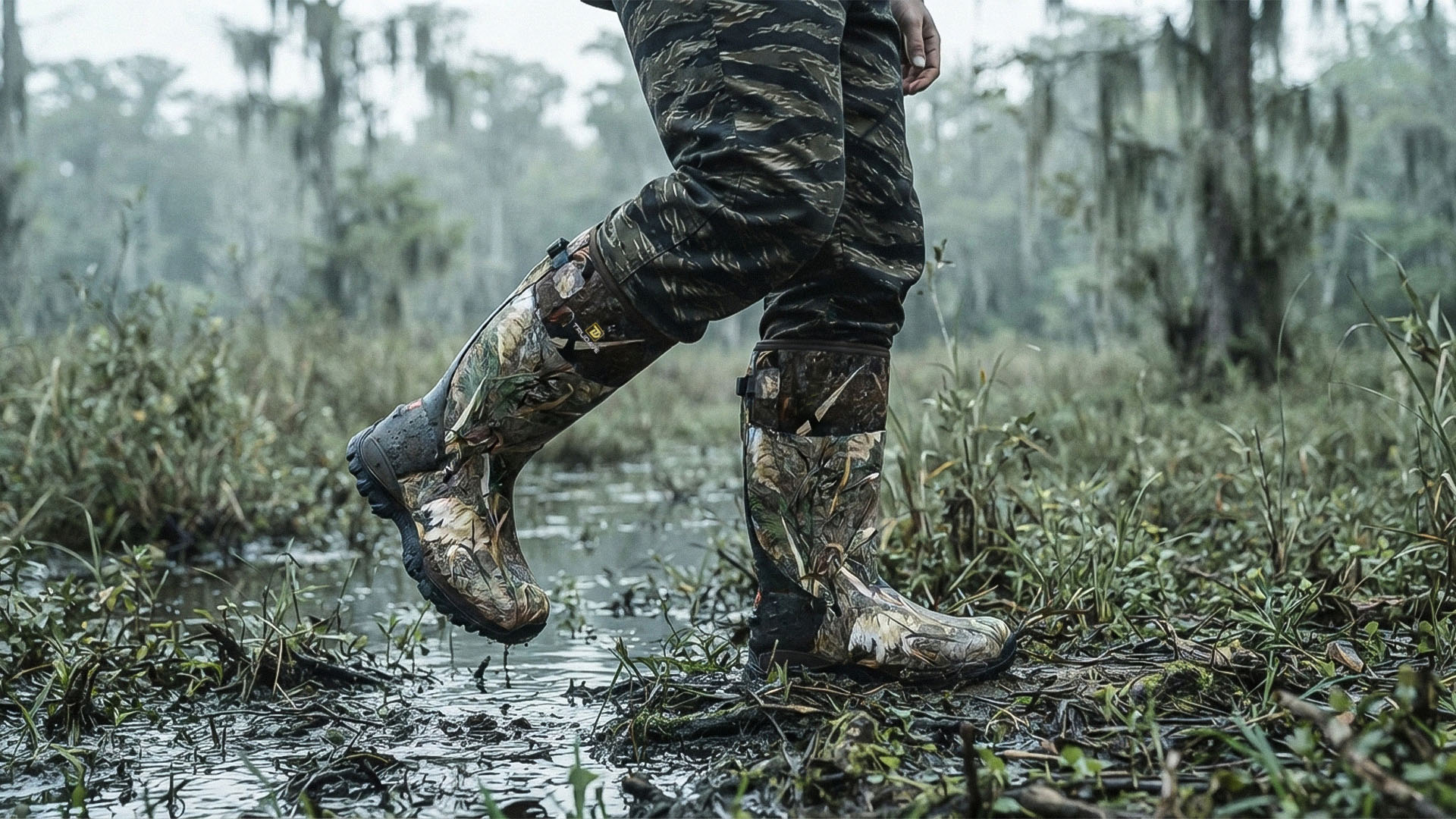
Hunters may benefit from waterproof hunting boots for mountain grouse hunting that provide secure heel retention, dependable traction, and enough ankle support for steep forest terrain without becoming excessively heavy.
Lightweight Boots Can Reduce Fatigue
Upland hunting involves constant walking.
Extra weight matters.
But Very Soft Boots May Lack Support
Rocky slopes and sidehilling require more structure than flat farmland.
Moderate Ankle Support Is Useful
Hidden roots and uneven terrain stress ankles.
Secure Heel Fit Is Critical
Climbing repeatedly pulls the heel upward.
Poor fit creates:
- Blisters
- Hot spots
Toe Room Matters Downhill
Long descents push feet toward the front of the boot.
Waterproofing Matters
Even mountain country that looks dry may contain:
- Dew
- Rain
- Snow
- Wet meadow grass
Gaiters Can Be Extremely Useful
They help keep:
- Snow
- Seeds
- Mud
- Gravel
out of boots.
Gravel Inside a Boot Can End a Hunt Quickly
Stop and remove it.
Do not keep walking.
Tall Rubber Boots Can Work in Wetter Lowlands
But they are usually less ideal for long steep mountain routes.
Lace-Up Waterproof Boots Often Fit Mountain Terrain Better
They provide:
- Heel lock
- Ankle control
- Precise footing
Choose Boots for the Entire Route
Consider:
- Logging-road approach
- Steep hillside
- Meadow
- Snow
- Temperature
together.
Insulation Depends on Season
Early-season mountain hunts may be warm.
Later hunts may be cold.
Do Not Automatically Use Heavy Insulated Boots
Constant walking generates heat.
Sweaty Feet Become Cold During Stops
Moisture management matters.
Carry Spare Socks
One unexpected creek crossing can soak the first pair.
Creek Crossings Can Appear Suddenly
Mountain roads and trails often cross:
- Small streams
- Seeps
- Drainages
Choose Firm Crossings
Avoid unstable banks.
Wet Rock Can Be Dangerous
Do not jump unnecessarily.
Trekking Poles Can Help
They may improve stability on:
- Steep descents
- Creek crossings
- Loose slopes
Dogs Can Be Useful for Mountain Grouse
Where legal and appropriate, pointing or flushing dogs may help locate birds.
Mountain Terrain Is Hard on Dogs
Dogs may cover much more distance than hunters.
Carry Enough Water
High ridges may have very little water.
Do Not Assume Every Creek Is Flowing
Seasonal water can disappear.
Warm Weather Increases Dog Risk
Early-season mountain hunts can become hot quickly.
Give Frequent Breaks
Shade does not eliminate dehydration.
Paw Condition Matters
Dogs may encounter:
- Gravel
- Sharp rock
- Deadfall
- Dry soil
Check Pads Often
A minor cut can worsen quickly.
Grass Seeds Can Be a Problem
Inspect:
- Ears
- paws
- coat
after hunting open slopes.
Snow Creates Ice Between Toes
Later-season hunts require paw checks.
Dogs Can Disappear Behind Terrain
A dog only fifty yards away may drop below a ridge.
Reliable Recall Matters
Mountain roads and cliffs create additional risk.
Bells or Legal Tracking Equipment Can Help
Where permitted.
Grouse Flushes Can Be Sudden
Birds may erupt from:
- Road shoulder
- Aspen
- Grass edge
with little warning.
Stay Ready in Good Habitat
But maintain safe firearm handling at all times.
Birds Can Fly Through Timber
That creates very short visual windows.
Do Not Shoot Through Unidentified Cover
Branches may hide:
- Dogs
- Partners
Establish Hunter Spacing
Mountain slopes naturally cause people to drift uphill or downhill.
Keep Everyone on a Clear Line
Do not let one hunter get far ahead.
Communicate Around Terrain
Ridges can hide partners quickly.
Pick One Bird
Multiple grouse may flush together.
Choose one.
Do Not Shoot Into the Group
Target discipline improves safety and recovery.
Positive Identification Is Essential
Dusky grouse range can overlap with other grouse species in some regions.
Know Local Species
Possible overlap may include:
- Ruffed grouse
- Spruce grouse
- Other regional upland birds
Do Not Identify Only by Habitat
A bird in conifers is not automatically a dusky grouse.
Study Adult and Juvenile Plumage
Appearance can vary.
Flight Alone Is Not Enough
Use several identification features.
If Unsure, Do Not Shoot
Positive identification comes first.
Dusky Grouse Regulations Vary
Before hunting, verify current official:
- Season dates
- Daily bag limits
- Possession limits
- License requirements
- Species rules
- Public-land restrictions
Grouse Limits May Be Combined or Separate
This varies by jurisdiction.
Do Not Rely on Old Regulations
Use the current season.
Public Forests Can Add Restrictions
Individual areas may regulate:
- Vehicle access
- Road closures
- Fire restrictions
Logging Roads May Have Seasonal Closures
Check before driving.
Private Timber Requires Permission
Do not assume open-looking forest roads are public.
Property Boundaries Can Be Difficult in Mountain Forest
Use current maps.
Forest Operations Can Change Access
Logging activity may close:
- Roads
- trails
- sections of habitat
Do Not Block Working Roads
Timber trucks and equipment need access.
Navigation Matters
Mountain forest can be confusing.
One ridge may look like another.
Offline Maps Are Useful
Download:
- Roads
- Topography
- Property boundaries
- Water
before hunting.
Mark the Vehicle
Following a dog or bird downhill can pull hunters far from the road.
Carry a Headlamp
Mountain daylight disappears quickly behind ridges.
Carry Backup Power
Cold weather drains batteries.
Fog Can Reduce Visibility
Clouds may settle into mountain forest.
Do Not Depend Only on Distant Landmarks
Use navigation tools.
Weather Changes Rapidly
A clear mountain morning can become:
- Rain
- Snow
- Wind
- Fog
Carry a Waterproof Layer
Even short hunts can become uncomfortable quickly.
Vent During Climbs
Sweat can soak clothing from inside.
Add Layers During Stops
Especially at higher elevation.
Windproof Clothing Helps
Exposed ridges can be much colder than timber.
Gloves Are Useful Around Brush and Cold Weather
Carry a dry backup pair.
Hydration Still Matters
Cool mountain air can hide fluid loss.
Carry Enough Water for the Return
Do not use all of it during the climb.
Save Energy
Mountain bird hunting can turn into a long descent and climb.
Do Not Chase Every Flush Downhill
Ask whether the habitat below remains productive.
Gravity Can Make Hunting Inefficient
Following one bird downhill may cost hundreds of vertical feet.
Hunt the Habitat, Not One Individual Bird
If the bird flies into poor cover far below, it may be better to continue through good habitat.
Recovery Can Be Difficult
A grouse can disappear in:
- Grass
- Pine needles
- Low shrubs
- Snow
Mark the Fall Immediately
Use:
- Large tree
- Rock
- Road bend
- Aspen edge
Mountain Terrain Distorts Distance
A bird may land farther away than expected.
Use Multiple Landmarks
Do not depend on one tree.
Dogs Can Improve Recovery
Allow them to search before trampling the area.
Without a Dog, Search Methodically
Work:
- Parallel passes
- Small circles
from the marked point.
Check Downhill
A bird may move or roll slightly on steep terrain.
Warm Weather Requires Game Care
Early-season mountain hunts can be warm.
Keep harvested birds:
- Clean
- Cool
Carry Simple Game Storage
Protect birds from:
- Dirt
- Insects
- Pack contamination
Common Dusky Grouse Hunting Mistakes
Hunting Only Mature Conifer Forest
Edges, aspen, meadows, and cuts can be more productive.
Ignoring Elevation
Seasonal movement changes where birds occur.
Walking Too Fast
Dusky grouse can hold tight.
Chasing Every Flushed Bird Downhill
Mountain elevation makes unnecessary movement expensive.
Ignoring Wet Logs and Roots
Rain makes forest footing much more dangerous.
Wearing Heavy or Poorly Fitting Boots
Mountain grouse hunting requires substantial walking.
Letting Dogs Range Too Far
Terrain, roads, and cliffs create hazards.
Assuming Every Mountain Grouse Has the Same Regulations
Always verify current local rules.
Frequently Asked Questions
Where do dusky grouse usually live?
Dusky grouse commonly use western mountain habitats including conifer forests, aspen edges, mountain meadows, logged areas, brushy openings, and high-elevation slopes.
Are aspen stands good for dusky grouse hunting?
Yes. Aspen habitat can provide feeding opportunities, insects, understory vegetation, and useful transitions beside conifer cover.
Are logging roads good places to find dusky grouse?
They can be excellent because roads provide open feeding edges, easier travel, and visibility through mountain forest.
Does elevation affect dusky grouse hunting?
Yes. Birds can shift habitat and elevation as weather, snow, temperature, and seasonal food availability change.
Is dusky grouse hunting good after rain?
Rain can quiet forest litter and create fresh mud sign, but wet roots, logs, grass, and rock become much more slippery.
What boots are best for dusky grouse hunting?
Waterproof hunting boots with secure heel fit, good traction on loose rock and wet forest ground, moderate ankle support, and enough comfort for long mountain walks are practical.
Can dogs help hunt dusky grouse?
Yes, where legal. Pointing or flushing dogs can help locate birds, but mountain terrain, heat, limited water, roads, snow, and paw wear require careful management.
Do dusky grouse hunting regulations vary?
Yes. Seasons, bag limits, possession limits, licenses, species rules, public-land restrictions, and access regulations vary by jurisdiction. Hunters should verify current official regulations before hunting.
Final Thoughts
Dusky grouse hunting teaches hunters that mountain forest is not one habitat.
One aspen edge provides food.
One conifer slope provides cover.
One logging road creates an opening.
One mountain bench gives birds a place to feed without fighting steep terrain.
One early snow pushes them toward a different elevation.
The mountain changes constantly.
The birds change with it.
Hunt the transitions.
Watch elevation.
Walk old logging roads slowly.
Check aspen edges.
Study meadow borders.
Respect steep terrain, wet logs, loose rock, changing weather, and property boundaries.
Wear boots that let you cross muddy forest roads, wet grass, pine needles, loose gravel, fallen timber, snow, and miles of mountain slopes without making blisters, wet feet, or poor traction the reason the hunt ends early.
And when a dusky grouse steps quietly onto a logging road after you walked half a mile through apparently empty timber, remember the lesson.
The bird was not using the whole mountain.
It was using the exact place where food, cover, elevation, and forest structure came together.
