
Cottontail rabbit country rarely looks impressive.
An abandoned fence row.
A blackberry patch.
Tall grass beside a soybean field.
A brush pile behind an old barn.
A drainage ditch filled with weeds.
Most hunters can walk past these places without giving them much attention.
That is exactly why rabbits use them.
A hunter approaches a narrow briar strip.
Nothing moves.
He takes another step.
Still nothing.
Then a gray rabbit explodes from cover only a few feet away.
It crosses the opening.
Turns sharply.
Disappears under another brush pile.
The entire event lasts only seconds.
That is cottontail hunting.
The challenge is not covering enormous country.
It is recognizing the small pieces of security cover that rabbits depend on.
Cottontails survive in landscapes full of predators by staying close to places where they can disappear instantly.
Successful hunters learn to search for combinations of:
- Briars
- Grass
- Brush piles
- Hedgerows
- Crop edges
- Ditches
- Young forest
The best rabbit habitat is often messy.
And the messier it looks to a hunter, the better it may look to a cottontail.
Cottontails Are Edge-Habitat Specialists
Eastern cottontails commonly use landscapes containing a mixture of open feeding areas and dense escape cover.
Productive habitat may include:
- Briar patches
- Brushy fence lines
- Old fields
- Hedgerows
- Ditches
- Young forest
- Crop edges
- Brush piles
- Overgrown farmsteads
They generally benefit from having food and security very close together.
A rabbit does not want to cross hundreds of yards of open ground if it can feed ten yards from a briar patch.
That relationship is the foundation of rabbit habitat.
Start With the Thickest Cover
Hunters naturally choose the easiest ground to walk.
Rabbits often choose exactly the opposite.
Look for vegetation that makes you think:
I do not want to walk through that.
That may include:
- Blackberry
- Greenbrier
- Honeysuckle
- Thick weeds
- Young saplings
Those places provide protection from:
- Hawks
- Foxes
- Coyotes
- Other predators
Dense cover is not an inconvenience to rabbits.
It is the reason they are there.
Briar Patches Can Hold Multiple Rabbits
A relatively small briar patch can contain more than one cottontail if nearby food and cover are strong.
After the first rabbit flushes, do not immediately leave.
Slow down.
Work the rest of the patch carefully.
Another rabbit may sit only twenty yards away.
Hunt the Edge Before the Center
Instead of crashing straight into the thickest cover, start around the outer transition.
Look where briars meet:
- Grass
- Crop field
- Woodland
- Ditch
Rabbits often sit just inside cover while staying close to feeding ground.
Small Gaps Can Reveal Rabbits
Dense vegetation may contain tiny openings.
Watch these carefully.
A rabbit moving through briars may appear for only a second while crossing one gap.
Those small windows can provide the only visual opportunity.
Hedgerows Are Natural Rabbit Highways
Agricultural hedgerows may contain:
- Shrubs
- Grass
- Small trees
- Briars
while connecting larger habitat patches.
Cottontails can use these strips to move between:
- Feeding fields
- Bedding cover
- Brush piles
A narrow hedgerow may support more rabbit activity than a large open pasture.
Hunt Both Ends of a Hedgerow Carefully
Rabbits pressured along a narrow strip may move toward:
- Brush pile
- Woodlot
- Ditch
- Thick corner
at the far end.
The final section of cover deserves extra attention.
Do not relax because you are almost finished.
Field Corners Are Often Better Than Field Centers
Modern agricultural fields may leave odd corners that are difficult to farm.
These areas can grow:
- Weeds
- Grass
- Briars
- Brush
That unused corner may be one of the best rabbit locations on the property.
Crop Edges Create Food and Security
Cottontails may use edges around:
- Soybeans
- Corn
- Hay
- Small grains
depending on season and region.
The important part is nearby cover.
An open food source with no security may receive little daylight rabbit use.
Hunt the First Cover Outside the Crop
Instead of walking the entire field, focus on:
- Grassy borders
- Brush
- Fence lines
immediately beside it.
Rabbits may feed near crops and retreat into these strips quickly.
Harvest Changes Rabbit Habitat
After crops are harvested, the landscape becomes much more open.
Rabbits that previously used standing crops may concentrate around:
- Ditches
- Hedgerows
- Brush piles
- Weedy margins
This can make their location more predictable.
Corn Stubble Can Still Hold Rabbits
Even after harvest, crop residue may provide:
- Food
- Limited cover
especially near thicker habitat.
Work the transition carefully.
Do not assume every rabbit immediately leaves the field.
Hay Fields Can Be Productive Around the Edges
Short hay itself offers limited security.
But hay fields often border:
- Ditches
- Briars
- Fence rows
These edges can be productive feeding zones.
Old Fields Are Classic Rabbit Habitat
An abandoned agricultural field may develop:
- Tall grass
- Goldenrod
- Briars
- Saplings
This mixture creates excellent early-successional cover.
As the field matures into forest, rabbit habitat may change.
Young Habitat Often Beats Mature Forest
A beautiful mature woodland may contain relatively little low cover.
Cottontails need protection close to ground level.
Young forests, clearcuts, and overgrown fields often provide more usable habitat.
Clearcuts Can Become Excellent Rabbit Cover
Several years after timber harvest, a cut may contain:
- Blackberry
- Young hardwoods
- Grass
- Brush piles
These areas can support rabbits if food and cover are suitable.
Fresh Clearcuts May Be Too Open
Immediately after logging, security cover may be limited.
As vegetation regenerates, habitat often improves.
Forest age matters.
Old Clearcuts Can Become Too Tall
Eventually, young trees may close the canopy.
Ground-level vegetation declines.
The same location may become less attractive.
Rabbit hunters benefit from following habitat succession.
Brush Piles Are Classic Security Cover
A pile of:
- Limbs
- Logs
- Old fence posts
can provide an excellent escape location.
Rabbits may use cavities underneath.
Approach brush piles carefully.
Work the Downwind or Quiet Side First
Where conditions allow, approach without making unnecessary noise.
A rabbit may sit tight until you are close.
If it detects you early, it may leave before you ever see it.
Never Climb Blindly Onto Brush Piles
Old piles may contain:
- Nails
- Wire
- Unstable logs
Work around the perimeter.
Do not put yourself or a dog into unsafe debris.
Farmsteads Can Hold Rabbits
Old rural properties may contain:
- Barn edges
- Brush piles
- Abandoned gardens
- Fence rows
These areas can create concentrated cover.
Always verify legal access and respect occupied structures.
Do Not Hunt Too Close to Homes or Buildings
Know current legal distance requirements and property rules.
Never shoot toward:
- Houses
- Barns
- Roads
- Livestock
even when rabbits use nearby cover.
Ditches Can Be Excellent Habitat
Roadside and agricultural ditches may contain:
- Grass
- Briars
- Shrubs
- Moist soil
They also connect larger habitat patches.
A ditch can function like a long rabbit travel corridor.
Drainage Ditches Can Hold Especially Thick Cover
Where water periodically flows, vegetation may grow densely.
Look for higher dry spots beside the drainage.
Rabbits may bed near the edge rather than in the wettest bottom.
Hunt the Banks, Not Just the Bottom
A ditch bottom may be muddy or flooded.
The banks often contain:
- Grass
- Brush
- Burrows or hiding cover
Walk the transition carefully.
Creek Bottoms Can Provide Similar Habitat
Small creeks may produce:
- Thick vegetation
- Fallen timber
- Moist edges
Cottontails may use these corridors where enough dry ground exists.
Wet Ground Can Push Rabbits Higher
After heavy rain, low cover may become saturated or flooded.
Rabbits may shift toward:
- Higher ditch banks
- Brush piles
- Field edges
- Small ridges
Rescout after major weather changes.
Rain Can Improve Rabbit Hunting Conditions
Wet vegetation reduces noise.
Dry leaves become quieter.
Fresh tracks may appear in:
- Mud
- Farm roads
- Ditch crossings
This can make habitat easier to read.
Rabbit Hunting After Rain Can Reveal Fresh Movement
Check soft soil for small tracks around:
- Briar edges
- Brush piles
- Crop boundaries
Fresh prints confirm recent activity.
Muddy Trails Can Tell You Where Rabbits Cross
A frequently used narrow opening beneath a fence or hedge may contain repeated tracks.
These crossing points help explain how rabbits move between cover blocks.
Tracks Are More Useful When Combined With Droppings
Rabbit droppings around:
- Feeding areas
- Brush edges
- Resting cover
can indicate repeated use.
Do not build the entire hunt around one old sign.
Look for multiple fresh clues.
Snow Makes Rabbit Sign Much Easier to Read
Where winter snow occurs, cottontail tracks can reveal:
- Feeding routes
- Cover use
- Travel corridors
Fresh snow turns a confusing field edge into a map.
Follow Patterns, Not Every Track
A single rabbit can create many tracks.
Instead of following every footprint, identify:
- Where it feeds
- Where it returns to cover
- Which edges receive repeated use
That is more useful than literal tracking.
Winter Can Concentrate Rabbits
As vegetation dies back, high-quality cover becomes more limited.
Rabbits may concentrate around:
- Evergreen shrubs
- Brush piles
- Thick briars
- Hedgerows
This can make productive patches easier to identify.
Snow-Covered Open Ground Increases Exposure
Rabbits may spend more time near security cover when the surrounding field is open and white.
Focus closely on thick edges.
Windy Weather Changes Cover Use
Strong wind can make exposed grass uncomfortable.
Rabbits may move deeper into:
- Briars
- Brush
- Ditches
Hunt the protected side of cover.
Sunny Winter Edges Can Be Productive
During cold weather, sheltered sunlit spots may provide more comfortable conditions.
Look for south-facing:
- Brush edges
- Banks
- Field corners
with nearby security.
Warm Weather Changes Timing
During warmer seasons, rabbits may reduce exposed daytime activity.
Early and late periods can become more useful for observation.
Habitat sign still remains important throughout the day.
Morning Dew Can Reveal Trails
Wet grass may show narrow paths where animals repeatedly move.
Look for disturbed vegetation between:
- Feeding area
- Cover
These small trails can be subtle.
Dew Also Soaks Hunters
A field can look completely dry from the road.
After fifty yards through morning grass, non-waterproof footwear may be soaked.
That matters on long hunts.
Rabbit Hunting Is a Footwear-Heavy Hunt
Cottontail hunting often involves constant walking through:
- Wet grass
- Mud
- Briars
- Ditches
- Creek edges
- Uneven farm ground
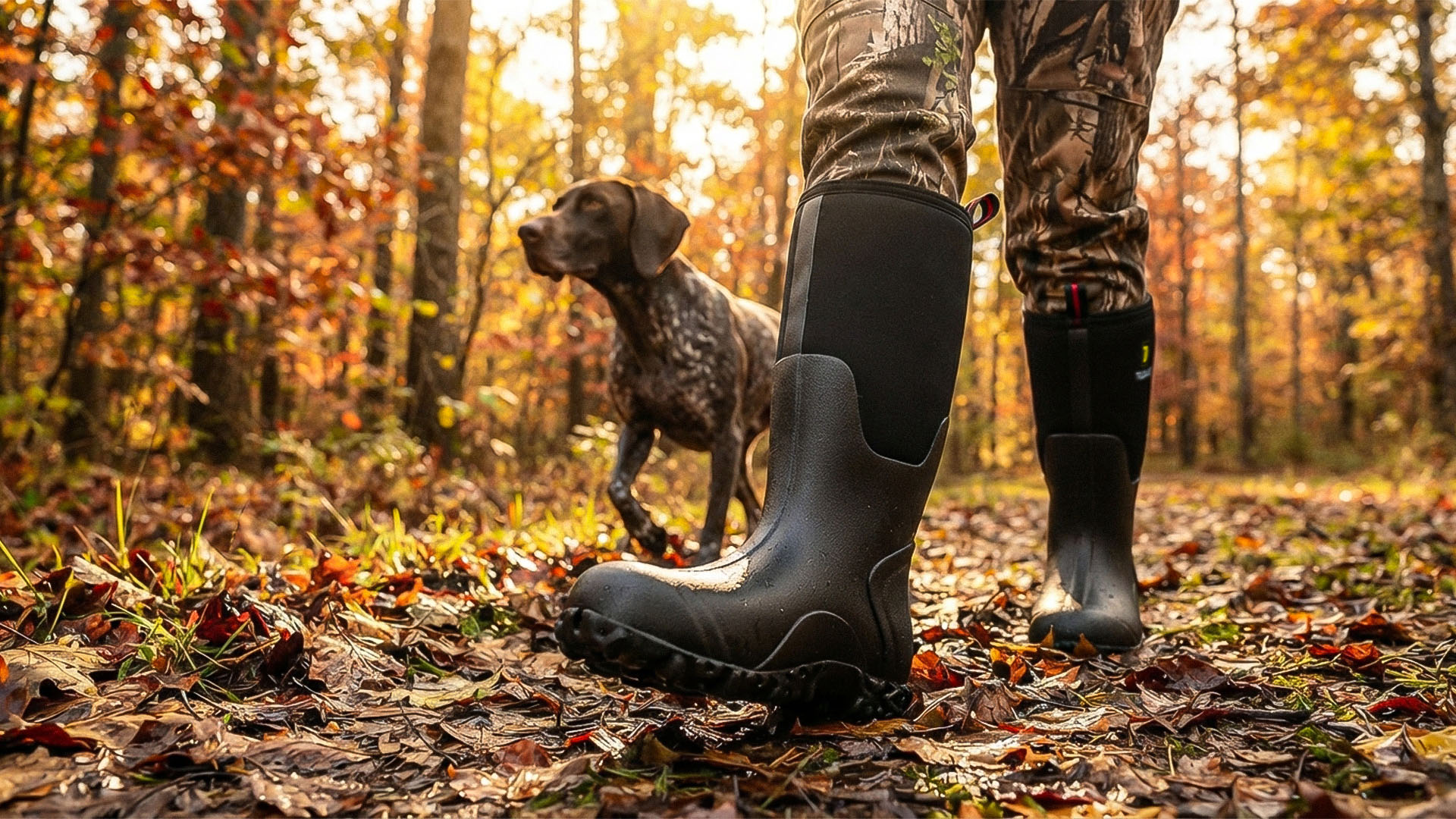
Hunters may benefit from waterproof hunting boots for rabbit hunting that provide secure heel fit, reliable mud and wet-grass traction, and enough durability for brushy agricultural terrain.
Waterproofing Matters Even Without Standing Water
Most rabbit hunters do not spend the day wading.
But moisture comes from:
- Dew
- Rain
- Mud
- Wet weeds
Repeated vegetation contact can soak boots gradually.
Lightweight Boots Are Often Practical
Rabbit hunting usually involves constant movement.
Extremely heavy footwear creates unnecessary fatigue.
Balance:
- Waterproofing
- Traction
- Support
- Weight
according to the terrain.
Tall Rubber Boots Can Work in Wet Farm Country
Rubber hunting boots may be useful around:
- Muddy ditches
- Wet grass
- Shallow creek edges
They provide excellent moisture protection.
Fit Still Matters With Rubber Boots
Rabbit hunters walk too much for loose footwear to be comfortable.
Poor heel retention creates:
- Blisters
- Hot spots
- Fatigue
Choose a secure fit.
Lace-Up Waterproof Boots Can Be Better for Long Walking
Where habitat includes:
- Rolling farmland
- Dry woods
- Brush
with only occasional mud, lightweight lace-up waterproof boots may provide better walking comfort.
Choose Boots for the Entire Property
One shallow ditch should not determine your whole footwear strategy.
Think about:
- Distance
- Weather
- Mud
- Elevation
- Brush
Traction Matters on Wet Banks
Ditches and creek edges can become slick after rain.
Mud and dead grass reduce footing.
Take controlled steps.
Fallen Leaves Can Hide Mud
An apparently dry forest edge may have soft ground underneath.
Slow down around drainage systems.
Gaiters Can Help With Seeds and Moisture
Low gaiters may keep:
- Seeds
- Burrs
- Wet grass
out of boots.
They also protect lower pant legs.
Briars Punish Lightweight Clothing
Blackberry and greenbrier can tear thin fabric.
Durable hunting pants make it easier to stay inside productive cover.
Brush Pants Can Improve the Hunt
If clothing makes you avoid every briar patch, you are avoiding the habitat rabbits depend on.
A more durable outer layer creates better access.
Gloves Are Useful Around Briars
Light gloves can protect hands while moving through:
- Thorns
- Brush
without sacrificing too much dexterity.
Eye Protection Can Be Valuable
Briars and young branches often sit at face height.
Clear protective glasses reduce the risk of eye injuries.
Dogs Can Transform Rabbit Hunting
Beagles are strongly associated with rabbit hunting because they can follow rabbit scent and keep pressure on animals inside dense cover where hunters cannot see them.
Where dog hunting is legal, a trained dog can greatly improve the ability to work large briar systems.
Dogs Need Control
A dog following scent may travel through:
- Roads
- Fences
- Property boundaries
Hunters must maintain appropriate control.
Know the surrounding landscape before releasing dogs.
Roads Are a Major Dog Hazard
Rabbit habitat often borders rural roads.
Do not hunt a cover block with dogs without understanding nearby traffic risks.
Fence Lines Can Injure Dogs
Old farms may contain:
- Barbed wire
- Woven wire
- Broken fencing
Check the area.
Dogs moving quickly can encounter hazards hunters barely notice.
Old Wire Can Be Hidden Under Grass
Abandoned fencing may lie flat on the ground.
Snow, weeds, and leaves can conceal it.
Stay alert.
Briars Can Affect Dogs Too
Dense vegetation can cause:
- Scratches
- Eye irritation
Inspect dogs after the hunt.
Check Paws Frequently
Farm edges can contain:
- Glass
- Metal
- Sharp stems
- Thorns
Small injuries can worsen during a full day.
Carry Water for Dogs
Do not rely on:
- Farm ponds
- Ditches
- Livestock water
Bring clean water when practical.
Warm-Weather Rabbit Hunts Can Overheat Dogs
Dense cover restricts airflow.
Watch dogs for excessive:
- Panting
- Fatigue
Give breaks.
Cold Weather Still Requires Hydration
Dogs working hard in winter still need water.
Snow does not necessarily provide sufficient hydration.
Hunting Without Dogs Is Still Effective
Cottontails can be hunted by methodically working:
- Briars
- Hedgerows
- Brush piles
- Field corners
Move slowly.
Pause frequently.
Solo Hunters Should Target Smaller Cover
One hunter can struggle to effectively pressure a huge field.
Instead, choose:
- Narrow hedgerow
- Small brush patch
- Ditch section
where escape options are easier to understand.
Two Hunters Can Work Narrow Cover Efficiently
Where safe and legal, hunters can work opposite sides of:
- Hedgerow
- Ditch
while maintaining clear shooting zones.
Communication is essential.
Never Shoot Through the Cover Toward a Partner
Dense vegetation hides people.
Know exactly where everyone is before the hunt begins.
If there is uncertainty:
Do not shoot.
Orange Clothing Improves Visibility
Follow current legal requirements.
High-visibility clothing is especially useful in:
- Briars
- Tall grass
- Brush
where partners disappear quickly.
Rabbits Often Circle Back Toward Familiar Cover
When pressured, cottontails may use known escape routes and sometimes return toward the same cover system.
This is one reason dog-assisted rabbit hunting can create repeated opportunities.
But do not assume every rabbit will follow the same pattern.
Watch Likely Escape Gaps
Inside thick habitat, rabbits may prefer:
- Open trails
- Fence gaps
- Ditch banks
Watch these movement windows.
Do Not Stand Directly in the Best Escape Route
A rabbit seeing a hunter blocking the opening may turn before becoming visible.
Set up slightly off the likely route where safe.
Brush Piles Can Stop Running Rabbits
A pressured cottontail may head toward the nearest strong security feature.
If a brush pile sits at the end of a hedgerow, expect the rabbit to use it.
Rabbits Can Hold Extremely Tight
Do not assume a patch is empty because nothing flushed immediately.
A rabbit may wait until the hunter is only a few feet away.
Work slowly.
Kick Carefully Around Dense Cover
The goal is to encourage movement without placing yourself into:
- Hidden wire
- Holes
- Unstable debris
Use caution.
Do Not Put Hands Into Unknown Cover
Brush piles can contain:
- Sharp objects
- Wildlife
Work around them rather than reaching blindly inside.
Low Flushes Require Strict Safety
Rabbits remain on the ground.
This makes background awareness extremely important.
Never shoot when:
- Dog
- Partner
- Livestock
- Building
is anywhere near the line of fire.
Know What Lies Beyond the Rabbit
Farm-country backgrounds can include:
- Houses
- Roads
- Equipment
that are partly hidden by vegetation.
Scout the property before hunting.
Do Not Shoot Toward a Road
A rabbit crossing a ditch beside a road may create a tempting opportunity.
Let it go if the shot direction is unsafe.
Livestock Changes the Hunt
Cottontail habitat may exist inside:
- Cattle pasture
- Horse property
Know animal positions.
Never fire toward livestock.
Barns and Outbuildings Can Be Hidden by Brush
Do not assume a briar patch provides a safe background.
Vegetation is concealment.
Not a backstop.
Positive Identification Is Still Important
Different rabbit and hare species may overlap depending on location.
Hunters should know:
- Local species
- Seasons
- Legal limits
before hunting.
Cottontails and Hares Are Not the Same
Eastern cottontails differ from snowshoe hares in:
- Habitat
- Size
- Seasonal appearance
- Geographic distribution
Do not assume regulations are identical.
Hunting Regulations Vary by State
Before hunting, verify current official:
- Season dates
- Bag limits
- Possession limits
- License requirements
- Legal methods
- Dog rules
- Public-land restrictions
Public Areas May Have Additional Rules
Wildlife areas can impose property-specific restrictions involving:
- Hunting dates
- Firearms
- Dog use
- Access
Always check the exact property.
Private Land Permission Matters
Some of the best rabbit habitat occurs on farms.
Always obtain permission.
Respect:
- Crops
- Gates
- Livestock
- Roads
Do Not Damage Brush or Fences Unnecessarily
Good access depends on good relationships with landowners.
Leave the property as you found it.
Wet Fields Should Not Be Driven
After rain, vehicle traffic can create deep ruts.
Park where directed.
Walk.
Small Properties Can Still Offer Excellent Hunting
Rabbit hunting does not always require thousands of acres.
A property containing:
- Several hedgerows
- Briar corners
- Ditches
may provide excellent habitat.
Habitat Quality Matters More Than Acreage
Twenty acres of ideal early-successional cover can outperform hundreds of acres of mature open woodland.
Look at structure.
Public-Land Hunters Should Search Overlooked Edges
Many hunters walk:
- Main trails
- Open woods
while ignoring ugly vegetation.
Small briar pockets beside access routes can still hold rabbits.
Pressure Can Move Rabbits Deeper Into Cover
After repeated hunting, cottontails may spend more time inside the densest security habitat.
Slow down around:
- Brush piles
- Heavy greenbrier
Rotate Productive Cover
Repeatedly pushing the same small patch can reduce opportunities.
If possible, hunt several habitat blocks.
Habitat Management Benefits Rabbits
Cottontails often benefit from landscapes containing:
- Early-successional vegetation
- Brush
- Young forest
- Grassy edges
When every acre matures into closed forest, rabbit habitat may decline.
Brush Piles Can Provide Valuable Cover
Where land management rules permit, retaining some woody debris can create security habitat.
Habitat projects should always follow landowner and agency guidance.
Hedgerows Benefit More Than Rabbits
Brushy field edges can provide habitat for:
- Songbirds
- Pollinators
- Other small wildlife
Diverse edge habitat supports broader ecosystems.
Common Cottontail Rabbit Hunting Mistakes
Hunting Open Fields Instead of the Edge
Rabbits stay close to security cover.
Avoiding Briars
The difficult cover is often the best cover.
Leaving After the First Flush
One productive patch may hold several rabbits.
Ignoring Ditches and Hedgerows
Narrow cover can be more productive than large fields.
Wearing Leaky or Lightweight Street Footwear
Dew, mud, briars, and ditches punish poor hunting footwear.
Letting Dogs Range Without Knowing Roads and Fences
Agricultural landscapes contain many hazards.
Shooting at Low Movement Without Knowing the Background
Ground-level hunting requires strict awareness.
Assuming All Rabbit Seasons and Limits Are the Same
Regulations vary by species and jurisdiction.
Frequently Asked Questions
Where do eastern cottontail rabbits usually live?
Eastern cottontails commonly use briar patches, hedgerows, old fields, brush piles, crop edges, ditches, young forest, and other habitats providing food close to dense escape cover.
Are briar patches good for rabbit hunting?
Yes. Dense briar cover can provide excellent protection from predators and weather, especially when located beside feeding habitat.
Are hedgerows good places to find cottontails?
Yes. Hedgerows can function as travel corridors and security cover connecting fields, woodlots, and brush patches.
Is rabbit hunting good after rain?
Rain can quiet vegetation, soften tracking surfaces, and create fresh mud tracks, although flooded low ground may move rabbits toward higher cover.
Can you hunt cottontails without dogs?
Yes. Hunters can slowly work briar patches, brush piles, field corners, ditches, and hedgerows without dogs.
What boots are best for rabbit hunting?
Lightweight waterproof hunting boots with secure heel fit, reliable traction in wet grass and mud, and enough durability for briars and agricultural terrain are practical. Tall waterproof boots can be useful in especially wet fields and ditches.
Why do rabbits stay close to thick cover?
Dense vegetation provides fast escape from predators and allows rabbits to feed near open ground without traveling far from security.
Final Thoughts
Cottontail hunting teaches hunters that the best habitat is often the habitat people find inconvenient.
The clean field is easy to walk.
The briar patch is not.
The open woodland is comfortable.
The brush pile is not.
The dry road is simple.
The muddy ditch is not.
Rabbits notice those differences too.
And they usually choose the cover that makes them hardest to reach.
Find the edges.
Walk the hedgerows.
Check brush piles.
Follow fresh tracks after rain.
Slow down around briars.
Watch the field corners everyone else passes.
Wear boots that let you cross wet grass, sticky mud, creek banks, ditches, and thorny field edges without forcing you onto the easiest ground.
And when a cottontail suddenly explodes from a tiny patch of cover you almost walked around, remember the lesson.
Rabbit habitat does not need to be large.
It only needs to be thick enough that the rabbit feels safer entering it than you feel entering after him.
