
A mature nilgai bull does not look like an animal that should be difficult to find.
He is large.
Heavy-bodied.
Dark across the shoulders.
Built more like a powerful antelope crossed with livestock than the whitetails many Texas hunters grew up chasing.
Put that same bull beside an open sendero and he seems impossible to miss.
Then he takes several steps into South Texas brush.
Gone.
Mesquite, thornscrub, cactus, live oak, coastal grass, and broken ranch country can hide an animal weighing several hundred pounds with surprising efficiency.
That is one of the first lessons of nilgai hunting.
The animal is large.
The country is larger.
And the cover is much more complicated than it appears from a ranch road.
Successful nilgai hunting requires hunters to understand food, water, wind, brush structure, open observation lanes, wet-season movement, and the difference between finding animals and actually getting close enough for a responsible opportunity.
Nilgai Are Not Whitetails
Hunters coming from Texas whitetail hunting sometimes make the mistake of using exactly the same strategy for nilgai.
There is some overlap.
Both animals may use:
- Brush
- Water
- Ranch roads
- Feeding areas
- Senderos
- Agricultural transitions
But nilgai can behave very differently.
They may travel longer distances.
Groups can move through large areas.
Mature bulls may appear alone or loosely associated with other animals.
They can use open country confidently and then disappear quickly into thick brush.
The best approach is learning nilgai behavior rather than trying to force whitetail assumptions onto them.
South Texas Brush Is More Complex Than It Looks
From a distance, South Texas brush can look like one continuous wall.
Inside it, the habitat may contain:
- Mesquite flats
- Blackbrush
- Huisache
- Cactus
- Live oak
- Grass openings
- Senderos
- Drainages
- Ranch roads
- Coastal prairie
- Agricultural edges
- Water tanks
Nilgai use those transitions.
A uniform block of brush may be difficult to hunt.
A brush system broken by roads, openings, water, and grass creates observation and travel opportunities.
The hunter’s job is identifying those interfaces.
Senderos Are Critical Observation Features
Senderos are cleared lanes through dense brush.
They are one of the most useful features in South Texas hunting because they create visibility where natural habitat offers almost none.
Nilgai may cross senderos while moving between:
- Feeding areas
- Water
- Bedding cover
- Ranch pastures
- Brush blocks
Do not assume every sendero is equally productive.
Look for crossings showing:
- Fresh tracks
- Droppings
- Worn trails
- Mud disturbance
- Vegetation pushed down
A narrow lane with consistent movement may be more valuable than a wide sendero that simply looks good from a blind.
Long Senderos Require Patience
A nilgai can appear at one end of a sendero and disappear again in seconds.
That creates a temptation to rush.
Do not.
Use optics.
Confirm the animal.
Study what direction it is traveling.
A bull crossing once may return.
A group may follow behind.
Instead of reacting instantly to the first glimpse, use the sighting as information.
Which brush block did it leave?
Which one did it enter?
What lies beyond them?
The crossing may reveal a larger daily pattern.
Tracks Can Look Almost Cattle-Like
Nilgai are large animals, and their tracks can be substantial.
In ranch country containing livestock, track identification requires attention.
Fresh tracks may appear along:
- Muddy senderos
- Water tanks
- Dirt roads
- Creek bottoms
- Fence crossings
Do not rely only on size.
Study:
- Shape
- Direction
- Repeated trail use
- Nearby droppings
- Camera observations where legal
Livestock can cover good wildlife sign quickly.
Look for patterns rather than one isolated print.
Rain Makes Tracking Much Easier
During long dry periods, South Texas ground can become hard.
Tracks become difficult to age.
Dust and livestock traffic obscure detail.
A good rain resets the surface.
Suddenly, muddy ranch roads and tank edges reveal fresh movement.
After rain, check:
- Sendero intersections
- Road crossings
- Water
- Low drainages
- Gate areas
- Brush edges
A track laid over fresh rain marks tells you much more than an old hardened print.
Post-rain scouting can help determine which parts of a large ranch are active now.
Rain Can Also Completely Change Access
The same storm that improves tracking can turn ranch roads into deep mud.
South Texas clay can become extremely slick.
A road that was easy yesterday may be difficult today.
Before driving, consider:
- Soil
- Ruts
- Drainage
- Landowner instructions
- Vehicle capability
- Weather forecast
Do not damage roads simply to save walking.
On private ranches, access is part of the landowner relationship.
Rutting roads can cost future permission.
Water Is Important—Until Rain Creates More of It
During dry conditions, permanent water can become extremely valuable.
Nilgai may use:
- Stock tanks
- Ponds
- Troughs
- Creek pools
- Artificial water sources
But heavy rain can weaken established patterns.
Temporary water appears in:
- Road depressions
- Low fields
- Drainages
- Shallow ponds
Animals gain more options.
A tank that showed constant activity before the storm may suddenly become quieter.
That does not necessarily mean the animals left.
It may mean they no longer need that exact water source.
Scout Travel Routes Instead of Only Water
Sitting directly over water is not always the best strategy.
Nilgai may approach from several directions.
Livestock can create disturbance.
Wind can become difficult.
Instead, study the corridors connecting water to secure cover.
A crossing 150 yards from the tank may provide:
- Better wind
- Better concealment
- More predictable movement
Water explains why the animals are nearby.
The trail explains how they get there.
Food Sources Change by Season
Nilgai use a variety of vegetation depending on local habitat and season.
Hunters should think in terms of current forage.
Watch where animals are feeding rather than assuming one plant type always dominates.
Productive areas may involve:
- Grasses
- Browse
- Agricultural crops
- Improved pasture
- Green-up after rain
- Native vegetation
Rain can create new growth quickly.
A previously dry pasture may become attractive after moisture returns.
Follow current food.
Green-Up Can Shift Animals Into More Open Country
After rain, fresh vegetation can appear in openings and ranch pastures.
Nilgai may use those areas more actively.
This can create better glassing opportunities.
Look during:
- Early morning
- Late afternoon
- Cooler cloudy conditions
Do not walk directly into the opening.
Glass from cover.
Large animals in open grass may still detect a hunter long before the hunter realizes he has been seen.
Nilgai Vision Should Not Be Underestimated
Large size does not make nilgai careless.
They can detect movement across open country.
Avoid:
- Skylining yourself
- Standing openly in senderos
- Moving quickly across fields
- Repeatedly driving close to animals
Use:
- Brush
- Terrain
- Road cuts
- Drainages
to reduce exposure.
Stop before glassing.
A motionless hunter beside brush is much harder to notice than someone walking continuously.
Herds Create More Eyes
When multiple nilgai are together, the difficulty increases.
One animal feeds.
Another watches.
A third may be partially hidden in brush.
Do not focus only on the bull.
Study the entire group.
Move only when conditions are favorable.
One alert cow can ruin a stalk before the target animal ever notices anything.
The larger the group, the more patient the hunter needs to become.
Mature Bulls May Be Alone
At other times, hunters may encounter mature bulls traveling or feeding alone.
This can reduce the number of eyes watching the stalk.
But a solitary bull may also be especially cautious.
Observe before moving.
Ask:
- Is he feeding?
- Traveling?
- Heading toward cover?
- Moving toward water?
- Likely to cross a sendero?
A calm bull following a clear direction can sometimes be intercepted more effectively than chased.
Spot-and-Stalk Works Best With Terrain
South Texas is not mountain country, but subtle terrain still matters.
Use:
- Dry creek channels
- Road berms
- Low rises
- Brush lines
- Small depressions
to break visibility.
A two-foot depression can hide much of a hunter’s body.
Do not think you need dramatic hills.
You only need enough terrain to keep the animal from seeing movement.
Do Not Walk Straight Toward the Animal
Direct approaches are obvious.
If a nilgai is visible, consider moving:
- Laterally
- Behind brush
- Through a drainage
- Toward a likely crossing
A longer hidden route is almost always better than a short exposed one.
The goal is not reducing walking distance.
The goal is reaching a position without changing the animal’s behavior.
Wind May Be the Most Important Factor
Nilgai live in brush country where scent matters.
Before every stalk, check:
- Wind direction
- Gusts
- Thermal movement
- Brush-channel airflow
Do not assume wind is simple because the terrain is relatively low.
Senderos, tree lines, creek bottoms, and warming ground can all alter air movement.
A good visual approach with bad wind can end instantly.
Morning Conditions Can Be More Stable
Early mornings may offer:
- Cooler temperatures
- Calmer wind
- Longer feeding activity
- Better glassing
This can be one of the best times to locate animals.
Find a position where multiple openings can be watched.
Let the animals show you their movement.
Do not immediately start walking because you spotted one bull.
Sometimes observation creates a much easier second opportunity.
Midday Shade Can Hold Animals
South Texas heat makes shade valuable.
During warm periods, nilgai may spend more time around:
- Thick brush
- Live oak
- Mesquite
- Creek corridors
- Dense shaded cover
Midday hunting may become more about locating bedding and security areas than finding animals in open fields.
Glass brush edges carefully.
A large bull may show only:
- Head
- Shoulder
- Horns
- Movement through gaps
Do not expect a full-body view.
Cloud Cover Can Extend Movement
Cool overcast weather can change daylight behavior.
Animals may remain in open or semi-open feeding areas longer.
This can create useful observation windows.
If a cool front follows rain, be ready to scout.
Fresh green-up combined with comfortable temperature may shift the pattern enough to create better daytime visibility.
Heat Management Is Part of the Hunt
South Texas hunting can become dangerous when temperatures rise.
A stalk through thornbrush can require more effort than distance suggests.
Carry sufficient water.
Watch for:
- Headache
- Dizziness
- Nausea
- Weakness
- Confusion
Do not continue simply because an animal is visible.
Heat affects decision making.
A safe hunter knows when to stop.
Start Hydrated
Do not wait until you are thirsty.
Begin the day hydrated.
Carry water during every significant stalk.
A “short” stalk can become much longer when:
- Animals change direction
- Brush blocks the route
- A drainage forces a detour
Leaving water in the vehicle because the animal looked close is a common mistake.
Bring it.
Thornbrush Changes Clothing Requirements
South Texas vegetation can be brutal.
Hunters may encounter:
- Mesquite thorns
- Blackbrush
- Cactus
- Huisache
- Sharp grass
- Dense woody stems
Light hiking clothing can tear quickly.
Durable pants and sleeves make it easier to use the right route rather than walking only where vegetation is comfortable.
The best stalk sometimes goes directly through ugly cover.
Your clothing needs to survive it.
Eye Protection Makes Sense
Thorny branches often sit at face height.
Clear protective glasses can help prevent eye injuries while moving through brush.
This is especially useful during low-light approaches.
A tiny branch can end the entire hunting day.
Protecting your eyes is simple compared with treating an injury miles from the vehicle.
Cactus Can Hide Under Grass
After rain, tall green vegetation may cover cactus and uneven ground.
Watch where you step.
Do not kick blindly through brush.
Cactus spines can penetrate lightweight footwear and pants.
Good hunting pace in thorn country is deliberate, not fast.
The animal is already better at moving through the brush than you are.
Footwear Has to Handle More Than Dry Ground
South Texas is commonly imagined as dry and dusty.
A hunting trip can include:
- Mud
- Wet pasture
- Creek crossings
- Clay roads
- Cactus
- Sharp brush
- Uneven ranch ground
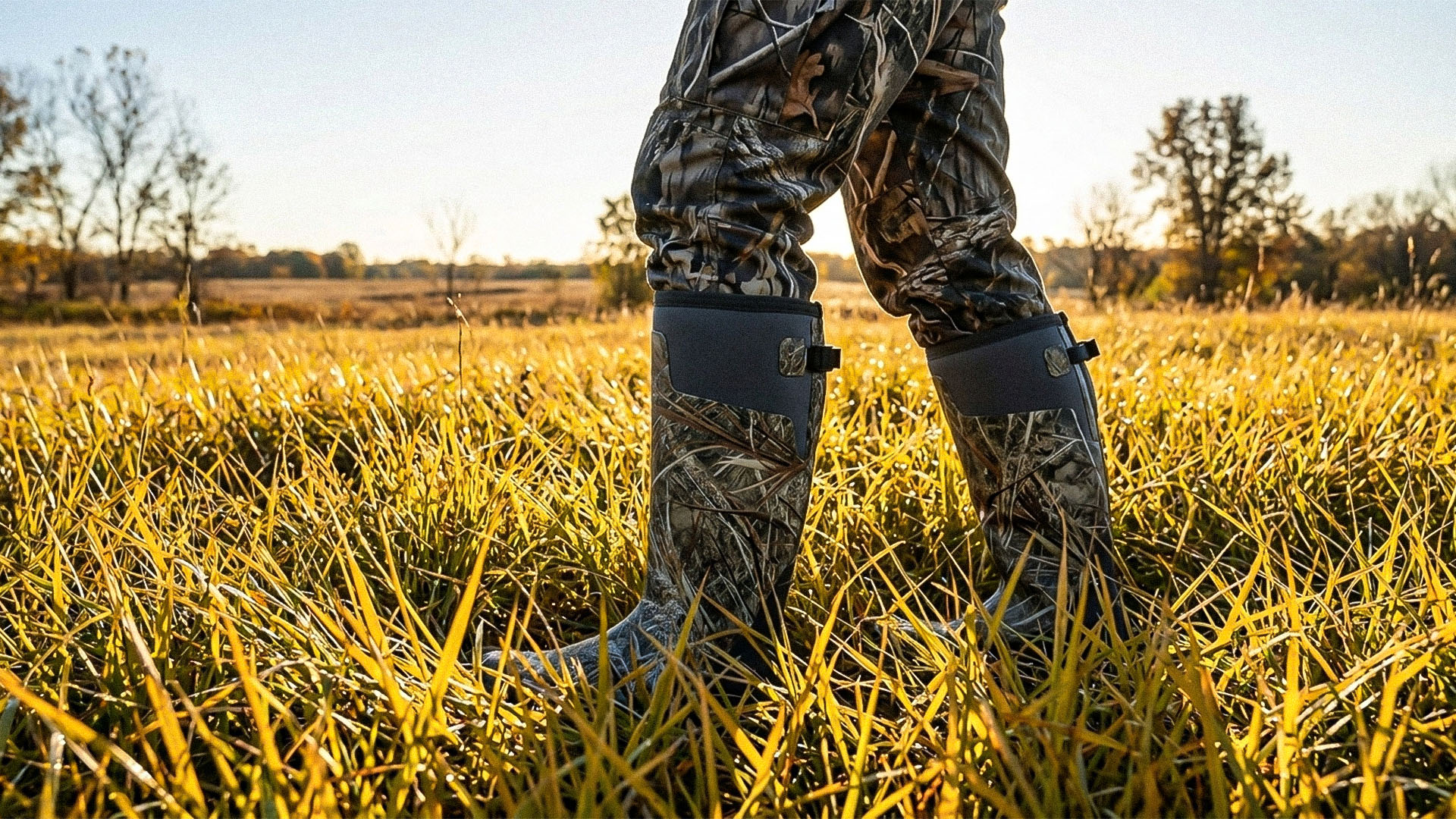
Hunters covering these conditions may benefit from waterproof hunting boots for South Texas brush hunting that offer secure fit, reliable traction, brush protection, and enough moisture resistance for wet ground without excessive insulation for warm climates.
The best boot should remain comfortable during long stalks.
Heavy cold-weather footwear can become miserable in Texas heat.
Lightweight Does Not Mean Fragile
Hunters often want lightweight footwear in hot climates.
That makes sense.
But South Texas vegetation punishes weak materials.
The ideal balance includes:
- Reasonable weight
- Durable upper
- Good outsole
- Secure heel
- Waterproof protection
- Breathability
A super-light hiking shoe may feel excellent until it meets cactus, mud, and thornbrush.
Match footwear to actual hunting terrain.
Wet Clay Requires Traction
Rain turns some ranch soil into slick clay.
Outsoles can fill with mud.
Traction disappears.
Slow down on:
- Road slopes
- Tank banks
- Creek edges
- Senderos
Clean packed mud from tread when necessary.
Do not run after animals.
The fastest way to lose the hunt is falling while trying to hurry.
Mud Suction Can Pull at Boots
Low areas may contain deeper mud.
Secure heel fit becomes important.
A loose boot can:
- Slip
- Rub
- Create blisters
- Increase fatigue
Take shorter steps.
Use vegetation roots and firmer edges where available.
A slightly longer path can be much easier than crossing the middle of a muddy depression.
Gaiters Can Help in Wet Grass and Seeds
Low gaiters can reduce:
- Mud
- Seeds
- Grass debris
- Water
entering boots.
They may be especially useful after rain when vegetation stays wet long after the sky clears.
Choose breathable equipment.
Heat management matters more here than in northern marsh hunting.
Snakes Require Awareness
South Texas brush country may contain venomous snakes.
Hunters should watch around:
- Rock piles
- Brush
- Water
- Fallen timber
- Ranch structures
Never place hands where you cannot see.
Keep dogs under control.
Know local species and emergency procedures.
Do not attempt to handle wildlife unnecessarily.
Ranch Roads Are Excellent Scouting Tools
Roads provide visibility and track information.
Use them to locate:
- Fresh crossings
- Groups feeding in openings
- Active water routes
But do not make the vehicle the entire hunt.
Repeatedly driving through the same area can pressure animals.
Once you identify activity, park and approach carefully where permitted.
Roads gather information.
Foot travel creates the hunt.
Glassing From the Vehicle Can Reduce Disturbance
On some private ranches, animals may tolerate normal vehicle activity more than people walking openly.
Where legal and permitted, glassing from established ranch roads can help locate animals without immediately disturbing them.
Once a target is located:
- Leave the area if necessary
- Plan the wind
- Choose a hidden route
- Begin the stalk from an appropriate point
Do not drive directly toward the animal hoping distance will solve itself.
Use the vehicle for scouting, not pressure.
Binoculars Matter Even in Brush Country
Hunters sometimes think optics are only for western mountains.
They are extremely useful in South Texas.
Use binoculars to inspect:
- Senderos
- Pastures
- Water edges
- Brush gaps
- Road crossings
A dark-bodied bull may blend into deep shade.
Magnification can reveal:
- Horns
- Head movement
- Legs
- Shoulder shape
before the naked eye recognizes the animal.
Glass the Shade
During warm weather, inspect shaded edges carefully.
A nilgai may stand just inside brush with only part of the body visible.
Scan slowly.
Do not look only for a full animal.
Search for:
- Dark vertical legs
- Ear movement
- Horn shape
- Body outline
- Movement against sunlight
Shade hides large animals remarkably well.
Fence Crossings Can Concentrate Movement
Ranch fences affect travel patterns.
Look for places where animals regularly cross.
Possible clues include:
- Worn trails
- Hair
- Tracks
- Broken vegetation
Never modify or damage fences without explicit permission.
Use existing movement rather than changing the property.
A regular crossing can become an excellent observation point when combined with favorable wind and cover.
Livestock Can Complicate the Pattern
Cattle may share:
- Water
- Roads
- Pasture
- Shade
with nilgai.
This creates both opportunity and confusion.
Tracks overlap.
Dust increases.
Animals may shift around livestock activity.
Do not assume cattle presence eliminates nilgai.
Instead, watch how wildlife uses the ranch relative to daily livestock movement.
The pattern may be more complex, but it still exists.
Shot Opportunities May Be Brief
Dense brush means nilgai can enter and leave visibility quickly.
Prepare before the animal appears.
Know approximate distances to:
- Sendero crossings
- Brush edges
- Water trails
- Openings
A rangefinder where legal and appropriate can help.
Do not use a brief opportunity as an excuse for a poor decision.
The shot still needs to be controlled.
Nilgai Are Tough Animals
Nilgai are large, heavily built game animals.
Hunters should use equipment, ammunition, and shot placement appropriate to the species and comply with all applicable regulations and property rules.
More power does not replace accuracy.
A poor shot with powerful equipment remains a poor shot.
Know your effective range.
Use a stable position.
Wait for an ethical angle.
Avoid Shooting Into Groups
Nilgai may travel together.
Before shooting:
- Confirm the target
- Check animals behind it
- Ensure a safe background
- Wait for separation
Brush can hide additional animals.
A bull that appears alone may have cows standing just behind vegetation.
Never assume the background is clear because you cannot immediately see another animal.
Recovery Planning Is Critical
A nilgai can move into extremely dense cover after the shot.
Before taking the opportunity, consider:
- Brush density
- Weather
- Light remaining
- Property boundaries
- Vehicle access
- Recovery help
Mark the exact location of the animal at the shot.
Choose landmarks.
In flat brush country, everything can look identical once you begin tracking.
Rain Makes Blood Tracking Harder
Wet vegetation and rainfall can reduce visible sign.
Look for:
- Blood
- Hair
- Tracks
- Broken stems
- Mud disturbance
Move methodically.
Do not allow several people to spread randomly through the trail.
Protect sign.
If trained tracking dogs are legal and available, understand the local rules before the hunt rather than learning them only after a difficult recovery.
Large Animals Create Serious Recovery Work
A successful nilgai hunt creates a significant field-care job.
Prepare beforehand with:
- Sharp knives
- Gloves
- Game bags
- Cooler capacity
- Ice
- Transport plan
- Help
Warm South Texas temperatures make meat care especially important.
Do not shoot first and figure out cooling later.
The recovery plan should already exist.
Heat Makes Meat Care Urgent
Even during cooler months, afternoon temperatures can rise.
A large carcass retains heat.
Begin field care promptly.
Get meat:
- Clean
- Ventilated
- Cooled
as quickly as practical.
Follow all applicable local rules for transport and proof of species or sex where relevant.
Good meat care is part of ethical hunting.
Plan Vehicle Access Before the Shot
Some ranches allow recovery vehicles on specific roads or routes.
Others restrict vehicle access.
Know the rules.
If the animal is several miles from a legal vehicle route, the recovery may require significant labor.
That reality should influence your shot decision.
A hunt does not end when the animal falls.
Private-Land Rules Are Central to Nilgai Hunting
Much nilgai hunting occurs on private ranchland.
Every property can have different rules.
Confirm:
- Hunting boundaries
- Approved roads
- Vehicle use
- Water access
- Livestock zones
- Recovery procedures
- Guide requirements
- Shooting areas
Follow instructions exactly.
Do not treat one ranch’s rules as universal.
Private access depends on trust.
Respect Ranch Operations
A ranch is a working property.
Hunters should avoid:
- Blocking roads
- Leaving gates incorrectly
- Driving soft ground
- Disturbing livestock
- Damaging fences
- Leaving trash
Communicate with ranch staff.
A successful hunt should create no additional work for the people maintaining the property.
Public-Land Opportunities May Differ
Nilgai hunting opportunity and access can vary greatly by location.
Hunters should research the exact land-management area rather than assuming private-ranch patterns apply everywhere.
Check:
- Access rules
- Species regulations
- Legal methods
- Area closures
- Permit requirements
Use current official information.
Regulations Must Be Verified
Nilgai are non-native in the United States, but that does not mean hunters should assume there are no rules.
Requirements may vary by:
- State
- Property type
- Hunting method
- Local ordinance
Before hunting, verify current rules for:
- Licenses
- Seasons if applicable
- Legal methods
- Access
- Transport
- Public-land restrictions
- Local discharge rules
Use current official wildlife and land-management information.
Common Nilgai Hunting Mistakes
Treating Them Like Oversized Whitetails
Learn nilgai movement and group behavior independently.
Focusing Only on Water
Water matters, but travel routes can produce better opportunities.
Ignoring Rain-Changed Patterns
Temporary water and green-up can redistribute animals quickly.
Walking Directly Toward Visible Animals
Use brush and terrain to hide the approach.
Watching Only the Target Bull
Other herd members may detect you first.
Ignoring Wind
Brush-country animals rely heavily on scent.
Wearing Heavy or Fragile Footwear
South Texas demands lightweight mobility plus protection from mud, thornbrush, and wet ground.
Underestimating Heat
Hydration and meat care require planning.
Shooting Without a Recovery Plan
Large animals and dense brush create serious work after the shot.
Frequently Asked Questions
Where are nilgai hunted in Texas?
Nilgai are strongly associated with portions of South Texas, particularly ranch and coastal-brush environments where established populations occur.
What habitat do nilgai use?
They can use brush, grassland, ranch pasture, senderos, water areas, agricultural transitions, and other mixed South Texas habitats.
Is spot-and-stalk hunting effective for nilgai?
It can be when hunters use optics, wind, brush, and subtle terrain to approach animals without being detected.
Is nilgai hunting better after rain?
Rain can create fresh tracks, new green vegetation, and improved scouting conditions, but it can also create temporary water and muddy access that change established patterns.
What boots are best for South Texas nilgai hunting?
Lightweight waterproof hunting boots with secure fit, good mud traction, durable brush protection, and enough breathability for warm conditions are useful.
Why is recovery planning important?
Nilgai are large animals, South Texas brush can make tracking difficult, and warm temperatures increase the need for efficient field care and cooling.
Final Thoughts
Nilgai hunting changes the way hunters look at South Texas.
A sendero becomes more than a road.
A muddy track becomes a movement clue.
A water tank becomes part of a much larger travel system.
A patch of green grass after rain may completely change where animals spend the morning.
And a giant bull can disappear behind brush that barely looked thick enough to hide a deer.
Glass before moving.
Watch the herd.
Respect the wind.
Use senderos and terrain intelligently.
Protect your feet from mud, cactus, wet grass, and thornbrush.
Carry enough water.
And plan the recovery before the opportunity arrives.
Nilgai may be one of the largest animals in South Texas brush country.
That does not make them easy.
It simply makes their ability to disappear even more impressive.
