
Sandhill cranes are not small birds.
They stand tall.
Their wings are enormous.
Their calls carry across open prairie.
A flock crossing a Texas grain field can look almost impossible to miss.
Then hunters actually try to get them close.
The birds circle once.
Then twice.
One crane turns its head.
The flock slides fifty yards to the side and keeps going.
Nothing appears obviously wrong.
But something was.
A blind outline.
A truck parked where it should not be.
Decoys facing strangely.
Movement inside the setup.
An approach that left tracks through an otherwise clean field.
Sandhill crane hunting is often a lesson in how differently birds see an agricultural landscape compared with hunters standing on the ground.
Wide-open country gives cranes room to inspect everything.
The best hunters succeed by scouting exact feeding locations, hiding aggressively, understanding wind, and building a spread that looks natural from the air rather than impressive from the pickup.
Crane Hunting Starts With Scouting
A sandhill crane field can look perfect and still produce nothing.
Do not choose fields based only on:
- Crop type
- Size
- Proximity to water
- Historical reputation
Find birds first.
Watch actual crane movement.
Scout morning and evening flights.
Record:
- Field being used
- Exact landing area
- Number of birds
- Arrival time
- Direction of approach
- Nearby roost
- Wind direction
- Vehicle traffic
- Other hunter pressure
The difference between the correct field and the correct location inside the field can be hundreds of yards.
For cranes, that distance matters.
Find the Exact Feeding Zone
Cranes may land repeatedly in one portion of a huge field.
Hunters often refer to this exact feeding location as the X.
Why birds choose one location over another can depend on:
- Waste grain
- Field elevation
- Water
- Wind
- Visibility
- Disturbance
- Crop residue
- Previous flock use
Do not simply gain permission for the field and set up near the gate.
Study where cranes actually put their feet on the ground.
That should guide the setup.
Grain Fields Can Be Excellent Crane Habitat
Depending on region and agricultural conditions, sandhill cranes may use harvested fields involving:
- Corn
- Milo
- Sorghum
- Wheat
- Other grain crops
Waste grain can provide an efficient feeding opportunity.
Fields become especially attractive when they are located within practical flying distance of secure roosting areas.
But availability changes.
Harvest timing matters.
Weather matters.
Human pressure matters.
A field covered with birds last week may become irrelevant after food is depleted or disturbance increases.
Scout current behavior.
Roosts Explain the Daily Pattern
Cranes may spend nights around shallow wetlands, reservoirs, river systems, playas, or other secure roosting environments depending on the region.
From the roost, they travel to feeding areas.
Understanding that relationship helps hunters predict:
- Flight direction
- Arrival timing
- Preferred field zones
- Evening departure routes
However, avoid disturbing roost areas unnecessarily.
Repeated human pressure near the roost can disrupt large numbers of birds and alter movement across the whole area.
Hunt feeding patterns rather than aggressively pushing secure resting locations.
Playa Lakes Can Shape Panhandle Movement
Across portions of the Southern High Plains, shallow playa systems can influence bird distribution.
When water is available, these wetlands may provide resting and roosting habitat.
A productive grain field near several usable wetland areas may see regular crane traffic.
But playa conditions can change significantly with rainfall.
Some may be:
- Dry
- Partially filled
- Flooded
- Surrounded by mud
This means rain can alter crane movement across a much larger landscape than one farm field.
Rain Can Completely Change the Hunt
Rain changes agricultural hunting quickly.
It may create:
- Standing water
- Mud
- Exposed grain
- New loafing areas
- Different vehicle access
- New feeding zones
After substantial rain, cranes may shift within a field.
Low sections can become muddy or flooded.
Birds may concentrate on firmer high ground.
Or they may use shallow wet areas if those spots feel secure and provide food.
Never assume yesterday’s X remains today’s X after a major weather event.
Scout again.
Mud Can Concentrate Birds on Slight Rises
A field that appears perfectly flat may contain subtle elevation differences.
After rain, those differences become obvious.
Low ground becomes saturated.
Higher ground stays relatively firm.
Cranes may favor areas that provide easier standing and walking.
Look for:
- Field crowns
- Slight ridges
- Raised rows
- Better-drained corners
- Firm crop residue
Only a small elevation change may be necessary.
From the road, the difference can be difficult to see.
From the birds’ perspective, it may determine where the entire flock lands.
Do Not Destroy the Field Getting to the Setup
Wet agricultural soil is vulnerable.
Driving across soft ground can create deep ruts.
Those ruts can:
- Damage fields
- Affect future planting
- Hurt drainage
- Upset landowners
- End hunting permission
Ask before driving.
If the landowner says walk, walk.
If only certain lanes are approved, use them.
A perfect crane hunt is not worth damaging the property that made the hunt possible.
Plan the Gear Haul Before Sunrise
Field crane hunting can involve a large amount of equipment.
Possible gear includes:
- Decoys
- Blinds
- Shotguns
- Ammunition
- Calls
- Seats
- Flags where used legally and appropriately
- Water
- Warm clothing
Mud multiplies the effort required to carry everything.
Before the hunt, decide:
- How far you must walk
- Who carries each item
- Which decoys are essential
- Whether a sled or cart is permitted and practical
- How birds will be recovered
- How gear will leave the field afterward
A smaller efficient spread in the right place is better than an oversized spread hunters cannot position correctly.
Cranes Have Excellent Eyesight
One reason crane hunting can be difficult is how well birds inspect open ground.
A mature crane has spent its life detecting danger across exposed landscapes.
Expect birds to notice:
- Blind outlines
- Faces
- Hands
- Vehicles
- Unnatural objects
- Movement
- Poor decoy spacing
Do not assume distance makes sloppy concealment invisible.
The birds begin evaluating the setup long before they reach shotgun range.
Hide the Hunters Completely
Concealment should work from above.
This is important.
A blind that looks perfect from another hunter’s eye level may look like a dark rectangle from the sky.
Use appropriate local field material and legal concealment techniques.
Blend:
- Blind edges
- Openings
- Equipment
- Dog blinds where used
Keep faces and hands concealed.
Do not allow shiny gear to remain exposed.
When cranes begin working the spread, unnecessary movement should stop.
Low Profiles Often Work Better
The higher the setup stands above flat crop ground, the easier it may be for birds to notice.
Where conditions and equipment allow, keep the hunting position low.
Use natural depressions or field structure without damaging crops or property.
The goal is to become part of the field rather than adding a new object to it.
Always choose concealment methods that remain safe and legal.
Decoy Realism Matters
Crane decoys should imitate natural birds using the field.
A random pile of decoys may look less convincing than a smaller spread arranged realistically.
Observe live birds during scouting.
Watch:
- Spacing
- Feeding posture
- Group size
- Direction
- Loose family groups
- Open landing areas
Then recreate the general feel.
The best decoy lesson comes from real cranes, not only from another hunter’s preferred diagram.
Do Not Pack the Landing Zone
Cranes need a place to finish.
If decoys completely occupy the most natural landing area, birds may slide outside the spread.
Leave a visible pocket according to:
- Wind
- Approach
- Blind position
- Field structure
The pocket should bring birds into an ethical, safe shooting location.
A spread should invite the flock.
Not create an obstacle course.
Wind Controls the Final Approach
Like many large birds, cranes generally use wind during landing.
Observe live flocks.
Most will adjust their approach to control speed as they descend.
Place the setup so the landing direction helps produce safe shooting opportunities.
Consider:
- Sun
- Roads
- Houses
- Other hunters
- Livestock
- Field boundaries
The best wind-based decoy position is useless if it produces an unsafe background.
Crosswinds Can Offer Advantages
Hunters sometimes assume birds must land directly in front of the blind.
Not necessarily.
A controlled crosswind setup can position birds at useful angles while reducing the chance that they stare directly into the hunting position for the entire approach.
The exact setup depends on the field.
Do not force one diagram onto every wind.
Build around real bird behavior.
Strong Wind Can Lower Birds
Windy conditions may cause cranes to fly differently.
They may:
- Approach lower
- Use terrain
- Adjust repeatedly
- Drift downwind of the spread
This can make shots more challenging.
It can also create opportunities when birds need more controlled approaches.
Watch how cranes behave during scouting in similar wind.
Do not assume calm-day patterns apply in strong weather.
Calling Should Support the Setup
Cranes are highly vocal.
Calling can be part of a hunting strategy where legal and appropriate, but the calls should sound like they belong to the visible flock.
More sound is not automatically better.
Watch bird reactions.
If a flock is already turning toward the decoys, unnecessary aggressive calling can add risk.
Use sound as one piece of the presentation.
Not the entire hunt.
Learn From Live Birds
Before trying to imitate cranes, listen to actual groups.
Pay attention to:
- Feeding sounds
- Flight calls
- Group communication
Real bird behavior provides context no call instruction can completely replace.
If your setup sounds dramatically different from the hundreds of cranes birds encountered yesterday, they may notice.
Observation improves calling judgment.
Movement Inside the Blind Ruins Good Setups
A group of approaching cranes creates excitement.
Hunters begin:
- Looking up repeatedly
- Moving shotguns
- Reaching for calls
- Whispering
- Adjusting position
Those movements can flare birds.
Organize before the flock arrives.
Keep essential gear accessible.
Only move when necessary and when bird position makes it safe.
Stillness finishes birds.
Watch the Entire Flock
Do not stare only at the front bird.
The flock may include birds at different heights and angles.
One crane may detect something and begin sliding away.
Watch the entire group for changes such as:
- Heads turning
- Wings changing
- Flock drifting
- Sudden elevation gain
Those signals tell you the birds are becoming uncertain.
Learn from every approach.
A flock that flares is feedback.
Sun Position Can Expose Hunters
Low winter sunlight creates difficult angles.
A setup facing directly into the sun can make target identification harder.
A setup brightly illuminated from behind can expose hunters and equipment.
When possible, consider sunlight during planning.
Use it to:
- Improve concealment
- Maintain visibility
- Reduce glare
Do not sacrifice safe shooting direction simply to improve lighting.
Safety remains first.
Morning Flights Can Be Intense
Cranes leaving roosts may create concentrated morning movement.
Being ready before legal shooting time is important.
The setup should already be:
- Concealed
- Organized
- Quiet
Do not be the group still brushing blinds when the first flock arrives.
Scout timing beforehand.
A field receiving cranes shortly after daylight demands a very early setup.
Midday Movement Can Still Happen
Do not assume crane hunting ends after the first morning flight.
Birds may move between:
- Feeding fields
- Resting areas
- Water
- Other agricultural ground
Weather and disturbance can create additional flights.
If birds are still moving in the broader area, staying patient may pay off.
A quiet hour is not proof the hunt is finished.
Evening Patterns May Differ
Evening birds may approach differently as they prepare to return toward roosting areas.
Some feeding fields see strong afternoon activity.
Others do not.
Scout evening movement separately.
A good morning field is not automatically a good evening setup.
The birds’ daily schedule is local.
Observe it.
Fog Creates Serious Identification Problems
Fog can reduce visibility across open agricultural country.
Do not take shots at silhouettes that cannot be positively identified.
Fog may also hide:
- Buildings
- Roads
- People
- Livestock
Wait until visibility provides a safe background.
Migratory bird hunting requires confident species identification.
Poor visibility is never an excuse to guess.
Species Identification Is Critical
Crane hunters need to identify legal birds accurately.
Depending on location and migration, other large birds may occur in the same broader landscape.
Hunters must understand identification characteristics before the hunt.
Never shoot based only on:
- Size
- Long legs
- General silhouette
Know the current rules and protected species concerns for your region.
If identification is uncertain, do not shoot.
Protected Crane Species Require Special Awareness
In some portions of North America, protected crane species may potentially overlap geographically or during migration with sandhill cranes.
That makes positive identification particularly important.
Hunters should review current wildlife-agency identification guidance before entering the field.
Learn differences involving:
- Plumage
- Head coloration
- Flight appearance
- Flock behavior
- Geographic occurrence
Do not rely on memory from an old hunting trip.
Use current official resources.
Agricultural Baiting Rules Must Be Understood
Sandhill cranes are migratory game birds, so hunters need to understand applicable rules regarding baiting and agricultural fields.
Never add grain or manipulate food illegally to attract birds.
Normal agricultural practices and hunting regulations can involve specific definitions.
Before hunting, confirm the field is legal under current federal and state regulations.
If there is uncertainty about how grain reached the ground, ask the appropriate wildlife authority before hunting.
A field full of cranes is not worth a federal wildlife violation.
Non-Toxic Ammunition Rules May Apply
Ammunition requirements can depend on jurisdiction and land type.
Hunters should verify whether non-toxic shot is required for the specific hunt and property.
Do not assume rules from another migratory-bird hunt apply automatically.
Check current:
- Federal requirements
- State requirements
- Wildlife-area rules
before purchasing or loading ammunition.
Shotgun Regulations Must Be Verified
Migratory bird hunting commonly includes rules involving shotgun capacity and legal methods.
Verify current regulations before the season.
Do not rely on equipment configuration from another type of hunt.
The hunter is responsible for ensuring the firearm complies with the rules of the specific crane hunt.
Crane Size Changes Shot Perception
Sandhill cranes are large birds.
Their size can make them appear closer than they actually are.
This can encourage hunters to take shots beyond their effective range.
Use disciplined distance judgment.
If birds are not close enough for a responsible shot, let them go.
A large silhouette does not make a distant bird an ethical target.
Pick One Bird
A flock of large birds finishing over a spread can create visual overload.
Do not shoot “into the flock.”
Choose one clearly identified bird.
Track it.
Take the shot only with a safe background.
This reduces:
- Misses
- Accidental multiple-bird hits
- Wounding risk
Controlled shooting matters especially when birds are tightly grouped.
Avoid Low Shots
Cranes may approach low across agricultural ground.
Before shooting, know where:
- Other hunters
- Dogs
- Roads
- Farm equipment
- Livestock
- Houses
are located.
Do not fire low toward an uncertain horizon.
Allow birds to reach a safe angle or pass.
One missed opportunity is insignificant compared with an unsafe shot.
Multiple Hunters Need Clear Zones
Field hunting often involves several hunters sharing one blind line or setup.
Before legal shooting time, establish:
- Who shoots which direction
- Where other blinds are
- Dog locations
- No-shoot zones
- Safe firing angles
Do not negotiate these details while birds are approaching.
Everyone should already understand the plan.
Cranes Are Large Birds to Retrieve
A downed crane can fall farther than expected.
Mark the location immediately.
Use:
- Decoy position
- Fence line
- Field row
- Utility pole
- Terrain feature
as references.
Do not assume a large bird will remain obvious in stubble.
Crop residue and small terrain dips can hide it.
Retrieve promptly.
Wounded Birds Require Caution
Any wounded wild animal deserves careful handling.
Approach a downed crane cautiously and follow legal, humane methods for completing recovery when necessary.
Do not allow unnecessary chasing across a field.
If using a trained dog, maintain control.
Large birds can be more difficult for inexperienced dogs to handle than smaller upland species.
Retriever Conditioning Matters
A dog accustomed to ducks may encounter a different challenge with larger birds and long field retrieves.
Prepare dogs gradually.
Monitor:
- Fatigue
- Cold
- Mud exposure
- Paw condition
Do not send a dog into dangerous ice, deep water, or heavy farm equipment areas simply because a bird landed there.
Plan shots around recoverability.
Mud Is Hard on Dogs Too
Wet agricultural fields can contain:
- Deep tire ruts
- Sticky clay
- Sharp crop residue
- Standing water
Inspect paws and legs.
Give dogs breaks.
Mud increases energy expenditure significantly.
A dog making repeated long retrieves may tire faster than it would on dry grass.
Field Footwear Can Determine How Much Gear You Can Move
Crane hunting may require long walks while carrying bulky equipment.
Wet Texas agricultural ground can include:
- Sticky clay
- Wet stubble
- Shallow water
- Frozen ruts
- Muddy roads
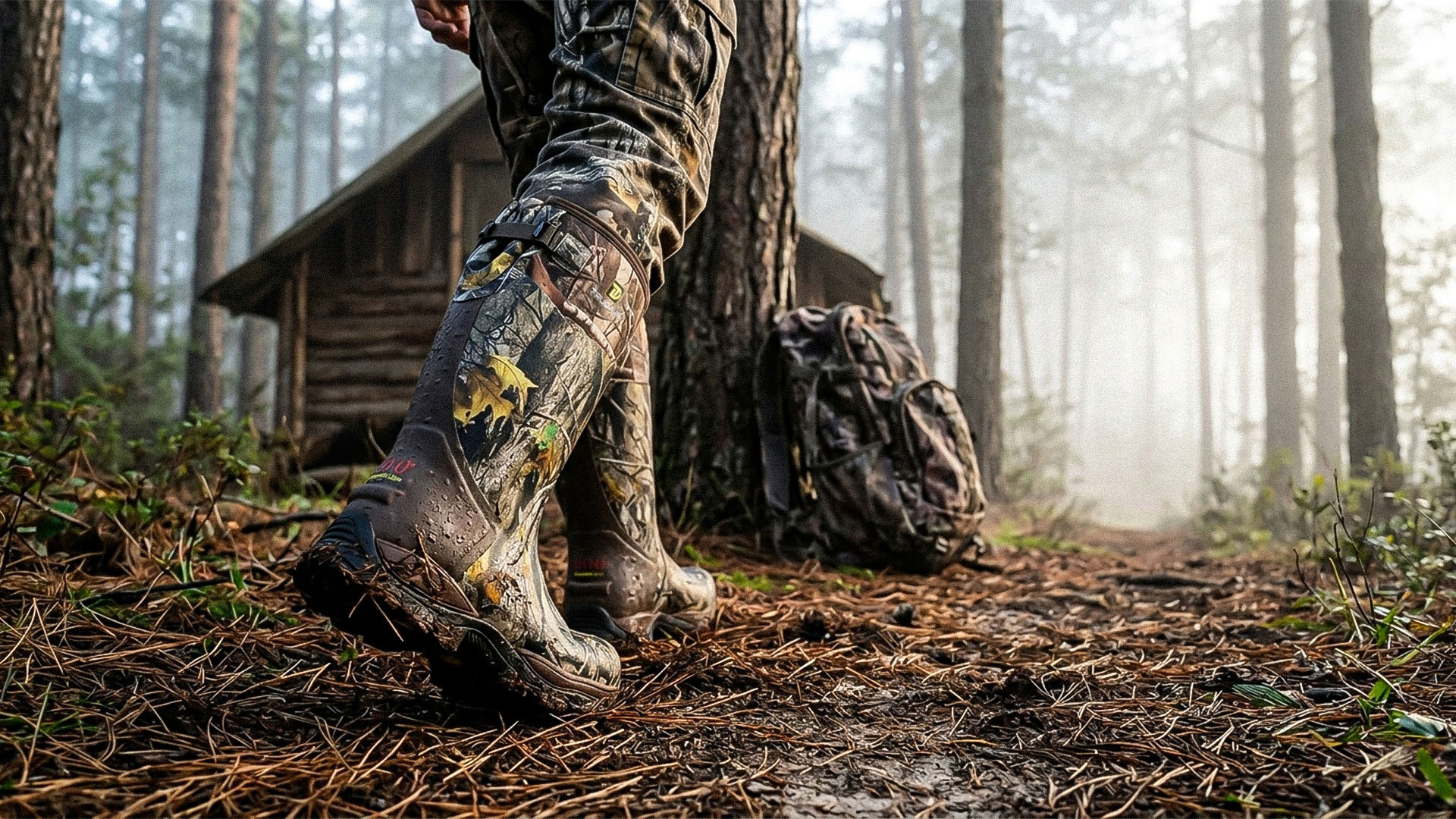
Hunters working these conditions may benefit from waterproof hunting boots for muddy Texas field hunting that provide secure heel retention, reliable traction, and enough waterproof height without becoming excessively heavy for carrying gear across large fields.
The right boot needs to handle both mud and walking.
One without the other creates problems.
Mud Suction Makes Loose Boots Miserable
Sticky clay can hold a boot while the foot tries to move forward.
If the heel slips inside, every step creates friction.
That leads to:
- Blisters
- Fatigue
- Poor balance
Choose a secure fit.
Take shorter steps through deep mud.
Use firmer field ridges and tractor lanes where allowed.
The shortest route is not always the easiest route.
Insulation Should Match the Hunt
Texas crane hunting can range from mild to very cold depending on weather.
Do not automatically choose the heaviest insulated boot available.
Consider:
- Temperature
- Wind
- Walking distance
- Time sitting
- Mud depth
Hunters carrying decoys generate significant heat.
Too much insulation leads to sweat.
Sweat becomes cold when the hunt becomes stationary.
Balance matters.
Waterproofing Helps Even Without Standing Water
Wet crop residue transfers moisture constantly.
Walking through damp stubble can soak non-waterproof footwear without ever stepping into a puddle.
Waterproof boots help protect against:
- Dew
- Wet vegetation
- Mud
- Shallow standing water
Keep water from entering over the top.
Gaiters may help in some conditions.
Frozen Ruts Are a Morning Hazard
A muddy field can freeze overnight.
Deep tire tracks become hard uneven trenches.
Walking before daylight requires caution.
Use a headlamp.
Avoid stepping directly into frozen ruts when possible.
A rolled ankle can end the hunt before the first flock leaves the roost.
Heavy Gear Increases Fall Risk
Carrying multiple decoys or a loaded bag changes balance.
Do not stack so much equipment that you cannot see the ground.
Make multiple trips if necessary.
A few extra minutes of setup is better than falling while carrying expensive equipment or a firearm.
Wind Chill Can Be Severe
Flat prairie and Panhandle agricultural country offer little shelter.
Strong winter wind can produce dangerous cold even when the air temperature appears manageable.
Protect:
- Hands
- Face
- Feet
- Core
Use layers.
Keep dry insulation available.
A field blind may reduce visibility to wind but still allow significant cold exposure.
Bring Dry Gloves
Wet decoys, mud, and field vegetation can soak gloves.
Cold hands reduce safe firearm control and equipment handling.
Carry a dry spare pair in waterproof storage.
Small comfort items become safety items when temperatures drop.
Watch Weather Before Committing to Remote Roads
Rain, snow, and freezing temperatures can change rural roads rapidly.
Know whether roads are:
- Public
- Private
- Maintained
- Clay
- Gravel
Ask landowners about trouble spots.
Do not create a recovery problem with the vehicle before the hunt even begins.
Sometimes parking farther away is the safer choice.
Respect Every Gate
Crane hunting often happens on active farms and ranches.
Follow exact landowner instructions regarding gates.
Do not assume every gate should be closed.
Some may be intentionally open for livestock.
Leave them as instructed.
One mistake can create a major problem for the property owner.
Stay Away From Livestock
Agricultural crane fields may overlap cattle operations.
Know where animals are before setting up.
Never shoot toward:
- Cattle
- Horses
- Barns
- Feed areas
- Farm workers
If livestock enters the hunting zone, stop until the situation is safe.
The hunt is secondary to ranch operations.
Pick Up Shells and Trash
A good crane hunter should leave the field cleaner than it was before the hunt.
Collect:
- Empty shells
- Food wrappers
- Blind materials
- Broken decoy parts
- Other trash
Do a final check after packing gear.
Landowners notice respect.
Future access often depends on it.
Do Not Leave Deep Foot or Vehicle Damage Unnecessarily
Hunters cannot avoid every footprint in mud.
But unnecessary vehicle ruts and repeated traffic through crops should be avoided.
Use approved routes.
Carry gear rather than driving when conditions demand it.
Good hunting access survives because hunters recognize that the field has value beyond hunting.
Public-Land Crane Opportunities Can Have Special Rules
Where public crane hunting opportunities exist, regulations may differ significantly from surrounding private land.
Check specific management-area requirements for:
- Access times
- Permits
- Ammunition
- Parking
- Hunt zones
- Shooting hours
Do not rely only on general statewide regulations.
Area rules can be more restrictive.
Migratory Bird Regulations Must Be Checked Every Season
Sandhill crane hunting is regulated and opportunities vary by state, zone, and season.
Hunters should verify current requirements for:
- Open hunting areas
- Season dates
- Permits
- Bag limits
- Possession limits
- Shooting hours
- HIP registration
- Legal methods
- Shotgun restrictions
- Species identification
- Baiting regulations
Use current official wildlife-agency and federal information.
This article should never substitute for current regulations.
Some Areas May Require Special Crane Permits
Crane management can include specific permit structures or zones.
Do not assume a normal hunting license alone is sufficient.
Check well before the hunt.
Permit deadlines or additional requirements may exist.
Preparing after birds arrive may be too late.
Common Sandhill Crane Hunting Mistakes
Setting Up in the Right Field but Wrong Spot
Scout the exact feeding zone.
Hiding From Ground Level Instead of From Above
Cranes inspect the setup from the sky.
Filling the Landing Pocket With Decoys
Leave birds a natural place to finish.
Moving When Birds Circle
Stillness becomes increasingly important as cranes approach.
Driving Into Wet Fields
Mud damage can destroy landowner relationships.
Wearing Loose or Leaky Boots
Sticky mud demands secure waterproof footwear.
Assuming Large Birds Are Close
Cranes can appear much closer than they really are.
Shooting Into the Flock
Pick one bird and maintain a safe background.
Ignoring Migratory Bird Regulations
Crane hunting can involve detailed federal and state requirements.
Frequently Asked Questions
Where do sandhill cranes feed in Texas?
Depending on region and current conditions, cranes may use harvested grain fields and other agricultural areas within traveling distance of suitable roosting or resting habitat.
Is rain good for sandhill crane hunting?
Rain can create fresh feeding and water conditions, but it may also shift the exact landing zone and make field access significantly more difficult.
How important is scouting for crane hunting?
Extremely important. Hunters should locate the exact field and exact portion of the field birds are currently using rather than relying only on historical locations.
Do sandhill cranes have good eyesight?
Yes. Their open-country lifestyle allows them to detect movement and unnatural setups from considerable distances, making concealment especially important.
What boots are best for crane field hunting?
Waterproof hunting boots with secure heel fit, strong mud traction, appropriate insulation, and enough comfort for carrying decoys through wet agricultural ground are a practical choice.
Are crane hunting regulations the same everywhere?
No. Seasons, zones, permits, bag limits, and other rules vary by jurisdiction. Hunters must verify current local and federal requirements before hunting.
Final Thoughts
Sandhill crane hunting is a game of details visible from the sky.
The field may be correct.
The crop may be correct.
The wind may be correct.
But one unnatural blind, one poorly positioned truck, or one hunter moving at the wrong moment can change the entire approach.
Scout the exact feed.
Study live flocks.
Build the spread around how cranes actually land.
Hide everything.
Protect the farmer’s ground after rain.
Wear footwear that can handle sticky mud without making every decoy trip miserable.
Choose shots carefully.
Identify every bird.
And pay attention when a flock refuses to finish.
The cranes are telling you something about the setup.
The hunters who keep learning from those refusals are usually the ones who eventually watch a flock commit all the way.
