
A dove field can change overnight.
One afternoon, birds pour into a dry harvested field along the same flight line every twenty minutes.
Then a summer thunderstorm rolls through.
Rain pounds the ground.
Low spots fill with water.
Dust turns to mud.
Standing vegetation bends.
By the following morning, the field looks almost the same from the road—but the doves are landing somewhere else.
That is one of the biggest mistakes early-season dove hunters make.
They remember where birds were yesterday instead of scouting where birds want to be today.
Mourning doves are highly mobile birds. Their daily movements are influenced by food, water, roosting cover, weather, disturbance, and field conditions.
A storm can change several of those factors at once.
Hunters who understand how doves respond to wet agricultural fields can adjust quickly rather than sitting beneath an empty flight line all morning.
Dove Hunting Begins With Daily Scouting
Good dove hunting is often more about observation than complicated calling or concealment.
Birds reveal their routine if you watch long enough.
Before hunting, scout during the same general period you plan to hunt.
Pay attention to:
- Where birds enter the field
- Where they land
- Which direction they leave
- Nearby roosting trees
- Water sources
- Power lines
- Fence lines
- Bare ground
- Grain concentration
- Hunter pressure
Do not simply count birds.
Watch what they are doing.
Twenty doves flying over a field without landing are less valuable than six birds repeatedly dropping into one specific corner.
Rain Can Move the Feeding Zone
A harvested grain field may contain food across many acres.
Doves still do not use every acre equally.
After heavy rain, low ground can become saturated.
Mud may cover exposed seed.
Standing water can make landing awkward.
Birds may shift toward:
- Higher field edges
- Gravelly soil
- Sandy sections
- Short stubble
- Dry tractor lanes
- Harvested ridges
- Areas where grain remains exposed
The shift may be small.
Birds feeding two hundred yards from yesterday’s location can make an established hunting position feel completely dead.
Re-scout after significant weather changes.
Bare Ground Matters
Mourning doves often prefer feeding areas where they can walk easily and reach seed from exposed ground.
Dense vegetation can make feeding more difficult.
That is why productive dove areas often include:
- Short crop stubble
- Disked strips where legal agricultural practices create suitable conditions
- Gravel lanes
- Sparse weed cover
- Harvested field edges
- Dry dirt
- Open rows
After rain, look for places where bare ground remains visible.
A muddy low spot surrounded by tall vegetation may hold little activity while a higher dry strip nearby attracts steady birds.
Food Must Still Be Available
A field can look perfect and still lack enough food.
Doves may feed on seeds associated with crops and naturally occurring plants, depending on the region and season.
Potential feeding areas can include fields involving:
- Sunflowers
- Wheat
- Millet
- Corn
- Sorghum
- Other grain crops
- Natural seed-producing vegetation
The important factor is current availability.
Harvest, rain, wind, livestock, farming activity, and other wildlife can all change how much usable seed remains.
Watch feeding birds before deciding where to sit.
Understand Migratory Bird Baiting Rules
Dove hunting is subject to migratory bird regulations.
Hunters need to understand the difference between legal hunting over normal agricultural operations and illegal baiting.
Do not scatter grain or manipulate food specifically to create an illegal hunting situation.
Field preparation and agricultural practices are regulated, and details can vary depending on circumstances.
Before hunting a field, verify current federal and state guidance regarding:
- Baiting
- Agricultural practices
- Wildlife food plots
- Manipulated crops
- Harvest operations
When in doubt, consult the responsible wildlife agency before hunting.
A field full of birds is not worth a violation.
Storms Can Knock More Seed Onto the Ground
Rain and wind sometimes change food availability in productive fields.
Wind may shake seed loose.
Standing plants may lean.
Harvest residue may move.
Birds can respond quickly when new feeding opportunities appear.
After a storm, inspect fields from a distance and watch where birds concentrate.
Do not assume every storm hurts dove hunting.
Some weather events may make a particular section more attractive.
The birds will tell you which one.
Flight Lines Matter More Than the Middle of the Field
Doves often use consistent routes between feeding fields, water, and roosting areas.
These travel routes are commonly called flight lines.
Look for birds following:
- Tree lines
- Fence rows
- Creek corridors
- Power lines
- Field corners
- Low gaps
- Roads
- Shelterbelts
A hunter sitting beneath a strong flight line may get opportunities even when birds are not landing immediately nearby.
The best setup sometimes lies between resources rather than directly over the feeding area.
Field Corners Often Create Natural Funnels
Agricultural fields are rarely perfect rectangles from a bird’s perspective.
Corners can concentrate movement because they bring several features together.
A productive corner may include:
- Trees
- Fence
- Power line
- Water
- Short stubble
- Nearby roosting cover
Birds entering a large field may naturally pass over that point.
Scout corners carefully.
A location that appears insignificant on a satellite image may become obvious when twenty birds use the same approach at sunset.
Tree Lines Provide Perches and Navigation
Doves often use tall trees around feeding areas.
Trees can provide:
- Roosting cover
- Resting perches
- Visual landmarks
- Staging locations
Hunters should watch where birds leave a tree line and where they return.
Do not necessarily sit directly underneath the largest tree.
Birds may approach or leave from one specific end.
Positioning slightly off the main tree line can create better crossing opportunities while making concealment easier.
Dead Trees Can Be Especially Attractive
A dead tree with exposed branches provides an easy landing location.
Doves may use it to:
- Rest before entering a field
- Observe activity
- Stage before watering
- Regroup
If birds repeatedly land in the same dead tree, the surrounding flight line may be worth hunting.
However, evaluate safe shooting directions.
Do not fire toward buildings, roads, livestock, or other hunters simply because birds are using a convenient perch.
Power Lines Can Reveal the Pattern
Doves frequently perch on utility lines in agricultural areas.
These lines are useful scouting clues.
Watch which sections birds prefer.
A cluster of doves sitting above one field may indicate nearby feeding or watering activity.
Never shoot at birds sitting on power lines, utility structures, transformers, or other infrastructure.
Use the observation to understand movement.
Hunt the legal and safe flight path away from the equipment.
Water Becomes Important in Hot Weather
Early dove seasons often occur during warm conditions.
Water can be a major part of daily bird movement.
Doves may visit:
- Farm ponds
- Stock tanks
- Creek edges
- Shallow mud banks
- Small reservoirs
- Irrigation areas
- Livestock water sources
They often prefer open approaches and firm banks where they can drink without moving through dense vegetation.
A water source becomes more valuable when it sits between feeding and roosting habitat.
Rain Can Create Temporary Water Everywhere
A storm can weaken a previously strong waterhole pattern.
Before rain, one stock pond may serve birds from a large area.
After rain, temporary puddles appear in:
- Roads
- Fields
- Ditches
- Depressions
- Tire tracks
Birds no longer need to visit the traditional pond as predictably.
This is why hunting a water source immediately after heavy rain can disappoint hunters.
When temporary water is abundant, focus more on feeding areas and flight lines.
Small Gravel Banks Can Stay Productive
Even after rain, some water sources remain attractive because the shoreline provides easy access.
Doves often prefer locations with:
- Bare mud
- Short grass
- Gravel
- Open visibility
- Gradual shoreline
Dense cattails or brush may make another pond less convenient.
Scout actual bird use rather than simply selecting the largest water source.
Morning and Evening Patterns Can Be Different
Morning dove movement does not always match evening movement.
Birds may leave roosts at sunrise and move toward food.
Later, they may travel toward water before returning to roosting cover.
Scout both periods when possible.
A field corner that produces excellent morning shooting may be quiet in the evening.
Conversely, a pond edge may become active only during the final hour of daylight.
Build separate morning and evening plans.
Wind Changes How Doves Approach
Wind influences flight direction, speed, and shot opportunities.
On windy days, doves may fly lower and use terrain or tree lines for protection.
Watch for routes along:
- Leeward tree lines
- Creek bottoms
- Low field edges
- Shelterbelts
- Rolling terrain
A strong wind can also make shooting more difficult.
Birds may change direction quickly.
Do not assume a flight line observed during calm weather will look identical in twenty-mile-per-hour wind.
Cloud Cover Can Change Visibility
Bright early-season sunlight can make incoming doves easier to see from some directions and difficult from others.
Cloud cover changes contrast.
When selecting a setup, consider where the sun will be during the hunt.
Avoid facing directly into bright morning or evening light if another safe position exists.
Better visibility creates more time to:
- Identify birds
- Prepare safely
- Track flight direction
- Choose responsible shots
Comfort matters, but seeing the bird clearly matters more.
Concealment Does Not Need to Be Complicated
Doves are alert, but hunters do not usually need a large blind.
Natural concealment may include:
- Field-edge brush
- Tall weeds
- Hay bales with landowner permission
- Tree shadows
- Fence-line vegetation
- Standing crop edges where legal
Sit still.
Avoid silhouetting yourself.
Break up the body outline.
Limit unnecessary movement when birds approach.
A simple shaded position often works better than an oversized blind that looks unnatural in an open field.
Shade Makes Early-Season Hunts Easier
September-style dove hunting can be hot.
Whenever possible, choose a setup that offers shade without sacrificing the flight line.
Shade helps hunters remain:
- More comfortable
- More patient
- Less dehydrated
- Less likely to move constantly
A comfortable hunter usually hunts more effectively.
Do not sacrifice safety or field position solely for shade, but consider it when two setups are otherwise similar.
Summer Storms Create Mud Quickly
Agricultural fields can become difficult to walk after a thunderstorm.
Clay soil sticks to boots.
Low ground becomes slick.
Ruts fill with water.
Short walks while carrying a stool, shells, shotgun, water, and harvested birds become harder than expected.
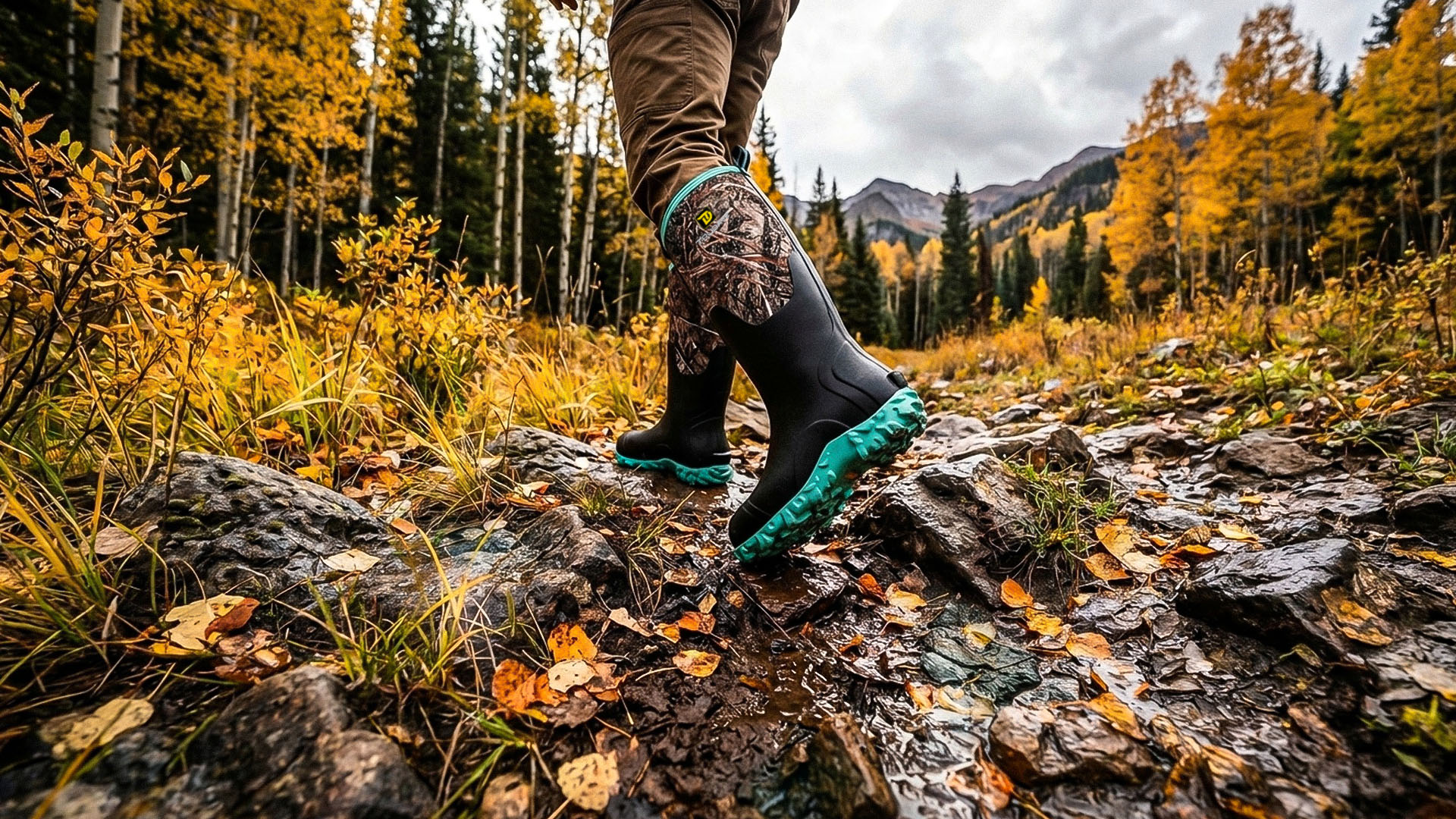
Hunters covering wet farm ground may benefit from lightweight waterproof hunting boots for early-season field hunting that provide wet-grass protection, secure heel retention, and enough traction for mud without the excessive insulation of cold-weather footwear.
Early-season footwear should keep the hunter mobile without trapping unnecessary heat.
Heavy Rubber Boots Are Not Always Necessary
Tall rubber boots work well in mud and shallow standing water, but they may be warmer than necessary for a long early-season hunt.
If the field contains mostly:
- Wet grass
- Shallow mud
- Gravel roads
- Short puddles
a lightweight waterproof hunting boot may provide better walking comfort.
If the field requires deeper water crossings, additional height may be useful.
Match footwear to actual conditions instead of assuming one boot style fits every wet hunt.
Breathability Matters in Warm Weather
Keeping outside water away from your feet is only half the challenge.
Sweat can create moisture inside the boot.
For warm-weather dove hunting, consider:
- Lightweight socks
- Appropriate waterproof construction
- Reasonable boot weight
- Proper sizing
- Airflow during breaks
Avoid wearing heavy winter socks simply because the boots feel slightly loose.
Correct fit is better than filling space with excessive insulation.
Mud Can Hide Farm Hazards
Wet fields contain more than soft ground.
Watch for:
- Deep tractor ruts
- Broken stalks
- Wire
- Irrigation equipment
- Holes
- Drainage channels
- Farm machinery
- Culverts
Use a headlamp when entering before daylight.
Do not stare at flying birds while walking through uneven ground.
Stop before watching distant flocks.
Good footing reduces accidents.
Vehicles Can Damage Wet Fields
Do not drive into a muddy field simply because you did during dry scouting.
Ask the landowner first.
Wet soil can rut easily.
Damage may affect crops, future planting, drainage, and your hunting permission.
Park on firm ground and walk when necessary.
A longer gear carry is far better than losing access.
Landowner Relationships Matter
Many excellent dove opportunities occur on private agricultural property.
Treat access seriously.
Before hunting, confirm:
- Where to park
- Which fields are included
- How many hunters may come
- Where livestock are
- Which roads may be used
- Whether gates should remain open or closed
- Any no-shoot areas
- Whether other hunters are expected
After the hunt:
- Pick up trash
- Collect empty shells where practical
- Leave gates correctly
- Avoid crop damage
- Thank the landowner
One respectful season can lead to years of access.
Multiple Hunters Need Defined Shooting Zones
Dove fields often contain several hunters spaced around the perimeter or through designated positions.
Before shooting begins, everyone should know:
- Hunter locations
- Safe shooting zones
- Roads
- Buildings
- Livestock
- Parking areas
- Dog locations
- Retrieval boundaries
Do not take low shots toward another hunter.
Do not shoot at birds that are clearly working someone else’s position when the angle creates risk.
Communication is part of field safety.
Eye and Ear Protection Are Worth Using
Dove shooting can involve significant numbers of shots during a productive hunt.
Hearing protection is valuable.
Eye protection can protect against:
- Shot fragments
- Vegetation
- Dust
- Ejected shells
- Debris
Choose equipment that allows you to remain aware of other hunters and approaching birds.
Protective gear should become normal hunting equipment, not something reserved only for the range.
Doves Can Humble Good Shooters
A mourning dove is small, fast, and capable of quick changes in direction.
Missing is part of dove hunting.
Do not respond by taking longer or lower-percentage shots.
Focus on:
- Smooth gun mount
- Follow-through
- Reasonable range
- Safe background
- Clean opportunities
A nearby crossing bird may provide a much better shot than a distant bird flying directly away.
Discipline saves ammunition and reduces wounded birds.
Practice Before the Season
Dove hunting exposes poor shotgun fundamentals quickly.
Before the opener, spend time practicing safe shotgun mounting and moving targets at an appropriate shooting facility.
Focus on:
- Crossing targets
- Angled targets
- Smooth mounting
- Follow-through
- Changing target direction
The objective is not firing as fast as possible.
It is building a repeatable movement that works when a dove suddenly appears over the tree line.
Do Not Shoot Birds You Cannot Identify
Agricultural fields can contain many bird species.
Never fire at a small bird simply because it flies like a dove from a distance.
Know how to identify legal species in your area.
Pay attention to:
- Size
- Shape
- Wing pattern
- Tail
- Flight
- Calls
Species and hunting regulations vary by region.
Positive identification comes before the shot.
Retrieval Can Be Harder Than Expected
A dove falling into tall grass, standing crops, weeds, or muddy ground can disappear surprisingly well.
Mark the fall immediately.
Choose a fixed reference such as:
- Fence post
- Tree
- Field row
- Weed patch
- Utility pole
- Decoy location
Walk directly toward the mark.
Do not continue shooting while losing track of a bird already down.
Responsible recovery is part of the hunt.
Dogs Can Help With Retrieval
A trained retriever can be useful in fields with tall vegetation or heavy cover.
Early-season heat requires careful management.
Dogs can overheat quickly while making repeated retrieves.
Provide:
- Water
- Shade
- Rest
- Controlled retrieve frequency
Watch for signs of heat stress.
Do not work a dog continuously because birds are flying.
The dog’s safety matters more than another opportunity.
Check Dogs for Grass Seeds and Cuts
Agricultural edges can contain:
- Grass awns
- Burrs
- Sharp stalks
- Wire
- Mud
- Thorns
Inspect the dog’s:
- Eyes
- Ears
- Paws
- Legs
- Coat
during and after the hunt.
Small plant material can create bigger problems if ignored.
Heat Is One of the Biggest Early-Season Risks
Many dove hunts take place in hot weather.
Hunters often underestimate heat because much of the hunt involves sitting.
But setting decoys, walking fields, retrieving birds, and carrying gear can raise body temperature quickly.
Bring more water than you expect to need.
Use shade.
Watch for:
- Headache
- Dizziness
- Nausea
- Confusion
- Unusual weakness
Stop when conditions become unsafe.
A limit of birds is never worth heat illness.
Thunderstorms Require Immediate Respect
Early-season dove weather can change quickly.
Open fields provide poor lightning protection.
If thunderstorms approach, leave.
Do not shelter:
- Under an isolated tree
- Beside a wire fence
- In the middle of an open field
- Near tall metal equipment
Monitor weather before and during the hunt.
A few extra birds are not worth remaining in a lightning storm.
Afternoon Storms Can Improve the Next Hunt
Even when a storm ends one afternoon’s hunt, it may create useful scouting conditions for the next morning.
Check how the weather changed:
- Feeding zones
- Puddles
- Grain exposure
- Flight lines
- Field access
- Mud
- Bird concentration
The storm becomes information.
Hunters who return without re-scouting miss the opportunity to adjust.
Public Dove Fields Can Change Quickly
Wildlife management areas and public dove fields often receive significant opening-week pressure.
Bird patterns may change within hours.
Doves may begin using:
- Field edges
- Smaller secondary openings
- Water away from parking
- Flight lines outside the main concentration
- Nearby public parcels
- Areas farther from shooting pressure
Arrive with more than one setup in mind.
Do not crowd other hunters.
A slightly less productive field with safe spacing may provide a better overall hunt.
Opening Day Is Not the Whole Season
Some hunters treat dove hunting as a one-day event.
Bird numbers and field conditions continue changing after opening day.
Later opportunities may develop after:
- New migration
- Harvest changes
- Rain
- Cold fronts
- Reduced hunting pressure
- New food availability
Keep scouting.
A quiet field one week can become active the next.
Dove hunting rewards hunters who follow current birds rather than traditional dates.
Cold Fronts Can Change Bird Numbers
Migratory movement can bring new birds into an area.
After weather changes, a field that had become quiet may suddenly show increased activity.
Recheck productive food and water locations.
Do not assume local birds represent the entire season.
Migration can refresh hunting opportunities.
Always Verify Current Regulations
Mourning doves are migratory game birds, and hunting requirements can include federal and state rules.
Before hunting, verify current requirements involving:
- Season dates
- Daily bag limits
- Possession limits
- Shooting hours
- Hunting licenses
- HIP registration
- Shotgun capacity
- Legal species
- Baiting rules
- Public-land regulations
Use current official wildlife-agency information.
Regulations can change, and field-specific rules may apply.
Common Dove Hunting Mistakes After Rain
Hunting Yesterday’s Flight Line
Storms can move feeding and watering patterns.
Ignoring Bare Ground
Doves often prefer open feeding surfaces where seed is accessible.
Assuming the Main Pond Is Still Important
Rain may create temporary water across the landscape.
Driving Into Wet Agricultural Ground
Mud damage can cost future access.
Wearing Heavy Winter Footwear
Early-season hunts usually require lighter waterproof protection and breathability.
Facing the Sun
Poor visibility reduces preparation time and safe shot selection.
Shooting Too Far
Doves are difficult enough at reasonable range.
Losing Marked Birds
Always prioritize retrieval.
Forgetting Migratory Bird Rules
Agricultural fields still require compliance with baiting and other regulations.
Frequently Asked Questions
Is dove hunting good after rain?
It can be. Rain may change food availability, create new water, move birds toward higher ground, and alter established flight lines, so fresh scouting is important.
Where do doves go after heavy rain?
They may favor higher, firmer feeding ground, gravelly areas, short stubble, dry field edges, and new temporary water sources.
What is the best place to sit in a dove field?
Look for active flight lines, field corners, tree lines, water approaches, bare feeding ground, and locations birds are currently using.
Do doves need water every day?
Water can strongly influence dove movement, especially during hot conditions, though recent rain may create many temporary drinking options.
What should you wear for early-season dove hunting?
Lightweight clothing, sun protection, and footwear appropriate for heat, wet grass, mud, and agricultural terrain are useful.
What boots work best after rain in a dove field?
Lightweight waterproof hunting boots with reliable mud traction, secure fit, and enough breathability for warm-weather walking are a practical option.
Final Thoughts
Dove hunting looks simple because the landscape is open.
That does not make the birds predictable.
A summer storm can move the feeding zone.
Create new water.
Change field access.
Expose new seed.
Turn a dry tractor lane into mud.
And shift a flight line several hundred yards overnight.
The hunter who returns to yesterday’s spot may spend the morning watching empty sky.
The hunter who scouts again sees the change.
Watch where birds actually land.
Find the dry ground.
Study the corners, trees, water, and flight lines.
Protect the farmer’s field.
Keep your gear light enough for warm weather.
Wear footwear that can handle wet grass and mud without turning an early-season hunt into a sweaty march.
And remember: the storm does not necessarily ruin the dove field.
Sometimes it simply moves the best seat.
