
A winter farm can look almost too clean to hold rabbits.
Harvested fields stretch between fence lines. The grass is brown. Frost covers the low spots, and the bare hardwoods make every brush pile seem visible from a hundred yards away.
Then you reach the part of the property nobody bothers to clean up.
An old fence row.
Blackberry canes.
A collapsed pile of branches.
Tall weeds around a rusted gate.
A ditch filled with grass, briars, and last summer’s vegetation.
You take three more steps.
A cottontail explodes from beneath the brush and disappears along the field edge before you can decide whether you had a safe shot.
That is classic eastern cottontail hunting.
The best rabbit habitat is often not the biggest patch of cover.
It is the messy transition between two different types of ground.
Field and woods.
Pasture and brush.
Fence and ditch.
Crop edge and abandoned corner.
Cottontails survive by staying close to food while never being more than a few jumps from security.
Once hunters understand that relationship, rabbit country becomes much easier to read.
Cottontails Are Edge Specialists
Eastern cottontails can live in a wide range of environments, but they often thrive where habitat types meet.
Productive rabbit cover may include:
- Brushy fence rows
- Overgrown field corners
- Blackberry patches
- Old farm lanes
- Hedgerows
- Drainage ditches
- Brush piles
- Young clear-cuts
- Orchard edges
- Abandoned homesteads
- Tall grass beside crops
- Shrubby creek banks
The common feature is structure.
Rabbits need enough cover to disappear quickly while remaining close to feeding areas.
A huge open pasture may provide grass but little security.
A dense mature forest may provide shelter but limited ground-level food.
The transition between them can be ideal.
Start With the Ugliest Cover
Hunters naturally notice clean trails and open woods.
Rabbits often prefer exactly the opposite.
A productive cottontail patch may look like:
- Tangled briars
- Fallen limbs
- Rusted fence wire
- Tall weeds
- Dead grass
- Small shrubs
- Brush pushed into a corner
- Overgrown machinery lanes
If the cover looks inconvenient to walk through, that may be a good sign.
Cottontails survive by making predators work.
A hawk wants visibility.
A fox wants room to chase.
A hunter wants an open shot.
Dense, low cover reduces all three advantages.
Fencerows Can Be Rabbit Highways
Old agricultural fence lines often create excellent cottontail habitat.
Birds spread seeds along them.
Shrubs grow where mowing stops.
Briars wrap around posts.
Grass remains taller beneath wire.
Over time, the fence becomes a narrow wildlife corridor.
Rabbits may use it to travel between:
- Crop fields
- Woodlots
- Brush piles
- Barn areas
- Ditches
- Pastures
- Creek bottoms
A fencerow only ten feet wide can provide enough cover to move across otherwise open ground.
When hunting these areas, do not stare only at the fence.
Watch the thickest escape cover connected to it.
A rabbit may run twenty yards inside the row before breaking into the open.
Brush Piles Are Classic Rabbit Cover
Farm brush piles are rabbit magnets when located near food and additional cover.
Productive piles may come from:
- Tree trimming
- Logging
- Storm damage
- Orchard maintenance
- Field clearing
- Fence repair
The best piles usually contain both large and small material.
Large limbs create cavities.
Smaller branches create overhead protection.
Grass and weeds may eventually grow around the base.
A brush pile isolated in the middle of a bare field may receive occasional use.
A brush pile connected to a fencerow, old field, or woodlot can become a core part of a rabbit’s home area.
Do Not Walk Directly Onto the Brush Pile
One common mistake is walking straight toward obvious cover.
The rabbit may leave out the far side before you ever reach it.
Instead, approach from an angle.
Watch the escape side.
If hunting with a partner, one hunter can safely position where expected movement may become visible while the other slowly works the edge.
Communication and shooting zones should be established before anyone enters cover.
Never fire through brush toward another hunter.
The rabbit is not worth guessing where your partner might be.
Frost Can Make Rabbit Sign Easier to Read
A hard frost changes field-edge hunting.
Tracks become easier to see in soft soil, thin snow, or muddy areas where frost begins melting.
Frozen vegetation may also reveal rabbit trails.
Look for:
- Small tracks crossing farm roads
- Narrow tunnels through grass
- Droppings
- Clipped vegetation
- Frost knocked from plants
- Trails beneath fences
- Tracks around brush piles
Early in the morning, fresh movement may leave a visible path through frosted grass.
As the sun rises, those clues disappear.
This gives early hunters a brief window to read activity from the night before.
After Frost, Sunny Edges Can Improve
Cold mornings may encourage rabbits to use cover receiving direct sunlight.
South- and east-facing edges often warm earlier.
Look for:
- Sunny briar patches
- Brush piles exposed to morning sun
- Field edges protected from wind
- South-facing ditch banks
- Weed patches beside timber
- Warm fence corners
A rabbit may remain beneath cover while using the warmer microclimate.
Cold weather does not automatically push cottontails deep into timber.
Often, they stay near food but choose the most comfortable portion of the cover.
Wind Changes the Best Side of a Field
Strong wind can reduce rabbit activity in exposed areas.
Cottontails may favor the protected side of:
- Hedgerows
- Banks
- Brush piles
- Barns
- Tree lines
- Ditches
- Young timber
On windy days, search the leeward side first.
The same fencerow can hunt very differently depending on wind direction.
A sunny, protected brush patch may hold multiple rabbits while an exposed edge across the field appears empty.
Snow Can Concentrate Movement
Light snow creates excellent tracking conditions.
Heavy snow can change rabbit movement more dramatically.
Cottontails may use established tunnels and protected cover rather than moving through open ground.
After snow, check:
- Brush piles
- Dense hedgerows
- Pine edges
- Old barns
- Fallen timber
- Overgrown ditches
- Low conifer branches
- Rabbit trails beneath fences
Repeated tracks entering and leaving the same cover show where rabbits feel secure.
Do not follow every track randomly.
Use the trail network to identify the core cover.
Rabbit Trails Are Usually Smaller Than Hunters Expect
A cottontail does not require a deer-sized trail.
Its regular route may look like a narrow tunnel through dead grass.
Watch for vegetation parted only a few inches wide.
Good trails may run:
- Beneath fence wire
- Along ditch banks
- Through blackberry
- Under fallen limbs
- Between grass clumps
- Toward crop residue
Fresh droppings along the route increase confidence.
When several small trails converge on one brush pile or weedy corner, slow down.
Droppings Help Confirm Repeated Use
Rabbit droppings are small round pellets, commonly found near feeding or resting areas.
A few pellets may indicate casual use.
A concentration suggests rabbits spend more time nearby.
Check:
- Beneath low shrubs
- Around brush piles
- Inside grass tunnels
- Along field margins
- Under farm equipment stored outdoors
- Near feeding patches
Droppings are especially useful when combined with tracks and clipped plants.
One sign is interesting.
Three different signs in the same patch mean you should hunt it carefully.
Feeding Areas Explain Rabbit Location
Cottontails eat a variety of grasses, clovers, weeds, bark, twigs, and agricultural vegetation depending on season.
Useful feeding habitat can include:
- Clover patches
- Wheat
- Field grasses
- Weed seeds
- Garden edges where hunting access is appropriate
- Corn residue
- Soybean field margins
- Orchard vegetation
- Young woody growth
The important relationship is distance to cover.
A rabbit may feed in an open area at night but spend daylight only yards away inside briars.
Hunters should often target the security edge rather than the center of the feeding area.
Harvested Crop Fields Can Create Predictable Edges
After harvest, fields suddenly become more open.
Rabbits lose some seasonal concealment and may concentrate near permanent cover.
Search:
- Cornfield fence lines
- Soybean edges
- Ditches beside harvested crops
- Brush around field corners
- Overgrown waterways
- Small woodlots surrounded by fields
Crop harvest can make rabbits easier to pattern because the remaining cover becomes more valuable.
A tiny briar patch ignored in summer may become one of the strongest rabbit locations on the farm in winter.
Grassy Waterways Are Easy to Overlook
Many agricultural fields include grass strips designed to manage runoff.
These waterways can become excellent rabbit habitat if they contain enough height and nearby brush.
Look for:
- Tall grass
- Weedy margins
- Ditch intersections
- Small shrubs
- Culverts
- Brush at field edges
Rabbits may travel the waterway like a covered road through open farmland.
After rain or frost, tracks can reveal regular crossings.
Work these strips slowly.
A rabbit may remain hidden until you are almost beside it.
Ditches Provide More Cover Than They Appear To
Roadside and farm ditches create low terrain, tall grass, moisture, and escape structure.
They can be excellent cottontail habitat when hunting is legal and safe.
Focus on ditches connected to:
- Fields
- Brush piles
- Hedgerows
- Woodlots
- Creek bottoms
- Abandoned farm areas
Road safety is critical.
Never shoot toward or across public roads.
Do not hunt shoulders or rights-of-way without confirming local access and discharge rules.
The presence of rabbits does not make every ditch a legal hunting location.
Old Homesteads Can Hold Excellent Cover
Abandoned farmsteads may contain a mix of:
- Fruit trees
- Brush
- Tall grass
- Old fences
- Barn foundations
- Wood piles
- Shrubs
- Overgrown lanes
That habitat diversity can support cottontails.
However, old properties also contain hazards.
Watch for:
- Broken glass
- Rusted metal
- Wells
- Wire
- Nails
- Collapsed structures
- Equipment
- Hidden foundations
Do not enter abandoned buildings casually.
Hunt the outdoor edge cover instead.
Pine and Cedar Edges Can Be Winter Security Cover
Evergreens provide overhead protection from snow, wind, and predators.
Cottontails may use low branches and dense evergreen edges during winter.
Check where pines or cedars meet:
- Grass
- Fields
- Briars
- Fence rows
- Young hardwoods
Look beneath low limbs for droppings and tracks.
The darkest center of a cedar patch may be difficult to hunt.
The edge where the rabbit enters and exits is often more practical.
Young Forest Regeneration Can Be Excellent
Clear-cuts and timber harvest areas can produce dense rabbit habitat several years after cutting.
Young saplings, briars, weeds, and logging debris create food and cover.
Productive areas may include:
- Cutover edges
- Logging roads
- Slash piles
- Creek crossings
- Young hardwood sprouts
- Blackberry patches
Do not simply walk the middle of the cut.
Focus on edge transitions and areas where ground-level cover is thick but still huntable.
Stop More Than You Walk
Still-hunting rabbits is often most effective when the hunter pauses frequently.
A rabbit’s defense is remaining still.
If both hunter and rabbit are moving, the rabbit usually detects the hunter first.
Try this rhythm:
Walk several slow steps.
Stop.
Scan the nearest cover.
Look underneath brush.
Listen.
Then move again.
A nervous rabbit may eventually move because the hunter stopped nearby.
That movement reveals it.
Constant walking allows the rabbit to slip away while you are focused on your next step.
Look Under the Cover, Not Over It
Cottontails live close to the ground.
Hunters often look too high.
Search beneath:
- Briars
- Brush piles
- Fallen trees
- Farm equipment
- Grass clumps
- Low evergreen limbs
- Fence corners
A rabbit may appear as:
- One dark eye
- An ear
- A patch of brown fur
- A rounded shape
- Slight grass movement
Train yourself to look into shadow.
That is where rabbits survive.
Hunting With Beagles Changes the Experience
Beagles are strongly associated with rabbit hunting because they can trail cottontails through thick cover and keep a chase moving.
A good rabbit dog may turn invisible sign into an active hunt.
Hunters should position themselves based on likely circles and crossings rather than following directly behind the dogs.
Listen.
Watch known escape routes.
Maintain safe spacing.
A cottontail may circle back near the original jump location.
Rabbits Often Circle, but Not Perfectly
A rabbit chase may form a loop, but terrain and pressure change the shape.
The rabbit may use:
- Fencerows
- Ditches
- Brush piles
- Field corners
- Creek banks
- Old roads
It may cross one opening repeatedly.
Experienced hunters learn the cover and anticipate these crossing points.
Do not crowd the dogs.
Allow the chase to develop.
The rabbit may return naturally if it is not pressured from every direction.
Know Where the Dogs Are Before Shooting
Brushy farm country can hide dogs easily.
Never shoot at rustling grass or a quick brown shape without full identification.
Before firing, know:
- Rabbit location
- Dog location
- Partner location
- Safe background
- Road and house locations
- Livestock location
A beagle may be seconds behind the rabbit.
Controlled shooting is essential.
Hunting Without Dogs Can Be Very Effective
You do not need dogs to hunt cottontails.
Still-hunting and coordinated small pushes work well in good cover.
Without dogs, prioritize:
- Brush piles
- Fencerows
- Grassy waterways
- Field corners
- Young timber
- Briars
- Fresh tracks
Move slowly enough to create close flushes.
After a rabbit runs, watch where it stops.
It may not travel far before hiding again.
Do Not Chase a Running Rabbit Blindly
A cottontail often runs into another patch of cover and stops.
If you charge after it, you may push it again without getting a clear opportunity.
Instead:
- Watch the direction.
- Mark the last visible point.
- Pause.
- Approach from a useful angle.
- Scan before entering the cover.
The rabbit may be sitting only a short distance away.
Patience can create a second opportunity.
Frosty Grass Creates Wet Feet Quickly
A frozen-looking field edge can still soak footwear.
As frost melts, grass transfers water to boots and pants with every step.
Add muddy field roads, shallow ditches, and wet brush, and small-game hunting becomes surprisingly wet.
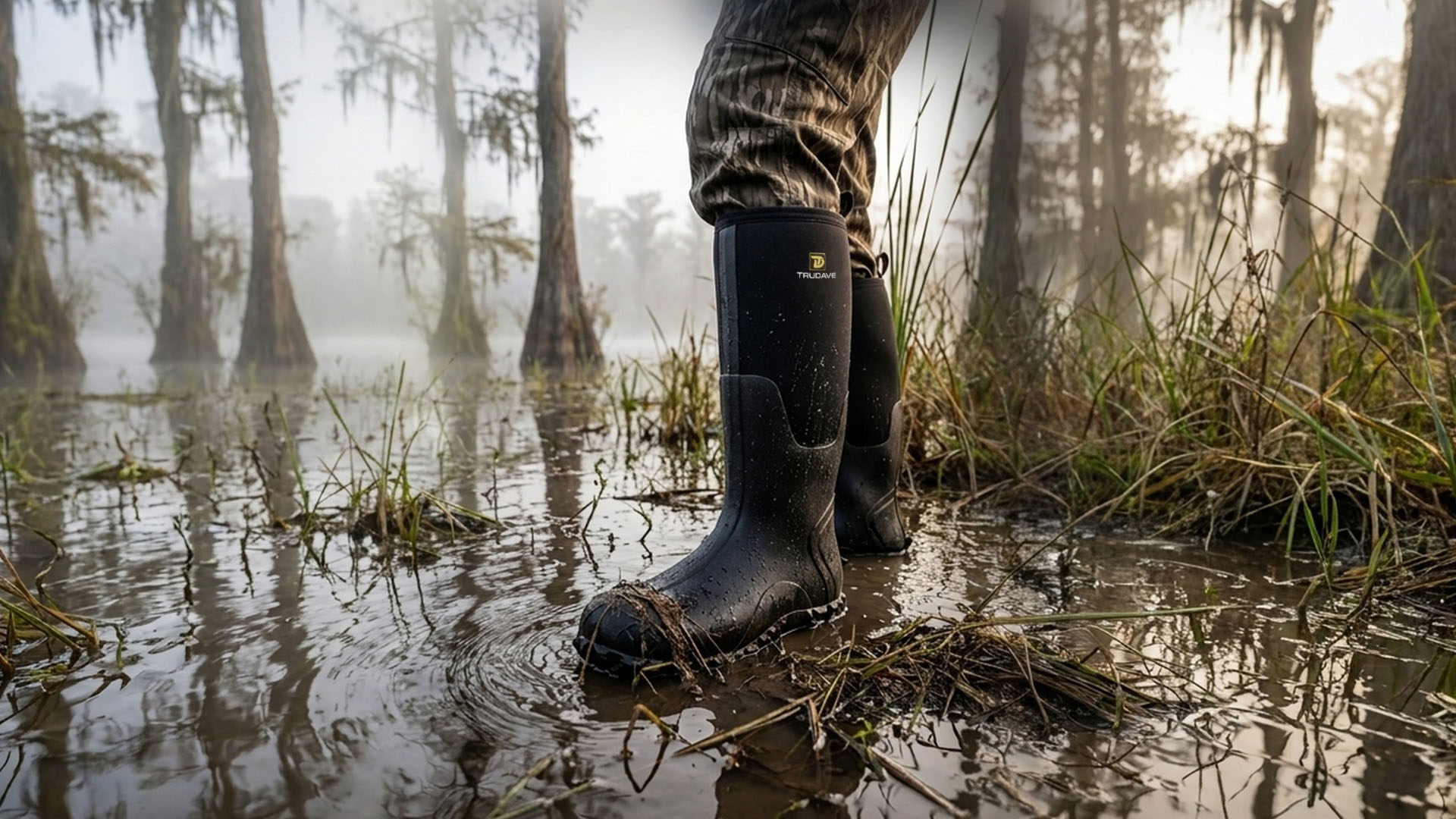
Hunters covering these conditions may benefit from waterproof hunting boots for wet field-edge hunting that provide dependable traction, a secure heel fit, and enough comfort for miles of stop-and-go walking.
The right boot should remain light enough for active hunting.
Cottontail hunting rarely requires the heavy insulation of stationary late-season big-game hunting unless temperatures truly demand it.
Boot Noise Matters
Rabbit hunters move close to cover.
A squeaky or stiff boot may alert animals before the hunter reaches the brush pile.
When selecting footwear, consider:
- Quiet flex
- Secure fit
- Waterproofing
- Wet-grass traction
- Mud performance
- Walking comfort
Test the footwear outdoors.
A boot that feels excellent in the house may sound very different in cold field conditions.
Mud Around Gates Can Be Deeper Than Expected
Farm gates concentrate livestock, vehicle, and human movement.
After rain, these locations can become extremely muddy.
Walk around the deepest holes where permission and fencing allow.
Do not damage gates or climb where you may bend them.
Follow landowner instructions.
A farm is a working property first and hunting ground second.
Barbed Wire Is a Constant Farm Hazard
Old fence lines can hide loose wire beneath grass and snow.
Watch for:
- Broken strands
- Rusted posts
- Woven wire
- Electric fence
- Wire wrapped around trees
Never climb a fence with a loaded firearm.
Use gates or safe crossing methods according to landowner permission.
Control dogs around livestock fencing.
One hidden strand can cause serious injury.
Livestock Requires Respect
Cottontail habitat often overlaps cattle and horse pastures.
Do not allow dogs to chase livestock.
Keep shooting direction away from animals, barns, equipment, and houses.
Ask the landowner where livestock will be during the hunt.
Avoid disturbing calving areas or other sensitive operations.
Good behavior protects access.
Permission Matters More Than the Rabbit
Some of the best cottontail habitat is on private farms.
A polite permission request can create valuable hunting opportunities.
When permission is granted:
- Park where instructed
- Close gates as requested
- Avoid crops
- Pick up shells
- Stay away from buildings
- Do not bring extra hunters without asking
- Report damaged fences or problems
- Thank the landowner
A successful relationship can last much longer than one hunting season.
Public Land Can Hold Cottontails Too
Wildlife management areas and other public lands may contain:
- Old fields
- Brushy borders
- Young cuts
- Hedgerows
- Food plots
- Pine edges
- Grass waterways
Search areas receiving active habitat management.
Rabbit hunting pressure is sometimes lower than deer or turkey pressure, but overlapping seasons require caution.
Know what other hunters may be pursuing.
Wear required visibility clothing.
Deer Seasons Create Additional Safety Concerns
Rabbit seasons often overlap deer seasons.
A rabbit hunter moving through brush may pass near tree stands or ground blinds.
Check current hunting calendars.
Wear appropriate hunter orange.
Avoid pushing obvious deer bedding cover near another hunter’s stand.
Communicate politely when you encounter people.
Small-game hunters and deer hunters can share public and private land when everyone uses common sense.
Brushy Cover Protects Rabbits—and Scratches Hunters
Briars, multiflora rose, blackberry, and thorny shrubs can tear ordinary clothing.
Brush pants or durable hunting pants make rabbit hunting more comfortable.
Eye protection is also valuable.
Branches and briars often sit at face height.
A simple pair of protective glasses can prevent a hunt-ending eye injury.
Ticks Can Remain Active During Mild Winters
Cold weather reduces insect activity, but mild days may still produce ticks depending on region.
Check:
- Clothing
- Skin
- Dogs
- Gear
after the hunt.
Use appropriate preventive measures.
Do not assume winter automatically eliminates tick exposure.
Shot Selection Requires Discipline
Cottontails often provide short, fast opportunities.
The rabbit may cross a narrow opening and disappear.
Do not let speed eliminate judgment.
Before shooting, confirm:
- Clear rabbit identification
- Dog location
- Partner location
- Safe background
- No livestock
- No buildings
- No road nearby
Farm country can contain people and structures behind vegetation.
Know what lies beyond the shot before the rabbit appears.
Recover Rabbits Immediately
A rabbit falling into briars or tall grass can become difficult to locate.
Mark the exact spot.
Use fixed landmarks.
Walk directly to the fall.
If the rabbit moves, look for:
- Fur
- Blood
- Tracks
- Disturbed vegetation
- Dog behavior
Do not immediately continue hunting.
Make every reasonable effort to recover game first.
Cold Weather Helps Game Care but Does Not Replace It
Winter temperatures can make rabbit care easier, but harvested game should still be handled properly.
Keep rabbits:
- Clean
- Cool
- Away from mud
- Protected from contamination
Follow current state rules regarding field dressing, transport, and possession.
Use proper food-safety practices during processing and cooking.
Regulations Must Be Checked Locally
Cottontail seasons, daily limits, possession limits, hunting methods, firearm restrictions, and public-land rules vary by state.
Before hunting, verify current regulations for:
- Season dates
- Bag limits
- License requirements
- Legal firearms
- Public-land restrictions
- Dog-use rules
- Hunter-orange requirements
- Roadside hunting restrictions
- Shooting-distance rules near buildings and roads
Use current official wildlife-agency information.
Do not rely on an older article as legal guidance.
Common Cottontail Hunting Mistakes
Walking Past Small Cover
A tiny brush pile or fence corner may hold a rabbit.
Walking Too Fast
Cottontails often rely on remaining motionless.
Looking Above the Cover
Search underneath briars, logs, and low evergreen limbs.
Hunting Feeding Areas Instead of Nearby Security Cover
Rabbits may feed in open ground mainly when hunters are absent.
Ignoring Wind-Protected Edges
Cold-weather rabbits may prefer sheltered cover.
Wearing Heavy or Leaky Footwear
Active field hunting requires lightweight comfort plus wet-grass and mud protection.
Chasing Every Rabbit Immediately
A rabbit may stop in the next patch of cover.
Losing Track of Dogs
Beagles can be very close behind a circling rabbit.
Ignoring Farm Hazards
Wire, livestock, equipment, and roads require constant awareness.
Frequently Asked Questions
Where is the best place to hunt cottontail rabbits?
Look for brushy field edges, fencerows, briar patches, old farm lanes, grass waterways, young timber, brush piles, and other cover close to feeding habitat.
Is rabbit hunting good after frost?
Yes. Frost can reveal tracks and movement through grass, while sunny protected cover may concentrate rabbits during cold mornings.
Can you hunt cottontails without dogs?
Absolutely. Still-hunting brush piles, field edges, fencerows, and young cover can be very effective.
Why do cottontails like brush piles?
Brush piles provide cavities, overhead protection, escape routes, and security close to feeding areas.
Are beagles necessary for rabbit hunting?
No, but trained beagles can help locate, trail, and circle rabbits through thick cover.
What boots are best for field-edge rabbit hunting?
Lightweight waterproof hunting boots with good traction, secure fit, and comfortable flex are useful for frost-covered grass, muddy farm roads, ditches, and long walking hunts.
Final Thoughts
Cottontail hunting does not require huge wilderness.
Sometimes the best rabbit cover is behind a barn.
Along an old fence.
Inside a blackberry patch.
Beside a harvested cornfield.
Or beneath the brush pile everyone else walked around.
The key is recognizing what the rabbit needs.
Food close by.
Cover immediately available.
A narrow trail to escape.
A dry place to sit.
And enough tangled vegetation to make predators work for every opportunity.
Walk slowly.
Stop often.
Look underneath the cover.
Read frost, mud, tracks, droppings, and clipped vegetation.
Keep your feet dry enough to stay in the field.
Respect farms, fences, livestock, and other hunters.
The cleanest-looking ground usually attracts people.
The messiest corner often belongs to the rabbits.
