
Mountain quail country can look like an upland hunter’s worst idea.
Steep slopes.
Brush-covered hillsides.
Creek canyons.
Young forest.
Loose rock.
Wet grass.
A hunter hears a covey somewhere below.
The birds call again.
He begins descending.
Brush closes around the trail.
The slope gets steeper.
Then the sound stops.
Nothing moves.
The hunter takes several more steps.
Suddenly, a mountain quail explodes uphill through the brush.
Another flies downhill.
Three more cross the canyon.
Within seconds, the entire covey disappears into terrain that looks almost impossible to hunt.
That is mountain quail hunting.
These birds live in country where elevation, brush, water, terrain, and escape cover all overlap.
Unlike open-country quail, mountain quail often use steep wooded environments where visibility is short and vertical movement matters as much as horizontal distance.
Successful hunters learn to think differently.
Do not ask only:
Where are the birds?
Ask:
Where can they feed?
Where is the water?
Where is the thick escape cover?
And where will they go when pressured?
That last question is especially important.
Mountain quail often use the landscape in three dimensions.
The hunter who understands that has a major advantage.
Mountain Quail Are True Western Brush Birds
Mountain quail occupy portions of western North America.
Productive habitat may include:
- Brushy mountain slopes
- Creek canyons
- Chaparral
- Young forest
- Riparian cover
- Shrubby clearcuts
- Oak woodland
- Mixed conifer edges
- Forest openings
Their habitat often looks much rougher than typical agricultural quail country.
The birds need:
- Food
- Water
- Dense security
- Travel cover
And much of that habitat exists on slopes.
Steep Terrain Is Part of the Habitat
Mountain quail are comfortable moving through terrain that slows hunters dramatically.
A hillside may include:
- Loose soil
- Rock
- Brush
- Fallen timber
The birds can move uphill, downhill, or across the slope quickly.
This creates one of the biggest hunting challenges.
The covey may be only seventy yards away.
Getting there may take fifteen minutes.
Vertical Movement Matters
Hunters often think only about forward movement.
Mountain quail can escape:
- Up slope
- Down slope
- Across a canyon
- Into brush above the hunter
When a covey flushes, watch elevation.
Do not simply mark horizontal distance.
A bird landing fifty yards away but one hundred feet higher may require a completely different approach.
Creek Canyons Are Excellent Places to Start
Mountain quail habitat often follows water.
Creek systems can provide:
- Dense vegetation
- Food
- Shade
- Travel corridors
Look for:
- Brushy creek edges
- Small side drainages
- Riparian benches
- Shrub transitions
A narrow canyon can concentrate birds from a much larger mountain.
Small Creeks Can Hold Big Coveys
A creek does not need to be large.
Even a seasonal drainage can create:
- Greener vegetation
- Better seed production
- Cooler cover
Birds may travel along the drainage and feed on adjacent slopes.
Follow the habitat.
Not necessarily the water itself.
Side Draws Deserve Attention
Small side canyons can be extremely productive.
They may connect:
- Creek bottoms
- Brushy hillsides
- Feeding benches
A covey pressured in one drainage may move into another.
Pay attention to every junction.
Riparian Edges Can Be More Productive Than the Creek Center
The wettest ground may be difficult for hunters and unnecessary for birds.
Mountain quail often benefit from the transition where:
- Willow
- Brush
- Grass
- Dry slope
come together.
Work the first strip above the creek.
This can combine food, water, and security.
Brush Is the Main Security Cover
Mountain quail love habitat hunters dislike.
Useful cover may include:
- Blackberry
- Manzanita
- Ceanothus
- Snowbrush
- Young conifers
- Dense shrubs
The brush allows birds to disappear instantly.
The thicker the escape cover, the more carefully the edges deserve to be hunted.
Do Not Attack the Thickest Brush First
Charging directly into dense cover often creates poor results.
Birds may:
- Run ahead
- Flush wild
- Move uphill
Instead, hunt the surrounding transition.
Look for:
- Trails
- Brush openings
- Creek gaps
- Old roads
Use the edges to control movement.
Brush Fingers Create Escape Lanes
A narrow strip of shrubs extending up a hillside can act as a bird highway.
Mountain quail may run through this cover instead of crossing open ground.
If you see one of these fingers connecting two larger patches, hunt it carefully.
It may funnel the entire covey.
Clearcut Edges Can Be Excellent
Timber harvest creates young growth.
As vegetation regenerates, clearcuts may develop:
- Shrubs
- Forbs
- Grass
- Young trees
The edge between young cover and older forest can be productive.
Birds gain both feeding habitat and immediate security.
Very New Cuts Can Be Too Open
A fresh clearcut may contain little useful cover.
Several years later, the same area can become excellent.
The best habitat often develops after shrubs and young trees establish.
Forest age matters.
Older Cuts Can Become Too Dense
Young forest eventually changes.
As trees close in:
- Ground vegetation decreases
- Visibility drops
- Feeding opportunities change
Do not assume the same cut will produce birds forever.
Follow habitat succession.
Logging Roads Can Help Locate Birds
Quiet forest roads create:
- Feeding openings
- Grit
- Easier walking
Mountain quail may use road edges early and late in the day.
Look for:
- Tracks
- Droppings
- Direct sightings
Then hunt the adjacent brush.
The road is the clue.
Not necessarily the destination.
Old Roads Can Be Better Than Active Roads
Decommissioned or lightly used routes often develop:
- Grass
- Weeds
- Shrubs
while receiving little disturbance.
These old roads can become excellent feeding and travel corridors.
Walk slowly.
Birds may sit just inside the brush.
Road Cuts Can Hold Birds
Where a road slices into a hillside, vegetation changes.
Look for:
- Brushy banks
- Seep areas
- Exposed soil
Birds may feed near these transitions.
Approach carefully.
A covey can flush uphill from only a few yards above the road.
Water Can Be Extremely Important in Dry Seasons
During dry conditions, reliable water may concentrate mountain quail.
Potential sources include:
- Creeks
- Springs
- Seeps
- Stock water
- Wildlife water
Do not sit only at the water.
Study the surrounding:
- Brush
- Feeding zones
- Escape slopes
The travel route often matters more.
Springs Can Create Small Habitat Islands
A spring may support a tiny patch of green vegetation inside otherwise dry mountain brush.
That small area can become extremely attractive.
Look for:
- Tracks
- Droppings
- Feeding sign
around nearby cover.
One spring can explain bird distribution across an entire hillside.
Rain Changes the Hunt Quickly
After rain, mountain habitat changes.
Dry slopes become:
- Wet
- Muddy
- Slippery
Vegetation may become greener.
Birds may change feeding patterns.
Fresh rain can also improve tracking.
Mud Can Reveal Current Bird Movement
Check soft ground around:
- Roads
- Springs
- Creek crossings
- Trails
Fresh small tracks can confirm covey activity.
Use tracks together with habitat.
Do not follow every print blindly.
Wet Brush Soaks Hunters Fast
Mountain quail country can be extremely wet after rain.
Every shrub transfers water.
A hunter may never cross a stream and still become soaked from:
- Grass
- Brush
- Ferns
- Low branches
This makes footwear and lower-body protection especially important.
Waterproof Boots Are Extremely Useful
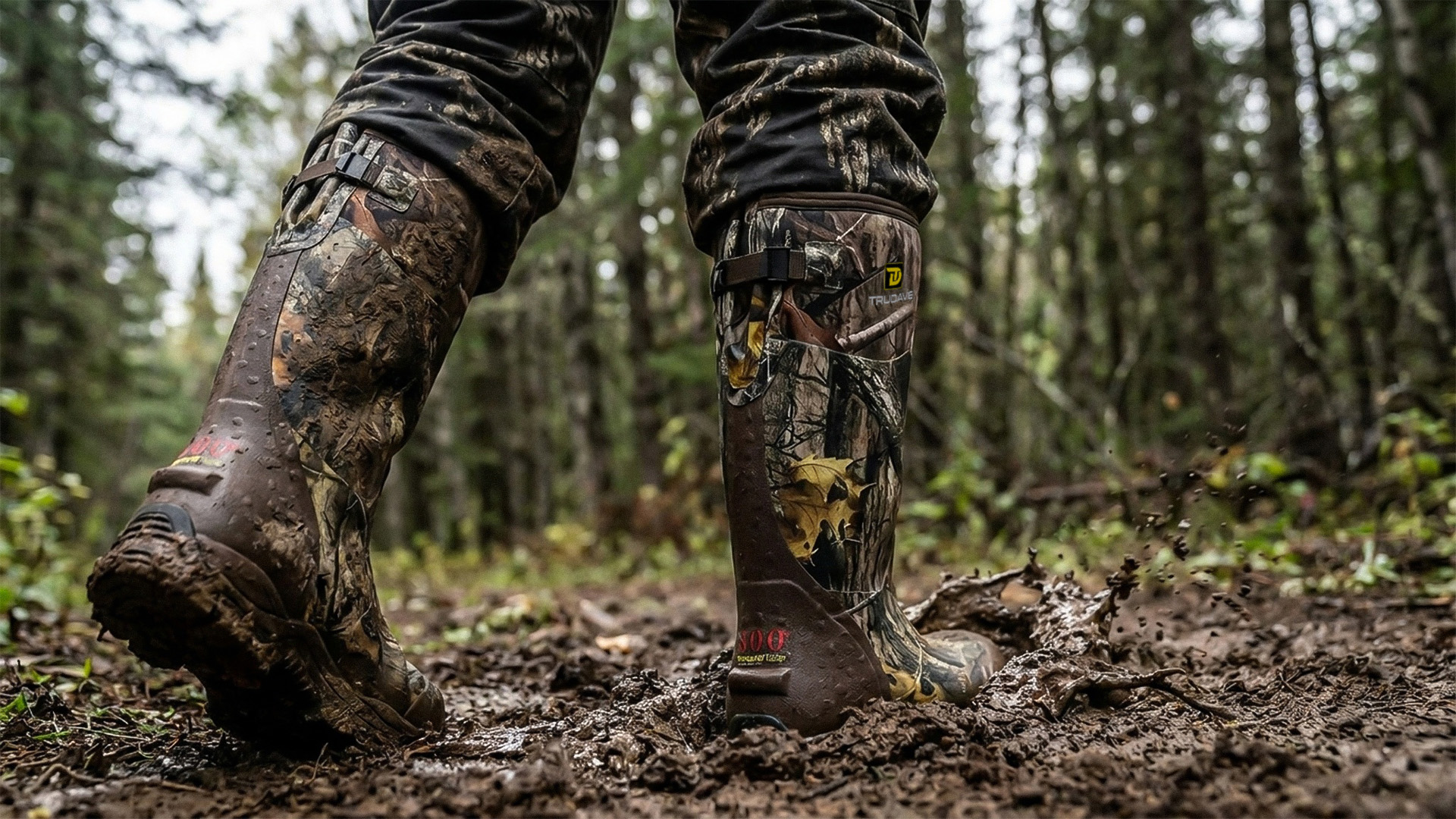
Hunters working these conditions may benefit from waterproof hunting boots for mountain quail hunting that provide secure heel retention, reliable traction, and enough support for wet brush, steep slopes, creek crossings, and long upland walks.
Mountain quail habitat punishes lightweight footwear that lacks structure.
Boot Support Matters on Steep Slopes
Repeated climbing and sidehilling place pressure on:
- Ankles
- Heels
- Knees
A secure boot improves stability.
But excessively heavy footwear creates fatigue.
Balance matters.
Heel Lock Is Critical
Descending steep slopes pushes the foot forward.
Climbing pulls the heel upward.
Poor fit can quickly create:
- Blisters
- Hot spots
Break boots in before the hunt.
Test them on actual hills.
Toe Room Matters on Descents
A boot that feels fine on flat ground can become painful downhill.
Repeated toe impact causes discomfort.
Proper sizing becomes especially important in mountain bird hunting.
Traction Matters on Wet Leaves
Forest slopes may be covered with:
- Wet leaves
- Pine needles
- Mud
- Roots
All of them can be slippery.
Use controlled steps.
Do not run downhill after a flush.
Loose Rock Creates Another Problem
Some mountain quail country includes rocky canyon slopes.
Boots need traction on:
- Gravel
- Loose rock
- Dirt
Watch each step.
A bird is not worth an ankle injury.
Wet Logs Are Dangerous
Fallen timber can become extremely slick.
Step around large logs when practical.
Do not walk along them simply to save distance.
Creek Crossings Require Care
Small creeks can still have:
- Slippery rocks
- Deep holes
- Undercut banks
Use established crossings where possible.
Never assume a bird trail provides a safe human route.
Gaiters Can Be Useful
Gaiters may help keep out:
- Mud
- Seeds
- Wet vegetation
- Snow
They also protect lower legs from constant brush contact.
Brush Pants Are Worth the Weight
Mountain quail habitat can tear up lightweight clothing.
Expect:
- Blackberry
- Thorny shrubs
- Young branches
Durable pants let hunters enter good habitat without constantly avoiding cover.
Eye Protection Is Important
Branches and brush often sit at face height.
Clear protective glasses can reduce eye injuries.
This becomes especially important when hunters are watching the dog instead of nearby vegetation.
Dogs Can Transform Mountain Quail Hunting
A trained bird dog can locate birds hidden in brush that hunters would otherwise never see.
Dogs help identify:
- Running coveys
- Singles
- Dense cover
But terrain makes control more difficult.
Dog Range Should Be Shorter in Thick Cover
A dog that works well at long range on prairie may disappear quickly in brushy mountain terrain.
Keep range manageable.
The dog should create huntable birds.
Not simply locate birds too far away.
Pointing Dogs Need Patience
Mountain quail may run.
The dog becomes birdy.
Then relocates.
Then points again.
Do not rush.
Let the dog solve the track.
A moving covey can take time to pin down.
Flushing Dogs Can Work Well Too
A close-working flushing dog can push birds out of dense brush.
Range is critical.
Too much distance creates wild flushes.
Close control creates safer opportunities.
Dogs Need Extra Conditioning
Mountain terrain is physically demanding.
Dogs may cover:
- Steep climbs
- Creek bottoms
- Brush
- Rock
Condition gradually before the season.
A fit hunter with an unfit dog still has a problem.
Paw Checks Are Important
Mountain terrain can damage paws through:
- Rock
- Sticks
- Thorns
- Seeds
Inspect dogs regularly.
Stop if limping appears.
Seeds and Burrs Can Be Serious
Upland vegetation may contain:
- Grass awns
- Burrs
- Sharp seeds
Check:
- Eyes
- Ears
- Nose
- Feet
after the hunt.
Persistent irritation deserves veterinary attention.
Dogs Need Water Even in Cool Weather
Mountain temperatures may feel comfortable.
Working dogs still lose substantial moisture.
Carry clean water.
Do not rely only on creeks or springs.
Hunting Without a Dog Is Still Possible
Hunters can focus on:
- Creek edges
- Brush fingers
- Old roads
- Clearcut transitions
- Water routes
Move slowly.
Stop often.
Listen for running birds.
Listen for Calls
Mountain quail are vocal.
Calls may reveal:
- Covey location
- Direction
- Movement
Early morning and evening can be especially useful.
One call can save an hour of random walking.
Do Not Charge Toward Every Call
Birds may continue moving while calling.
Take time to understand:
- Terrain
- Wind
- Cover
Then plan the approach.
A rushed direct line often pushes birds farther into brush.
Coveys Can Run Uphill
This surprises hunters.
When pressured, mountain quail may move vertically through brush.
A covey that disappears may be:
- Above you
- Below you
- Across the slope
Watch terrain carefully.
Uphill Escape Routes Are Important
Look for brush lanes climbing toward:
- Ridge cover
- Timber
- Rock
Birds may prefer these routes.
Positioning slightly above or beside the covey can sometimes improve the approach.
Downhill Flushes Can Be Difficult to Follow
A bird dropping into canyon cover may disappear instantly.
Mark:
- Elevation
- Creek
- Distinct tree
- Rock
Do not start descending before identifying a clear landmark.
Vertical Distance Is Hard to Judge
A bird may land only sixty yards away horizontally.
But if it drops deep into the canyon, the actual walking route can be much longer.
Think in elevation.
Not only yards.
Multiple Hunters Can Help
Where safe and legal, two hunters can work a hillside more efficiently.
One may stay slightly higher.
The other works lower cover.
This can reduce the birds’ ability to run endlessly.
Never Stack Hunters Vertically Without a Plan
Steep slopes create dangerous shooting geometry.
Before hunting, establish:
- Hunter positions
- Safe shooting zones
- No-shoot directions
Do not allow one person to fire toward another hunter located above or below.
Low Flushes Are Common
Mountain quail may fly low through:
- Brush
- Trees
- Canyon cover
Know where:
- Dogs
- Partners
- Roads
are located.
If the background is uncertain, do not shoot.
Pick One Bird From the Covey
A covey flush can be chaotic.
Choose one bird.
Track it.
Shoot with control.
Do not fire into the group.
Watch Every Bird You Can
After the flush, the surviving birds create the next opportunity.
Mark where groups land.
Some may settle:
- Uphill
- Downhill
- Across the drainage
The first flush tells you how the covey is using the terrain.
Let Birds Settle
Do not immediately chase.
Pause.
Recover downed birds.
Reload safely.
Then plan the next approach.
A settled single or pair may hold much better.
Singles Can Be Excellent Dog Work
Scattered mountain quail often become less mobile.
Pointing dogs may locate birds that now hold tightly in brush.
This can create the best opportunities of the hunt.
Recovery Is Difficult in Brush
A downed quail can disappear in:
- Ferns
- Leaves
- Blackberry
- Logs
Mark the exact location immediately.
Do not assume the bird will remain visible.
Dogs Can Be Extremely Valuable for Recovery
A trained dog can locate birds in dense vegetation.
Give the dog time.
Avoid trampling the entire area first.
Steep Recovery Can Be Dangerous
A downed bird may fall downhill.
Move carefully.
Do not slide or run after it.
A small bird is never worth a serious fall.
Early Season Heat Can Still Be Significant
Some mountain quail seasons begin while afternoons remain warm.
Dogs and hunters can overheat during steep climbs.
Start early.
Carry enough water.
Use shade.
Cold Rain Creates the Opposite Problem
Later-season hunts may involve:
- Rain
- Wind
- Cold
Wet clothing combined with inactivity can cool hunters quickly.
Carry layers.
Stay dry.
Snow Can Enter Higher Mountain Quail Country
At elevation, early snow can change:
- Bird location
- Access
- Footing
Fresh tracks may help scouting.
Birds may move toward:
- Lower brush
- Snow-free slopes
- Protected drainages
Follow current conditions.
South-Facing Slopes Can Open Earlier
Snow may melt faster on sun-exposed slopes.
These areas can provide:
- Available food
- Easier walking
- Warmer habitat
Search them after early storms.
Protected Canyons Can Hold Birds During Wind
Strong mountain wind makes exposed ridges uncomfortable.
Birds may concentrate in:
- Leeward draws
- Creek bottoms
- Brushy benches
Use weather to narrow the search.
Fog Can Make Canyon Navigation Difficult
Mountain fog can remove:
- Ridges
- Landmarks
- Distant roads
Carry reliable navigation.
Do not assume you can simply climb back to the vehicle.
Offline Maps Are Valuable
Cell service can be unreliable in mountain country.
Download maps beforehand.
Mark:
- Vehicle
- Main road
- Creek
- Property boundaries
Carry a Headlamp
Steep terrain makes unexpected delays more serious.
A covey relocation or difficult recovery can extend the day.
Carry:
- Headlamp
- Backup power
Do not depend entirely on a phone flashlight.
Public Land Can Offer Good Opportunities
Mountain quail habitat may occur on:
- National forests
- BLM land
- State lands
- Other public areas
depending on region.
Research:
- Access
- Fire closures
- Seasonal restrictions
- Current hunting rules
Habitat quality still matters more than acreage.
Fire Can Change Mountain Quail Habitat
Wildfire alters brush and forest structure.
Some burns may eventually create:
- Shrubby regrowth
- Grass
- Open feeding areas
while nearby unburned cover provides security.
The age of the burn matters.
Fresh Burns Can Be Too Open
Immediately after severe fire, cover may be limited.
As vegetation regenerates, habitat quality can improve.
Look for edges where:
- New growth
- Older brush
- Creek habitat
meet.
Post-Fire Access Can Change
Burned areas may have:
- Closed roads
- Hazard trees
- Erosion
- Washouts
Check current land-management information.
Do not assume the old route remains safe.
Rain After Fire Can Create Major Hazards
Recently burned watersheds may experience:
- Flash flooding
- Debris flow
- Road damage
Avoid canyon travel during dangerous weather.
A quail hunt is not worth entering an unstable drainage.
Private Timberland May Have Different Access Rules
Some productive mountain quail country is privately managed.
Access may change due to:
- Logging
- Fire risk
- Seasonal closure
Always verify permission.
Respect Active Logging Operations
Do not interfere with:
- Heavy equipment
- Trucks
- Work crews
Stay away from closed roads and active units.
Safety comes first.
Property Boundaries Can Be Complicated
Mountain terrain makes fences difficult to follow.
Use maps.
A covey crossing onto private land ends the legal pursuit unless access is authorized.
Hunting Regulations Vary by State
Mountain quail seasons and bag limits differ across their range.
Before hunting, verify current:
- Season dates
- Bag limits
- Possession limits
- License requirements
- Legal methods
- Open areas
- Ammunition rules
Use current official wildlife-agency information.
Species Identification Matters
Mountain quail may overlap with other quail species.
Hunters should know the differences between:
- Mountain quail
- California quail
- Other regional species
Positive identification comes before the shot.
Mountain Quail Are Distinctive but Fast
Their long straight head plume can help identification under good conditions.
But dense brush and quick flushes make field identification challenging.
If unsure, let the bird pass.
Habitat Conservation Matters
Mountain quail depend on landscapes containing:
- Shrub cover
- Healthy watersheds
- Young forest
- Riparian habitat
- Natural disturbance
Wildfire, drought, logging, and development can all change local habitat.
Responsible hunters benefit from diverse healthy mountain ecosystems.
Common Mountain Quail Hunting Mistakes
Hunting Flat Ground Only
These birds often use steep country.
Ignoring Creek Systems
Water and riparian brush can organize bird movement.
Following Running Coveys Straight Through Brush
Predict their vertical escape route.
Avoiding Thick Cover
Security habitat is often where the birds go.
Wearing Poor Footwear
Steep wet terrain demands traction, support, and waterproof protection.
Letting Dogs Range Too Far
Dense brush and elevation quickly hide them.
Chasing the First Flush Immediately
Watch landings and let birds settle.
Underestimating Vertical Distance
Fifty horizontal yards can become a difficult canyon climb.
Frequently Asked Questions
Where do mountain quail usually live?
Mountain quail commonly use brushy mountain slopes, creek canyons, riparian habitat, young forest, chaparral, clearcut edges, and other western upland habitats with food, water, and dense escape cover.
Are mountain quail harder to hunt than California quail?
They can be. Mountain quail often occupy steeper, denser terrain where visibility, access, and recovery are more difficult.
Do mountain quail run before flushing?
Yes. Coveys may run through brush and use uphill, downhill, or lateral escape routes before taking flight.
Is rain good for mountain quail hunting?
Rain can improve vegetation, soften ground, reveal tracks, and quiet dry brush, although it also creates slick slopes and wetter hunting conditions.
Can you hunt mountain quail without a dog?
Yes. Hunters can systematically work creek edges, brush transitions, old logging roads, water routes, and clearcut edges without a dog.
What boots are best for mountain quail hunting?
Waterproof hunting boots with secure heel fit, dependable traction, moderate ankle support, and enough durability for brush, steep slopes, creek crossings, mud, and long upland walking are practical.
Final Thoughts
Mountain quail hunting teaches hunters to stop looking at the landscape like a flat map.
The birds do not.
A creek runs through the canyon.
Brush climbs the hillside.
A clearcut creates food.
A spring creates moisture.
A narrow shrub finger connects everything.
Then pressure arrives.
The covey chooses the route that gives it the greatest advantage.
Sometimes that route goes uphill.
Sometimes downhill.
Sometimes straight through brush the hunter hoped to avoid.
Find the creek.
Study the brush.
Understand the vertical terrain.
Control the dog.
Watch every landing.
Wear boots that let you climb wet slopes, cross creeks, step over logs, and push through brush without turning bad footing into the biggest problem of the hunt.
And when the birds vanish into a hillside that looks impossible to hunt, remember:
They did not disappear.
They simply used the mountain better than you did.
The next hunt begins when you learn to do the same.
